May 10, 2026

So, what exactly is a white label mobile app? At its core, it’s a ready-made application, fully developed and tested by a provider, that can be customized with your organization's unique branding. This lets you launch a powerful, polished app without sinking a ton of time and money into building one from the ground up.
Think of it this way: instead of hiring an architect, a construction crew, and an electrician to build a house from a bare plot of land, you’re buying a brand-new, move-in-ready home. The foundation, plumbing, and electrical are all expertly done. You just come in and pick the paint colors, furniture, and decor to make it completely yours.
That’s the essence of a white label app. A specialized provider has already handled all the complicated, behind-the-scenes work—the coding, testing, security, and ongoing updates. Your role is simply to apply your brand identity—your logo, color scheme, and specific content—to a proven, reliable framework.
For associations and event organizers, this model is a total game-changer. It effectively removes the two biggest roadblocks to having a dedicated mobile app: prohibitive cost and long development timelines. Instead of a project that takes months and a six-figure budget, you get a feature-rich app ready to go in a fraction of the time and for a fraction of the cost.
The benefits become obvious pretty quickly:
A white label solution provides the engine; you provide the brand. When a member downloads your app, they see your organization—not a marketplace of competing groups, not a platform logo, not someone else’s brand. Just you.
This approach gives you a professional mobile presence and puts a valuable tool right where your members are looking: their phones. If you're interested in the technical side of things, experts in the field offer great insights on building high-quality native mobile applications and what goes into them.
Ultimately, a white label app isn't just a piece of technology; it's a strategy. It’s about strengthening your brand, creating a real sense of community, and delivering tangible value right to your members. To get a deeper understanding of how this works, you can learn more about what is a white label app and see how it can directly benefit your group. It’s the smartest way to build a vibrant, engaged community without the headaches of custom software development.
For associations and event planners, the decision to launch a mobile app isn't just about keeping up with technology. It's a strategic move. A white-label mobile app puts your brand—your logo, your colors, your entire identity—right into the hands of your members.
Think about it. When a member opens their phone, they aren't just opening a generic event platform; they're opening your app. That constant, direct connection is powerful. It builds a sense of community and loyalty that a third-party branded platform simply can't match.
Let’s be honest: the most persuasive reason to go with a white-label app often comes down to the budget. Building a custom app from the ground up is a massive undertaking, both in time and money. What if you could redirect that huge capital expense into things that actually grow your organization?
Imagine what you could accomplish with that freed-up budget:
You're essentially shifting from a huge, one-time capital expense to a predictable, manageable operating cost. This makes financial planning far easier and puts your resources where they can make the biggest impact.
Speed is another huge advantage. In the world of events and association management, timing is everything. A traditional custom app build can drag on for months, which is a non-starter when your annual conference is just around the corner.
White-label solutions cut through that lengthy process. They allow you to get a fully functional, beautifully branded app launched in a fraction of the time.
The table below breaks down the core differences.
Choosing between a custom build and a white-label solution comes down to your priorities: budget, timeline, and available resources. A custom app offers ultimate control but at a significant cost, while a white-label app provides a fast, affordable, and branded path to mobile.
| Factor | Custom App Development | White Label Mobile App |
|---|---|---|
| Cost | $70,000 - $100,000+ | Typically a monthly or annual subscription |
| Time to Launch | 6-9 months (or longer) | Weeks, sometimes even days |
| Technical Team | Requires a dedicated team of developers, designers, and project managers | No in-house technical team needed; handled by the provider |
| Maintenance | Ongoing costs for updates, bug fixes, and security patches | Included in the subscription; provider handles all updates |
| Customization | Unlimited; built to exact specifications | High level of branding and feature configuration within a set framework |
Ultimately, a white-label solution allows you to focus on your community and content, not on managing a complex software project.

The numbers really speak for themselves. The cost to build a custom app can easily climb into the $70,000 to $100,000 range. In stark contrast, a quality white-label app subscription can be found for a tiny fraction of that. This isn't a small difference—we're talking about potential savings of up to $97,000 in 2026 alone.
A white-label mobile app closes the gap between needing a mobile presence and actually having one. It’s not just about saving money; it's about acting quickly and seizing opportunities without getting bogged down in a nine-month development cycle.
On top of the financial savings, you’re also reclaiming your time. Instead of a 6-9 month development marathon, you could have a fully functional app ready in just a few weeks. You can learn more about these development cost breakdowns and see how the numbers stack up for yourself.
Choosing a white-label mobile app isn't just about stamping your logo on a piece of technology. It's about giving your community a dedicated home—a central hub that replaces the scattered mess of different tools you're probably using right now.
Think about it. Instead of juggling emails, event platforms, and social media groups, your members get a single, branded space for everything. The best platforms aren't just digital brochures; they are dynamic toolkits built to foster real connection. Knowing what features actually move the needle on engagement is the key.
A community that can't talk to itself isn't much of a community. Your app has to be the place where conversations happen, moving them out of cluttered email inboxes and into a space designed for connection.
Look for a platform that includes these fundamentals:
These aren't just features; they're the building blocks that transform a static app into a lively, interactive space where engagement happens naturally.

If you run events, your app needs to work hard for you. It should streamline the entire event experience, starting with dynamic ticketing and registration. You should be able to create custom forms to get the info you need from attendees and easily offer different ticket tiers or special upgrades.
The app also becomes your content library. This is where you can post conference materials, speaker bios, session recordings, and other important documents. By making these resources available on-demand, you extend the value of your event long after it’s over.
A great white-label platform also provides a clear return for your sponsors and exhibitors. With dedicated profiles, lead capture tools, and digital showcases, they get a tangible reason to invest in your community. That’s a win-win.
Nailing these core components is your first step toward building a thriving digital presence. If you're ready to go deeper, check out our guide on creating a successful community app and the strategies behind it. When you choose a platform with these features, you’re not just buying software—you’re making a long-term investment in your community's growth.
A white-label mobile app is more than just a digital brochure; it's a direct line to your community. But its true power only comes alive when you use it to communicate well. After all, an app is only useful if people actually open it, and the single best tool for getting them to do that is the push notification.
Think about it. Email inboxes are overflowing, and important messages easily get buried. Social media is a constant shouting match where your posts are at the whim of some mysterious algorithm. Push notifications slice right through that noise. They land directly on a user’s lock screen, creating an immediate and personal touchpoint that’s hard to ignore.
Of course, this isn't about spamming your members with generic alerts. It's about sending strategic, timely messages that genuinely help them.
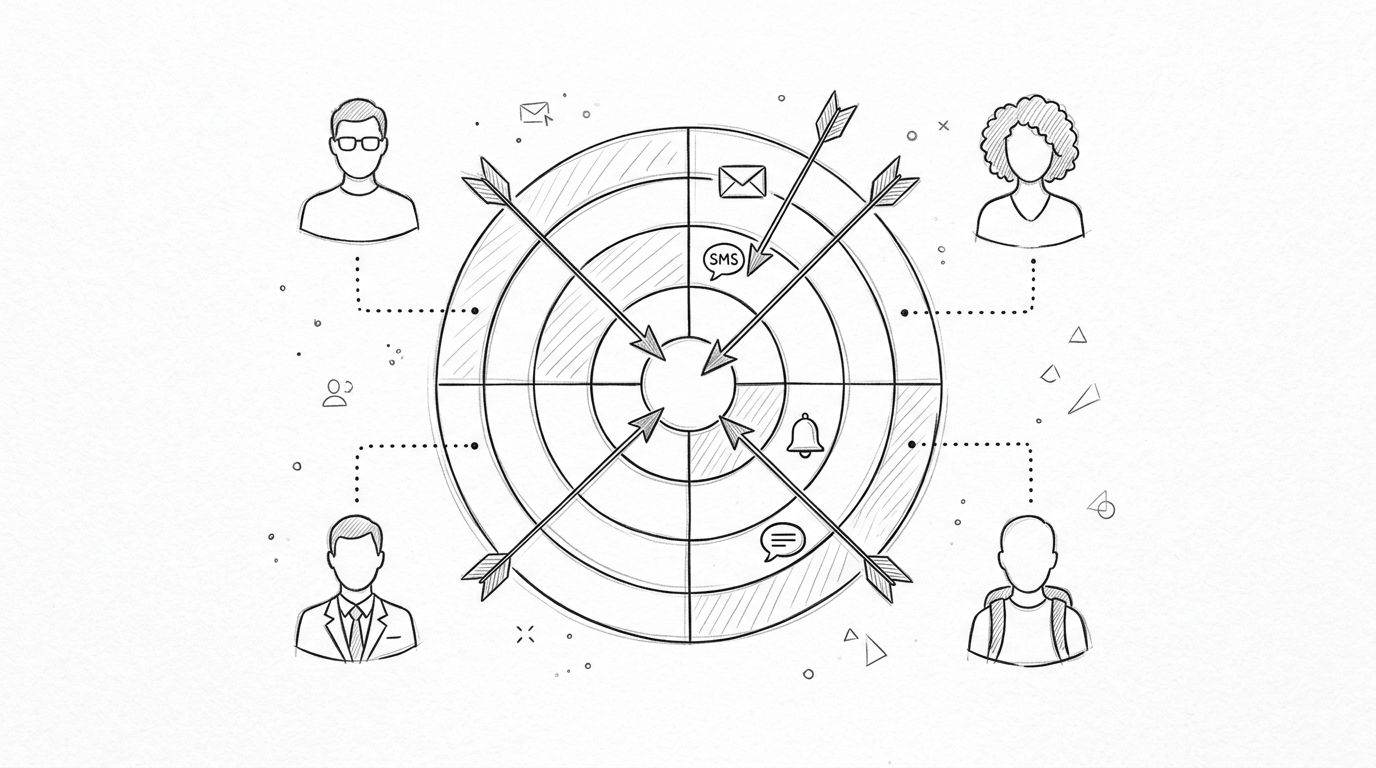
Imagine your app as a megaphone that can whisper a unique message to each member. With the right communication strategy, you can turn your app from a passive library of content into an active hub of engagement.
Here are a few ways this plays out in the real world:
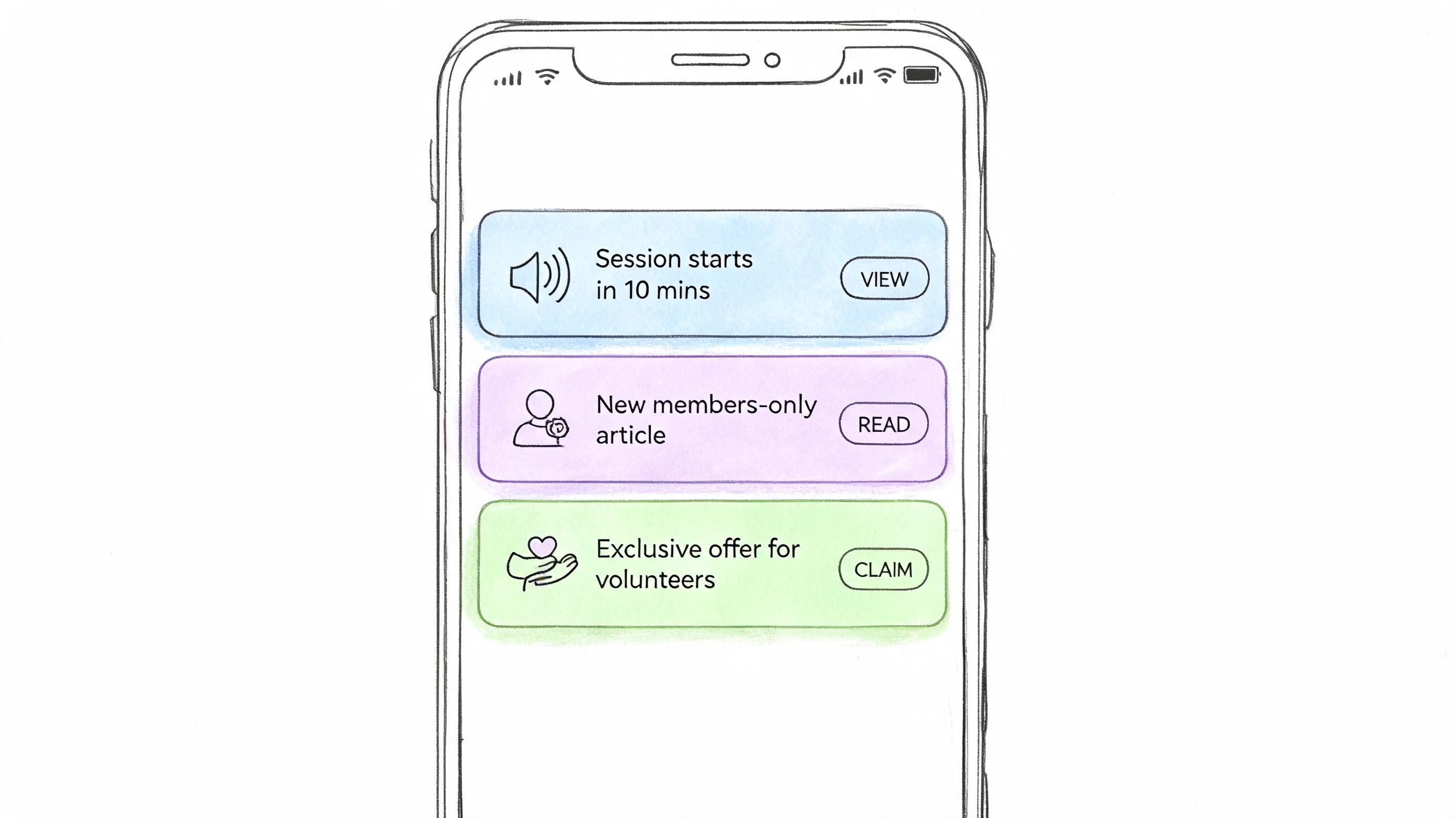
This kind of personalized communication makes a massive difference. We've seen contextual push campaigns hit open rates as high as 14.4%, which blows the 4.19% rate for generic messages out of the water. Compare that to a channel like Facebook, where organic reach has plummeted to a dismal 0.2%. You can explore more data on the cost-benefit analysis of white-label apps to see the full financial picture.
The goal is to make every notification feel like a helpful tap on the shoulder, not a disruptive shout. It’s a strategy that builds a vibrant, active community by delivering the right information at the right time.
When you master this, you’ll see member retention climb, event participation grow, and your app solidify its place as the true hub of your organization. And for those looking to manage the conversations that happen inside the app, our guide on how to create group messages can help you facilitate those focused discussions.
So, you're ready to get your new white label mobile app off the ground. It's easy to see this as a huge, technical project, but it doesn't have to be overwhelming. The key is breaking it down into a clear, step-by-step roadmap.
Think of this as your pre-flight checklist. Before you can get your community soaring, you need to make sure every system is configured and ready. This journey starts with a simple question—what do you want to achieve?—and ends with your members happily using their new digital hub.
This first phase is all about laying a solid foundation. Getting these details right from the start will save you headaches down the road and make the whole process feel much smoother. This is where you turn your vision into the actual nuts and bolts of the app.
A great app launch is really built in the preparation stage. The more clarity you have on your goals and content strategy upfront, the quicker and more impactful your rollout will be. It’s all about setting up the app to solve a real problem for your members from the get-go.

With all your prep work done, the focus shifts to the launch itself. This isn't just about flipping a switch; it's a coordinated effort to get the app published and, more importantly, get your community excited to use it.
Picking a technology partner for your white-label mobile app is easily the most critical choice you’ll make in this whole process. Get it right, and your partner feels like a seamless extension of your team. Get it wrong, and you're in for a world of headaches and missed opportunities. This decision goes way beyond just ticking boxes on a feature list.
When you're sitting through demos, really focus on how the platform feels to manage. Is the content management system (CMS) actually intuitive, or does it look like it was designed by engineers for engineers? You should be able to update content, manage your members, and tweak event details without needing to call in a technical expert every time.
Don't forget to dig into their experience with the app store submission process. An experienced partner knows the ins and outs of Apple's and Google's ever-changing rules and can guide you through the process, ensuring your app gets published smoothly under your own brand.
As you start talking to potential vendors, you need to arm yourself with the right questions. This is how you cut through the sales pitch and get a real sense of what it would be like to work with them day-to-day. You're looking for a platform that works for you right now but also has the legs to grow with your community.
During your demos, be ready to ask:
A true partner isn't just selling you software—they're providing a complete ecosystem for your community, events, and content. The best choice is often an all-in-one platform that brings your tools together, saving you both time and money.
The mobile app market is growing incredibly fast, with projections showing it will hit $755.50 billion by 2027, and white-label solutions are a huge part of that. You'll want a partner who not only understands this but is prepared for it. To see how a unified system fits into this picture, it's worth exploring the benefits of an all-in-one membership platform and how it amplifies your mobile strategy.
As you start exploring the idea of a white-label app for your organization, a few practical questions always come up. Let's tackle the most common ones head-on so you can get a clear picture of what to expect.
This is probably the first question everyone asks, and for a good reason. When you hear that building a fully custom app from scratch can easily cost $70,000 to $100,000 (or even more), it's daunting.
A white-label solution is a completely different ballgame. Instead of a massive upfront investment, you're looking at a much more manageable monthly or annual subscription.
Costs can vary, typically from a few hundred to a few thousand dollars per month. What changes the price? It usually comes down to a few key things:
Think of it as a predictable operating expense rather than a huge capital outlay. The best part is that ongoing maintenance, security patches, and platform updates are almost always rolled into that subscription fee.
Yes, absolutely. Any reputable white-label provider will handle the entire app store submission process for you. This isn't just a side benefit; it's a core part of the service.
Your app will be published under your own organization’s developer account, so it shows up as a unique, standalone application. They take care of the technical headaches and ensure everything meets Apple's and Google's notoriously strict guidelines. This way, your members can find and download your app just like any other.
The real magic of the white-label model is that the app truly becomes yours. Your members will search for your organization's name in the app stores, find your logo, and download an app that feels like it was built exclusively for them.
Almost none. These platforms are built with the understanding that they'll be managed by community managers, event coordinators, and association staff—not developers.
You’ll do everything through a simple administrative dashboard, which is just a fancy name for the app's backend. It’s all based on intuitive tools like text editors, forms, and sometimes drag-and-drop interfaces. If you can update a basic website or run your organization's Facebook page, you have all the skills you need to manage your app's content and engage with your community.
Ready to build a vibrant, engaged community with your own branded app? GroupOS provides an all-in-one platform to manage your members, events, and content seamlessly. Schedule a demo today and see how easy it is to launch your own mobile app.