December 30, 2025

In the dynamic landscape of professional associations and community management, fostering vibrant, engaging discussions is the cornerstone of a thriving network. The right topics of group discussions not only captivate your audience but also unlock immense value, driving retention, collaboration, and growth. Choosing impactful conversation starters is a critical component of any successful community-building effort. For a deeper dive into establishing the framework for active participation and sparking meaningful connections, refer to this comprehensive guide to community engagement strategy.
This article moves beyond generic icebreakers to provide a strategic blueprint for event planners and community leaders. We will explore twelve high-impact discussion themes, each tailored to address the core challenges and opportunities your members face, from mastering hybrid events to optimizing sponsorship ROI. These topics are specifically designed to be actionable, insightful, and transformative for your organization. Let's dive into the conversations that will define successful communities, complete with facilitation prompts and practical formats to ensure every session is a resounding success.
The shift towards combining in-person and digital experiences has made virtual and hybrid event management one of the most vital topics of group discussions for modern organizations. This approach allows professional associations and corporate groups to dismantle geographical barriers, expanding their reach to a global audience while preserving the energy of a live event. It involves a strategic blend of technology, content, and engagement to create a cohesive experience for all attendees, regardless of their location.
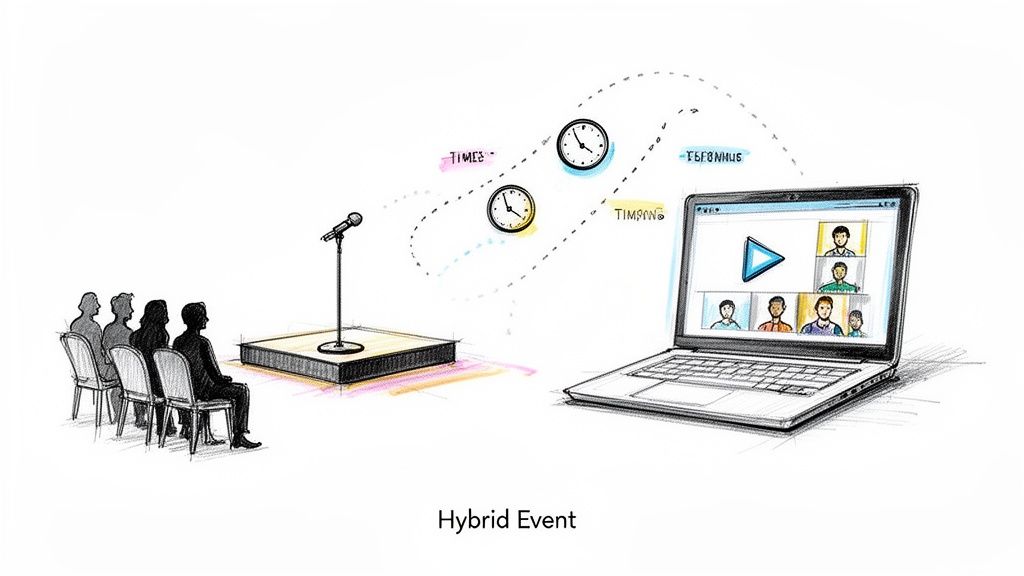
Hosting a roundtable or workshop on this subject is crucial because it addresses a fundamental change in how communities connect. A successful hybrid event isn't just a live stream; it requires dedicated strategies for both audiences. For a deeper dive, you can explore the fundamentals of hybrid events and their impact.
Use these points to guide the conversation and provide immediate value:
Building a loyal, active member base requires systematic approaches to deliver sustained value and foster meaningful interactions. Community engagement and retention strategies are crucial topics of group discussions for any membership-based organization, as they directly impact recurring revenue and long-term stability. This involves exploring everything from lifecycle marketing and member segmentation to creating sticky community experiences that prevent churn.
This topic forces a shift from acquisition-focused thinking to a sustainable, member-centric model. Discussing retention is vital because keeping an existing member is far more cost-effective than acquiring a new one. The conversation can uncover blind spots in the member journey and generate innovative ideas for boosting loyalty and participation.
Use these points to guide the conversation and provide immediate value:
Sponsorship and exhibitor relations management is a critical topic for group discussions, focusing on strategic frameworks for cultivating and maximizing partnerships. This goes beyond simple transactions, encompassing the entire lifecycle of a sponsor relationship from lead generation and contract negotiation to ROI demonstration and renewal. Effective management turns sponsors into true partners, creating significant revenue streams while delivering tangible value to them and the member community.
This subject is vital because sponsorships are often the primary financial engine for professional associations and large-scale events. A group discussion can uncover new strategies for creating compelling value propositions that attract high-quality sponsors. It allows organizers to move beyond standard packages and innovate their offerings. For more ideas, you can explore how to build effective event sponsorship packages that deliver results.
Use these points to steer the conversation and offer practical takeaways:
A focused approach to content strategy and knowledge management is one of the most impactful topics of group discussions for modern associations. It shifts the community model from being event-centric to resource-centric, providing continuous value far beyond scheduled meetups. This involves a comprehensive plan for creating, organizing, curating, and distributing valuable resources like digital libraries, on-demand courses, and expert-led knowledge bases that serve distinct member needs.
Discussing content strategy is essential because it addresses how an organization can become the go-to authority in its niche. It’s about building an ecosystem of information that keeps members engaged year-round, not just during conferences. This strategy transforms a membership from a simple transaction into an indispensable professional tool, directly boosting retention and demonstrating ROI.
Use these prompts to structure a workshop or roundtable on building a powerful content engine:
Leveraging data to understand member behavior is no longer a luxury; it’s a core function for thriving communities and professional associations. This topic of group discussion dives into how organizations can collect, analyze, and act on member data to predict churn, personalize experiences, and drive strategic growth. By examining everything from event attendance to content consumption, groups can move from guesswork to data-backed decision-making, ensuring every initiative is impactful and relevant.
A discussion on data analytics is vital because it empowers community leaders to prove their value with concrete numbers. Many organizations collect data but struggle to translate it into actionable insights. This conversation helps bridge that gap, turning raw information into a strategic asset. Understanding analytics allows groups to identify at-risk members, discover what content resonates most, and optimize engagement strategies for maximum retention and satisfaction.
Use these points to guide the conversation and provide immediate value:
The strategic implementation of internal communication platforms is a foundational topic for any group aiming for operational excellence. This discussion moves beyond just choosing a tool; it's about architecting a digital environment where information flows freely, knowledge is easily shared, and collaboration thrives. Effective systems reduce silos, accelerate decision-making, and create a unified culture, which is especially critical for hybrid and distributed teams. It encompasses everything from chat platforms to structured channels and messaging hierarchies.
This is one of the most practical topics of group discussions because the tools and protocols a community uses directly impact its effectiveness and member satisfaction. A well-structured communication strategy prevents information overload and ensures members can find what they need. For communities operating in virtual or hybrid settings, selecting the right platforms is paramount to fostering effective group discussions. Explore some of the best collaboration tools for remote teams to understand the options available.
Use these prompts to guide a productive conversation on improving internal workflows:
The first 30 days of membership are pivotal, often determining long-term retention and engagement. Member onboarding and activation is one of the most critical topics of group discussions for associations and communities, as it focuses on strategically converting newcomers into active participants. It involves creating a structured experience with welcome sequences, profile completion prompts, and immediate value demonstration to forge a strong initial connection. This process is essential for reducing member churn and ensuring a positive first impression.
A group discussion on onboarding addresses a core challenge: how to prevent new members from becoming inactive. It shifts the focus from merely acquiring members to intentionally activating them. Exploring this topic helps organizations design workflows that guide new users toward their "aha!" moment quickly, whether it's connecting with a mentor, finding a relevant resource, or joining a subgroup.
Use these prompts to guide a productive conversation and develop an effective onboarding strategy:
For professional associations and industry groups, networking is often the core value proposition. Discussing how to strategically facilitate peer-to-peer connections is essential for fostering a vibrant community where members build meaningful professional relationships and exchange knowledge. This topic moves beyond simple meet-and-greets to cover structured matchmaking, organic discovery, and creating an environment where valuable collaborations can flourish.

This is one of the most critical topics of group discussions because it directly impacts member retention and satisfaction. When members find mentors, partners, or peers who help solve their problems, the value of the community becomes tangible. A workshop on this subject can uncover new ways to leverage technology and event design to engineer serendipity and ensure members connect with the right people at the right time.
Use these prompts to guide a productive conversation about building a powerful community network:
Designing effective membership models and subscription strategies is one of the most critical topics of group discussions for associations and community-based businesses. This involves creating strategic frameworks for membership tiers, pricing, and value propositions that maximize revenue while meeting diverse member needs. The goal is to balance accessibility with sustainability, ensuring the organization thrives long-term.
A workshop on this topic is essential because it directly impacts an organization's financial health and member satisfaction. It forces a conversation about what members truly value and how to price that value appropriately. Discussing this helps leaders move beyond simple cost-plus pricing to a more sophisticated, value-based approach. For more inspiration, you can review some powerful subscription business model examples from various industries.
Use these prompts to guide a productive conversation on building a resilient membership structure:
Optimizing the registration and ticketing process is a critical topic of group discussions for any event-driven organization. This first touchpoint directly influences attendance rates, revenue, and attendee data quality. It involves designing a frictionless sign-up experience, from tiered ticket pricing and early bird promotions to custom registration forms that capture valuable insights without creating barriers.
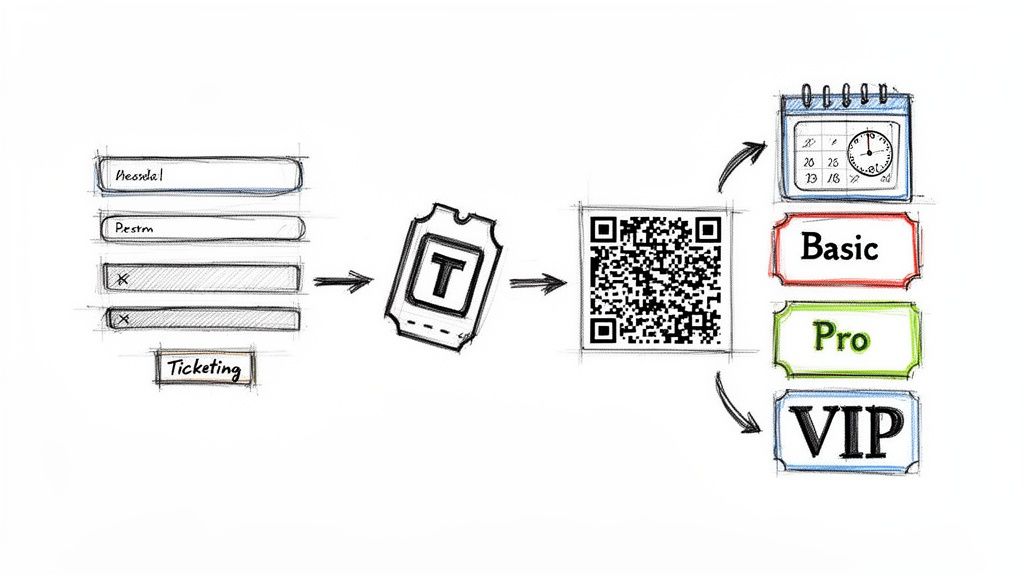
A workshop focused on this subject helps stakeholders understand that registration isn't just a logistical step; it's a strategic marketing and data collection tool. Discussing best practices can lead to significant improvements in conversion rates, member acquisition, and overall event profitability. It moves the conversation from simply selling tickets to creating a seamless journey that begins long before the event day.
Use these points to guide a productive conversation around maximizing your registration strategy:
As professional associations and corporate groups scale their online presence, the topic of community moderation and governance becomes a critical area for group discussions. This subject focuses on creating and upholding the frameworks that ensure a safe, healthy, and productive environment. It involves establishing clear guidelines, enforcing standards consistently, and empowering members to contribute to the community's well-being through self-governance. This is the operational backbone that maintains a positive culture.
A workshop on moderation is essential because it directly impacts member retention and engagement. A poorly managed community can quickly become toxic, driving away valuable contributors. Discussing this topic helps leaders proactively build a resilient community capable of handling conflict and scaling gracefully. To see this in action, you can review excellent examples of community guidelines from successful groups.
Use these prompts to structure a productive conversation on community health:
With the majority of digital interactions now happening on smartphones, designing a mobile-first community experience has become one of the most critical topics of group discussions. This approach prioritizes designing for the smallest screen first, ensuring that core community functions are accessible, intuitive, and engaging on mobile devices. It's not just about a responsive website; it's a strategic shift towards native apps, push notifications, and thumb-friendly navigation to meet members where they are most active.
This subject is vital because a poor mobile experience can drastically reduce member engagement and retention. Many communities are still built around a desktop-first mindset, creating friction for users on the go. Discussing mobile-first design helps organizations re-evaluate their entire digital strategy, from feature development to communication channels, ensuring they remain relevant and accessible.
Use these points to steer the conversation and deliver practical takeaways:
The extensive list of topics of group discussions explored throughout this guide serves as a strategic blueprint, not just a simple menu of options. From optimizing Member Onboarding to mastering Virtual Event Management and leveraging Data Analytics, each theme represents a critical pillar in building a vibrant, resilient, and valuable community. The power, however, lies not in selecting a single topic but in weaving them together into a cohesive engagement strategy that meets your members where they are.
A well-chosen discussion topic is a catalyst. It transforms a passive audience into an active, engaged community of contributors. By facilitating conversations around Sponsorship Relations, Content Strategy, or Community Governance, you are doing more than filling an event agenda; you are co-creating value, building trust, and empowering your members with the knowledge and connections they need to succeed. The true measure of a successful group discussion isn't just the conversation itself, but the actions, insights, and relationships that follow.
To bridge the gap between planning and execution, consider these immediate steps:
Ultimately, mastering the art of the group discussion is about more than just moderating a Q&A session. It is about intentionally engineering environments where meaningful connections are forged, professional challenges are solved collaboratively, and a shared sense of identity is strengthened. Each discussion on Networking Facilitation or Internal Collaboration Tools reinforces the value proposition of your organization. It proves that you are not just a content provider, but a central hub for industry advancement and a catalyst for professional growth. By thoughtfully selecting and expertly facilitating these critical conversations, you elevate your role from a simple organizer to an indispensable community architect.
Choosing the right topics of group discussions is the first step; bringing them to life with seamless technology is the next. GroupOS unifies ticketing, communication, and analytics into a single, powerful platform, letting you focus on fostering engagement instead of juggling tools. Explore how GroupOS can streamline your community and event management today.