February 28, 2026
Collecting phone numbers gives you a direct line to your community, a way to cut through the noise of crowded inboxes and unpredictable social media feeds. The trick is to do it right—to build a strategy that respects privacy and gives people a clear reason to share their information. It all boils down to seamless capture methods, crystal-clear consent, and following through on what you promise.
In a world overflowing with digital chatter, having a direct link to your community is priceless. Email has long been the standard, but let's be honest, open rates can be hit-or-miss. Text messaging, on the other hand, boasts open rates that often climb past 98%. That makes it an incredibly powerful channel for information that needs to be seen.
Collecting phone numbers isn't just about stockpiling data. It’s about forging a dedicated, high-engagement connection with the people who are the lifeblood of your organization.
This guide is your complete playbook for collecting phone numbers effectively, whether you're running a professional association, organizing events, or leading a membership business. We'll get into why SMS is such a goldmine for engagement and how to build a strategy that works without crossing privacy lines. Forget outdated tactics; we're diving into modern, compliant methods for every touchpoint.
Picture this: You’re at a major industry conference a couple of years from now. It's 2026, and there are over 5.78 billion unique mobile users worldwide. That’s a staggering 70.1% of the global population walking around with a smartphone.
With smartphones making up 86.9% of all mobile devices, every single attendee holds a key to ongoing engagement. And it's only growing. Projections show global smartphone subscriptions will top 7.9 billion by 2028. This isn't just a trend; it's a massive, expanding opportunity right in front of you.
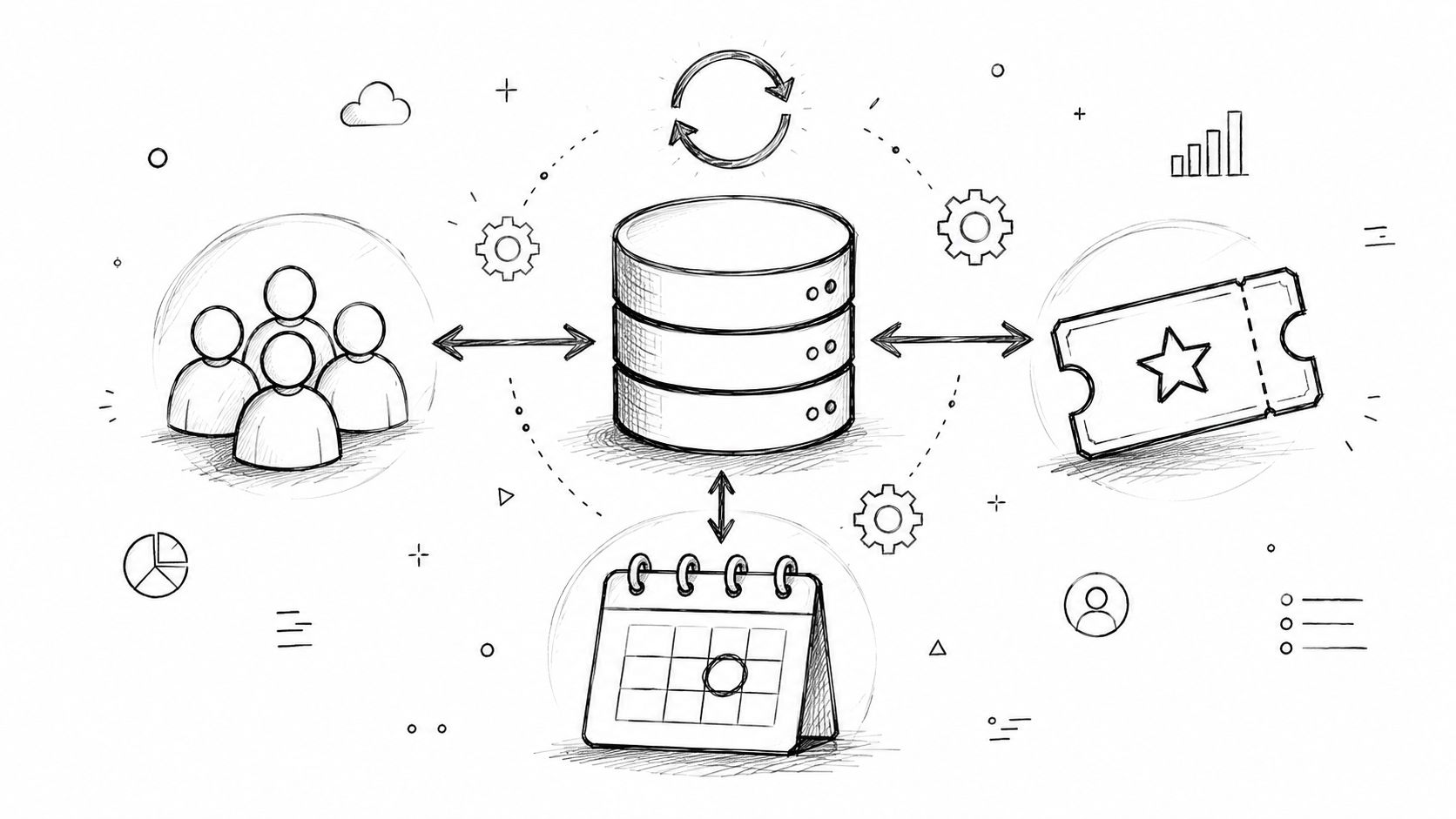
The whole process can be broken down into three straightforward, connected stages. It starts with thoughtful design and ends with putting the data to work.
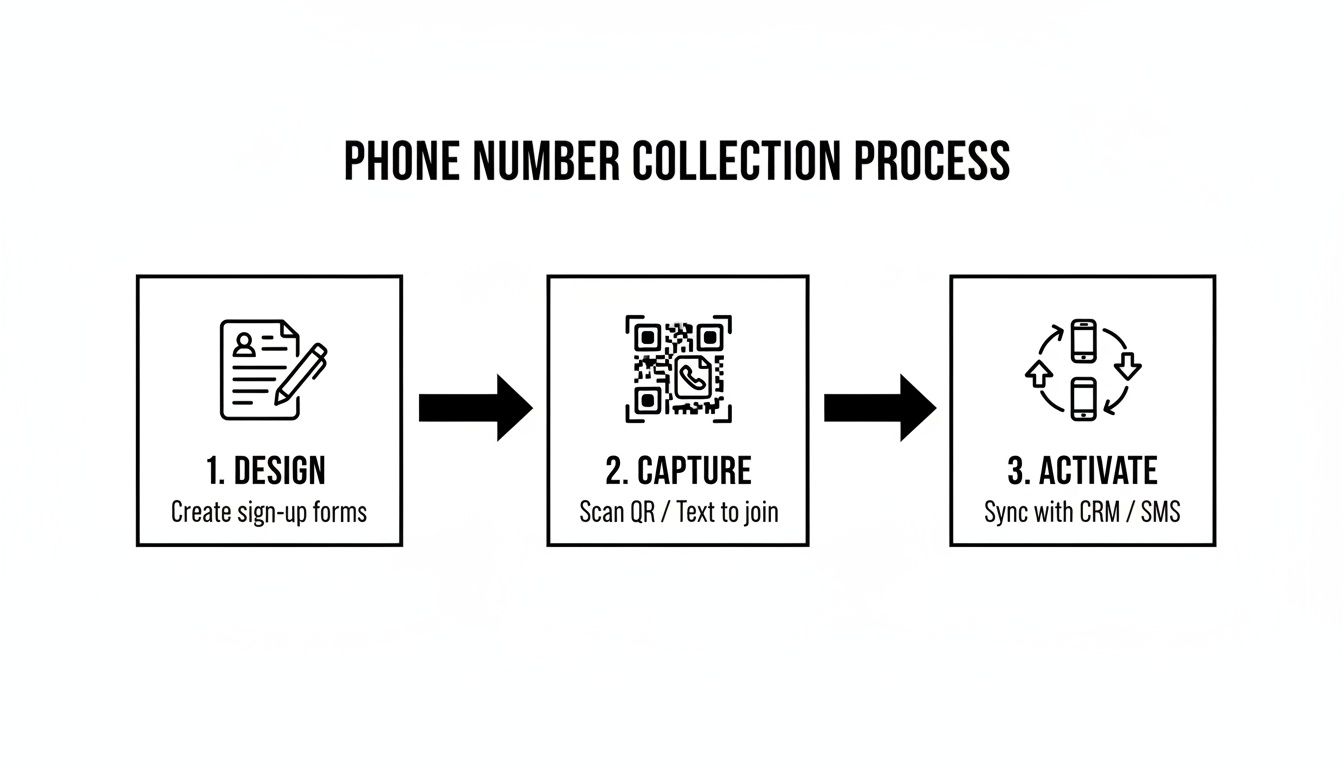
This workflow shows that successful data collection isn't a one-off task. It’s a deliberate process. By getting each step right, you create a smooth experience for your members and build a powerful asset for your organization. To learn more about fostering these kinds of connections, you can find your tribe with our dedicated guide.
To get started, it helps to know which tools to use and when. Different situations call for different approaches, and choosing the right one makes all the difference in getting that opt-in.
Here's a quick rundown of the most effective methods, where they shine, and what you need to keep in mind.
Each of these methods has its place in a well-rounded collection strategy. The key is to make the process as frictionless as possible for your audience while always being transparent about how you'll use their information.
The moment you ask for a phone number is a make-or-break point in your relationship with a potential community member. If you get it wrong, you’ll create friction, suspicion, or just another abandoned form. Get it right, and you open up a powerful new channel for genuine engagement.
The goal is to design collection points that feel helpful and natural, not intrusive or demanding.
Think of it like a real-life conversation. You wouldn't walk up to a stranger at a conference and immediately ask for their personal number. You’d introduce yourself, find some common ground, and then suggest a good reason to stay in touch. Your digital collection points—whether on a registration page, a ticketing form, or a website pop-up—should follow that same social etiquette.
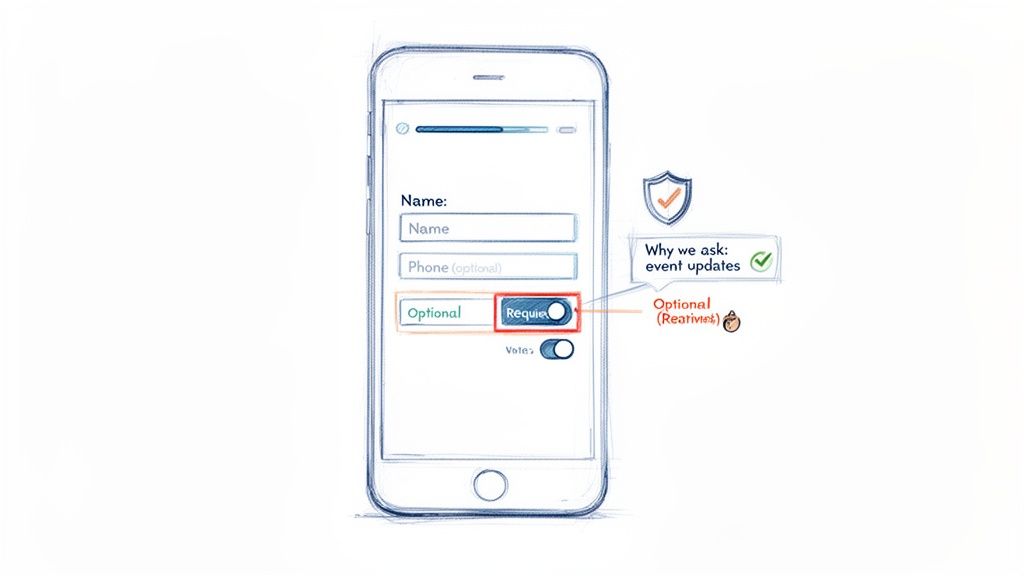
The design of your form has a direct, measurable impact on whether someone will trust you with their contact info. Here, the small details matter immensely. Your job is to reduce their mental effort and build their confidence with every field they fill out.
A form that actually works for collecting phone numbers usually includes these three things:
When you focus on these elements, you’re no longer just demanding data. You're creating a mutually beneficial exchange.
The words you choose are your most powerful tool for persuasion. Vague, lazy requests like "Enter your phone number" create uncertainty and suspicion. You need to provide specific, compelling context that answers their unspoken question: "What's in it for me?"
Just look at the difference a few words can make in these common scenarios:
For a Professional Conference:
For a Webinar Sign-Up:
A well-crafted request frames giving a phone number not as a cost, but as an investment in a better experience. It shifts the user's mindset from "What are they taking from me?" to "What am I getting out of this?"
Making the phone number field required might feel like the fastest way to build your SMS list, but it often backfires. Forcing someone's hand can dramatically increase form abandonment rates.
A much smarter approach is to make the field optional but highly incentivized.
This strategy respects their autonomy while still making a strong case for opting in. You capture the essentials (like name and email) from everyone, and then you successfully persuade a good portion to also share their number because you've made it worth their while.
This is where progressive profiling comes in handy. On an initial sign-up, maybe you only ask for a name and email. Later, when they register for their first event or download a guide, you can present the phone number field with a new, relevant incentive. This builds their data profile over time without overwhelming them at the first touchpoint.
This is especially effective in live settings. As you can see in our guide on how to use QR codes for events, linking a scan to a simple form that asks for just one piece of information can be incredibly effective. For example, a QR code at a session could offer to text attendees the presentation slides, making the phone number collection a seamless part of the value exchange.
Ultimately, collecting phone numbers is about making the ask at the right time, with the right message, in a way that feels completely natural.
Live events are a fantastic opportunity to collect phone numbers, but the old-school clipboard and pen just don't fly anymore. They’re clunky, create long lines, and you're lucky if you can read half the handwriting you get. Today, capturing phone numbers in person has to be quick, digital, and feel like a natural part of the event itself.
The real trick is to weave the ask into the experience, not make it feel like another administrative hoop to jump through. When someone can scan a code or tap a screen to get something they actually want, you're not just taking their number—you're making their time at your event better.
Everyone knows QR codes, but too many organizers only use them for event entry. That's a huge missed opportunity. Start thinking of QR codes as interactive touchpoints you can sprinkle throughout your venue, each offering a different reason to connect.
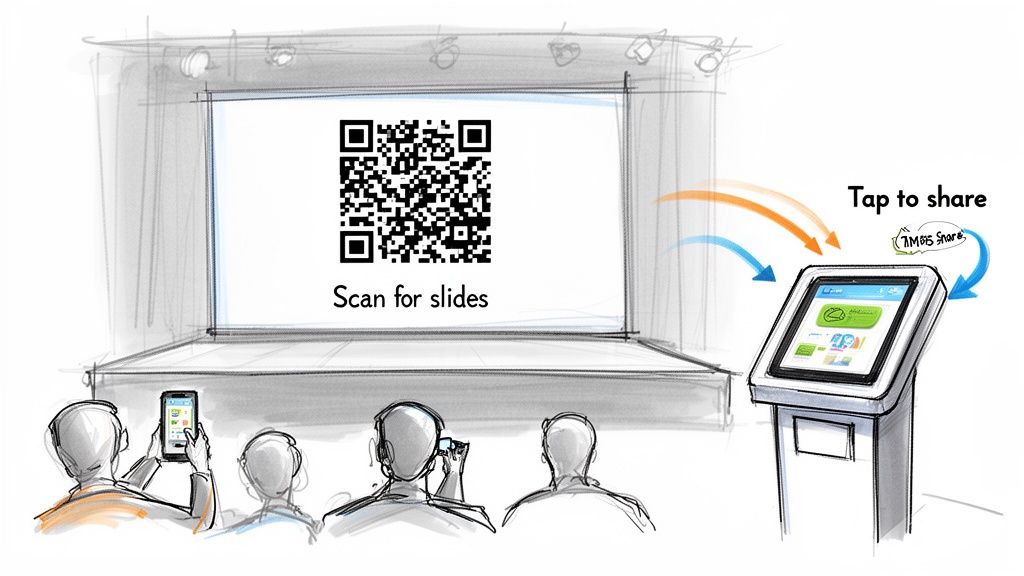
Picture this: A keynote speaker just wrapped up an amazing presentation. As they close, a slide pops up with a QR code. The message? "Scan here to get these slides sent straight to your phone." Attendees pull out their phones, scan the code, enter their number on a simple form, and boom—they get a text with the PDF. You’ve just delivered instant value and captured a phone number with clear consent.
Here are a few other ways I've seen QR codes used brilliantly to collect phone numbers:
The best in-person capture methods are always a value exchange, not a one-way ask. Give people something useful in the moment—content, a chance to win, a networking shortcut—and they’ll be happy to share their contact information.
To get more ideas on maximizing these moments, our guide on effective trade show lead capture is a great resource.
For larger conferences and trade shows, dedicated kiosks can be a lifesaver. Set them up in high-traffic areas so attendees can update their info or sign up for specific text alerts without waiting in line at the registration desk. It’s all about empowering them to manage their own data.
Your biggest ally here is the smartphone in every attendee's pocket. It's wild to think that back in 2014, there were only 1.03 billion smartphone owners globally. By 2025, that figure is expected to hit 4.69 billion—a staggering 38.38% jump from 2022 alone. For event pros, this boom means we can build incredibly rich contact lists, especially from international events. This is where tools like GroupOS shine, with drag-and-drop builders and member maps that turn simple sign-ups into a living database. With a projected 5.12 billion owners in 2026, every single attendee is a potential connection.
And don't forget about your exhibitors! They are on the front lines. Equip them with a simple app or a unique QR code tied to their booth. When they scan an attendee's badge, they can capture that qualified lead's phone number directly. The data syncs to your central event database, and the attendee gets the exhibitor's info sent right to them. It’s a win-win that turns every booth into an efficient hub for lead collection. For more on making your live events truly impactful, check out these excellent tips for organizing a marketing event that drives results.
Let's be honest: people guard their phone numbers. And for good reason. Asking for a number isn't a small request—it's asking for a direct line into someone's life. To get a "yes," you have to offer a value exchange that's both clear and compelling. Forget vague promises like "sign up for updates." You need to create specific, high-value incentives that make someone want to act immediately.
Earning that access is all about trust. You build it when the value you're offering feels genuinely more significant than a person's natural hesitation to share their contact info. This isn't about tricking anyone. It's about making your offer so good, they feel like they're actually missing out if they say no. The right incentive feels like an exclusive perk or a genuinely helpful service, not just another marketing tactic.
To make your request truly irresistible, you have to offer something tangible and exclusive. Put yourself in your audience's shoes and think about what they really value in that specific moment. Are they looking for convenience? Early access? Special status?
Here are a few real-world examples I've seen work brilliantly:
The trick is to connect the incentive directly to what the person is trying to achieve right then and there. If they're at your conference to learn and network, give them something that makes that experience even better.
A great incentive gets their attention, but it’s transparency that truly earns their trust. When you ask for that phone number, you have to be completely upfront about what you'll use it for and how often you'll be in touch. This isn't just a "best practice"—it's the foundation of a healthy, long-term relationship with your audience.
State your intentions right on the collection form. A simple bit of microcopy can make all the difference.
"We'll text you only with critical event updates and a reminder before next year's ticket sales. No spam, ever. You can reply STOP at any time to opt out."
This simple statement accomplishes three critical things: it sets clear expectations, it provides powerful reassurance, and it gives them an easy way out. For anyone serious about collecting phone numbers ethically, this level of transparency is non-negotiable.
The very first message you send is your chance to prove you're trustworthy. A well-crafted welcome text doesn't just confirm their subscription; it solidifies the relationship and validates their decision to sign up. It should fire off immediately after they subscribe and include these key elements:
With 8.31 billion mobile subscriptions worldwide in 2024, the potential for reaching people is massive. But that scale also makes accuracy critical. Top-tier data providers now claim 95% precision on North American mobile numbers, and the FCC’s Reassigned Numbers Database contains over 305.9 million records to help you avoid texting the wrong person. This is exactly why your welcome message is so important—it confirms the number is active and starts your relationship off on the right foot, built on trust and precision. You can explore more about the global scale of mobile usage and what it means for data accuracy on bankmycell.com.
So, you're ready to start collecting phone numbers. Fantastic. But before you get too far down the road, we need to talk about the serious responsibility that comes with it. Handling personal data isn't just a logistical task; it's a matter of trust and law.
Honestly, this is where a lot of well-meaning organizations get into hot water. They nail the collection strategy but completely miss the boat on compliance. Ignoring these regulations isn't just a slap on the wrist—it can lead to staggering fines and, worse, completely shatter the trust you've worked so hard to build. Let's cut through the legalese and talk about what you actually need to do.
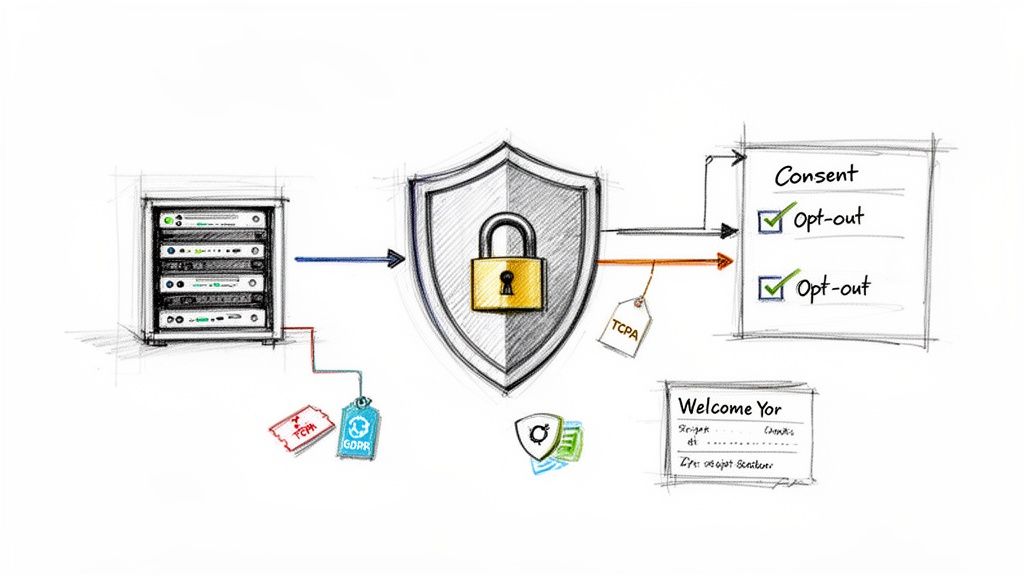
When you collect phone numbers for any kind of outreach, you're playing in a heavily regulated space. You don't need to be a lawyer, but you absolutely must know three key acronyms: TCPA, GDPR, and CTIA. They all boil down to one core idea: consent is everything.
Think of these not as roadblocks, but as guardrails that ensure you're building a communication strategy that's both ethical and built to last.
That phrase, "express written consent," trips a lot of people up. It doesn't mean you need to get a pen-and-paper signature from every single person. What it does mean is you need a clear, documented record showing someone knowingly and explicitly agreed to get marketing texts from you.
The consent has to be completely unambiguous. For example, having someone actively check an empty box on your registration form is a perfect way to capture this. Another solid method is having them text a specific keyword like "UPDATES" to your number.
Your request for consent can't be hidden in the fine print of a 20-page "Terms and Conditions" document. It needs to be right there, clear as day, at the moment they give you their number.
A simple, effective disclosure looks something like this:
"By providing your number, you agree to receive automated marketing texts from [Your Organization Name]. Msg & data rates may apply. Reply STOP to opt out."
Anything less is asking for trouble. Never, ever assume you have permission.
It’s also crucial to understand that not all texts are created equal. The law treats messages with different purposes very differently.
The line between the two can sometimes feel a bit fuzzy. If you’re ever in doubt, the safest bet is to always get that explicit, express written consent for any recurring SMS communication. It’s better to be safe than sorry.
Once you have those numbers, your job has only just begun. Protecting that data is just as critical as getting consent in the first place. A data breach involving phone numbers can be incredibly damaging to your reputation.
Here are a few non-negotiable security practices you should have in place from day one:
Ultimately, managing privacy and security isn't a one-time task—it's an ongoing commitment. By focusing on clear consent, playing by the rules, and fiercely protecting the data you're entrusted with, you’ll build a program that's not just powerful, but also worthy of your community's trust.
Growing a list of phone numbers is a great first step, but it’s just raw data until you actually put it to use. The real magic happens when you activate those contacts by plugging them into your wider marketing and community ecosystem. This is how a good day of collecting numbers turns into lasting, long-term engagement.
Your goal should be a seamless flow of information between all your tools. When someone trusts you with their number at an event, that number shouldn't just die in a spreadsheet. Ideally, it should instantly sync with your CRM, your event platform, and whatever marketing automation software you’re running, enriching that member’s profile in real time.
Let's be honest: manually exporting and importing lists is a surefire way to make mistakes and miss opportunities. Today’s platforms are built to talk to each other. Using integrations and webhooks, you can set up powerful automated workflows that handle the busywork for you.
Just picture this scenario: A member buys a VIP ticket to your upcoming conference. With a solid integration in place, that one action can set off a chain reaction:
This kind of automation makes sure every new contact is segmented and put on the right communication track from the get-go. It’s not just efficient; it’s accurate and lets you scale your efforts without getting bogged down in administrative tasks.
The best data strategies I've seen are all built on automation. When your systems are connected, you guarantee the right message gets to the right person at the right time, every time—without you lifting a finger.
To really get the most out of the numbers you collect, you need a smart approach to subscriber data management. This is what helps you keep your contact info clean, organized, and genuinely useful across all your different platforms.
Now that your contacts are integrated and segmented, you can finally send highly targeted follow-up campaigns. Generic, one-size-fits-all messages just get ignored. Instead, lean on the context you’ve gathered to send texts that are relevant, timely, and genuinely valuable.
For instance, a strong post-event follow-up is more than a simple "thanks for coming." It's your chance to deepen the relationship.
Post-Event Engagement Example:
"Hi [First Name], thanks for joining us at [Event Name]! As promised, here are the keynote slides you requested: [Link]. We'd love your feedback in this 2-min survey: [Survey Link]."
This works because it’s personal, it delivers on a promise, and it asks for a small, easy bit of engagement. It keeps the conversation going instead of shutting it down.
You can use targeted SMS for other key moments in the member journey, too.
Platforms that focus on community building usually have these kinds of features built right in. You can learn more about how to choose effective customer engagement platforms in our detailed guide. By activating your data with smart integrations and thoughtful messaging, you turn the simple act of collecting a phone number into a powerful engine for community growth.
As you start weaving text messaging into your community strategy, some common questions always pop up. Let's tackle the ones we hear most often, with practical answers you can put to use right away.
It all comes down to getting ‘express written consent’ before you send a single marketing text. Don't let the word "written" fool you—this doesn't mean a pen-and-paper signature.
This consent can be as simple as an unchecked checkbox on a web form, a text message reply, or a digital confirmation. The key is that the language is crystal clear, stating that by giving you their number, they're agreeing to receive automated marketing messages. This is the bedrock of TCPA compliance and your best defense against serious legal trouble.
The secret is to focus entirely on the value you're offering. Ditch the generic "Sign up for updates" and give them a real, tangible reason to share their number.
For instance, if you're running a conference, try something like, "Get session slides sent directly to your phone." If you manage an online community, you could offer, "Enter our exclusive member giveaway by texting JOIN to [Number]." Always frame the request as a benefit they'll receive, not a demand you're making.
This 'foot-in-the-door' approach works wonders. You build trust with smaller, less-intrusive interactions first. When you finally ask for a phone number, it feels like a natural next step, not a sudden invasion of privacy.
Go digital from the start. Your best bet is using QR codes linked to a simple, mobile-friendly form. This approach is fantastic because it captures the number accurately and documents their consent all in one seamless action.
If you absolutely have to collect numbers manually (like on a paper sign-up sheet), you must send a confirmation text immediately. That first message is your chance to get everything right. It needs to:
This immediate two-step process does two critical things: it verifies the number is correct and active, and it creates the digital consent record you need for compliance. This is especially important in the fast-paced environment of a live event.
Juggling memberships, event ticketing, and communicating across different channels can feel overwhelming. GroupOS simplifies everything by bringing it all together in a single, powerful platform branded for your organization. See how you can build, manage, and grow your community by getting a demo.