March 2, 2026

When you get down to it, successfully managing subscriptions isn't just about collecting money. It's about creating plans your members can't resist, making the payment process completely painless, and then using data to make sure they stick around for the long haul. This works best when everything is connected in one system, not when you’re trying to duct-tape separate tools together for payments, your community, and your analytics.
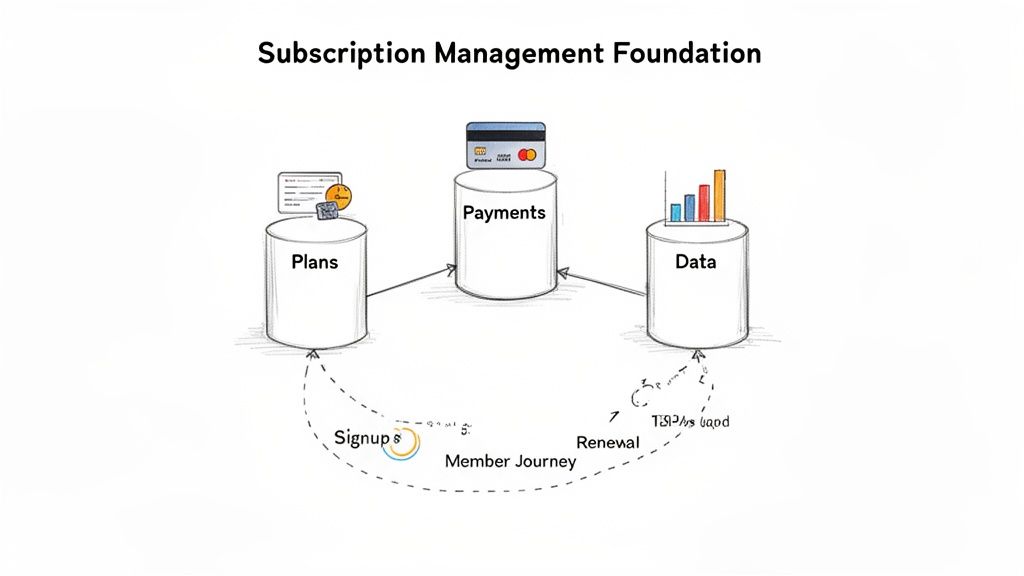
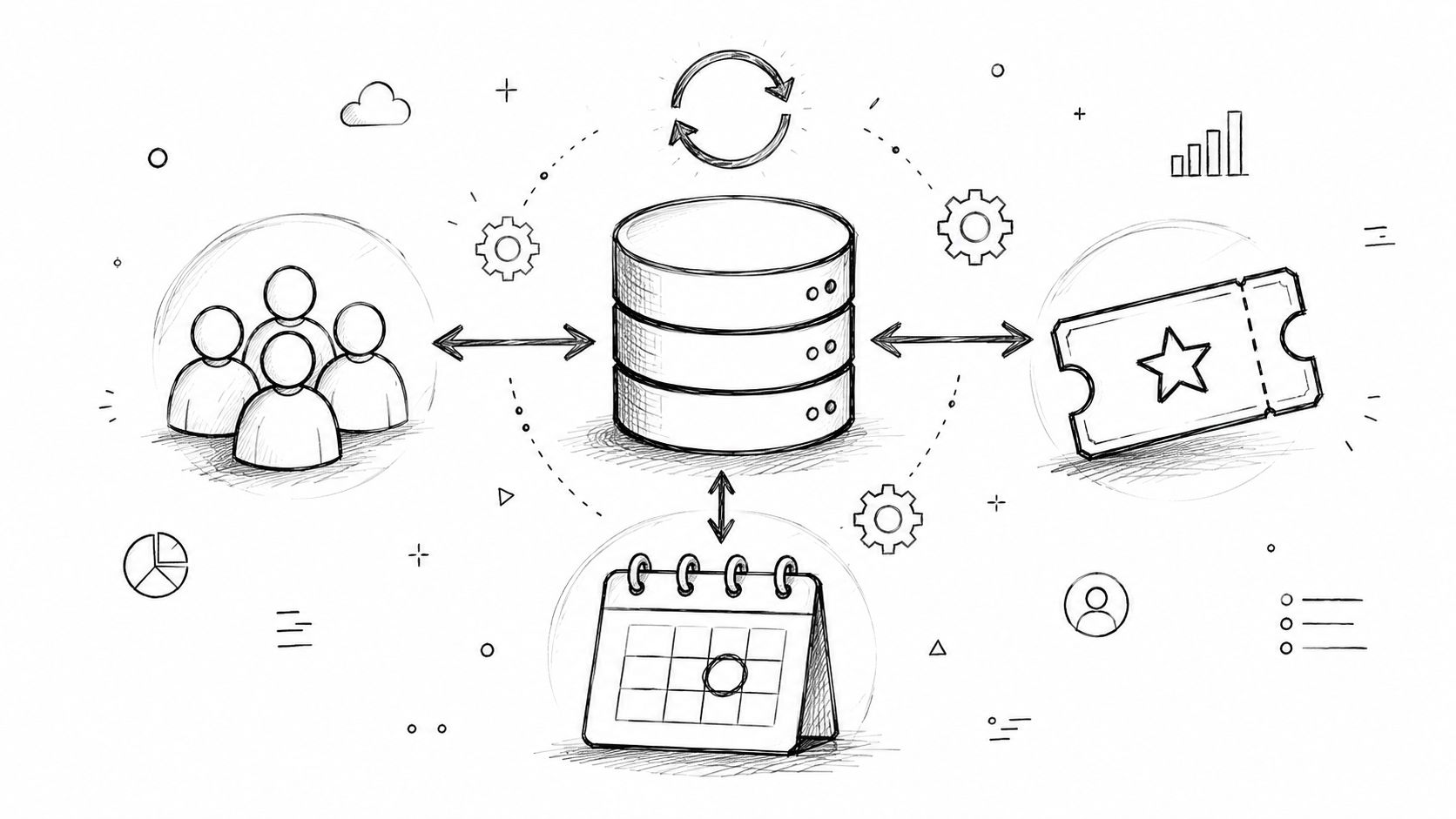
Before we get into the nitty-gritty of dunning emails and pricing psychology, let's step back and look at the big picture. How you manage subscriptions isn't just a technical software problem; it's a strategic decision that shapes the entire member journey. A solid foundation here is built on three core components that need to work in perfect harmony.
When these pieces are disconnected—payments happening in one place, community chat in another, and analytics in a third—the whole member experience starts to fall apart. It leads to a mountain of admin work for you, confuses your members, and makes it impossible to get a clear view of what’s actually going on.
The first pillar is thoughtful plan design. This is much more than just coming up with clever names for your tiers. It’s about deeply understanding what your members actually want and mapping tangible benefits—like exclusive content, early bird access to events, or one-on-one support—to their specific needs. For a much deeper look at this, our guide on https://groupos.com/blog/how-to-start-a-subscription-service is a great starting point.
Next up, you absolutely need a frictionless payment experience. Every single touchpoint, from the moment a member signs up to their annual renewal, should feel effortless. This means secure payment processing, of course, but also crystal-clear communication about charges and a simple way for members to update their own card details or change their plan.
The final pillar is data-driven member engagement. You can't improve what you don't measure. Keeping a close eye on member behavior is the key to retention. Tracking metrics like login frequency, which content they’re consuming, or who’s attending your virtual events helps you spot who might be losing interest so you can step in before they decide to leave.
A truly effective subscription model is a flywheel. Great plans attract members, a smooth payment process keeps them enrolled, and engagement data provides the insights needed to refine your offerings and boost retention. It’s a continuous cycle of value delivery and improvement.
To help visualize how these components fit together, here’s a quick breakdown of what a strong foundation looks like.
This table shows how the strategy translates directly into action within a unified system, creating a repeatable process for growth.
An integrated platform like GroupOS brings all three pillars under one roof. Instead of fighting with multiple disconnected systems, you get a single source of truth for your entire membership operation.
This unified approach gives you some serious advantages:
A sustainable membership model depends on two things: acquiring new members efficiently and keeping them for the long term. As you build out your foundation, it’s worth exploring proven strategies to reduce customer acquisition cost (CAC). An integrated system is the key to mastering both acquisition and retention.
Your subscription tiers are so much more than just price points on a page. They are the very backbone of your membership model—the tangible promise of value you're making to your community. To build a thriving, sustainable community, you first have to design plans that people are genuinely excited to join and, more importantly, stay a part of. Let's move past the generic "Bronze, Silver, Gold" thinking and build a real strategy.
The foundation of any great subscription plan is a deep, empathetic understanding of your members. Who are they, really? What problems keep them up at night? What are they hoping to achieve by joining you? Answering these questions is the only way to map specific, high-value benefits to tiers that actually resonate.
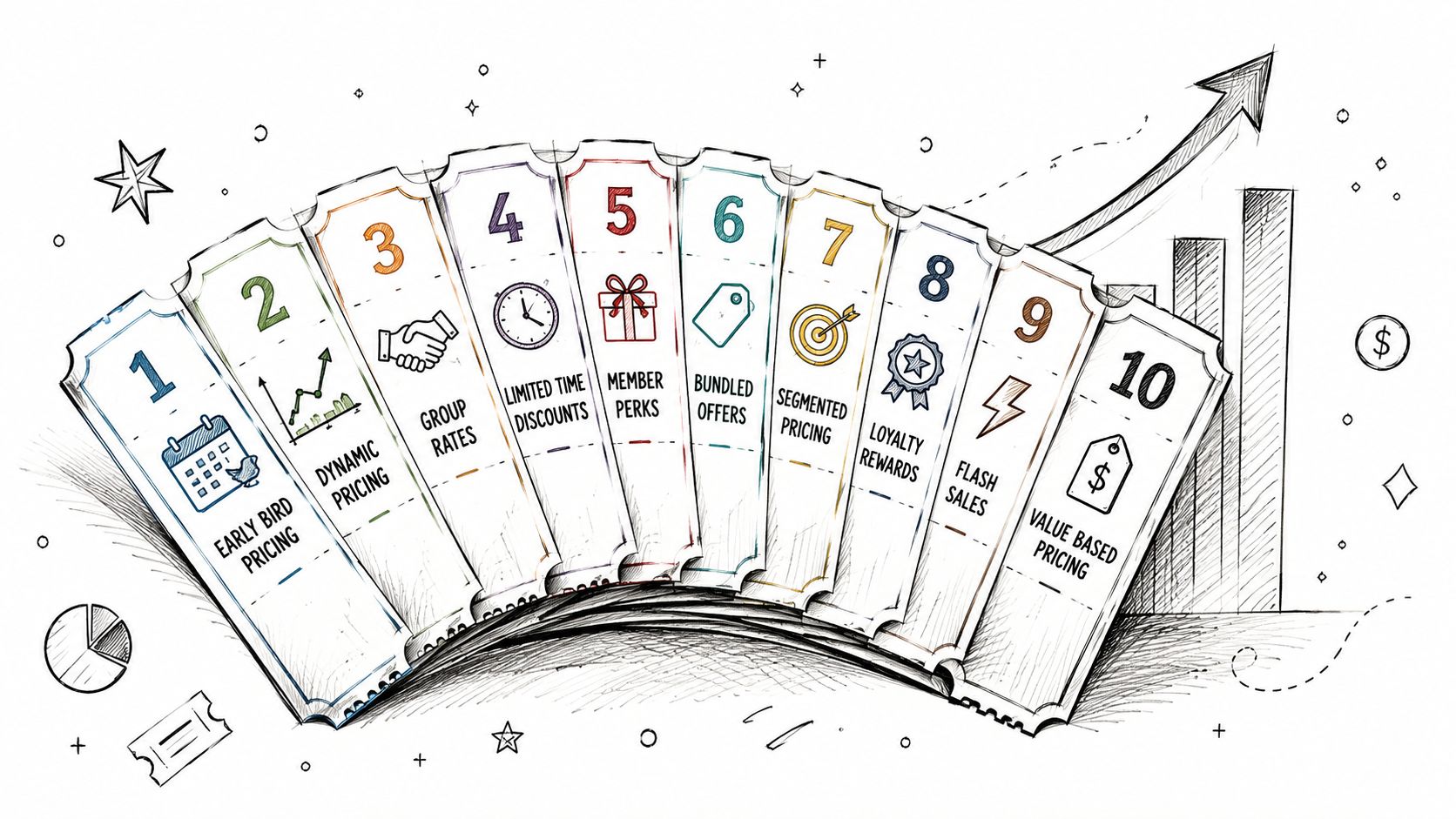
Instead of just creating arbitrary levels, think in terms of member personas or career stages. For instance, a "Student" or "Emerging Professional" tier could offer access to core content and community forums at a lower price point. This gets them in the door, engaged, and growing within your ecosystem from the very start.
Then, you can build a clear upgrade path. A "Professional" or "Pro" tier might include everything from the basic level but add in exclusive access to advanced workshops, downloadable resources, or priority registration for your annual conference. The goal is for members to see exactly why they should move up as their needs evolve.
Finally, you might offer a "Premium" or "Enterprise" tier designed for industry leaders or entire companies. This top-tier plan could unlock unique benefits like one-on-one coaching, a dedicated support channel, or even promotional opportunities within the community. Each tier needs to feel like its own distinct, valuable package.
For a deeper dive into the numbers and psychology behind setting these prices, we've put together a complete guide on developing effective subscription pricing strategies.
One of the most impactful decisions you'll make is your billing frequency. Monthly plans feel like a smaller commitment, which is great for getting new members to sign up. But from my experience, annual plans are the secret weapon for retention and predictable revenue.
Offering a compelling annual plan, usually with a discount like "get 12 months for the price of 10," gives members a powerful nudge to commit for the long haul. This one choice can have a massive impact on your churn rate and, critically, your cash flow.
I can't stress this enough: retention is everything. Research shows that annual plans can reduce churn by 40% compared to monthly billing. On top of that, these committed members tend to generate 50-60% higher revenue per user—a crucial advantage in a market projected to hit $2,095.7 billion by 2034. You can explore more stats on the recurring revenue economy in this full subscription commerce guide on digitalapplied.com.
Locking in revenue for the year gives you financial stability and the confidence to invest back into your community. It also means fewer billing-related touchpoints, which translates to fewer opportunities for failed payments and the dreaded involuntary churn.
An all-in-one platform like GroupOS is built to handle this kind of flexible plan structure. You can easily create multiple tiers, each with its own set of permissions for accessing specific content, events, or private community channels.
Here’s a great example of how you can lay out different membership tiers on your site.
The screenshot above shows a clean, side-by-side comparison that makes it easy for potential members to see the value at each price point. This visual clarity is absolutely essential for guiding people to the plan that’s the right fit for them.
Once your tiers are defined, how do you get people to actually try them? This is where free trials and freemium models come into play. They serve different purposes, so the right choice really depends on your goals.
Free Trials: These offer full access to a premium tier for a limited time, like 14 or 30 days. A trial is perfect for communities where the full value is best experienced firsthand. It’s a classic "try before you buy" approach that works exceptionally well for converting highly interested prospects. Pro tip: Requiring a credit card upfront dramatically increases the chance they'll convert when the trial ends.
Freemium Models: A freemium plan offers a basic, feature-limited version of your membership for free, forever. This strategy is fantastic for maximizing top-of-funnel growth and building a massive audience. While only a small percentage will ever upgrade, your freemium tier becomes a powerful, self-sustaining lead generator for your paid plans, events, and other offerings.
Ultimately, designing effective subscription plans is an ongoing conversation with your members. It's about listening to their needs, analyzing their behavior, and continuously refining your offerings. By creating clear value, offering smart billing options, and providing a frictionless way to get started, you’ll build a membership that doesn't just attract new people—it keeps them engaged for years to come.
Let’s be honest: nothing sours a great member experience faster than a clunky payment process. A confusing or difficult billing system can turn an excited new member into a frustrated former one in a matter of minutes. This section is your playbook for building a seamless, automated recurring billing engine that keeps your members happy and your revenue flowing.
The ultimate goal is to make payments feel invisible—a background detail that just works. It all starts with choosing a secure and reliable payment gateway.
Think of your payment gateway as the heart of your subscription business. This is the service that securely handles member credit cards and processes those all-important recurring charges. For most organizations, partnering with an established leader like Stripe is the gold standard. They bring top-notch security, global payment acceptance, and powerful tools that can dramatically reduce involuntary churn.
When you manage subscriptions through an integrated platform like GroupOS, connecting your Stripe account is usually a straightforward, one-time setup. Once it's linked, the platform takes over, automatically initiating charges based on each member's billing cycle—whether that’s monthly or annually. This is your first big win in clawing back administrative time.
The real power comes from having a single command center. Instead of jumping between Stripe for payment data and another system for member activity, a unified platform gives you a complete, real-time view of revenue and engagement in one place.
True operational efficiency isn't just about charging a card on a set date. It’s about automating the entire lifecycle of a subscription. A well-designed system should handle all the complexities of subscription management without you needing to step in manually.
This visual guide breaks down the core components of designing your billing process, from defining tiers to setting up billing cycles and trials.
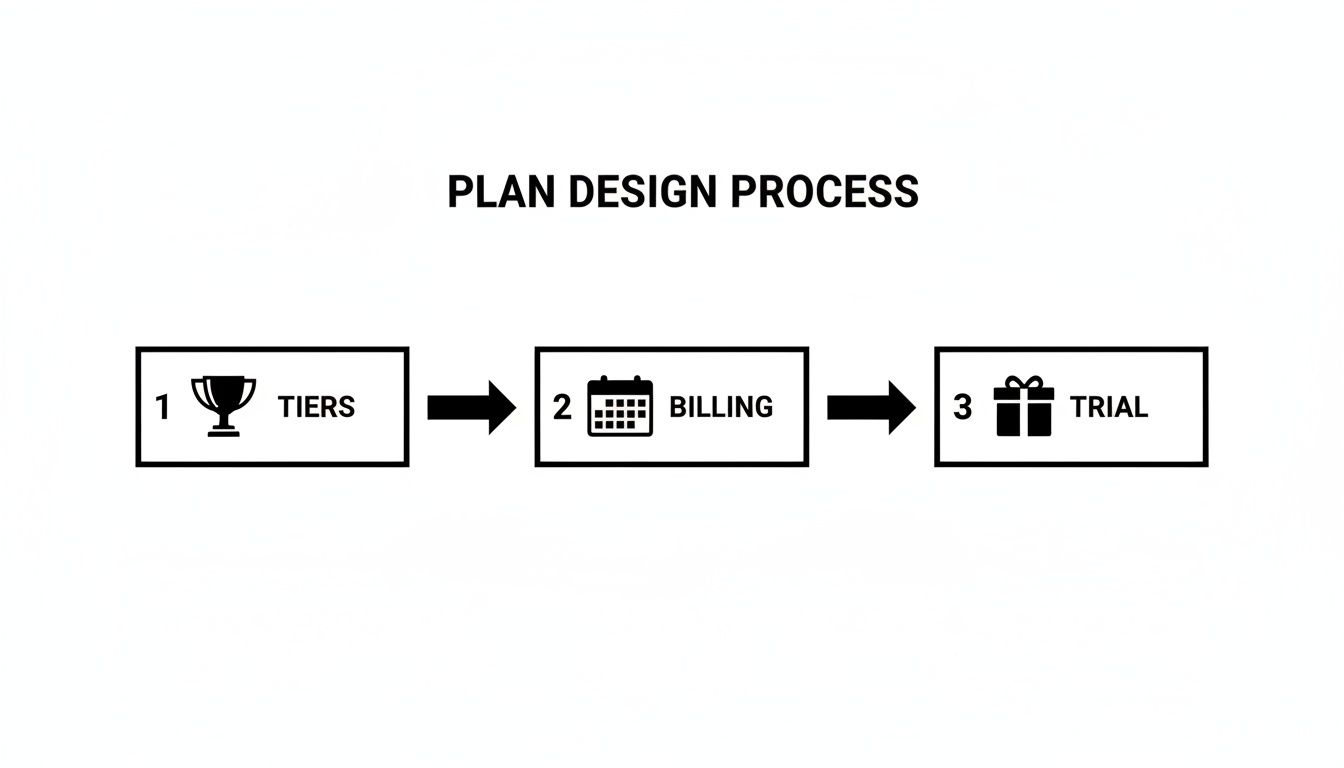
As you can see, successful billing is a direct result of thoughtful plan design, clear billing intervals, and the strategic use of trial periods to bring new people in. The key is to see these as interconnected steps, not isolated decisions.
Your system also needs to handle plan changes gracefully. When a member is excited to upgrade to a higher tier, the platform should automatically calculate the prorated charge and adjust their billing cycle on the spot. The same logic applies to downgrades; the system should ensure the member keeps their current access until the end of their paid term before switching them to the new plan. That kind of fairness builds a lot of trust.
One of the most critical—and often overlooked—parts of managing subscriptions is dunning management. It’s the formal term for how you handle failed payments. Without an automated process, you could be losing a huge chunk of your revenue to simple issues like expired credit cards.
Chasing failed payments manually is a soul-crushing and inefficient task. A proactive, automated dunning sequence can recover 50-80% of involuntary churn without you lifting a finger, protecting your revenue and member relationships.
A proven strategy is to implement a friendly, automated email sequence. Instead of a cold, robotic "payment failed" alert, frame it as a helpful reminder.
Here’s a simple but effective 3-step sequence:
Modern payment gateways like Stripe often include "smart retries," where they attempt to charge the card again at times when it’s more likely to succeed. When you combine that with a platform like GroupOS that automates the email notifications, you create a powerful, hands-off system for revenue recovery. And for those times when a cancellation is unavoidable, our guide on how to handle the end of a Stripe subscription will help you ensure the process is clean and professional.
Everyone knows that bringing in a new member costs a whole lot more than keeping an existing one. That simple fact makes retention your single most important growth strategy. But retention isn't just about putting out fires when someone complains. True success comes from building a proactive, automated system that spots at-risk members and steps in before they even consider canceling.
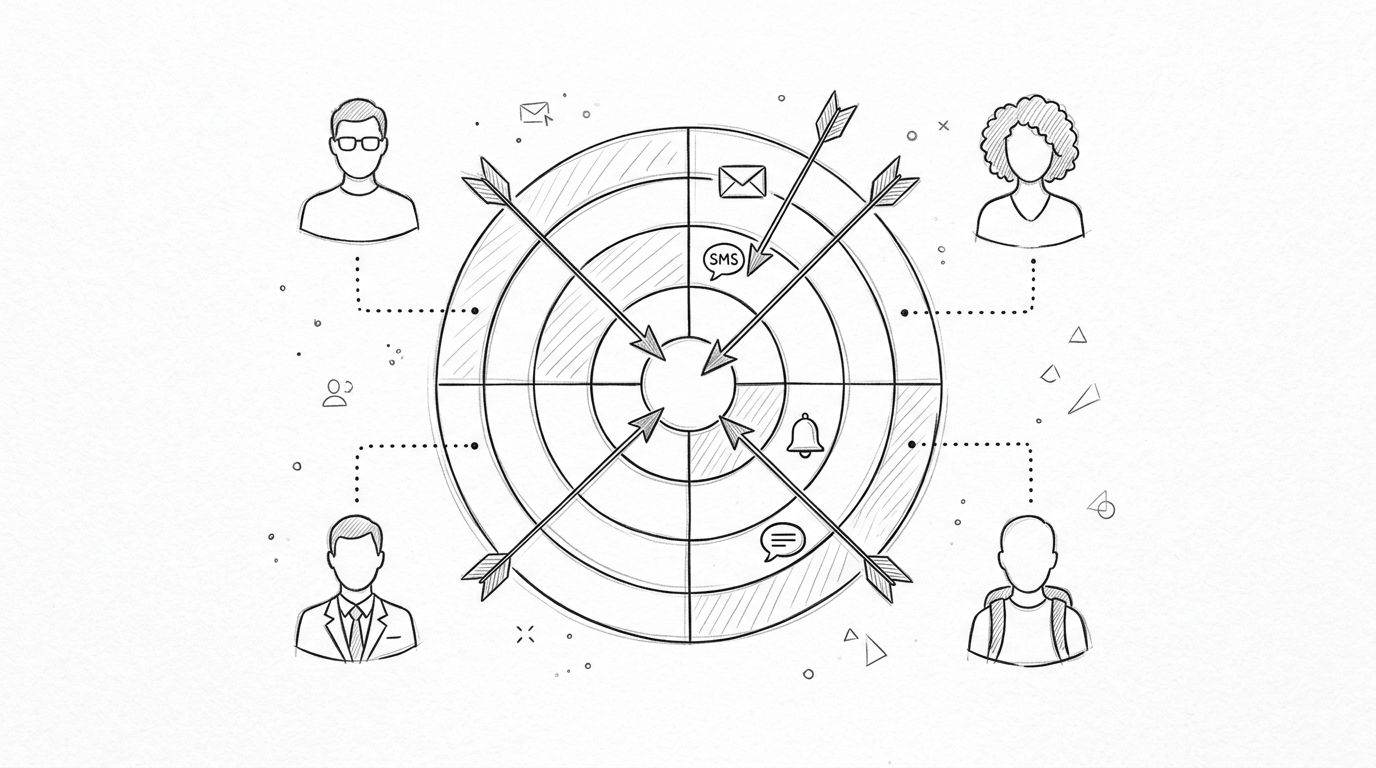
This isn't about reading minds. It’s about using the engagement data you already have—things like login frequency, content views, or event participation—to see who might be drifting away. With the right setup, you can automate outreach that feels personal and arrives at just the right moment, turning a potential cancellation into a saved relationship.
The first step toward cutting down churn is learning to spot the warning signs early. When you're using a unified platform like GroupOS, all that crucial member engagement data is right there in one place. No more trying to connect the dots between different spreadsheets and software just to get a clear picture of member activity.
You can set up simple but incredibly powerful automation rules based on behavior. For instance, if a member hasn't logged in for 30 days or hasn't checked out any new content, the system can automatically send a re-engagement email. That message could highlight a new course you just launched or an upcoming virtual networking event, gently reminding them of the value they're missing out on.
To make this work, it's vital to have a solid grasp of the difference between your retention rate vs churn rate. This clarity sharpens your focus, ensuring your automated campaigns are aimed at the right target and are as effective as possible.
Life happens. A member might get swamped with a big project, plan a long trip, or just need to tighten their budget for a little while. In these situations, the "cancel" button feels like a final, drastic solution to what might be a temporary problem. This is where offering a "pause subscription" option can be a total game-changer.
Instead of losing that member forever, you give them a flexible way to stay connected. A pause option simply freezes their membership and billing for a set period, usually one to three months. It’s a small feature with a massive impact on your retention numbers.
A pause isn't a cancellation. It's a retention tool that keeps the door open for their return. It’s an empathetic acknowledgment that life is unpredictable, and it shows you value the relationship beyond the next invoice.
The beauty of this approach lies in keeping the relationship alive. The member's account, history, and connections all remain intact. When they're ready to come back, resuming their subscription is as easy as a single click.
Even with the best retention strategies in place, some members will still leave. But that doesn't have to be the end of the story. A smart, well-timed win-back campaign can be one of your most powerful tools for growth, bringing former subscribers back into the community. The trick is to act quickly and make them an offer they can't refuse.
Here’s what a great automated win-back campaign looks like in action:
Automation is making a huge difference here. In fact, 40% of businesses now use it for churn prediction, and strong win-back campaigns can drive 1 in 4 sign-ups. Even more impressive, members who use a pause feature have been shown to return at rates as high as 75%.
By using the integrated messaging tools within a platform like GroupOS, you can put these entire sequences on autopilot. You’ll be sending the perfect message at the perfect time, turning a lost subscriber into a loyal, returning member without lifting a finger.
There’s an old saying: you can't improve what you don't measure. When it comes to managing subscriptions, this couldn't be more true. The term "data-driven" can sound a bit sterile, but all it really means is listening to what your members' actions are telling you. This is where you truly start to master your community's growth.
The trick isn’t to drown yourself in every possible metric. Instead, the real skill lies in focusing on a handful of key performance indicators (KPIs) that act as a health check for your community. These numbers tell you exactly where your efforts will pay off the most.
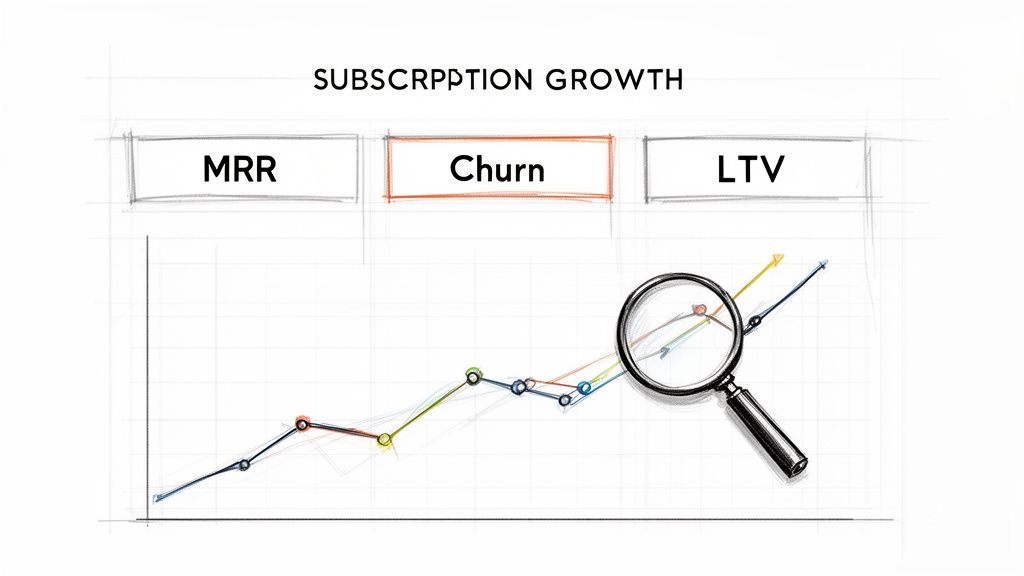
Forget wrestling with complicated spreadsheets or getting lost in analytics jargon. From my experience, you can get a powerful grip on your entire subscription business by consistently watching just three core metrics.
Monthly Recurring Revenue (MRR): This is the lifeblood of your community. It’s the predictable, stable income you can count on every month. Tracking its ebbs and flows gives you a real-time pulse on your financial health. Is it growing? Stagnating? This number tells the story.
Churn Rate: This is the percentage of members who hit the cancel button over a certain period. Think of a high churn rate as a flashing red light on your dashboard. It’s a clear signal that something isn’t quite right—maybe with your pricing, the value you’re providing, or the overall member experience.
Customer Lifetime Value (LTV): This metric forecasts the total revenue you can realistically expect from an average member over their entire time with you. A steadily rising LTV is a fantastic sign; it means you're not just keeping members, but you're also successfully increasing their value over the long haul.
These three metrics don't exist in a vacuum; they tell a complete story together. MRR shows your current momentum, Churn points to your weaknesses, and LTV predicts your long-term sustainability. Learning how they influence each other is what separates good community managers from great ones.
The most successful community managers I know don't just track these numbers—they dig into the "why" behind them. A dip in MRR isn't just a number; it's a prompt to investigate. Did a recent content change miss the mark? Did a competitor just launch a tempting new offer?
This is where a dedicated platform like GroupOS becomes so valuable. It’s built to surface these vital statistics and put them front and center on a dashboard that does the heavy lifting for you. You can skip the hassle of patching together complex analytics tools and get actionable data right away.
This integrated approach is quickly becoming the industry standard. In fact, the global market for subscription billing management is projected to rocket to $19.36 billion by 2031. This massive growth is fueled by cloud-based solutions that offer the exact kind of scalability and ease of use we're talking about.
An integrated dashboard makes it easy to see what’s going on at a glance, visualizing key data like active members, revenue, and recent activity. It’s your community's health check, available 24/7. Having this information so accessible lets you shift from just reacting to problems to proactively shaping your community’s future.
Data is only as good as the decisions it helps you make. Let's walk through a real-world scenario. Imagine you log into your dashboard and notice that members on your "Pro" plan have a 30% higher LTV than those on your "Basic" plan.
That one piece of information immediately opens up several strategic questions:
This is how analytics goes from being a passive report to an active growth engine. You can use this data to test pricing tweaks, fine-tune your plan benefits, and forecast future revenue with confidence. For a deeper dive into this process, check out our guide on using analytics and insights for your community.
By focusing on a few key metrics and using a platform that makes them easy to understand, you take the guesswork out of managing your subscriptions. You’ll be ready to not only see what’s happening but to steer your community toward a more profitable and engaging future.
Once you start diving into subscriptions, you'll quickly find that the real work isn't just setting up plans. It's about handling the messy, human side of running a membership business. Let's walk through some of the most common hurdles I see community leaders face and how to clear them with confidence.
Knowing how to handle these specific situations is what separates a thriving community from one that's constantly putting out fires. This is where your planning—and your choice of platform—really shows its worth.
Migrating your members to a new home is a delicate process that hinges on great communication and a solid plan. Don't just flip a switch. Start by announcing the move well in advance, but frame it around the benefits for them. Are they getting a better mobile app, easier access to content, or a billing portal that isn't a headache? Lead with that.
Technically, the smoothest path is usually a phased migration. With a platform like GroupOS, you can typically import your member list from a simple CSV file. Their team can even help you map your old membership levels to the new subscription plans you've built.
A CRITICAL WORD OF WARNING: Whatever you do, never handle raw credit card information yourself. This is non-negotiable. Payment data has to be migrated securely by your payment gateway (like Stripe) using a process called tokenization. It keeps you PCI compliant and, more importantly, keeps your members' trust intact.
After the move, roll out the welcome mat. A short email series or a quick "here's what's new" tour on the platform can get everyone re-engaged and excited about the new space you've built for them.
This is where automation becomes your most valuable employee. The process is officially called dunning management, and its job is to recover revenue you'd otherwise lose without you having to chase people down. A gentle, helpful nudge is always more effective than a stern demand.
Most payment failures aren't because someone wants to leave; they're due to simple things like an expired credit card. An automated email sequence can solve the vast majority of these issues without you lifting a finger. A proven sequence looks something like this:
Modern platforms like GroupOS are often integrated with payment gateways that use "smart retry" logic. This means they'll automatically try charging the card again at times when it’s more likely to succeed. This one-two punch of smart retries and friendly notifications can recover a surprising amount of revenue that would have just slipped away.
Your refund policy needs to be crystal clear in your terms of service. For annual subscriptions, the standard and fairest practice is to not offer pro-rated refunds if a member cancels mid-year.
Instead, the typical approach is to let the member keep full access to all their benefits until their paid-for year is up. This approach simplifies your revenue forecasting and gives you a much more predictable financial model to work with.
That said, building trust is paramount, especially with new members. Offering a 14-day or 30-day money-back guarantee for first-time annual sign-ups can be a fantastic way to lower the barrier to entry. It signals that you're confident in the value you provide. The most important rule? Be consistent. Apply your policy the same way for everyone, every time.
Once you have a stable base, increasing your Average Revenue Per User (ARPU) becomes the next big goal. This isn't about squeezing every last dollar out of people; it's about offering them more value. This generally happens in two ways: upselling and cross-selling.
Upselling: This is the art of showing members why they should upgrade to a higher-value subscription tier. To make this work, you have to consistently demonstrate what they're missing. For example, you could run a campaign for your "Pro" members promoting the one-on-one coaching sessions included in your "Premium" tier.
Cross-selling: This is about offering valuable, one-off purchases to members on any plan. Think of it as giving them more ways to engage with your ecosystem. You could sell tickets to a special virtual conference or offer a standalone bundle of digital resources that complements their membership.
An all-in-one platform makes this incredibly straightforward. For example, using GroupOS, you can manage your membership tiers, sell event tickets, and offer digital products all from one dashboard. This creates a frictionless way for members to go deeper with your community and, in turn, increase their spend.
Tired of juggling spreadsheets and a dozen different tools? GroupOS gives you a single, powerful platform to manage subscriptions, events, content, and community communication seamlessly. Start your free trial today and see how easy growing your community can be.