January 21, 2026
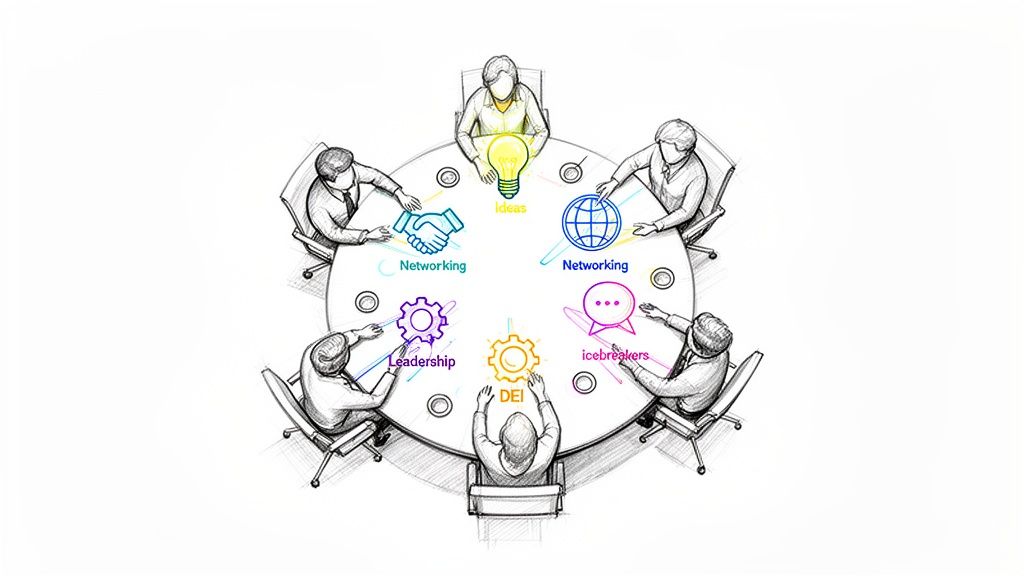
Group discussions are the lifeblood of any thriving professional network, association, or member community. Moving beyond generic icebreakers to tackle substantive, relevant topics is what transforms passive members into active, engaged contributors. The right conversation can spark innovation, solve critical challenges, and build lasting professional relationships that form the very foundation of a valuable community. However, identifying and structuring these high-impact discussions is a persistent challenge for community managers and event organizers. Finding engaging and relevant topics for group discussions that resonate with a diverse audience requires a strategic approach, not just a list of random questions.
This guide moves past the superficial and provides a comprehensive framework for facilitating conversations that matter. We will explore 12 essential categories for group discussions, each tailored to address specific strategic and operational needs within a professional community. For each category, you will find a curated selection of actionable prompts and practical implementation details designed to foster deep engagement and generate tangible outcomes.
You will learn how to structure discussions around critical areas such as member retention, community leadership, and technology optimization. The goal is to provide a blueprint for turning every group interaction, whether at a conference, a virtual meetup, or a training session, into a valuable experience. By focusing on these specific topics for group discussions, you can ensure every conversation delivers measurable value to both your members and your organization, ultimately driving engagement, retention, and growth. We will also highlight how to leverage a unified platform to manage these conversations effectively, from initial scheduling to post-event follow-up and analysis.
As organizations navigate the new era of events, the challenge of creating a unified experience for both in-person and remote attendees has become a critical focal point. This topic for group discussions centers on developing and refining strategies for successful hybrid events. The goal is to move beyond simply live-streaming a physical event and instead design an integrated experience where all participants feel equally engaged and valued.
This discussion is ideal for event planners, marketing teams, and leadership looking to maximize reach and accessibility. By exploring this topic, your group can collaboratively solve key challenges related to technology, engagement, and logistics, ensuring your events are inclusive and impactful regardless of attendee location.
To structure the conversation, focus on actionable outcomes and shared experiences. Use these prompts to guide the discussion:
Pro Tip: Use GroupOS to manage the entire hybrid event lifecycle. Deploy custom registration forms to capture attendance preferences, create dedicated channels for virtual-only networking sessions, and use the content hub to host recorded sessions for on-demand access post-event. This centralizes logistics and communication for all attendee types.
For any membership-based organization, from professional associations to online communities, the conversation around member engagement and retention is paramount. This discussion topic focuses on developing comprehensive strategies to keep members active, reduce churn, and cultivate a thriving community. The goal is to move beyond transactional relationships and build a sense of belonging and value that encourages long-term commitment.
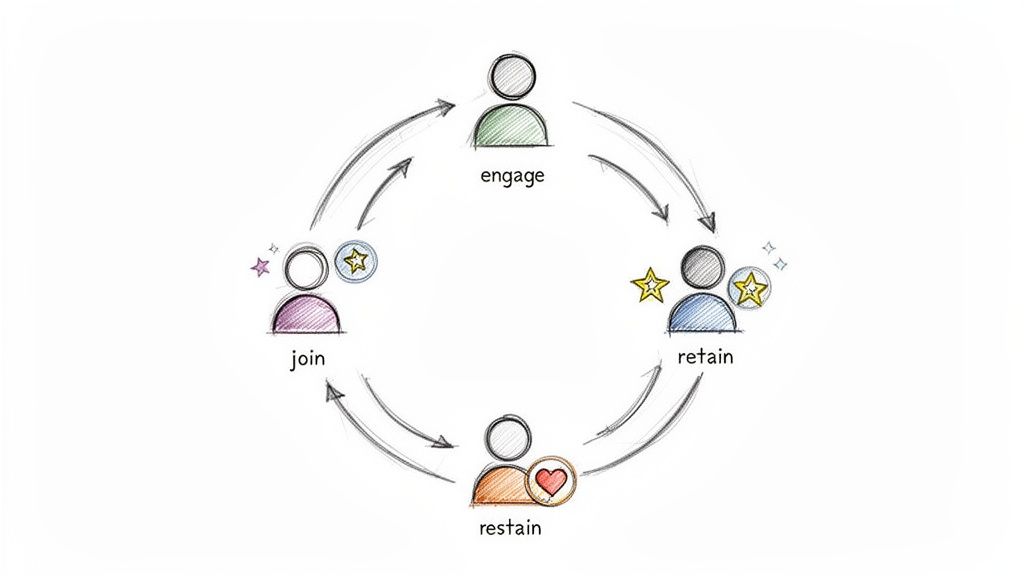
This discussion is ideal for community managers, membership coordinators, and leadership teams seeking sustainable growth. Exploring these topics for group discussions allows your team to collaboratively pinpoint what truly resonates with members, like the value propositions seen in Patreon communities or the gamification used by Stack Overflow, and translate those insights into actionable retention tactics. Effective engagement also involves proactively addressing potential issues, which can include leveraging tools to reduce customer churn through social media monitoring insights.
To structure this conversation, center it on the member lifecycle and specific touchpoints. Use these prompts to spark practical and strategic ideas:
Pro Tip: Use GroupOS to segment members based on engagement analytics to identify your most active advocates and at-risk cohorts. Create exclusive content channels to reward participation, use member maps to facilitate peer-to-peer connections, and send targeted messages based on interests to ensure every member feels seen and valued.
As a community or organization scales, ad-hoc leadership models often become unsustainable, leading to burnout and unclear decision-making. This topic for group discussions centers on creating a formal leadership structure that supports growth while preserving member influence. The goal is to define clear roles, establish transparent governance, and build a sustainable pipeline for future leaders.
This discussion is critical for association boards, volunteer managers, and community organizers looking to create resilient and democratically-run groups. By exploring this topic, your group can design frameworks like the committee structures seen in the Project Management Institute or the elected officer roles in Toastmasters International, ensuring accountability and shared ownership as the community evolves.
To ground the conversation, focus on building a practical and transparent governance model. Use these prompts to guide the discussion:
Pro Tip: Use GroupOS to formalize your leadership structure. Create private channels for board or committee communication, host all governance documents and role descriptions in the content hub for easy access, and use custom registration forms to gather nominations for leadership positions. This centralizes governance and simplifies succession planning.
For organizations that rely on sponsor revenue, moving beyond traditional booth space and logo placement is paramount. This topic for group discussions is centered on creating comprehensive strategies that deliver measurable return on investment (ROI) for sponsors and exhibitors. The objective is to collaboratively design partnership models that integrate sponsors as valuable contributors to the community, not just advertisers.
This discussion is critical for event planners, association managers, and revenue-focused teams. It helps shift the conversation from a transactional sale to a consultative partnership, exploring how to build tiered packages that offer tangible benefits like lead generation, enhanced brand visibility, and content authority. By focusing on mutual value, your organization can build stronger, more sustainable sponsor relationships.
To drive a productive conversation, concentrate on building a framework for value delivery that can be customized for different partners. Use these prompts to explore innovative approaches:
Pro Tip: Use GroupOS to create dedicated exhibitor profiles that function as mini-websites within your event platform, complete with product showcases and direct contact forms. Implement rotating banner ads for maximum visibility and provide sponsors with post-event analytics on their profile views and interactions to clearly demonstrate ROI. To dive deeper, check out our guide on how to build winning event sponsorship packages.
A powerful discussion for any organization is centered on how it creates, organizes, and delivers valuable content to its members. This topic for group discussions goes beyond simple content creation and dives into building a robust knowledge management system that establishes thought leadership and serves member needs. The goal is to develop a cohesive strategy for turning expertise into accessible, engaging resources.
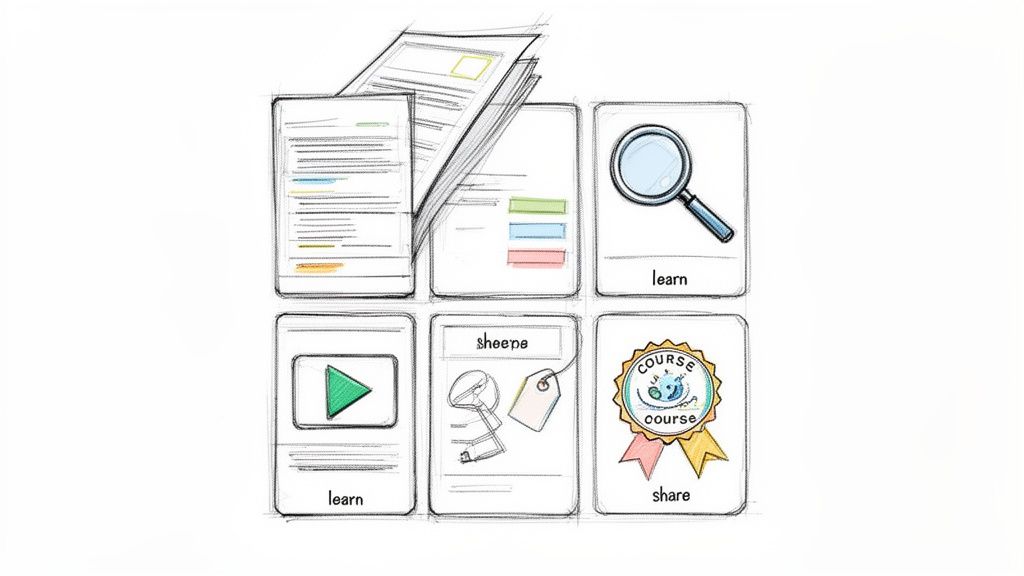
This conversation is essential for marketing teams, community managers, and education directors aiming to position their organization as an indispensable industry hub. By collaborating on content strategy, your group can align on everything from production calendars and multimedia formats to content repurposing, ensuring your knowledge base is both comprehensive and easy to navigate.
To drive a productive conversation, focus on the entire content lifecycle from creation to discovery. Use these prompts to guide your group's strategic planning:
Pro Tip: Use GroupOS to build a centralized knowledge hub. Upload videos, documents, and courses, then use global tagging to make everything discoverable. Record live discussions and webinars directly within the platform and add them to your on-demand library, creating a lasting repository of member-generated and organization-led expertise.
For member-based organizations, fostering genuine connections among a large, diverse group is a constant challenge. This topic for group discussions moves beyond simple introductions to explore scalable strategies for building a truly interconnected community. The goal is to design systems, both online and in-person, that facilitate meaningful professional relationships, transforming a large audience into a powerful, collaborative network.
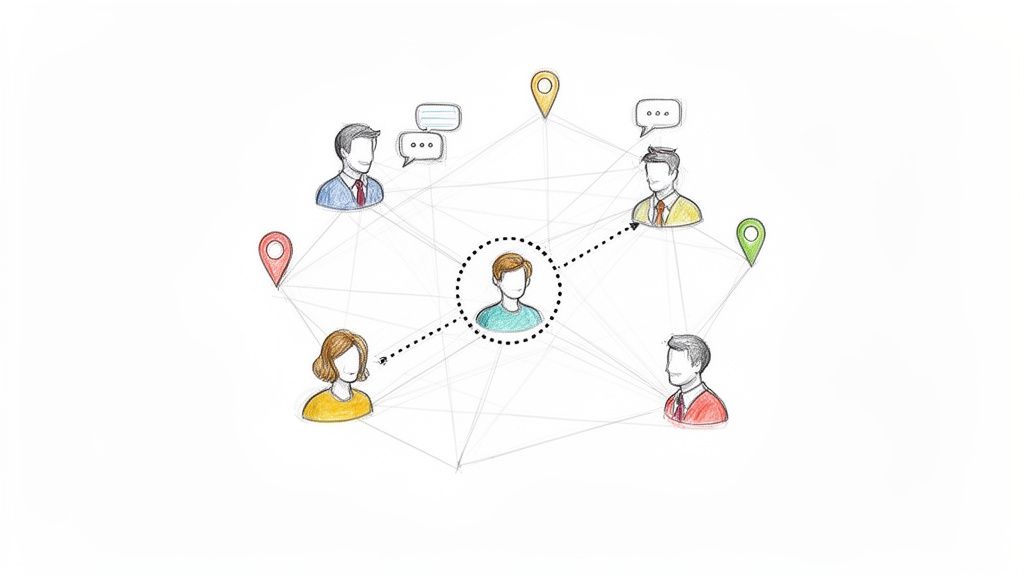
This discussion is perfect for community managers, association leaders, and event planners focused on delivering high-value networking. By brainstorming scalable solutions, your group can identify how to leverage technology and structured programming to help members connect with the right people, whether for mentorship, business development, or peer support. For more inspiration, check out these virtual networking event ideas.
To structure this conversation, concentrate on blending technology with human-centric program design. Use these prompts to spark innovative ideas:
Pro Tip: Use GroupOS to build a powerful networking ecosystem. Create detailed member profiles and an interactive directory to facilitate discovery. Set up dedicated channels for specific interest groups, automate introductions between members with complementary goals, and use event features to run structured virtual coffee chats or speed networking sessions.
In an era of heightened data sensitivity, protecting member information is not just a legal obligation but a cornerstone of trust. This topic for group discussions addresses the critical need for robust data privacy, security protocols, and compliance with regulations like GDPR and CCPA. The goal is to move from a reactive to a proactive stance on data governance, ensuring member data is handled ethically and securely.
This discussion is essential for leadership, IT teams, and community managers responsible for stewarding member data. By exploring this topic, your group can identify potential vulnerabilities, align on compliance strategies, and establish transparent practices that build and maintain member confidence in your organization's integrity.
To ground the conversation in practical actions, focus on developing a shared understanding of risks and responsibilities. Use these prompts to guide the discussion:
Pro Tip: When selecting a platform, prioritize those with verified security credentials like SOC 2 and ISO 27001 certifications. Use GroupOS to create a secure content hub that houses your official privacy policy and data-handling procedures, making them easily accessible to all members and demonstrating a commitment to transparency.
Establishing clear standards for behavior is fundamental to creating a safe, inclusive, and productive community space. This topic for group discussions focuses on the practicalities of developing, implementing, and enforcing a code of conduct. The goal is to move beyond a simple document and build a comprehensive framework for managing member interactions, resolving conflicts, and fostering a positive culture.
This discussion is crucial for community managers, volunteer leaders, and board members responsible for member experience and safety. By collaboratively defining moderation policies and enforcement procedures, your group can ensure consistency, fairness, and transparency, which builds trust and encourages constructive participation from all members.
To structure the conversation, focus on creating a clear and actionable moderation framework. Use these prompts to guide the discussion:
Pro Tip: Use GroupOS to manage moderation workflows efficiently. Create a private channel exclusively for your moderation team to discuss cases, document decisions, and ensure consistent rule application. Use the platform’s member profile features to log warnings or temporary suspensions, creating a clear record of enforcement actions.
As community engagement shifts decisively toward handheld devices, organizations must prioritize a mobile-first approach to their platform design. This topic for group discussions focuses on strategies for optimizing the user experience for members accessing the community via smartphones and tablets. The goal is to move beyond a simple responsive website and build a seamless, intuitive mobile environment that leverages native device capabilities.
This discussion is crucial for community managers, UX/UI designers, and technology leaders responsible for platform selection and development. By exploring this topic, your group can identify key priorities for mobile design, such as app-based features, push notification strategies, and content formatting for small screens, ensuring your community remains accessible and engaging wherever members are.
To ground the conversation in practical application, focus on tangible design choices and their impact on member engagement. Use these prompts to guide the discussion:
Pro Tip: Use GroupOS to provide a superior mobile experience with its dedicated native iOS and Android apps. Implement strategic push notifications for event reminders or new discussion posts, enable mobile-only features like QR code check-ins for events, and use app analytics to understand how members engage on the go. This ensures your community hub is always in your members' pockets.
In a world saturated with data, the ability to translate numbers into actionable insights is a powerful competitive advantage. This topic for group discussions is centered on creating a culture of data-driven decision-making, moving beyond vanity metrics to focus on the key performance indicators (KPIs) that truly drive organizational growth and member value. The goal is to demystify analytics for all stakeholders.
This discussion is perfect for leadership teams, marketing departments, and community managers who want to ground their strategies in evidence rather than intuition. By exploring this topic, your group can align on what to measure, how to interpret the results, and how to use data to make smarter, faster decisions, from content strategy to event planning.
To make the conversation practical, focus on developing a shared framework for analytics. Use these prompts to guide your group toward a unified data strategy:
Pro Tip: Use GroupOS to automatically track and visualize key community engagement metrics. Analyze discussion participation, content views, and member activity patterns to identify your most engaged segments and popular topics. To effectively measure the reach of your community content, consider delving into a guide to organic traffic in Google Analytics to connect community activity with website acquisition goals.
In today’s digitally connected landscape, a fragmented technology stack can create friction for members and operational bottlenecks for administrators. This topic for group discussions explores how to strategically integrate a community platform with other essential tools, automate repetitive tasks, and optimize the overall technology ecosystem. The objective is to create a seamless, unified experience where data flows effortlessly between systems like your CRM, email marketing platform, and event management software.
This conversation is vital for community managers, IT leaders, and operations teams aiming to enhance efficiency and improve the member journey. By discussing integration priorities and automation opportunities, your group can design a more cohesive and intelligent system that reduces manual work and leverages data more effectively across the organization.
To ground the conversation in practical solutions, focus on mapping current workflows and identifying high-impact integration points. Use these prompts to spark a productive discussion:
Pro Tip: Leverage GroupOS’s robust API and native integrations to connect seamlessly with your existing technology stack. Use our built-in Zapier integration to automate workflows like adding new members to your Mailchimp list or creating a Salesforce contact from a new registration, creating a powerful, interconnected ecosystem without custom development.
A member’s initial experience dictates their long-term engagement, making the onboarding process one of the most crucial topics for group discussions in any community or association. This topic focuses on designing a comprehensive journey that welcomes new members, accelerates their time-to-value, and provides a clear path to success. The goal is to move beyond a simple welcome email and build a structured program that integrates orientation, continuous training, and defined success metrics.
This discussion is perfect for community managers, membership coordinators, and leadership teams dedicated to reducing churn and maximizing member lifetime value. By exploring this topic, your group can architect a seamless experience that ensures new members feel supported, understand how to leverage community resources, and quickly become active, contributing participants.
To ground the conversation in practical application, focus on the entire member lifecycle from day one onward. Use these prompts to spark innovative ideas:
Pro Tip: Use GroupOS to automate and personalize the onboarding journey. Create a dedicated "New Member Hub" using the content hub feature, build an automated welcome sequence with triggered emails, and use custom member profiles to facilitate a buddy or mentor matching program. Tracking onboarding completion and early engagement metrics helps you refine your program over time.
Choosing impactful topics for group discussions is the foundational step in building a vibrant community, but it's only the beginning of the journey. As we've explored throughout this comprehensive guide, the true power of these conversations is unleashed when they are strategically planned, skillfully facilitated, and integrated into a broader engagement strategy. Moving from a simple list of prompts to a thriving ecosystem of dialogue requires a deliberate shift in perspective: from viewing discussions as isolated events to seeing them as critical data points in your community's lifecycle.
The vast array of topics, from high-level leadership roundtables to tactical training sessions and inclusive DEI workshops, serves a singular, powerful purpose: to connect members to each other and to your organization's core mission. The success of these interactions hinges not just on the what but on the how. By mastering facilitation techniques, adopting versatile session formats, and creating psychologically safe spaces, you transform passive attendees into active, engaged contributors who feel seen, heard, and valued.
The real magic happens after the breakout room closes or the roundtable concludes. The insights, feedback, and relationships generated during these sessions are invaluable assets. When captured and analyzed, they become the fuel for data-driven decision-making across your entire organization.
Each conversation is a stepping stone. An icebreaker today builds the trust needed for a difficult DEI conversation tomorrow. A networking session lays the groundwork for a future mentorship program. By seeing this interconnectedness, you can architect a member journey that is rich with meaningful, cumulative experiences.
To turn this collection of discussion topics into a cornerstone of your growth strategy, focus on these essential takeaways:
Ultimately, mastering the art of group discussion is about more than just filling an event agenda. It is about intentionally weaving a strong, resilient social fabric that binds your community together. These conversations are the threads. By selecting the right topics for group discussions and supporting them with a robust strategic framework, you are not just hosting meetings; you are building a more connected, engaged, and powerful organization poised for sustainable growth.
Ready to move beyond scattered spreadsheets and fragmented tools? GroupOS provides a single, powerful platform to manage your entire community lifecycle, from ticketing and scheduling to hosting and analyzing the very discussions we've covered. Unify your community conversations and turn valuable insights into strategic action by exploring what a centralized platform can do for you. Visit GroupOS to learn more and request a demo today.