March 8, 2026
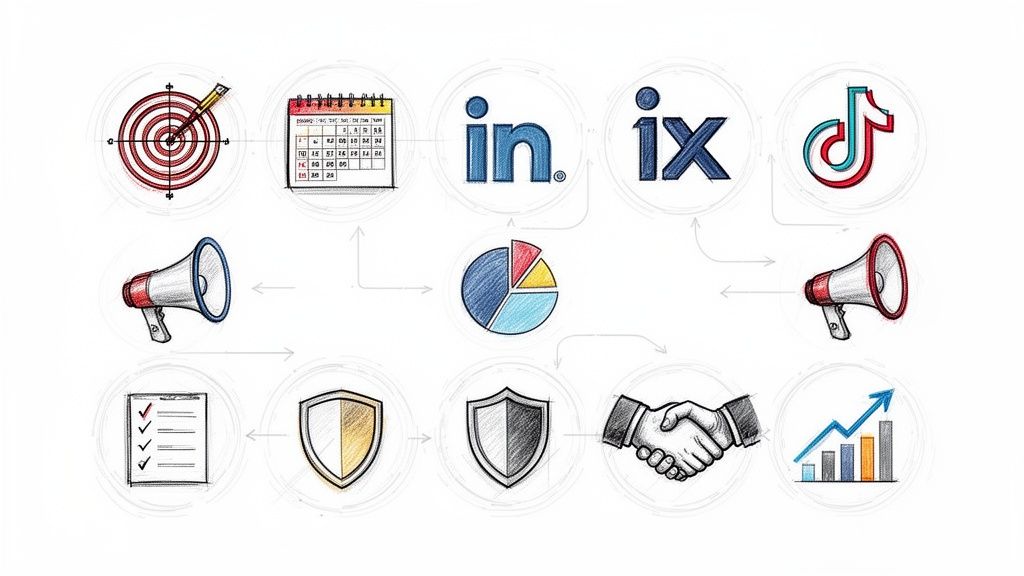
In 2026, a generic social media presence is no longer enough for professional associations, event organizers, and membership-driven organizations. True success lies in building a vibrant, engaged community that delivers tangible value to members, drives event attendance, and reinforces your organization's role as an industry leader. This requires a strategic approach that goes beyond follower counts and vanity metrics. A foundational understanding of effective social media use is critical; for a deeper dive into core principles, explore these essential 10 Social Media Best Practices.
This article builds on those fundamentals by unpacking the essential social media best practice pillars that professional networks must master today. We move past the basics to provide a focused roadmap specifically for groups that depend on community engagement for their survival and growth. From defining a consistent brand voice across channels to planning content strategically and engaging authentically, each point is designed to be immediately actionable.
You will learn how to:
These actionable strategies, many of which can be simplified with platforms like GroupOS, will help you transform your social channels from simple broadcast tools into powerful engines for growth, retention, and community building. We will provide a comprehensive roadmap for organizations ready to elevate their digital community game and prove its ROI. Let's get started.
A fundamental social media best practice is ensuring your organization presents a unified front wherever your members or audience engage with you. This means that a person interacting with your brand on LinkedIn should have the same core experience as someone joining your community on a platform like GroupOS or attending one of your virtual events. Consistency in brand voice and visuals builds immediate recognition and fosters trust, which is critical for membership-driven organizations and professional associations.
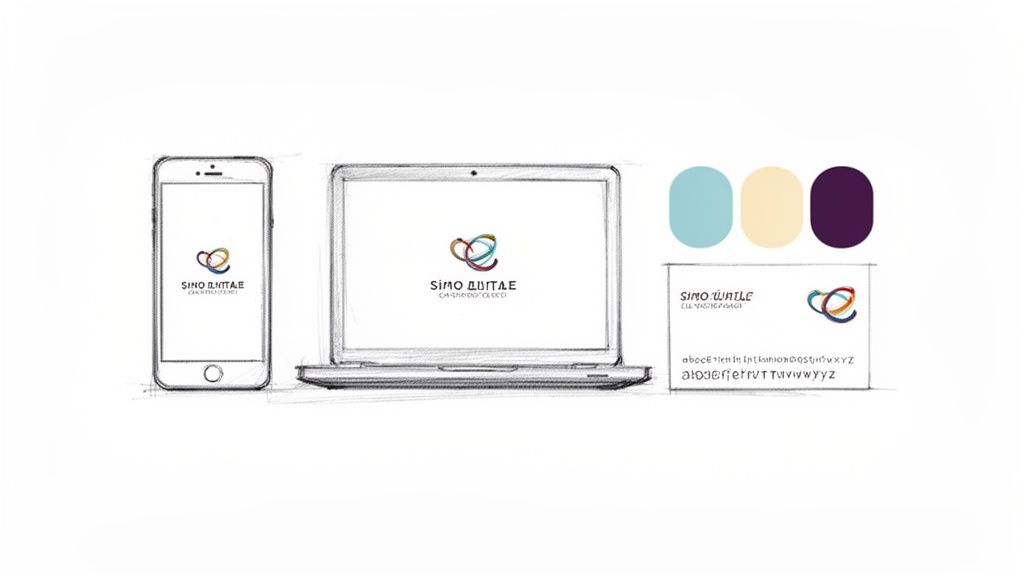
A cohesive identity isn't just about plastering your logo everywhere; it’s about creating a predictable, professional, and reliable presence. When your tone, color palette, typography, and messaging are constant, you reinforce your organization's values and make your content instantly stand out in a crowded feed. This approach simplifies content creation for your team and clarifies your mission for your audience.
To put this into practice, start by documenting your standards. A central brand guide is the single source of truth for your entire team, event staff, and even sponsors.
Create a Comprehensive Brand Guide: This document should detail logo usage, primary and secondary color palettes (with HEX codes), font choices, and a clear description of your brand's tone of voice. Is your tone authoritative and academic, or is it more conversational and encouraging? Make this guide easily accessible to all stakeholders, perhaps within your shared file system or directly in your GroupOS community.
Standardize Platform-Specific Assets: Use your brand guide to create templates for social media posts, email headers, and event announcements. For example, HubSpot maintains a consistent, helpful, and data-driven voice across its blog, social channels, and community forums, making its brand instantly recognizable.
Train Your Team and Partners: Before a major conference or event, hold a short training session for staff, exhibitors, and key speakers. Brief them on your brand standards for any content they create that promotes their involvement. This ensures that even third-party content aligns with your visual identity.
Key Takeaway: A consistent brand experience is a non-negotiable for building credibility. It signals professionalism and makes your organization memorable across every touchpoint, from a social media post to your exclusive member portal.
A crucial social media best practice is implementing a structured content calendar. For professional associations and event organizers, this planning tool is the difference between reactive, last-minute posting and a strategic, goal-oriented content flow. It ensures a consistent presence that aligns with key organizational milestones like membership drives, conference registration windows, and community events, preventing the all-too-common scramble for relevant content.

A well-managed calendar helps balance promotional posts with the educational, engaging, and community-building content that retains member interest. By planning ahead, organizations like major conferences (e.g., SXSW, CES) can build anticipation months in advance, while associations can align social media campaigns with their most important revenue-generating periods. This strategic foresight transforms your social channels from simple announcement boards into powerful engagement engines.
Putting this into action requires a central document and a forward-looking mindset. Use a master calendar that becomes the command center for your entire content strategy.
Build a Master Calendar: Use a tool like Asana, Trello, or a simple spreadsheet to map out your content 4-6 weeks in advance. Integrate key dates from your event management platform, like GroupOS event schedules, sponsorship deadlines, and member renewal notices. This provides a clear runway for creating and approving posts.
Create Diverse Content Tracks: Not all content speaks to everyone. Segment your calendar with different tracks for specific audiences, such as prospective members, current attendees, and sponsors. For example, plan member spotlight posts by pulling interesting details from profiles in your GroupOS community, while another track focuses on registration reminders for an upcoming webinar.
Plan Post-Event Content Immediately: The engagement window is widest right after an event concludes. Use your calendar to schedule "thank you" posts, session recording announcements, and calls for feedback while the experience is still fresh in your attendees' minds. Build in flexibility by leaving about 20% of your calendar open for timely news or trending topics.
Key Takeaway: A content calendar is your strategic roadmap for building momentum and maintaining engagement. It ensures every post has a purpose, whether it's driving ticket sales, highlighting a member's achievement, or sharing valuable industry knowledge.
A critical social media best practice is to move beyond one-way broadcasting and actively cultivate a two-way conversation with your audience. For professional associations and event planners, prompt, authentic engagement with comments and messages demonstrates that you value your members and are invested in their experience. Responding to questions, acknowledging feedback, and participating in discussions build trust and foster a genuine sense of community.

This level of responsiveness signals that your organization is listening and accessible, which is essential for retaining members and encouraging participation. When members feel heard, they are more likely to become active contributors to your community, amplifying your message and enriching the network for everyone. This practice turns passive followers into dedicated advocates.
Putting a system in place for responsive communication prevents member inquiries from getting lost and ensures a consistently positive interaction with your brand.
Establish a Response Protocol: Assign specific team members ownership of different channels to ensure coverage. For example, one person might monitor your GroupOS community messages and integrated Slack channel, while another handles Facebook and LinkedIn. This clear division of labor guarantees that no message is overlooked.
Balance Templates with Personalization: Create response templates for common questions about event registration, membership benefits, or technical support. However, always train your team to personalize each reply. For example, you can use GroupOS member profiles to mention a member's specific interests or their history with your organization, making the interaction feel more personal.
Schedule Dedicated Engagement Time: Block out time in your team's calendar for social media engagement, especially during peak periods like event registration or membership renewal campaigns. Daily check-ins are crucial to ensure messages don't languish. For instance, the organizers of Content Marketing World are known for responding quickly to attendee questions, which builds confidence and excitement for their event. For more ideas on keeping your community active, you can find a number of effective member engagement strategies.
Key Takeaway: Prompt and authentic engagement is not just good customer service; it’s a core community-building activity. Every timely, personalized response reinforces a member’s value and strengthens their connection to your organization.
A powerful social media best practice is to turn your members into your best storytellers. Encouraging them to create and share content, such as event photos, testimonials, and professional insights, provides authentic social proof that resonates far more than traditional marketing. This strategy not only increases engagement but also significantly reduces the content creation burden on your team, filling your calendar with genuine, relatable material.

For professional associations and event organizers, user-generated content (UGC) is a goldmine. When a prospective member sees their peers succeeding and sharing valuable experiences, it powerfully demonstrates the tangible benefits of joining. Highlighting member achievements and contributions also builds immense community pride and motivates others to participate, creating a positive feedback loop of engagement and value.
Putting your members in the spotlight requires a clear and intentional system for collecting, curating, and sharing their contributions.
Create a Central Hub for Contributions: Designate a specific area within your GroupOS community for members to submit their stories, testimonials, and event highlights. This simplifies collection and gives you a ready-made content repository. Also, create a simple permission form to ensure you can legally share their content on public channels.
Launch a Hashtag Campaign for Events: Promote a unique, easy-to-remember hashtag (e.g., #YourOrgConf2024) for every conference or virtual event. Actively monitor the hashtag across social platforms and encourage attendees, speakers, and exhibitors to use it when posting photos and key takeaways. Reshare the best content on your official accounts.
Systematize Member Spotlights: Develop a recurring content series, like a "Member of the Month" feature, published in your GroupOS announcements or email newsletter. Use member profiles to gather information on their achievements and contributions, then reach out to feature them. This approach, seen in LinkedIn's promotion of user thought leadership, consistently celebrates community members and encourages active participation.
Key Takeaway: User-generated content is your most authentic marketing asset. By systematically spotlighting your members, you build trust with prospects, foster deep community loyalty, and create a self-sustaining engine of engaging social media content.
A critical social media best practice is letting data guide your decisions. Data-driven strategy ensures your social media and community efforts are aligned with organizational goals, not just assumptions. For professional associations and event organizers, analytics provide direct insight into member behavior, content effectiveness, and overall return on investment, moving social media from a cost center to a value driver.
Without measurement, you're operating in the dark. Regular analysis helps you understand what resonates with your members, allowing you to optimize your strategy, allocate resources effectively, and demonstrate value to stakeholders. For instance, Salesforce tracks community engagement metrics to improve its platform, while professional conference organizers analyze past attendee data to refine marketing for future events. This approach turns guesswork into a repeatable, successful process.
Start by defining what success looks like for your organization and then build a process for tracking your progress toward those goals.
Establish Clear Key Performance Indicators (KPIs): Your KPIs must align with core business objectives. Are you focused on member retention, event attendance, or new leads? Define measurable goals, such as increasing event registration from social media by 15% or boosting post-event community engagement by 25%.
Create a Regular Analytics Review Process: Schedule a monthly or quarterly meeting with stakeholders to review performance. Use this time to discuss what worked, what didn't, and how to adjust your plan. Platforms like GroupOS have built-in dashboards to track member activity, content consumption, and event performance in one place. You can learn more about which social media engagement metrics matter most.
Track the Entire Member Journey: Monitor metrics from initial contact to long-term retention. Analyze event registration conversion rates by traffic source (e.g., LinkedIn vs. email) to see where your promotional budget is most effective. Follow engagement from event attendance to post-event community discussions and, ultimately, membership renewal.
Key Takeaway: Data provides the proof of what's working and the direction for what to do next. Consistently tracking and analyzing your social media and community performance is the only way to ensure your efforts are delivering real, measurable value.
A crucial social media best practice is transforming your audience from passive followers into an active, engaged community. For professional associations and membership organizations, creating structured opportunities for members to connect with each other delivers ongoing value that extends far beyond a single event or piece of content. This strategy focuses on facilitating member-to-member interactions through interactive content like polls, Q&As, and discussions, which builds loyalty and strengthens the entire network.
The goal is to create a vibrant hub where members feel comfortable sharing expertise, asking questions, and forming professional relationships. When members see your organization as the primary place for valuable industry connections, their loyalty deepens, and your community becomes a self-sustaining asset. Platforms like Mighty Networks and LinkedIn Groups have popularized this approach by providing the tools needed for these rich discussions to flourish.
To put this into practice, you need a dedicated space and a clear strategy for encouraging participation. Your community platform, like GroupOS, becomes the central venue for these activities.
Create Topic-Specific Channels: Organize conversations by creating private channels in GroupOS based on member interests, industry segments, or geographic locations. This helps members find relevant discussions and connect with peers who share their specific focus, such as a "Marketing Professionals in the Northeast" group.
Facilitate Structured Interactions: Don't just open a forum and hope for the best. Actively spark conversations by launching monthly discussion topics, hosting live Q&A sessions with industry experts, or running polls to gather member feedback on emerging trends. A great example is the American Bar Association (ABA), which uses dedicated forums to facilitate deep legal discussions among its members.
Enable Peer-to-Peer Connections: Implement features that make it easy for members to find and connect with one another. Use an interactive member map to help professionals discover peers nearby, or establish a mentorship program within your GroupOS community to match experienced leaders with those newer to the field.
Key Takeaway: Community is not built on content consumption alone; it's built on connection and shared experience. Facilitating member networking is a powerful social media best practice that turns your organization into an indispensable hub for professional growth.
A significant portion of your community members and event attendees will access your content on smartphones and tablets. This makes a mobile-first approach a critical social media best practice. For professional associations and event organizers, a seamless mobile experience means members can check event details, access content, and connect with peers from anywhere, ensuring continuous engagement beyond a desktop computer. Accessibility across web, iOS, and Android platforms guarantees that no one is excluded from your community or event, regardless of their preferred device.
Optimizing for mobile goes beyond simply having a website that scales down. It means designing an experience with the on-the-go user in mind, from easy-to-tap buttons to fast load times on cellular networks. When members can effortlessly access event schedules, member directories, or community discussions on their phones, they are more likely to stay connected and active. This approach, popularized by mobile-first companies like Uber and community platforms like Slack, puts your organization’s resources directly in your members' hands.
Putting mobile users at the forefront requires a combination of technical testing and strategic content delivery. The goal is to remove all friction for users accessing information on smaller screens.
Prioritize a Native App Experience: Use platforms like GroupOS that provide native iOS and Android apps. This allows members to receive push notifications for event reminders or new messages, access content offline, and use features like mobile directories and QR code check-in at events.
Test All User Journeys on Mobile: Thoroughly test every interaction, from event registration to accessing member-only content, on various mobile devices and tablets. Ensure forms are simple, with fewer fields and mobile-friendly inputs. For example, Eventbrite’s mobile app is central to its event check-in and attendee networking experience, showing the power of a dedicated mobile interface.
Optimize for Performance: Your website and community platform must load quickly, even on slower mobile networks. Compress images and simplify page elements to improve performance. Ensure event details, maps, and speaker bios are fully readable without excessive pinching or zooming.
Key Takeaway: A mobile-first strategy is not optional; it's essential for modern audience engagement. By ensuring your content and community are fully accessible and easy to use on any device, you empower members to connect with your organization anytime, anywhere.
A sophisticated social media best practice involves viewing your sponsors and exhibitors not just as revenue sources, but as strategic content partners. By collaborating on value-driven content, you create a win-win scenario: sponsors gain authentic access to your audience, and your members receive relevant, high-quality information. This approach transforms transactional sponsorships into meaningful partnerships that boost engagement and strengthen your community ecosystem.
Instead of simply selling logo placements, work with partners to produce educational content, product deep dives, and exclusive offers that align with your members' interests. Major conferences like SaaStr and INBOUND excel at this, integrating sponsor-led sessions and co-branded resources directly into their programming. This method extends your content calendar, adds expert voices to your channels, and delivers tangible benefits to both members and partners.
Effective co-marketing requires structure and clear communication. The goal is to make sponsorship a valuable part of the member experience, not an interruption.
Establish Tiered Co-Marketing Packages: Move beyond traditional booths and banners. Define sponsorship tiers that include specific content deliverables, such as a sponsored webinar, a guest post in your GroupOS content hub, or a dedicated "Partner Showcase" email blast. This clarifies the value for sponsors upfront. You can discover more ideas for creating event sponsorship packages that integrate these content opportunities.
Facilitate Value-Added Content Creation: Guide sponsors to create content that serves your audience. Ask for case studies, industry research reports, or how-to video guides instead of direct sales pitches. For example, a cybersecurity vendor could offer a workshop on data protection for your members, promoted across your social channels.
Amplify Sponsor Content Strategically: Create a content plan to promote your partners' contributions. Schedule social media posts tagging the sponsor, feature them in your community announcements, and highlight their sessions in event-related communications. To ensure your content is optimized for mobile consumption and reaches a wider audience, exploring resources on the best TikTok editing apps can be highly beneficial.
Key Takeaway: Treat your sponsors as content allies. By co-creating valuable resources and promotional campaigns, you enrich your members' experience, provide sponsors with meaningful ROI, and extend the reach and authority of your own brand.
A crucial social media best practice is to move beyond promotional posts and deliver genuine value through education. By creating and sharing thought leadership content, your organization establishes itself as a definitive authority in your field. This approach builds deep-rooted trust with members and prospects, giving them a compelling reason to engage with your brand and join your community. For professional associations, this isn't just a strategy; it’s a core component of your value proposition.
Content like in-depth research reports, expert-led webinars, and insightful commentary helps your members stay ahead in their careers. Organizations like the American Medical Association (AMA) and Project Management Institute (PMI) have built their reputations on providing essential continuing education. This positions them as indispensable resources, not just networking hubs. When you become the go-to source for industry knowledge, member loyalty and acquisition naturally follow.
Your goal is to become an indispensable resource for professional development. A central community platform is ideal for organizing and distributing this high-value content.
Centralize Your Knowledge Base: Use a community platform like GroupOS to create a dedicated content hub. This can house your library of on-demand webinars, downloadable research reports, and past event recordings, making it easy for members to find what they need.
Develop a Webinar Series: Launch a recurring webinar series focused on topics your members have expressed interest in. Use member surveys to identify pressing challenges and skills gaps, then recruit industry experts to provide actionable insights. Promote these events through targeted announcements and social media campaigns.
Repurpose High-Performing Content: A single webinar can be repurposed into multiple assets. Turn the recording into a video-on-demand, transcribe the key points into a blog post, pull out powerful quotes for social media graphics, and compile the Q&A into a follow-up article. This maximizes the return on your content creation efforts.
Key Takeaway: Educational content is a powerful driver of member value. By consistently teaching your audience and helping them solve their biggest professional challenges, you build a reputation that attracts and retains members far more effectively than any marketing campaign alone.
A crucial social media best practice is establishing clear rules that protect your brand and its members. For professional associations and event organizers, a strong governance and moderation policy is not just about preventing spam; it's about safeguarding the integrity of your community, ensuring discussions remain professional, and protecting the member experience. Without documented standards, your community can quickly become disorganized, and your team will lack the framework to handle violations fairly.
Clear policies are the foundation of a healthy, self-sustaining community. They define acceptable behavior, reduce ambiguity for moderators, and empower members to report issues with confidence. From the public comments on a LinkedIn post to the exclusive forums within your GroupOS community, consistent enforcement of these rules builds trust and signals that your organization is committed to maintaining a high-quality environment.
To put this into practice, you must create and communicate your rules clearly, then establish a process for enforcement that is both fair and transparent.
Develop and Document Your Guidelines: Create written community guidelines that define expected behavior and explicitly state what is not permitted. Include specific examples of unacceptable conduct like commercial solicitation, harassment, or sharing confidential information. For inspiration on structuring your rules, you can review some excellent community guidelines examples from other organizations.
Establish a Clear Reporting and Enforcement Process: Make your policies easily accessible to all members, such as in a dedicated resources page or a pinned post in your GroupOS community. Create a simple mechanism for members to flag inappropriate content and define a graduated enforcement ladder, such as a warning, content removal, temporary suspension, and permanent removal.
Train and Empower Your Moderation Team: Your policy is only as good as its enforcement. Train your community managers and moderators on the guidelines, how to apply them consistently, and how to handle sensitive situations. Document all moderation decisions internally to ensure consistency and identify recurring issues that may require a policy update.
Key Takeaway: Proactive governance and moderation are essential for protecting your members and your brand's reputation. Clear, accessible policies and a consistent enforcement process create a safe and professional space where meaningful engagement can thrive.
The journey from simply posting on social media to cultivating a dynamic, engaged digital community is built on a foundation of consistent, intentional effort. Throughout this guide, we've explored ten essential social media best practice principles that serve as your blueprint. Moving beyond sporadic updates to a structured, strategic approach is what separates organizations that broadcast from those that genuinely connect.
The core theme connecting these practices is a shift in mindset: from a platform-centric view to a member-centric one. Your success isn't measured in follower counts alone, but in the quality of interactions, the sense of belonging you foster, and the tangible value you provide to your members, attendees, and sponsors. This is where the real work begins, translating these ideas into daily operational habits.
Mastering your social media presence doesn't require a complete overhaul overnight. Instead, it’s about making incremental, informed improvements. Let's distill the most critical takeaways from our ten practices:
By internalizing these key points, you can prioritize your efforts. Start by assessing your weakest area. Is it a lack of consistent branding? Or perhaps a failure to respond to member comments in a timely manner? Pick one or two areas and dedicate resources to improving them over the next quarter.
The true measure of a successful social media strategy is its ability to support and amplify your organization's core objectives, whether that's increasing event attendance, boosting member retention, or providing more value to sponsors. This is where applying a solid social media best practice framework becomes indispensable.
Think of these principles as interconnected gears. A clear governance policy (Practice #10) protects your brand and community, allowing authentic engagement (Practice #3) to flourish. Partnering with sponsors on valuable content (Practice #8) strengthens your event ecosystem while providing fresh material for your content calendar (Practice #2). Each practice reinforces the others, creating a powerful, self-sustaining cycle of community growth and engagement. The ultimate goal is to build an ecosystem where your social media presence, event platform, and membership portal work together seamlessly, creating a unified and rewarding member experience. This integrated approach is what builds lasting relationships at scale and turns passive followers into active advocates for your organization.
Ready to unify your community management, event engagement, and social media efforts? GroupOS provides a central hub to manage your membership, communicate with your audience, and deliver a seamless branded experience across all your digital touchpoints. See how our platform helps you implement these best practices by visiting GroupOS to schedule a demo.