February 25, 2026
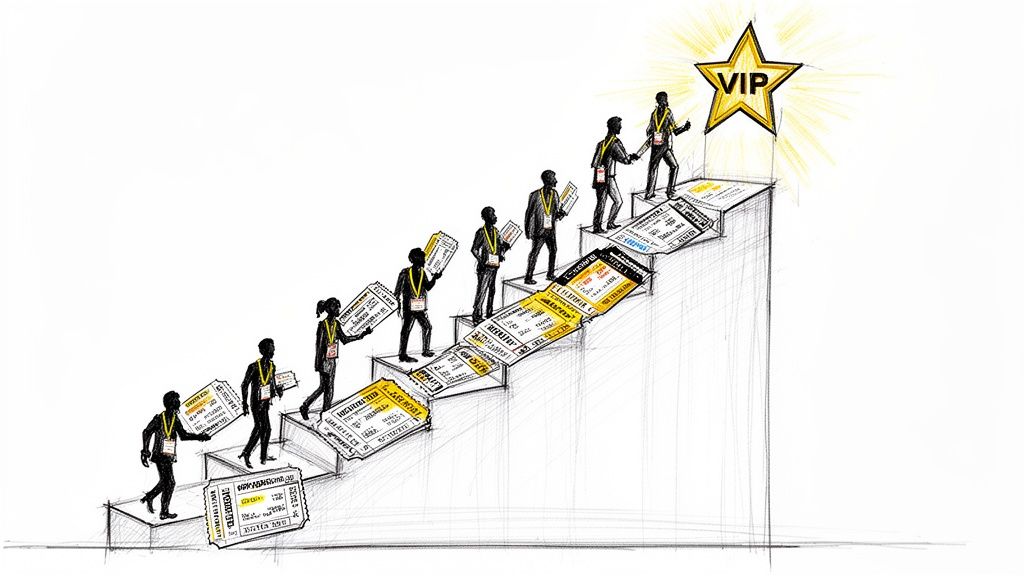
A ticket level up strategy is about so much more than just slapping a “VIP” label on a few tickets. It's a thoughtful approach to maximizing the value of every single person who walks through your doors by offering them tiered experiences and premium add-ons.
The goal here isn't just to boost attendance numbers. Instead, we’re shifting our focus to generating more revenue and building a genuinely loyal, invested community around our event.
Let’s be real for a moment. Just selling more general admission tickets isn't a sustainable way to grow. When you rely only on volume, you're constantly chasing new people, often at the cost of your profit margins and the overall attendee experience.
The real gold is in deepening the connection with the people who are already committed to showing up. That’s where a "ticket level up" approach becomes a game-changer.
This strategy taps into some fundamental human desires that drive people to want more. It’s not just about a velvet rope—it's about offering something that speaks to their need for:
When you design upgrades that deliver on these psychological drivers, you're not just selling a ticket; you're crafting an unforgettable experience.
While a ticket level up plan is an incredible revenue driver, its impact goes far beyond the immediate cash injection. You’re actually laying the groundwork for long-term community loyalty.
Think about it: attendees who invest in a premium experience feel a much stronger connection to your brand. They’re the ones who are most likely to return for future events and become your biggest advocates.
This shift from volume to value is a major trend in the live events world. The 2025 Top 100 Worldwide Touring Artists, for example, averaged over $2.5 million per show—a 9.2% increase from the previous year. This proves that getting more value from each attendee is a key growth strategy. You can see the full breakdown in Pollstar's 2025 year-end analysis.
By offering tiered access and thoughtful add-ons, you’re not just upselling; you're inviting your most enthusiastic supporters to engage on a deeper level. This creates a powerful feedback loop where their investment fuels an even better experience for everyone.
To truly understand how to maximize event ROI with this kind of strategy, it helps to look at practical ways to add tangible value. This isn't just about theory; it’s about making smart, strategic choices that resonate with your specific audience and deliver real, measurable results.
Let's be honest: just slapping a ‘VIP’ label on a ticket and hiking the price isn't a strategy. Your attendees are smart, and they can spot a lazy cash grab a mile away. If you want your ticket level up plan to actually work, you need to build upgrade tiers that offer real, tangible value.
The best upgrades come from knowing what makes your audience tick. Why are they really coming to your event? Are they looking for career-changing knowledge, invaluable networking connections, or just a fantastic experience? The perks you offer have to connect directly with those core desires. When they do, the upgrade stops feeling like an extra cost and starts feeling like an essential investment in their time.
Before you start building tiers, you need to figure out what to put in them. A great way to start is by mapping out the entire attendee journey, from the moment they arrive to the moment they leave. Look for friction points you can eliminate or special moments you can create.
I find it helpful to group potential benefits into two main categories:
For example, at a large tech conference, a standard attendee might get access to all the main sessions. But a 'Pro' upgrade could include downloadable slide decks and lifetime access to session recordings. For anyone who can't be in two places at once or wants to review the content later, that's a huge, practical benefit they'd gladly pay for.
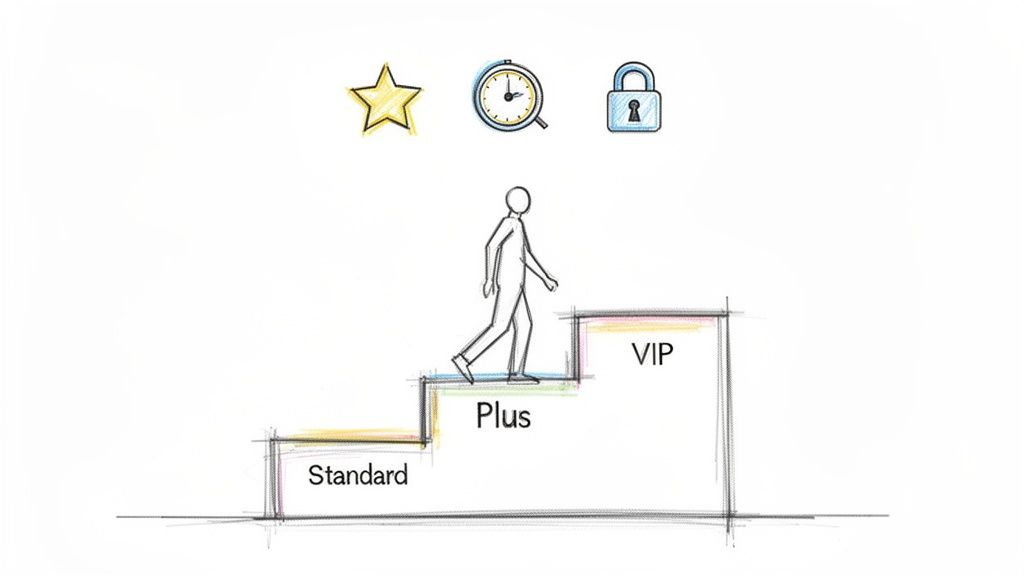
Once you have a solid list of potential perks, it's time to bundle them into clear, distinct tiers. The key is to create a value ladder. Each step up should feel like a significant improvement and clearly justify the price bump. A word of caution: don't go overboard. Offering too many options can lead to "decision paralysis," where attendees get confused and just stick with the default. Two or three upgrade tiers is usually the sweet spot.
An effective tier structure tells a story. It guides the attendee from a good experience (General Admission) to a great one (Pro Upgrade) and finally to an unforgettable one (Platinum VIP). Each level should clearly communicate what makes it special.
To help you visualize this, here’s a common way to structure tiers for a professional conference or festival.
See how that works? The clear separation helps people choose the experience that best fits their goals and budget. The "Pro Upgrade" is a no-brainer for a professional focused on learning, while the "Platinum VIP" is tailored for an executive who prioritizes high-level networking and comfort.
This kind of strategic thinking is what turns a simple ticket level up idea into a program that doesn't just offer upgrades, but has attendees eagerly buying them.
Alright, you've mapped out your strategy and dreamed up some killer upgrade tiers. Now it's time to bring that ticket level up plan to life. This is where the rubber meets the road—translating those ideas into a smooth, intuitive system that makes attendees want to upgrade. We'll be using GroupOS as our home base for this.
The real goal here is to build a registration and checkout flow that does the selling for you. You want to present your options so clearly that upgrading feels like a no-brainer. It's all about stripping away any friction and shining a spotlight on the benefits right when someone is pulling out their credit card.
First things first, let's take your brainstormed tiers and turn them into actual tickets inside the GroupOS dashboard. You'll create new ticket types for each level—think "Pro Upgrade" or "Platinum VIP"—and then set the price and how many are available.
This little flowchart breaks down the creative process before you even touch the platform settings.
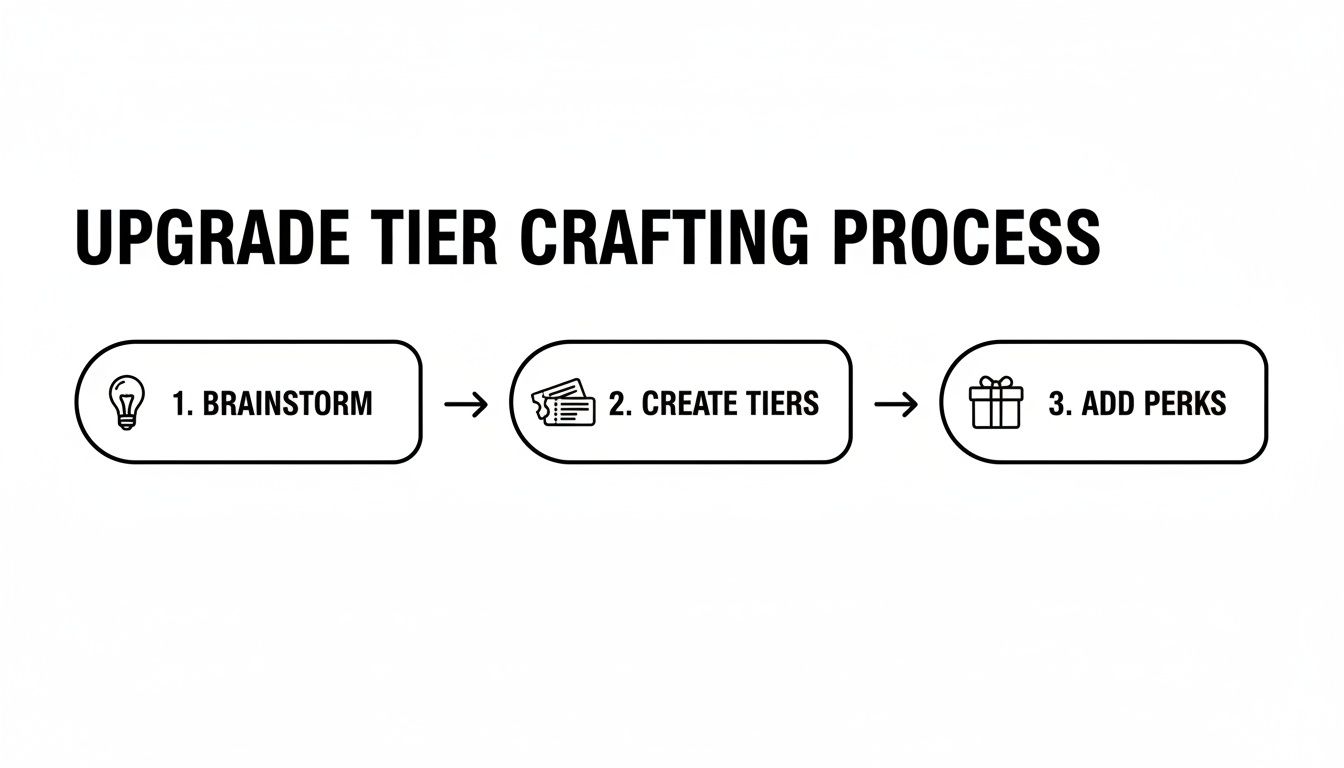
It’s a great reminder that a solid plan, built on perks your attendees actually value, is what makes these tiers sell themselves.
Once your ticket types are in the system, you can start connecting the dots. For example, your “Platinum VIP” pass can be set up to instantly grant access to an exclusive digital content library. Or it could automatically add those ticket holders to a private VIP messaging channel in your community. That direct link between the ticket and the perk is what creates a truly seamless experience on the day.
Nothing kills the vibe of a premium ticket faster than a generic registration form. If someone is paying top dollar, you need to collect the right information to deliver that white-glove experience you promised.
With a flexible platform like GroupOS, you can build out different registration forms for each ticket tier.
This isn't just about collecting data; it's your first opportunity to show your VIPs that you see them and are already preparing for their arrival. Customizing the flow also lets you weave your upgrade offers directly into the initial purchase path.
My Two Cents: The easier you make it for someone to see the difference between your ticket tiers, the more upgrades you'll sell. A clean, side-by-side comparison during checkout is probably the most powerful sales tool you have at this stage.
Getting the technical setup right is a huge part of the puzzle, and your choice of platform can make or break your efforts. If you're still weighing your options, our guide on the best ticketing platforms for events is a good place to start. In the end, you want a user experience that makes upgrading feel like an easy, exciting win—not a chore.
Alright, your ticket tiers are built and live in GroupOS. Now comes the fun part: shifting from building to selling. A killer marketing plan is what turns your carefully planned ticket level up strategy into real, tangible revenue. Your job is to sell the dream, not just list the features. It's about creating an irresistible sense of desire and a healthy dose of FOMO (fear of missing out).
The secret is to communicate the feeling of the premium experience. Don't just say "exclusive lounge access." Instead, paint a picture. Talk about them unwinding away from the crowds, chatting with speakers over coffee, and feeling like a true insider. Your marketing has to clearly answer the question, "How will this upgrade make my event unforgettable?"
Who's most likely to buy an upgrade? Someone who's already bought a ticket. They're already invested in your event. All you have to do is show them what they're missing out on. This is where segmented email campaigns become your most powerful tool.
Resist the urge to send a generic blast to your entire attendee list. Tailor the message. For example, you could design a campaign that highlights the professional networking perks of your VIP tier and send it only to attendees who listed "Director" or "Manager" in their registration form.
The goal is to make the upgrade offer feel like a personal invitation, not a generic upsell. Use the data you collected during registration to craft messages that speak directly to an attendee's specific goals.
This targeted approach proves you're paying attention to their needs. It reframes the upgrade from an extra cost into a valuable solution. Honing your ability for how to sell event tickets online is all about this kind of smart segmentation and personalized messaging.
Beyond targeted emails, you need to create a steady drumbeat of excitement around your premium offerings across all your channels. Use social media to drop sneak peeks and share glowing testimonials.
Here are a few tactics I've seen work time and time again:
When you combine targeted outreach with compelling visuals and time-sensitive offers, you create multiple touchpoints that consistently nudge attendees toward investing in a better experience. Each message reinforces the value, making that final decision to upgrade an easy one.
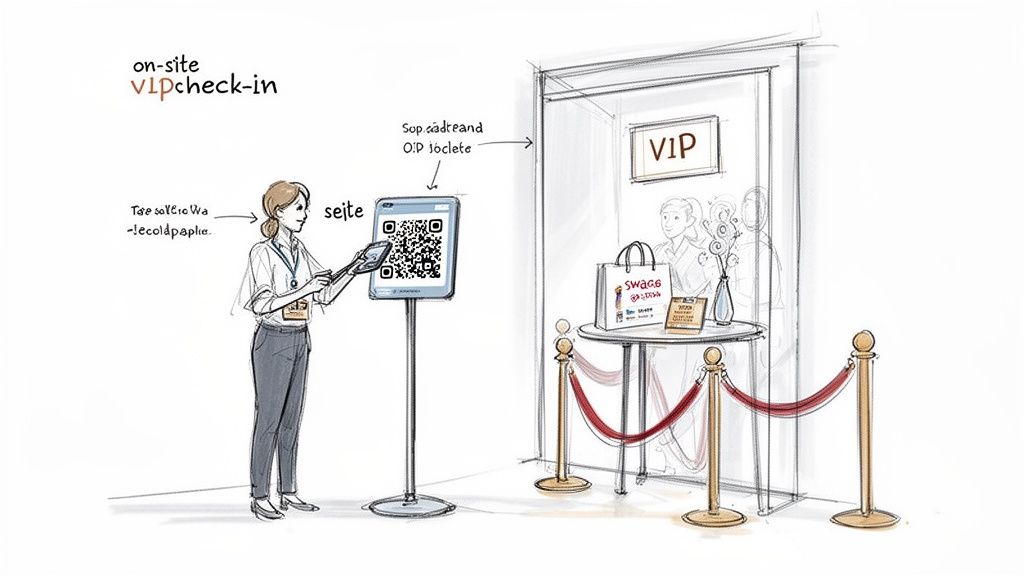
Selling the upgrade is just the first part of the equation. The real test of your ticket level up strategy begins the moment your guest walks through the door. This is where you convert a simple transaction into genuine loyalty, but only if you nail the on-site delivery and make your VIPs feel truly special.
Think about it: a messy, frustrating arrival can undo all the marketing magic you created. Long queues, confused staff, or perks that aren't quite as promised are the quickest ways to sour the experience. The aim here is to make your premium guests feel recognized and appreciated, reinforcing that their decision to upgrade was absolutely the right one.
First impressions are formed at the registration desk, and nothing kills the VIP vibe faster than being stuck in the same line as everyone else. A dedicated, clearly marked check-in lane for your premium ticket holders isn't a luxury—it's essential.
Your event tech is your best friend here. A platform like GroupOS with built-in QR scanning lets your team verify tickets with a simple zap. That quick scan instantly reveals an attendee's tier, making the whole process lightning-fast and headache-free. You can see how modern event check-in software is a game-changer for cutting down wait times.
A VIP check-in shouldn't just be faster; it should feel different. Train your staff to greet these guests by name, give them a quick rundown of their exclusive perks, and answer any questions they might have. It's a small touch that has a huge impact.
Once they're inside, your team needs to be ready to deliver on every single benefit you advertised. Staff managing the VIP lounge or handing out merch need a dead-simple way to know who gets what.
Here are a few tricks I've learned over the years:
At the end of the day, making your upgraded attendees feel genuinely valued is what it's all about. Learning how to improve customer experience is what turns a good event into a memorable one, creating the kind of loyalty that brings people back again and again. When every touchpoint is smooth and thoughtful, you aren’t just fulfilling a sale—you’re building a brand advocate for your next event.
The event is over, the confetti has settled, and your team is exhausted but proud. Now comes the critical question: how do you really know if your ticket level up strategy was a success? Moving beyond gut feelings and into hard data is the only way to refine your approach and make your next event even more profitable.
Guesswork just won’t cut it. To truly understand your return on investment, you need to dive into the analytics. The data tells a story about what your attendees truly valued and where you can double down for future growth.
Your GroupOS dashboard is packed with insights. It can be tempting to look at everything, but to avoid analysis paralysis, I always recommend focusing on a few core metrics that directly reflect the performance of your upgrade tiers. These numbers will be your guide.
Start with these three essential data points:
Upgrade Conversion Rate: This is your headline number. What percentage of total ticket buyers chose to purchase an upgrade? It's the most direct measure of how compelling your offers were. A low rate might mean your perks didn't resonate or the value wasn't clear.
Revenue Per Tier: Don't just look at total revenue. Break it down to see how much each specific tier—Pro, Platinum, VIP—contributed. This is how you identify which level is your financial workhorse.
Perk Popularity: If your Pro tier offered session recordings and your VIP tier included a networking dinner, which one sold better? Analyzing the popularity of tiers tied to specific benefits shows you what perks are worth investing in again.
The most powerful insights often come from cross-referencing these metrics. For instance, you might find that while your top-tier VIP package had a low conversion rate, it generated 30% of your total upgrade revenue. That tells you there's a small but highly motivated segment willing to pay a premium for an exclusive experience.
Numbers tell you what happened, but direct feedback from your attendees tells you why. This qualitative data is crucial for understanding the emotional response to your premium offerings. Whatever you do, don't skip this step.
After the event, send a targeted feedback survey exclusively to your upgraded ticket holders. Ask specific, open-ended questions to get rich, actionable insights.
This direct feedback is gold. It helps you spot hidden gems—maybe the "exclusive lounge" was less about the free coffee and more about the quiet space to take calls—and identify what to cut next time. Combining this feedback with your sales data gives you the full picture, empowering you to make much smarter decisions.
For a deeper dive into this, check out our guide on how to measure event success with a data-driven mindset.
When you're diving into a ticket level up strategy for the first time, a few questions always pop up. It's totally normal. Getting these sorted out is what separates a hesitant launch from one that hits the ground running. Let's tackle some of the most frequent ones we hear from event pros just like you.
This is all about timing. If you miss the window, you miss the sale. I've found that a three-pronged approach works best, hitting attendees at different points when they're most receptive.
Pricing is tricky—it feels like more of an art than a science. The secret is to tie every dollar of the price increase to tangible, obvious value. If someone looks at the price and asks, "Why does it cost that much?" you've already lost. They need to see the perks and think, "Oh, that's worth it."
Your goal is to position the upgrade as an investment in a better, more memorable experience—not just a tacked-on fee. Make the benefits—like exclusive networking time or front-row access—so clear that the price feels like a steal.
A solid rule of thumb is to price your first VIP tier about 25-50% higher than the general admission ticket. This creates a premium feel without pushing it out of reach for most people who are looking for that extra something.
Absolutely. Don't let the "VIP" label make you think it's only for massive conferences. The scale is different, but the psychology is identical. For a smaller community gathering, a ticket level up doesn't have to mean a private lounge or catered meals.
Think about what's truly valuable to your specific group. It could be something as simple as:
The strategy is the same no matter the size: offer a more exclusive, valuable experience for the segment of your audience that is more than happy to pay a little extra for it.
Ready to build a seamless ticket level up experience that your community will love? With GroupOS, you can easily create custom ticket tiers, manage registrations, and deliver a flawless VIP experience. Start your free trial today and see just how simple it is to elevate your next event.