February 23, 2026

Sales funnel templates can give you a solid starting point for turning prospects into members, but let's be real—most aren't built for organizations like yours. For professional associations and event organizers, a generic template usually falls flat. The secret is finding a specialized approach that understands the long-term relationships you're trying to build.
Standard sales funnel advice just doesn't quite fit for organizations built on community and trust. A typical B2B funnel is all about a quick, transactional sale, which can feel completely out of sync with the mission of an association or the energy of a big annual event. That disconnect really starts to show in the results.
Across most industries, the average sales funnel conversion rate is somewhere between 3% and 7%. But when you look at B2B models—which are pretty similar to how corporate memberships or event sponsorships get decided—that rate often drops to a sluggish 1-5%. It's not surprising when you consider the long decision-making process involving multiple people. In fact, only about 22% of businesses are actually happy with their conversion rates.
Unlike selling a one-off product, you're managing a journey that never really ends. Your "customer" isn't just buying a thing; they're joining a community, investing in their career, or committing to an event they'll attend year after year. Generic sales funnel templates just can't handle that reality.
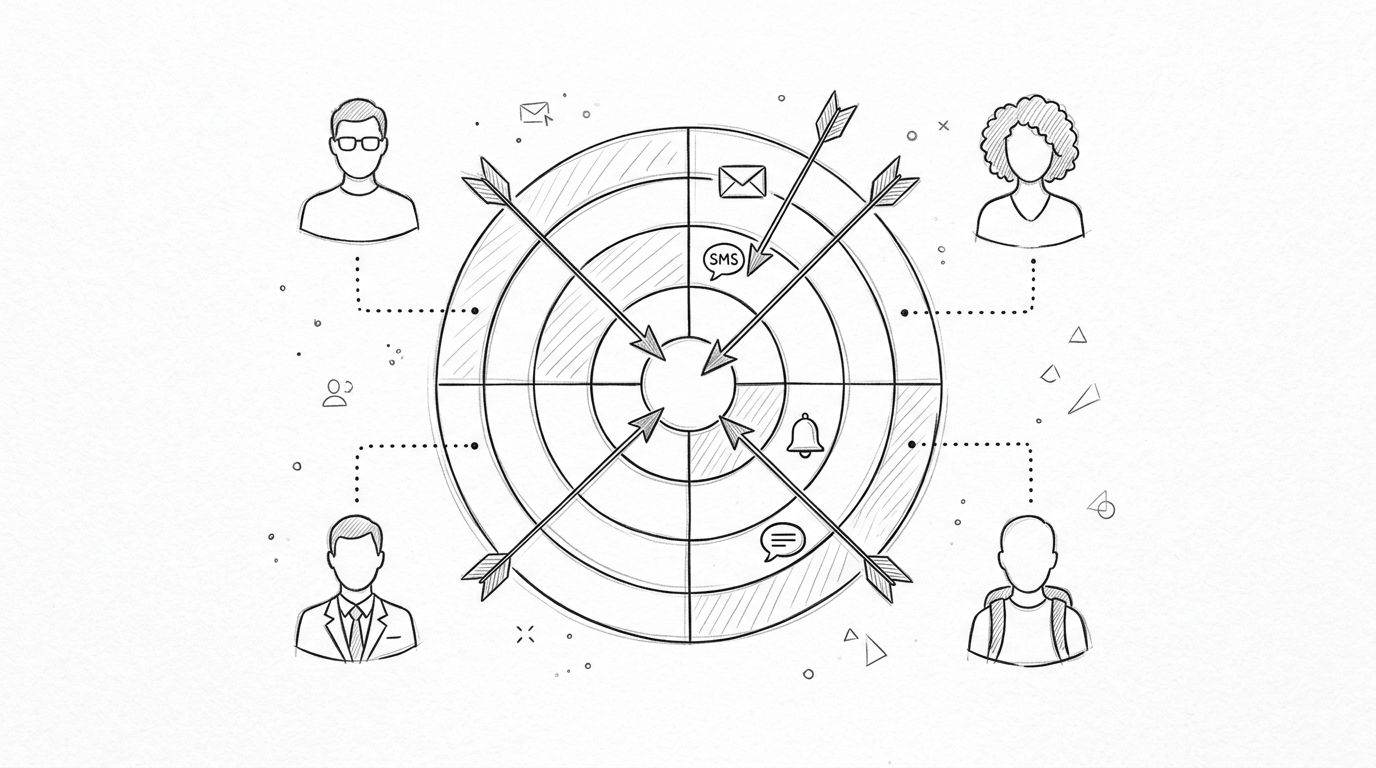
The real problem is that generic funnels treat everyone like a cold lead. For an association, many of your prospects are already warm—they’ve been to a webinar, they're on your newsletter, or they know someone who's already a member. Your funnel needs to acknowledge and build on that existing relationship from the start.
This is where a platform like GroupOS comes in, giving you the integrated tools to build funnels that actually reflect the true member journey. When you grasp the fundamentals of what is association management, it becomes crystal clear why a one-size-fits-all approach just won't cut it. To move past these limitations and build something truly effective, it’s worth digging into proven B2B sales funnel optimization strategies. This is how you turn a leaky, unpredictable funnel into a reliable engine for growth.
Picking the right sales funnel isn't about finding a one-size-fits-all template. It’s about getting inside your audience's head and understanding their specific journey with your organization. A funnel built to drive new memberships looks entirely different from one designed to land high-dollar event sponsors. The secret is to align the funnel's structure with a single, clear goal.
For instance, if your professional association is launching a new certification course, a Webinar Funnel is a fantastic choice. You're not going for the hard sell right away. Instead, you're offering real value upfront—like a free webinar on a hot industry topic—to build trust and a targeted list of people who are serious about their professional growth.
On the other hand, an event organizer trying to sell exclusive VIP packages for a major conference needs a completely different playbook. That’s where a High-Ticket Funnel comes in. This process is much more hands-on, often involving personal discovery calls or detailed proposals. You’re focusing on quality interactions, not just quantity, because the commitment is much bigger.
When you just grab a generic funnel and hope for the best, you end up with a predictable problem: friction. You're creating a clunky experience that just doesn't resonate.
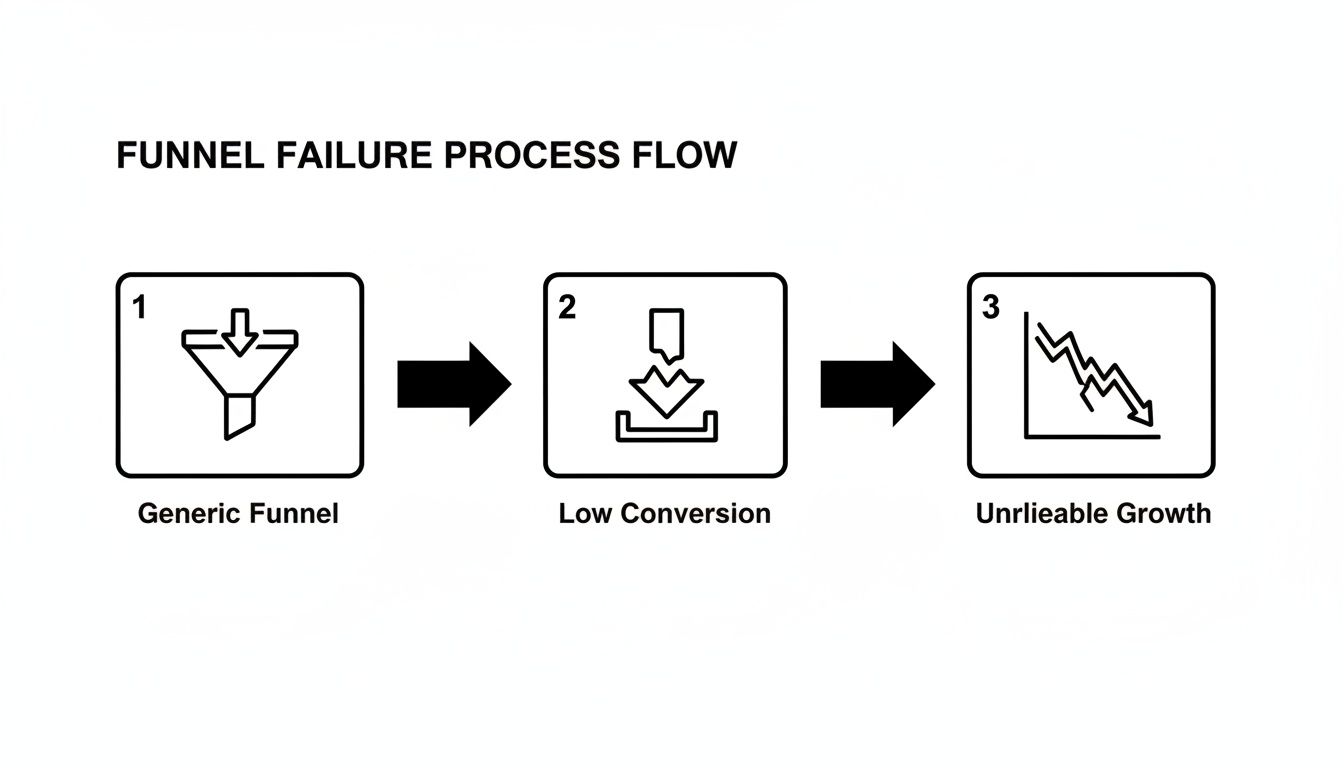
This mismatch is a recipe for low conversions and unreliable growth because you’re not meeting your potential members where they are.
Once you’ve settled on the right type of funnel, it's time to get granular. You need to map out every single interaction someone will have with you, from the moment they first hear about you to the post-purchase "thank you" email.
Think of it like you're storyboarding a film. Ask yourself:
A great user flow map anticipates questions and removes roadblocks before a user even hits them. It's your chance to be strategic. Think about where you can add a smart upsell, like offering a discounted workshop during event registration, or how you can create an engagement loop that gets this year's attendees excited for the next one.
A well-organized, professional-looking page is non-negotiable for building trust and guiding people toward conversion.
Your journey map will quickly show you that you need more than just a homepage and a checkout page. Each step in your funnel deserves its own dedicated landing page, and each page needs to have one job and one job only.
This is where a good page builder comes in handy, letting you create these essential touchpoints without hiring a developer. A solid grasp of what is lead generation is crucial here, as it helps you understand how these initial pages work together to fill your pipeline.
For a typical event funnel, you'll likely need to build a few core pages:
By starting with the right funnel model and then carefully mapping each step, you create a journey that feels intuitive and helpful to your audience, naturally guiding them right where you want them to go.
A powerful sales funnel isn't built on grand theories; it's built one great page at a time. The entire journey your members or attendees take—from a flicker of interest to hitting that "register now" button—hinges on the clarity and persuasiveness of each page they see. This is where we get our hands dirty and focus on designing pages that get results.
You’ve probably heard that the average landing page converts around 2.35%. But the real pros? They’re consistently hitting over 10%. That massive difference isn't magic. It's about smart, focused design—especially since 82.9% of traffic now comes from mobile, where speed and simplicity are everything. You can see more data on these powerful sales funnel statistics on venturz.co.
So, how do we get there? It starts with the most critical pages in your funnel. Let's look at how to build each of these inside GroupOS for maximum impact.
Each page in your funnel has a specific job to do. Understanding that job is the first step to designing it well. Here's a quick breakdown of the essential pages you'll be building and the GroupOS features that make them work.
Building these pages correctly is what separates a funnel that just exists from one that actively grows your business.
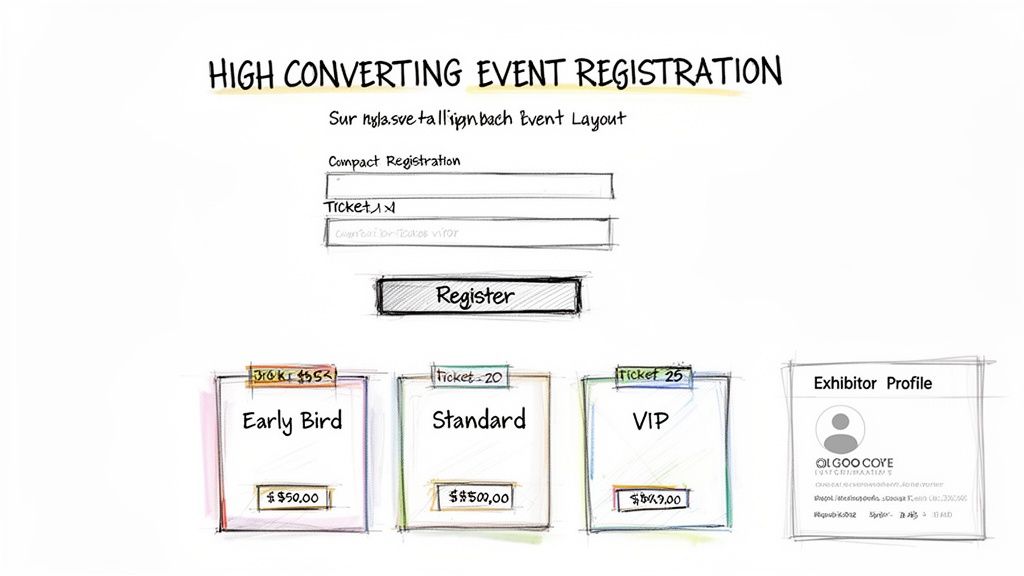
For anyone running an event, the registration page is where the money is made or lost. A clunky, confusing, or long form is the number one reason potential attendees bail. Your only job here is to make saying "yes" ridiculously easy.
When you're building this page in GroupOS, be ruthless about only asking for what you absolutely need right now. You can always circle back later with a survey to get more details.
Your registration page isn't just a form; it's the front door to your event. Every single field you add is another bit of friction. Ask yourself, "Do I need this right now for them to sign up, or can it wait?" Simplicity always wins.
We’ve got a whole lot more on this topic, so when you’re ready for a deep dive, check out our guide on how to design landing pages that convert.
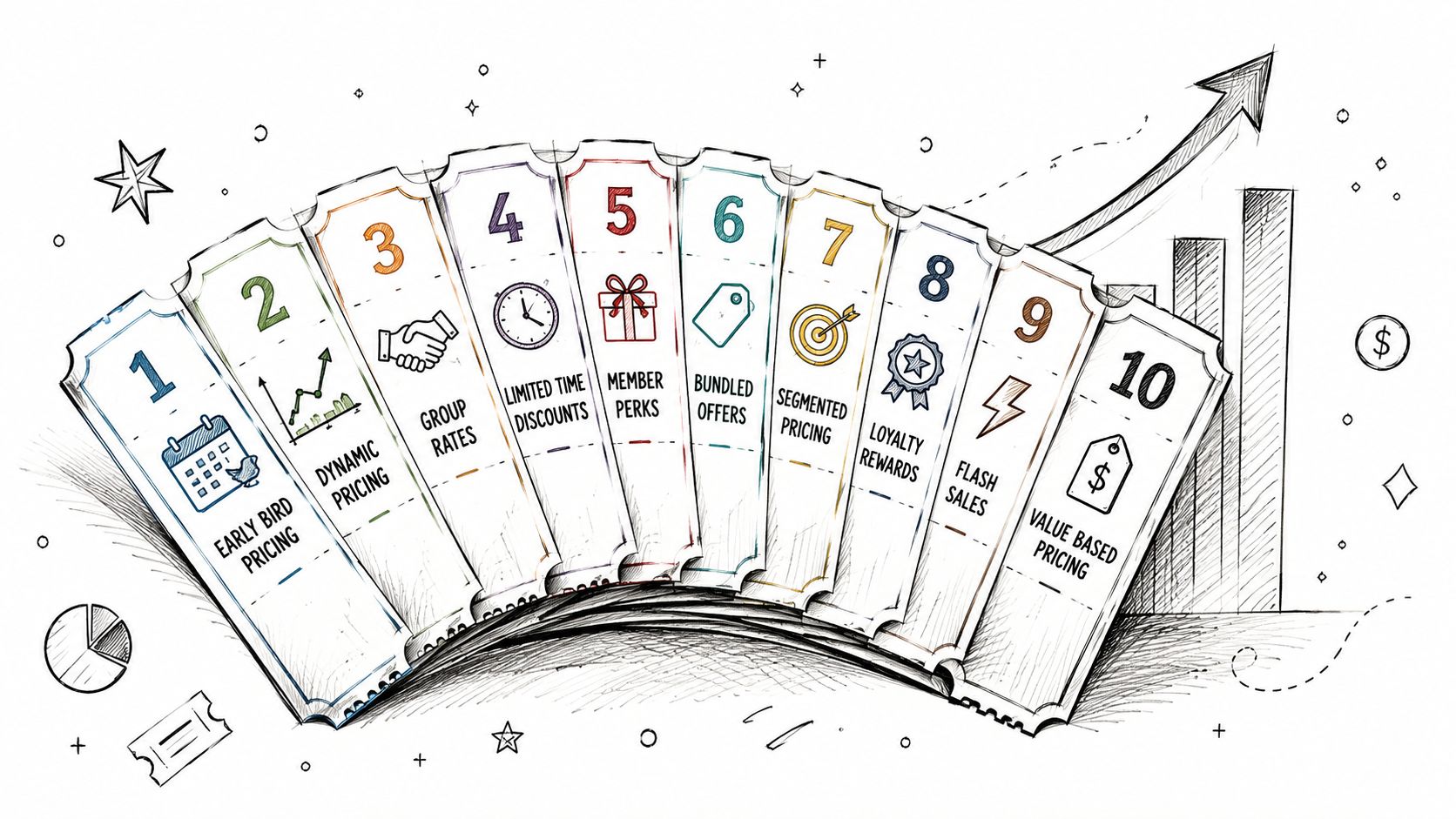
If you’re still using one-size-fits-all pricing, you’re leaving money on the table. Your ticketing structure should be a strategic part of your funnel, designed to pull in more revenue while offering real value to different people.
Instead of a single "General Admission" ticket, build out a tiered system that speaks to different needs and budgets. It's easy to do inside a flexible platform.
Sponsors are often the financial backbone of an association or conference. But far too often, their "presence" is just a logo slapped on a webpage. That’s a huge missed opportunity. A truly effective funnel turns those static sponsor profiles into lead-generating machines.
With GroupOS, you can give your sponsors dedicated profiles where they can actually showcase their value, not just their name. Give them the tools to build an interactive hub that works for them.
By thinking about each page this way—with a clear purpose and a relentless focus on the user—your funnel templates stop being just a plan and start becoming a predictable engine for growth.
Getting someone’s email is just the starting line. The real magic—and frankly, where most funnels fall flat—happens in the follow-up. It's the consistent, valuable communication that turns a curious prospect into a registered attendee or a paying member. This is where automation becomes your secret weapon, letting you build relationships at scale without losing that personal feel.
The point isn't just to blast out emails. It’s about sending the right message at the right time. A solid funnel template helps you map out entire communication flows triggered by what people actually do. Someone signs up for your webinar? Bam. They get a welcome email, a few reminders leading up to the event, and a follow-up with the recording afterward, all without you lifting a finger.
For any association or event-based business, a few automated email campaigns are absolutely essential. They handle the heavy lifting of engagement, freeing you up to think about the bigger picture.
Here are the flows you should build first:
You don't have to start from a blank page. You can get a huge head start by looking at what works in other industries, like these ecommerce email templates that actually convert.
Your automation should feel less like a robot and more like a helpful concierge. Personalization is everything. Use the data you have—like a member’s job title or interests—to make every message feel like it was written just for them.
Email is the workhorse of automation, but a modern funnel uses every tool in the box to create a much richer experience. This is especially true in the middle of the funnel, where your goal is to build a real sense of community.
This is where a customer engagement platform like GroupOS really shines. You can use its built-in tools to create deeper connections that email alone can't replicate.
Think about it: you could create a private channel just for webinar registrants to chat and ask questions before the event. Or a dedicated group chat for new members to meet each other. These little touchpoints make your organization feel alive and accessible, building the trust you need to turn a lead into a loyal advocate. By automating the invites and reminders for these channels, you create a seamless journey that nurtures people from every possible angle.
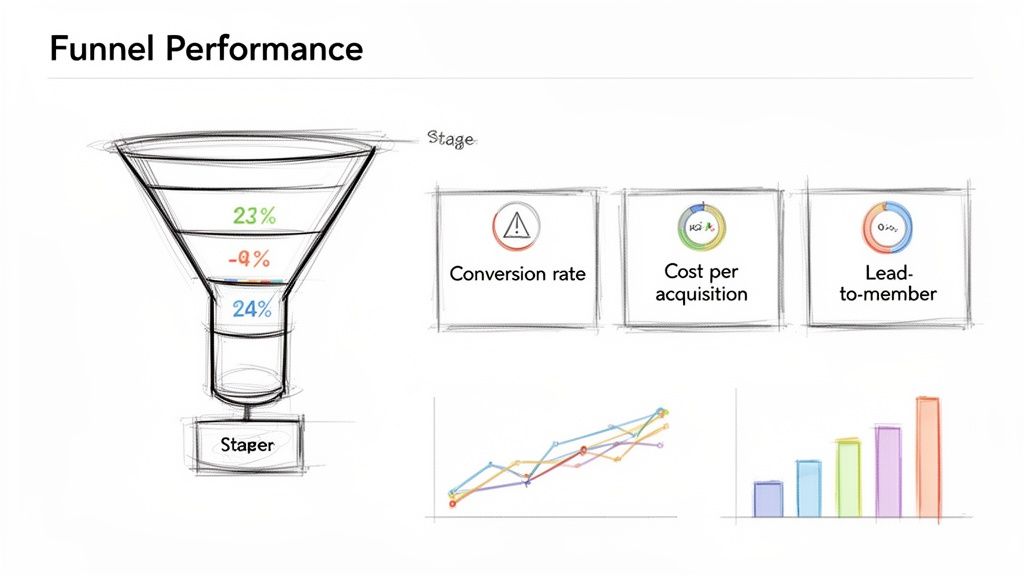
If you aren't measuring your funnel's performance, you're flying blind. A beautiful funnel that doesn't actually convert is just a pretty website, not a growth engine. To get predictable results for your association or event, you have to get comfortable with the numbers.
This doesn't mean you need a PhD in data science. It’s about creating a simple, clean dashboard that shows you the health of your member acquisition or event registration process at a glance. You need to know exactly where people are falling out of the process so you can fix the leaks.
Every funnel has a few make-or-break moments. For associations and event organizers, these are the key stages that tell the real story of how a stranger becomes a member or attendee.
Tracking these numbers stage-by-stage is how you find out where your funnel is bleeding money. For example, in many B2B funnels, the conversion from a marketing lead to a sales-ready lead can drop to just 13% on average. That’s a massive choke point. By keeping an eye on your own numbers, you can find your own weak spots and start fixing them. You can dig deeper into these kinds of numbers with these SaaS marketing funnel benchmarks and statistics.
Think of your funnel like a series of gates. Your job is to see how many people make it through each one. More importantly, you need to figure out why the others are turning back. Is the path confusing? Is what’s behind the next gate not compelling enough? Your data holds the answers.
Once you know your conversion rates, the real work begins. You can start asking the right questions.
Let's imagine your Visitor-to-Lead rate is fantastic, but very few of those leads ever buy a membership. What does that tell you? It suggests your freebie or initial offer is a winner, but the value of full membership isn't coming across in your emails or on your sales page.
On the other hand, if your landing page gets tons of traffic but almost no one signs up for your lead magnet, the problem is right at the top. Your ad targeting might be off, or the copy on the page simply isn't connecting with the right people.
This data-first approach takes the emotion and guesswork out of the equation. Inside the GroupOS dashboard, you can see all of these numbers in one place, connecting your marketing spend directly to new members and event registrations. This is how you stop guessing and start making smart decisions that actually improve your results.
When you start digging into sales funnels, it's natural for questions to pop up. This is especially true when you're trying to make a standard template work for the unique world of associations, events, and membership businesses. Let's clear up some of the most common sticking points so you can move forward with confidence.
This question comes up all the time. The short answer? Yes, absolutely.
Think about it this way: a funnel designed to attract a brand new member to your association has a completely different job than one built to sell a $5,000 sponsorship package for your annual conference. Each goal, audience, and price point requires its own unique psychological journey, its own messaging, and its own set of calls to action. Trying to use a one-size-fits-all approach is a recipe for poor results.
It’s a common myth that once a funnel is built, you can just set it and forget it. The truth is, your funnel is a living, breathing system that needs regular attention to stay effective. You don't have to tear it down and rebuild it every month, but a quarterly review is a really smart habit to get into.
Dive into your analytics. Where are people dropping off? Is one of your follow-up emails getting almost zero clicks? These are tell-tale signs that a specific part of your funnel needs a tune-up.
I always tell my clients to think of their funnels like a car. You don't wait for it to break down on the highway to get an oil change. Regular maintenance keeps it running smoothly. The same principle applies here—small tweaks like rewriting a headline or swapping out a testimonial can lead to huge lifts in conversion rates over time.
This kind of proactive monitoring is what separates the pros from the amateurs. It stops your performance from slowly fizzling out.
This is probably the single biggest hurdle that stops most organizations in their tracks. The good news is, the days of needing to be a coding guru are long gone. Modern platforms with drag-and-drop editors and pre-built sales funnels templates are made for people like us—marketers and organizers, not developers.
While you don't need to write code, there are a couple of skills you absolutely should focus on:
Honestly, if you can write a good email and understand a simple performance report, you have what it takes. The technology is just the tool to bring your strategy to life.
Ready to stop guessing and start building funnels that actually convert for your organization? GroupOS gives you the all-in-one platform you need, complete with intuitive page builders, automated email sequences, and powerful analytics. Start your free trial today and see how easy it can be.