February 21, 2026
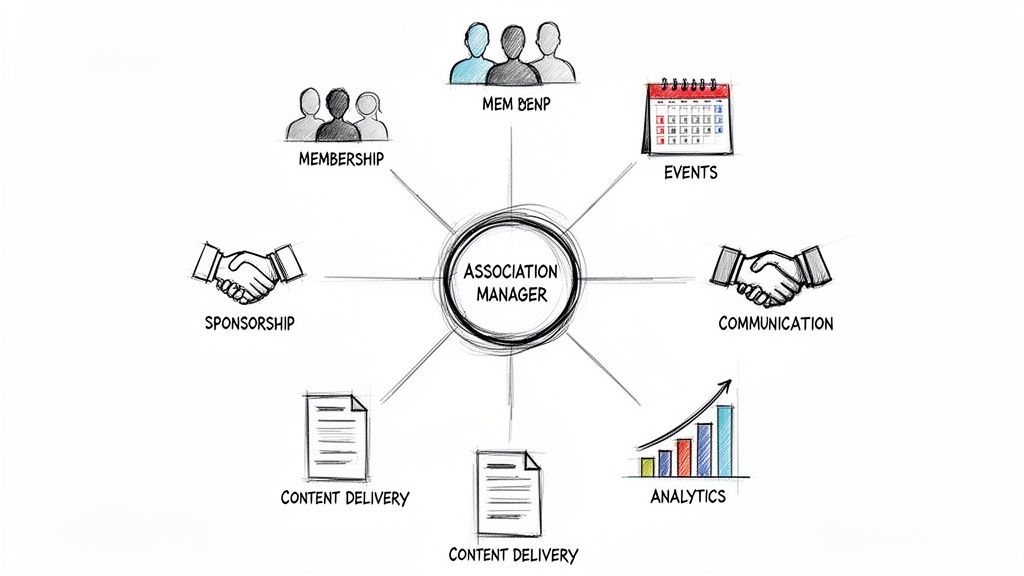
At its heart, association management is the art and science of running a member-based organization. It's the complete playbook for handling everything from day-to-day operations and financial stewardship to building a strong community and planning standout events. The goal is simple: deliver undeniable value to members and secure the organization's future.
Think of your association as a living, breathing city. Members are the citizens, events are the bustling town squares, and membership dues are the taxes that fund public services. Association management, in this case, is the city hall, public works department, and communications office all in one. It’s the essential, often invisible, infrastructure that keeps the lights on and allows the community to flourish.
Without a solid management structure, things quickly devolve into chaos. Members can't find what they need, events feel thrown together, and the finances are a mess. Good management brings order, turning a loose collection of individuals into a powerful, engaged community that practically runs itself.
It's the function that answers the big questions:
Not long ago, association management was mostly administrative work—think processing checks, printing newsletters, and manually updating member lists. But the role has completely transformed. Today, it’s a strategic engine for growth.
It’s less about simple bookkeeping and more about building a vibrant, thriving ecosystem. Modern association management uses technology to handle the repetitive, mundane tasks, freeing up leaders to focus on what truly matters: engaging members, forging partnerships, and planning for the future. This isn't just a minor update; it's a fundamental shift needed to stay relevant. The job is no longer just to manage a community, but to actively grow it. You can see how this overlaps with other community-focused roles in our guide on what is community management.
At its core, association management is about creating a predictable, valuable, and seamless experience for every member. When done right, members feel supported and connected, which directly translates into higher retention and sustained growth.
The impact of this field is massive. Association management currently supports communities that are home to nearly 80 million Americans. According to the Foundation for Community Association Research, these groups—from professional societies to neighborhood associations—now represent a third of the entire U.S. housing stock.
The growth is staggering. The number of associations jumped from around 373,000 to 377,000 in a single year, with thousands more on the horizon. This isn't a niche field; it's a cornerstone of how people connect, learn, and live. You can dive deeper into these trends at the Foundation for Community Association Research.
To better understand how these functions work in practice, let's break down the core responsibilities of modern association management. This table shows how traditional administrative tasks have evolved into strategic, technology-powered goals.
As you can see, the focus has shifted from merely performing tasks to creating outcomes. Technology isn't just a tool; it's the engine that enables associations to deliver more value, operate more efficiently, and grow more sustainably.
When you peel back the layers of association management, you find it's so much more than just administrative work. To really grasp what it's all about, you have to look at the specific jobs leaders do every day to build and keep a community alive and well. These responsibilities are the engine of the organization, making sure members feel seen and valued while keeping the lights on.
At its heart, the job is to craft an experience for members that feels both effortless and valuable. This requires juggling several key areas at once, each one crucial to the association's overall health and ability to grow.
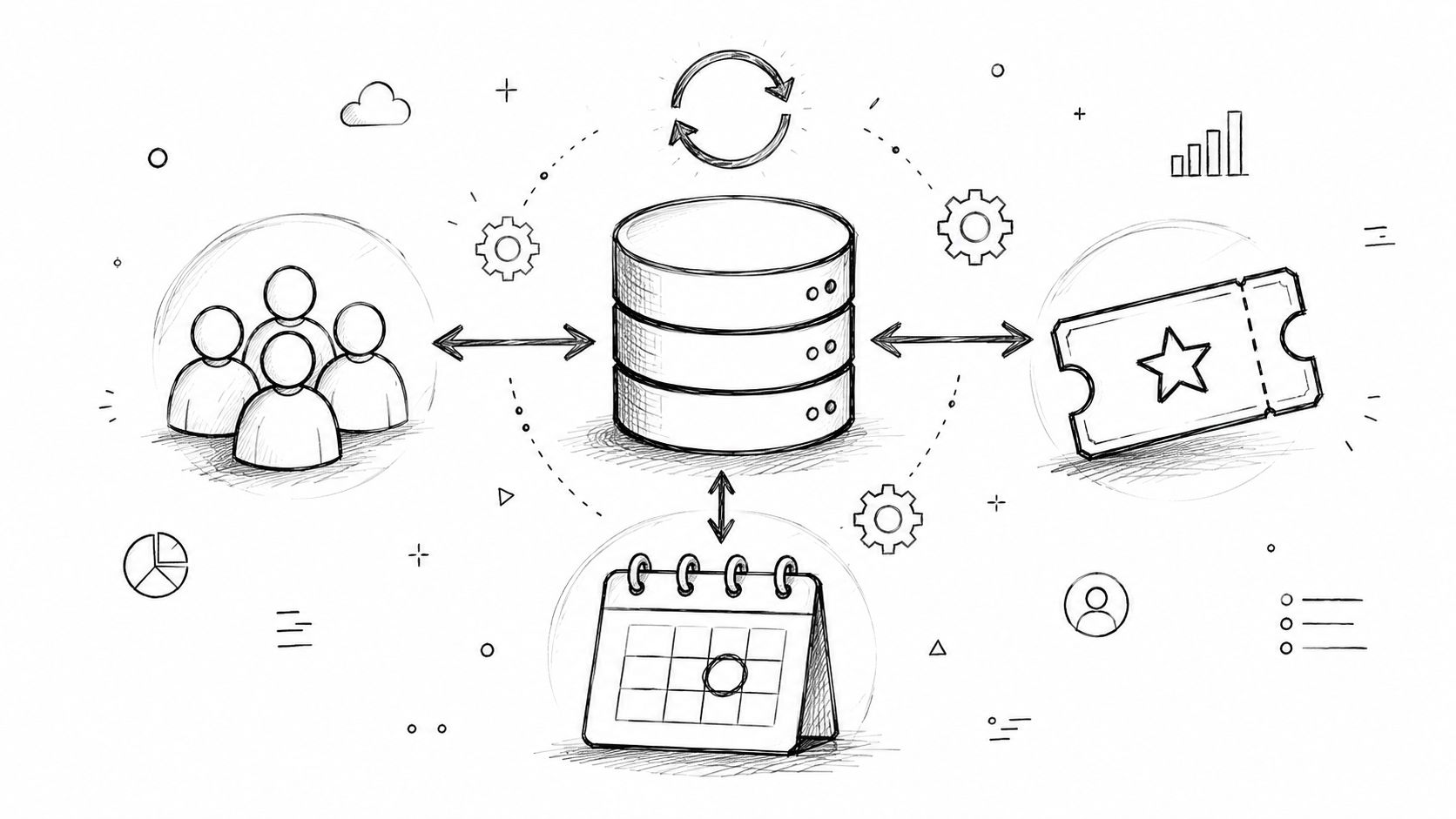
This map here gives you a good visual of how everything is connected. You've got management right in the middle, orchestrating the flow between members, events, finances, and communications.
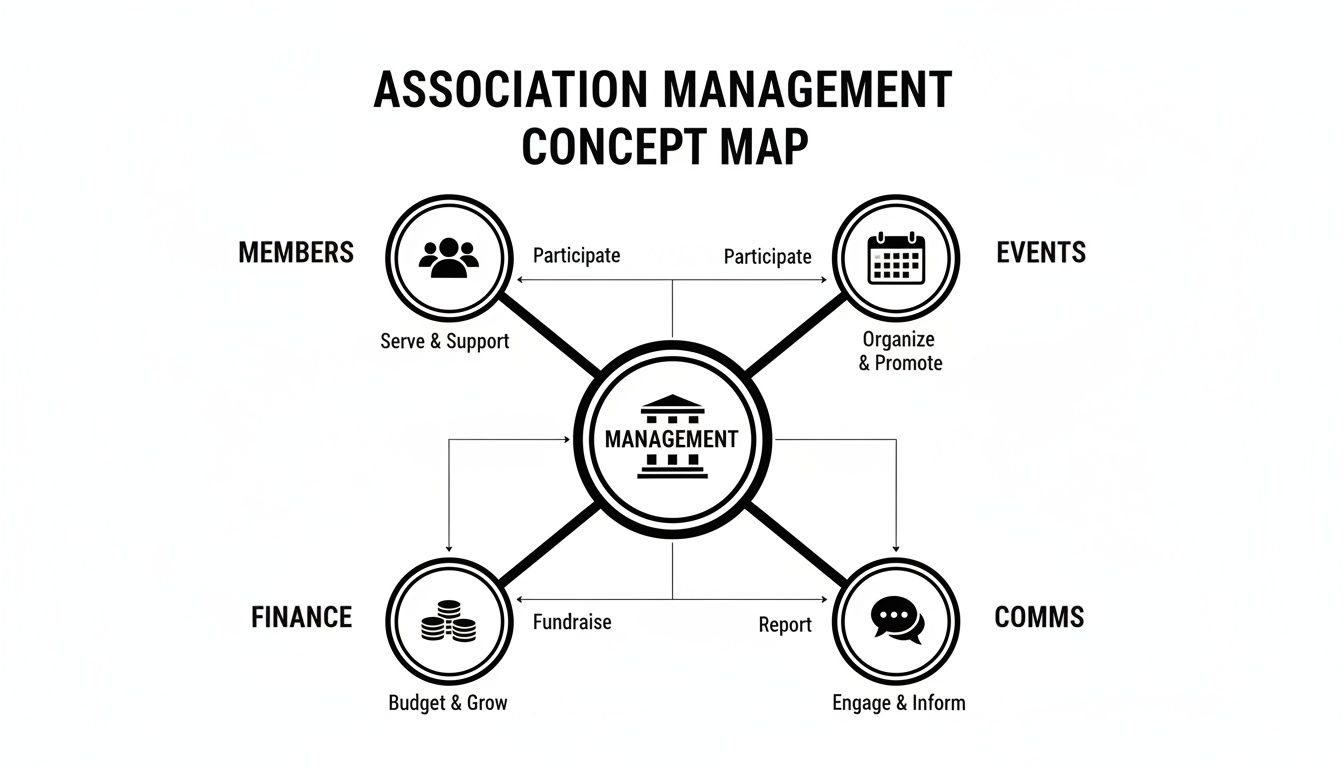
As you can see, nothing happens in a silo. A successful association manager knows how to balance these pillars so they support each other, creating a stable and effective organization.
The absolute foundation of the role is membership management. This isn't just about sending out invoices for dues; it's about walking with members on their entire journey with your organization. This lifecycle approach is what creates a consistently great experience, from the moment they first hear about you to their long-term involvement.
A smart member lifecycle strategy covers all the bases:
When you focus on the whole journey, the results speak for themselves. Associations that actively manage the member experience see a 15-20% higher likelihood of renewal compared to those that just let things ride.
Events—whether they’re virtual, in-person, or a mix of both—are often the most powerful way an association connects with its members. They’re absolutely vital for building community, sharing knowledge, and bringing in revenue that isn't tied to dues. This responsibility means sweating every single detail, from the first brainstorming session to the post-event wrap-up.
Modern event management looks something like this:
The real magic of an event often happens after it’s over. By analyzing attendance data, seeing which sessions were most popular, and reading attendee feedback, managers can prove the event’s ROI and fine-tune their strategy for the next conference.
Solid financial oversight is the bedrock of any association that plans to stick around. This isn't just about managing the current budget; it's about actively looking for new ways to bring in money. While a community manager might focus more on engagement, the association manager has to be a sharp financial steward. You can dig deeper into these different roles by learning about what a community manager does.
Financial responsibilities really fall into two main buckets:
1. Financial Operations
2. Non-Dues Revenue Generation
Beyond membership fees, the smartest managers find other ways to generate income. This could mean securing event sponsorships, selling educational courses, running a job board, or even creating premium membership tiers with special perks. Spreading out your income streams like this makes the organization much more resilient and less fragile.
Even with a passionate team and a clear mission, running an association means facing a few persistent, tricky problems. It seems like leaders are constantly wrestling with the same set of issues, from keeping members actively involved to managing a messy tangle of software. Naming these challenges is the first step to finally getting a handle on them.
The biggest struggle, by far, happens on the front lines of member engagement and retention. It’s one thing to attract new members, but it’s a completely different (and often harder) battle to convince your current ones to renew, year after year. This challenge usually points back to a much deeper problem: proving that membership is actually worth the cost.
If your members can't easily connect the dots between their membership and their career or personal growth, they won't think twice about letting it lapse. This isn't just a hunch; for many organizations, it’s a full-blown crisis.
Recent data from the Association Trends Report is pretty sobering: 41% of associations say their retention rates are flat, and another 14% are actively losing members. The root cause? A major value gap. A tiny 11% of associations believe their value proposition is 'very compelling.' This confirms what many of us have seen firsthand—the number one reason members walk away is a failure to see the organization's worth. You can dig into more of these findings in the 2026 Association Trends report.
This retention problem often comes down to a few classic missteps:
The key to turning your retention numbers around is being able to confidently answer the "What's in it for me?" question for every single member.
The modern member doesn't just want a library of resources. They expect a personalized experience that grows with them. When an association can't deliver that, it stops being an essential investment and starts looking like a disposable line item on a budget.
Another huge headache is the operational mess that comes from using a patchwork of different software tools. So many associations are basically holding their operations together with digital duct tape—using one system for email, another for event sign-ups, a third for the member database, and yet another for payments.
While each tool might do its one job well, the fact that they don't talk to each other creates a logistical nightmare. This setup is a perfect recipe for data silos, where critical member information gets stuck in separate buckets. For example, your event platform knows exactly who came to the annual conference, but that information never makes it over to your email system. Now you can't send a targeted follow-up to attendees without a clunky, manual process of exporting and importing spreadsheets.
This kind of inefficiency causes a domino effect of problems:
These data issues are more than a minor annoyance; they actively hold an association back from running smoothly and serving its members well. If this sounds painfully familiar, our article on common data integration challenges offers some great insights.
Ultimately, these two giant hurdles—weak retention and operational chaos—are two sides of the same coin. A fragmented tech stack makes it impossible to understand and connect with your members on a personal level. And when you can't do that, you can't demonstrate your value, which makes it incredibly hard to earn their loyalty. The only way forward is a strategic shift toward a unified, member-first approach.
How do some associations seem to grow effortlessly while others struggle to keep up? It’s not magic—it's their tech stack. After wrestling with member retention issues and operational chaos, the smartest leaders realize that juggling a dozen different software tools just doesn't work anymore. They've moved on from a fragmented toolkit to an integrated system that acts as a single command center for everything they do.
Trying to run an association with a patchwork of disconnected software for emails, events, and payments is a recipe for disaster. It creates isolated pockets of data (data silos) and burns out your staff with manual, repetitive work. Shifting to an all-in-one platform is a huge leap forward. It takes an organization from constantly putting out fires to strategically planning for the future.
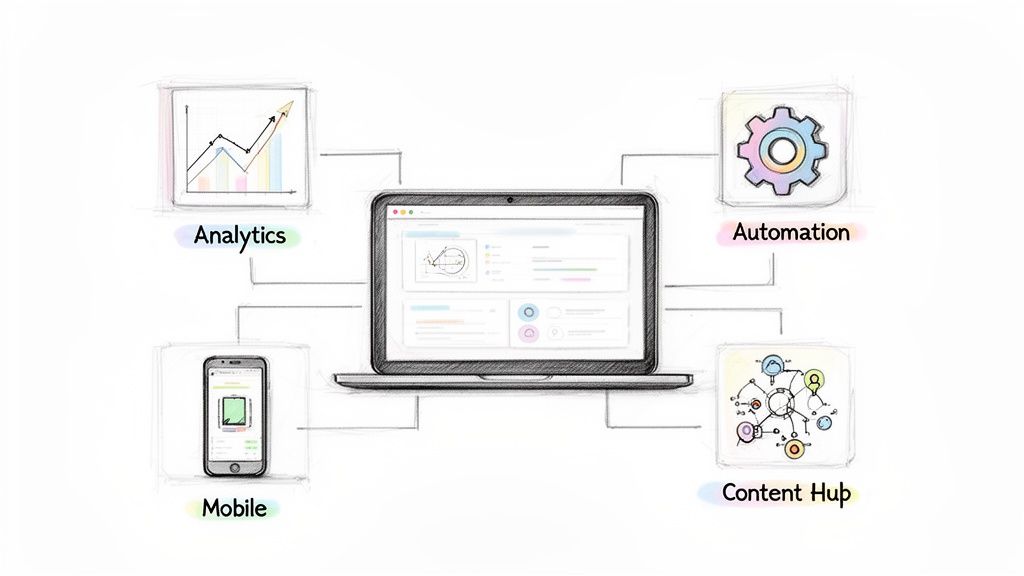
This isn’t just about making life easier for your team. It’s about crafting a smooth, professional member experience where every interaction feels connected. When all your tools talk to each other, you finally get a complete picture of your community.
One of the biggest wins of a unified system is bringing all member communication under one roof. No more jumping between a separate email marketing service, a clunky forum, and multiple social media channels. An integrated platform becomes the single source of truth for your members.
This immediately solves a few critical problems:
Of course, a comprehensive toolkit still needs to work with the outside world. For example, knowing the best social media management tools is still vital for reaching new audiences and driving them back to your central community hub.
A centralized content hub is one of the most powerful features of modern association software. Think of it as your organization's private, members-only library—a secure place for all your collective knowledge. This is where you can house everything from webinar recordings and research papers to professional development courses and industry reports.
By creating this single destination for high-value content, you tackle the number one reason members leave: they don't see the value. A well-organized, easy-to-access content hub makes the benefits of membership tangible and available 24/7.
A unified platform transforms your association from a simple membership group into an indispensable career resource. When members know exactly where to find the insights they need, your value proposition becomes crystal clear.
Without integrated data, association leaders are flying blind, often forced to make decisions based on gut feelings alone. An all-in-one platform changes the game by giving you a single dashboard with real-time analytics on every part of your operation.
This data-driven approach empowers you to:
The industry is catching on fast. According to one industry report, 92% of management companies are planning to grow their portfolios, and 63% of association leaders are optimistic about growing non-dues revenue. The problem? Most admit they don't have the systems in place to make it happen. This gap highlights just how critical a robust, integrated toolkit is for turning ambition into reality.
Picking the right technology is one of the most important calls an association leader can make. The right software isn’t just about making admin work easier; it becomes the very heart of your community—the place for member engagement, event management, and real, sustainable growth.
On the flip side, the wrong choice can lead to a world of pain: frustrated staff, a clunky member experience, and a budget that just seems to evaporate.
Making a good decision starts with asking the right questions, but not of the vendors—of yourselves. Before you even sit through a single demo, your team needs to get on the same page about what problems you're actually trying to solve. What does a "win" look like for your organization? Getting this internal alignment right from the start is the bedrock of a successful technology partnership.
Once you start looking at different platforms, it's easy to get lost in a sea of flashy features and sales pitches. These questions will help you cut through the noise and stay focused on what really matters for your association's health.
Getting straight answers to these questions will quickly separate the true partners from the slick salespeople.
One of the biggest forks in the road you'll face is whether to go with a single, integrated platform or try to stitch together multiple specialized tools. There's no single right answer here—it all comes down to your association's budget, technical know-how, and long-term vision.
An all-in-one platform bundles everything you need—member database, event registration, communications, content—into a single, unified system. The big win here is having one source of truth for all your data, which gives both your staff and your members a clean, consistent experience.
On the other hand, a multi-tool stack means you pick and choose the "best-of-breed" tool for each job (think Mailchimp for email, Eventbrite for events, and so on). This gives you powerful features in each category, but it comes at a cost: a ton of effort to make them all talk to each other and keep the data in sync.
Choosing a platform is about more than just features; it's a commitment to a specific operational philosophy. An all-in-one system prioritizes unity and efficiency, while a multi-tool stack prioritizes specialized functionality at the cost of integration.
To make this decision clearer, it helps to see the trade-offs side-by-side. Our complete guide to the best association management software goes deeper, but the table below covers the main differences.
This checklist can help you weigh which technology approach is the right fit for your organization's needs, budget, and internal resources.
So, what’s the verdict? It really boils down to your team's capacity. For most associations, the simplicity, data clarity, and vastly better member experience of an all-in-one platform create a much stronger foundation for growth.
Let's be honest: great association management isn't just about handling administrative tasks. It's the engine that actually drives sustainable growth. When you stop patching together disconnected tools and making reactive decisions, you can start building a resilient organization that your members truly value. This is your roadmap for making that happen.

Getting there requires a shift in how you think and work. The goal is to move beyond simply managing tasks and start orchestrating a seamless member experience. You want to build a community so valuable that when renewal time comes around, it’s a no-brainer for every single member.
Modernizing your association isn't a single leap; it’s a journey with four key stages. Each step builds on the one before it, creating a solid foundation for long-term success and member loyalty.
Take an Honest Look at Your Processes: Start with a simple audit of your current tech and workflows. Where are the bottlenecks that drain your team's time and frustrate your members? Pinpoint your data silos and identify the manual tasks eating up the most hours.
Get Clear on Your Member Value: Once you know what's broken, you can sharpen your value proposition. What specific problems are you solving for your members? A strong, clear answer to that question should be the guiding light for both your technology choices and your content strategy.
Choose a Platform That Unifies, Not Divides: Find a technology partner that solves your biggest headaches. An all-in-one platform like GroupOS can replace a chaotic collection of different tools, bringing all your data into one place and creating a single, branded home for your community. This kind of integration is the key to efficiency.
Measure What Actually Matters: It’s time to look past vanity metrics like total member count. Instead, focus on meaningful engagement data. Track who is actively participating, what content they’re consuming, and how they rate your events. This is how you discover what really resonates.
This methodical approach turns association management from a cost center into a strategic growth driver. It aligns your technology, operations, and member experience toward a single, unified goal: creating a community people want to join and, more importantly, a community they want to stay in.
Ultimately, the right technology partner gives you more than just software. They give you a faster path to building a thriving, future-proof organization.
Diving into the world of association management always sparks a few specific, practical questions. Getting straight answers is the first step toward making a smart decision for your organization's future. Here, we'll tackle some of the most common queries we hear from leaders just like you.
Our aim is to give you direct, no-fluff information to clear up confusion and set the right expectations for what a solid management strategy can really do.
It’s a common point of confusion, but the distinction is pretty simple when you break it down.
An association manager is your human strategist. This is the person or team steering the ship—planning goals, running programs, and overseeing operations. They're the ones building relationships, making tough decisions, and guiding the staff.
On the other hand, association management software is the toolkit they use to get the job done right. It's the platform that handles the administrative heavy lifting like collecting dues, managing event sign-ups, and sending out member updates. This frees up the manager to focus on what really matters: strategy and building a strong community. Think of it as the manager’s digital command center.
The price tag for association management software can be all over the map, but it usually comes down to a few key things. Most platforms today operate on a subscription basis, typically billed once a year.
Your final cost will likely be shaped by:
A simple tool might start at a few hundred dollars a month. But for a mid-sized or large association needing an all-in-one system, you could be looking at anywhere from several hundred to a few thousand dollars monthly.
The real key is to stop thinking of it as a cost and start seeing it as an investment. The right platform should easily pay for itself by making your team more efficient, keeping members around longer, and opening up new ways to bring in revenue.
Justifying the expense means you have to measure the return on your investment (ROI). Knowing who you are trying to attract is the foundation for any growth, and resources on defining your Ideal Member Profile can give you a great framework for that.
Once you're up and running, you can calculate the ROI by looking at real, tangible improvements:
Ready to stop juggling a dozen different tools and start building a community that thrives? GroupOS gives you an all-in-one platform to manage your members, events, and content without the headache. Book a demo today and see how you can unify your operations and accelerate growth.