February 19, 2026

Finding the right membership based website builder is like choosing the foundation for a house; it must be strong, scalable, and perfectly suited to your vision. The platform you select will dictate everything from member experience and content delivery to your administrative workload and revenue streams. This decision is critical for professional associations, event organizers, and subscription-based businesses alike.
This guide moves past the marketing noise to offer a detailed, practical comparison of the top 12 platforms available today. We dive deep into each solution, analyzing its core strengths, exposing its limitations, and providing specific use cases to help you make an informed decision. Forget generic feature lists; we're focusing on real-world application and implementation considerations.
Our goal is to give you the clarity needed to find a system that not only manages memberships but actively fuels engagement and growth. Each review includes screenshots and direct links to help your evaluation process. We'll examine everything from payment processing and content gating to community features and event management, giving you a clear picture of how each platform performs in action. By the end, you'll know exactly which tool aligns with your specific operational needs and long-term goals.
GroupOS solidifies its position as a premier membership based website builder by offering a powerful, consolidated platform tailored for event-driven professional communities. It moves beyond basic site-building to provide a fully integrated ecosystem where ticketing, membership management, content delivery, and community messaging converge. This approach directly addresses a common pain point for associations and event organizers: the administrative burden of managing disparate tools for different functions. With GroupOS, organizations can run their entire operation from a single, white-labeled hub accessible on web, iOS, and Android.
The platform's core strength lies in its ability to connect the event lifecycle directly to ongoing community engagement. Instead of attendee interaction ending when an event concludes, GroupOS provides the tools to maintain momentum. Features like a built-in agenda builder, QR code check-ins, and post-event video access are seamlessly linked with community channels and direct messaging, creating a persistent space for connection.

GroupOS is particularly effective for organizations where events are a central part of the value proposition. Its feature set is designed to both execute flawless events and monetize the surrounding community.
A case study with Million Dollar Sellers highlights the platform's real-world impact, citing a 20% increase in attendee engagement and a 30% reduction in administrative workload.
"I love that my team and I could use GroupOS to manage all our events and community engagement in one place. My members love how intuitive the app is. They’re way more engaged now!"
- Ian Sells, CEO of Million Dollar Sellers
Pricing for GroupOS is not publicly listed; prospective customers need to contact the sales team for a custom quote. However, the company offers a no-credit-card-required free trial that includes a custom setup, allowing organizations to experience the platform's capabilities firsthand before committing. This model suggests a focus on ensuring a good fit for medium-to-large organizations that require a more robust, enterprise-grade solution. The onboarding process includes support for seamless member migration and connects to over 350 SaaS applications, simplifying the transition from an existing tech stack.
Website: https://groupos.com
For organizations already committed to the WordPress ecosystem, MemberPress stands out as a powerful and flexible plugin-based solution. It's not a standalone website builder; instead, it transforms a standard WordPress site into a full-featured membership platform. This approach gives users complete control over their data, hosting, and overall site architecture, making it ideal for those who prioritize customization and ownership. It’s a top choice for creating a membership based website builder experience on your own terms.
MemberPress excels at creating granular access rules, allowing you to protect pages, posts, custom post types, and even individual files. You can schedule content to "drip," releasing it to members over time, which is perfect for online courses or sequential training programs. This functionality is central to building a valuable member experience, as explained in resources that cover what a membership site is and how to structure its content.
Its built-in course creator is a significant advantage, providing Learning Management System (LMS) capabilities directly within the plugin. Users can build curricula, add quizzes, and track student progress without needing a separate, costly LMS integration.
Pros:
Cons:
Website: https://memberpress.com
Memberstack offers a unique approach by acting as a no-code membership layer that integrates with existing front-end frameworks like Webflow, Carrd, and custom HTML sites. It is not an all-in-one builder but rather a powerful toolkit for adding secure user accounts, gated content, and Stripe-powered payments to a website you design and control. This makes it an excellent membership based website builder solution for designers and agencies who prioritize complete creative freedom over a bundled CMS.
The platform is designed to be fast, allowing users to add membership functionality without writing server-side code. Memberstack handles the complex backend logic of authentication and billing, letting creators focus on the user interface and member experience. As projects grow, understanding the roles of different professionals can be beneficial; the distinctions between a web developer vs web designer become important for teams looking to add advanced custom features beyond the platform's core no-code capabilities.
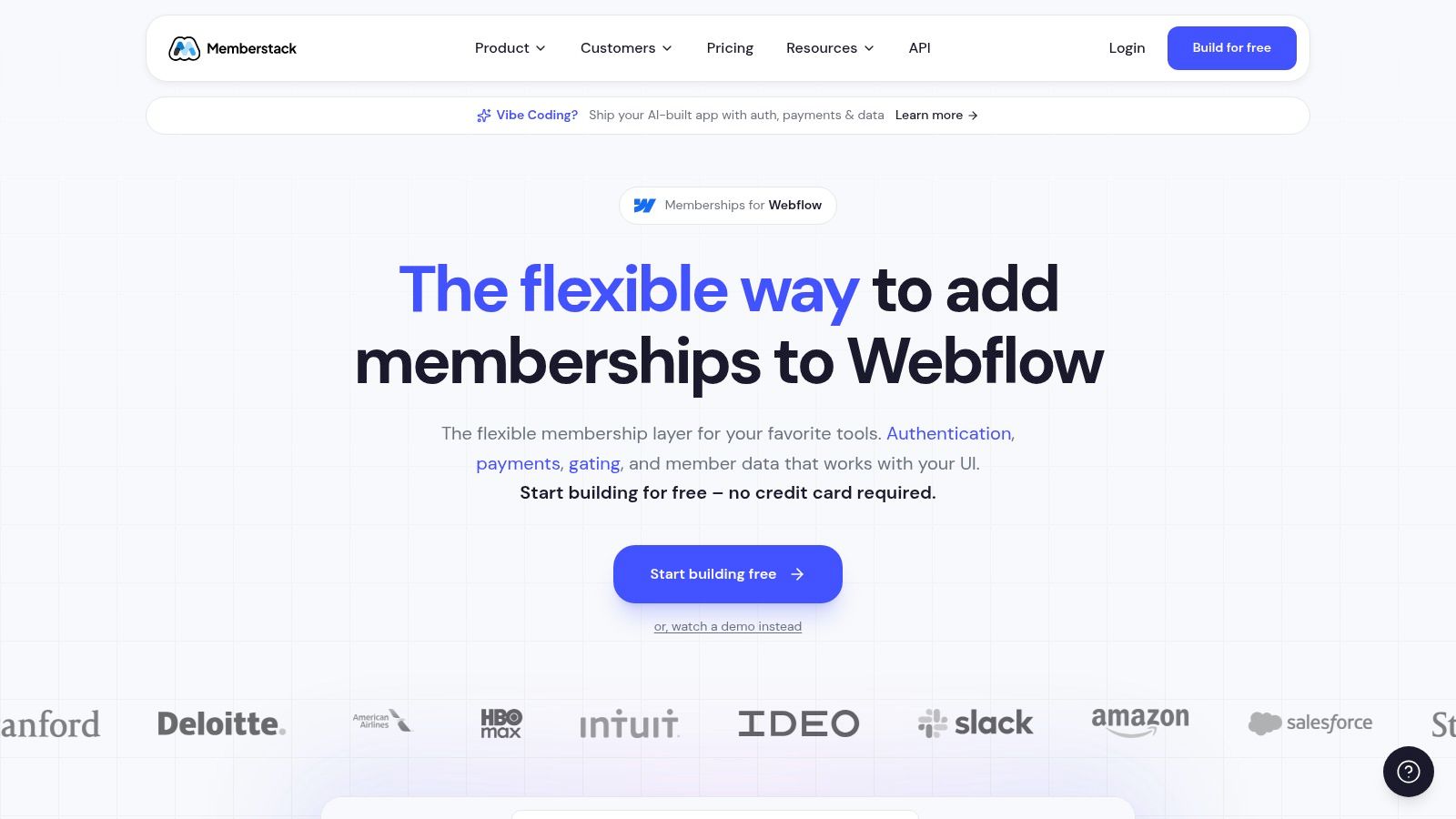
Its deep integration with Webflow is a standout feature, making it a go-to choice for the Webflow community. It provides social logins, SSO, and a data table feature for managing member information directly within the platform.
Pros:
Cons:
Website: https://www.memberstack.com
For creators who already have a website they love, MemberSpace offers a CMS-agnostic solution to layer on membership functionality without a complete rebuild. It’s designed to integrate with platforms like Squarespace, Wix, Webflow, and even custom-coded sites, making it exceptionally flexible. This approach lets you add protected content, member logins, and payment gateways directly onto your existing marketing site, effectively turning it into a membership based website builder without the migration headache.
The core strength of MemberSpace lies in its simplicity and speed of implementation. You can quickly lock specific pages or content behind a paywall, creating tiered access for different member levels. It provides a simple pop-up checkout experience that works with Stripe, including modern payment options like Apple Pay and Google Pay, which helps reduce friction for new sign-ups.
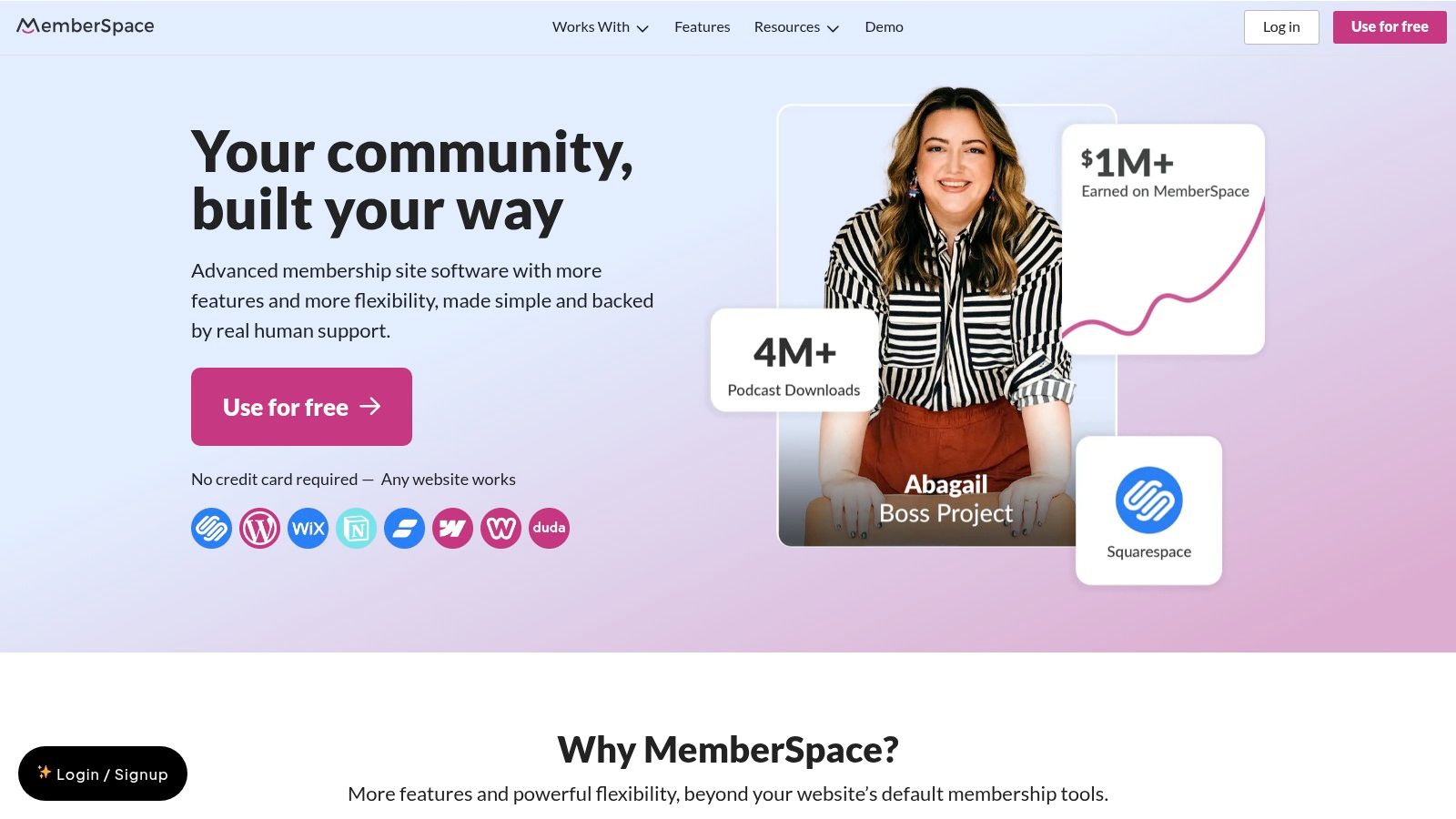
Its primary function is gating content, and it does this very well across nearly any platform. Rather than rebuilding your stack, you install a simple code snippet, connect Stripe, and choose which URLs to protect. This makes it a go-to for designers, consultants, and artists who want to monetize an existing portfolio or content hub.
Pros:
Cons:
Website: https://www.memberspace.com
Outseta takes a unique, all-in-one approach by combining the essential backend tools needed to run a subscription business. It’s not a visual site builder but a powerful engine that integrates authentication, billing, CRM, and communication tools into a single platform. This makes it a strong choice for businesses that want to reduce tool sprawl and manage their core operations from one dashboard, pairing it with any front-end builder like Webflow or a custom-coded site. It offers a consolidated alternative to a traditional membership based website builder stack.
The platform is designed to unify your tech stack, providing user sign-ups, payment processing via Stripe, and a built-in CRM to manage member relationships. It also includes email marketing and a help desk, eliminating the need for separate subscriptions to tools like Mailchimp or Zendesk. This headless-friendly model is perfect for founders and teams who prefer a specific front-end experience but need a robust, integrated backend to handle the business logic.
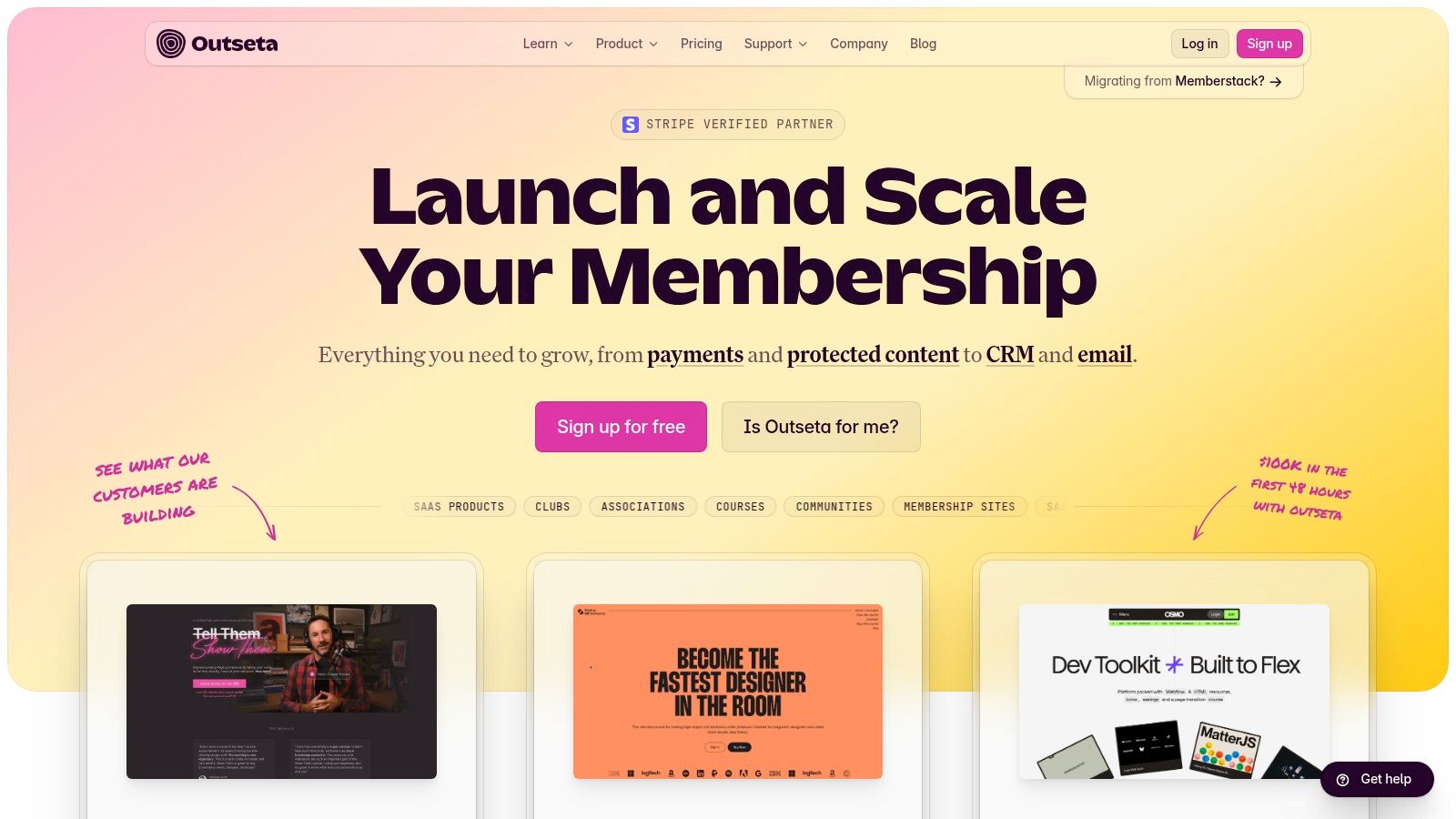
Outseta's primary strength is its consolidation of core business functions. A SaaS startup or a paid community can manage everything from user authentication and subscription tiers to targeted email campaigns and customer support tickets without cobbling together multiple services.
Pros:
Cons:
Website: https://www.outseta.com
Kajabi positions itself as a premium, all-in-one platform for serious creators and digital entrepreneurs. It moves beyond basic site building by integrating every tool needed to create, market, and sell content, including courses, coaching, and communities. This end-to-end system is designed for users who want to manage their entire business, from sales funnels to email marketing, within a single, cohesive dashboard, making it a powerful membership based website builder for those scaling their operations.
The platform provides a unified solution that handles everything from website and landing page creation to payment processing and sophisticated marketing automations. Its strength lies in its ability to connect different business functions seamlessly, such as triggering an email sequence when a member signs up for a specific product. This integrated approach is a core part of effective content monetization strategies, as it simplifies the customer journey from discovery to purchase.
Kajabi’s built-in funnels, called Pipelines, are a major differentiator, offering pre-built templates for lead generation, product launches, and other marketing campaigns. The platform also offers robust tools for affiliates, coaching programs, and podcasts, all managed from one place.
Pros:
Cons:
Website: https://www.kajabi.com
Podia is designed from the ground up for individual creators and small teams who need an all-in-one solution without a complex setup. It combines a website builder with tools for selling memberships, online courses, digital downloads, and coaching sessions. This integrated approach makes it a strong contender for anyone looking to build a membership based website builder and storefront quickly, focusing more on content creation than on technical maintenance.
The platform's strength lies in its simplicity and user-friendly interface. You can build your entire digital storefront, create landing pages, and manage your community and email marketing from a single dashboard. This consolidated system is ideal for solopreneurs who want to offer various digital products alongside their core membership without juggling multiple software subscriptions and integrations.
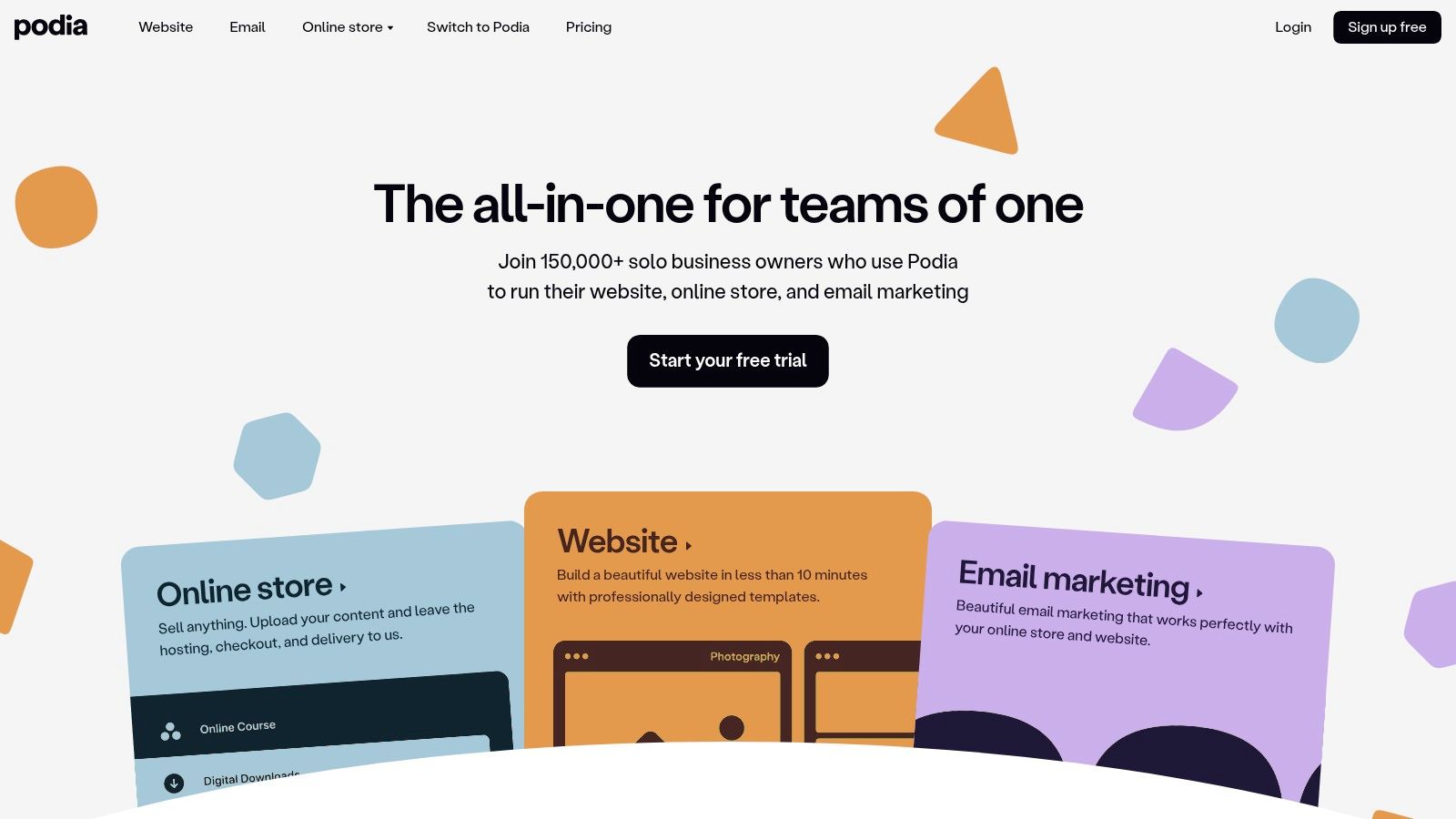
Podia’s built-in email marketing tools are a major benefit, allowing creators to nurture leads and communicate with members directly within the platform. It also provides flexibility in how you package your offerings, supporting product bundles, payment plans, and promotional coupons to help drive sales.
Pros:
Cons:
Website: https://www.podia.com
Circle has established itself as a premier community platform, blending engagement features with powerful monetization tools. It functions as a modern, white-labelable space for creators and organizations to build paid communities centered around courses, events, and interactive discussions. While it includes a lightweight site builder, its primary strength is creating a destination where members connect, learn, and participate, making it a distinct type of membership based website builder focused on interaction.
The platform excels at creating a user-friendly, branded environment that feels separate from the noise of social media. It centralizes member activity with features like live streams, event calendars, and course modules, all protected behind flexible paywalls. This integrated approach allows creators to manage their entire member journey, from acquisition to long-term engagement, within a single, cohesive system.
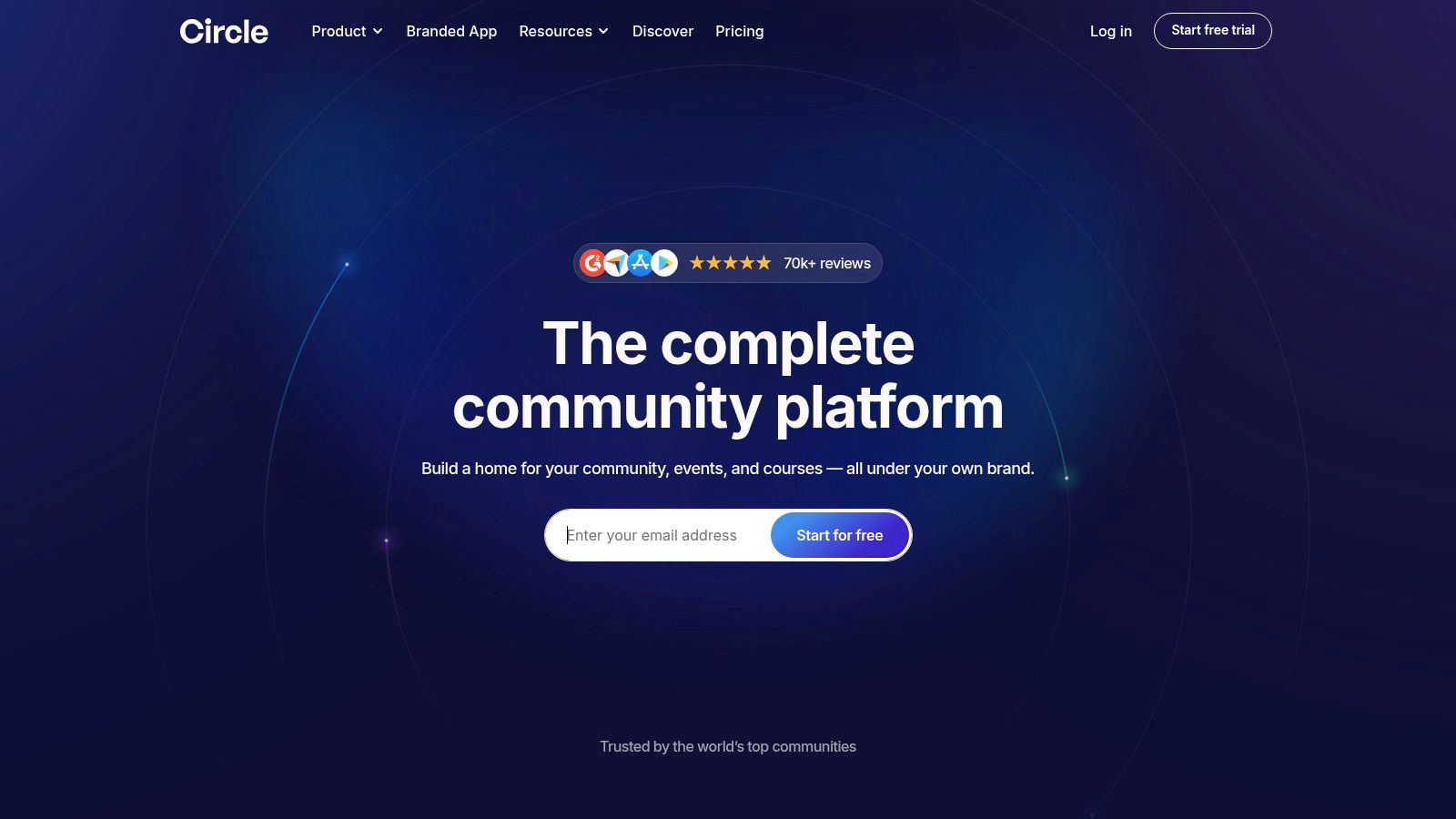
Circle's architecture is designed for active participation. Its live rooms, event scheduling, and course delivery tools are built directly into the community fabric, encouraging members to interact with content and each other. The platform's API also allows for deeper integrations and custom member experiences.
Pros:
Cons:
Website: https://circle.so
Mighty Networks positions itself as a community-first platform, ideal for creators and organizations that prioritize member interaction above all else. It combines community forums, online courses, events, and paid memberships into a single, cohesive environment. This focus on engagement makes it a powerful membership based website builder for those looking to foster a vibrant, active user base. A key differentiator is its native mobile app offering, which allows members to connect on the go, a critical feature for building a modern, accessible community.
The platform is designed to scale with your community's growth, from a small group to a large enterprise with a fully branded mobile app. Its structure encourages member-to-member connections through features like groups, direct messaging, and live events. This approach is fundamental for anyone learning how to create an online community that sustains itself through user participation. For organizations that need a mobile-native solution, Mighty Networks is a top-tier contender.
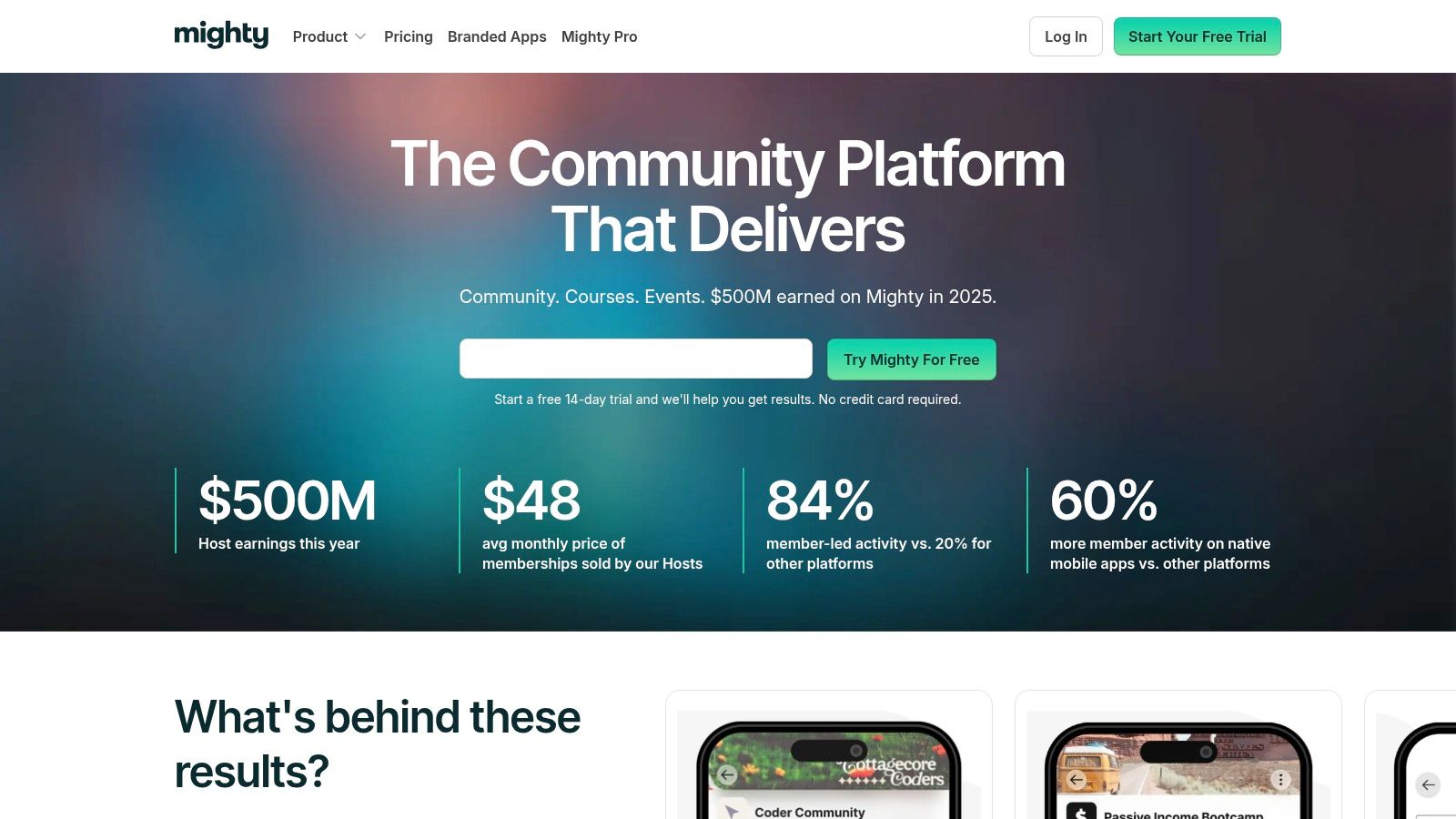
Its all-in-one design means you don't need to patch together separate tools for courses, events, and community forums. The platform’s AI tools also help admins with content creation and community design, making it easier to manage and grow the space.
Pros:
Cons:
Website: https://www.mightynetworks.com
For publishers and content creators who prioritize speed, simplicity, and direct audience ownership, Ghost stands out as a powerful open-source platform. Its hosted version, Ghost(Pro), combines a high-performance publishing engine with native membership and newsletter tools. This makes it an exceptional membership based website builder for organizations where content is the core value proposition, allowing for direct-to-consumer subscription models without technical overhead.
Ghost is built from the ground up to support modern publishing workflows. It includes native tools for creating paid newsletters and locking content behind a paywall, giving creators a direct line to their most dedicated followers. The platform’s focus on clean design and an excellent writing experience means the technology gets out of the way, letting creators focus on what they do best: creating valuable content for their members.

Its core strength lies in unifying a website, newsletter, and paid memberships into a single, cohesive system. This integrated approach ensures a seamless experience for both the administrator and the end-user, from sign-up to content consumption.
Pros:
Cons:
Website: https://ghost.org
Softr takes a unique approach by positioning itself as a no-code app builder that functions as a powerful membership based website builder for data-driven communities. Instead of a traditional CMS, it connects directly to data sources like Airtable, Google Sheets, or Notion to build interactive client portals, internal tools, and member directories. This makes it exceptionally well-suited for organizations whose membership value is tied to accessing and interacting with structured data.
The platform's strength lies in its ability to create granular, data-dependent user permissions. You can build complex, multi-tiered membership sites where content visibility is determined by a user's status in your Airtable base or Google Sheet. This allows for the rapid development of sophisticated, app-like web experiences without writing a single line of code, offering a flexible alternative to conventional website builders.
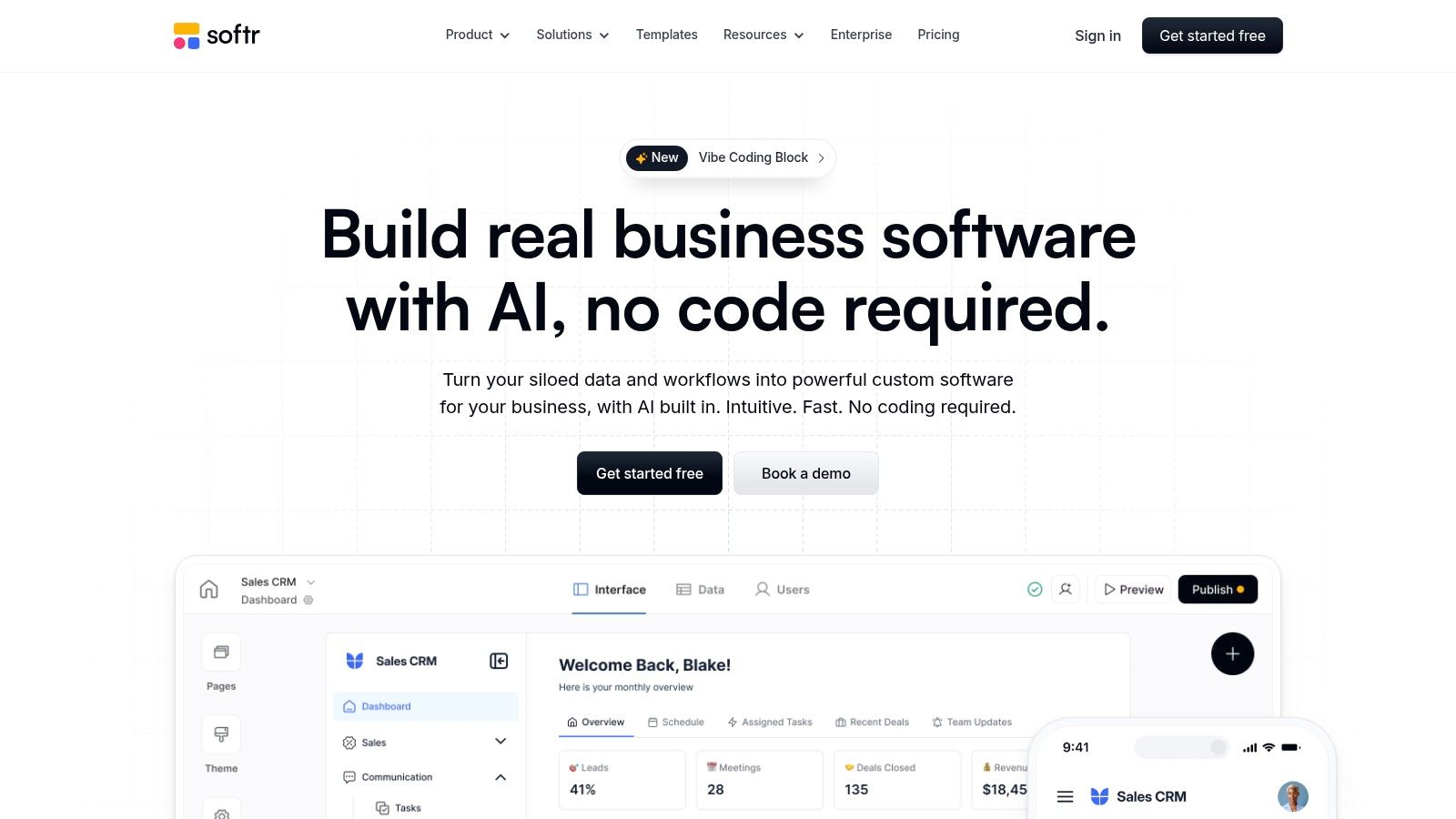
Softr excels at transforming spreadsheets and databases into fully functional, gated web applications. This is ideal for creating searchable member directories, partner portals where users manage their own data, or online courses where progress is tracked in an external data source. Its template library provides a strong starting point for these specific use cases.
Pros:
Cons:
Website: https://www.softr.io
Hivebrite is an enterprise-grade community platform designed for large-scale organizations like alumni associations, professional networks, and corporate communities. Rather than a simple content-focused tool, it serves as a central hub for complex organizations, providing sophisticated tools for managing members, chapters, and events. For groups needing a powerful and structured membership based website builder, Hivebrite offers a robust framework built for scale and deep engagement.
The platform excels at managing intricate organizational structures, such as national associations with regional chapters or corporate networks with various employee resource groups. Its granular visibility rules and member directory features allow administrators to control information flow and connection opportunities precisely. This is ideal for fostering professional development through features like job boards and dedicated mentoring modules.
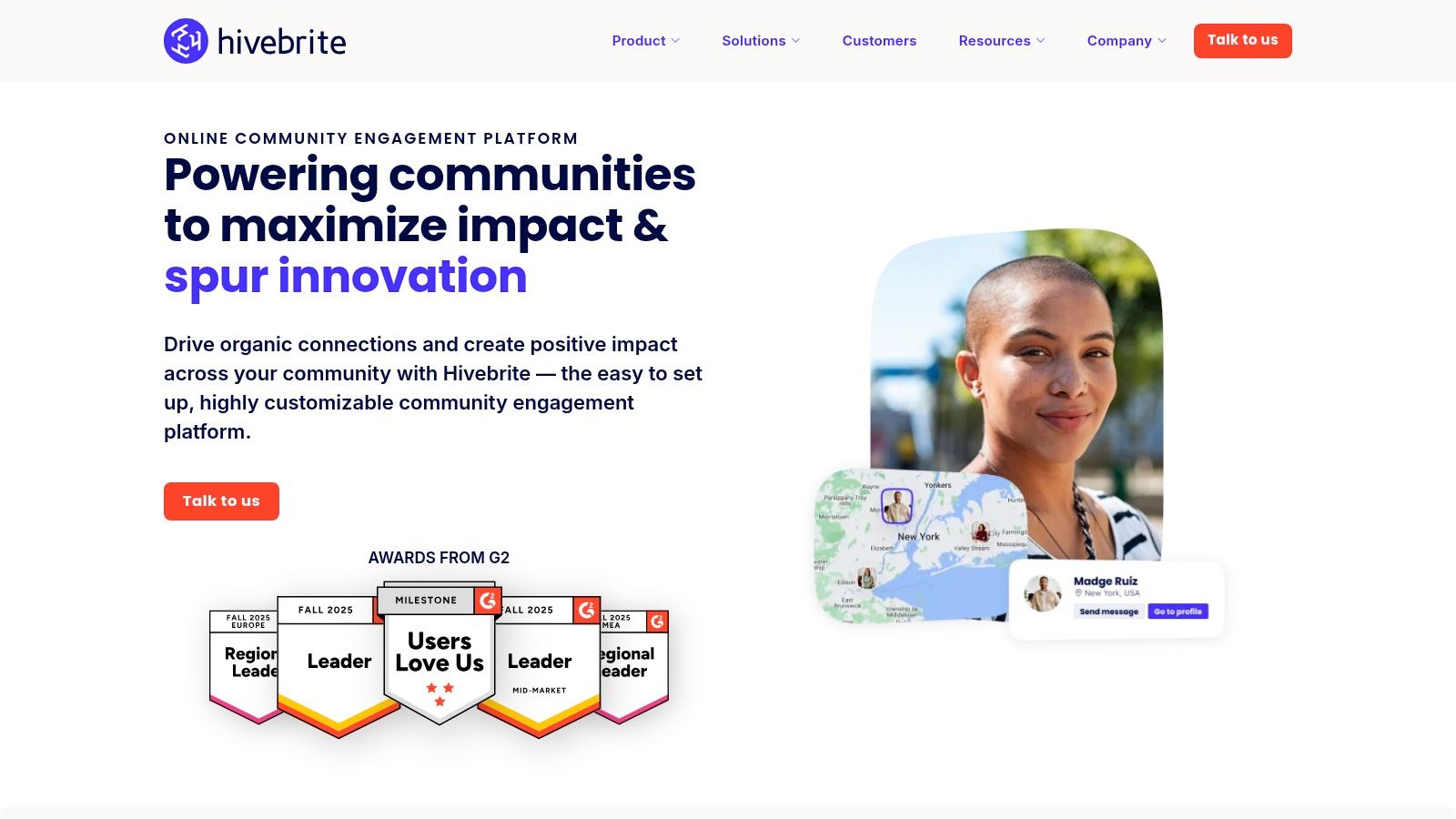
Hivebrite's strength lies in its all-in-one approach for large, structured groups. It combines membership management with communication tools, event ticketing, and career services, removing the need to piece together multiple disconnected systems.
Pros:
Cons:
Website: https://hivebrite.io
We've journeyed through twelve distinct platforms, each offering a different approach to building and managing a membership community. From the all-in-one course creation suites like Kajabi and Podia to the community-first models of Circle and Mighty Networks, the choices are plentiful. The key takeaway from this deep dive is that the "best" membership based website builder is entirely subjective; it depends completely on your organization's unique structure, goals, and operational needs.
Your decision-making process shouldn't be about chasing the longest feature list. Instead, it should be a strategic exercise in matching platform capabilities to your specific requirements. The ideal tool is not just software; it's a partner in your growth, an extension of your team that automates administrative tasks and frees you to focus on member value.
To move from analysis to a confident decision, focus on three critical areas that define your operational reality:
Before you sign any contracts, work through this practical checklist to ensure you're making an informed choice:
For many professional associations, event organizers, and corporate community managers, the ultimate goal is a unified ecosystem. The challenge lies in connecting disparate systems for ticketing, content delivery, community engagement, and sponsor management. This is where a truly integrated platform demonstrates its value, not just by offering features, but by creating a seamless experience for both members and administrators. The right membership based website builder will feel less like a tool and more like the foundation of your community's future.
Ready to see how an all-in-one platform can reduce administrative overhead and create a seamless member experience for your event-centric organization? GroupOS combines powerful ticketing, a year-round community app, and integrated sponsor monetization into a single, intuitive system. Schedule your personalized demo of GroupOS today and discover a smarter way to manage and grow your community.