May 5, 2026

Most advice on a social media engagement strategy is built on a bad assumption: that your team has endless time to post, reply, monitor, report, and still run the actual association.
That isn’t how professional associations work. The same person handling social often also manages speakers, sponsors, member emails, event logistics, board requests, and renewal campaigns. So when generic advice says “just engage more,” it ignores the operational reality that makes most social plans collapse after a few weeks.
Worse, the reward for all that effort is often unclear. Likes rise on one post, comments dip on the next, and nobody can say whether any of it improved member retention, drove event registrations, or created value for sponsors. A social presence can look active while producing very little business impact.
A strong social media engagement strategy for associations has to do something different. It has to respect limited team capacity, choose channels and formats with discipline, and treat public social platforms as feeders into an owned member experience, not the final destination.
Most broken social strategies don’t fail because the team is lazy. They fail because the strategy asks full-time staff to do work that doesn’t fit inside a normal week.
One source calls this the “real dirty, little secret of social media engagement strategies” and asks a blunt question: “Of the thousands of entities out there seeking to engage with consumers through social media, how much time per day is any one (actively employed at a full-time job) individual even able to engage?” That observation from Digital Clarity Group’s discussion of social media engagement constraints is painfully familiar to association teams.

Associations usually aren’t under-posting. They’re overextending.
They try to maintain Facebook, Instagram, LinkedIn, event pages, member emails, and maybe a Slack or WhatsApp group at the same time. Each channel demands its own format, timing, moderation style, and reporting logic. The work multiplies, but the insight rarely improves.
That creates a familiar cycle:
If you’re still treating every platform as equally important, it’s worth reviewing a more selective set of social media best practices for organizations with limited resources.
A lot of teams are still operating with a broadcast mindset. Announce the conference. Promote the webinar. Share the award winner. Post the sponsor graphic. Repeat.
That activity can keep feeds busy, but it doesn’t automatically create community.
Practical rule: If a post creates visibility but doesn’t help you identify, segment, or move a member toward a meaningful next step, it has limited strategic value.
The shift is this: public social shouldn’t carry the whole engagement burden. It should create awareness and capture intent. Your association’s asset is the environment where members consume content, join discussions, register for events, and build relationships over time.
A workable strategy starts by replacing three bad assumptions:
| Broken assumption | What it leads to | Better approach |
|---|---|---|
| More posting means more success | Team fatigue and inconsistent quality | Fewer posts tied to a clear outcome |
| All engagement is good engagement | Vanity reporting | Track actions that show member value |
| Social platforms are the community | Fragmented experience | Use social to route members into owned channels |
When teams make that shift, social gets simpler. It also gets more useful.
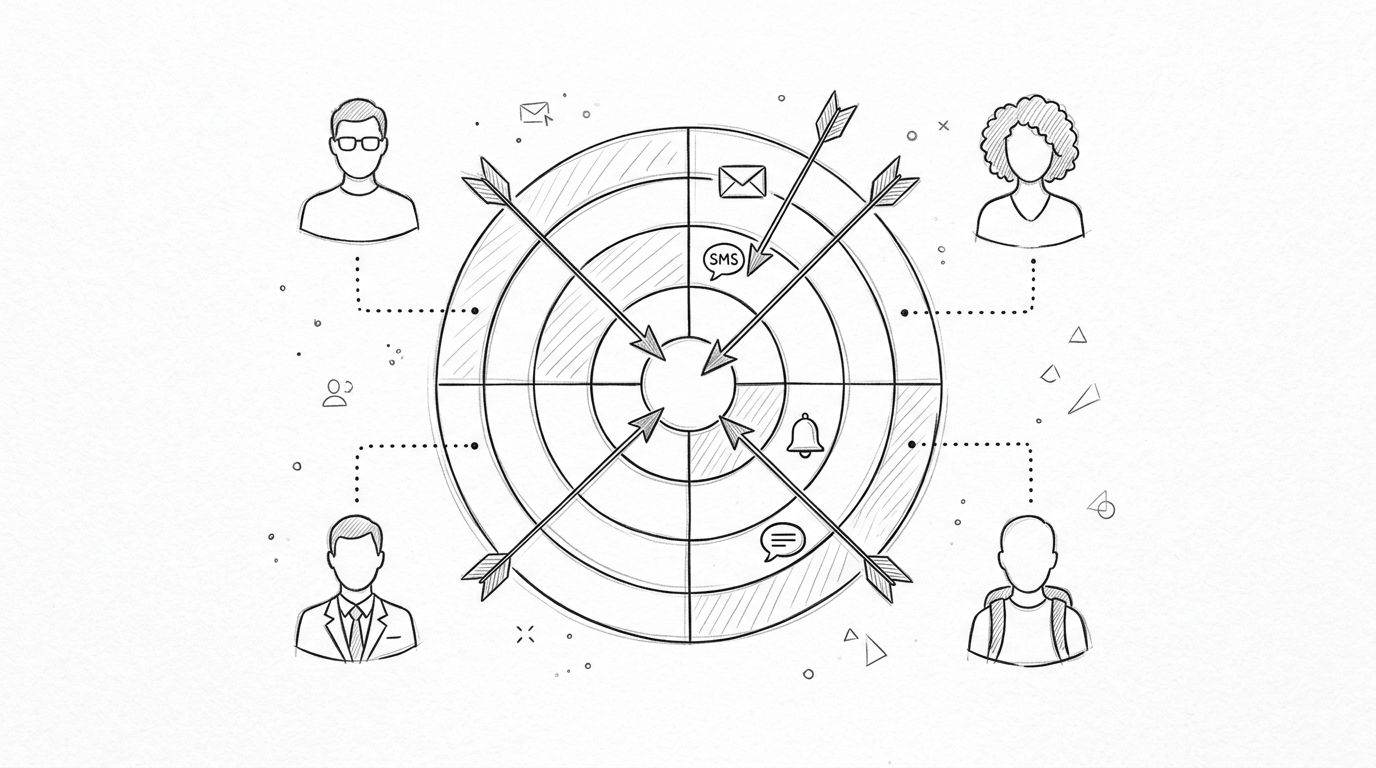
A social media engagement strategy falls apart fast when it starts with content ideas instead of member insight. Before you pick channels, formats, or posting times, you need a blueprint that answers two questions: who you’re trying to activate, and what business outcome that activation should support.
For associations, that blueprint has to go deeper than demographics. “Mid-career professionals” isn’t enough. You need to know what members are trying to solve, what they want from peer relationships, which topics influence renewal decisions, and where social fits into that journey.
The easiest mistake is building content around broad segments like students, executives, or vendors. Those labels help with reporting, but they don’t explain why someone would stop scrolling and engage.
A better approach is to map members by need state.
For example, one association may have all of these people on the same LinkedIn page:
Those are different engagement jobs. They need different prompts, different offers, and often different destinations after the click.
One practical way to uncover this is to pull language from member surveys, webinar Q&A, event feedback, support requests, and sales calls with sponsors. Then build content themes around what members ask for, not what the marketing calendar happens to need.
If your team needs a structured way to define these groups, this breakdown of customer segmentation models for communities and membership organizations is a useful planning reference.
“Increase engagement” isn’t a strategy. It’s a placeholder.
A useful social plan ties platform activity to an action your association cares about. In practice, that usually means your goals should point toward one of four outcomes:
Member participation
More discussion replies, content downloads, profile completion, or peer interaction inside your owned environment.
Event conversion
Social content that moves people from awareness to registration, session selection, or on-site participation.
Sponsor value
Activity that drives qualified attention toward sponsor pages, showcases, or lead capture opportunities.
Retention signals
Behaviors that show members are finding ongoing value, not just reacting to isolated posts.
Social metrics are useful when they explain member behavior. They become noise when they replace it.
There’s another reason to get this blueprint right. External platforms are less reliable than they used to be. Gartner projects that by 2025, 50% of consumers may either abandon or significantly limit social media usage because of distrust and fatigue, as summarized in Sprinklr’s social media statistics roundup.
For associations, that has a direct implication. If social platforms become less dependable, then your owned member channels become more important. That means your strategy shouldn’t ask, “How do we get more likes?” It should ask, “How do we use social to pull the right people into a space we control?”
Before posting anything, write down these five fields for each campaign:
| Planning field | What to define |
|---|---|
| Audience slice | Which member group or stakeholder this is for |
| Core pain point | What they’re trying to solve right now |
| Desired action | The next step you want them to take |
| Destination | Where that action happens in your owned ecosystem |
| Success signal | What behavior would prove the post worked |
That document does two things. It prevents random posting, and it gives your team a way to reject content that doesn’t serve a clear purpose.
Association teams don’t need a giant content engine to build a useful social media engagement strategy. They need a system they can sustain.
That usually means choosing a limited number of recurring content themes, assigning a clear owner for community response, and deciding in advance what deserves promotion on public channels versus what belongs in the member hub, event app, or email program.
The plan should fit the staff capacity you already have. If your strategy only works when everyone has extra hours, it isn’t a strategy. It’s wishful thinking.
Coverage is not a strategy. For a professional association, channel choice should come from one question: which platforms produce actions that can be captured in your own system, tracked in GroupOS, and tied back to retention, registrations, or sponsor value?

A broad social presence often looks busy and performs poorly. Association teams spread effort across too many channels, publish thin content, and end up with weak referral traffic into the member hub. The result is familiar: likes accumulate, but event signups stay flat and member conversations never leave rented platforms.
For professional audiences, LinkedIn usually earns priority. In 2025, LinkedIn holds an average engagement rate of 6.50%, ahead of Facebook at 5.07% and TikTok at 4.86%, according to Dreamgrow’s 2025 social media engagement statistics.
The more useful insight is format performance inside LinkedIn. Dreamgrow reports that native documents reached 37% engagement, while multi-image carousel posts averaged 6.6% and video reached 5.6%. That pattern matters for associations because your audience often responds to substance, not spectacle.
In practice, I would rather see an association publish a clear document post with a policy summary, benchmark checklist, or conference takeaway than spend two weeks producing a polished video that says less. Video still has a place, especially for keynote clips or event energy, but it is often the most expensive format per meaningful response.
Each format does a different kind of work. The mistake is treating them as interchangeable.
| Format | Best use in an association context | Caution |
|---|---|---|
| Native document | Research summaries, policy updates, conference recaps, member guides | Requires strong structure and readable design |
| Carousel or multi-image post | Step-by-step education, member spotlights, event previews | Needs a clear narrative across frames |
| Video | Speaker teasers, quick updates, behind-the-scenes event content | Often costly to produce relative to return |
| Text-led post | Opinion, leadership perspective, industry commentary | Easy to publish, easy to make forgettable |
For small teams, documents and carousels often win because they carry more substance, take less production overhead than video, and give you stronger material to link back into GroupOS. That matters if the primary goal is to move someone from social attention into a webinar registration, a member discussion, or a resource library visit.
Instagram can still play a role, but it should earn that role. The same Dreamgrow report notes Instagram’s median engagement rate dropped sharply between January 2024 and January 2025. For an association with limited staff time, that kind of decline should trigger a reassessment, not automatic continuation.
If members are not using Instagram to discover programs, register for events, or connect with each other in a way you can route into your owned platform, keep it in a support position. Use it for event atmosphere, brand visibility, or advocacy moments. Do not let it absorb the same effort as a channel that sends qualified traffic into your core community.
If your team is still using Facebook by default because “that’s where communities happen,” it’s worth reviewing these alternatives to Facebook for organizations building owned communities.
A simple channel matrix works better than following trends. Rate each platform against four criteria:
Audience fit
Are the member segments, prospects, or sponsors you care about active there?
Format fit
Does the platform support the kind of content your audience responds to?
Operational fit
Can your staff publish, respond, and moderate there consistently?
Conversion fit
Can you move people from that platform into a tracked action such as joining GroupOS, registering for an event, downloading a resource, or booking sponsor exposure?
The right platform is the one that turns attention into action you can measure.
For many associations, the strongest setup is narrower than expected.
A common model looks like this:
Primary channel
LinkedIn for thought leadership, event visibility, professional discussion, and sponsor exposure
Secondary channel
One additional network chosen for a specific need, such as advocacy, chapter communication, or event momentum
Owned hub
GroupOS as the central place for discussions, resources, event workflows, member profiles, and sponsor engagement
That structure creates a clear handoff. Social creates interest. GroupOS captures the value.
Patterns repeat across association teams.
What works
What fails
A good platform mix should make reporting easier, not harder. If a channel cannot contribute to member retention, event attendance, lead generation for sponsors, or identifiable growth in your owned community, it does not deserve equal weight in the plan.
Once the platform mix is clear, execution becomes less about volume and more about timing, structure, and follow-through. At this stage, a lot of associations either create momentum or lose it in the first hour.
High-impact engagement tactics aren’t glamorous. They’re operational. They depend on small decisions made before and after a post goes live.

Early traction shapes what happens next. Instagram posts that get strong engagement in the first hour receive a meaningful algorithmic advantage, and HubSpot’s 2026 benchmark, cited in Hootsuite’s engagement guide, says posts with engagement rates above 3% get 40% more algorithmic promotion than lower-performing content.
Even if your association isn’t centered on Instagram, the operating lesson applies broadly: don’t publish and walk away.
For a membership team, that means every important post should have a short activation plan attached to it. Someone should know when it goes live, who is expected to respond, and what kind of early conversation you’re trying to trigger.
Most associations don’t need a sprawling engagement playbook. They need a repeatable routine that fits into real workdays.
A simple version looks like this:
Publish with a narrow prompt
Ask a question members can answer quickly and specifically. “What was your biggest takeaway from today’s keynote?” works better than “Thoughts?”
Monitor immediate replies
Respond while the post still has momentum. Short, specific follow-ups keep the thread moving.
Escalate useful comments
If a member raises a strong point, turn it into the next post, a member spotlight, or a discussion prompt inside your owned space.
Route interest somewhere useful
If the post is about a webinar, chapter resource, or event session, the next step should be obvious.
A strong engagement tactic lowers friction. It doesn’t ask members to do more work than the value of the interaction justifies.
Your board wants to know what members care about most going into the AGM. Don’t post a vague “What’s on your mind?” question.
Instead, run a binary or bounded prompt on social:
Those prompts are easier to answer, easier to analyze, and easier to feed into programming.
A conference announcement post rarely creates conversation on its own. A stronger move is to break the launch into assets that invite response.
For example:
Each one creates a different entry point for the same event.
Here’s a useful walkthrough on shaping content for response-driven social activity:
Associations frequently miss easy engagement. They post a thank-you graphic and move on.
A better post asks for one contained contribution:
Those answers do more than boost a thread. They tell you what content deserves a second life.
Many teams think of moderation as a defensive task. In associations, it’s also a trust signal.
Members will engage more when they know the space is handled well. That means you need a visible standard for discussion. It doesn’t have to be legalistic. It just has to be clear.
A workable moderation policy includes:
Some teams still spend too much time “warming up” feeds by liking random posts, dropping generic comments, and trying to trigger platform signals. That can create motion without producing much value.
What consistently works better is disciplined interaction around content that already maps to member needs. When a staff member replies with context, asks a sharper follow-up, or redirects a member into a deeper discussion, the engagement has a purpose.
That’s the difference between social activity and community activation. One makes the feed look alive. The other helps members build a relationship with your organization.
A weak social report makes busy work look productive.
If the monthly update starts with likes, follower growth, and impressions, leadership gets a distorted picture of performance. Those numbers describe platform response. They do not show whether members became more active, whether events filled faster, or whether sponsors reached the right people.
That gap is where many association teams lose credibility. Tanya Aliza’s discussion of social engagement strategy captures the operational problem well. Teams spend time trying to please the algorithm, then struggle to show what that effort produced for the organization.

Engagement rate is only useful if you know how it was calculated.
According to InfluenceFlow’s guide to engagement rate and reach metrics, teams commonly use either (total engagements ÷ reach) × 100 or (total engagements ÷ total followers) × 100. Those formulas answer different questions, so they should not be treated as interchangeable.
| Measurement approach | What it tells you | Best use |
|---|---|---|
| Reach-based engagement rate | How compelling the post was to the people who saw it | Post-level performance review |
| Follower-based engagement rate | How engaged your audience base is over time | Trend tracking and audience quality |
InfluenceFlow also shows that benchmark ranges differ sharply by platform. Comparing a LinkedIn post to a Facebook post with one flat target usually leads to bad decisions. I advise clients to benchmark within each channel first, then compare content types inside that channel.
One dashboard cannot answer every question. Associations usually need three layers of measurement, and each one serves a different decision.
Use these to judge whether content earned qualified interest.
Track:
Use these to see whether social traffic turns into participation inside your owned environment.
Examples:
Leadership and sponsors care about outcomes they can use to make decisions.
Look at:
If a metric does not inform staffing, budget, programming, or sponsor planning, it belongs lower in the report.
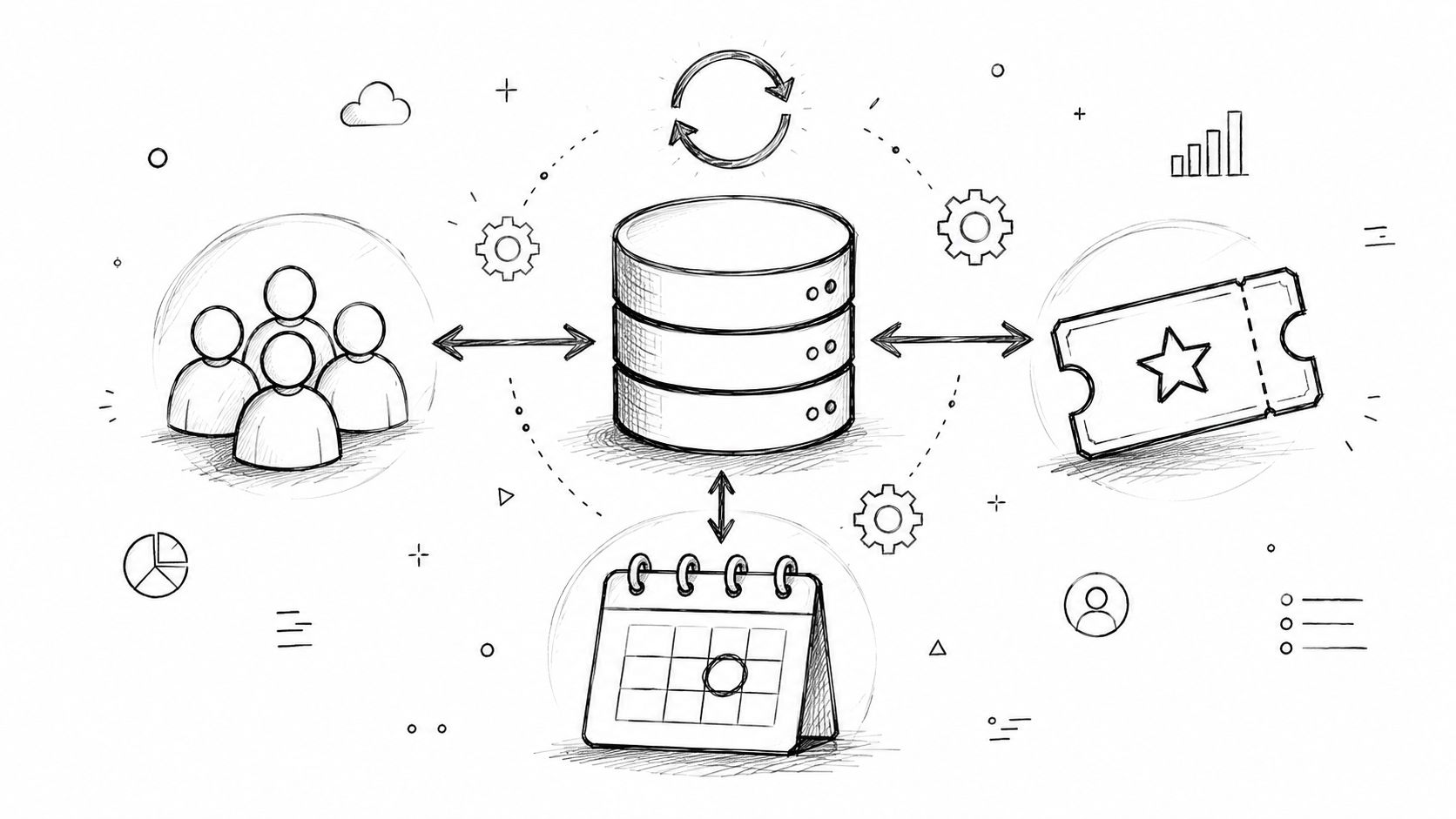
Associations get better reporting when they map social to a clear destination. Public channels create awareness. The owned platform captures intent, participation, and conversion.
That is why the handoff matters.
| Social post type | Immediate value on-platform | Destination after click | Business value |
|---|---|---|---|
| LinkedIn document preview | Gives a useful summary | Full resource in member hub | Content consumption and member value |
| Event speaker carousel | Builds interest and discussion | Registration page or agenda builder | Event conversion |
| Sponsor insight post | Shares practical expertise | Sponsor profile or showcase page | Lead generation for sponsors |
| Member spotlight | Social proof and recognition | Community thread or full profile | Peer connection and retention |
This is the operating model I recommend for professional associations. Social creates the first touch. GroupOS holds the deeper record of what happened next across membership, events, content, sponsor activity, and member interaction. That structure makes attribution more practical because the activity is not scattered across disconnected tools.
If you need a tighter framework, this guide to social media engagement metrics that connect activity to business value is a useful reference.
Format shapes perception. A flat spreadsheet of social numbers invites shallow questions. A stage-based report leads to better ones.
Organize reporting around:
Which posts attracted the right audience?
Which posts moved people into registration, content, sponsor experiences, or member discussion?
Which of those actions aligned with retention, attendance, sponsor value, or member participation?
That structure changes the conversation with leadership. Instead of asking whether engagement was "good," they can ask which channel, format, or campaign deserves more investment.
Some numbers take up too much space because they are easy to collect.
Raw likes
Easy to report. Hard to connect to organizational value.
Follower count by itself
Audience size does not tell you whether the right people are joining, returning, or converting.
Cross-platform averages
They hide differences in audience behavior and platform mechanics.
Single-post winners
One breakout post can distract from the repeatable patterns that build retention, event demand, and sponsor results.
Teams in adjacent community models run into the same problem. The technology changes, but the measurement lesson holds. This guide to building Web3 communities is a useful example of how participation systems create durable value beyond surface-level engagement.
A credible association dashboard should answer questions like these:
That is the standard. Measurement should help your team decide what to stop, what to repeat, and where to put the next hour of effort.
When reporting works this way, social becomes easier to defend because it is no longer a soft awareness line item. It is an acquisition and activation channel feeding a community asset your association controls.
The strongest social media engagement strategy for an association doesn’t aim to win the feed. It aims to build an asset.
That asset is a community your organization can understand and grow. This is more than an audience that occasionally reacts in public; it is a network of members, attendees, speakers, chapter leaders, and sponsors whose activity connects to real outcomes.
That shift changes everything.
When you stop treating social as the destination, you make better decisions. You choose fewer channels. You publish formats that fit the audience instead of chasing trends. You spend more time moving people into spaces where discussion, content, events, and relationships can compound over time.
The organizations that do this well treat public platforms as magnets, not homes. Social creates discovery. The owned environment creates continuity.
There’s a useful lesson in adjacent community models too. If you want another perspective on how participation systems are designed in emerging ecosystems, this guide to building Web3 communities is worth reading. The technology stack is different, but the community principles are familiar: clear incentives, intentional spaces, and participation that creates durable value.
Here’s what usually separates a noisy association from an effective one:
That last point matters most. Every discussion thread, event registration, resource view, sponsor interaction, and member connection inside your own ecosystem increases the long-term value of the organization.
A good social program gets attention. A good community system keeps it, learns from it, and turns it into something useful.
If your association wants one place to manage memberships, events, content, messaging, and sponsor visibility under your own brand, explore GroupOS .