April 28, 2026

If you're responsible for a professional association in aesthetics, you may be staring at the same messy environment everyone else is. Members ask which courses are credible. Vendors pitch training partnerships. New academies appear with polished branding, but it's hard to tell what is rigorous, what is basic, and what is purely marketing.
That confusion creates work for your team, but it also creates an advantage. The aesthetic academy space is fragmented, uneven, and full of demand for trusted guidance. Associations that step into that gap can do more than educate. They can curate standards, organize communities, and build durable revenue around professional development.
The phrase the aesthetic academy sounds like a single institution. It isn't. It's a broad label for training providers that serve the beauty and medical aesthetics workforce.
Some are local schools with state oversight and long histories. Others are short-course providers focused on a narrow treatment area. Some operate as online education brands. Others run hands-on workshops for licensed professionals who want to add a service or deepen a specialty.

When people say "academy," they often assume a formal school. In aesthetics, that assumption can be misleading. The market includes providers with very different goals:
That variety is why association leaders get pulled into credential questions. A member may complete a respected in-person program, a quick online module, or a branded workshop, and all three may be described with similar language.
A good anchor is The Aesthetics Institute's history and licensing background. The Aesthetics Institute, licensed by the State of Oregon Board of Education and located in southeast Portland, has trained over 2,000 professionals since its founding in 1985, with specialized programs including Esthetics and Advanced Esthetics.
That example matters because it shows what a mature provider can look like. It has longevity, a clear training focus, and an identifiable regulatory context. Not every academy in the market offers that same level of clarity.
Practical rule: When your members use the term "academy," ask what kind they mean. A state-licensed school, a continuing education provider, and a branded workshop organizer solve very different professional problems.
Aesthetic academies are where professionals gain skills, add services, and pursue career mobility. For many practitioners, these organizations shape what they know long before an association ever sees them at a conference or inside a membership portal.
That gives associations a strategic opening. If your organization can help members understand which academies are credible, which courses fit which career stage, and which credentials deserve visibility, you move from being a passive observer to a trusted navigator.
What these academies teach varies widely. That range is exactly why buyers struggle to compare one provider to another.
A first-time learner may need a broad educational foundation. A working practitioner may want one highly targeted skill. A clinic owner may look for staff training that closes a service gap quickly. Those are all valid needs, but they produce very different course formats.
At one end, you have extensive programs. These are usually designed to build a professional base. They may cover core esthetics, nail technology, sanitation, client care, and treatment fundamentals in a structured sequence.
At the other end, you have narrow training offers built around a single outcome. These might focus on one treatment category, one device, or one service add-on. The appeal is obvious. They're easier to market, easier to buy, and often framed as fast career accelerators.
A useful way to organize the market is by training depth:
| Training type | Typical purpose | What members usually want |
|---|---|---|
| Foundational school program | Entry into the profession | Career launch, licensing preparation, broad technical grounding |
| Advanced specialty course | Deeper treatment capability | Service expansion, clinical confidence, competitive positioning |
| Short workshop | One specific technique or product area | Quick upskilling, exposure to a method, refresher learning |
| On-demand online module | Flexible learning access | Convenience, review, staff onboarding, theory before practice |
Association leaders often hear course requests grouped around a few recurring areas:
The friction isn't the existence of options. It's the lack of a shared comparison framework. Members want to know what a course qualifies them to do, how much supervised learning it includes, and whether peers in the field respect the credential.
When your team sees this market clearly, you can build better member guidance. You don't need to teach every subject yourself. You do need a way to classify learning experiences by depth, audience, and professional relevance.
That starts with curriculum logic. If your organization is evaluating course partners or designing its own training pathways, this guide to developing training curriculum is a useful operational reference because it forces clear thinking about learning objectives, sequencing, and learner outcomes.
The more fragmented the course market becomes, the more valuable simple classification becomes. Members don't just want more courses. They want a trusted way to compare them.
Many people assume that if a course looks polished, it must be credible. In aesthetics, that assumption breaks down quickly.
The market lacks transparent standardization. As noted by AAOF Ohio's overview of the gap in verification and curriculum quality, numerous organizations offer courses, but there isn't a clear system for verifying credentials or ensuring curriculum quality. For practitioners, employers, and associations, that creates a real governance problem.

A provider may advertise certification, mastery, advanced placement, or clinical excellence. Those words sound authoritative, but they don't answer the questions your members care about:
Many associations hesitate on this issue. They don't want to become regulators. Fair enough. But members aren't asking for regulation from you. They're asking for clarity.
A useful contrast comes from aesthetic surgery. According to the published history of ASAPS education and research development, the American Society of Aesthetic Plastic Surgeons has grown to include eighteen approved aesthetic surgery fellowship programs across the United States. The oldest program began in 1970 at Manhattan Eye, Ear, and Throat Hospital in New York City. The same source notes that the Aesthetic Surgery Journal was founded in 1996, became indexed in PubMed in 2008, and had a 2.502 impact factor by 2016.
Those facts matter for one reason. They show what happens when a field builds visible pathways for training, peer review, research, and institutional approval. Smaller aesthetic academies often operate without that kind of shared framework.
A market with many courses but no common validation system doesn't create freedom. It creates uncertainty.
Professional organizations are uniquely positioned to solve the trust layer without pretending to be a government body. You can create:
If your team is thinking through how to formalize that work, this piece on how to create a certification program is a useful starting point for framing requirements, assessment, and recognition.
For associations that already think in terms of CE, it's also worth reviewing continuing professional education insights from Cloud Present. The terminology differs by field, but the underlying issue is the same. Adults need learning systems that are trackable, trusted, and easy to interpret.
A course can teach technique. It usually doesn't teach judgment over time.
That's the missing piece in much of the aesthetic academy market. Current offerings are heavily focused on course delivery, with limited evidence of ongoing mentorship, peer community, or structured post-training support, as reflected in current academy collection models.
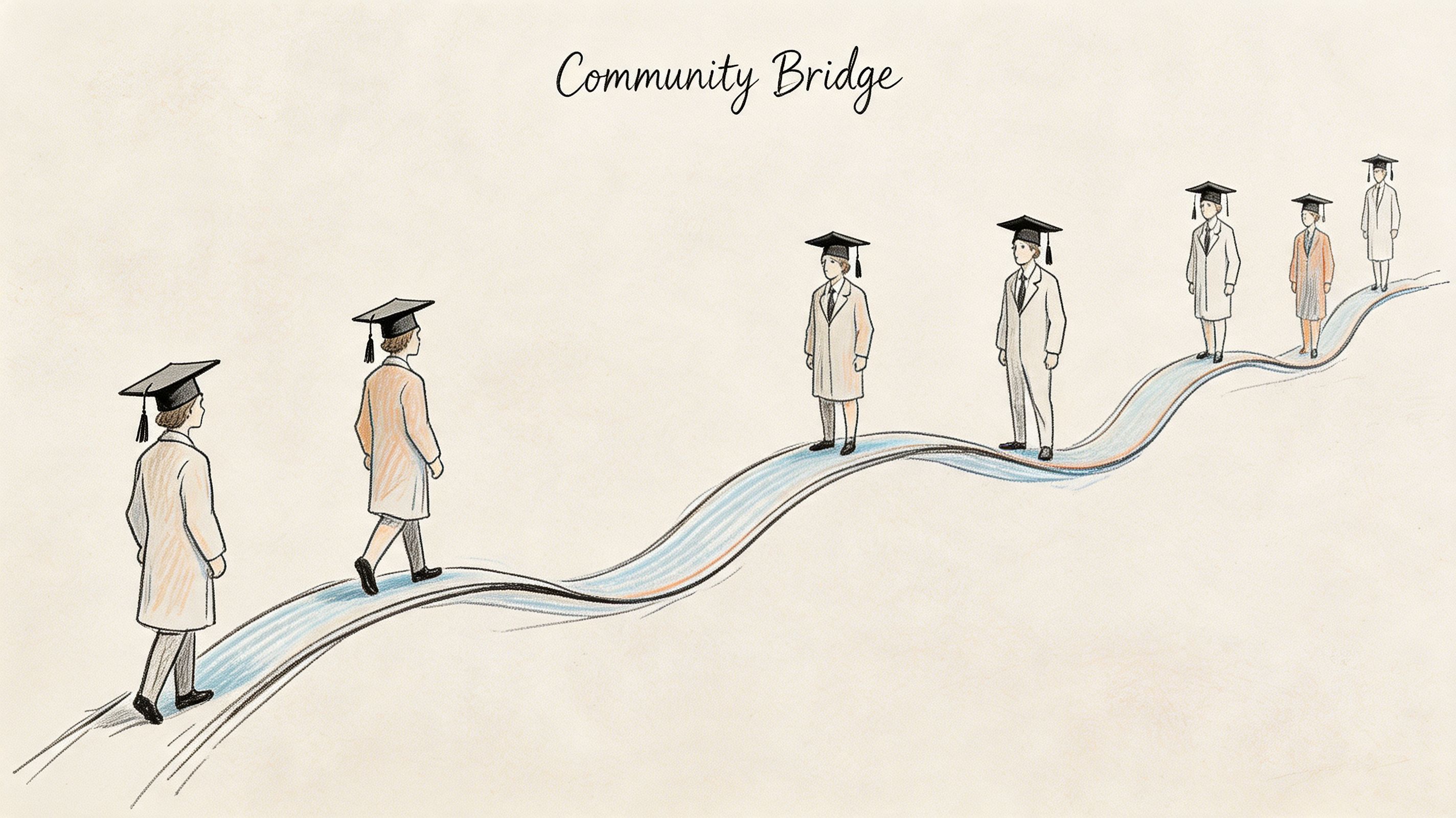
This shows up most clearly after completion. A practitioner finishes a course, receives a certificate, returns to work, and starts encountering edge cases, client objections, workflow problems, or treatment questions that don't fit neatly into a classroom script.
Solo practitioners feel this most sharply, but they aren't the only ones. Small practices, new hires, and career changers often need a professional home where they can ask thoughtful questions without feeling exposed.
A strong association can fill that gap with community structures such as:
The real value of education often begins after the certificate is issued.
Professional confidence grows through repetition, reflection, and feedback. That's why one-time training rarely produces lasting engagement on its own. Members stay close to organizations that help them apply what they've learned.
This short video captures the idea of sustained professional development more effectively than most course catalogs do:
Associations sometimes underestimate how valuable a moderated peer environment can be. A conference may create momentum. A journal may create authority. But a year-round member community is what turns occasional participation into professional habit.
You don't need a massive program to start. A focused model works well:
| Community element | Why members use it | Why associations benefit |
|---|---|---|
| Specialty discussion groups | Quick peer feedback | Higher engagement between events |
| Monthly expert sessions | Ongoing practical learning | Stronger perception of member value |
| Member introductions by region or focus | Easier relationship building | Better retention and cross-program participation |
| Follow-up learning prompts after training | Better application of material | Stronger tie between education and membership |
If your association becomes the place where professionals keep learning after training ends, your relevance deepens. You're no longer only approving knowledge. You're helping members use it.
Once an association decides to organize the aesthetic academy market rather than merely observe it, the operational question appears fast. Where does all of this live?
Most organizations try to patch it together. One tool hosts events. Another stores videos. A third manages member communication. A fourth handles directories. Members then experience the system as disconnected pieces, which weakens trust and lowers participation.

Before you choose features, define the job of the hub. For most associations in aesthetics, a centralized education environment should do four things well:
This is the same pattern that stronger professional bodies use in more formal settings. As discussed earlier through ASAPS, fields gain credibility when education, recognition, and research are connected rather than scattered.
A centralized hub works best when it mirrors how members behave. They don't think in software categories. They think in tasks.
One useful structure looks like this:
Discovery layer
A branded landing area where members browse vetted academies, upcoming trainings, specialty tracks, and recommended resources.
Learning layer
A content area for documents, recorded sessions, course materials, and on-demand education.
Engagement layer
Private channels, direct messaging, and group spaces where members continue discussing what they learned.
Recognition layer
Member profiles, completion records, badges, and searchable directories that show who has completed what.
That architecture matters because it turns isolated educational activity into a professional ecosystem.
When associations use a single white-label environment, members don't have to wonder where to go next. The same system that hosts a workshop can also handle registration, post-event discussion, sponsor visibility, and ongoing peer connection.
A white-label community platform approach becomes strategically useful. It gives the association one branded destination instead of a chain of loosely connected tools.
A well-run hub can also support different stakeholder groups at once:
If your association plans to publish recorded training, live workshops, or hybrid education, delivery quality matters almost as much as curriculum quality. That includes pacing, replay access, and how well educators hold attention on screen.
For teams refining digital instruction, these enhancing video engagement for educators ideas from vitelnk are useful because they focus on the teaching experience rather than just the technical upload step.
A centralized hub shouldn't act like a storage closet for courses. It should behave like a professional operating system for education, recognition, and connection.
Members usually don't praise infrastructure. They notice outcomes. They remember that they found a credible course quickly, registered without friction, met peers in the same specialty, and could return later to review materials or ask follow-up questions.
That's the primary payoff of centralization. It reduces administrative noise for staff and decision fatigue for members. In a fragmented market like the aesthetic academy space, that kind of clarity becomes part of your association's value proposition.
Associations often treat education as a service line and community as a mission line. In practice, the strongest organizations connect the two.
When you package vetted learning, member recognition, and ongoing peer access into a structured offering, you create more than a helpful program. You create a membership engine with recurring value.
In subscription-based aesthetic models, a 5% increase in member retention can lift profits by as much as 95%, according to Precia Aesthetics' subscription model analysis. The same source explains that this happens because retained members spend more over time and recurring revenue smooths cash flow.
For association leaders, the lesson is straightforward. The money isn't only in selling one course. The bigger opportunity is keeping members engaged long enough that education, events, and community reinforce each other.
Instead of selling isolated products, build layered access. This works especially well in professional education because members have different needs at different career stages.
A simple monetization structure might include:
This approach aligns with value-based thinking. Members don't only pay for content files. They pay for access, clarity, recognition, and easier career navigation.
Your pricing structure works best when the member can clearly see the difference between levels. That's why educational monetization isn't only about billing tools. It's about packaging.
If your team is planning that packaging, this guide to content monetization is a strong reference point for thinking through gated resources, recurring access, and member-focused pricing models.
Some associations also expand revenue with referral or partner ecosystems. If you're exploring adjacent models, these ideas on affiliate marketing for creators from LinkJolt can help you think through how educational influence can connect to partner revenue without making the member experience feel cluttered.
Members stay when the offer keeps solving the next problem in their professional life.
Don't start with everything. Start with what members will return for repeatedly.
A good sequence is:
Vetted education library
This gives immediate utility.
Member-only discussion spaces
This creates habit.
Live expert sessions and follow-up resources
This strengthens perceived access.
Credential visibility and recognition tools
This gives members status and practical career value.
That sequence matters because recurring revenue follows recurring usefulness. If your education program helps members choose better training, apply what they learned, and stay connected to peers, monetization stops feeling like a separate initiative. It becomes the natural result of sustained value.
If your organization wants to turn the aesthetic academy field into a trusted education and membership engine, GroupOS gives you one branded place to manage content, events, communication, and recurring member access. It's a practical way to curate learning, strengthen community, and build revenue without stitching together multiple disconnected tools.