January 16, 2026
Crafting a compelling event proposal is the critical first step to turning an ambitious idea into a successful, funded reality. This document is far more than a formality; it's a strategic blueprint designed to secure buy-in from stakeholders, attract high-value sponsors, and align internal teams. A poorly constructed proposal can stop a brilliant concept in its tracks, while a persuasive one opens doors to necessary resources and partnerships. Yet, many event professionals struggle to move beyond generic templates, failing to articulate the unique value and strategic impact of their proposed event. The key is to present a clear, data-supported business case that resonates with the specific goals of your audience, whether they are executives, potential sponsors, or member committees.
This guide is designed to solve that problem by providing a detailed breakdown of what works. We've curated a collection of eight distinct samples of event proposals, each meticulously crafted for a specific industry scenario. You'll find examples for everything from a global hybrid conference and a member-exclusive training series to a high-stakes product launch and a corporate exhibitor package.
Instead of just showing you a finished document, we will dissect each one. You’ll get an inside look at:
Our goal is to equip you with the strategic insights and practical tools needed to build proposals that don't just get read-they get approved. Let's move beyond the template and start building your blueprint for success.
The virtual/hybrid conference model has become a cornerstone for modern event strategy, blending physical and digital experiences to maximize reach and engagement. This proposal type is essential for organizations looking to cater to both a local, in-person audience and a global, virtual one. It addresses the unique complexities of dual-format logistics, from technology platforms to synchronized content delivery.
A strong hybrid conference proposal must demonstrate a clear value proposition for both attendee types. It’s not enough to simply livestream main stage sessions; the proposal must outline a cohesive experience. This includes interactive elements for virtual attendees, such as dedicated Q&A, virtual networking lounges, and digital exhibitor booths, alongside seamless on-site experiences.
This type of proposal is critical because it directly addresses the modern audience's demand for flexibility. It acknowledges that travel constraints, budget limitations, and personal preferences dictate how people engage with events. By offering both options, you expand your potential audience exponentially.
Key Insight: A successful hybrid event proposal frames the two experiences not as separate, but as interconnected parts of a single, unified event. The goal is to create shared moments and opportunities for interaction between in-person and virtual attendees, breaking down the digital barrier.
When crafting one of these samples of event proposals, focus on demonstrating a robust technological plan and a clear return on investment for all stakeholders.
This proposal type is designed for organizations where events are a core component of a membership or subscription model. Instead of a one-off event, this proposal outlines a recurring series designed to deliver continuous value, drive member retention, and foster community engagement. It is essential for professional associations, industry networks, and subscription-based businesses that use exclusive access to events as a key selling point.
A successful membership event series proposal must clearly articulate how the events support the overarching membership strategy. It should detail the cadence of events (e.g., monthly workshops, quarterly networking mixers), the specific value they provide to members, and how they align with different membership tiers. The focus is less on a single event's ROI and more on the long-term impact on member loyalty and lifetime value.
This proposal is crucial for demonstrating that your events are not just add-ons but are integral to the membership value proposition. It shifts the conversation from a transactional ticket sale to a relationship-building investment. The proposal must show how this consistent engagement nurtures a community, turning passive members into active participants and advocates for the organization.
Key Insight: The most effective membership event proposals frame the series as a strategic asset for retention and upselling. The goal is to prove that the events create a "stickiness" factor, making the membership indispensable and providing clear pathways for members to upgrade for more exclusive access.
When creating one of these samples of event proposals, focus on demonstrating the synergy between the events and the membership structure. Your proposal should be a clear roadmap for how events will enhance the member journey.
A corporate sponsorship proposal is a highly targeted document designed to persuade businesses to invest in your event in exchange for brand exposure and access to a specific audience. This type of proposal is less about the attendee experience and more about the business value for a potential partner. It frames the event as a strategic marketing opportunity, focusing on lead generation, brand visibility, and direct engagement with a qualified demographic.
This proposal must go beyond simply listing logos on a banner. It needs to articulate a compelling story about your audience and how sponsoring the event provides an unparalleled channel to reach them. From title sponsorships like 'Presented by Salesforce' at major tech conferences to interactive exhibitor booths at trade shows like CES, the core function is to demonstrate a clear return on investment (ROI).
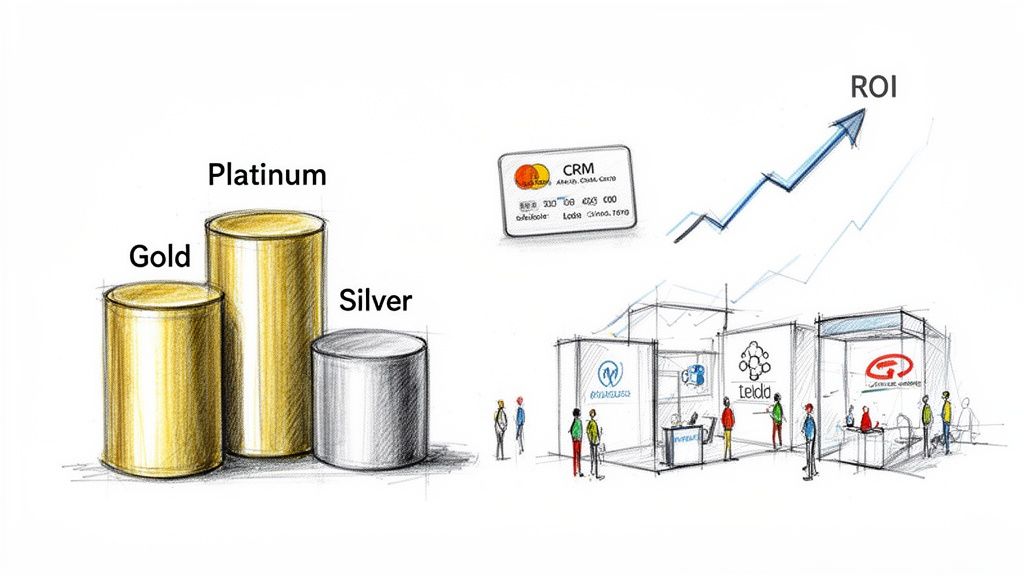
This proposal is essential for monetizing large-scale events and validating their industry relevance. Securing reputable sponsors lends credibility and financial stability to an event, enabling a richer experience for attendees. The document must be data-driven, using audience demographics, past engagement metrics, and projected reach to build a business case for investment.
Key Insight: The most effective sponsorship proposals are not one-size-fits-all. They are customized to align with a specific company's marketing goals, whether that's B2B lead generation, consumer brand awareness, or thought leadership within an industry. The proposal should feel like a solution to the sponsor's business challenges.
When creating one of these samples of event proposals, focus on translating your event’s features into tangible business benefits for potential sponsors.
The product launch or industry summit proposal is designed for high-stakes events that aim to capture market attention, unveil innovation, and solidify brand leadership. This proposal format is crucial for major corporations, tech giants, and industry associations looking to create a landmark moment, such as an Apple-style keynote or a Salesforce Dreamforce-level summit. It focuses on generating excitement, securing significant media coverage, and engaging key stakeholders like investors, partners, and top-tier customers.
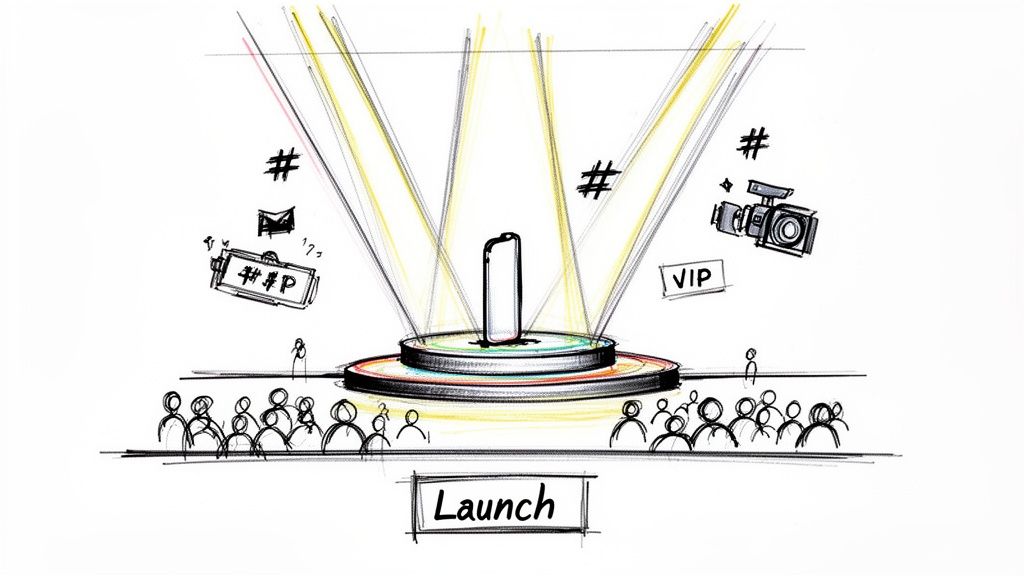
A successful proposal for this type of event goes beyond logistics; it sells a narrative. It must articulate a compelling story around the product or theme, detail a multi-channel marketing and PR strategy, and promise an exclusive, high-production-value experience. The core objective is to create an event so significant that it becomes an industry-wide focal point.
This proposal is essential when the goal is not just to inform but to dominate the conversation. It's used for events where the announcement itself is the main product. The strategy hinges on creating a sense of exclusivity and anticipation, ensuring that every detail, from speaker selection to stage design, reinforces the brand's position as an innovator and leader.
Key Insight: A top-tier product launch proposal frames the event as a pivotal industry moment, not just a company announcement. It highlights how the event will shape future trends, provide exclusive insights, and offer attendees a first look at the future, making attendance feel essential for anyone in the field.
When creating these samples of event proposals, the focus should be on demonstrating meticulous planning, high-impact branding, and a clear strategy for generating buzz and media engagement.
A regional or local chapter event proposal is a specialized document designed for organizations with a distributed network of members, such as professional associations or corporate employee resource groups. Its primary function is to standardize the event planning process across multiple geographic locations while allowing for local customization. This ensures brand consistency and quality control from a central body, yet empowers local leaders to create relevant, engaging experiences for their communities.
This proposal format must balance centralized guidelines with local flexibility. It typically includes standardized sections for budget requests, marketing materials, and key performance indicators, alongside customizable fields for local speaker details, venue selection, and topic relevance. For events focused on local engagement, a strong example can be found in a Community Event Proposal template that helps structure these key details effectively.
This type of proposal is essential for maintaining a cohesive brand and member experience across a decentralized organization. It provides a framework that simplifies administrative oversight for national or global headquarters while empowering local chapter leaders, who are often volunteers, with the tools they need to succeed. This prevents fragmentation and ensures all events, regardless of location, align with the organization's overarching mission.
Key Insight: The most effective chapter event proposals are built as scalable templates, not rigid documents. They function as a strategic partnership tool between headquarters and local chapters, fostering collaboration while ensuring governance and consistency in event execution and reporting.
When creating these samples of event proposals, the goal is to streamline logistics for chapter leaders and simplify reporting for national oversight. The proposal should be a tool that makes their job easier, not harder.
This proposal format is tailored for organizations that offer structured educational content, professional development, and certification programs. It moves beyond a one-off event to detail a long-term learning journey, focusing on curriculum, skill acquisition, and credentialing. It is crucial for professional associations and corporate training entities that use education as a primary driver for member value and retention.
A successful workshop or certification proposal must clearly articulate the learning outcomes and the value of the credential. It outlines the entire educational pathway, from course modules and instructor qualifications to assessment methods and the final certification. The proposal is designed to convince stakeholders of the program's quality, relevance, and impact on a learner's career progression.
This type of proposal is essential for establishing an organization as a thought leader and an authority in its field. It creates a recurring revenue stream and fosters a deeply engaged community of learners who are invested in a long-term relationship with the brand. The focus shifts from a single event's ROI to the lifetime value of an educated and certified member.
Key Insight: A compelling certification proposal positions the program not just as a series of classes, but as a career-defining pathway. It emphasizes the tangible benefits of completion, such as industry recognition, enhanced job prospects, and inclusion in an exclusive network of certified professionals.
When drafting these kinds of samples of event proposals, focus on demonstrating the program's educational integrity, practical application, and the community benefits for participants.
The networking and social event proposal prioritizes connection and community building over formal programming or transactional goals. This type of proposal is designed for events like industry mixers, member appreciation nights, and casual meetups, where the primary objective is to foster relationships and create a sense of belonging. The focus is less on a packed agenda and more on creating an environment conducive to organic conversation and meaningful interaction.
A successful networking event proposal clearly articulates the "why" behind the gathering. It should detail the atmosphere, the target audience, and the specific mechanisms that will be used to facilitate connections, moving beyond just offering a time and a place. It's about engineering an experience that helps attendees break the ice, discover common interests, and build lasting professional or social bonds within a community.
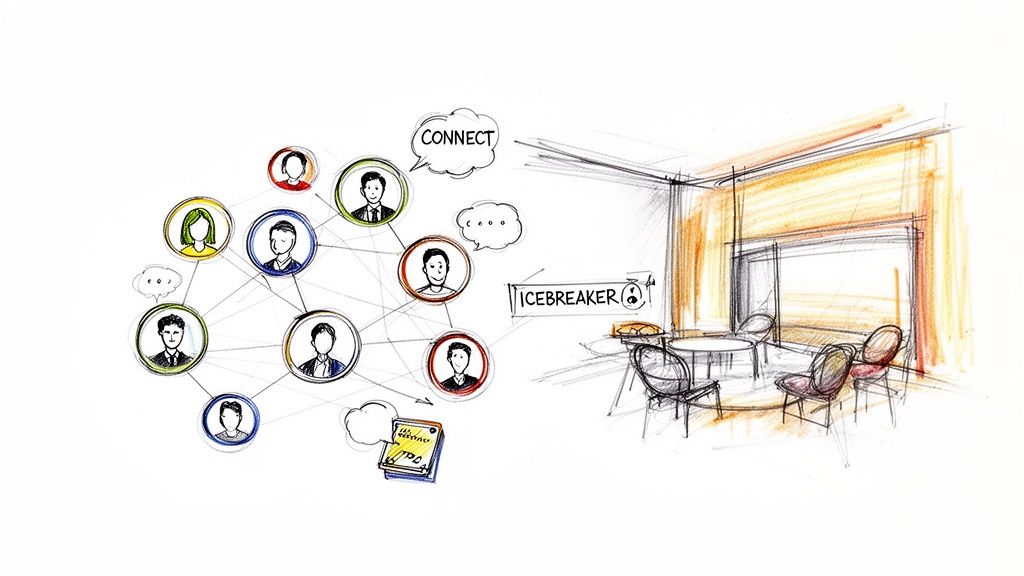
This proposal is crucial for organizations focused on building and retaining a strong community culture. While conferences and workshops deliver educational value, networking events deliver relational value, which is often the key driver of long-term member loyalty and engagement. These events transform a transactional membership into a genuine community people want to be a part of.
Key Insight: An effective networking event proposal demonstrates that you're not just hosting a party; you are intentionally designing an experience for connection. The value lies in the quality of interactions, not the quantity of presentations.
When crafting these samples of event proposals, emphasize the attendee experience and the tools you'll use to make networking seamless and enjoyable.
This sophisticated proposal is designed for exclusive, high-level strategic meetings for an organization's most influential stakeholders. Unlike large-scale conferences, this format emphasizes confidentiality, curated strategic content, and intimate peer-to-peer knowledge sharing. It is ideal for engaging C-suite executives, board members, or key industry leaders in a focused, high-impact environment.
A proposal for an executive roundtable must convey a sense of prestige and purpose. It needs to articulate clearly why these specific leaders should invest their valuable time. The focus is less on broad entertainment and more on a meticulously planned agenda that promises tangible strategic outcomes, exclusive insights, and unparalleled networking opportunities with true peers.
This type of proposal is critical for organizations seeking to gather high-level feedback, foster deep relationships with decision-makers, or co-create future strategies. These events strengthen an organization’s leadership position by demonstrating that it values the expertise of its most important members and stakeholders. The exclusivity itself is a primary value driver, creating a powerful incentive to attend.
Key Insight: A successful executive roundtable proposal positions the event not as a meeting, but as a strategic retreat. It must promise a confidential, distraction-free environment where leaders can candidly discuss industry challenges and opportunities, ensuring the value proposition is centered on exclusive access and actionable intelligence.
When crafting one of these specialized samples of event proposals, the focus must be on exclusivity, security, and a bespoke experience from invitation to follow-up.
The journey from a compelling concept to a flawlessly executed event begins with a powerful proposal. Throughout this guide, we’ve deconstructed various samples of event proposals, moving beyond mere templates to uncover the strategic psychology behind each one. From securing high-value corporate sponsorships to launching an exclusive executive roundtable, the core principle remains the same: a successful proposal is a document of persuasion, empathy, and strategic foresight. It’s not just about what your event is; it's about the value it delivers to a specific audience, be it a potential sponsor, a loyal member, or a C-suite stakeholder.
The key takeaway from analyzing these diverse examples is the power of customization. A one-size-fits-all approach is the fastest route to rejection. The most effective proposals demonstrate a deep understanding of the recipient's goals, pain points, and motivations, framing the event not as a cost, but as an indispensable investment in their success.
Reflecting on the proposal breakdowns, several critical themes emerge that every event professional should internalize:
Mastering the art of the proposal is the first step. The next is ensuring you have the operational capacity to deliver on your promises. A meticulously crafted proposal sets high expectations; your event execution must exceed them. This involves managing countless moving parts, from registration and ticketing to communication and post-event analytics. It's here that the proposal's vision meets operational reality.
Consider every detail promised in your proposal as a contractual obligation. If you guaranteed sponsors prominent brand visibility, how will you manage that in a hybrid setting? If you promised members exclusive content, how will you deliver and track it? The logistics of execution are just as critical as the initial pitch. Even small, practical details can have a big impact on the attendee experience. For instance, successfully setting up event food and beverage services can be a key factor in attendee satisfaction and networking success.
Ultimately, the samples of event proposals in this guide are more than just documents; they are strategic blueprints for building thriving communities and creating unforgettable experiences. By internalizing these strategies, you equip yourself to not only win approval but to lay the foundation for events that deliver tangible, lasting value. Your proposal is your promise; your execution is your legacy.
Ready to turn your approved proposals into seamless, engaging events? GroupOS provides an all-in-one platform to manage your memberships, ticketing, and event communications in a single branded app. Stop juggling spreadsheets and disconnected tools, and start building a powerful, integrated community experience with GroupOS.