January 15, 2026
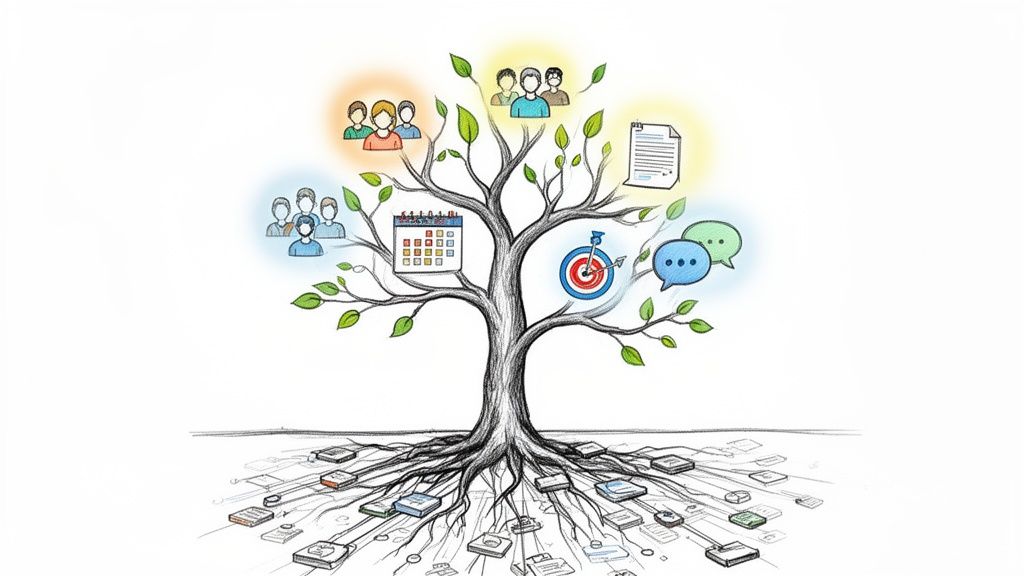
Making customer engagement a priority isn't just a "nice-to-have" marketing goal anymore; it's a core survival strategy for any modern association. Real engagement means moving beyond basic transactions. It's about creating meaningful, continuous interactions that build genuine loyalty and a sense of belonging. This demands a conscious move away from old-school, fragmented communication toward a unified, member-first mindset.
In a world where attracting new members is getting more expensive and earning their loyalty is tougher than ever, putting engagement on the back burner is a recipe for stagnation.
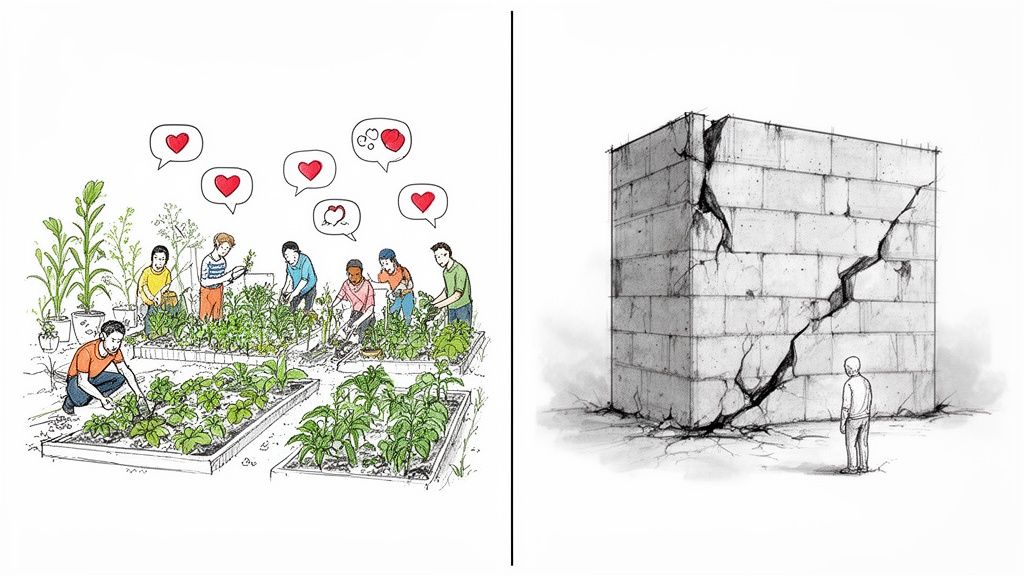
Picture your association as a community garden. When you give it constant care, cultivation, and attention, it flourishes, creating valuable connections and growth. But if you leave it unattended like an abandoned concrete lot, it slowly cracks and decays as members drift away from neglect.
Many association leaders are dealing with the same nagging problems, and they almost always trace back to poor engagement. Clunky, siloed systems make it impossible to get a clear picture of the member journey, which leads to generic, one-size-fits-all communication that just doesn't connect.
This disconnect makes members feel like just another entry in a database, not a valued part of a living, breathing community. It means the real benefits of community engagement, like better retention and happier members, are always just out of reach.
The pressure to evolve is real and it's growing. Recent data shows that a whopping 77% of marketers believe they need to seriously rethink their organization's approach to customer engagement. On top of that, 76% feel the need to adapt faster than ever before.
This points to an undeniable truth: the old playbook isn't working. Juggling disconnected tools for memberships, events, and communications creates a clunky experience full of friction and missed opportunities.
To really grasp the change needed, it helps to see the old and new ways side-by-side. The traditional model was all about broadcasting information at members, while the modern approach is about building a platform for them to connect and grow.
The differences are stark. A modern strategy integrates every interaction into one seamless experience, helping you build a rich profile of each member. This is what enables the kind of personalized touch that makes people feel seen, heard, and truly valued. To get ahead, it's worth exploring different methods for mastering customer engagement plans.
The shift from a passive audience to an active community doesn’t happen by accident. It is the direct result of a strategic commitment to understanding and serving member needs at every single touchpoint.
This guide is designed to give you the actionable playbooks and strategies to make that transition. We'll show you how to turn passive members into your most passionate advocates, and it all starts with getting the foundation right.
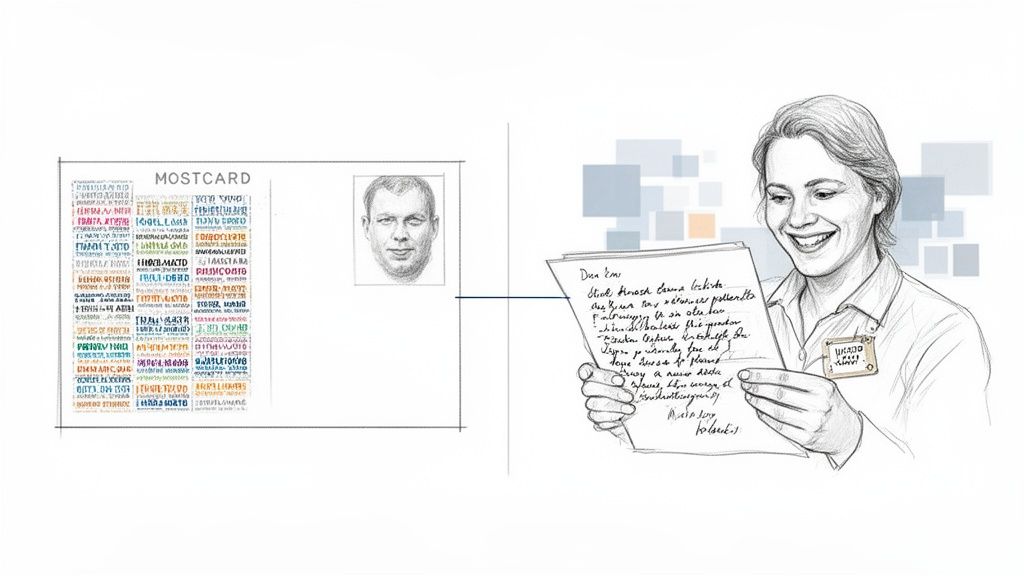
Think about sorting your mail. You pull out a generic postcard with a bland offer—it’s impersonal, and you probably toss it straight into the recycling bin. Now, imagine finding a handwritten note addressed to you, maybe even referencing a recent conversation.
That’s the difference between communication that gets ignored and communication that actually builds a connection. The hard truth? Too many associations are still sending the digital equivalent of that generic postcard.
This creates a jarring disconnect. While an impressive 84% of businesses feel they provide 'good' or 'excellent' personalized engagement, only 54% of their customers agree. That's a huge gap in perception versus reality, and it's a problem often rooted in siloed systems and clunky, outdated technology. You can dig deeper into these numbers in the full 2025 customer engagement report.
This personalization gap isn't a small issue; it actively works against your engagement efforts. When members feel like just another number in your database, their motivation to participate, renew their membership, and champion your organization starts to fade.
So, what's causing this problem? The main culprits are almost always data silos and fragmented technology.
When your membership data lives in one system, your event registrations are in another, and your email history is stuck in a third, it's impossible to get a clear picture of any single member. You can't connect the dots between the webinar they attended last month and the discussion forum they just joined.
This forces you to fall back on generic, one-size-fits-all messaging that completely ignores a member’s unique interests or history with your group. The solution lies in breaking down those digital walls to create a single source of truth for all your member data.
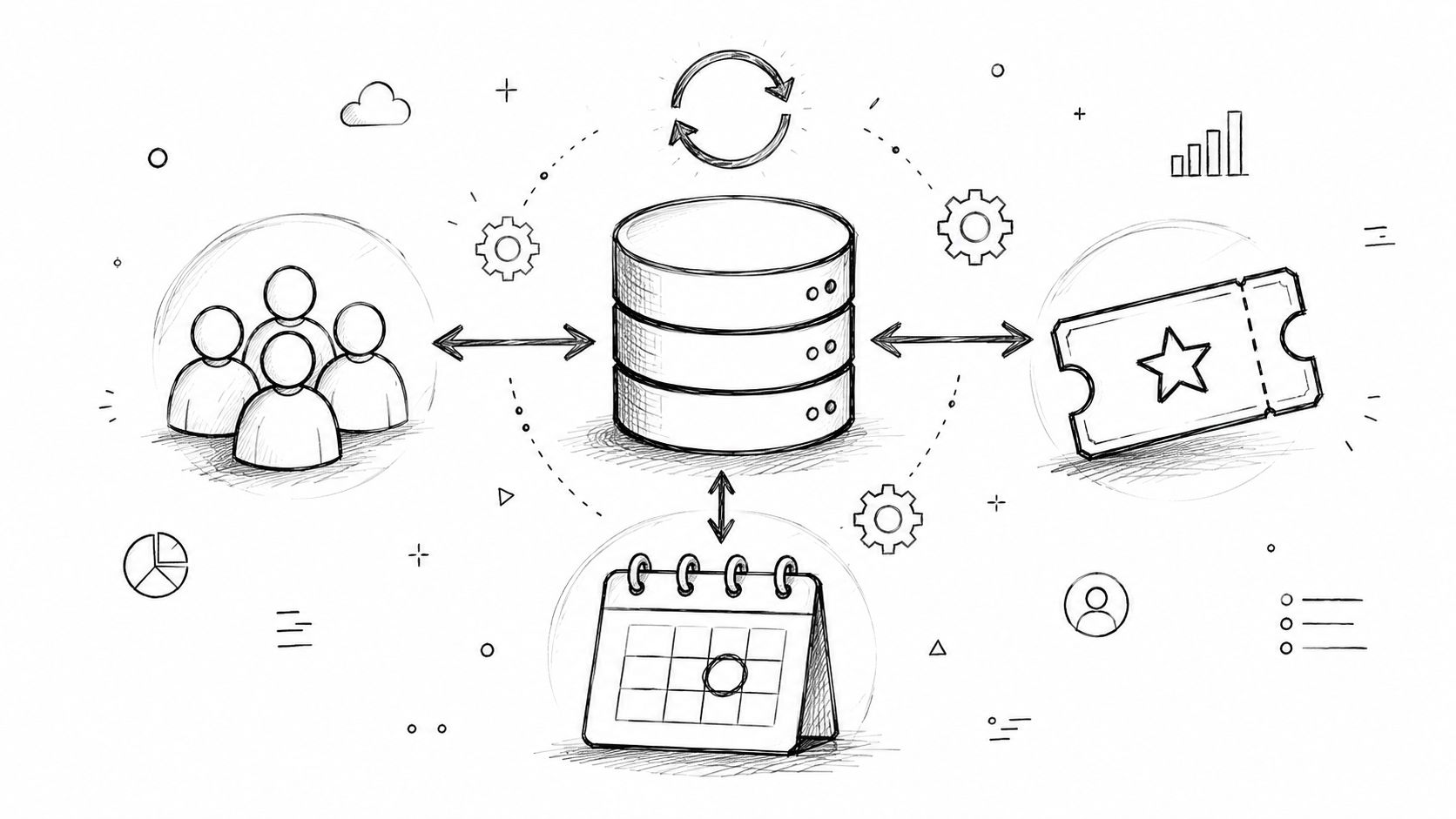
A unified platform is like the central nervous system for your community. It turns scattered data points into a deep, actionable understanding of each member, powering true one-on-one relationships at scale.
By tracking behavior across every touchpoint—from the content they download to the events they check into—you build rich, dynamic member profiles. These profiles go way beyond a name and email, giving you the insights needed for hyper-relevant communication that feels more like a helpful conversation and less like a marketing blast.
Closing this personalization gap requires a fundamental shift in thinking: from broadcasting at your members to connecting with them. It's about using technology not just to send messages, but to listen and respond to what your members are doing in real time.
Here are three concrete strategies you can use to start unifying the member experience:
Centralize Your Data: First things first, get all your member interactions into one place. A modern platform like GroupOS is built to do this, integrating membership management, event registrations, and communication tools to give you that 360-degree view without having to stitch together a dozen different apps.
Segment Your Audience Dynamically: It's time to move beyond static lists based on membership level. Instead, create dynamic segments based on behavior. Think of groups like "members who attended our conference's marketing track" or "members who downloaded the annual research paper." This lets you send targeted messages that actually mean something to them.
Automate Personalized Journeys: Use member data to trigger automated communication flows. For instance, a new member who lists "project management" as an interest could automatically get a welcome email highlighting your PMP prep resources and an invitation to an upcoming project management webinar. It’s simple, powerful, and feels incredibly personal.
Closing the personalization gap often means using more advanced tools, including AI customer profiling and personalization techniques. Ultimately, the goal is to make every single member feel seen, understood, and valued. By unifying your technology and your data, you can transform generic interactions into meaningful relationships that build loyalty for years to come. For more ideas on putting this into practice, you can explore a variety of customer engagement solutions.
Alright, let's move past the theory. This is where the real work of boosting engagement begins. A thriving community doesn't just sprout up on its own; you have to build it, pillar by pillar. You need a practical playbook that turns passive members into active participants who feel a real sense of ownership and connection.
This playbook is built on five core pillars, each designed to create value and spark interaction. By focusing on these areas, you can build an environment where members don't just belong—they actively contribute, connect, and grow together.
One of the most powerful ways to get people engaged is through exclusivity. When members feel they're getting access to resources they can't find anywhere else, the value of their membership shoots through the roof. This is about more than just a newsletter or the occasional blog post.
Think of it as building a private, curated library for your industry. Instead of members having to hunt down scattered articles, you’re creating a central, premium content hub that becomes their go-to professional resource. This solidifies your position as a thought leader and gives people a compelling reason to log in and participate again and again.
Here’s how you can make this happen:
Events are often the lifeblood of an organization, but so much of their engagement potential gets left on the table. The goal is to shift the experience from passive viewing to active participation, whether someone is in the room or joining from their home office.
A modern event should feel less like a lecture and more like a facilitated conversation. This means using technology to break down the walls between speakers and the audience, and just as importantly, between the attendees themselves.
An event shouldn't be a one-off moment. It should be the catalyst for ongoing conversations. The real magic happens when connections made during the event turn into lasting relationships within the community.
For instance, using a platform like GroupOS, you can run virtual events with features like live polling, Q&A sessions, and breakout rooms. This gets your virtual attendees just as involved as your in-person crowd, creating a single, engaging experience for everyone.
Just throwing a bunch of professionals into the same room (virtual or otherwise) and hoping for the best isn't a networking strategy. Good networking is structured, intentional, and facilitated. Your members are busy people; they appreciate tools that help them make the right connections without the guesswork.
You want to move people from random handshakes to purposeful introductions. By understanding your members' interests, goals, and expertise, you can actually engineer opportunities for them to meet the people who matter most to their careers. To go deeper on this, check out our guide on how to create an online community that makes these valuable interactions happen.
Here are a few practical ways to facilitate better networking:
To build a real community, members need to be able to talk to each other, not just be talked at by you. When you rely on platforms like LinkedIn or third-party messaging apps, you're splintering the conversation and pulling engagement away from your own turf.
By providing built-in communication tools, you create a central hub where all community interaction lives. This not only makes conversations easier to follow but also gives you incredible insight into what your members are actually talking about. With GroupOS, these channels are integrated directly, giving you private messaging, group chats, and dedicated discussion forums all under your own brand.
Let's be honest, everyone wants to feel seen and appreciated. A simple recognition program is an incredibly effective way to encourage good behavior and shine a spotlight on your most dedicated members. It adds a bit of fun to participation and creates a positive feedback loop that motivates others to get more involved.
This doesn't have to be complicated. A "Member of the Month" feature on your homepage, a special badge on a member's profile for being an active contributor, or a quick shout-out in the monthly newsletter can go a long way. Recognizing these contributions validates your members' efforts and deepens their emotional connection to the community, turning them from passive observers into your most passionate advocates.
Events are often the crown jewel of an organization’s engagement strategy. They're where connections spark and community truly comes to life. But a great event is so much more than what happens on the day itself. Real, lasting engagement is a journey that starts long before the doors open and continues long after everyone has gone home.
If you think of your event like a three-act play—before, during, and after—you can craft a cohesive experience that keeps attendees hooked from registration to follow-up. It's this thoughtful approach that turns a one-time gathering into a cornerstone of your community.
The real work starts weeks, sometimes months, before showtime. This pre-event phase is all about stoking excitement, setting the stage, and giving people a reason to connect early. Getting this initial momentum right is everything.
First off, your communication has to be smarter than a generic "register now!" email blast. You have member data, so use it. Segment your audience and send them messages that speak directly to their interests, highlighting the specific speakers or networking tracks they'll care about most.
Next, give attendees the tools to start networking before they even pack their bags. A dedicated event app, like the one built into GroupOS, is perfect for this. It lets people:
Doing this turns a list of names into a budding community before anyone even sets foot in the venue.
Once the event kicks off, your job is to make everything effortless and interactive. A smooth experience is what separates a forgettable conference from one people will talk about for years. Every little detail, from check-in to the Q&A sessions, matters.
It all starts with a frictionless arrival. QR code check-ins get rid of the dreaded lines and get people into the action fast. Once they're in, technology should be your ally in encouraging participation, not just broadcasting information.
The goal is to turn a passive audience into active participants. The right tools can dissolve the barrier between the stage and the seats, making everyone feel like part of the show.
Here are a few tactics that really drive engagement on the floor:
This whole process is a key milestone in a much larger strategic timeline.
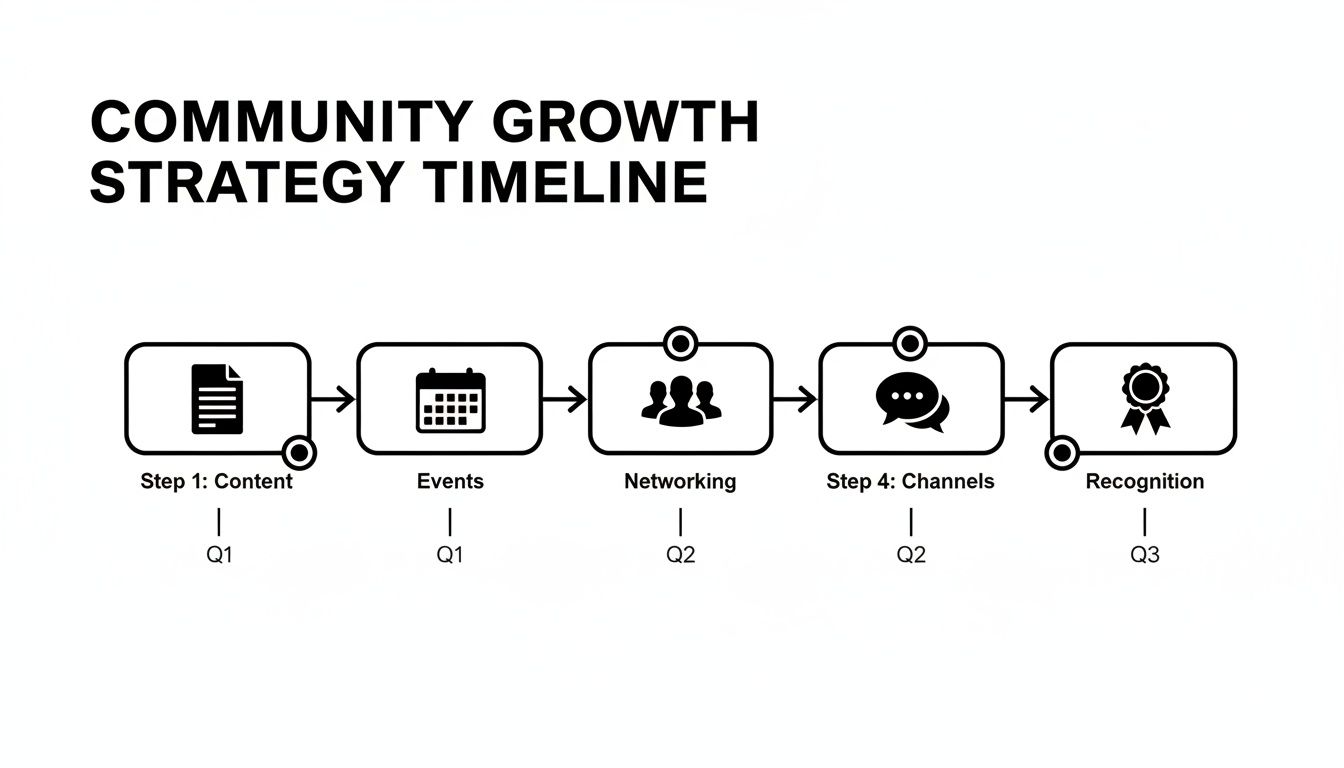
As you can see, events don't happen in a vacuum. They're a powerful beat in the rhythm of your ongoing content, networking, and communication efforts.
When the lights go down, the conversation shouldn't stop. The post-event phase is your golden opportunity to lock in the value, get honest feedback, and nurture the connections that were just made. This is how you convert the buzz of a live event into a thriving, year-round community.
As soon as possible, get the content into people's hands. Upload session recordings, slide decks, and any other resources to a central library within your community platform. This is a huge win for attendees who want to revisit a specific talk, and it's a lifeline for members who couldn't be there in person.
This is also the best time to ask for feedback. Send out automated surveys while the experience is still fresh. Digging into that data is crucial for producing an event that’s even better next year. And finally, keep the chatter going. Create a dedicated channel in your community for people to share their key takeaways, ask follow-up questions, and continue the conversations they started.
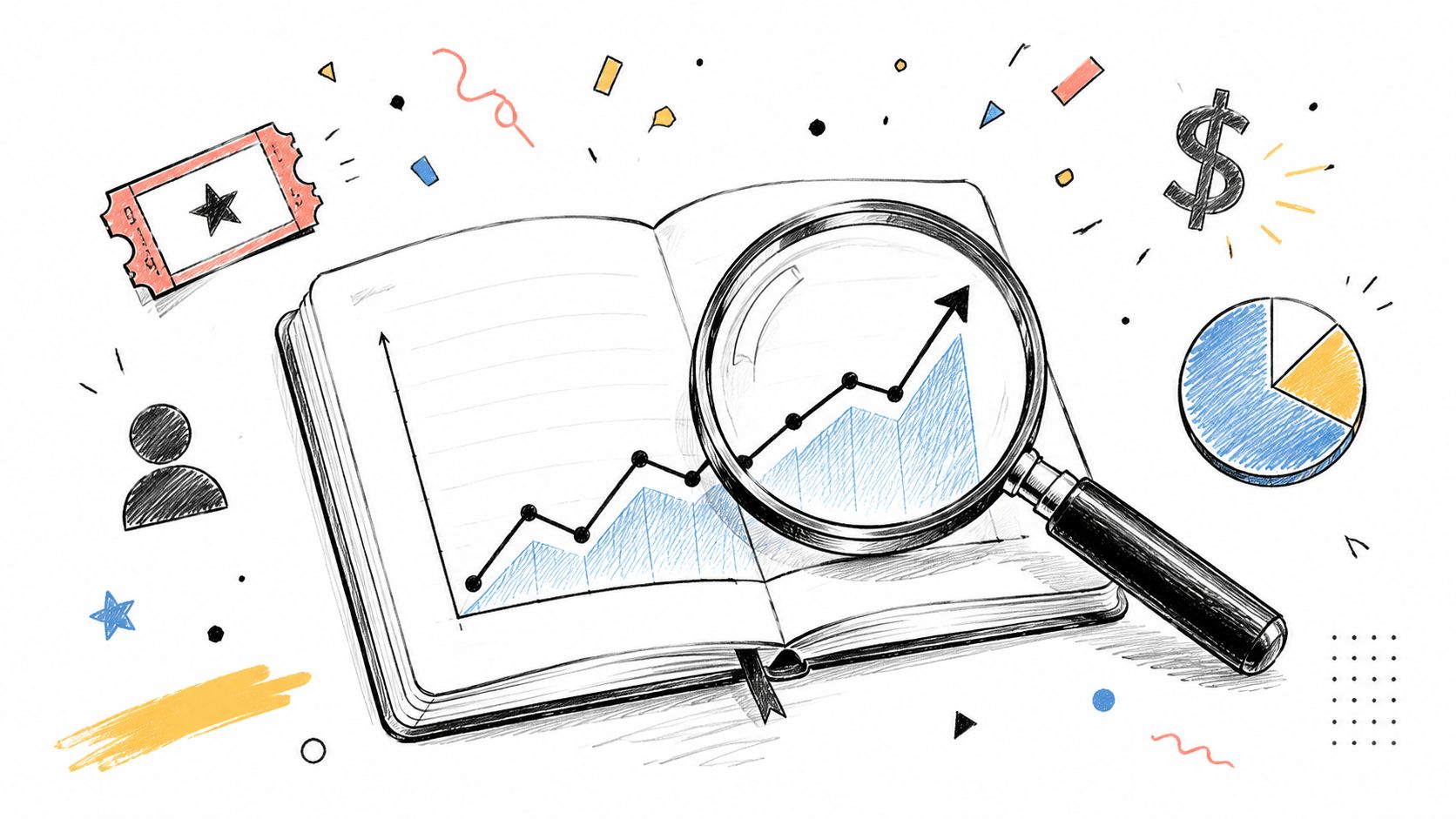
So, you've rolled out new initiatives to boost member engagement. That’s great. But how do you know if any of it is actually working?
It's way too easy to get lost in a sea of data, especially when you're staring at "vanity metrics" like page views or social media likes. Sure, those numbers might look impressive on a report, but they don't tell you the real story about the health of your community or the loyalty of your members.
To get a real pulse on engagement, you have to measure what matters. Think of it like a pilot in a cockpit. They aren't just looking at one single dial. They're constantly monitoring altitude, speed, fuel, and heading to get a complete, real-time picture of the situation. You need that same kind of multi-instrument dashboard to navigate your community’s growth and spot any turbulence before it becomes a real problem.
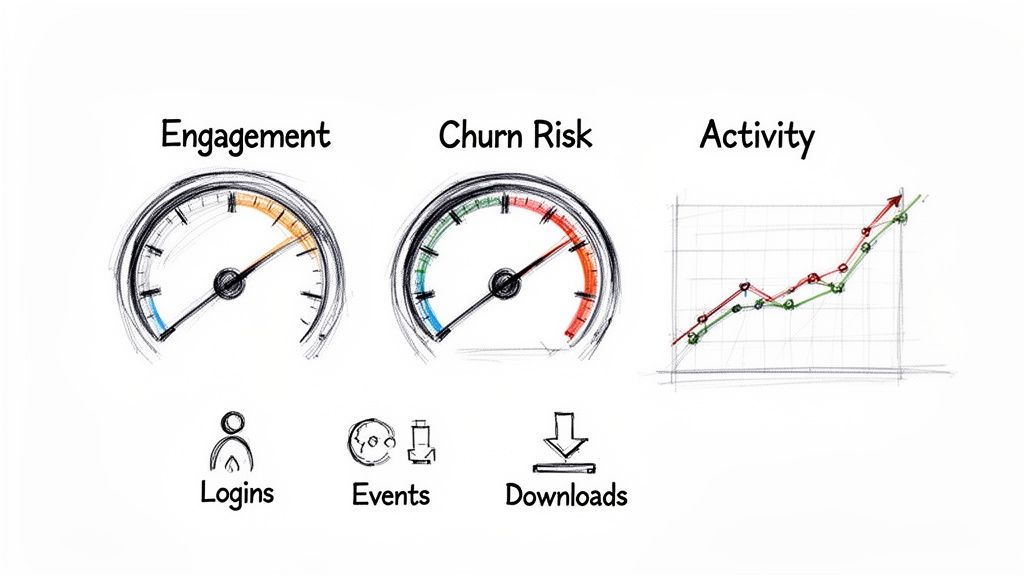
This kind of data-driven approach means you can stop guessing and start making confident, informed decisions. The core shift is moving from asking, "Are people seeing our stuff?" to asking, "Are people interacting in ways that show they're getting real value?"
First things first: you need to redefine what an "engaged member" actually looks like for your specific organization. It's definitely not just someone who opens your weekly newsletter. A truly engaged member is an active participant. They show up.
Your focus should be on action-based metrics—the specific behaviors that signal genuine involvement. These are the key performance indicators (KPIs) that have a direct line to member retention and overall satisfaction.
Here are a few examples of meaningful actions you should be tracking:
When you track these kinds of actions, a much clearer picture emerges, showing you who's truly invested and who's just window shopping.
Vanity metrics tell you how many people are looking in the window. Actionable metrics tell you who is coming inside, participating, and making themselves at home.
To put this into practice, you need a clear framework that connects your goals to specific data points. The table below breaks down some of the most critical metrics for professional associations and event organizers, helping you focus on the numbers that truly move the needle.
By tracking these specific KPIs, you can move away from vague assumptions and toward a concrete understanding of your community's health and the impact of your engagement efforts.
One of the most effective ways to consolidate all these different data points is by creating a Member Engagement Score (MES). Think of it as a single, holistic score that rolls up dozens of different touchpoints into one simple number, giving you a quick and accurate health check for every single member.
Platforms like GroupOS automate this entire process. You can assign a weighted value to different actions based on how important they are to your organization. For instance, attending the big national conference might be worth 50 points, while downloading a whitepaper is worth 10 points, and posting in a forum gets 5 points.
This scoring system completely changes how you manage your community. It gives you the power to:
This data-backed approach transforms your member base from a faceless spreadsheet into a dynamic group of individuals with visible, trackable engagement levels, empowering you to act with precision and purpose.
Even with the best game plan, you're bound to run into questions and challenges when you're working to improve customer engagement. This section tackles the most common questions we hear from association and event managers, with straightforward answers to help you get past those hurdles and back to building a thriving community.
If I had to boil it all down to one thing, it would be personalization at scale. Today’s members and attendees just expect more. They assume you understand their professional goals, their specific interests, and their entire history with your organization. Generic, one-size-fits-all messages just don't cut it anymore—they feel impersonal and, frankly, get ignored.
Now, achieving real personalization doesn't mean you need to write thousands of individual emails by hand. The key is having a single technology platform that brings together all your data from every touchpoint—memberships, event check-ins, content downloads, even private messages. Without that unified view, your member data is stuck in different silos, making it impossible to create the relevant, timely experiences that build real loyalty.
It’s the difference between shouting into a crowd and having a genuine one-on-one conversation.
Think of it this way: a fragmented system is like trying to understand a person by only looking at a single photograph. A unified platform gives you the entire photo album, showing you their journey, their interests, and how they've grown with you over time.
The secret to great virtual and hybrid events is creating truly interactive experiences that feel like more than just a video stream. Your goal should be to make remote attendees feel every bit as present and involved as the people in the room.
Start building that energy long before the event kicks off. Open up a dedicated digital channel or an event-specific group where people can introduce themselves, see who else is coming, and start connecting. It’s a simple step that turns a static attendee list into a buzzing community before day one even arrives.
During the event itself, use tools that encourage people to participate, not just watch.
And don't forget, the event isn't over when the last speaker walks off the stage. Extend its life by making all the session recordings, slides, and other resources available on-demand in a central content hub. This transforms a one-time event into a lasting community resource that drives engagement for months to come.
While you definitely need a long-term strategy, a few smart tactics can give you an immediate boost and build some positive momentum. If you’re looking for a quick win, focus on actions that feel personal, happen consistently, and deliver obvious value.
Here are three tactics that work like a charm to get people involved right away:
These small, strategic moves are so effective because they show your members you're listening and that you're committed to giving every single person a valuable, personalized experience.
Ready to stop juggling disconnected tools and start building a truly engaged community? GroupOS provides the all-in-one platform you need to manage memberships, host unforgettable events, and deliver personalized content that keeps your members coming back. Schedule a demo today to see how GroupOS can transform your engagement strategy.