January 13, 2026
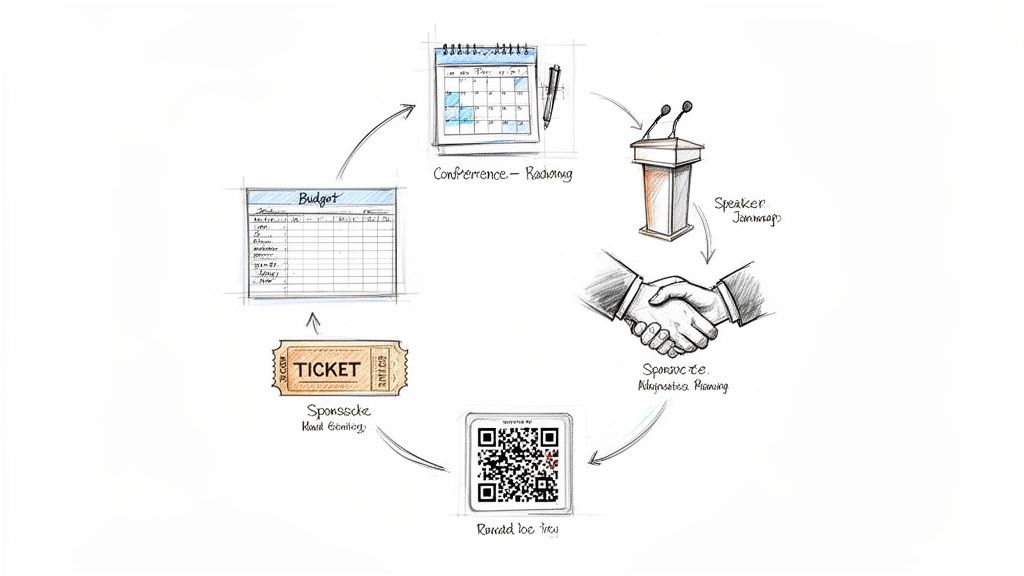
Putting together a successful conference all comes down to getting the foundation right: clear goals, a realistic budget, and a killer team. This is, without a doubt, the most critical phase of the entire process. It shapes every single decision you'll make later, from who you invite to speak to how you price your tickets.
Long before you even think about booking a venue or sending a single speaker request, you have to build a solid strategic plan. This is where you decide what "success" actually looks like, who you're trying to attract, and what resources you have to work with.
It’s easy to get caught up in the logistics, but this initial stage is all about purpose. Skipping it is like trying to build a house without a blueprint—you’re setting yourself up for a weak foundation. A well-thought-out plan becomes the north star that keeps your team, stakeholders, and partners all moving in the same direction. Learn more about the fundamentals here: https://groupos.com/blog/what-is-an-event-plan.
The global events industry is booming, jumping from $1,227.3 billion in 2024 to an expected $1,346.92 billion in 2025. That's a massive 9.7% growth rate. While that means there's a huge opportunity, it also means the competition is fiercer than ever, making a sharp, strategic approach non-negotiable.
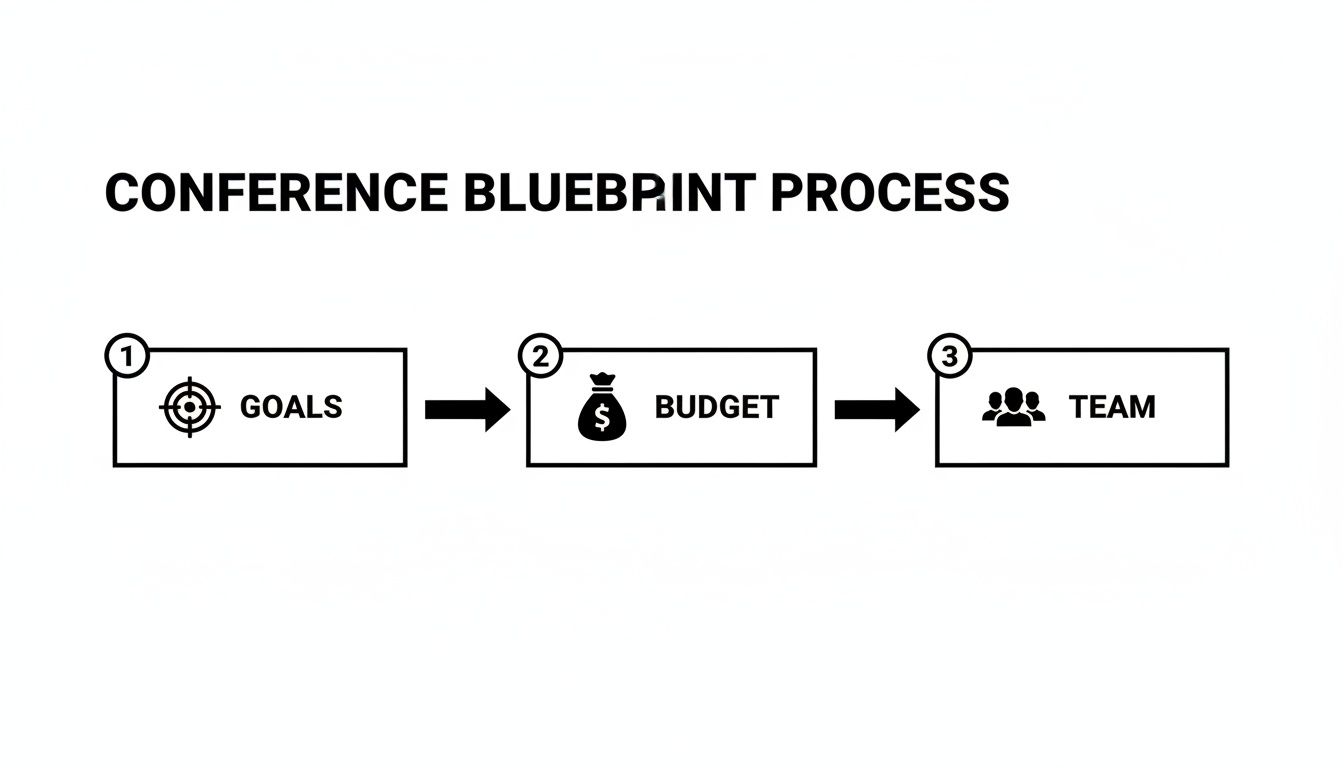
This visual really drives home how these three pillars—goals, budget, and team—build on each other. They're the essential first phase of any winning event strategy.
First things first, you have to ask the most important question: Why are we even doing this? And "because we always do" is not a valid answer. Your goals need to be specific, measurable, and directly connected to what your organization is trying to achieve.
Are you trying to generate a pipeline of qualified leads for your sales team? Is the main point to educate your association members on new industry regulations? Or is the goal to create a space for genuine innovation and community connection?
Your answer will dictate everything that follows. For example:
My Two Cents: Think of your conference goals as your compass. Without them, your team is just sailing in the dark. It becomes impossible to measure success, and you’ll have a tough time proving the event's return on investment (ROI) to your leadership.
Let's be real: no one pulls off a great conference alone. You need a dedicated team where everyone has a crystal-clear role. Ambiguity is the enemy of good execution, so make sure every person knows exactly what they own from day one.
While the titles might change depending on your organization, a solid core team usually includes these roles:
To keep all these moving parts organized, I highly recommend starting with a comprehensive event planning checklist template. It's a lifesaver for making sure nothing falls through the cracks.
A conference timeline can feel overwhelming, but breaking it down into key milestones makes it manageable. Here’s a high-level look at what that roadmap typically looks like.
This table provides a bird's-eye view, but remember that every conference is unique. You’ll need to adapt the timeline based on your event's scale, complexity, and your team's resources.
Let’s be honest: a conference budget is more than just a spreadsheet. It’s the blueprint for your entire event, dictating everything from the quality of the coffee to the caliber of your keynote speaker. Getting the financials right from the start is about more than just tracking expenses; it’s a strategic game of forecasting, generating revenue, and proving your event's worth.
This whole process kicks off by mapping out every single cost you can think of. The big-ticket items usually fall into a few predictable categories, and getting a firm handle on them early will save you from those heart-stopping, last-minute surprises that can completely sink your plans.
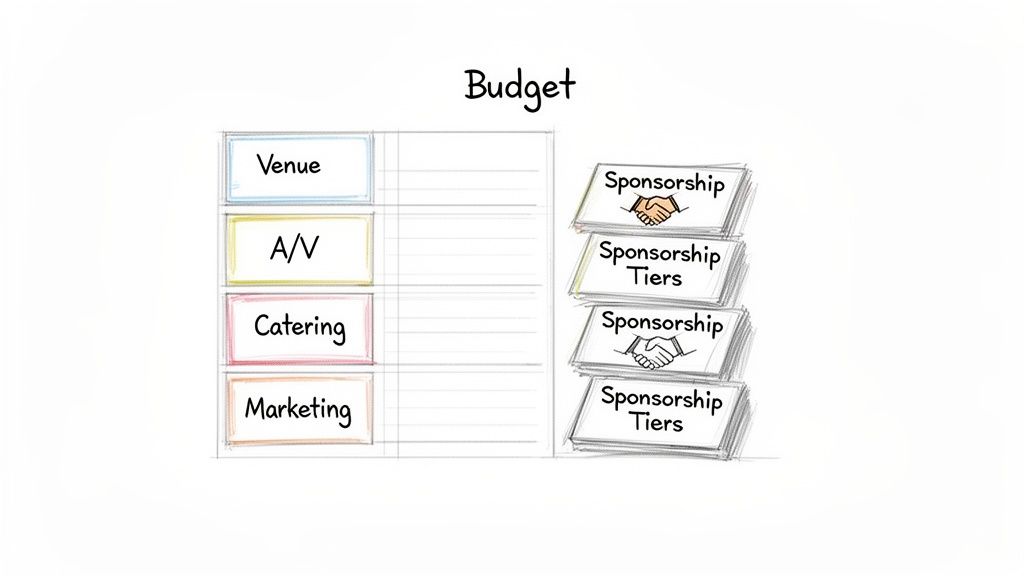
To build a budget that holds up, you first have to know where the money is going. While every conference has its own unique quirks, most of the costs are anchored to a few key pillars.
Budgeting in today’s economy means staying on your toes. According to Cendyn's 2025 planner survey, over 50% of event planners expect costs for A/V, F&B, and tech to jump by as much as 20% next year. With corporate sponsors scrutinizing every dollar, proving ROI with solid data has never been more important.
Once you’ve got your expenses pinned down, it's time to think about bringing money in. Sponsorships are the lifeblood of most conferences, but selling them isn't as simple as slapping a logo on a banner anymore. Today’s sponsors want to see a tangible return on their investment.
Your job is to build tiered packages that offer real, escalating value. Ditch the generic "Gold, Silver, Bronze" labels and start thinking about what sponsors actually want: qualified leads, genuine brand exposure, and a platform to be seen as industry leaders. If you're looking for a deeper dive, our guide on how to get a company sponsorship is a great resource.
Here’s a more modern way to think about structuring your sponsorship tiers:
This kind of structure makes the value proposition crystal clear at each level, giving sponsors a much easier "yes" when they talk to their finance teams.
Pro Tip: The best sponsorship pitches aren't about what you need from them. They're about what they get in return. Frame every single opportunity in terms of ROI and highlight the unique value of getting in front of your specific audience.
Sponsorships are amazing, but putting all your financial eggs in one basket is a risky move. A smart, diversified revenue strategy will give you a much more stable financial foundation and can seriously boost your bottom line.
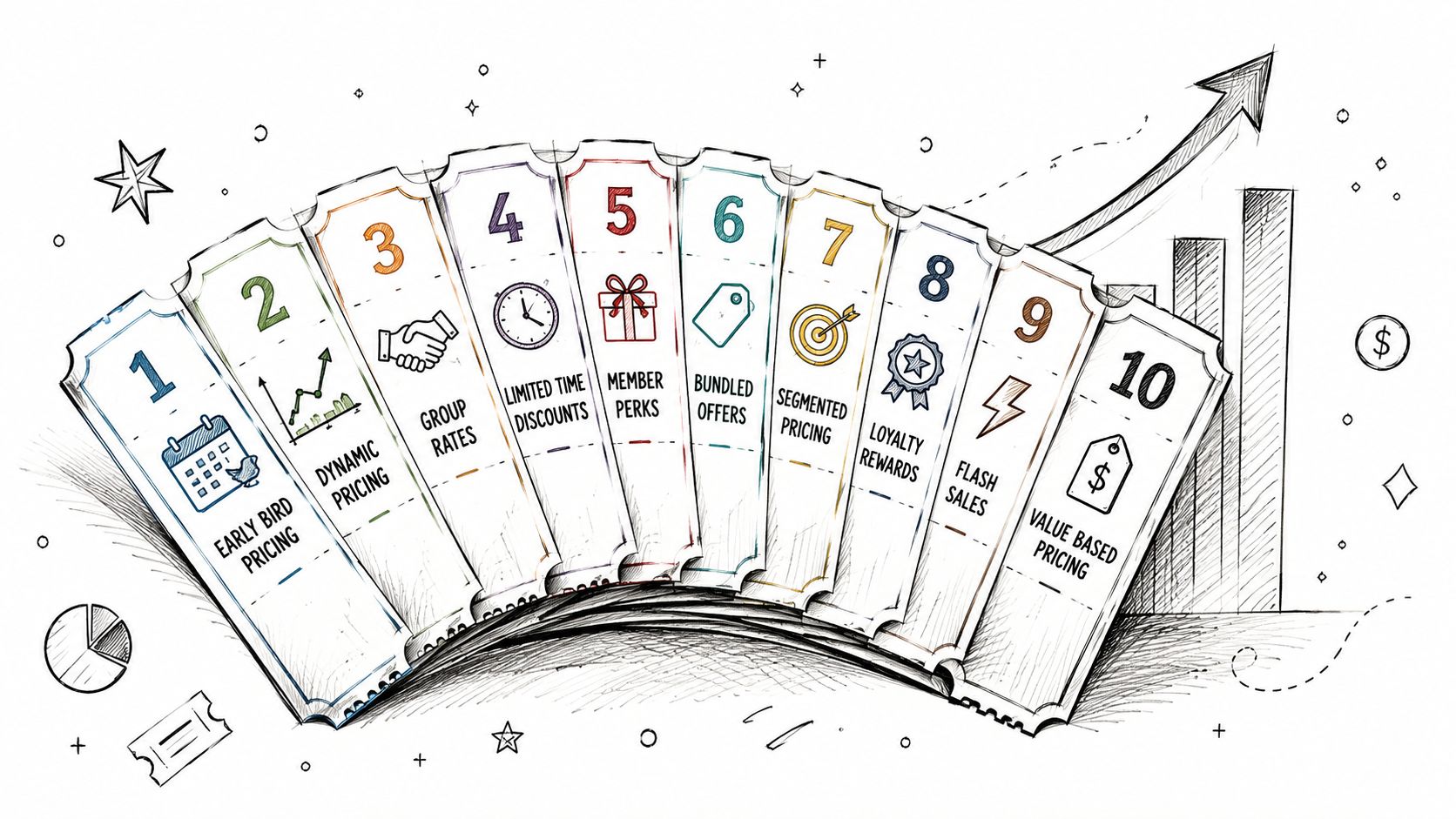
Think beyond one flat ticket price. A tiered ticketing structure gives attendees choices and you more opportunities for revenue. For example:
This approach doesn't just bring in more money; it lets attendees customize their experience to fit their budget and professional goals. When you pair a meticulous expense plan with a creative revenue strategy, you're building an event that’s set up for financial success from the very beginning.
Let’s be honest: the soul of any conference isn't the fancy venue or the catered lunch. It’s the content. Your agenda is the core promise you make to every attendee—a promise of fresh ideas, practical skills, and connections that matter. This is where you architect those "can't-miss" moments that get people buzzing long after the lights go down.
Crafting an engaging agenda is a true art form. It's so much more than just slotting speakers into a timeline. A great program takes your attendees on a journey, moving them from high-level inspiration to tactical, in-the-weeds learning that they can put to work on Monday.

Nothing kills the energy of a room faster than a lineup of back-to-back, one-note lectures. To keep people leaning in and not zoning out, you have to mix up the formats.
Think of your agenda like a great playlist—you need different tempos to keep it interesting. A powerful opening keynote can set the tone, but you need tactical workshops for deep learning and lively panels to spark debate and bring in diverse perspectives.
Try weaving in a variety of session types:
A classic rookie mistake is packing the schedule too tight. Your attendees need mental white space to process what they’re learning and, just as importantly, to actually talk to each other. Those gaps in the agenda are just as crucial as the sessions themselves.
Your speakers are the face of your content. They aren't just there to share information; they are a huge part of your marketing, drawing in a crowd and lending credibility to your event. The search for the right people needs to start early—the really great ones are often booked 6-12 months out.
And don't just chase big names. Look for great teachers and compelling storytellers. Someone might have an impressive job title, but can they actually hold a room and deliver real value? Always vet potential speakers by watching their previous talks online or asking for references from other event organizers.
Here’s a practical approach to finding top-tier talent:
Once you have your shortlist, the outreach begins. This is where being organized and professional really pays off.
A happy, well-prepped speaker delivers a better presentation. It’s that simple. Your entire speaker management process, from the first email to the post-event thank you, should be designed to make their life as easy as possible.
Create a centralized speaker portal or a detailed info hub where they can find everything in one place: key dates, slide deck guidelines, travel details, and who to contact for help. This kind of proactive communication shows you respect their time and prevents those frantic, last-minute emails.
Your speaker management checklist must cover:
Remember, your speakers are your partners. Treat them with care and professionalism, and they won't just deliver a great talk—they'll become your event's biggest champions, helping you build a reputation that attracts even better talent next year.
You can have the most incredible agenda and a speaker lineup that's the envy of the industry, but those things alone won't fill the seats. A truly successful conference hinges on a smart, multi-channel marketing plan that does more than just announce your event—it has to build genuine excitement and a real sense of urgency.
Your marketing needs to tell a story. It's not just about listing dates and session titles; it’s about crafting a compelling narrative that speaks directly to the biggest challenges and goals of your ideal attendee. You aren't just selling tickets. You're selling an experience, a career-changing opportunity, and a solution to their problems.
Before a single email goes out or a social media post gets scheduled, you have to lock in your event's unique brand and core message. This is the bedrock of your entire promotional campaign. Ask yourself: what's the one big promise we're making? What transformation will someone experience by showing up?
Your messaging needs to be sharp, focused on the benefits, and consistent everywhere you use it. For instance, instead of a generic tagline like "The Premier Conference for Industry Leaders," get specific and hit a pain point: "Where Top Marketers Learn to Stop Guessing and Start Growing." That kind of direct, value-driven language grabs attention and sticks. For more ideas, you can find a wealth of information in our guide on how to promote an event.
Putting all your marketing eggs in one basket is a surefire way to end up with a half-empty room. A robust strategy weaves together several channels, with each one playing a distinct role in guiding potential attendees from "I've heard of this" to "I've bought my ticket."
My biggest takeaway from years of conference marketing? Urgency is everything. Don't just announce your early-bird deadline; explain why it’s a big deal. Show the price jump, highlight that tickets are limited, and create a clear sense of FOMO (fear of missing out).
Okay, your marketing worked. You’ve convinced someone they need to be there. The absolute last thing you want is for them to give up because your registration form is confusing, clunky, or asks for their life story. Every click, every field is a potential roadblock. Your mission is to make saying "yes" as easy as possible.
A great registration flow is clean, works flawlessly on a phone, and only asks for what's absolutely necessary. Make your ticket tiers simple to understand and offer options that fit different needs and budgets.
Consider these tried-and-true options to drive sales:
When you combine a compelling story with a strategic multi-channel push and a dead-simple registration process, you’re not just marketing an event—you’re building a community that can’t wait to show up.
Event day. This is the culmination of months of meticulous planning. It’s showtime, and your team's ability to handle the on-the-ground logistics will make or break the attendee experience from the very first impression.
A flawless event doesn't just happen. It’s the result of a system built to anticipate chaos and empower your team to solve problems on the fly. The goal is to make everything feel completely effortless for your attendees, because a smooth, professional operation behind the scenes is what creates a high-value, memorable conference. This is where all that detailed planning really pays off.
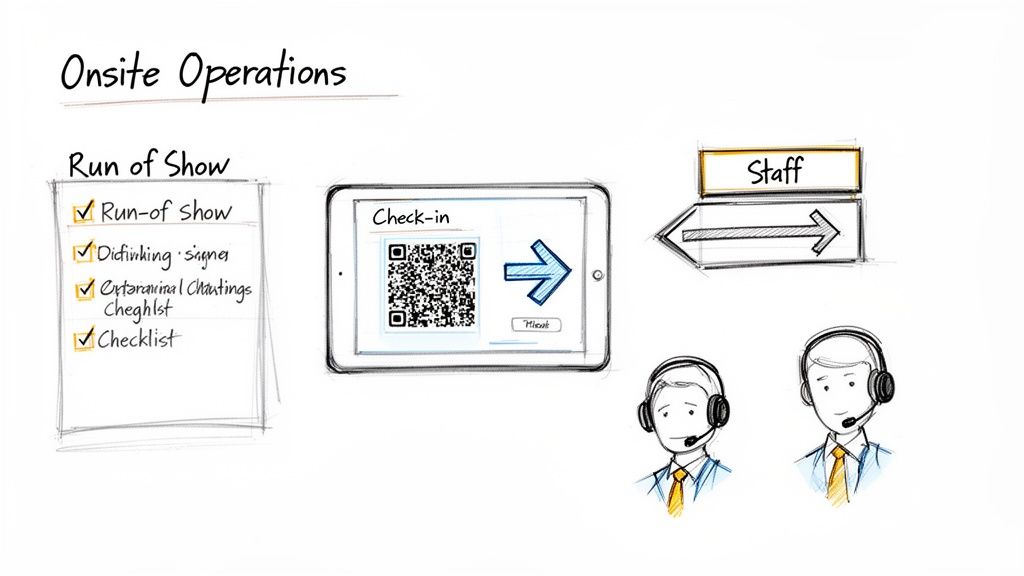
Your staff and volunteers are the face of your event. Their confidence is your greatest asset, and the key to unlocking it is a hyper-detailed run-of-show document. This isn't just a schedule; it's the single source of truth for the entire day, mapping out every moment from the first vendor arrival to the final teardown.
Think of it as the event’s playbook. It should be a minute-by-minute guide that includes:
Before the doors open, hold a thorough pre-event briefing with your entire onsite team. Walk them through the run-of-show, clarify everyone’s roles, and answer every last question. A team that knows the plan can handle just about anything with professionalism and grace.
In today's events, smart tech isn’t a luxury—it's essential for a seamless onsite experience. The right tools can eliminate common frustrations and keep attendees plugged in and engaged.
The check-in process is your first opportunity to impress, and long, snaking queues immediately set a negative tone. Implementing a system with QR code check-in, like the one offered by GroupOS, is a game-changer. Attendees can scan a code from their phone and have their badge in seconds. This isn't just about efficiency; it shows you value their time from the moment they arrive.
A frictionless arrival is powerful. An attendee who breezes through check-in in under 30 seconds enters your conference feeling positive and ready to engage, rather than frustrated and annoyed before the first session even begins.
Beyond check-in, a dedicated mobile event app becomes the central hub for your attendees. It’s the perfect place for the agenda, speaker bios, and venue maps. But its real power lies in driving interaction. You can use the app for:
Your relationship with the venue team is critical. Make sure you schedule a final walkthrough a day or two before the event to confirm every detail—room layouts, A/V setups, and catering schedules. Insist on having a dedicated venue contact who will be onsite and available for the entire duration of your conference.
Finally, never, ever underestimate the power of great signage. When an attendee is rushing to find their next session, clear, well-placed signs are an absolute lifesaver. Keep your signage consistent with your event branding and make it large enough to be seen from a distance. A smart mix of large directional signs, room-specific agendas, and helpful "You Are Here" maps ensures everyone can navigate your space with confidence and ease.
When the last attendee leaves and the final banner comes down, the real work begins. This is your moment to prove the conference’s value, justify the budget, and build unstoppable momentum for next year. It’s where you transform the buzz and anecdotes into hard data that tells a compelling story of success.
It all starts with asking the right questions. You need to get inside the attendee's head and understand their experience, not just what you think it was. This isn't the time for a 50-question survey that no one will finish. Keep it short, focused, and mobile-friendly to get the highest response rate.
A well-designed post-event survey is your goldmine.
The whole point of a survey is to figure out what was a home run and what needs rethinking for next time. Don't just ask, "Did you have a good time?" That's a dead end. You need to dig deeper with specific questions that give you a clear path forward.
I always recommend structuring feedback requests around a few key pillars of the event experience:
A quick pro-tip: Speed is everything. Send that survey within 24 hours of the event’s close. The experience is still fresh, and you'll capture their genuine impressions. I've seen response rates fall off a cliff after the 48-hour mark.
Now you take that rich, qualitative feedback and pair it with the hard numbers you’ve been tracking all along. This is how you build a powerful report that demonstrates a clear return on investment (ROI) to your board, your boss, and your sponsors. Our guide on measuring event ROI goes much deeper into the specific formulas and frameworks you can use.
Think of your report as a dashboard of Key Performance Indicators (KPIs) that connect directly back to the goals you set on day one.
The end of the conference is just the beginning of the conversation. The goal now is to keep that energy alive and nurture the connections people made onsite. This is how you turn a three-day event into a vibrant, year-round community.
A great first step is sharing on-demand recordings of the most popular sessions. It provides massive value for attendees who had to choose between two great talks and reinforces that their ticket was a fantastic investment.
Next, create a high-energy highlight reel. Splice together attendee testimonials, exciting moments from the keynotes, and shots of people connecting. This becomes an incredible marketing asset for next year’s event. By keeping the discussion going on your community platform and sharing these resources, you make sure the momentum never stops.
GroupOS is the all-in-one platform designed to help you manage every aspect of your conference, from seamless ticketing and registration to post-event analytics and year-round community engagement. Replace disjointed tools with a single, branded solution that empowers you to prove ROI and grow your event year after year. Start your free trial today.