January 12, 2026
Before you even think about platforms or send a single invite, the real work of building a successful community begins with a solid strategic foundation. This isn't just busywork; it's the most critical phase that separates thriving hubs from digital ghost towns. Your goal here is to align the community's purpose directly with your organization's mission, ensuring it's a strategic asset from day one.
A great online community doesn't happen by accident. It starts with a clear, practical blueprint that will guide every decision you make down the line. You absolutely have to answer this core question first: "Why should this community exist, and who is it for?" If you can't answer that with conviction, you'll struggle to get anyone to show up, let alone stick around.
Your answer dictates everything. For example, is this community meant to keep the conversation going year-round after your big annual conference? Or maybe it's a dedicated space for members to find mentors and network with peers. It could even be a premium offering, housing exclusive courses and high-value resources. Each of these goals requires a totally different approach to your content, moderation, and overall member experience.
Once you've nailed down the why, you need to get laser-focused on the who. Don't just settle for basic demographics. You need to build out detailed member personas. What are their biggest frustrations at work? What truly motivates them to participate in something new? What kind of content or connection would they consider indispensable?
From there, map out their entire journey. Think through their experience from the second they first hear about your community to the moment they become a super-user.
Thinking through this path helps you spot potential friction points and design an experience that delivers value right out of the gate.
Your goals need to be specific, measurable, and directly tied to your organization's bottom line. Vague targets like "increasing engagement" just won't cut it. You need to focus on concrete KPIs that leadership will understand and value.
A huge mistake I see all the time is organizations treating their community as a cost center. When you tie your community's goals to revenue, retention, and member success, you can clearly demonstrate its ROI and get the long-term buy-in you need.
Here are a few examples of strong, meaningful goals:
This data-driven mindset is essential. The economics of building an online community have moved from a nice-to-have tactic to a core business strategy. The global online community platform market was valued at around USD 1.2 billion in 2023–2024 and is projected to skyrocket to over USD 3.0 billion by 2032. This shows just how much businesses are investing in this space.
This foundational process—defining your purpose, understanding your audience, and building a real strategy—is non-negotiable.
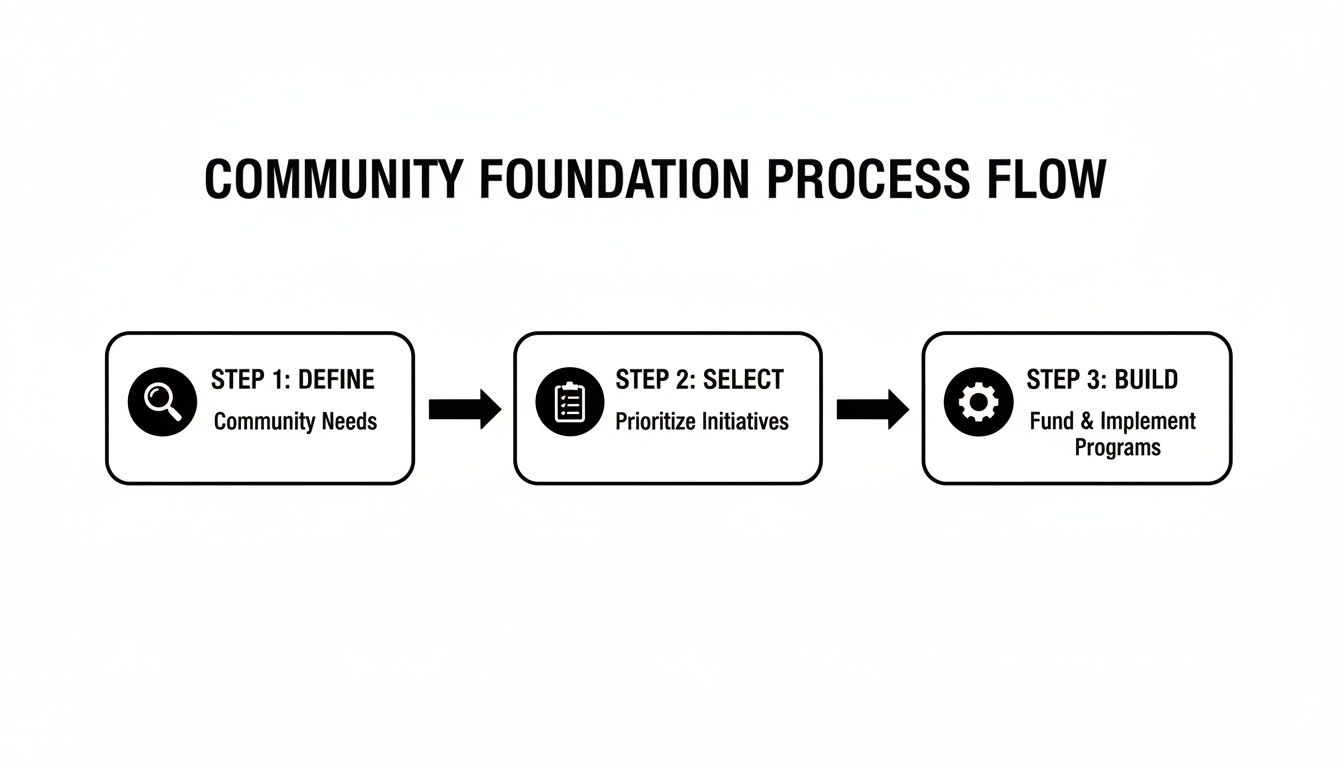
As you can see, a successful community is the result of a deliberate, step-by-step process, not luck. As you lay this groundwork, it can be helpful to review guides on how to create a social network app, as they often share valuable insights on niche selection and user experience. And for more hands-on tactics you can use today, check out our complete guide on effective community-building strategies.
A great community shouldn't feel like just another website. It should feel like a destination. Its success really hinges on creating a smooth and engaging journey for members, right from the moment they decide to join. Your goal is to design an environment where people feel seen, connected, and ready to jump in from their very first visit.
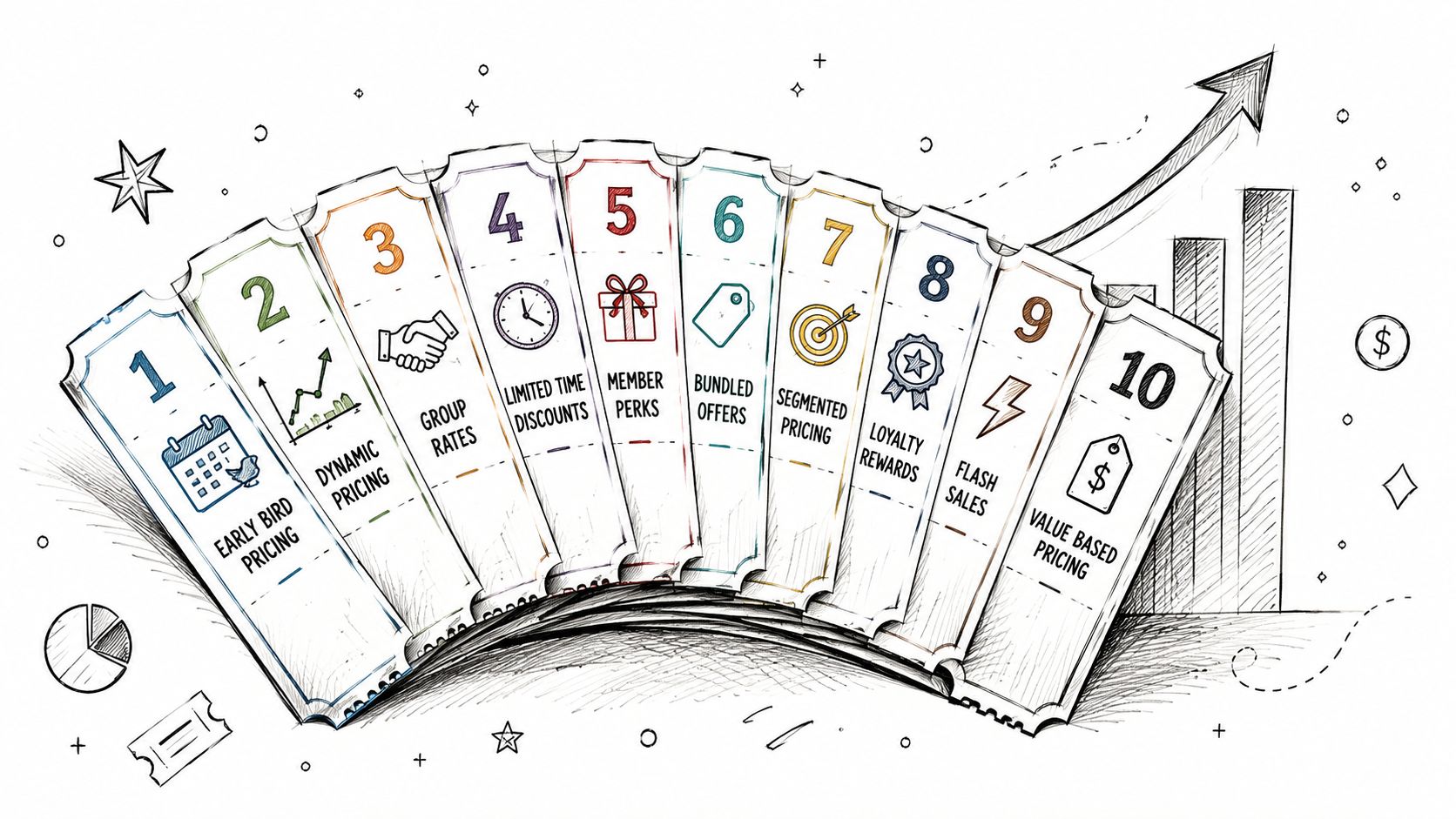
This whole experience starts with how you structure access and membership. When you're building an online community, a one-size-fits-all approach almost never works. Offering flexible tiers lets you meet people where they are, accommodating different levels of commitment and giving them a clear path to get more involved over time.
Think beyond a simple "member" versus "non-member" split. A tiered structure is one of the best ways to serve your audience well.
This tiered model doesn't just create a clear value proposition for each level; it builds a sustainable revenue model right from the start.
Nothing kills a great member experience faster than manual, clunky administrative tasks. For any community that plans to grow, setting up automated workflows for key touchpoints isn't just a nice-to-have; it's essential. Your platform should be doing the heavy lifting so you can focus on people, not paperwork.
Automated renewals are a perfect example. Instead of you or your team chasing down members for payments, the system should send out reminders before a subscription lapses. This one workflow alone can dramatically reduce churn and keep revenue predictable. Research from the University of Michigan even found that customers tend to spend more after joining a company's online community, so keeping them around is your top priority.
But the most critical workflow of all is your member onboarding sequence. A new member’s first 48 hours are everything. If they don't find something valuable or connect with someone quickly, the odds of them coming back plummet.
Your onboarding isn't just a welcome email. It's a guided tour designed to deliver an "aha!" moment as fast as possible. The goal is to get a new member to take one small, meaningful action—like introducing themselves or asking a question—that makes them feel like they belong.
A solid onboarding sequence could look something like this:
A single, giant forum can feel like shouting into the void. The best communities I've seen create smaller, more intimate spaces where members can build real connections around specific topics or shared interests. This approach turns a monolithic platform into a dynamic hub with something for everyone.
For a professional association, this might mean creating:
By segmenting your community this way, you make it incredibly easy for members to find relevant conversations and connect with peers who actually get their world. That level of personalization is what transforms a generic platform into an indispensable career resource. Of course, your software has to support this. Our guide on the best online community platforms can help you compare features like private groups and member tagging.
Ultimately, this thoughtful design is what turns passive lurkers into your most active and valuable champions.
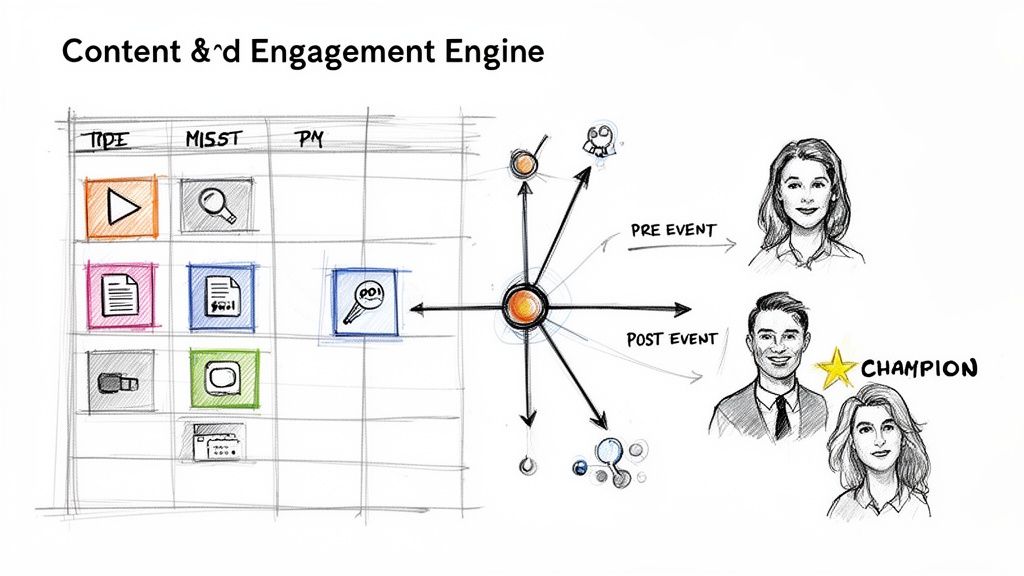
If your strategy is the blueprint and your platform is the structure, then content is the lifeblood of your community. It’s what keeps people coming back. Without a consistent flow of valuable, engaging material, even the slickest platform will feel like an empty room.
The goal isn't just to post stuff. It’s to create a dynamic engine that delivers real value and, more importantly, inspires members to jump into the conversation. You want to shift them from being passive consumers to active participants.
Think of it like running a niche media channel exclusively for your members. A solid content calendar is non-negotiable here.
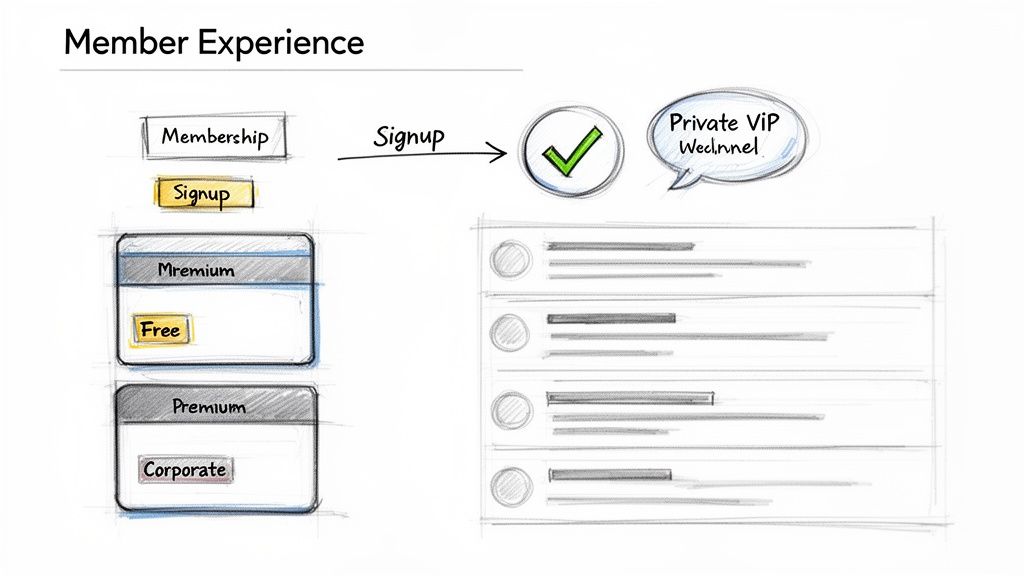
A predictable-yet-varied content plan ensures there's always something worthwhile for every member, no matter their interests. The best approach is a healthy mix of content you create (top-down) and opportunities for members to contribute their own insights (bottom-up).
Here’s a simple but effective weekly programming idea for a professional association:
This kind of rhythm turns your community from a static forum into a reliable source of professional growth. For a deeper dive, our guide on how to create engaging content has more frameworks you can use.
Pushing out content is just step one. The real magic happens when that content ignites a genuine conversation. The secret? Be relentlessly relevant and interactive.
Don't just post a link to an article. Frame it with a direct question that invites members to share their own experiences.
For instance, instead of just sharing a market trends report, try this: "We just published our Q3 industry report (see attached). Which of these trends is hitting closest to home for your organization right now, and what are you doing to adapt?"
That simple shift from passive announcement to active prompt makes all the difference.
Your ultimate goal is to reach a tipping point where the community becomes self-sustaining—where members start and lead valuable conversations on their own. This doesn't happen by accident. It happens when you identify and empower your most passionate members.
These are your community champions. Find the people who consistently answer questions, welcome newcomers, and offer thoughtful replies. Give them the recognition they deserve with special badges or titles, and maybe even create a private channel to get their feedback on new community ideas. When you empower them, you scale your efforts and build a resilient, member-driven culture.
The investment in dedicated platforms to do this is no longer a niche idea. The community platforms market was valued at around USD 454.1 million in 2021 and is projected to skyrocket to USD 2.67 billion by 2033. This growth proves that community has shifted from a "nice-to-have" to a core business strategy. You can see more on these trends in this market report on community platforms.
For most associations, annual conferences and events are the main attraction. Your online community is the perfect vehicle to extend that value far beyond the few days of the event itself, creating a continuous loop of engagement.
Think of your community as the central hub for every event you run.
This strategy transforms a three-day conference into a 365-day conversation. It's a constant, powerful reminder of the value you provide and gives members an undeniable reason to renew.
A thriving community isn’t just about great content. It’s built on a foundation of safety and professionalism, where members feel genuinely comfortable sharing their ideas and being vulnerable. This sense of psychological safety is completely non-negotiable if you want your community to have any long-term health and credibility.
Don't think of governance as a way to stifle conversation. It's the exact opposite. By creating a solid structure, you’re actually enabling more constructive, meaningful dialogue to happen.
Your first move is to draft a clear, easy-to-understand Code of Conduct. This document is the cornerstone of your community's culture. It needs to spell out what's welcome, what's out of bounds (think spam, harassment, or hate speech), and what happens when someone crosses a line. Be transparent. Your members will thank you for it.
From my experience, the most sustainable moderation systems are a smart blend of automated tools and real human oversight. You simply can't rely on just one. AI filters are brilliant at catching low-hanging fruit like spam links or obvious keywords, but they completely miss the nuance of complex human interaction.
That’s where your community managers and moderators step in. Think of them as the guardians of your culture.
Let's be real: conflict is going to happen. It's an inevitable part of bringing people together. The way you handle it is what truly defines your community’s culture.
When a violation happens, aim to educate first and penalize second (unless it's a major offense, of course). A private, direct message explaining which rule was broken and why is almost always more effective than a public shaming.
Have a clear, documented process for what happens when rules are broken. It keeps things fair and predictable.
Keep in mind that a trustworthy environment goes beyond just moderating discussions. Implementing robust website security best practices is a foundational piece of governance that protects member data and shows you’re committed to their safety.
At the end of the day, your moderation needs to be consistent, fair, and transparent. If you're looking for inspiration on what to include in your own rules, checking out a few community guidelines examples can be a great starting point. This proactive approach builds a culture of respect and ensures your community remains a valuable resource for years to come.
Getting your online community off the ground is a huge win, but let’s be honest—that’s just the starting line. Now, the real work begins. To keep the momentum going and prove its value to your stakeholders, you have to shift from building to measuring. If you don't have the data, you’re essentially flying blind. You can't show the real ROI or figure out what actually makes your members tick.
It’s tempting to lean on big, flashy numbers like total member count. But that’s a vanity metric. A massive number looks great in a presentation, sure, but it tells you nothing about whether your community is a vibrant hub or a ghost town. The real story is always in the activity.
To get a real sense of how things are going, you need to zero in on a few key performance indicators (KPIs) that track genuine participation and member value. These are the numbers that will actually guide your strategy and show you’re on the right track.
Any modern community platform worth its salt, like GroupOS, will have a dashboard that makes tracking this stuff easy—no data scientist required.
Here's what you should be watching:
Tracking these numbers helps you prove you're building a strategic asset for the organization, not just another social media channel.
Before we dive into the qualitative side, let's break down these essential KPIs and how to measure them. A good platform should give you all the tools you need to see what's happening at a glance.
Having this data at your fingertips is what separates a professionally managed community from a hobby. It’s what allows you to make informed decisions instead of just guessing.
Data tells you what is happening, but it rarely tells you why. That’s where good old-fashioned human feedback comes in. Numbers can't capture the subtle frustrations or moments of delight your members experience. For that, you have to listen.
One of the easiest ways to do this is with simple, regular surveys. A quarterly "Community Health Check" with just a couple of questions can give you so much to work with.
Ask something direct like, "On a scale of 1-10, how likely are you to recommend this community to a colleague?" Then, add an open-ended follow-up: "What's one thing we could do to make this community more valuable for you?" The answers you get are often a goldmine.
I also highly recommend setting up a dedicated "Feedback & Suggestions" channel right inside the community. It gives members a designated spot to share ideas and shows them you’re genuinely open to their input. This qualitative insight is what helps you make human-centered decisions.
Once you’ve got a healthy, engaged core group, you can start thinking about growth. But this isn't about opening the floodgates. It's about strategically attracting the right people—the ones who will contribute to the culture you've worked so hard to build.
Member referral programs are fantastic for this. Offer a small perk—a discount on renewal, some company swag—for every new member they bring in. These referrals are almost always high-quality because they come with a built-in connection and a basic understanding of what the community is about.
Strategic partnerships are another great avenue. Find non-competing organizations that serve a similar professional audience and team up. You could co-host a webinar, swap articles for each other’s newsletters, or run a joint virtual event. It’s a perfect way to get your community in front of a relevant, pre-qualified audience.
Organizations are clearly seeing the long-term value here. The market for online community platforms is expected to jump from USD 8.74 billion in 2025 to a massive USD 23.63 billion by 2033. You can dig into the specifics in this community engagement platform market report. This isn't a fleeting trend; it’s a fundamental shift, proving that a well-run community is a powerful growth engine for any association.
Diving into a new community platform is a big step, and it’s natural to have questions. Over the years, we've helped countless professional associations and community managers get started, and we've noticed a few questions that come up time and time again. Let’s get you some straight answers.
Getting buy-in from the top often comes down to speaking their language: results and ROI. Instead of focusing on fuzzy concepts like "engagement," you need to build a rock-solid business case that ties the community directly to the bottom line.
Frame your pitch around three core pillars that leadership can't ignore:
Back this up with data. The community platform market is exploding for a reason—your competitors are likely already making this move. And don't forget the crucial point of owning your member data. This reduces your dependency on fickle social media algorithms and gives you direct, invaluable insight into what your members truly want.
Without a doubt, the single biggest misstep is launching to an empty room. Nothing kills a community's potential faster than a new member showing up to find crickets. You absolutely must have a critical mass of people and content on day one to create that initial spark of energy.
Your launch shouldn't be a single event, but a carefully phased rollout. Before you open the floodgates, you need to set the stage. Pre-populate the space with interesting discussion prompts, valuable resources, and a few conversation starters.
The secret sauce is a "Founding Members" program. Hand-pick a small group of your most enthusiastic members, trusted speakers, or key partners and give them early access. Make them feel special, ask for their feedback, and empower them to start the first conversations.
When you finally have your big public launch, new members will walk into a space that’s already buzzing with activity. This instantly shows them the value and makes them far more likely to jump in and participate themselves.
This is definitely not a "set it and forget it" initiative, but the time commitment is more manageable than you might think, especially with the right tools. The hours you'll need will scale with the size and activity of your community.
For most small to mid-sized professional associations, a dedicated community manager working 10-20 hours per week can do a fantastic job. Their focus will be on welcoming new members, programming content, sparking conversations, and general moderation.
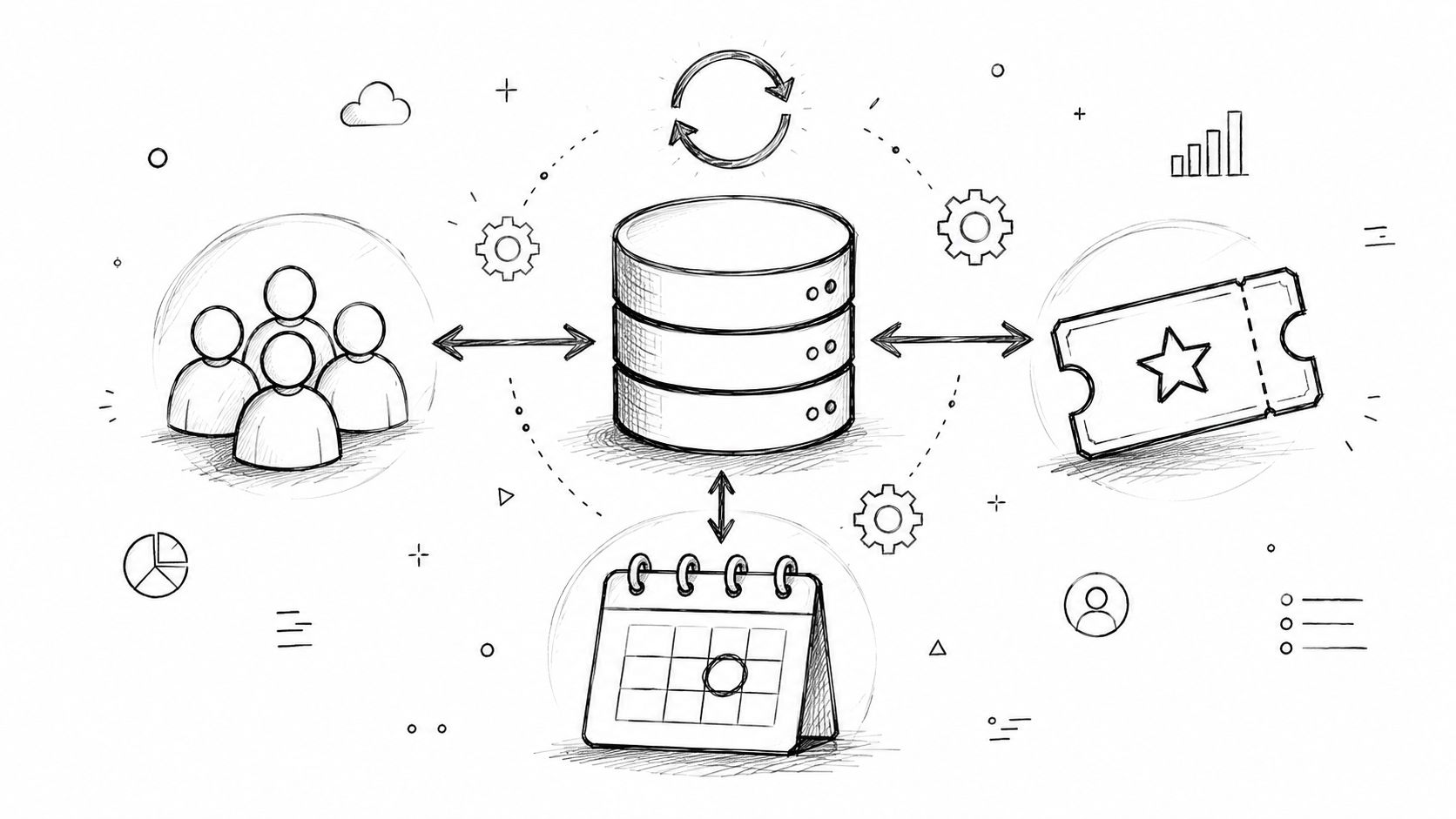
Once you grow into a larger enterprise-level community with thousands of members, a full-time role becomes pretty essential. The key to making this manageable is to lean on your platform's features. When your member database, events, and content are all in one place, your manager isn't bogged down with administrative busywork. They can focus on high-impact engagement. Automating things like onboarding emails and renewal reminders is a huge time-saver.
The goal is to make your community platform the undeniable hub for your events—before, during, and after. This is how you turn a one-time event into a year-round experience, which delivers way more value for both your attendees and sponsors.
Think of it in three distinct phases:
This integrated approach gives attendees a powerful, ongoing reason to stay active in your community long after the event wraps up.
Ready to build a thriving, engaged, and profitable online community? GroupOS provides an all-in-one platform to manage your members, events, and content seamlessly. Schedule a demo today and see how we can help you grow.