January 10, 2026
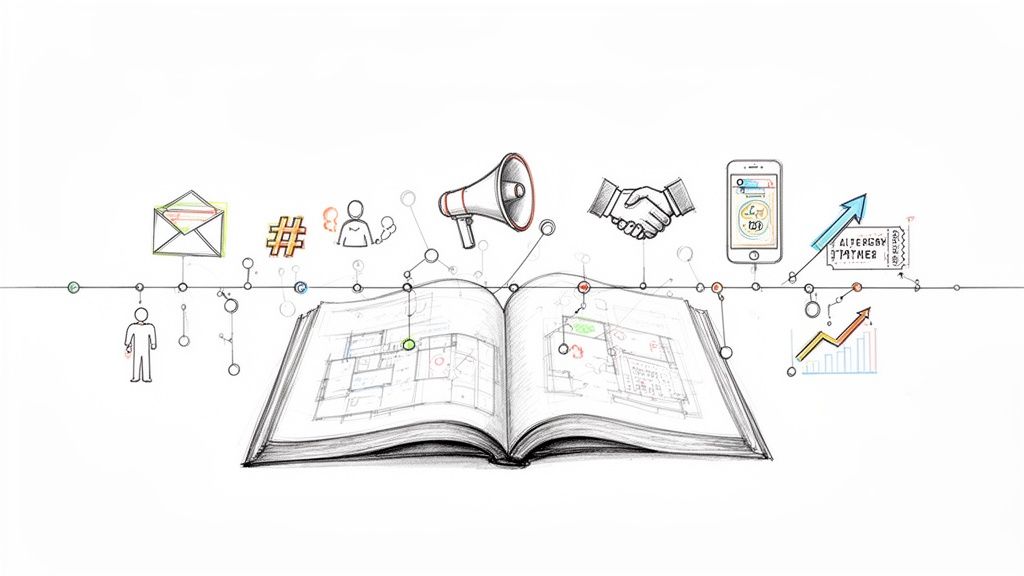
Let's be honest: you can't just throw up a registration page and expect people to flock to your event. The real magic happens long before you send that first promotional email. A truly successful event launch is built on a solid foundation of smart planning.
This is where you get crystal clear about your event's purpose, who it's for, and what success actually looks like. Getting this groundwork right ensures every dollar you spend and every piece of content you create hits the mark.
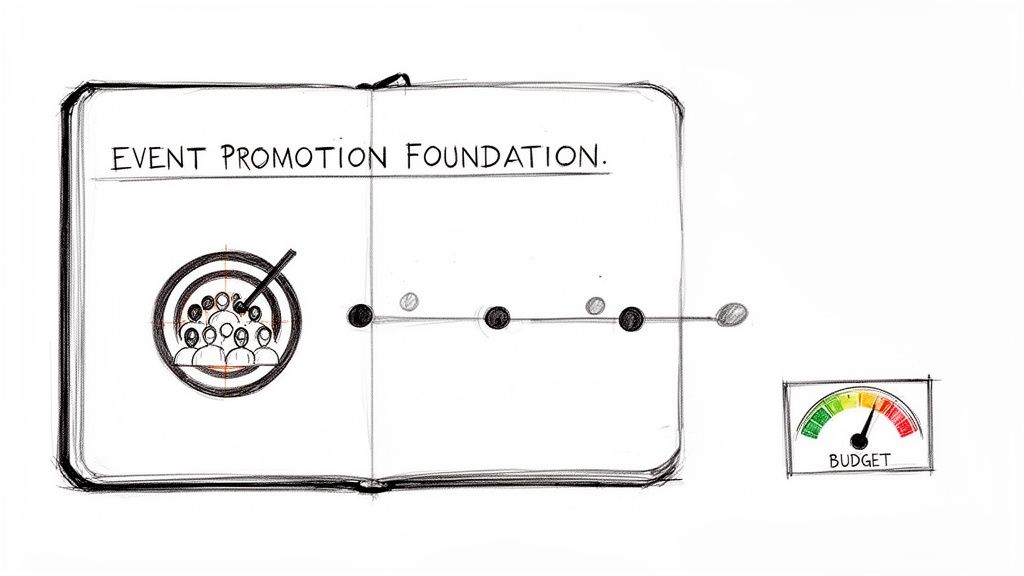
Before you even think about social media graphics or ad campaigns, you have to answer one critical question: "Why should someone clear their schedule and pay to attend this event?" If your answer is vague, your marketing will be weak. But a powerful, specific answer becomes the North Star for everything you do.
This isn't just about listing features; it's about crafting a compelling story. You're not just selling a ticket—you're selling an experience, a career-changing connection, or a solution to a nagging problem.
First things first: what makes your event stand out? Is it the A-list speaker lineup you worked so hard to secure? The intimate, hands-on workshops? Or maybe the unparalleled networking with industry decision-makers? This is your unique value proposition (UVP), and it's the core message that will cut through the endless noise online.
At the same time, you need to know exactly who you're talking to. Don't just settle for basic demographics. Dig deeper. What are their biggest professional headaches? What blogs do they read? Where do they hang out online? Building this detailed attendee persona will dictate the language you use, the visuals you create, and the promotional channels you invest in.
Key Takeaway: A sharp value proposition and a detailed audience profile are your two most powerful promotional assets. Without them, you're just shouting into the void, no matter how big your budget is.
What does "success" mean for this event? Is it selling 500 tickets? Generating 100 qualified sales leads? Or building a vibrant community that lasts long after the event ends? You need to set SMART (Specific, Measurable, Achievable, Relevant, Time-bound) goals. So, instead of a vague goal like "sell more tickets," a better one is "sell 200 early-bird tickets by May 15th."
Once you have your goals, work backward from the event date to build your promotional timeline. This map should lay out all your key milestones: when you’ll announce the keynote speaker, when early-bird pricing ends, and when you’ll start the final ticket push. Having a structured process is so crucial that a detailed guide on what an event plan includes can be a total game-changer.
Your budget dictates the scale and scope of what's possible. The global event market is massive—projected to hit $1,346.92 billion in 2025—so the competition for your audience's attention is intense. The good news? 74% of event marketers expect their budgets to increase, which shows a strong industry-wide commitment to investing in high-quality promotion.
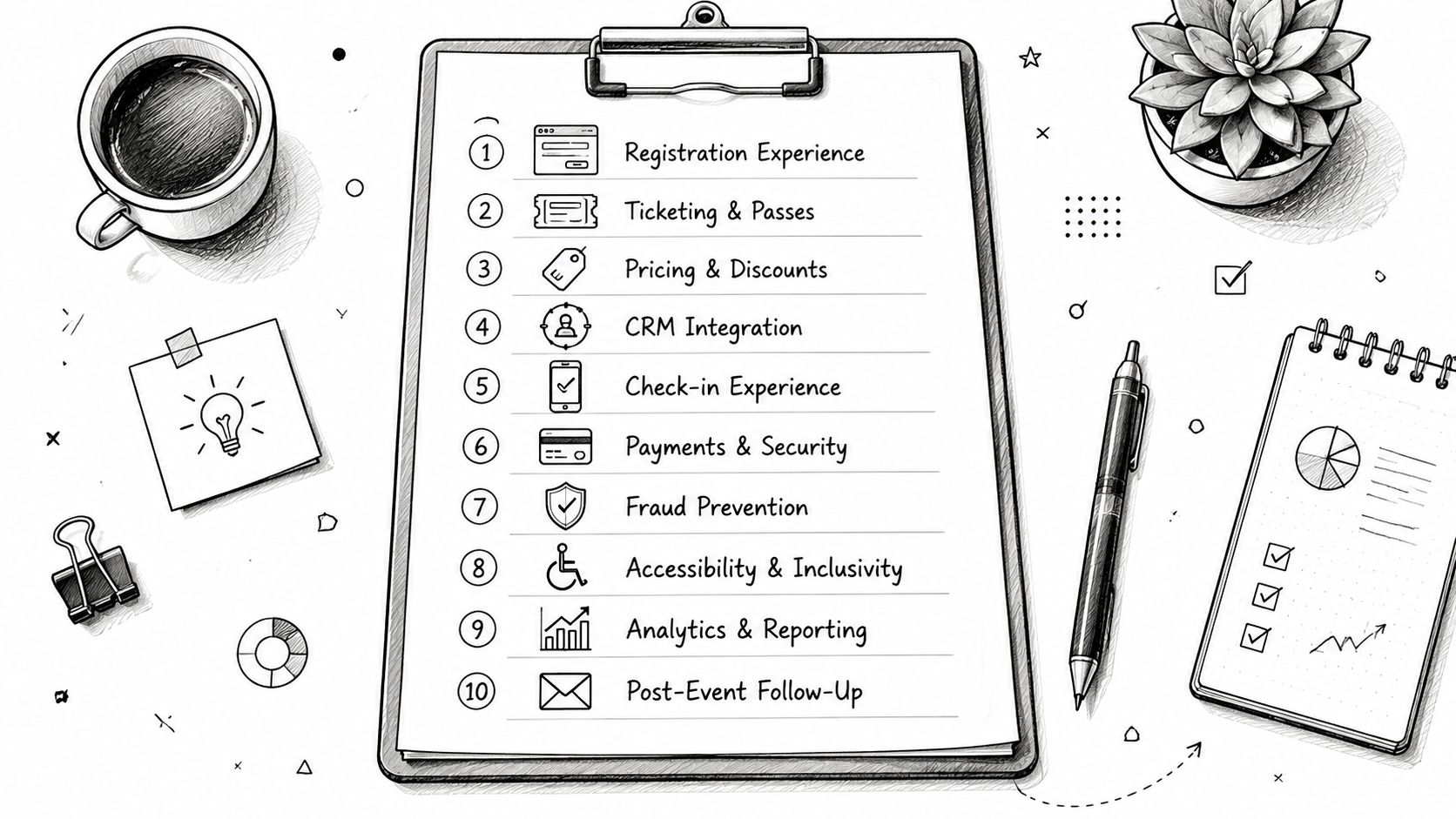
This initial planning phase can feel like a lot to juggle, but it sets the stage for everything that follows. Before you start the actual outreach, it's a good idea to run through a quick checklist.
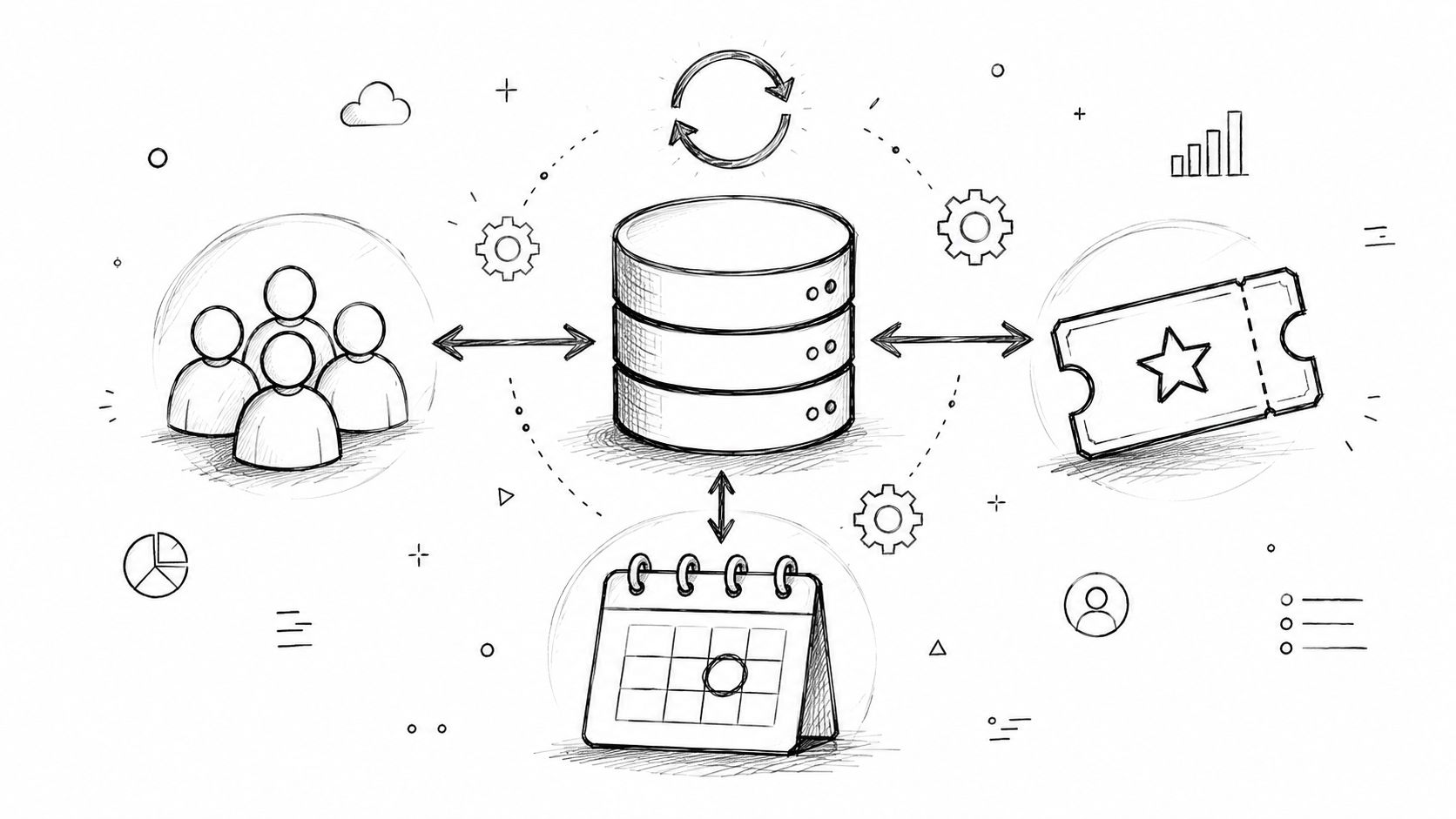
Here are the essentials you need to have locked down before you kick off your promotion. Using an all-in-one platform like GroupOS allows you to manage all of these foundational elements in a single, centralized place.
Nailing down these core components in a unified system like GroupOS helps ensure your message, audience, and goals are perfectly aligned from day one. This creates a powerful, coherent promotional engine before the real work of outreach even begins.
Let's be honest: putting all your promotional eggs in one basket is a surefire way to host an event with plenty of empty seats. In today’s world, a successful event promotion plan absolutely requires a diversified, multi-channel approach. You have to meet your audience where they actually are, and the days of just posting on Facebook and hoping for the best are long gone.
The real magic happens when all your channels start working in concert, creating a single, powerful message that builds momentum over time. We're going to break down how to use email for direct, personal communication, social media for building a real community, targeted ads for finding new faces, and strategic partnerships to pour gasoline on your promotional fire.
Relying on a single channel, like organic social media, is risky business. One little algorithm change from Instagram or Facebook could completely tank your reach overnight, leaving you scrambling. Diversifying your promotional mix is your insurance policy—it ensures you’re consistently connecting with different segments of your audience on the platforms they prefer.
To really nail this, you need to understand the fundamentals of what is multichannel marketing. The goal is to create a seamless and consistent brand experience, no matter where a potential attendee first stumbles upon your event.
And the data backs this up. Event promoters have nearly doubled their active channels, jumping from an average of 4.79 channels in 2022 to a staggering 9.5 channels in 2024. This isn't just a fad; it's a strategic shift toward a smarter blend of social media, paid ads, community hubs, and partnerships. This trend from the 2025 Event Promotion Trends Report highlights just how critical this has become.
Not all channels are created equal. The right mix depends entirely on your event and, more importantly, your audience. A B2B tech conference is going to live and breathe on LinkedIn, while a local music festival will find its groove on Instagram and TikTok.
Here are the essential channels you should be thinking about for your promotional mix:
The key is to pick three to five core channels where you can really show up and be consistent. It’s far better to master a few platforms than to spread yourself thin across ten of them with mediocre content.
An integrated strategy is so much more than just copy-pasting the same message everywhere. It's about making your channels work together to smoothly guide someone from "what's this?" to "I'm in!"
For instance, a paid ad on Instagram could pique someone's interest and drive them to a detailed blog post about your keynote speaker. At the end of that post, a simple form captures their email for your newsletter. A few days later, they get an email with an exclusive early-bird discount. See? Each channel has a job to do.
Pro Tip: Make your channels cross-promote each other. Drop your event hashtag from social media into your email newsletters. Put a link to your private community forum in your email signature. This creates a connected ecosystem that keeps your audience hooked.
This is where having an all-in-one platform like GroupOS is a game-changer. Instead of juggling a dozen different dashboards, you can see the entire promotional funnel in one place, making it easy to see what’s working.
So, how do you really know which channels are driving ticket sales? If you’re not tracking, you’re just guessing. A truly effective multi-channel strategy is built on data, not gut feelings.
Set up unique tracking links (often called UTM codes) for every single channel and campaign. This simple step is critical because it tells you exactly where your registrations are coming from.
Answering these questions is how you start spending your time and money wisely. If you see a partner collaboration is knocking it out of the park, invest more there. If your Facebook ads are duds, pause them and shift that budget to a channel that’s actually delivering a return.
This constant cycle of tracking, analyzing, and optimizing is the secret sauce to a promotion that’s both successful and cost-effective. You can also dive deeper into experiential marketing events to learn how creating memorable in-person interactions can fuel your multi-channel buzz even further.
Okay, you've got your high-level strategy mapped out. Now it's time to get into the trenches with the two workhorses of event promotion: email and social media. Firing off a generic email blast or just posting a flyer on Instagram isn't going to move the needle. To really make an impact, you need to be precise, creative, and completely in tune with your audience.
This is where the real work begins. Think of your email list as your direct line for driving registrations—it's personal and targeted. Social media, on the other hand, is your town square for building hype, creating conversations, and fostering a community. When you get them working together, they create an unstoppable promotional engine.
Never underestimate the power of a well-crafted email. While social media gets all the glamour, email is still one of the most reliable drivers of ticket sales. It’s your chance to speak directly to people who are already interested, without having to battle a fickle algorithm.
The trick is to think beyond a single announcement. You need to build a strategic sequence of emails that builds excitement and gently nudges subscribers toward that "register now" button.
And please, pay attention to your subject lines. "Event Registration is Open" is a guaranteed way to get ignored. Try something more magnetic, like, "The Answer to [Your Audience's Problem] is Here" or "Last Chance for 20% Off [Event Name] Tickets." It’s a small tweak that makes a world of difference to your open rates.
Social media is where your event comes to life before the doors even open. It’s a crowded space, so your content has to be visually compelling and genuinely interactive to stand out. Before you even think about posting, you need a solid game plan to plan your social media content effectively so your messaging stays consistent and strategic.
Your goal is to create a content calendar that tells a compelling story. Don't just post the same graphic over and over. Mix it up.
Pro Tip: Talk with your audience, not at them. Use Instagram Story polls ("Which session are you most excited for?"), run a giveaway where followers tag a friend they’d bring, or host a quick Q&A with one of your speakers. Engagement is the name of the game.
This timeline gives you a great visual for how these channels work together, each ramping up at just the right time.
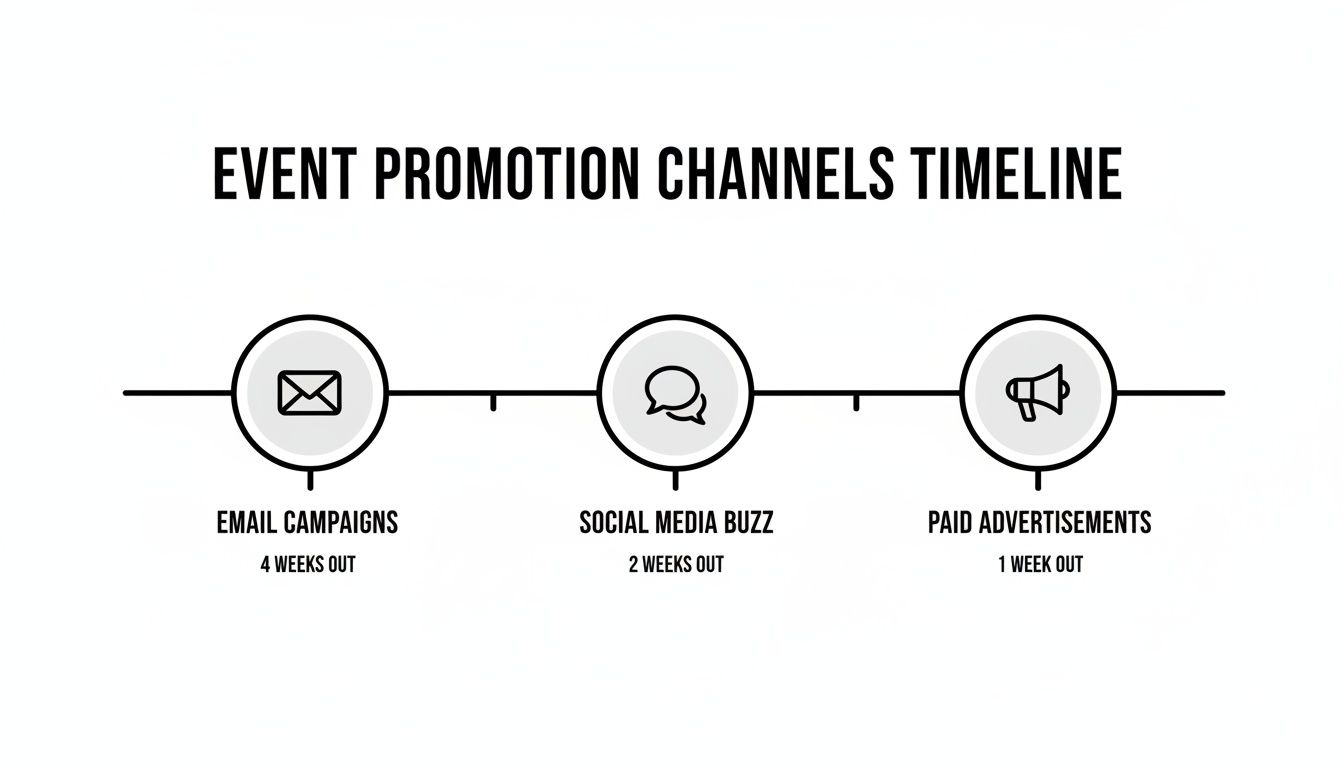
As you can see, the promotional rhythm changes. It often starts with direct, personal outreach through email, then expands to build public excitement on social, and finishes with a targeted ad push to capture last-minute interest.
This is critical: your email and social campaigns can't operate in their own little bubbles. They need to work together, cross-promoting each other to create a seamless experience for potential attendees.
In your emails, encourage subscribers to follow you on social for behind-the-scenes content and real-time updates. On your social channels, run a contest where people have to sign up for your event newsletter to enter. This synergy creates a powerful feedback loop.
Here's a sample timeline to help you visualize how these activities might be structured in the weeks leading up to your event.
This timeline isn't rigid, but it provides a solid framework. You can adjust the pacing based on your event's scale and your audience's behavior.
By weaving these channels together, you create a connected community long before day one. You're not just selling tickets; you're building momentum toward an unforgettable experience.
Let's be honest: your ticket price is much more than just a number. It's one of your most powerful marketing tools. Get it right, and you can create a real sense of urgency, lock in early commitments, and even supercharge your promotional efforts. When you start treating your ticketing strategy as an active part of your campaign, you're not just selling seats—you're building momentum.
At the same time, trying to promote an event all by yourself is an uphill battle. The right strategic partnerships can blow your audience size wide open, giving you instant credibility and a reach that would otherwise take months, or even years, to build from scratch.
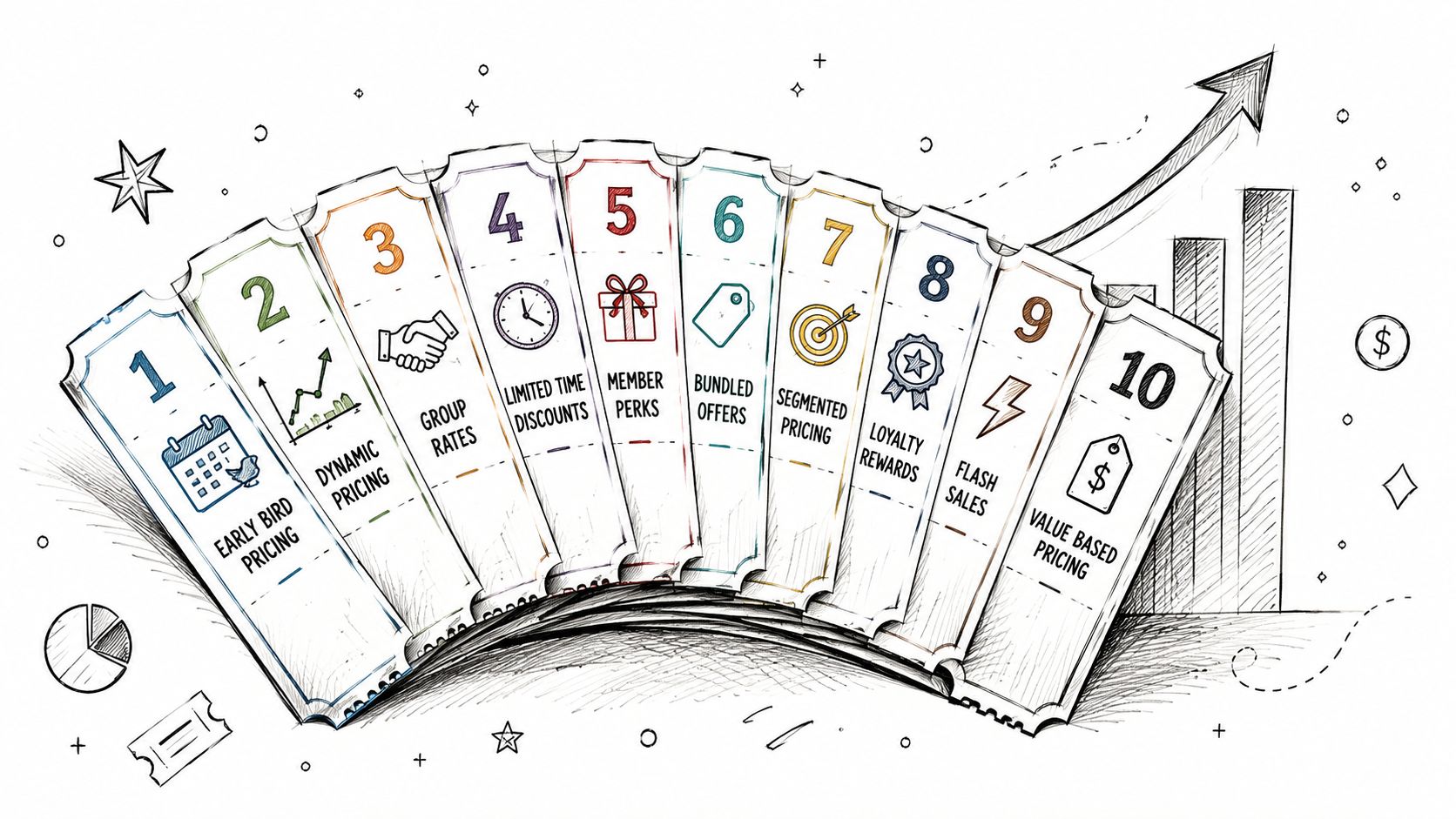
A single, static ticket price is an invitation for people to wait until the last minute. We’ve all been there. To break that cycle, you need a ticketing structure that nudges people to commit now, but without just slashing prices and making your event seem cheap. The real goal is to reward commitment and add genuine value.
Here are a few ticketing strategies I’ve seen work wonders:
These options change the game from a simple purchase to a strategic decision for your attendees. An all-in-one platform like GroupOS makes it incredibly simple to create these custom ticket types, automate price changes when early-bird deals expire, and manage all the different access levels without any headaches. To get a better sense of what to look for, exploring the features of the best event ticketing software can give you a great head start.
Think of strategic partnerships as your promotional force multipliers. When you team up with the right people and organizations, you get to tap into their established, trusting audiences—audiences that are often a perfect match for your event.
And don't just think about sponsors. Your pool of potential partners is probably a lot bigger than you realize.
Key Insight: A great partnership is always a two-way street. Don't just show up asking for a favor. Figure out what’s in it for them. Offering their community an exclusive discount code is a simple, effective way to provide real value.
When you reach out, keep your pitch short, clear, and easy for them to say "yes" to. Show them you’ve done your homework on their audience and lay out the mutual benefits. This is where a tool like GroupOS comes in handy again—you can generate unique, trackable promo codes for every partner. That way, you can see exactly which collaborations are driving sign-ups and prove the ROI of your partnership efforts.
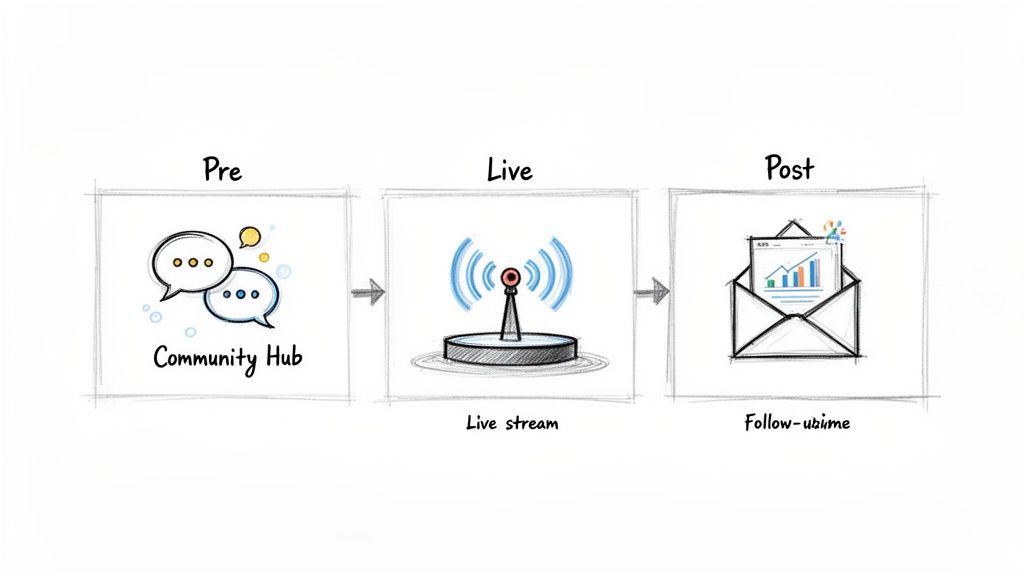
Getting someone to register is a huge win, but it’s really just the beginning of the journey. The most talked-about events feel less like a one-off day and more like an entire experience, one that kicks off weeks before the doors open and keeps buzzing long after everyone’s gone home.
This complete engagement cycle is what separates a good event from a truly great one. It’s how you turn a first-time attendee into a lifelong fan. Your job is to build and sustain that energy from the moment they buy their ticket.
That quiet period between registration and the actual event? It’s a goldmine for building connections. Don't just leave your attendees hanging. Give them a place to gather, chat, and get genuinely excited about what’s to come.
This is where a dedicated community hub, managed through a platform like GroupOS, really shines. It’s your own branded space to share exclusive content, host live Q&As with speakers, and let attendees start networking before they even shake hands.
When you do this right, you eliminate any potential buyer's remorse and make attendees feel like they’re already part of an exclusive club.
Once the event is live, it's all about amplifying the energy in the room and sharing it with the world. This is your chance to lean heavily on live social media and interactive tech.
I always recommend having someone on the team whose sole job is to be your "live correspondent." They should be capturing the magic as it unfolds—live-tweeting key quotes, posting short video interviews with attendees, or going live on Instagram during a big keynote. You're creating powerful FOMO (Fear of Missing Out).
An event app or community platform is no longer a 'nice-to-have.' It’s essential for keeping everyone connected. Use it for live polls, session Q&As, and push notifications for last-minute changes. It's your direct line to every attendee.
And don't forget to display your event hashtag everywhere! When you see attendees posting, reshare their content. It validates their experience and, better yet, creates authentic marketing material for your next event.
The work isn’t done when the lights go out. Honestly, your post-event follow-up is one of the most critical pieces of the entire strategy. This is where you lock in the event's value, get priceless feedback, and pave the way for next year.
Your follow-up sequence should be quick and packed with value:
Let's be real, the competition for attendees is fierce. With only 12.5% of promoters believing there's room for pure market expansion, keeping your existing audience happy is everything. The good news? Over 53.1% of organizers still report rising attendance, proving that a smart, full-funnel approach works. Dig into more insights like these in the 2025 Event Promotion Trends Report to stay ahead.
Using an all-in-one platform like GroupOS is how you tie this whole lifecycle together. You can manage the pre-event community, deliver all your post-event content, and track the engagement analytics that prove your event's lasting impact to stakeholders.
Even with the perfect playbook, you're bound to hit a few snags when you get into the nitty-gritty of promoting an event. It’s just the nature of the beast. You're constantly juggling budgets, tight timelines, and a million other moving parts.
So, let's tackle some of the most common questions that pop up. These aren't just textbook answers; they come from years of seeing what actually works (and what doesn't) in the real world. Getting these right can save you a lot of headaches down the road.
This is the million-dollar question, isn't it? And if anyone gives you a single magic number, they're lying. The right budget is completely tied to your event's goals, who you're trying to reach, and how much a ticket costs.
A solid rule of thumb is to set aside 10-20% of your projected event revenue for marketing and promotion.
If you're launching a brand-new event and need to make a splash, you'll probably want to lean closer to that 20% mark (or even higher) just to cut through the noise. But if you're running a beloved annual conference with a built-in audience, you might get away with spending closer to 10%.
Before you land on a final number, think about these things:
The short answer? Sooner than you think. Your promotional timeline should be a direct reflection of your event's scale. A huge, multi-day international conference needs a much longer runway than a small, local workshop.
Here’s a general timeline I’ve seen work well:
My Two Cents: Don't just announce your event. Build a story around it. Starting early lets you drip out speaker reveals, share behind-the-scenes content, and send value-packed emails that turn lukewarm interest into must-attend excitement.
It's an old cliché for a reason: you can't improve what you don't measure. It's incredibly easy to get lost in a sea of data, but focusing on a handful of key performance indicators (KPIs) is what separates the pros from the amateurs. Forget vanity metrics like social media likes and focus on what drives results.
Here are the core numbers you should live and breathe:
The marketing world is always changing, and for 2025, the sharpest promoters are putting their money into a mix of online paid ads, organic social media, genuine community engagement, email marketing, and local partnerships. It’s clear that a blended strategy is the only way to win. You can dive deeper into the latest 2025 event promotion trends to see how your plan stacks up.
Tired of juggling a dozen different spreadsheets and disconnected tools? GroupOS is the all-in-one platform that brings your event promotion, ticketing, community management, and analytics together in one place. Start your free trial today and see how much easier it is to launch a sell-out event.