January 8, 2026
A winning event proposal isn't a template you just fill out. Think of it as a strategic document, one that's built on a deep understanding of your client. It all starts by asking the right questions to uncover what they really want to achieve. This is how you prove you're a partner invested in their success, not just another vendor quoting a price.
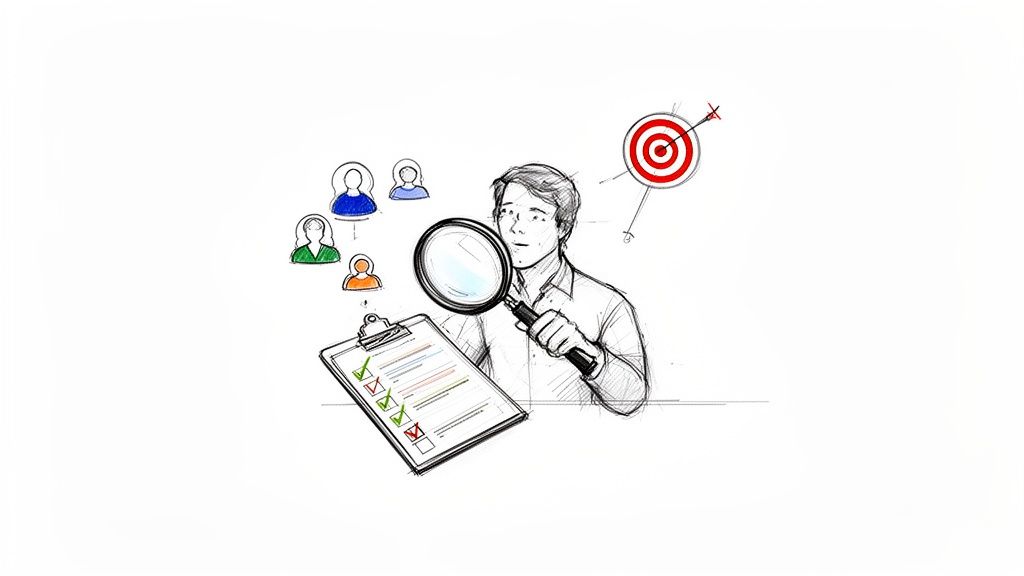
Before you even think about writing, the most important work happens during discovery. This is your chance to stand out. Anyone can respond to a surface-level request, but a true professional digs deeper. So, instead of just asking, "what kind of event do you want?" you need to get to the business objectives behind it.
Frame your initial conversation as a strategic consultation, not a sales pitch. Your goal here is to gather the intel that will become the backbone of your proposal, making every section speak directly to the client’s specific needs.
To build that strong foundation, you have to understand the client's core motivations. This means asking questions that reveal their pain points and what a successful outcome actually looks like to them.
For instance, if a client says they want a user conference, is the real goal to reduce customer churn? Announce a major product? Or build a stronger community around their brand? Each of those objectives requires a completely different strategy.
Here are the key areas I always probe during discovery calls:
The answers to these questions are your roadmap. A proposal that directly addresses the client’s own definition of success is infinitely more powerful than one that simply lists services.
The information you gather here informs your entire strategy. To keep it all straight, I highly recommend using a structured document. Learning about the ideal event brief format is a great next step to ensure you capture every critical detail systematically.
This groundwork also helps you anticipate the full scope of what's needed, which might involve a whole range of professional event planning services to execute the vision flawlessly. When you do this right, your proposal becomes more than just a document—it’s the first real step in a successful partnership.
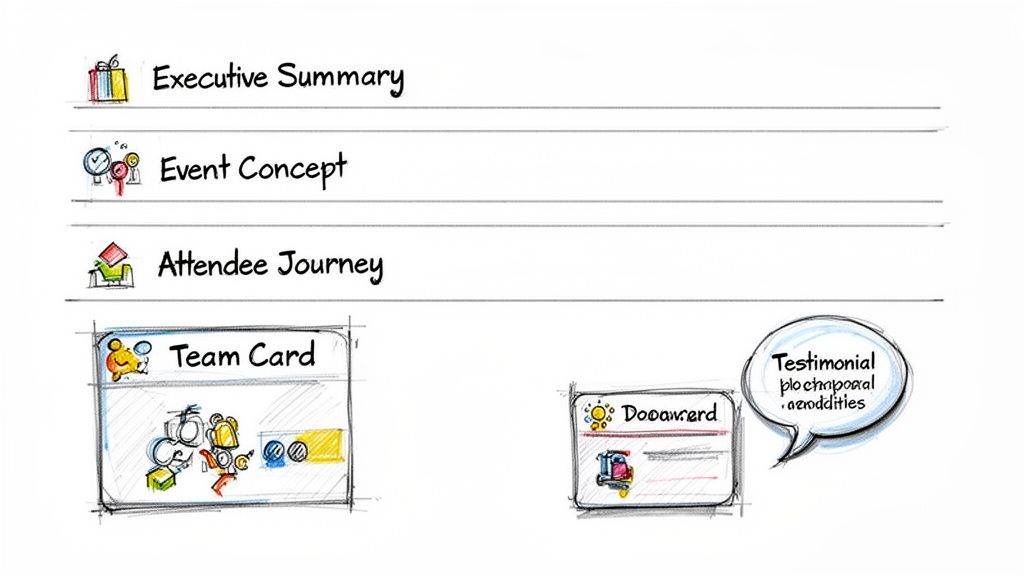
A winning event proposal does more than just list services and prices. It tells a compelling story, one that frames you and your team as the only logical choice to bring a client’s vision to life. Let’s walk through the key pieces that transform a simple quote into an irresistible argument for partnership.
Remember, this entire document is a direct response to what you learned during your discovery calls. Every section should scream, "We heard you, we get it, and here's exactly how we're going to make it happen."
Your executive summary is your hook. It’s your one chance to grab their attention and convince them to keep reading. Think of it as the trailer to your movie—it needs to be punchy, clear, and leave them wanting more. Briefly touch on their core challenge, your big-picture solution, and the incredible results they can expect.
This isn’t the place for dry facts. You're selling a vision. So, instead of a flat statement like, "We will organize a one-day conference," you aim higher: "We’ll produce a one-day immersive brand experience designed to re-engage your top 100 enterprise clients and drive a 15% increase in contract renewals." See the difference?
Now, you get to bring the event to life on paper. Your goal is to paint such a vivid picture that the client can feel the energy in the room just by reading it. You're describing the entire experience from an attendee's point of view.
When you show that you can handle everything from the big creative ideas down to the minute technical details, you build serious confidence. Highlighting your capacity for comprehensive event services assures them they’re in good hands.
A professional proposal leaves no room for ambiguity. I've found that breaking down the core sections and their strategic purpose is the best way to ensure you've covered all your bases.
Having a clear structure like this not only makes your proposal easier to read but also shows the client you’re a thorough and professional partner.
Once the vision is sold, it's time to prove you're the team to execute it. This is where you build trust and lay the groundwork for a smooth working relationship.
Don’t be shy here. Include short, impactful bios of the key people who will be hands-on with the event, making sure to highlight their experience with similar projects. This adds a personal touch and shows the client the depth of talent they're getting. A powerful testimonial or a mini case study from a past success can be the final nudge they need.
A great proposal clearly outlines the scope of work. It details exactly what services are included and, just as importantly, what is not. This prevents scope creep and sets clear expectations from day one, fostering a healthy client relationship.
That kind of transparency is a game-changer. It shows you’re a partner, not just a vendor. If sponsorships are part of the plan, laying out a clear framework for that is equally important. For anyone needing guidance on that front, our event sponsorship proposal template is a fantastic resource for structuring that specific component.

Let's be honest: the budget section is where a proposal lives or dies. It’s the moment of truth where your client decides if this is a smart business decision or just an expense. Your job is to shift their entire mindset from "cost" to "investment."
The fastest way to build trust here is with complete transparency. It doesn't matter if you work on a flat fee, a percentage, or some hybrid model—every single line item needs to be crystal clear and have a reason for being there. Vague terms like "Miscellaneous" are red flags. Break everything down. This clarity shows you've done your homework and have nothing to hide.
A great proposal never just lists costs. It ties every dollar to a specific, desirable outcome. For every significant expense, you need to confidently answer the question, "And what do we get for this?"
For example, don't just put "A/V Equipment - $15,000." That's just a number. Instead, frame it as a solution:
See the difference? You’ve connected the expense directly to a benefit, making it a logical and essential part of the event's success.
To make your numbers believable, they have to reflect what's actually happening in the industry. We're seeing a huge rebound in attendance—over 53.1% of organizers are reporting bigger crowds. In fact, major promoters have seen attendance jump by around 20% in the last year alone. With the U.S. live events market expected to reach $638.5 billion by 2032, clients expect sophisticated revenue models that go beyond a single ticket price.
This is where you seal the deal. Calculating and presenting a potential Return on Investment (ROI) moves the conversation from what the client is paying to what they stand to gain.
Keep your projections conservative but confident, and always tie them to metrics you can actually track.
Your budget isn't just a spreadsheet. It's the financial blueprint for success. When you can clearly draw a line from every dollar spent to a tangible business outcome, the investment becomes not just justifiable but genuinely exciting.
By showing the potential financial upside, you make saying "yes" a no-brainer. If you want to get really granular with the numbers, our complete guide on measuring event ROI will walk you through building a bulletproof financial case for your proposal.
Let's be honest: a modern event proposal is much more than a document. It’s a live demonstration of your capabilities. Just listing what you do isn't going to cut it anymore. You have to show clients exactly how you'll deliver a seamless, engaging, and measurable experience. And the best way to do that? Technology.
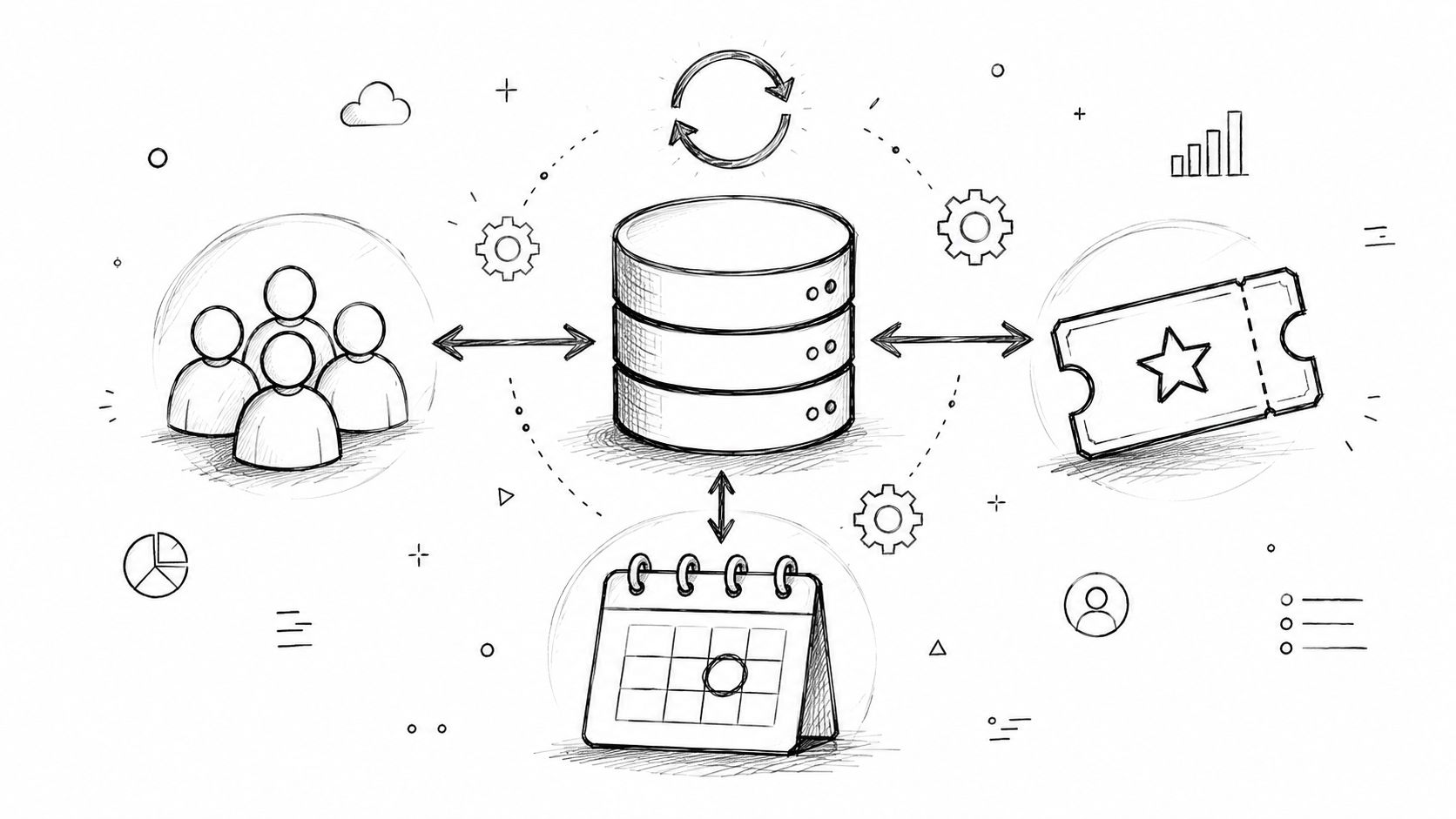
Instead of making vague promises about engagement, get specific. Your proposal should walk them through a tech-powered attendee journey. Explain how you’ll use dynamic ticketing paired with custom registration forms to capture valuable data right from the get-go. This isn't just about selling tickets; it's about understanding the audience on a deeper level before they even walk through the door.
A great proposal paints a picture of operational excellence. It's the small things that show you're a pro. For instance, describe how QR code check-ins will make long lines a thing of the past, creating a smooth and professional first impression. This detail alone shows you value every attendee's time and are focused on a friction-free experience from the moment they arrive.
This same logic applies directly to your sponsorship packages. A static logo on a banner feels ancient. A truly compelling sample proposal for event sponsorship needs to show tech-driven value that gets sponsors excited.
Here’s what that could look like:
A proposal truly clicks when technology stops being a simple line item in the budget and becomes an integral part of your event strategy. It's how you prove you can deliver not just an event, but a modern, data-rich experience that gets results for everyone.
This screenshot from a G2 review for GroupOS shows exactly what clients are looking for: a central, easy-to-use platform.
The feedback drives home the point that having a single hub for communication, event management, and member engagement is a massive selling point. Highlighting this in your pitch shows you get it.
Laying out a clear tech stack in your proposal shows you understand where the industry is headed. The global events market is projected to hit an incredible $2.5 trillion by 2035, and corporate events are a huge piece of that pie, making up about 35% of the share.
In a space this competitive, you need every edge you can get. Consider that 79% of event professionals already rely on event management systems to make their jobs easier. Proposals that clearly outline a tech strategy, especially for hybrid formats, are immediately put at the top of the pile.
By including specific features like a centralized content hub for on-demand video or integrated messaging channels, your proposal becomes more than just a plan. It turns into a sneak peek of the sophisticated, high-value experience you’re going to deliver. To really beef up this section of your proposal, check out our deep dive into the benefits of using an online event management software.
Even the most brilliant strategy can fall flat if it's trapped in a clunky, hard-to-read document. The final hurdles—how you design it, send it, and follow up—are often what separate a proposal that gets read from one that gets immediately archived.
Think of your proposal's design as part of the user experience, not just decoration. Your goal is to make it effortless for the client to navigate. A clean layout with lots of white space, clear headings, and maybe even their own branding colors will make the document feel custom-built for them. A wall of text is intimidating; a visually organized proposal respects their time and invites them in.
How you send the proposal can be just as important as what's inside it. A static PDF attached to an email is the classic move. It's universal and everyone knows how to open one, but it's also a black box. You hit send and cross your fingers, with no idea if they even looked at it.
For a bigger impact, I’d suggest exploring a couple of modern alternatives:
Quick tip from experience: try sending your proposal on a Tuesday or Wednesday morning. It’s a sweet spot that avoids the Monday morning chaos and the Friday afternoon wind-down, increasing your chances of getting their full attention.
The real work starts after you click "send." A polite but persistent follow-up strategy is what turns a great proposal into a signed contract. Your goal is simply to stay top-of-mind and make it incredibly easy for them to say "yes."
I've found a simple, structured cadence works best. First, send a quick confirmation email right after the proposal to make sure it landed safely in their inbox. From there, a gentle check-in email 3-4 business days later is a great way to nudge them for feedback.
Here’s a simple script I often use:
"Hi [Client Name], just wanted to circle back on the event proposal I sent over last week. Did you get a chance to look it over? I'm free this week if you'd like to hop on a quick call to walk through it or answer any questions."
Notice the tone—it’s helpful, not demanding. If you're still met with silence, a phone call a week later is completely appropriate.
And what if they come back with revision requests? That’s fantastic news! It means they're genuinely engaged and picturing themselves working with you. Address their feedback quickly and clearly. This is your chance to show you’re a responsive, collaborative partner who’s ready to bring their vision to life. This is how deals are won.
When you're knee-deep in planning, a few questions always seem to pop up. It happens to everyone. Let's clear the air on some of the most common sticking points so you can get your proposal out the door with confidence.
There’s no magic number, but I’ve found the sweet spot for most corporate or larger-scale events is somewhere between 8-15 pages.
This gives you enough real estate to cover the crucial details—the what, why, and how—without sending your client a novel they don't have time to read. The real goal is to anticipate their questions and answer them proactively. You want them to finish reading it in one sitting feeling informed and impressed, not exhausted.
Remember, a punchy, persuasive proposal will always beat a long, fluffy one. Focus on substance, not just page count.
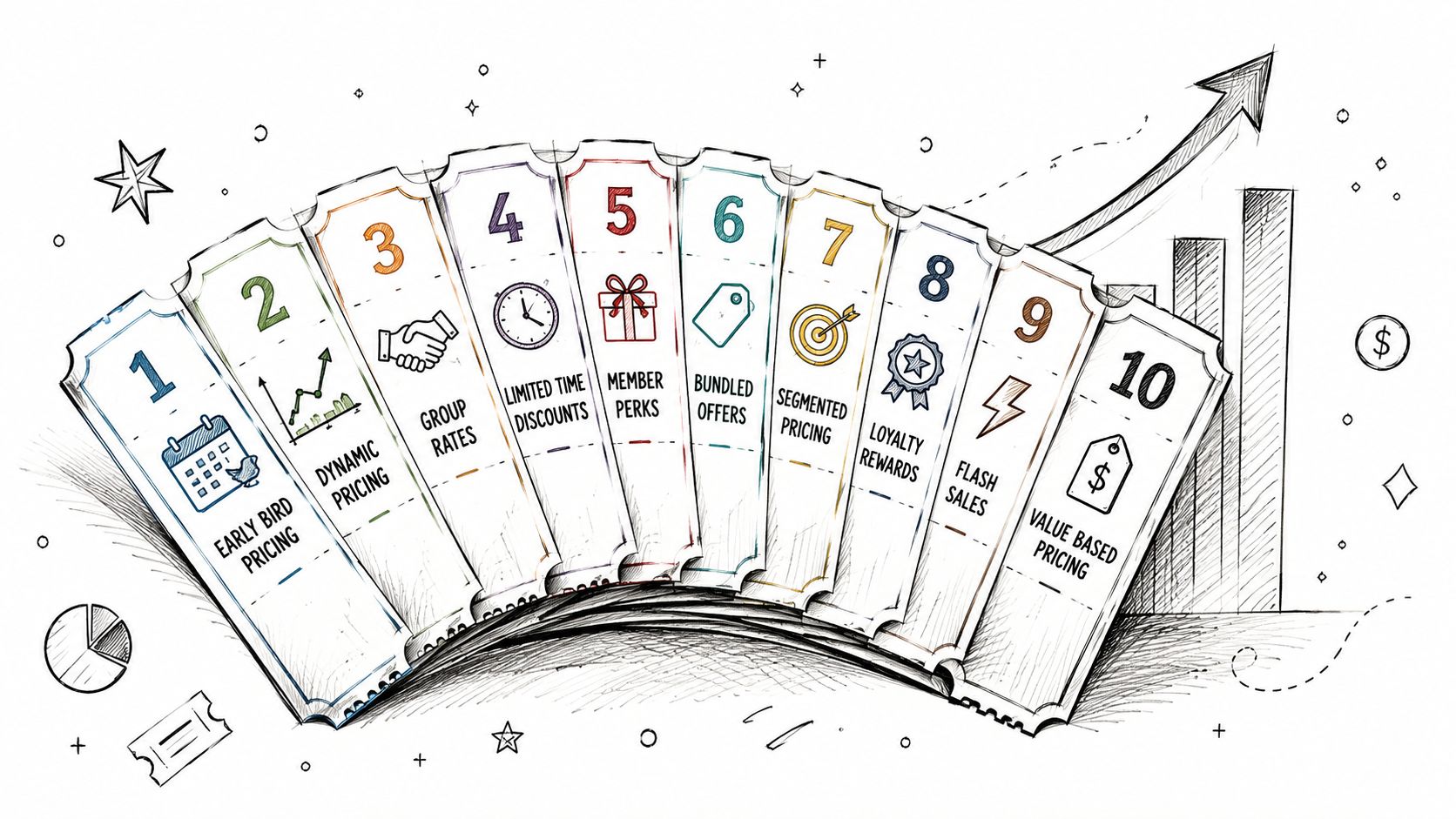
Yes. One hundred percent. Offering two or three pricing packages is one of the smartest things you can do.
It’s a subtle but powerful psychological shift. Instead of forcing a simple "yes" or "no" decision, you're inviting them to consider, "Which of these options is the best fit for us?" This simple change puts the client in the driver's seat and makes them feel in control of the decision.
Here’s a structure I see work time and time again:
This approach not only provides options but often guides clients toward the middle or top-tier packages.
I see it all the time: planners make the proposal all about them. Don't fall into that trap. Your proposal isn't your company's biography; it's a direct response to your client's needs.
The most effective proposals hold up a mirror to the client. They should see their own challenges, their own goals, and their own vision for success reflected back at them on every single page.
Skip the long, self-congratulatory intro about your company's history. Instead, frame every section—from the event concept to the budget—around how you are the solution to their specific problem. Make them the hero of the story. When you do that, signing on with you feels like the most logical next step they could possibly take.
Ready to build proposals that close deals? GroupOS gives you the tools to create a compelling, professional package. Showcase your value with integrated ticketing, custom registration forms, and impressive sponsor profiles that prove you're the right choice from page one.