June 9, 2026
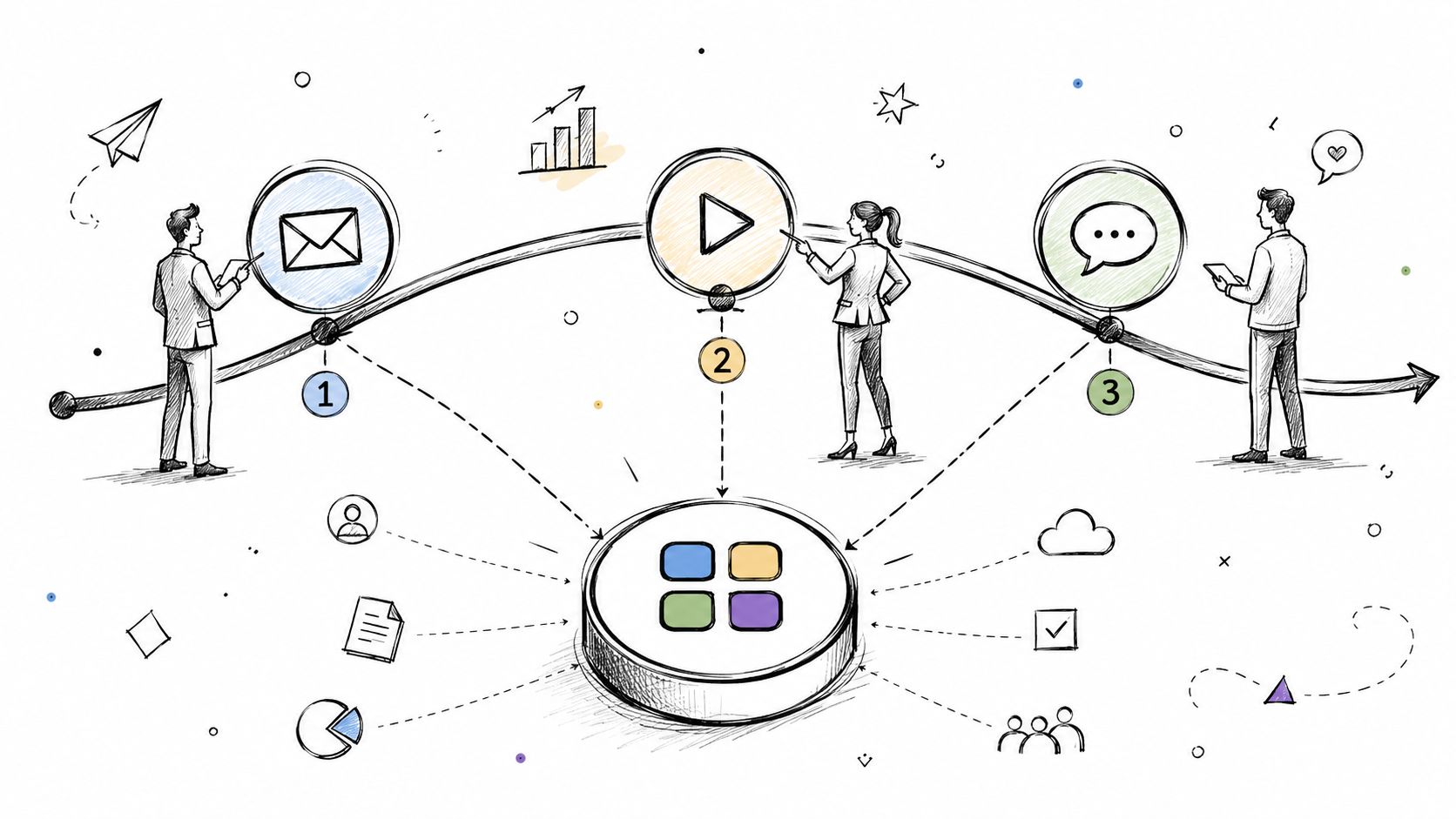
Event teams lose momentum fast after a program ends. The problem is not effort. It is treating post-event engagement like cleanup instead of part of the event strategy itself.
After the close, pressure comes from every direction at once. Marketing needs a thank-you sequence. Sales wants qualified follow-up by account and level of intent. Sponsors expect proof of value, not a raw lead dump. Community teams need content they can reuse. If that work sits across separate tools, the post-event window gets wasted on exports, handoffs, and generic sends.
Post-event engagement should run as a connected process tied to business outcomes: retention, sponsor ROI, pipeline, renewals, and future registrations. That means planning for attendees and non-attendees, segmenting by behavior, and deciding what action each group should take next. A practical starting point is a structured after-event thank-you email strategy paired with clear follow-up owners, content deadlines, and audience rules. Teams that need cleaner meeting follow-through can also borrow from SpeakNotes' guide to action items.
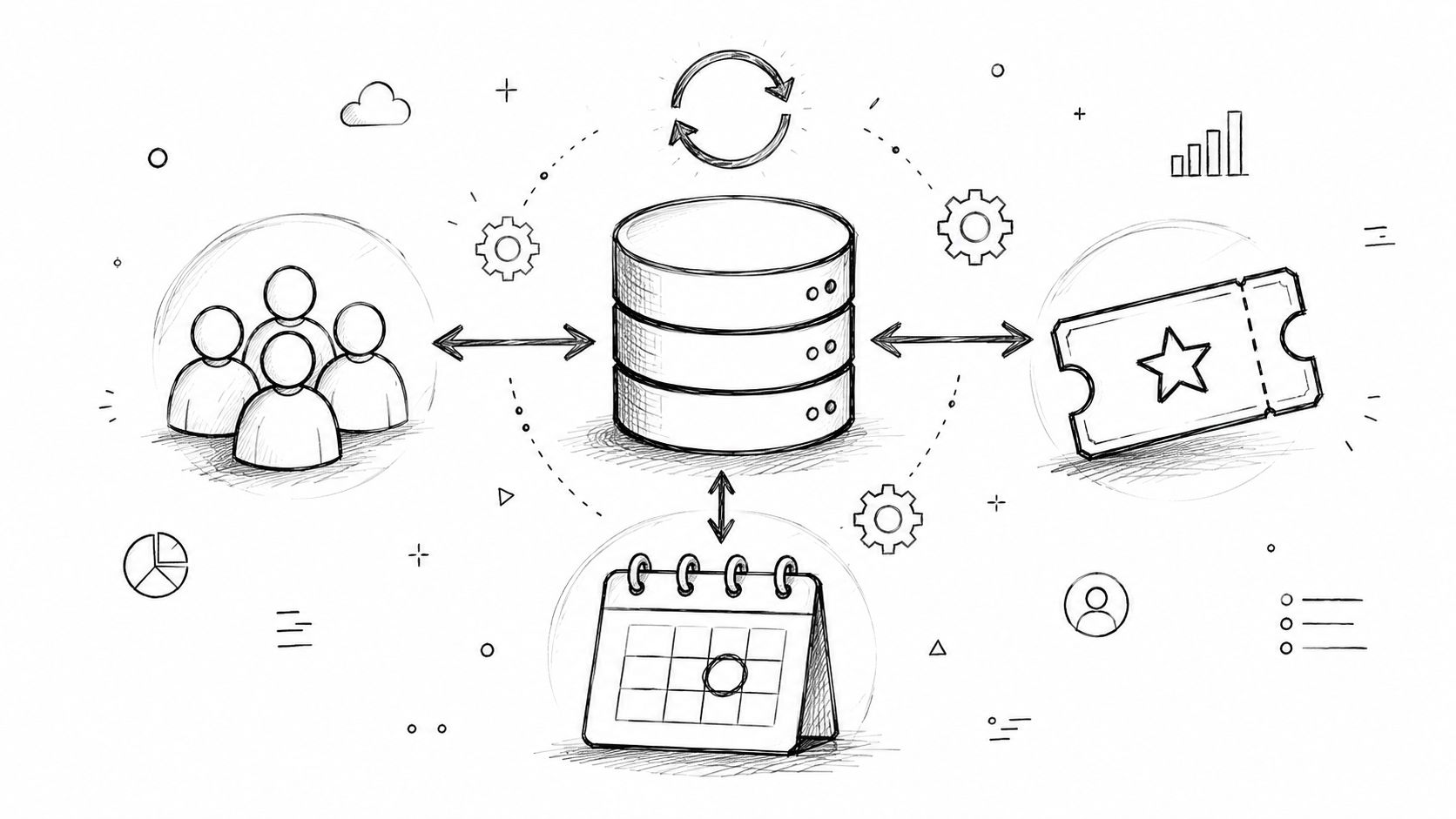
An integrated platform makes that manageable because registration data, attendance behavior, session interest, survey responses, sponsor touchpoints, and follow-up campaigns live in one place. The result is better timing, tighter segmentation, and reporting that shows what happened after the event, not just what happened in the room.
73% of event organizers say proving event ROI is a top challenge. That problem usually starts after the closing session, when follow-up turns into scattered tasks instead of a managed system tied to revenue, retention, and sponsor value.
What fails here is rarely effort. It is coordination.
Marketing has a thank-you draft. Sales wants account-level follow-up based on intent. Partnerships needs a sponsor report that shows real interaction, not a raw export. Community teams need clips, slides, and discussion prompts while the event is still fresh. If registration data, attendance behavior, content assets, and outreach live in separate tools, teams spend the highest-value window stitching together reports instead of acting on signals.
The result is predictable. Attendees get generic recaps. Non-attendees get ignored or treated like attendees. Sponsors wait too long for proof of value. Sales follows up without session context. By the time the team is aligned, the audience has moved on.
Weak post-event engagement usually breaks in four places:
One rule changes the quality of the whole program. Build the post-event plan before the event starts.
That means defining segments in advance, including high-intent attendees, low-engagement attendees, sponsors, speakers, customers, prospects, and registered non-attendees. It means setting the next action for each group, assigning an owner, and deciding what data will trigger each follow-up. Teams that want a tighter structure can adapt the same discipline used in SpeakNotes' guide to action items. The method works well for event follow-through because it forces clarity on owners, deadlines, and next steps.
The thank-you email still matters, but as the opening move in a longer sequence, not the whole strategy. A practical place to improve that first touchpoint is this after-event thank-you email strategy, especially if the current message is doing too much at once.
Integrated platforms make this manageable. The same system can hold registration details, session attendance, sponsor interactions, survey data, content engagement, and campaign history. That gives teams one operating view for segmentation, timing, handoff, and reporting. It also makes one often-missed job possible. Treating non-attendees as a distinct audience with their own follow-up path, content, and conversion goal instead of writing them off as lost registrations.
Post-event engagement used to be treated as a courtesy. Send thanks. Ask for feedback. Move on. That's outdated.
The field has shifted from judging success by headcount alone to using a broader mix of attendance, session participation, app usage, and survey feedback to understand impact, as described in Qondor's guidance on post-event analysis. That shift matters because it changes what leaders should expect from the event team. Not just attendance numbers, but evidence of relationship depth and downstream value.
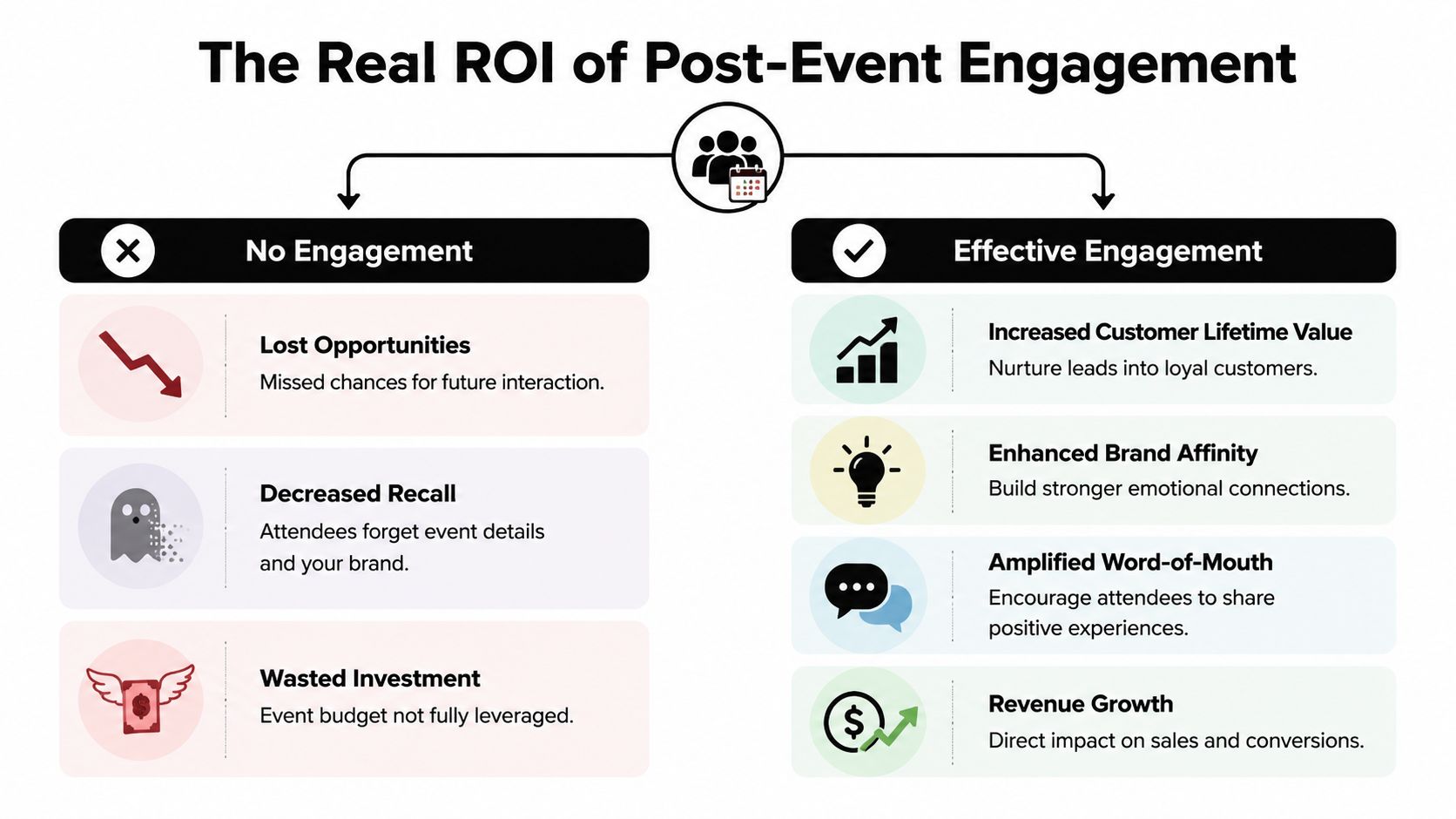
A live event creates momentum. Post-event engagement decides whether that momentum becomes a habit.
When attendees receive relevant recaps, discussion prompts, member content, or invitations into smaller groups, they stop relating to the event as a one-time experience. They start relating to the organization as an ongoing source of value. That's how conferences feed communities, and how associations turn attendees into active members rather than occasional registrants.
Teams often market the next event as a separate campaign. It isn't. The strongest acquisition source for your next event is the audience that already trusted you once.
A disciplined follow-up sequence does three things at the same time. It reinforces the original decision to attend. It helps people revisit value they may have missed live. It makes the next registration feel like a continuation, not a fresh ask.
Sponsors rarely need a giant unfiltered list. They need context. Which attendees showed strong intent. Which sessions attracted the right segment. Which follow-up assets generated meaningful interaction.
That only happens when post-event engagement is structured around behavior, not broad distribution. A sponsor recap is useful. A sponsor handoff tied to actual attendee interest is far more valuable.
Good post-event engagement doesn't just say, “Thanks for coming.” It answers, “What should happen next for each person who interacted with this event?”
For commercial teams, event engagement creates signals that normal lead capture often misses. Session choices, Q&A participation, poll responses, content downloads, and revisit behavior all add nuance. They tell you who was curious, who was comparing options, and who was ready for a conversation.
That's why event marketers who want to justify effort internally should stop reporting post-event activity as a marketing task list. Report it as a business system tied to retention, sponsorship, pipeline movement, and repeat attendance. If your organization needs a stronger framework for that conversation, this guide to measuring event ROI helps connect event outputs to business outcomes.
Time is the governing variable in post-event engagement. Not creativity. Not channel choice. Not email copy.
Several event-industry sources recommend sending surveys and initial follow-ups within 72 hours because recall fades quickly, and faster outreach preserves better feedback and stronger behavioral signals for later analysis in Artisan's post-event marketing guidance.
That means your playbook should be designed by time horizon, not by department.
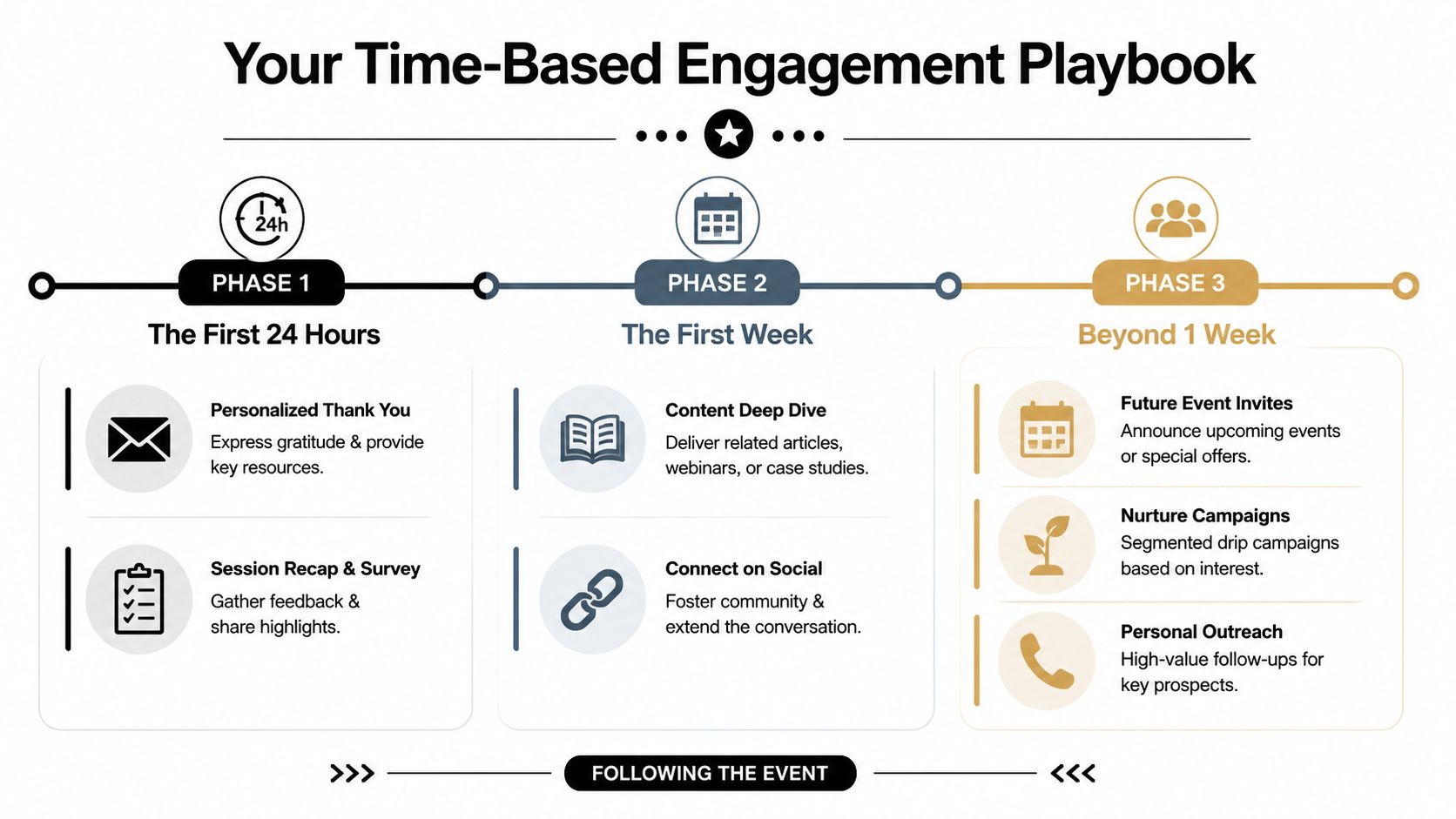
This is the hot zone. People still remember specific speakers, questions, and friction points. Their intent is at its cleanest.
Your outreach in this window should be simple and direct:
A common mistake is overpacking the first message. Teams try to thank, recap, cross-sell, upsell, survey, promote sponsors, and announce next year's event in a single email. That usually lowers response quality because the attendee doesn't know what matters most.
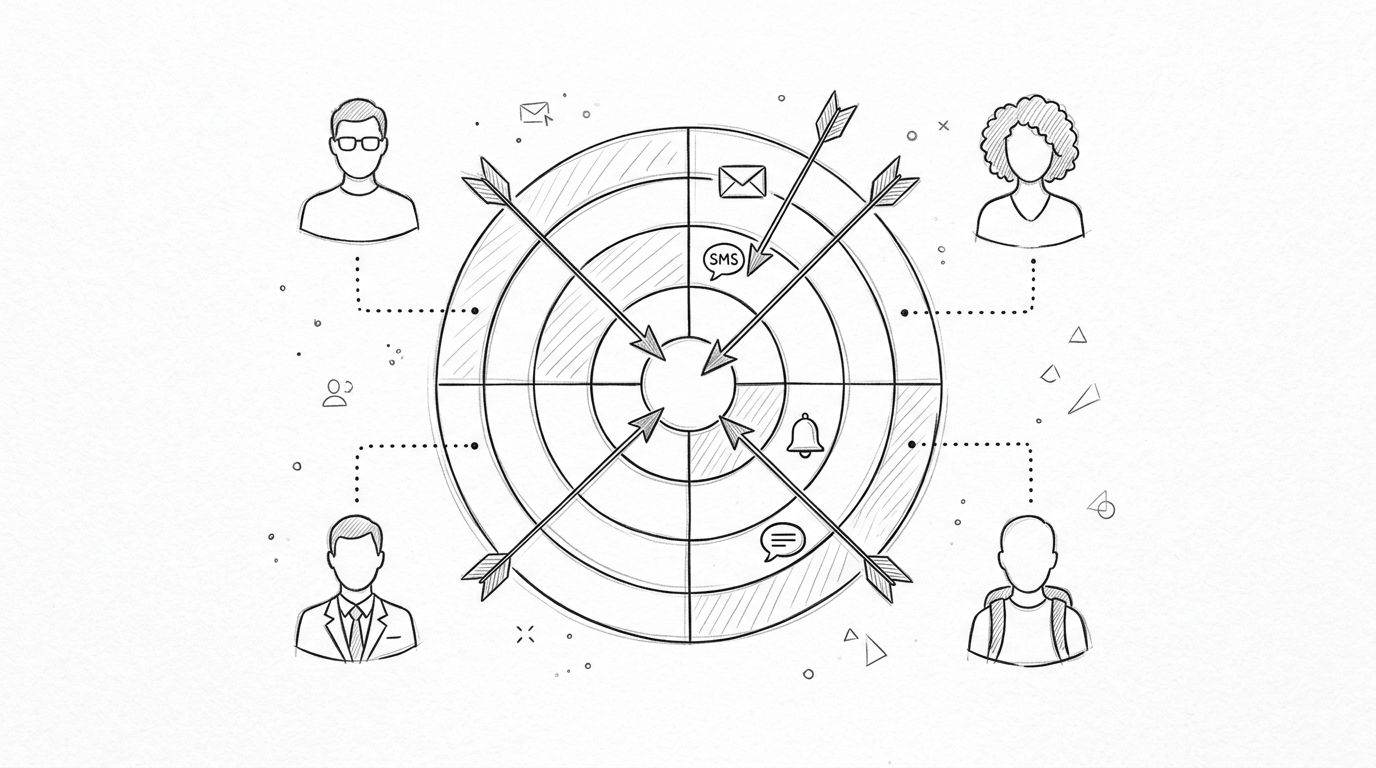
During the first week, the audience splits into clearer groups. Some people want more content. Some want community. Some want a direct conversation. Some need a nudge because they intended to engage more than they ultimately did.
Use this period to branch follow-up by behavior:
| Audience type | Best next move | What to avoid |
|---|---|---|
| Highly engaged attendees | Invite them into discussion, membership, or a direct next-step offer | Sending the same basic recap they already saw |
| Quiet attendees | Send curated highlights and one low-friction action | Assuming silence means no interest |
| No-shows | Offer a concise “what you missed” path with on-demand access | Treating them like attendees |
| Sponsors and exhibitors | Provide organized lead context and content placement opportunities | Dropping a generic attendee export |
Here's the mindset shift. The event isn't one audience anymore. It's a set of post-event cohorts.
A useful operational model is to map each cohort to an onboarding path. If your team already uses lifecycle thinking for members or customers, adapt that same discipline. This onboarding plans template is a strong model for building a structured sequence instead of sending isolated touchpoints.
A short visual overview can help your team align on timing and responsibilities:
By this point, post-event engagement should stop feeling like follow-up and start feeling like nurture.
Teams can extend value without repeating themselves:
The first month should answer one question for every segment: what relationship are we trying to build now that the event is over?
What doesn't work here is endless recycling. A highlight reel on day three can work. A fourth generic reminder to watch on-demand content usually won't. Post-event engagement needs progression. Each touchpoint should deepen relevance, narrow the ask, or open a more valuable path.
The right channel depends on what you want the audience to do next. That sounds obvious, but many teams still choose channels based on habit. Email gets everything. Social gets leftovers. Community platforms get whatever survives.
That usually leads to clutter. Strong post-event engagement works when content type, channel, and audience segment line up.
Some content is built for recall. Some is built for conversion. Some is built for relationship maintenance.
Use them differently:
A bloated follow-up calendar often underperforms a tighter one because relevance matters more than frequency. Someone who attended product sessions should get different content from someone who spent time in leadership roundtables. A sponsor should receive a different recap from a first-time attendee. A no-show should get recovery content, not “thanks for joining us.”
The content itself should reflect that segmentation. For example, short recap clips can re-engage quieter audiences better than long written summaries. Teams that need lightweight creative for fast recap distribution sometimes use tools like ShortGenius AI UGC video ads to turn event themes into simple video assets for social and retargeting. The principle matters more than the tool. Use formats that reduce friction and fit the audience's attention level after the event.
Field note: One excellent post-event asset often outperforms a pile of average ones. Curate harder.
The highest-performing post-event programs usually have a central place where content lives. Not just a landing page full of links, but an organized destination with recordings, slides, sponsor resources, discussion threads, and clear next actions.
That's also what makes content reusable. A keynote clip may drive social reach. A session replay may support sponsor follow-up. A summary article may help convert non-attendees into future registrants. If you're refining that content engine, these ideas for how to create engaging content can help you plan post-event assets with more intention.
Most post-event reporting is too shallow. Teams count opens, clicks, survey responses, and maybe replay views. Those signals are useful, but they don't answer the harder question: did post-event engagement change anything important?
That gap is common. Much of the available advice focuses on immediate follow-up tactics and early engagement signals, but doesn't define strong outcome measurement for retention, sponsor value, or future attendance over time. So the discipline needs a stricter measurement model.
The most useful post-event analysis links what people did during and after the event.
Effective post-event engagement is driven by cross-channel behavioral segmentation. By combining registration data, session attendance, app activity, and survey responses, teams can identify highly engaged cohorts and tailor follow-up based on actual behavior, as outlined in Wiz-Team's post-event analysis strategies.

That changes how you measure success. Instead of asking whether the recap email performed well, ask:
A simple way to structure this is to tie each business goal to a post-event signal and an outcome signal.
| Business goal | Early post-event signal | Longer-term outcome |
|---|---|---|
| Membership growth | Community joins, content return visits, discussion activity | Renewals, upgrades, repeat participation |
| Future event growth | Save-the-date clicks, waitlist joins, content consumption | Registrations for the next event |
| Sponsor ROI | Booth revisits, sponsor asset clicks, meeting requests | Qualified handoffs, sponsor renewals |
| Sales acceleration | Session depth, Q&A participation, resource downloads | Meetings booked, opportunity creation |
This model keeps the team honest. It stops reporting from ending at campaign metrics and pushes it toward business relevance.
If your organization needs a clean way to set these definitions with stakeholders, it helps to define and track key metrics before the event starts. Otherwise, teams often collect plenty of activity data and still can't agree on what success means.
Optimization isn't just changing subject lines. It's finding patterns in audience behavior and adjusting the journey.
For example, you may learn that first-time attendees who joined one discussion thread were much easier to move into a member community than those who only watched on-demand sessions. Or that certain sponsor categories performed better when introduced through curated content rather than direct outreach. Or that quiet attendees responded better to narrow recommendations than full resource libraries.
Those insights come from linking systems, not from looking at one dashboard in isolation.
An advanced post-event strategy sounds straightforward until you try to run it across disconnected tools. Registration lives in one system. Surveys live in another. Session attendance sits in a mobile app export. Sponsor handoffs happen in spreadsheets. Community follow-up is managed somewhere else. Reporting becomes manual, and segmentation becomes inconsistent.
That's why many teams struggle with the audiences most guides barely address. A major gap in post-event advice is how to nurture non-attendees and quiet attendees. A unified platform makes that manageable by segmenting those groups and delivering targeted content that can turn no-shows and low-engagement participants into future members or repeat attendees, as noted in VirtualBadge's post-event engagement ideas.

When event data, content delivery, communication, and member activity live together, teams can do work that's hard to coordinate manually:
A fragmented stack often creates three problems.
First, the team can't move quickly because exports and list cleanup take too long. Second, the audience gets generic communication because behavior data isn't accessible where messages are sent. Third, leadership sees disconnected reports rather than a clear story about business impact.
An all-in-one approach doesn't make strategy for you. But it removes a lot of the friction that causes good strategy to collapse under operational pressure. That matters most for organizations running recurring events, sponsor programs, member communities, and on-demand content at the same time.
Post-event engagement works best when it's treated as an operating system, not a checklist. The event creates attention. The post-event period converts that attention into something durable.
The teams that do this well don't rely on one thank-you email and a survey. They move fast, segment by behavior, tailor content by audience type, and measure outcomes that matter to the business. They also recognize that the hardest audiences are often the most valuable to recover. Quiet attendees, no-shows, and lightly engaged members still represent intent. They just need a better path.
A strong event strategy doesn't end when the stage goes dark. It continues through follow-up sequences, content experiences, sponsor handoffs, and community activity that make the next action obvious.
If you want more retention, stronger sponsor results, and better future attendance, don't ask whether you sent follow-up. Ask whether your post-event engagement created momentum that lasted beyond the event itself.
If you want a simpler way to run registrations, segment audiences, deliver on-demand content, track engagement, and manage post-event follow-up in one place, GroupOS is built for that job. It gives associations, community teams, and event organizers a branded platform to turn events into an ongoing growth engine instead of a disconnected series of campaigns.