March 27, 2026
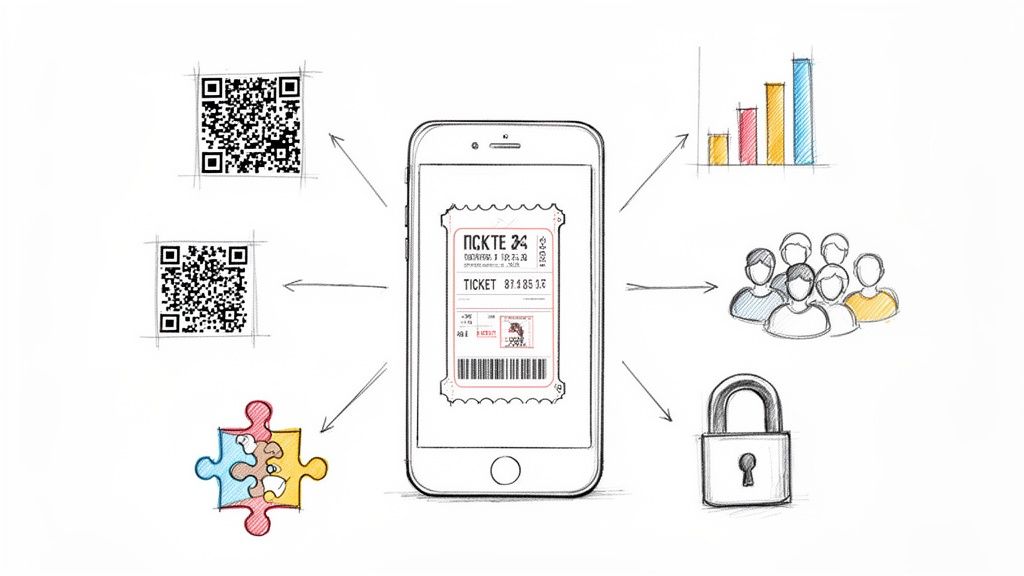
At its most basic, an online event ticketing system is a digital tool that handles everything from selling tickets to checking people in at the door. It takes all the manual work—think spreadsheets, cash boxes, and paper lists—and replaces it with one clean, automated platform.
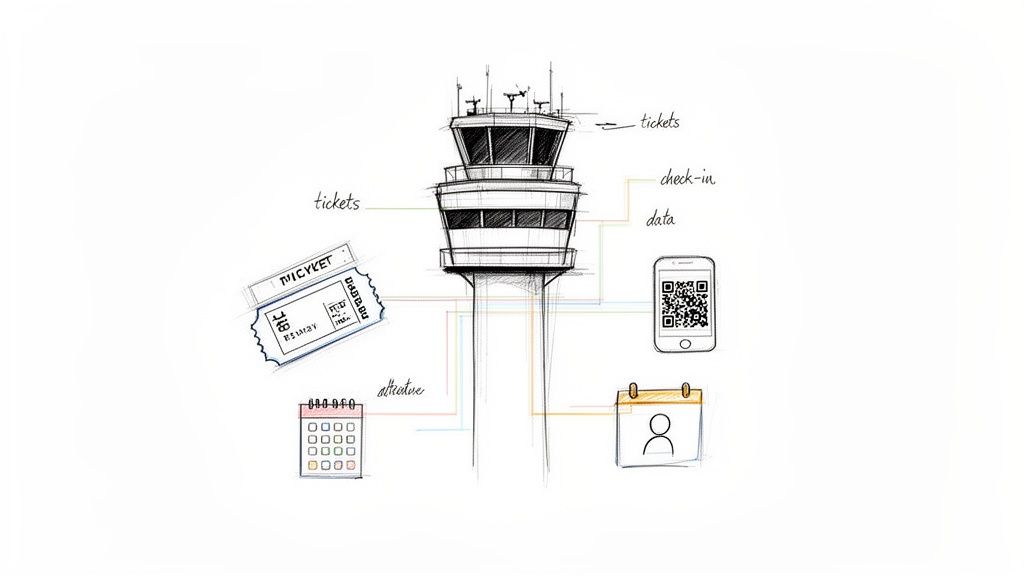
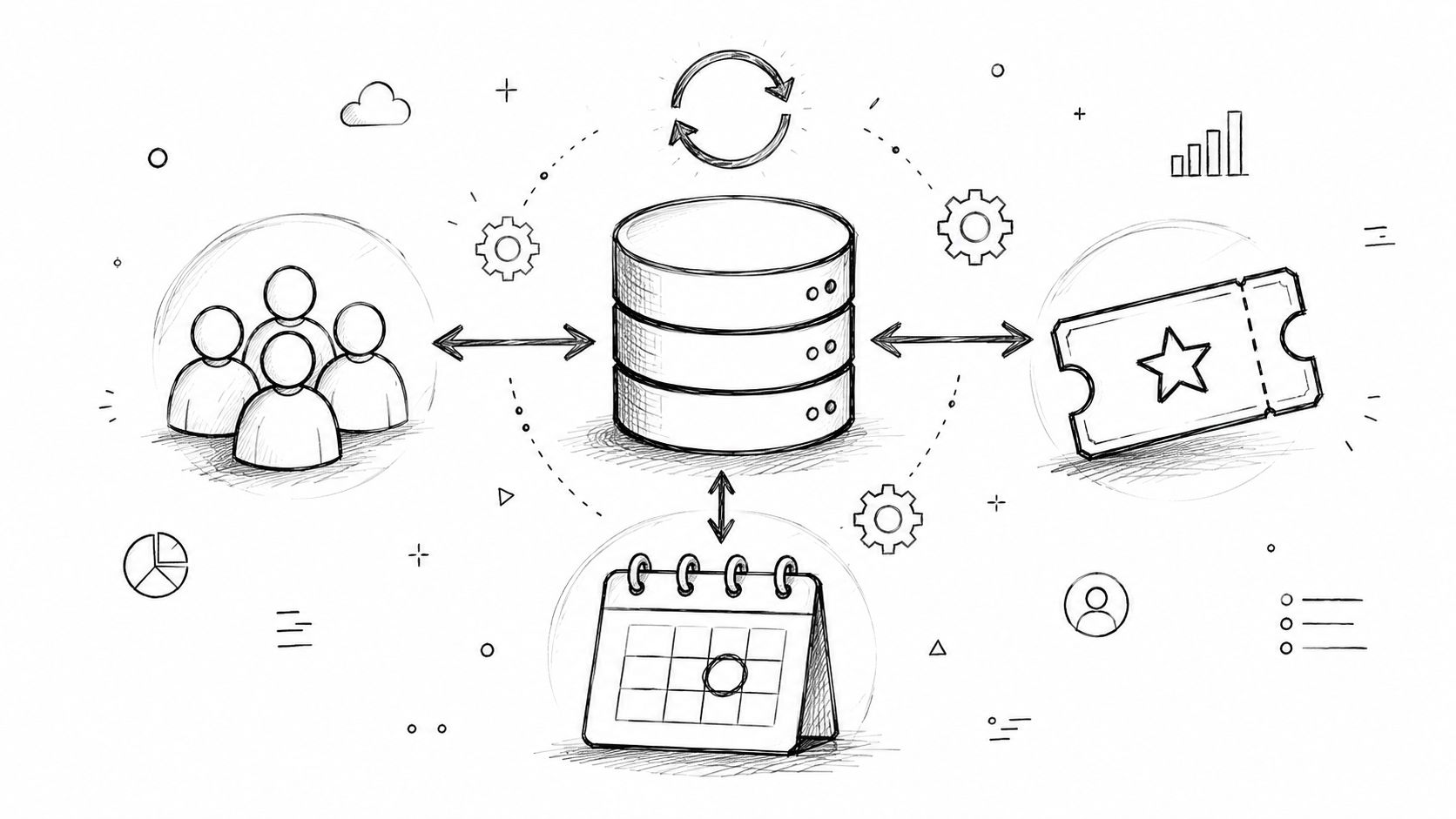
It’s tempting to see these systems as just a digital cash register, but that’s selling them short. A better way to think about it is as your event’s central nervous system or air traffic control tower. It coordinates every single moving part, from the second a guest decides to buy a ticket all the way through to their arrival at your venue.
This is a huge step up from the clunky, error-prone methods of the past. The days of juggling paper sign-up sheets, manually tracking down payments, and dealing with a chaotic line at the entrance are finally over.
Before these platforms became the norm, organizing even a simple event felt like a series of disconnected, tedious chores. Planners would sink countless hours into reconciling payments, updating attendee lists by hand, and printing physical tickets. This old-school approach created a ton of friction for everyone, often leaving attendees with a clunky and unprofessional first impression.
Modern systems automate that entire workflow, creating a smooth experience for both you and your guests. For an attendee, it’s a simple, secure online purchase. For you, it’s a powerful command center that lets you manage your event’s logistics with confidence and ease.
A well-chosen ticketing system isn't just a convenience—it's a strategic asset. It captures priceless data, helps drive revenue, and sets a professional tone for your event long before the doors even open.
The shift to digital is undeniable. The global online event ticketing market is projected to hit an incredible USD 71.54 billion by 2030, which shows just how essential this technology has become. You can discover more insights about the online ticketing market's expansion and what’s driving this massive growth.
So, what does a great ticketing system actually do for you? It delivers a few core benefits:
For today’s event planners and community managers, this technology is no longer a "nice-to-have." It’s the absolute foundation for creating the kind of organized, engaging, and profitable events that people remember. Getting a handle on how these systems work is the first real step toward mastering modern event management.
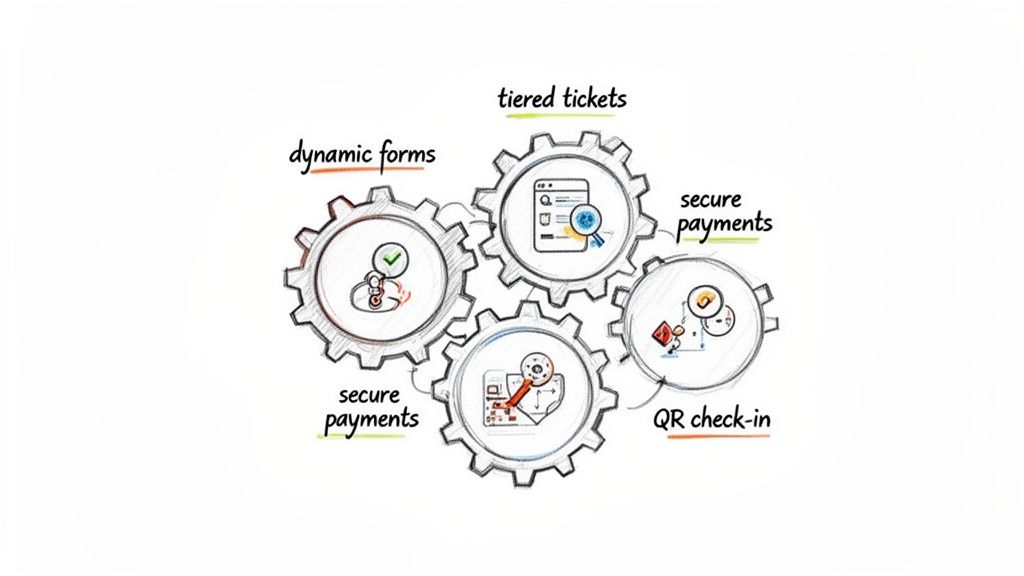
Think of an event ticketing system as more than just a digital cash register. While its main purpose is obviously selling tickets, the real power is in the features working behind the scenes. These tools are what separate a good event from a truly professional one, turning a simple purchase into a smooth, data-rich experience for both you and your attendees.
These aren't just bells and whistles; they’re practical solutions to the real-world headaches that every event planner knows well. From figuring out what your attendees actually want to getting them through the door without a fuss, each feature plays a critical role in your event's success.
Your registration form is the first real handshake you have with an attendee. A modern ticketing platform turns this moment from a simple name-and-email grab into your first, best chance to gather strategic information. With custom forms, you can ask the right questions to start tailoring the experience immediately.
For instance, a conference organizer might ask about dietary needs, professional interests for better networking, or which breakout sessions someone is leaning toward. This intel is gold. It lets you personalize everything from the lunch menu to suggesting valuable connections, making every guest feel seen and catered to. More than just a sales tool, a great system helps you apply proven strategies to increase event attendance and pack the house.
The data you collect during registration is the foundation for personalization. It allows you to move from hosting a generic event to creating a curated experience for every individual.
Let's be honest: not all attendees are looking for the same experience, so why offer them the same ticket? One of the most important features of a solid online event ticketing system is the ability to create multiple ticket tiers. This is about more than just "General Admission."
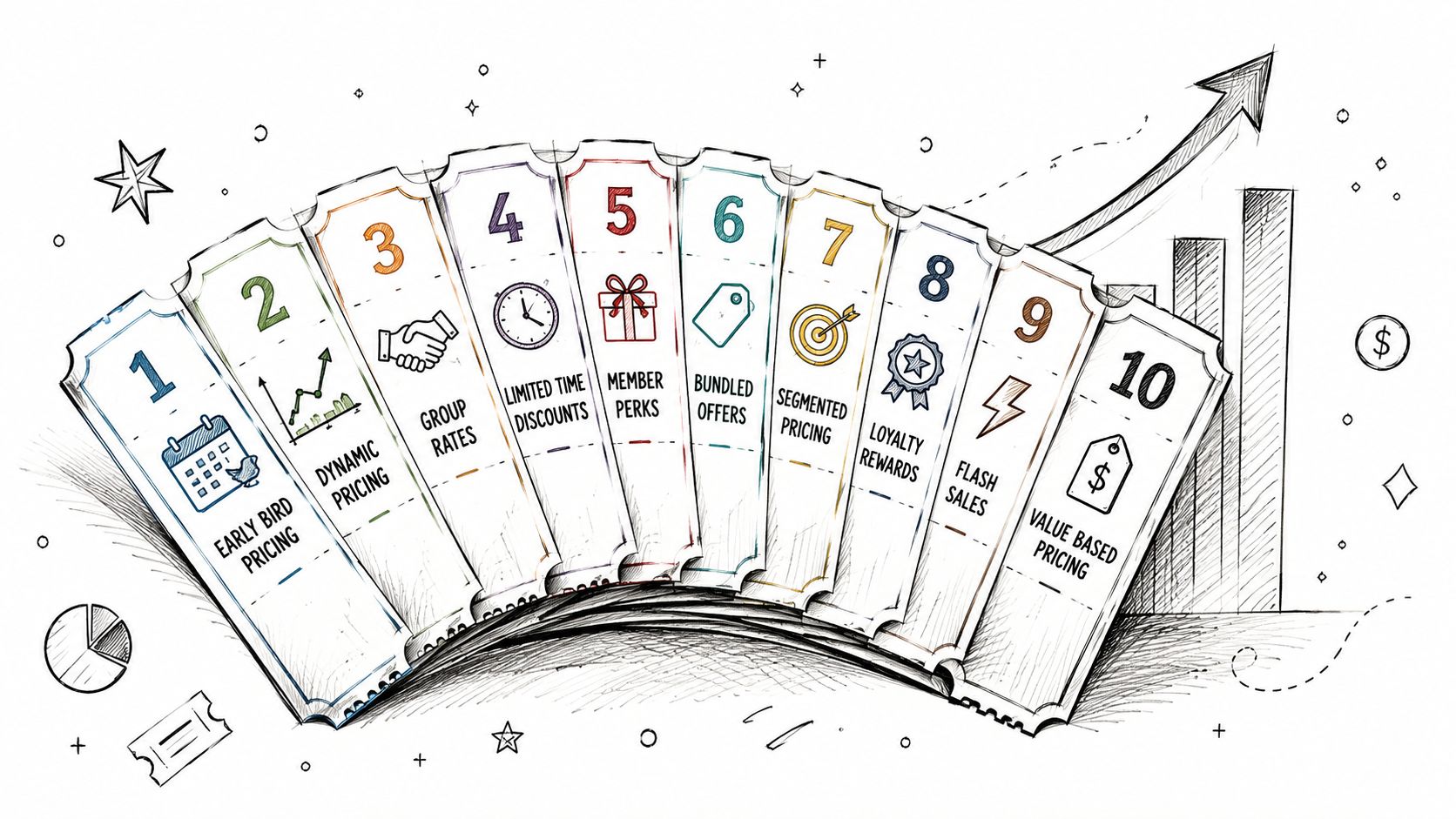
You can get creative and build out a menu of options that both boosts revenue and gives people more of what they want:
By pricing these tiers thoughtfully, you can appeal to a wider range of budgets and motivations, which almost always leads to a significant lift in your overall event revenue.
Trust is everything when it comes to online payments. The moment an attendee pulls out their credit card, they need to feel 100% confident that their information is secure. A top-tier ticketing platform handles this by integrating PCI-compliant payment gateways that process every transaction safely and reliably.
This integration takes the security burden completely off your shoulders. The platform manages all the technical headaches of payment processing, fraud detection, and even compliance with regulations like the BOTS Act, which outlaws the use of bots to scoop up tickets unfairly. You're left with a legitimate, trustworthy process for everyone.
On top of that, offering a variety of payment options—like all major credit cards, PayPal, or Google Pay—makes the checkout process smoother. When people can use the payment method they prefer, they're far more likely to complete the purchase. To see what else you should be looking for, check out our deep dive on essential event management software features.
Nothing kills the mood faster than a long, slow-moving line at the entrance. That first on-site impression is crucial. Modern ticketing systems have all but eliminated this problem with simple but powerful QR code technology.
Here’s how it works: once a ticket is purchased, the system generates a unique QR code for that attendee and sends it straight to their email or a mobile app. When they arrive, your staff simply scans the code with a smartphone or tablet. The ticket is instantly verified, and the guest is checked in.
This process is incredibly fast—a small team can check in hundreds of people per hour without breaking a sweat. It gets rid of the need for clunky paper lists and makes wait times practically disappear. The result is a sleek, professional welcome that starts your event on a high note.
Look around at your next event. What's the one thing everyone has in their hand? Their phone. The entire event experience, from the moment someone discovers you to the final scan at the door, now happens on that small screen. Modern attendees don't just prefer a mobile-friendly experience; they expect it. A winning event strategy is no longer about just having a nice website—it's about thinking mobile-first for absolutely everything.
Think about how people find events today. It’s rarely through a desktop search. It’s a quick scroll on social media, a link from a friend in a text message, or an ad that catches their eye while they're on the go. An effective online event ticketing system meets them right in that moment, letting them buy a ticket and have it instantly appear in their digital wallet. The whole process takes minutes, all without ever needing a laptop.
This mobile-first approach completely smooths out the path from initial curiosity to showing up at your door. All the old friction points—like having to find a printer or digging through a cluttered inbox for a confirmation email—are gone. The ticket is just there, a living part of their phone.
This effortless feeling carries right through to the event itself. A digital ticket means check-in is just a quick, painless scan. That’s a world of difference from fumbling with crumpled paper tickets or standing in a slow-moving queue. A fast, smooth entry sets a positive and professional tone for everything that follows. You can read our guide on event check-in apps to see just how much this technology transforms the on-site experience.
Before we dive deeper, it's helpful to see the practical differences between older systems and modern, mobile-first platforms.
This table breaks down how a mobile-first philosophy changes the game for both you and your attendees compared to traditional desktop-centric systems.
| Feature | Desktop Experience | Mobile-First Experience |
|---|---|---|
| Registration Flow | Optimized for mouse and keyboard; can feel clunky and require lots of zooming on mobile. | Designed for touchscreens; simple, vertical flow with large buttons and minimal typing. |
| Ticket Delivery | Often requires printing a PDF or saving a file to a computer first. | Instant delivery to a digital wallet (Apple Wallet, Google Pay) or a branded app. |
| Event Day Check-In | Relies on attendees bringing printed tickets or scrolling through emails to find a barcode. | A simple QR code is always accessible on the phone, making scanning fast and foolproof. |
| Communication | Primarily relies on email blasts, which can get lost in spam or go unread. | Enables direct communication via push notifications for real-time updates and reminders. |
| Community Building | Engagement is limited to before and after the event, usually via email or social media. | Fosters an ongoing community within a branded app through networking and content sharing. |
As you can see, the shift isn't just about convenience. A mobile-first approach fundamentally changes how you connect with your audience.
Here’s where it gets really powerful. When your ticketing system is part of a branded mobile app, a one-time purchase becomes the start of a genuine relationship. This is how you build a real community.
Suddenly, you have a direct line to every single attendee. You can use this channel to:
This turns a static event into a dynamic, interactive experience that keeps people engaged long after they've gone home. Your event is no longer a single point in time; it becomes a constant touchpoint for your community.
A mobile-first strategy isn't just about convenience. It’s about owning the communication channel with your audience and building a community that lives on their most-used device.
The market data makes it clear this isn't just a trend; it's a fundamental shift. Mobile ticketing is set to dominate the market, with projections showing it will grow from USD 56.75 billion to a staggering USD 109.57 billion by 2033. With mobile apps already handling over 65% of transactions in 2024, there's no question about where your audience is.
For any association or event planner, the message is simple. To stay relevant and truly connect with your members, your strategy must start—and thrive—on mobile.
A great event shouldn't just be a one-time thing. It's a chance to build something that lasts. When your online event ticketing system is disconnected from everything else, you're leaving a huge opportunity on the table. The real magic happens when you weave ticketing into your larger community management platform, turning people who buy a single ticket into active, long-term members.
Think of selling a ticket as the first handshake. The real relationship-building is the ongoing conversation that comes after. An integrated system helps you connect the dots between who shows up to your events and how engaged they are as a member, creating a powerful cycle of growth.
Too many organizations see an event as "done" once the last person walks out the door. But a more strategic approach views it as just the beginning. By linking your ticketing data directly to your member profiles, you get a much richer picture of who your audience really is.
This connection lets you automate workflows that actually nurture those relationships. For instance, you can set it up to automatically give loyal members a discount on tickets, see who your biggest fans are by tracking their participation, and use what you learn after an event to plan your next big community project.
The whole point is to get a flywheel going. A fantastic event brings in new faces, the integrated system helps you welcome them as members, and those members become the built-in audience for your next event.
As your ticketing system gathers all this great attendee data, connecting it to your CRM is a no-brainer for boosting community engagement. While some platforms have this built-in, you can learn a lot about the core principles of data syncing by checking out guides like Managing Attendee Data with the Webinargeek x Salesforce Integration.
When ticketing is just another feature inside a complete community platform, you can design a much more thoughtful journey for your attendees. It stops being just about buying a ticket and becomes about the entire experience—before, during, and long after the event itself.
This all-in-one approach means you can:
This flowchart shows just how smooth the mobile experience can be when everything works together, from discovering the event to getting in the door.
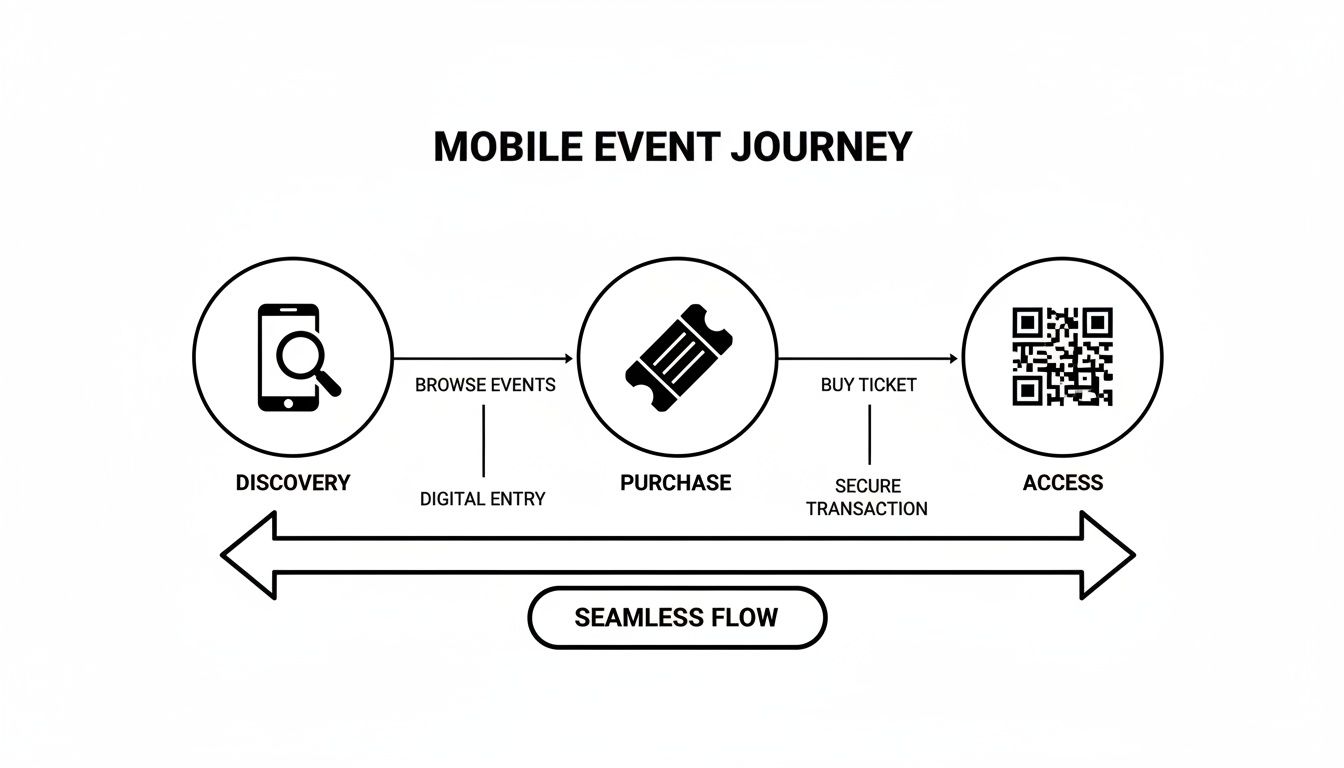
It’s easy to see how each step, from finding the event on their phone to scanning a QR code at the entrance, flows together into one seamless experience. That’s what integrated tech makes possible.
An integrated system gives you a complete picture of your members. You’re no longer looking at random data points, like a single ticket sale. Instead, you're seeing the full story of their involvement with your organization over time.
This complete view is what drives sustainable growth. Imagine you run a major conference. With an integrated system, you can see exactly which non-member attendees signed up for a full membership in the month that followed. That gives you a direct, measurable ROI on your event, proving it’s one of your best tools for bringing in new people.
Ultimately, connecting your online event ticketing to your community management tools is how you transform a temporary audience into a permanent community. It’s the strategic move that lets you build real connections, show people your value day in and day out, and create a loyal base that can't wait to see what you do next. You're no longer just filling seats—you're building a community that thrives.
Picking the right online event ticketing system can feel like a massive, high-stakes decision. With so many options out there, it’s all too easy to get bogged down in endless feature lists and slick marketing promises. The truth is, making a smart choice really boils down to asking a few key questions that get to the heart of your business.
This isn't just about finding a button that sells tickets. It’s about finding a true partner for your events—one that fits your budget, protects your attendees, and can scale right alongside your organization. A little thoughtful evaluation now will save you from a world of headaches later.
The first hurdle is almost always the price tag. You need to get a clear picture of how you'll be paying. Most platforms fall into one of two buckets, and the best one for you is all about your event schedule and size.
Per-Ticket Fees: This is the classic model. The platform takes a small percentage of the ticket price plus a flat fee for every ticket sold (like 2.5% + $0.99). If you run just a few large, public-facing events a year, this can be perfect. You only pay when you're actually making money.
Subscription Plans: On the other hand, many all-in-one community platforms work on a monthly or annual subscription. This gives you a predictable cost and unlocks a whole suite of tools beyond just ticketing. For associations and groups that host lots of events, workshops, or members-only gatherings, this route is often way more cost-effective in the long run.
Whatever you do, always dig for hidden costs. Ask directly about payment processing fees, extra charges for "premium" features, or support costs. Honest, transparent pricing is the first sign of a platform you can trust.
We live in an age of constant data breach headlines. Protecting your attendees' information isn't just a nice-to-have; it's a core responsibility. One slip-up can completely shatter the trust you’ve spent years building with your community.
Your attendees are trusting you with their personal and financial data. Choosing a secure platform is the most important promise you can make to them.
Make sure any system you’re looking at is PCI compliant—that’s the gold standard for securely handling credit card info. Also, look for SSL encryption to protect data as it travels from your attendee’s computer to the server. It’s also wise to ask how the platform helps you comply with rules like the BOTS Act, which outlaws the use of software by scalpers to snap up all your tickets unfairly.
The fight against fraud is also getting a high-tech upgrade. The online ticketing market is projected to explode from USD 101.22 billion in 2024 to USD 237.99 billion by 2035, and a big piece of that growth comes from new security tech. For instance, things like blockchain are emerging to create tamper-proof digital tickets, which could slash ticket fraud by up to 90%.
Your needs today won't be your needs tomorrow. The system that works perfectly for a 50-person workshop should also be able to handle a 5,000-attendee conference without breaking a sweat. Scalability isn't just about handling more volume; it’s about having the features you'll need as you grow more sophisticated.
Before you sign on the dotted line, ask yourself:
Choosing a platform that can grow with you saves you from the incredibly painful process of switching systems in a year or two. To get a better sense of what's out there, you might find our breakdown of the best event ticketing platforms helpful. An all-in-one platform like GroupOS is specifically designed to scale, blending ticketing with membership management and community tools to support you for the long haul.
Thinking about a new ticketing system always brings up a few big questions. Let's be honest, you're not just buying software; you're investing in the core experience for your members and attendees.
To help you cut through the noise, we've tackled the most common questions we hear from event planners and association leaders.
Let's talk money. Pricing for these systems usually falls into one of two camps, and the right one for you really depends on how often you host events.
Some platforms charge a fee for every ticket sold, often a small percentage plus a flat rate (like 2.5% + $0.99). This model can work well if you only run a couple of large-scale events each year.
The other popular model is a flat monthly or annual subscription. If you're an association constantly running workshops, webinars, and member-only gatherings, this is almost always more cost-effective. It gives you a predictable budget without penalizing you for being active. Just be sure to ask about any extra payment processing fees so there are no surprises.
You bet. The last thing you want is to send your community to a generic, third-party site that breaks your brand's look and feel. Most modern systems get this and offer simple embeddable widgets.
These widgets let you drop the entire registration flow right onto a page on your own website. It’s a clean way to maintain a professional experience.
But some platforms, like GroupOS, go way beyond a simple widget. The ticketing isn't just an add-on; it's woven directly into a fully branded web and mobile app for your community. This means you aren't juggling a bunch of different tools, and your members get one seamless journey from discovering an event to checking in.
When you're handling people's money and personal information, security isn't just a feature—it's everything. The absolute, must-have starting point is PCI compliance. This is the industry-wide standard for handling credit card data securely. If a platform isn't PCI compliant, walk away.
Beyond that, look for SSL encryption to protect data as it travels from your attendee's browser to the server. You'll also want to see that the platform has tools for fraud detection and a transparent data privacy policy.
A secure platform is a promise to your attendees that their personal and financial information is safe with you. It’s the foundation of trust.
This isn't just about protecting payments. It's about showing your community you value and protect every piece of information they share with you.
This is where a good system really earns its keep. The right data can turn a one-off event into a long-term growth opportunity. While tickets are on sale, you get a real-time dashboard showing you which ticket types are selling best or what time of day people are most likely to buy.
But the real magic happens after the event closes. You can instantly see your final attendance numbers, calculate no-show rates from QR code check-ins, and analyze who actually showed up.
When your ticketing is part of an all-in-one community platform, these insights become even more powerful. You can directly connect event attendance with other key metrics, like membership renewals or participation in future programs, giving you a true picture of engagement.
Ready to see how an all-in-one platform can transform your events and community? GroupOS integrates seamless ticketing with powerful membership management and communication tools. Start your free trial today and build a more connected community.