May 14, 2026
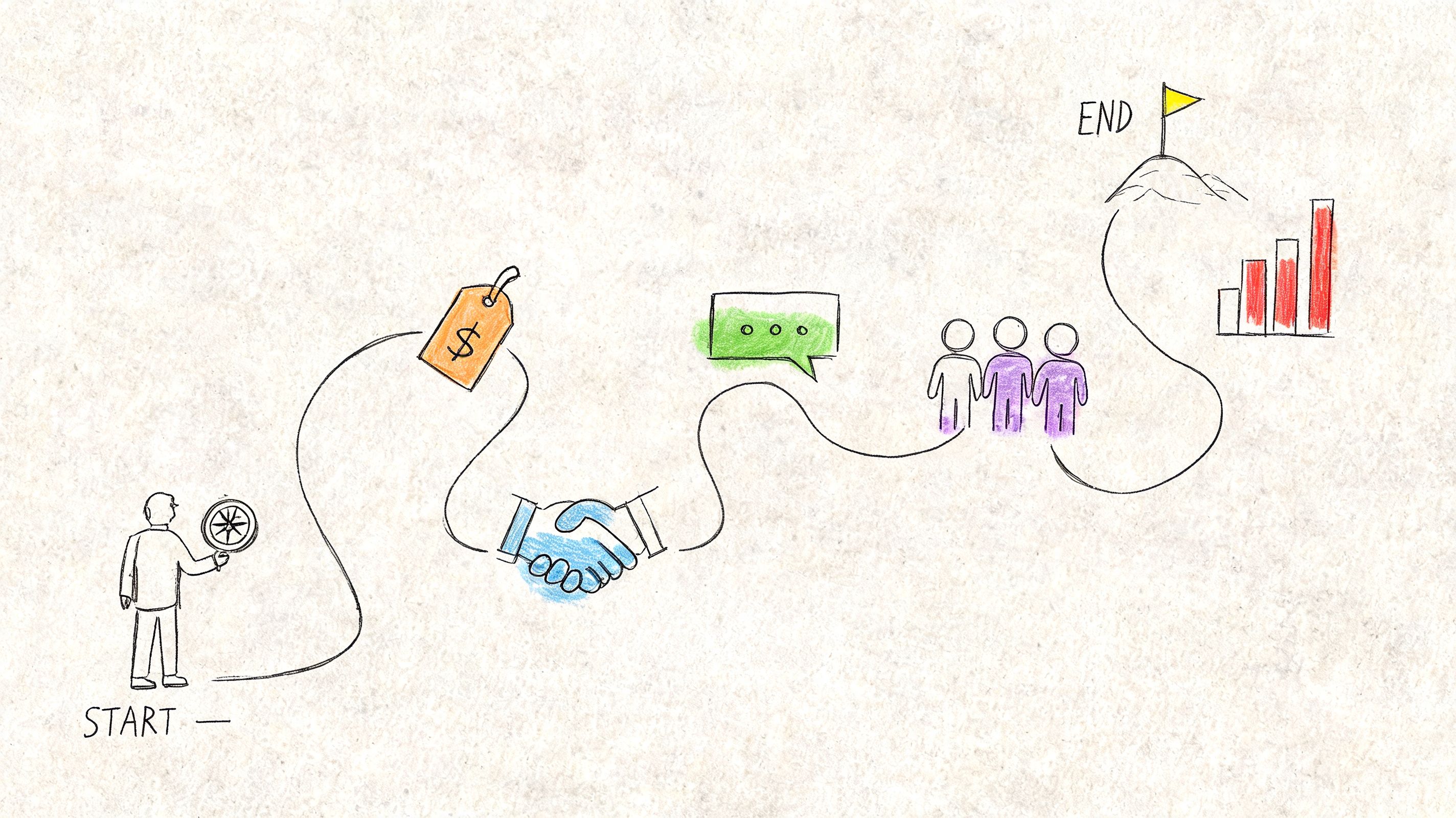
Most advice for high ticket coaches is too focused on the sale and too thin on delivery. It teaches pricing, objections, and funnels, then leaves out the hard part: building an experience that justifies the premium.
That gap is where many coaching businesses break. A coach sells a premium offer, then delivers it through scattered Zoom links, loose Google Docs, manual reminders, and inbox triage. Clients feel the friction immediately. The coach feels it a few weeks later, when every enrollment creates more admin, more emotional labor, and less room to think strategically.
High ticket works best when the offer, the sales process, and the delivery system are designed together. If those pieces are disconnected, pricing starts to feel inflated, onboarding feels shaky, and renewals become harder than they should be.
High-ticket offers fail long before the sales call. They fail at the design stage, when the promise is broad, the delivery model is improvised, and the coach sells custom access instead of a controlled path to a result.
A premium offer needs a narrow problem, a defined client, and a delivery structure that can produce wins without turning every new client into more manual work. Research from Hinge on high-growth professional services firms found that specialists grow faster than generalists. The same pattern shows up in coaching. Clear positioning attracts better-fit buyers and makes the program easier to deliver at a high standard.
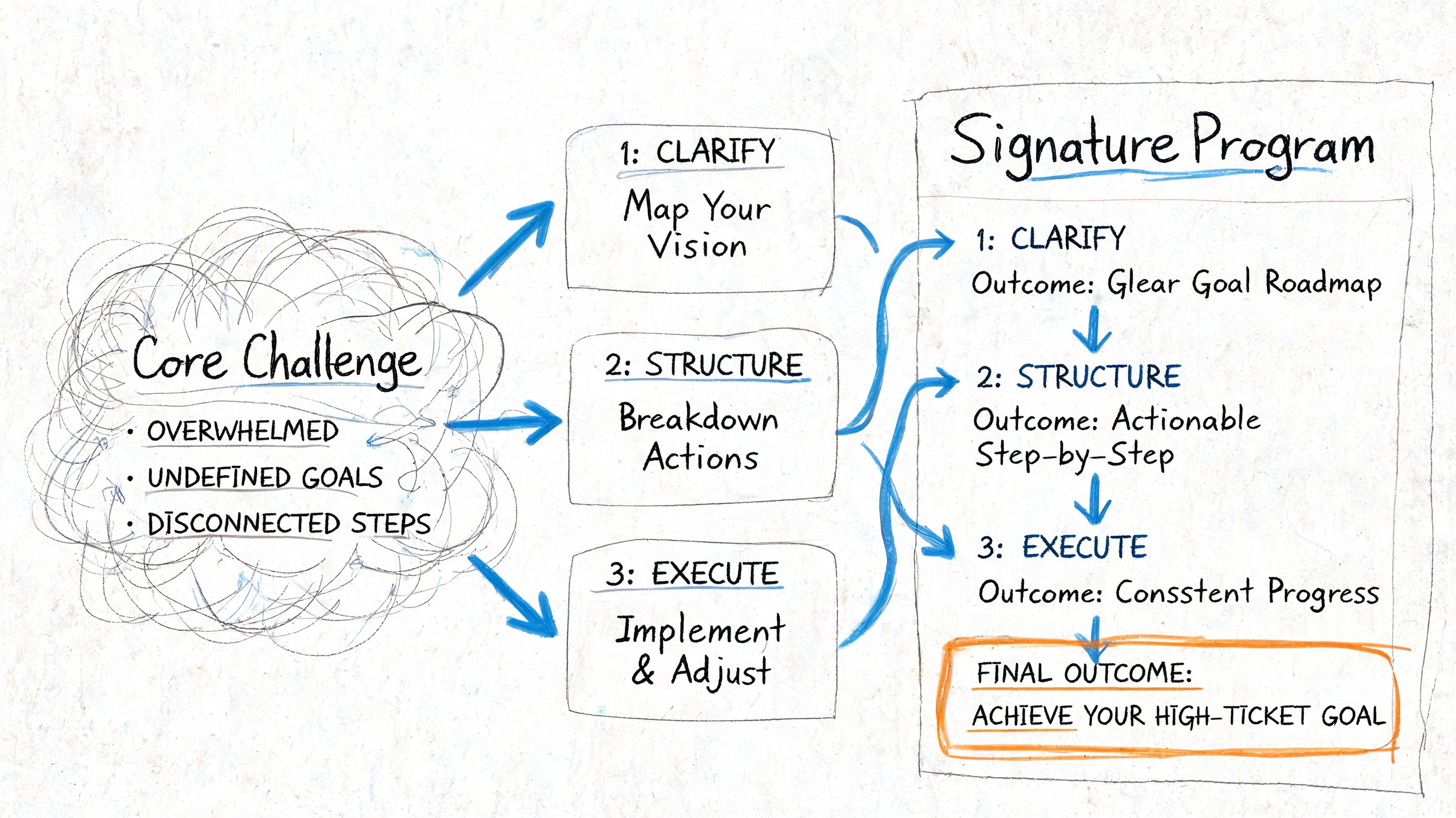
Clients pay for a meaningful change in their business or performance. They also pay for a process that feels controlled.
That second part gets ignored. I have seen many coaches sell a strong promise, then deliver it through a patchwork of calls, PDFs, and ad hoc support. The result is inconsistent client progress and a business that gets heavier every month.
Define the offer in one sentence with three parts:
Specific client
Name the buyer precisely enough that qualified prospects recognize themselves quickly.
Concrete outcome
State the result in terms the client already uses.
Delivery constraint
Include the context that shapes execution, such as team size, business stage, available time, or implementation capacity.
“I help founders grow” is too loose. “I help agency owners install a delivery system that reduces client firefighting and frees up leadership time” gives the buyer something clear to evaluate.
Premium coaching is not higher priced because it contains more calls. It earns the price when the delivery model reduces confusion, shortens time to implementation, and gives clients the right support at the right moment.
The strongest offers usually combine three delivery assets:
| Layer | Job | What belongs here |
|---|---|---|
| Coaching | Solve high-value decisions | Strategy calls, reviews, targeted feedback |
| Curriculum | Standardize repeated teaching | Lessons, templates, checklists, process guides |
| Community | Keep momentum between touchpoints | Peer discussion, implementation threads, shared wins |
This structure protects your time and improves the client experience. Repeated concepts live in content. Bottlenecks get handled in coaching. Accountability and peer learning happen in community. If you are mapping the learning journey, this guide on how to structure a course outline is a practical reference.
A high-ticket offer should not depend on your constant presence. If the client only progresses when you are live in the room, you built a demanding service, not a scalable premium program.
That means defining milestones upfront. What should a client complete in week one, thirty days in, and by the end of the engagement? What can be templatized? What requires direct judgment from you? What can a peer community reinforce without lowering quality?
Those decisions determine margin, client consistency, and burnout risk.
Clients do not need more material. They need evidence that the process works and that progress will be visible.
Use elements such as:
This is one reason community-based delivery works so well for high-ticket coaches. It creates accountability, surfaces recurring issues fast, and reduces the need to answer the same question in ten private threads.
If your positioning relies on authority in a visible channel, it also helps to build your LinkedIn brand around the exact problem your program solves. Clear market positioning and clear delivery design reinforce each other.
High-ticket coaching breaks when pricing is tied to hours. It pushes the buyer to compare calendars instead of outcomes, and it pushes the coach into a delivery model that gets heavier every time revenue grows.
I have seen this happen repeatedly. A coach raises prices, keeps the same one-to-one structure, adds more Voxer access, more custom reviews, more calls, and then wonders why the business feels harder at $30,000 months than it did at $10,000 months. The issue is not ambition. The issue is that the price went up while the delivery model stayed manual.
An hour is a poor unit of value for coaching. Clients are not buying sixty minutes. They are buying faster decisions, better execution, fewer expensive mistakes, and a clearer path through a problem that has already cost them time or money.
That matters even more at the premium end of the market.
The buyers willing to pay high-ticket rates usually care about one of three things. Speed, certainty, or support through complexity. If your pricing is still anchored to session length, you make the offer look interchangeable with lower-level coaching, even if your judgment is far stronger.
Executive coaching is a useful reference point. The International Coaching Federation and PwC global coaching study has long pointed to strong reported returns from coaching engagements, especially when the work is tied to business performance and leadership outcomes. The lesson is not to copy executive coaching fees. The lesson is that serious buyers pay for decision quality and measurable progress, not for time blocks on a calendar.
Set price based on the size of the problem, the level of support required, and how your delivery infrastructure handles that support without creating chaos behind the scenes.
A practical structure looks like this:
Focused premium offer
One clear outcome, defined timeline, limited customization, and structured checkpoints.
Core high-ticket program
Broader implementation support, direct feedback, group coaching, and a client environment that keeps resources, wins, and questions in one place.
Advisory or VIP engagement
Higher-stakes decisions, tighter access windows, faster response expectations, and more nuanced review.
The mistake is assuming higher price means more private time. In a well-run coaching business, higher price often means better architecture. Cleaner sequencing. Faster feedback loops. Stronger support between calls. More visibility into client progress. Those improvements raise value without forcing the coach to carry every part of delivery personally.
That is also why platform-based community delivery matters. If part of the transformation can be reinforced through peer discussion, implementation threads, resource libraries, and shared coaching moments, the client gets more support while your labor per client stays under control. Margin improves. Consistency improves. Burnout risk drops.
For coaches building recurring revenue layers around the main offer, these subscription pricing strategies for membership and continuity offers are useful for separating a one-time transformation promise from ongoing access, alumni community, or advisory support.
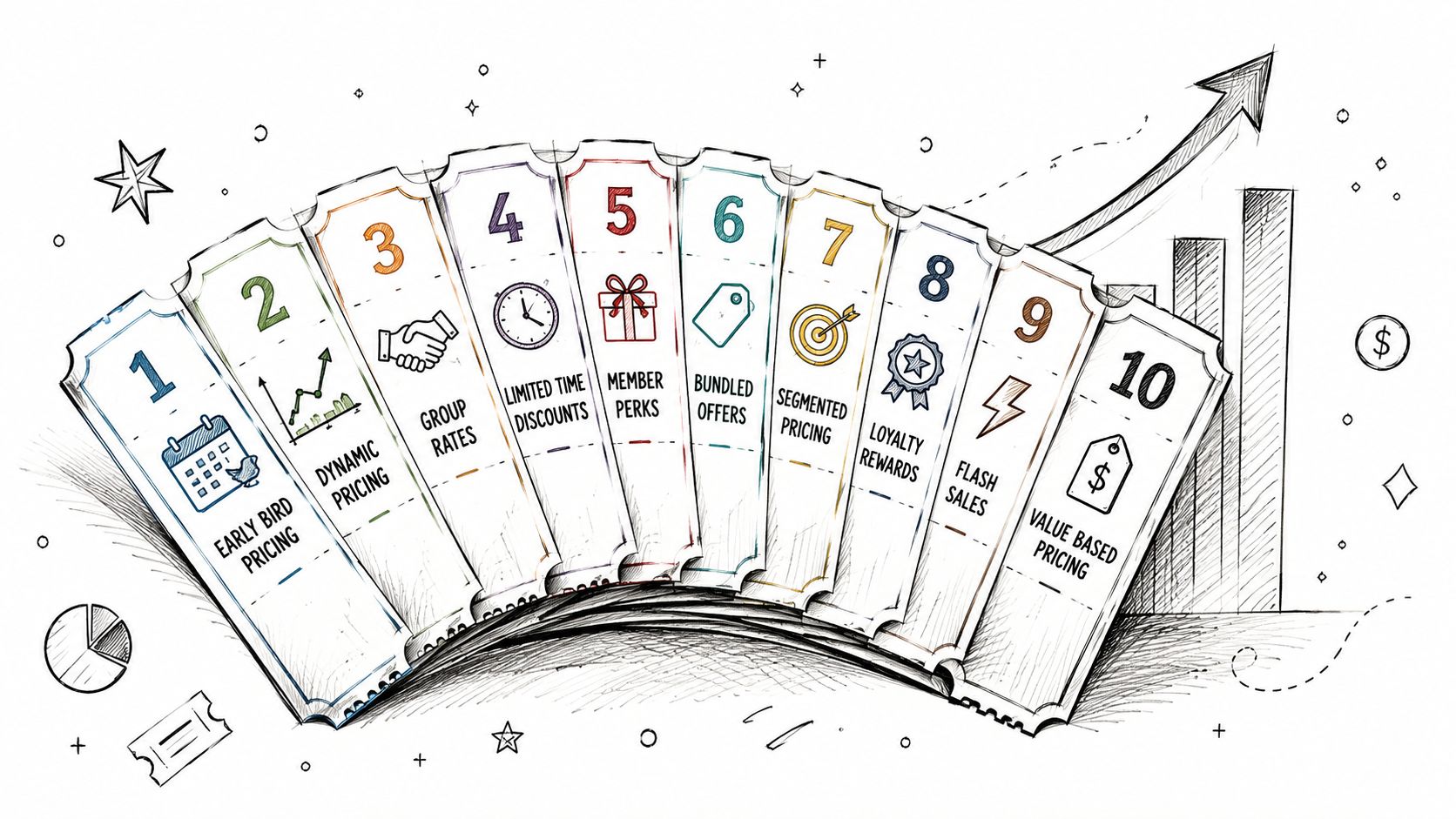
Coaches who also host live experiences can borrow pricing logic from adjacent models too. This guide to dynamic pricing for local community organizers shows how operators adjust price based on access, timing, and demand rather than using one flat rate for every buyer.
Premium pricing holds when the offer creates a real result and the delivery model can support that result repeatedly. Without that operational backbone, higher prices only buy a faster path to overwork.
High-ticket sales gets easier when the process screens for fit before you ever get on a call.
That's the opposite of what many coaches do. They invite anyone to book a discovery call, then try to rescue low-intent conversations through charisma. It wastes time and pressures both sides. A better system uses an application first, then a structured conversation with people who already understand the offer.
A practical benchmark comes from this breakdown of high-ticket funnel numbers. A typical high-ticket funnel requires just 150 qualified applications to generate $300,000 from a $10,000 group coaching program, assuming a conservative 30% conversion from accepted applicants to enrollments. The key point is the filter. Revenue comes from qualified applications, not from talking to everyone.
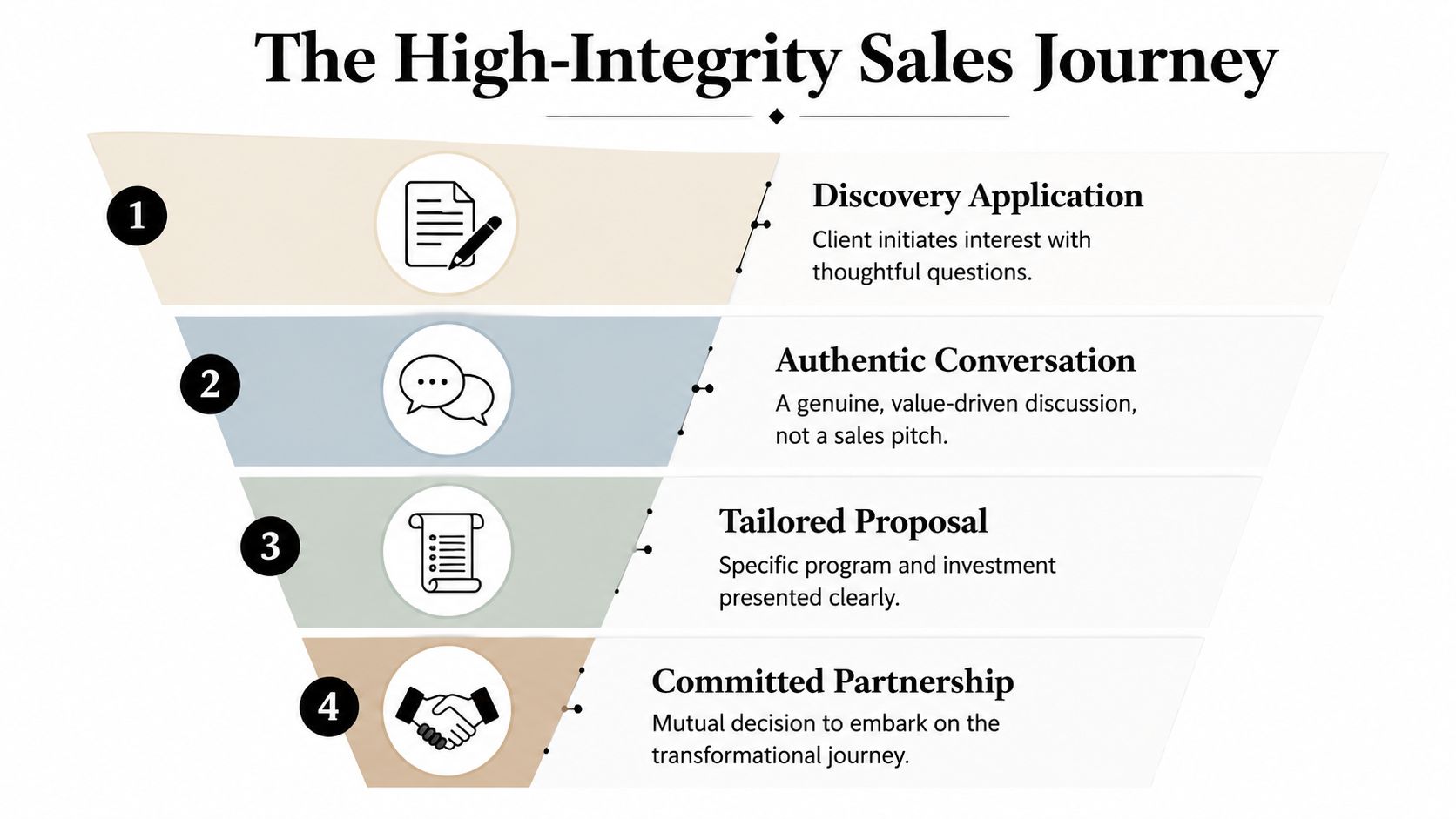
A good application is not busywork. It should surface urgency, readiness, and fit.
Ask questions that reveal:
Current situation
What problem are they dealing with right now?
Desired outcome
What are they trying to change?
Past attempts
What have they already tried?
Commitment level
Are they ready to implement, or still browsing?
Context
Team, role, business stage, decision-making authority, and relevant constraints
Avoid generic prompts that just collect enthusiasm. You want signal, not compliments.
Call it a clarity call, strategy call, or fit call. The label matters less than the posture.
Your job is not to convince. Your job is to assess whether your framework matches the buyer's problem and whether the buyer is willing to do the work. That creates a much calmer conversation.
A useful call flow looks like this:
Confirm the goal
Repeat back what they want in plain language.
Clarify the obstacle
Identify what has kept them stuck.
Pressure-test readiness
Ask what changes if they solve this now versus later.
Explain the fit
Show how your program addresses the gap.
Present the path
Outline structure, support, timing, and investment clearly.
The cleanest sales process for high ticket coaches feels less like persuasion and more like mutual due diligence.
Most weak close rates come from one of three issues:
| Problem | What it looks like | Better move |
|---|---|---|
| Wrong audience | Price objections from poor-fit leads | Tighten positioning and entry content |
| Weak diagnosis | The call stays vague | Ask sharper questions and summarize clearly |
| No next step | Interest fades after the call | Send a concise proposal and deadline |
If you're using paid traffic to drive applications, the ad layer needs the same discipline as the call itself. Generic lead generation usually fills the calendar with unqualified conversations. Coaches testing paid acquisition can learn from AdStellar's Facebook ad solution, especially if they want ads that pre-frame the offer instead of dumping cold leads into a booking page.
The sale is not the trust-building moment. It's the test.
The minute a client pays, they start looking for signs that they made the right decision. If they receive a payment receipt, a vague email, and a pile of links spread across tools, doubt shows up fast. High ticket buyers expect order.
According to this article on high-ticket coaching program lessons, one of the biggest gaps in the space is operational. Delivering VIP access and curated experiences for small, high-value cohorts requires serious community management and communication infrastructure. That's the part many high ticket coaches underestimate.
A strong onboarding experience does three things quickly. It confirms the decision, reduces friction, and creates forward motion.
Here's what clients should experience in the first stretch after payment:
A clear welcome message
Not a generic autoresponder. A message that explains exactly what happens next.
One central access point
No hunting through email for links, passwords, forms, and call details.
A fast win
A prep worksheet, assessment, kickoff question, or implementation task that gets them moving.
A visible roadmap
Clients should know where the journey starts and how support is delivered.
When that sequence is clean, buyers settle in. When it's messy, they start second-guessing the investment.
Premium clients forgive challenge. They do not forgive confusion.
If you want a practical model for mapping those early touchpoints, this onboarding plan template is a solid place to start.
Many coaches still run onboarding through a chain of one-off actions: invoice, separate intake form, separate calendar link, separate chat invite, separate content portal. It works for a handful of clients. Then it becomes fragile.
Operational onboarding looks different:
| Manual setup | Better setup |
|---|---|
| Welcome info scattered across emails | Centralized welcome hub |
| Intake handled ad hoc | Standardized intake workflow |
| Session links sent manually | Scheduled and visible in one place |
| Resources shared as-needed | Curated content library available from day one |
A walkthrough can help if you're redesigning this part of the client journey:
The point isn't to make onboarding flashy. It's to make it reliable. High ticket coaches earn premium pricing by delivering a premium experience before the first coaching call even starts.
The fastest way to cap a coaching business is to make the coach the delivery system.
That model often looks prestigious from the outside. Premium clients, high rates, lots of customized support. But the operating reality is brutal. Every client wants context, responsiveness, feedback, and access. The more successful the business gets, the more the coach becomes the bottleneck.
That's one reason many high ticket coaches eventually rethink the business model. As noted earlier in the piece, the one-to-one model creates real strain over time. The better long-term move is usually a community-backed delivery model that keeps quality high while reducing repetition and administrative drag.
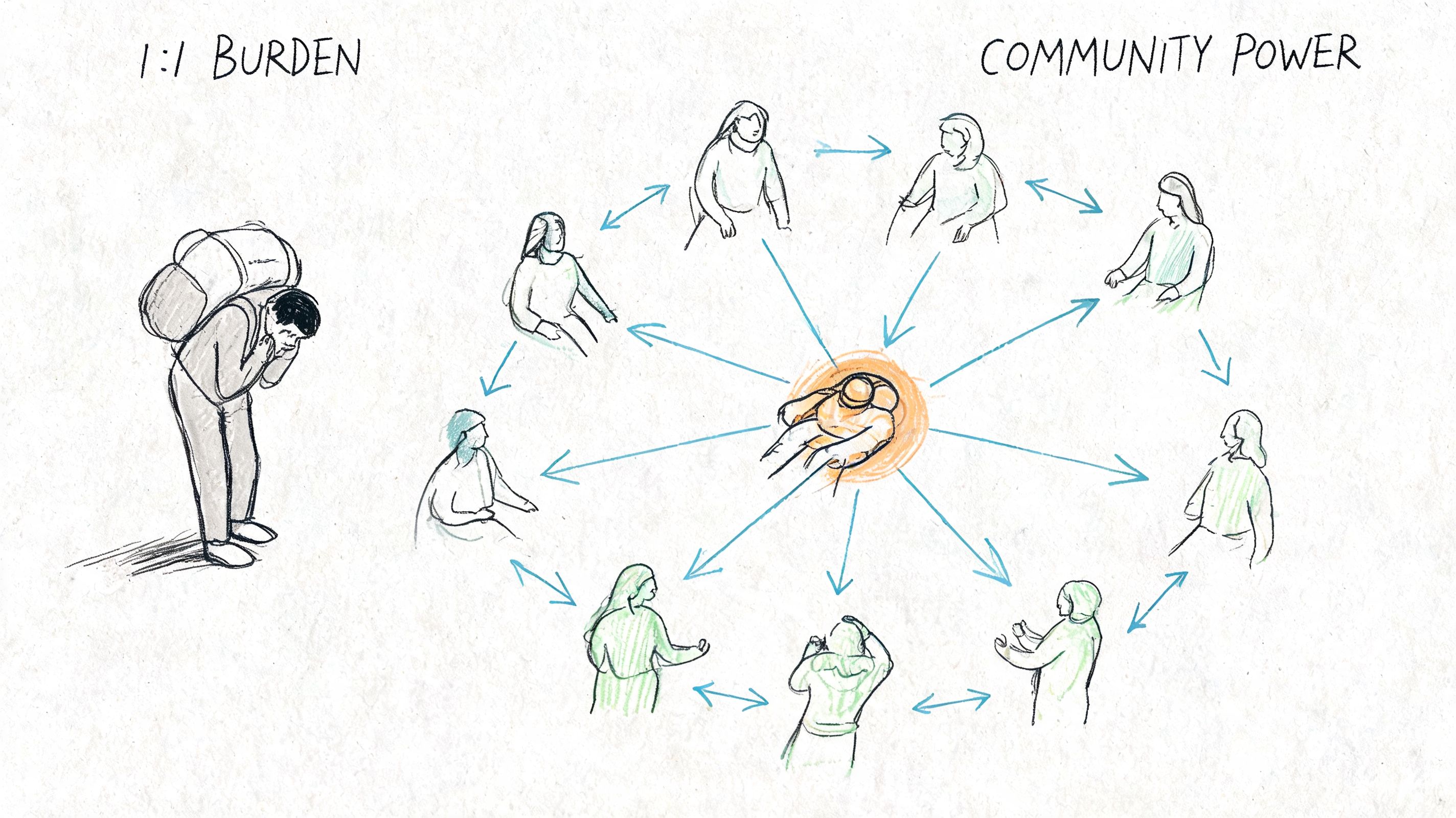
A community model is not “less premium.” Done well, it creates better support because clients get access to three things at once:
That combination removes a huge amount of duplicate coaching. You stop answering the same operational question in twelve private threads. You answer it once in the right space, and the answer becomes an asset for the whole cohort.
A strong group model still protects intimacy. It doesn't throw clients into a giant feed and call it community.
Use a structure like this:
| Delivery element | Why it works |
|---|---|
| Cohort-based onboarding | Clients start with context and shared momentum |
| Focused group calls | Common roadblocks get solved in real time |
| Private channels | Smaller discussions stay relevant and confidential |
| Content hub | Core teaching becomes repeatable and searchable |
| Retreats or live events | Premium connection deepens outside weekly calls |
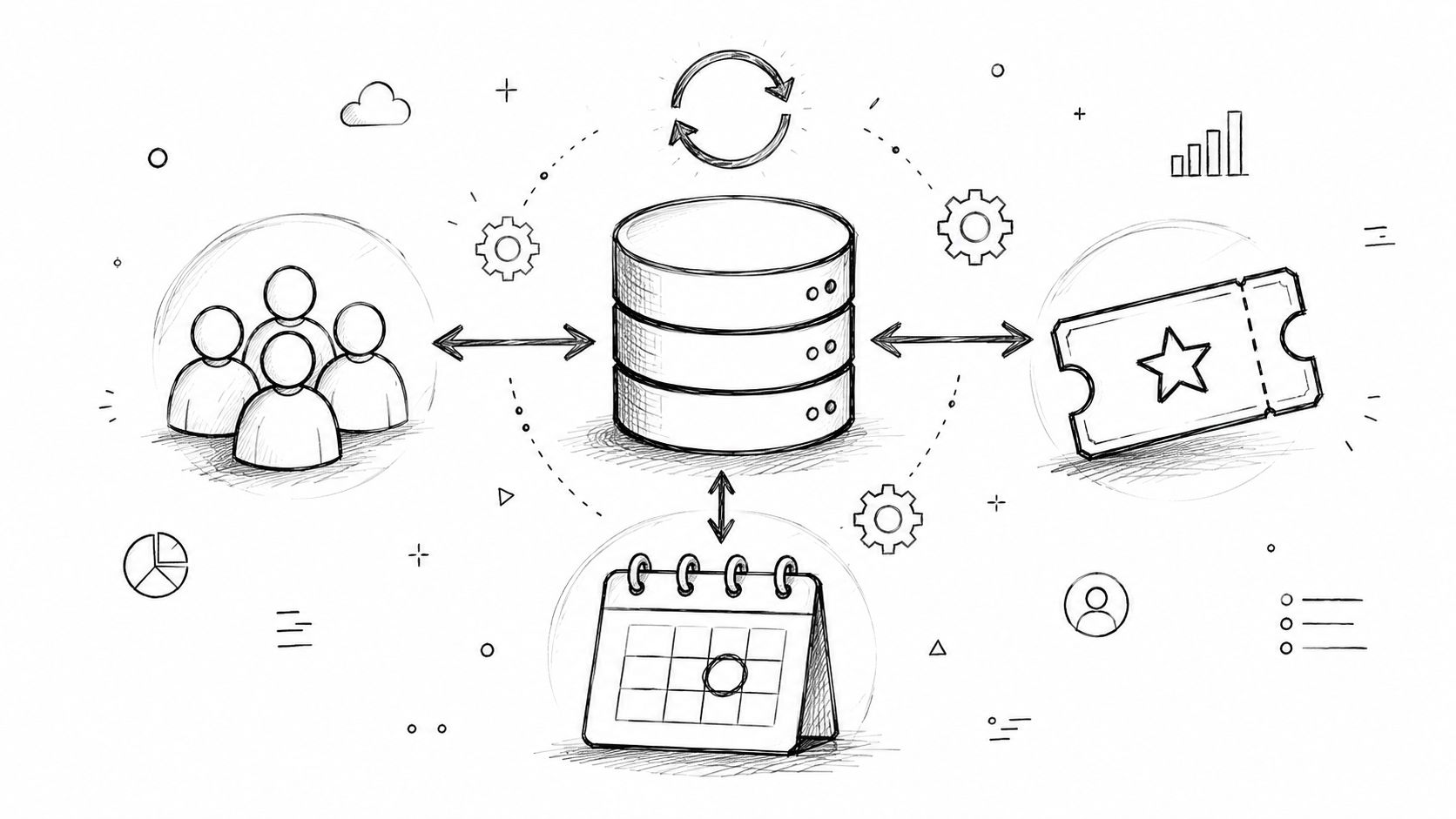
Many coaching businesses need better systems than Zoom, email, Slack threads, and spreadsheet tracking. The infrastructure has to support ticketing, content access, private communication, member profiles, and engagement data without forcing the team to stitch everything together manually.
For coaches building this kind of model, this guide on how to build online community is useful because it focuses on structure, not vague engagement advice.
A premium community is not a bonus feature. It is part of the transformation when clients learn from each other, see standards in action, and stay accountable between calls.
The strategic shift is simple. Stop selling access to you as the entire product. Start designing an environment where your expertise scales without losing coherence.
High-ticket retention is rarely a sales problem. It is usually a delivery design problem.
Clients renew when the program keeps producing progress after the initial excitement wears off. They leave when the value depended too heavily on live calls, founder access, or personal hand-holding that the business cannot sustain at scale. That is the operational fault line in many premium coaching offers. They sell a transformation, then deliver an exhausting service model.
Renewal gets easier when the next stage is built into the client journey from day one.
The cleanest renewal path comes from progression. Clients should be able to see what happens after the first milestone, who it is for, and why it matters. That takes pressure out of the renewal conversation because the next step feels like the logical continuation of the work.
In practice, that usually means three lanes:
A second-phase implementation offer
For clients who need support applying the method inside a team, a launch cycle, or a more complex business stage.
An alumni or mastermind tier
For clients who still want access to peer context, strategic feedback, and higher-level conversations.
A lighter continuity layer
For clients who want accountability, community, and periodic guidance without another intensive engagement.
The mistake is creating these paths at the end of the program. By then, the team is reacting instead of directing. Strong operators know midway through the engagement which clients are advancing, which are stalled, and which need a different format rather than more of the same.
Revenue alone hides operational weakness. A cohort can close well and still produce low renewals, thin referrals, and heavy support load.
I track a small set of metrics because they show whether the offer is working as a business model, not just as a sales event. CAC shows how hard the market is making you work for each client. ROI shows whether clients can connect your program to a concrete result. NPS and qualitative feedback show whether they would recommend the experience without hesitation. Completion and engagement show whether people are using what they paid for.
Bain & Company explains that increasing customer retention can have a meaningful effect on profit over time because retained customers tend to buy more, refer more, and cost less to serve than newly acquired ones, which is why retention deserves the same attention as acquisition in a premium model (Bain on retention economics).
Use a scorecard like this:
| Metric | What it tells you | What to watch for |
|---|---|---|
| CAC | How expensive it is to acquire a client | Rising cost without stronger fit or better retention |
| Client ROI | Whether clients can tie your program to a business or personal result | Good outcomes that are poorly documented or hard to explain |
| NPS | Whether clients would actively recommend the experience | Strong coaching with inconsistent delivery |
| Completion | Whether clients finish the key milestones | Valuable material buried in an overloaded program |
| Engagement | Whether clients participate between calls | Founder-dependent delivery and weak community habits |
| Renewal intent | Whether a next step makes sense to the client | Satisfaction without a clear progression path |
One metric matters more than coaches admit. Engagement between sessions.
If clients only get value when you are live, retention will always be fragile. A community-based delivery model changes that dynamic. Clients get reinforcement from peer discussion, searchable wins, implementation examples, and ongoing accountability between calls. That lowers the pressure on the coach to create every breakthrough personally. It also raises the odds that clients stay long enough to compound results.
Run this process before the final month, not after the final call:
Review progress client by client
Separate clients who completed the work, clients who consumed but did not implement, and clients who disengaged early.
Document outcome proof
Capture specific wins, language from client feedback, and examples of how results were produced.
Identify the right next environment
Some clients need advanced strategy. Others need structure, accountability, and peer proximity.
Check delivery friction
Look for missed sessions, low platform activity, repeated support questions, or confusion around the curriculum.
Hold a closeout conversation
Ask what changed, what remains unresolved, and what support format fits the next stage.
Follow up after the official end date
Continued contact shows clients the business is built around results, not contract expiration.
The strongest high-ticket programs treat retention as an output of delivery quality. They do not depend on last-minute renewal pitches to save a weak experience.
If you're building a premium coaching business and need the operational side to match the promise, GroupOS gives you one place to run memberships, events, content, communication, and client experience without patching together separate tools. It's a practical way to support cohorts, retreats, and ongoing communities at a standard that fits a high-ticket offer.