May 13, 2026

Your organization probably knows who its top people are already. They're the members who buy the premium ticket, bring in sponsors, speak on your stage, answer other members' questions, and influence whether the rest of the community stays engaged.
Most groups still treat those people almost the same way they treat everyone else.
That's where a well-built million dollars club changes the game. Not as a vanity badge, and not as a generic VIP list, but as a deliberate operating layer inside your membership model. Done well, it gives high performers a reason to stay, gives rising members something concrete to aim for, and gives your organization a premium product that can support revenue, recognition, and stronger community gravity all at once.
I've seen the same pattern repeatedly. A community grows, broad membership stabilizes, event attendance looks healthy, and then leadership hits a ceiling. The missing piece usually isn't more content. It's a sharper offer for the people who've outgrown general programming.
If your top members are plateauing in engagement, they're not necessarily unhappy. More often, they're under-served. They've already extracted the value that entry-level and mid-tier programming can provide, so they start showing up less, replying less, and renewing with less enthusiasm.
A strong elite tier fixes that by creating proximity, recognition, and relevance at the top end.

The strategic case is stronger now because the addressable audience is larger than many operators assume. The share of total wealth held by millionaires rose from roughly 35% of global household wealth in 2000 to nearly 48% in 2021, and the United States alone added over 10 million new millionaires between 2016 and 2021, according to CultureBanx's summary of the Credit Suisse wealth findings. That doesn't mean every organization should target wealthy individuals. It means the market for high-achievement, high-expectation networks is real, visible, and growing.
An elite member tier solves three common problems at once:
That last point matters more than organizations realize. A million dollars club isn't just for the people inside it. It shapes how the rest of the community perceives progress.
Practical rule: If your highest performers can get the same access as everyone else, your membership ladder is too flat.
A vague VIP program tends to become a discount bucket or an event-seating upgrade. An elite tier should function more like a distinct product line with its own qualification logic, access model, and service standard.
That's also why it pairs well with broader community strategy. If you're already thinking about retention and member participation, the operating logic behind online community benefits for organizations becomes sharper when your top cohort has a dedicated environment, not just a name on a list.
Most million dollars club programs break down at the definition stage. The phrase sounds clear until someone asks the obvious question: a million dollars of what?
For a trade association, it might be annual sales. For a direct sales network, it might be cumulative commissions. For a fundraising organization, it could be funds raised. For a professional services group, it may be closed business attributable to a member over a defined period.
If you don't define the metric precisely, your club turns political fast.
Start by selecting the metric your members already trust operationally. That usually means one of these:
The mistake is mixing them. If one member qualifies on gross revenue and another qualifies on compensation, they're not being measured on the same playing field.
The direct sales world offers a useful design clue here. Many successful million-dollar-club models use cumulative lifetime earnings rather than annual income, and analysis cited in the Mannatech context indicates that typically fewer than 1% of participants ever reach that level, which is why intermediate recognition points such as $100k and $250k matter for motivation and fairness, as described in this analysis of million-dollar-club recognition structures.
Annual thresholds create urgency. Lifetime thresholds create legacy.
Use annual qualification when your community is built around current market performance. This works well for founder groups, seller communities, broker networks, and sponsor-facing organizations that want a current signal of relevance.
Use lifetime qualification when your members value career achievement and durability. This is often better for associations, recognition programs, and communities where one bad year shouldn't erase a decade of contribution.
If members can't explain your eligibility rule to each other in one sentence, the rule is too complicated.
Your rules need to answer operational questions before members ask them. Include:
A strong operator also writes edge-case rules early. Partnerships. Joint ventures. Agency retainers. Team accounts. Regional conversions. Founder-owned holding companies. If your members are astute, they'll find ambiguity immediately.
A million dollars club should be selective, but not isolated from the rest of the community. The cleanest model uses a visible progression path:
That keeps your top tier credible while giving ambitious members milestones they can realistically pursue.
The fastest way to weaken an elite tier is to fill it with ceremonial perks. Trophies matter. Access matters more.
Members join and stay for three things: better peers, better opportunities, and better decisions. Your benefit design should reflect that order. If a perk doesn't improve one of those three, it probably belongs in your standard membership, not your premium one.
The cleanest architecture is a ladder. Each step should reveal something substantively different, not just “more” of the same.
| Tier Level | Eligibility Threshold (Annual Revenue) | Key Benefits |
|---|---|---|
| Leadership Circle | Meaningful revenue threshold below the top tier | Private roundtables, early event registration, curated introductions |
| Growth Council | Higher verified performance band | Small-group masterminds, invitation-only speaker dinners, member spotlights |
| Million Dollars Club | $1M annual revenue threshold | Closed peer forum, executive retreats, direct access to leadership, premium recognition |
That structure works because it creates aspiration without diluting the top level. If everyone jumps from general membership straight into the top badge, you lose momentum in the middle.
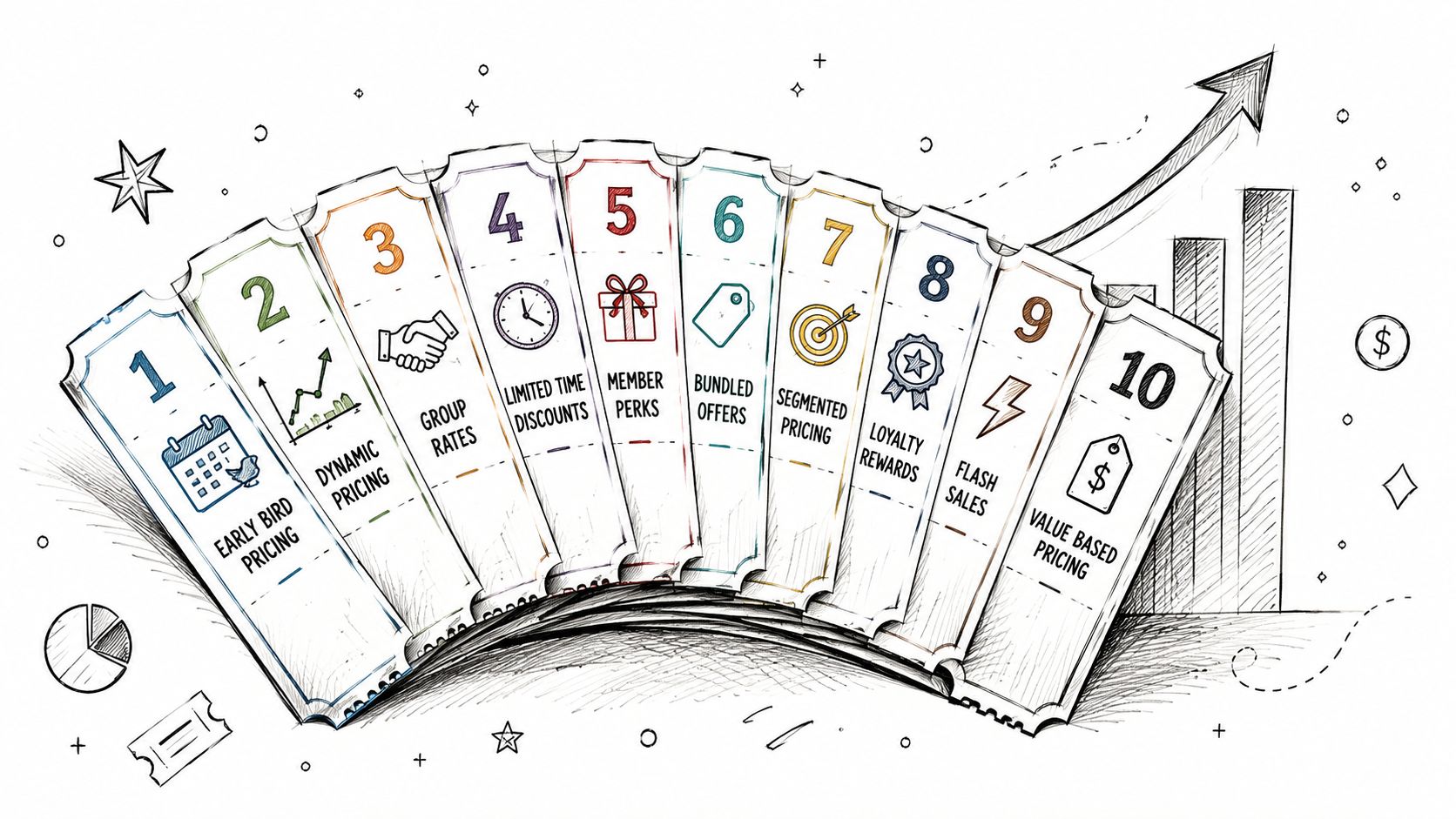
For organizations pricing these layers, it helps to study how strong operators package value. Refgrow's guide to tiered pricing is useful because it frames tiering around willingness to pay and clear differentiation, which is exactly what elite community design requires.
The most effective elite-tier benefits tend to look like this:
Some perks look impressive on paper and underperform in practice:
The test is simple. If a member can get the same outcome through LinkedIn, your benefit isn't premium enough.
Your tier structure should support monetization, but the value logic has to come first. Teams often build backward from revenue targets and end up with a pricing page nobody believes. A smarter approach is to define service load, peer quality, and event access first, then map that to your broader subscription pricing strategy for memberships.
Scarcity also needs discipline. Limit some benefits by format rather than by vague exclusivity. Small-group dinners, curated cohorts, rotating host circles, and capped advisory seats all preserve quality without making the whole club feel inaccessible.
Recognition is where your million dollars club becomes visible. Without it, the tier operates like a private database field. With it, the club becomes a status marker that people remember and talk about.
The best recognition moments feel earned, public enough to matter, and personal enough to feel specific. A staged applause line isn't enough. Members want to feel that the organization understands what they achieved and why it matters.

A good annual conference usually has too many awards and not enough weight behind them. Your elite tier needs one flagship ritual. That might be an induction dinner, a stage recognition at your main event, or a private breakfast where the board chair welcomes new entrants personally.
The format matters less than the choreography.
A strong recognition sequence usually includes:
A lot of operators confuse exclusivity with velvet-rope theater. A crowded VIP lounge inside a noisy conference rarely creates the kind of exchange elite members value. The better move is often a smaller, tightly curated format where the attendee list itself is the draw.
Here are the trade-offs I'd use:
Recognition should create memory. Events should create relationships. Don't ask one format to do both jobs equally well.
Some members care more about narrative than applause. A profile article, founder interview, or “inside the build” feature can outperform an award if it captures the member's judgment, not just their achievement.
That's especially true in founder, investor, and professional communities where credibility comes from how someone thinks. A polished story inside your member hub, paired with selective promotion, often gives members something they'll share with pride.
Recognition can be public. The most valuable conversations usually shouldn't be.
Elite events work when operators control the room carefully. No random guest upgrades. No sponsor ambushes. No bloated invite lists. If members expect candor, you need formats that protect candor.
Many million dollars club programs drift off course at this stage. They become symbolic but not intimate. The members still appreciate the badge, but they stop expecting meaningful access. Once that happens, retention becomes much harder.
An elite tier needs economics that make sense. If the club drains staff time, event budget, and leadership attention without a clear return, it won't survive internal scrutiny. If it over-monetizes the member experience, it won't survive member scrutiny.
The workable model usually combines dues, sponsors, and selective premium experiences.

A lot of organizations hesitate to add dues on top of core membership. Sometimes that's the right call. But high achievers will pay when the value is verified, selective, and useful.
A real benchmark exists in e-commerce. Million Dollar Sellers is a community for entrepreneurs with over $1M in annual revenue, and members reportedly pay approximately $7,497 per year, as covered in Business Insider's profile of Million Dollar Sellers. The lesson isn't that every club should copy that fee. The lesson is that top performers will pay premium pricing when the room is credible and the gate is real.
Charge extra dues when your club delivers:
Skip separate dues when the elite tier is primarily honorary and symbolic. In that case, sponsors or foundation support may be the better economic engine.
Sponsors belong in an elite club only when access is earned and relevance is obvious. Wealth advisors, executive service firms, software providers, or travel brands can fit. But they need boundaries.
I'd structure sponsorship around these rules:
For organizations with a mission component, this gets even more delicate. Teams balancing premium members, donor expectations, and program goals can learn a lot from broader thinking around mastering donor advocacy, especially the discipline of aligning stewardship with trust rather than transaction volume.
Treat the elite tier as a standalone business unit inside your organization. Map revenue sources separately from the rest of the membership business.
A clean model usually includes:
If you're formalizing sponsor offers, your team should build a clear package structure with inventory, visibility rules, and protected member touchpoints. A useful starting point is this guide on creating a sponsorship package for events and communities.
The worst financial model is the one where nobody can explain what members are paying for. If the club includes extra dues, members should be able to point to specific access, service, or opportunities that justify it. If sponsors fund part of the experience, members should understand why those sponsors are there and what limits exist.
That's how you keep the club premium instead of merely expensive.
Elite communities often spend too much time on curation and not enough on governance. That's risky. Once dues increase, sponsors enter the picture, and recognition carries status, your million dollars club becomes an accountability issue, not just a programming issue.
There's also a real transparency gap in high-net-worth communities around governance and financial accountability. That gap is one reason operators should build compliance tracking, clear oversight, and visible auditability into the program from day one, as noted in Long Angle's community context around private wealth networks.
The best elite clubs don't improvise their ethics. They document them.
Your operating model should cover:
Prestige attracts scrutiny. Run the club as if every decision may need to be explained later.
That doesn't mean making the club bureaucratic. It means reducing ambiguity before a sensitive situation lands on someone's desk.
Member count alone tells you very little. What matters is whether the club creates real density and long-term value.
The most useful KPI set usually includes:
Some of these are quantitative. Some are observational. Both matter. In premium communities, weak signals often appear first in behavior, not dashboards.
The hardest retention question is simple. What happens when a member falls below the threshold?
Automatic demotion is usually a mistake. It creates embarrassment, punishes volatility, and teaches members to disengage before they lose status. Better approaches include grace periods, review cycles, alumni status, or rolling qualification logic.
What matters most is consistency. If one member gets flexibility because they're prominent and another doesn't, trust erodes quickly.
A durable elite tier protects prestige without humiliating people on the way down. The members who stay loyal longest are often the ones who remember that the organization handled a difficult year with fairness.
A million dollars club gets messy fast when it runs on spreadsheets, inbox threads, and a few staff members who “just know” who belongs where. You need systems that make qualification, access, billing, events, and communication visible in one place.
That's why implementation should start with workflow design, not branding.

A modern membership stack should support the club in practical ways:
This is the same reason operators researching infrastructure often look at broader guides on how to create a membership website. The front-end experience matters, but the heavy lift comes from the back-end rules that determine who sees what and when.
The first mistake is building the program in disconnected tools. Your CRM says one thing, your event platform says another, and your private discussion space has outdated access rights.
The second is manual review with no audit trail. If a staff member can't reconstruct why a member was approved, renewed, or given grace status, you don't have a process. You have institutional memory.
The third is launching without member-facing clarity. Elite members should see exactly what they get, how to use it, and who to contact. Premium programs fail when onboarding feels improvised.
A short product walkthrough can help your team think more concretely about how membership and event workflows connect in one environment:
Keep the rollout disciplined:
If you're comparing systems for this, the useful lens isn't just “community platform” versus “association software.” It's whether the product can handle memberships, communication, events, content, and sponsor visibility without forcing your team into patchwork operations. That's the practical standard to apply when evaluating a membership platform built for communities and events.
If you're ready to turn an elite tier from an idea into an operational program, GroupOS gives organizations one place to manage memberships, gated access, event registration, sponsor visibility, billing, and member communication without stitching together separate systems. It's a strong fit for associations, event-driven communities, and membership businesses that want a million dollars club to run like a real product, not a side project.