January 5, 2026
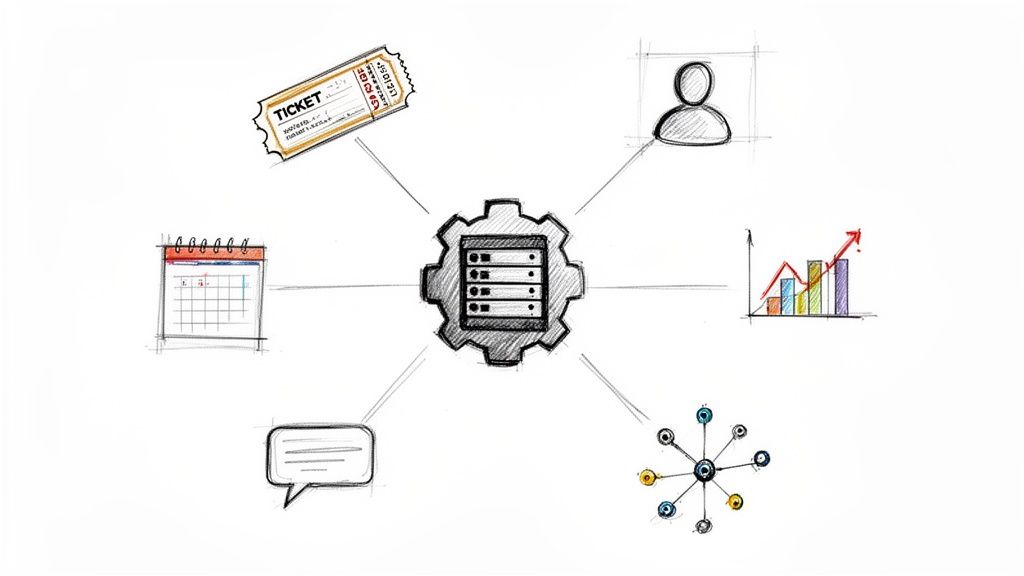
At its core, online event management software is the digital command center for your event. It’s a single platform designed to handle and connect every moving part—from the first registration click and marketing push to live attendee engagement and the final post-event report.
Think of it as trading in a messy toolbox of mismatched, single-purpose tools for a sleek, all-in-one Swiss Army knife. It's built to run any kind of modern event, whether it's in-person, fully virtual, or a hybrid of both.
Let's be honest, we all remember the old way of piecing an event together. It was a chaotic jigsaw puzzle of disconnected spreadsheets, never-ending email threads, and siloed communication apps. Attendee lists were in one place, speaker bios were in another, and trying to track financials felt like a constant, manual reconciliation nightmare. That fragmented approach was not only inefficient but made getting a clear, real-time snapshot of your event's health practically impossible.
That old method just can't keep up anymore. We're seeing a massive shift as event organizers ditch their reliance on spreadsheets and look for dedicated solutions, including specialized tools like golf event management software for niche events. The fundamental problem with the old way was the lack of a central nervous system; data was scattered everywhere, workflows were painfully manual, and getting teams to collaborate was a headache.
Think of modern online event management software as the conductor of an orchestra. Instead of each musician playing from a different sheet of music, the conductor provides a single, unified score, ensuring every part works in perfect harmony.
This isn't just about making life easier; it's a strategic move driven by higher attendee expectations and the sheer complexity of today's events. The proof is in the numbers: the global event management software market is exploding, projected to hit USD 42.57 billion by 2034. That incredible growth is powered by the need for tools that can handle hybrid and virtual formats with features like branded virtual stages, live Q&A, and deep analytics. You can dive into the full research on this market expansion to see what's driving the change.
To really grasp the difference, let's compare the old way with the new.
The table below breaks down the day-to-day reality of planning an event with manual tools versus a dedicated software platform.
As you can see, the shift is less of an upgrade and more of a total transformation in how events are managed.
An all-in-one solution attacks the root problems of inefficiency and disconnected data head-on. It establishes a single source of truth where every bit of information, from a new registration to a sponsor's engagement stats, lives and is interconnected. This unified view is absolutely essential for making smart, fast decisions and getting your teams to work together seamlessly.
When your marketing, sales, and operations teams can all pull from the same live data, you finally break down those frustrating departmental silos.
This integrated approach is the secret to creating a smooth, professional experience for everyone involved:
By bringing all these functions under one roof, the platform becomes more than just a piece of software—it becomes a core asset for driving growth. One of the biggest wins is vastly improved cross-departmental collaboration, which ensures every person on every team is aligned and pushing toward the same goals. This creates the solid foundation you need for a successful, engaging, and profitable event.
To really get what online event management software can do, you have to look under the hood. Think of the platform as your event's central nervous system—a network of connected tools working in sync to create a smooth, powerful experience for everyone involved. Each feature is designed to solve a specific, often frustrating, problem, turning a mountain of manual tasks into a smart, automated workflow.
These tools are the beating heart of your event. They manage everything from that very first click on the "register" button to post-event analytics and sponsor ROI reports. Let's break down the essential components that make it all happen.
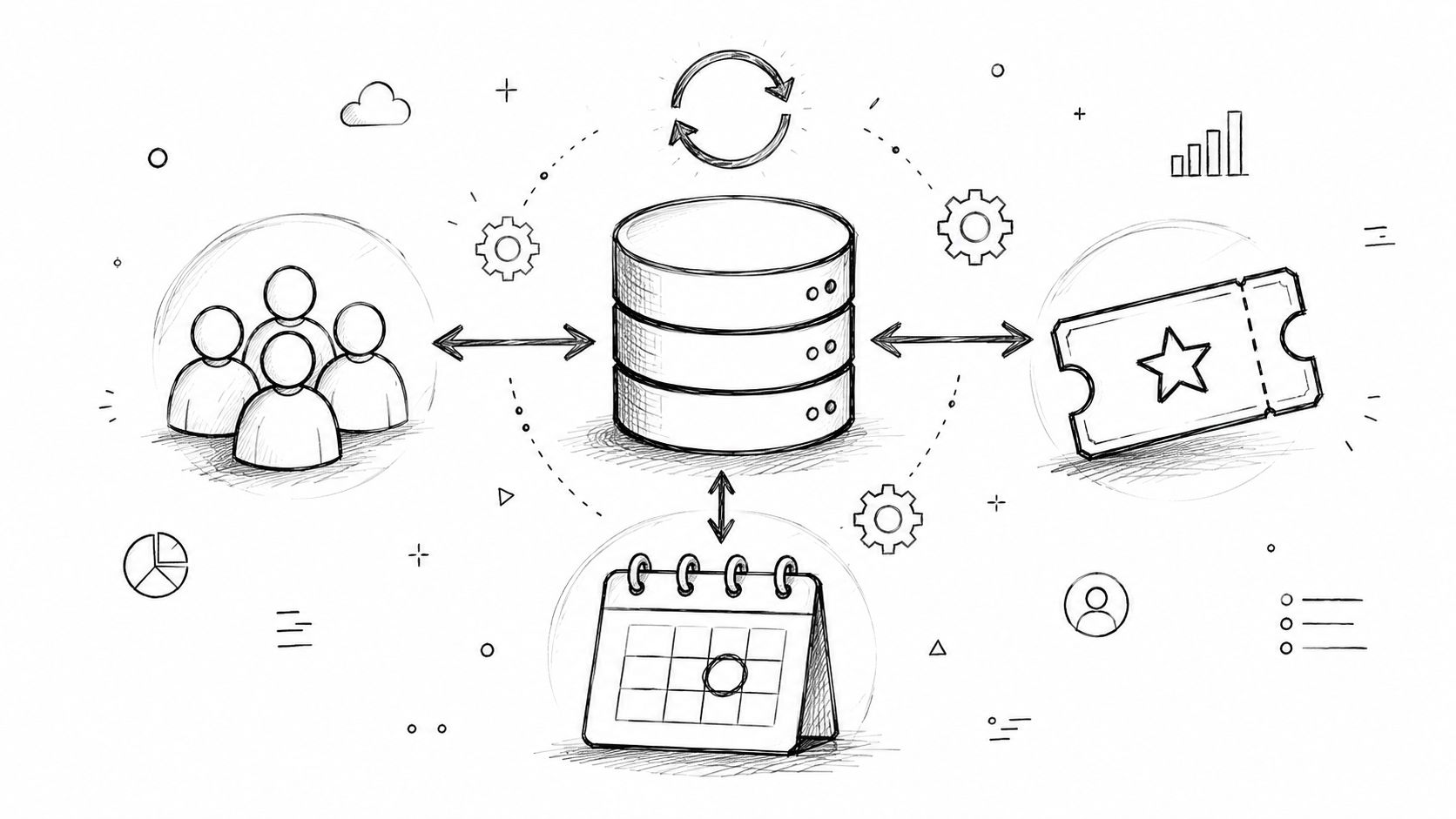
The diagram below really shows the "before and after." It's the difference between a chaotic, disconnected manual process and the streamlined, integrated workflow you get with modern software.
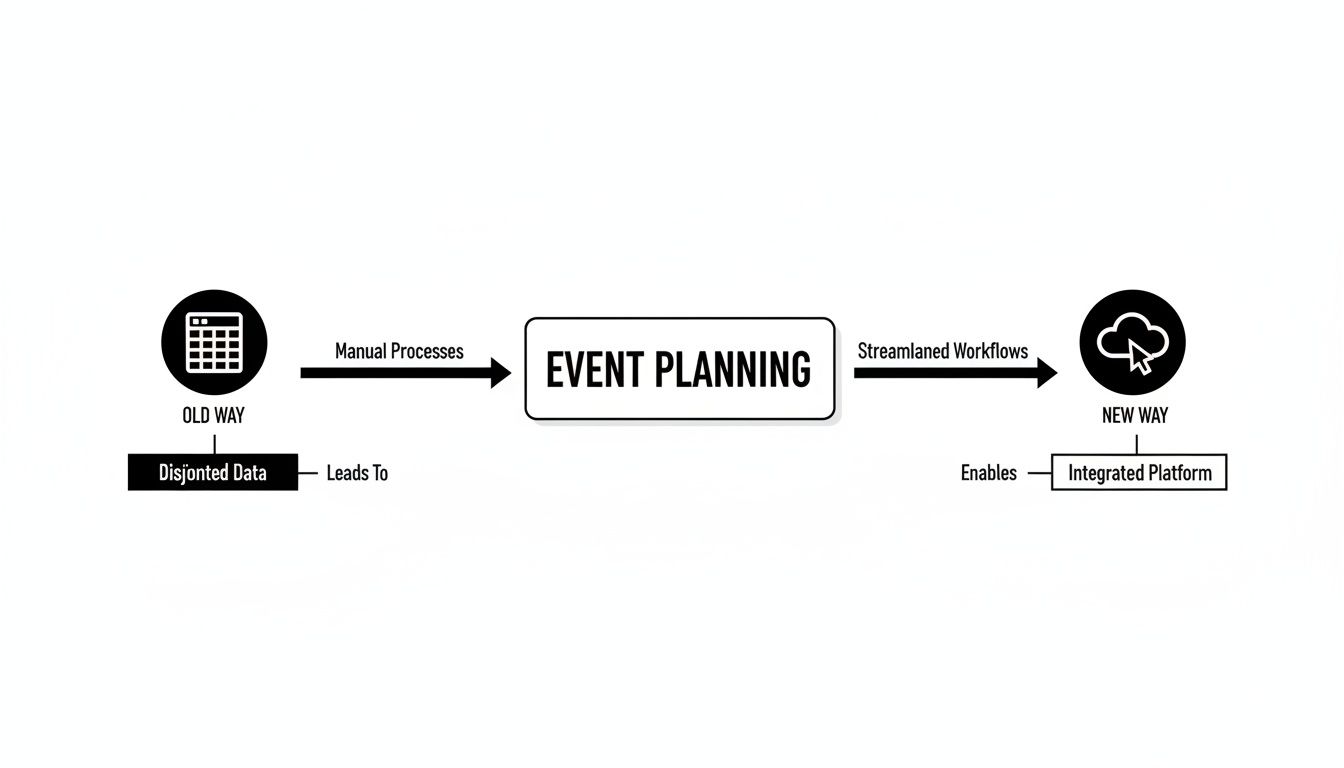
You can see how a central platform gets rid of those frustrating data silos and gives you a single command center for all your event operations.
The first impression anyone has of your event is the registration page. This isn't just a simple sign-up form; it’s your front door, your data-gathering engine, and your cash register all in one. A good platform goes way beyond just asking for a name and email, creating a dynamic registration experience that feels intelligent.
Picture this: you're running a hybrid conference. You need different tickets for in-person attendees, virtual viewers, and VIPs, each with unique pricing and access levels. The right software handles this complexity without breaking a sweat. You can build custom forms with conditional logic—for instance, if someone selects "in-person," they're prompted to choose a meal option. If they pick "virtual," that step vanishes.
This kind of automation also covers:
Let’s be honest, the content is why people show up. Whether it's live-streamed keynotes, downloadable slide decks, or on-demand workshops, this is your event's core value. An online event management platform gives you a single, branded home where all this content can live—not just during the event, but long after it ends.
It's like creating a private Netflix for your community. Instead of making attendees dig through old emails for Zoom links or access five different websites, they just log into one portal. This turns your event hub into a lasting resource, dramatically extending its life and value while opening up new ways to make money, like selling all-access passes to the recording library.
For associations and professional groups, events are rarely standalone. They're a critical piece of a much larger membership strategy. The best platforms understand this and weave event management directly into their membership functions, creating a powerful synergy.
Instead of treating events and memberships as separate buckets, an integrated platform sees them as two sides of the same coin. This allows you to track a member's entire journey—from their first event registration to their annual subscription renewal—all in one place.
This tight integration is what fuels retention and growth. You can automate membership renewals, offer event ticket discounts that only active members can see, and track engagement to see who your most dedicated supporters are. These are just some of the powerful event management software features that make a real difference. Managing both under one roof is a genuine game-changer for building a loyal, engaged community.
Sponsors and exhibitors are the financial lifeblood of many events, and they need to see a clear return on their investment. A solid software platform gives them the tools to do just that. They get more than just a logo slapped on a webpage; they get dedicated virtual booths or dynamic profile pages.
These profiles essentially become mini-websites right inside your event hub, complete with:
This has become even more critical with the rise of virtual and hybrid events. The market is increasingly shaped by the demand for dynamic online experiences, from high-quality live streams to robust sponsor tools. With the number of global internet users projected to hit 6.54 billion by 2025, the digital-first mindset is here to stay. By providing your partners with clear metrics and tangible lead-gen tools, you're not just selling them exposure—you're proving their ROI and ensuring they come back year after year.
When you bring all your event tools under one roof, something bigger than just efficiency happens. It stops being about simply managing tasks and starts being about creating real value for every single person involved.
The experience shifts from a series of transactions to a collaborative, rewarding partnership. Suddenly, the data flows freely, connecting the association, the planner, and the sponsor in a way that helps everyone succeed. It’s no longer just an operational cost; it’s a strategic investment.
Let's break down exactly what this looks like for each group.
An event is never just a one-off for a professional association—it's the lifeblood of the member experience. The right software becomes the engine that drives community growth and directly strengthens the organization's long-term health.
The benefits stack up quickly:
Event planners are the conductors of a complex orchestra, and their biggest enemy is friction. Disconnected tools, endless manual data entry, and repetitive check-ins steal time that should be spent on strategy and creating an unforgettable attendee experience.
For a planner, the biggest win is getting back their time and focus. Instead of drowning in spreadsheets, they can pour that energy into what really matters: designing incredible moments and building a community that lasts.
This freedom comes from automating the most tedious parts of the job. Think about it: a speaker updates their bio in their profile, and it instantly syncs across the event website and the mobile app. No more version control nightmares or making the same edit in three different places.
The software also acts as a single source of truth. With real-time dashboards, planners can see registration numbers, ticket revenue, and session attendance at a glance. This means they can make smart, fast decisions without having to piece together reports from five different systems.
Sponsors aren't just donating money; they’re making an investment. They need qualified leads and a clear, data-backed return to justify their spend. This is where a modern event platform really shines, turning sponsorship from a hopeful guess into a predictable, high-value marketing channel.
The right platform gives sponsors a full toolkit for success:
Picking the right online event management software is one of those foundational decisions that can make or break your event strategy for years. This isn't just about buying a tool; it's about choosing a partner. Get it right, and you move from just managing tasks to strategically building a community and boosting revenue. A rushed decision, on the other hand, can lead to workflow headaches, a clunky attendee experience, and a ton of missed opportunities.
This guide is designed to give you a practical, no-nonsense checklist to help you sort through the options with confidence. We'll break down the essential criteria into clear, manageable categories so you can find a solution that actually fits your organization's goals and how your team works.
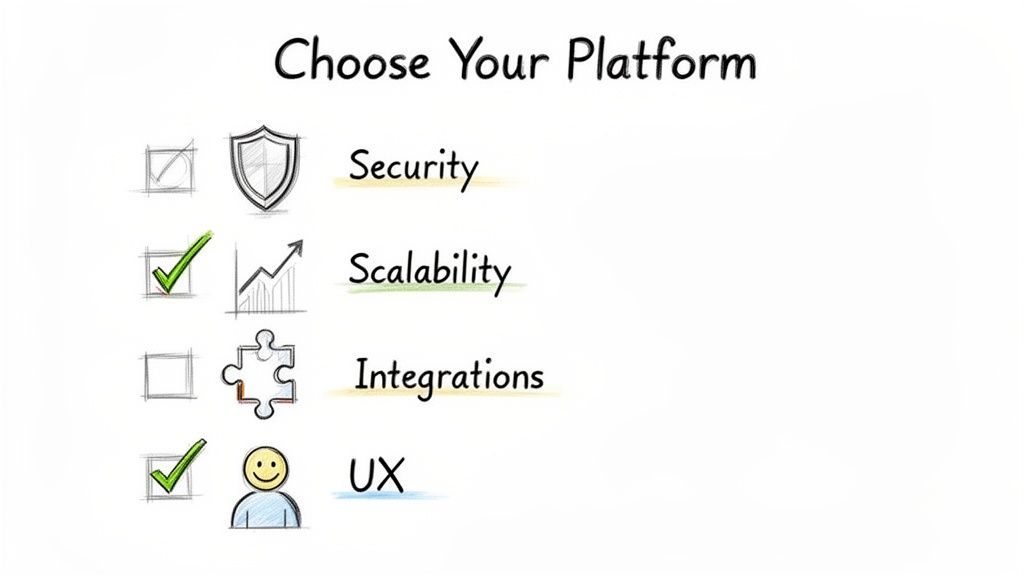
Before you even glance at a feature list, you need to pop the hood and check the platform's technical foundation. These are the absolute non-negotiables that ensure your event runs smoothly, your data is locked down, and the software can grow with you. A failure here can bring your entire event to a screeching halt.
Think of it like checking the foundation of a house before you start admiring the kitchen countertops.
Once you've confirmed the technical basics are solid, it's time to match the software's features to what you actually do day-to-day. This is where you have to be honest about how you'll use the tool. It's easy to get distracted by flashy new features you'll never touch; instead, focus on what solves your biggest, most persistent pain points.
The best software isn't the one with the most features—it's the one with the right features for your event. A simple tool that nails complex ticketing is far more valuable than a bloated platform that does it poorly.
You'll notice a big trend toward cloud-based platforms, and for good reason. They dominate the market because they offer fast setup, can scale up or down as needed, and get updated without you having to do a thing. With the surge in virtual events and the need to cut infrastructure costs, they've become the go-to for both corporations and associations.
When you're evaluating options, look at tools like the Saucial app, which focus heavily on social engagement and building that community feel within an event.
And for a side-by-side look at some of the top players, our detailed event management software comparison guide is a great resource.
A platform can be packed with power, but if your team finds it clunky or your attendees get frustrated, it’s useless. The user experience (UX)—both for your internal admins and your external audience—is a make-or-break factor. A clean, intuitive interface means less training time for your staff and higher engagement from your attendees. It’s a win-win.
Always ask for a full demo or a trial period, and test it from two different angles:
Finally, remember that you're not just buying a piece of software; you're entering into a long-term relationship with the vendor. The quality of their customer support can save your skin when unexpected issues pop up (and they always do). You want a vendor who acts like a true partner—someone who is genuinely invested in your success.
Be sure to ask pointed questions about their support structure:
Choosing a vendor with responsive, knowledgeable support ensures you have an expert in your corner right when you need it most.
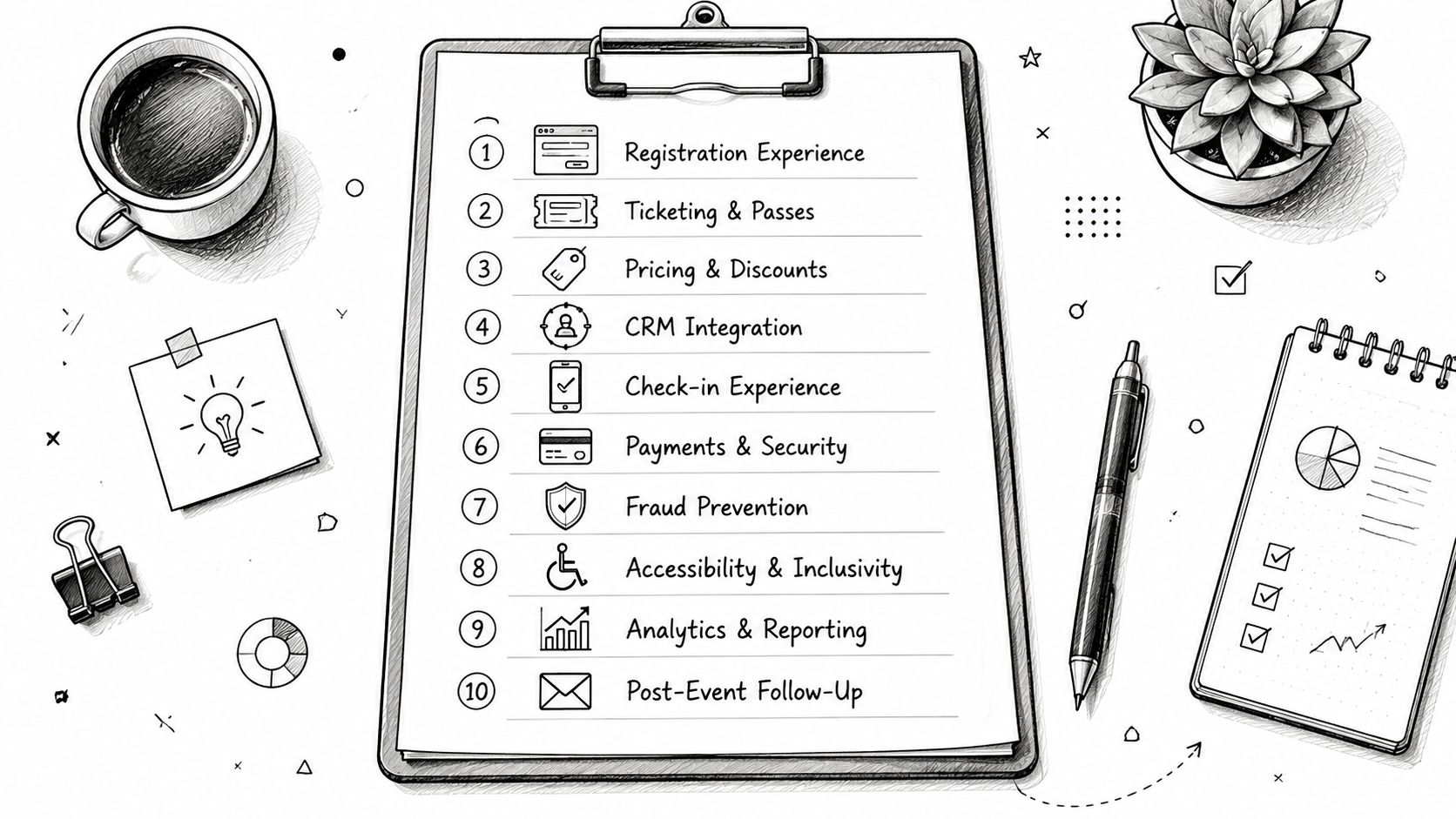
To help you organize your thoughts and compare different platforms apples-to-apples, we've put together a simple checklist.
Use this checklist to systematically compare different online event management software options. It will help you stay focused on what truly matters—the technical foundation, functional fit, and long-term support you'll receive.
By methodically working through this checklist for each vendor you consider, you'll replace guesswork with a clear, data-driven decision that sets your events up for success.
It’s one thing to talk about the features and benefits of online event management software in theory. It's another thing entirely to see how they all click together in a single, smart platform. That's exactly where GroupOS steps in, turning abstract concepts into a practical, all-in-one engine for your community and events. The whole idea is to stop the madness of fragmented tools and inefficiencies that hold so many organizations back.
The philosophy behind GroupOS is actually pretty simple: stop juggling a dozen different apps and subscriptions. Forget using one tool for tickets, another for member DMs, and yet another to host your content. GroupOS brings all of that under one roof, branded just for you. This isn't just for convenience—it creates a smooth, continuous flow of data that gives you incredible insights and a much better experience for your members, attendees, and sponsors.
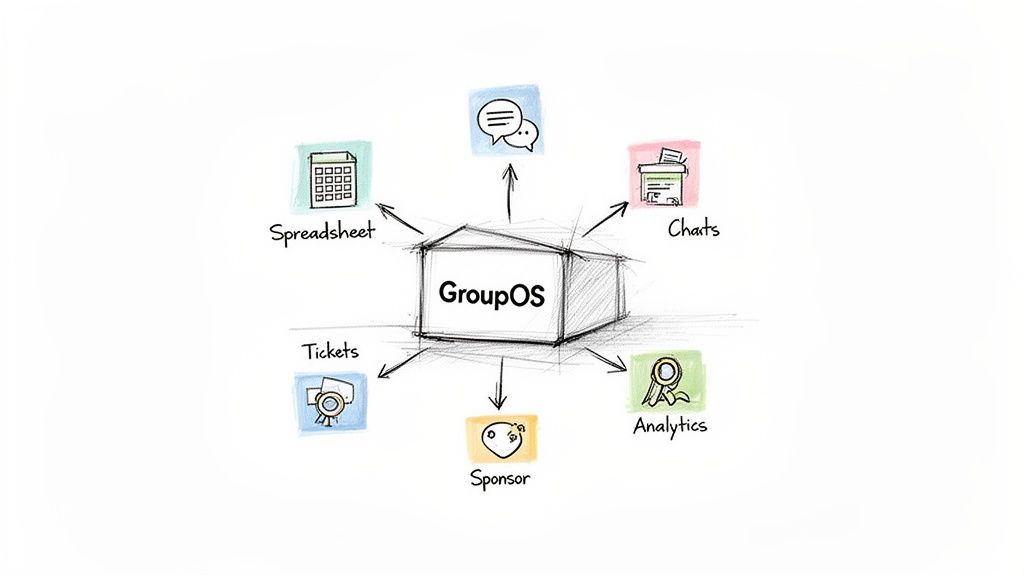
We built GroupOS to be the central nervous system for any professional network, association, or event-driven business. It connects every critical touchpoint, from the moment someone clicks "register" all the way to the final ROI report you present to your board. This tight integration means every piece of data informs your next move, solving the real-world headaches that slow you down.
Take our registration and ticketing system, for instance. It does way more than just sell tickets. It’s smart enough to capture custom data fields, handle complex tiered pricing (think member vs. non-member rates), and send out automated confirmations. Best of all, that information flows right into your membership database, which means no more mind-numbing hours spent on manual data entry. One of our clients calculated that GroupOS cut their administrative workload by over 200 hours a year, freeing up their team to actually focus on strategy.
For any membership-based group, this is a game-changer. GroupOS directly links event participation to member engagement. Imagine automated subscription management, renewal reminders that are triggered by event attendance, and exclusive content access—it all works in concert to boost retention and prove the value of a membership. An event is no longer just a one-off thing; it becomes a cornerstone of the year-round member journey.
Sponsors and exhibitors get a major upgrade, too. They get the tools they need to see a real, tangible return on their investment. Inside GroupOS, they receive dedicated profiles that essentially become digital hubs for their brand.
These profiles let them:
This goes so far beyond just sticking a logo on a webpage. It gives sponsors measurable interactions and qualified leads, making it a no-brainer for them to justify their investment and come back next year.
Let's walk through a real-world scenario. A national professional network needed to run its big annual conference as a hybrid event, serving both in-person and virtual attendees. They were completely stuck on the idea of using separate platforms for each audience, knowing it would create a mess of disconnected data and a clunky experience for everyone.
By moving over to GroupOS, they were able to manage the entire event from start to finish in one system.
GroupOS provided a single source of truth for the entire hybrid conference. This eliminated the need to manually merge data from different systems and gave the organizers a holistic view of attendee behavior, which was invaluable for planning the next year's event.
This example really gets to the heart of what a truly integrated online event management software delivers. It replaces chaos with control, giving you a scalable, branded, and efficient platform that helps your organization grow its community and make a much bigger impact.
Let's be honest—switching to a new software platform can feel like a huge leap. It’s a big decision, and you need to know that your investment will actually make life easier for your team and deliver a better experience for your members.
To help you get there, I've rounded up some of the most common questions that come up when organizations are looking at a modern event management platform. My goal is to give you straight answers, cut through the jargon, and show you what it really means to bring everything under one roof.
The thought of migrating years of member data is enough to give anyone pause, but it’s much smoother than you might imagine. Modern platforms are built to make this process as painless as possible. For instance, a solution like GroupOS doesn't just hand you a tool; they provide dedicated onboarding support to guide you through it.
Think of it as a great opportunity for a spring clean. You can tidy up your existing data before moving it over. A good partner will help you map your old data fields to the new system, ensuring all that valuable history—like who attended which events, their membership status, and how they've engaged in the past—is preserved perfectly.
The entire point is to make a seamless switch without your members ever noticing a thing.
Absolutely. In fact, this is where you'll see the biggest impact. An all-in-one platform is specifically designed to do the job of a half-dozen different tools you're likely paying for right now. Instead of one subscription for ticketing, another for email marketing, a third for your mobile app, and a fourth for a community forum, a single integrated platform bundles them all together.
This move gives you two massive wins. First, you cut down on your monthly software bills. Second, you save an incredible amount of time. Research has found that 89% of businesses using event technology save around 200 hours a year, simply because they aren't juggling multiple, disconnected systems.
But the real magic is in the data. When everything is connected, you get a complete picture of a member's journey—from the first email they opened to the survey they filled out after the event. Those are the kinds of insights you just can't get when your data is scattered everywhere.
Return on investment (ROI) isn't just a number on a spreadsheet; it shows up in a few different ways. When you adopt a unified event platform, you can expect real returns in three key areas.
A powerful online event platform is the backbone of any successful hybrid event. It’s built to bridge the gap between your in-person and virtual audiences, making sure everyone feels like they’re part of the same experience.
The platform becomes the central hub for everything.
And when it's all over, the platform pulls the data from both audiences into a single, unified dashboard. For the first time, you’ll get a complete, insightful picture of how your entire event performed, not just bits and pieces.
Ready to see how an all-in-one platform can change the game for your events and community? GroupOS replaces a dozen fragmented tools with one cohesive, branded solution designed for growth. Book a demo today and discover how you can save time, boost revenue, and create a better experience for everyone.