May 11, 2026

Your association probably already knows why certificates matter. Members want proof of completion they can share with employers, boards want professional development to support retention, and your team wants one system that doesn't force course delivery, event registration, payments, and member communication into five disconnected tools.
That's where most platform roundups fall short. They rank course marketplaces for solo learners, but they don't answer the operational questions associations and event organizers face. Can this platform issue certificates cleanly? Can it connect learning to memberships and paid events? Can staff track engagement without exporting spreadsheets every week? If you're comparing the best online course platforms with certificate features, those are the questions that decide whether a launch works or stalls.
This guide focuses on that practical layer. Some platforms shine because their credentials carry strong outside recognition. Others are better when you need control over branding, member journeys, and non-dues revenue. If you're also comparing broader consumer-facing options, this roundup of UK distance learning options is useful context, but the lens here is different. The priority is helping an organization create, deliver, and certify professional education in a way that fits association operations.
If your team is tired of stitching together a course tool, a community tool, an event platform, a chat app, and a payment system, GroupOS is the platform I'd put at the top of the shortlist.
Unlike marketplace platforms that prioritize discovery for individual learners, GroupOS is built around the organization's brand and operations. That matters for associations because the certificate is rarely the whole product. The actual product is the member experience around it. Registration, learning access, event upsells, sponsor visibility, private discussion, and renewal touchpoints all need to live in one journey.
GroupOS combines course delivery, assessments, progress tracking, memberships, ticketing, sponsorship tools, messaging, and branded web and mobile experiences. For a professional body or conference organizer, that combination is usually more valuable than a giant public course catalog.
GroupOS works best when education is tied to membership, events, or community access. If your certificate program sits inside an annual conference, a paid member hub, a chapter network, or a sponsor-supported learning series, the all-in-one model makes operational sense.
What stands out in practice:
Practical rule: If certificates are part of a member journey, not a standalone product, favor a platform that handles identity, payments, events, and communication together.
The strength of GroupOS is also the trade-off. An all-in-one platform won't always go as deep in a single niche as a highly specialized LMS or CRM. If your association already runs a mature enterprise stack with rigid internal workflows, you'll want to map exactly which system owns member data, course logic, and reporting.
For smaller hobby groups, the platform may feel broader than necessary. But for associations, networks, and event-led communities, that breadth is usually the point. You're replacing fragmentation.
A practical advantage here is monetization. Many education programs fail because the certificate experience is isolated from the revenue model. GroupOS lets organizations combine subscriptions, paid access, events, sponsor visibility, and member communications under one roof, which is how many associations fund professional development.
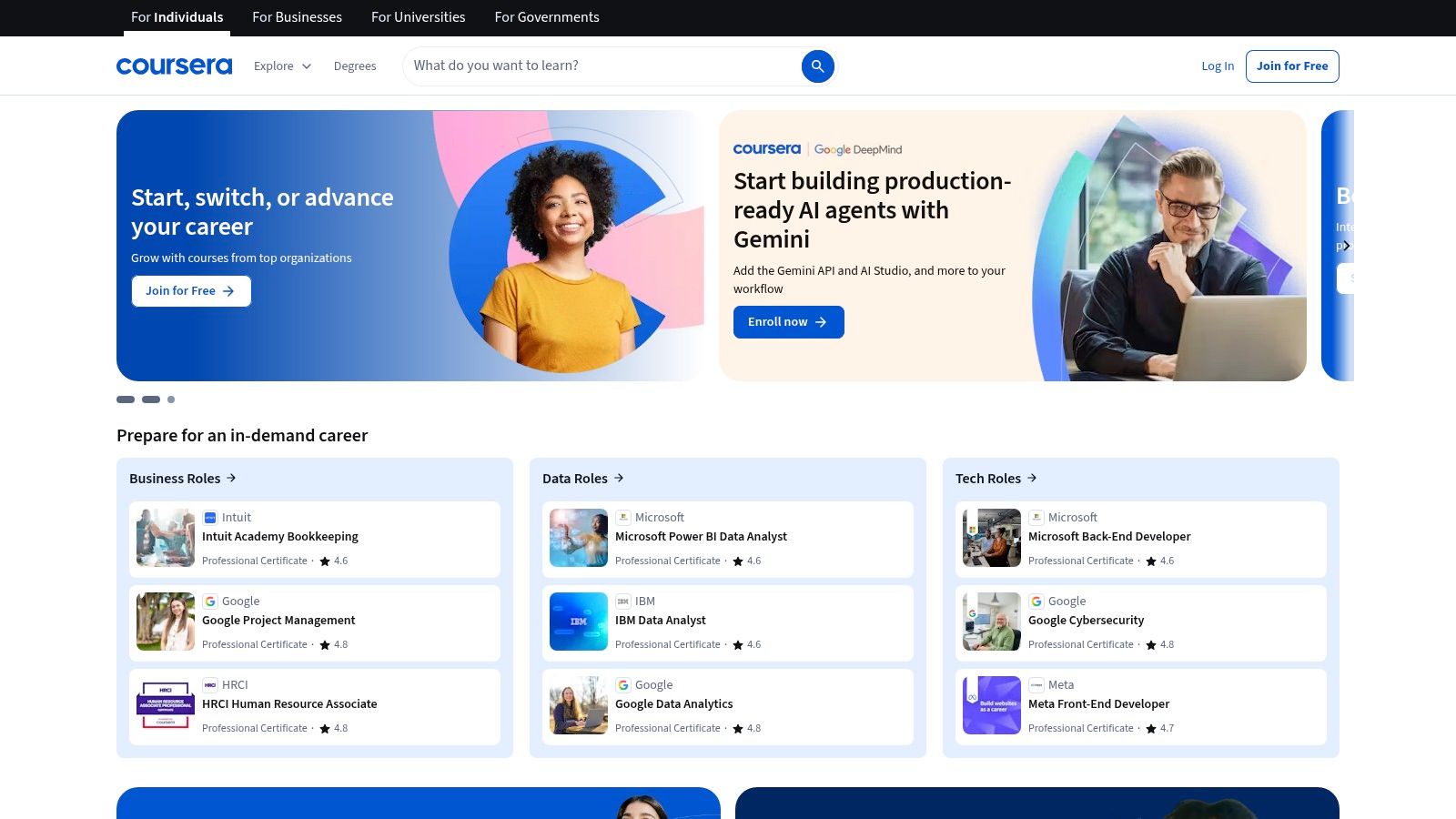
A common association scenario looks like this. The board wants certificate programs that members will recognize immediately, staff needs credible content fast, and the organization does not want to spend a year building a full catalog internally. In that case, Coursera is often one of the first platforms worth evaluating.
Coursera is strongest here when external credential recognition matters more than controlling every part of the member journey. It was founded in 2012 by Stanford professors Andrew Ng and Daphne Koller. By 2013, it had partnered with 196 universities and passed 1 million enrollments in its first year, according to the Inomics market summary. That early university alignment still defines how the platform is perceived.
For associations, the practical value is not just course volume. It is the ability to point members toward certificates that already carry weight with employers, hiring managers, and credential committees. That can shorten time to market for professional development programs, especially in fields where members care as much about outside recognition as they do about the learning experience itself.
Coursera also suits organizations that want to curate education instead of producing everything on their own. Workforce boards, chambers, trade groups, and professional societies can package relevant learning paths around established courses, then use that catalog to support member retention, career advancement, or sponsor-funded workforce initiatives.
A few strengths stand out for this audience:
The trade-off is operational control.
Coursera is not designed to be your association's primary member system. It gives you less room to connect certificates to dues status, conference attendance, chapter activity, sponsor packages, or a broader member communication plan. If your education program depends on tight links between learning, events, and membership records, the handoff between systems matters a lot.
I would treat Coursera as a strong content and credential partner, not as the center of your association infrastructure. It fits best when recognized certificates are the priority and your team can manage the surrounding member experience elsewhere.
Visit Coursera.
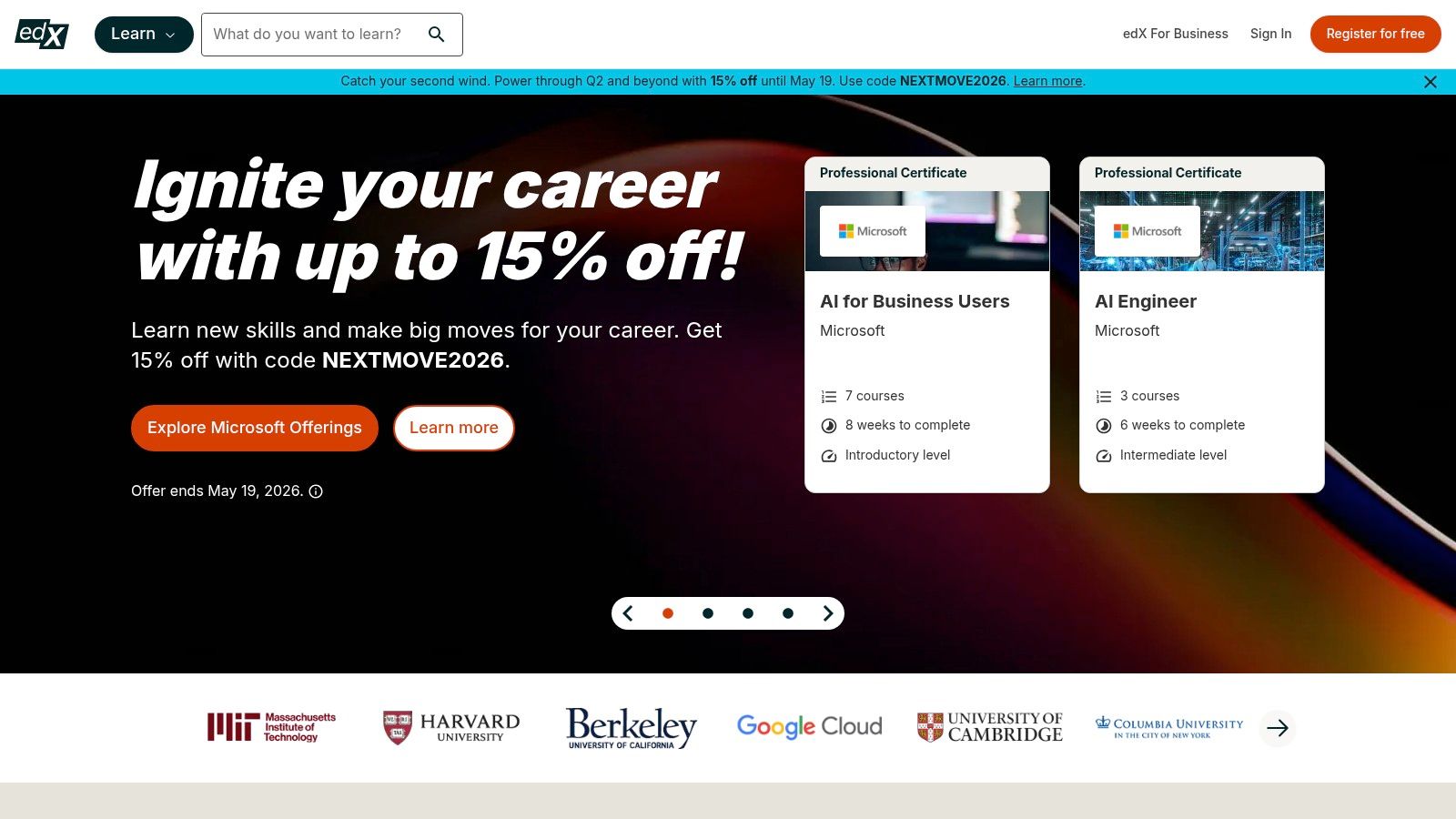
A common association scenario looks like this. The education team wants certificates that carry more weight than a simple course completion PDF, but they also need a structure that can support multi-course professional development, cohort programs, or subject-matter tracks tied to member advancement. That is where edX tends to stand out.
edX fits associations that want a more formal academic presentation for online learning. As noted earlier, its scale and university relationships are well established. In practice, that shows up less in raw catalog size and more in how programs are packaged. Verified certificates, Professional Certificates, MicroBachelors, and MicroMasters give associations a clearer way to point members toward progressive learning rather than isolated classes.
This matters for credential-sensitive fields. Medical societies, engineering groups, research organizations, policy associations, and technical trade bodies often need education that looks credible to employers, boards, and external partners. edX usually presents better in those settings than a broad consumer marketplace.
For association leaders, the main advantages are practical:
The trade-off is ownership and operational flexibility.
If your association needs to connect course completion to membership tiers, annual renewals, chapter participation, conference registration, exhibitor packages, or CE reporting inside one member journey, edX will not solve that by itself. Most organizations still need a separate AMS, LMS, or event platform to manage pricing, access rules, and certificate records at the member level.
I recommend edX when the certificate itself needs to signal rigor. I would not choose it as the center of an association's education infrastructure unless your technical stack already handles membership, events, and monetization elsewhere.
Visit edX.
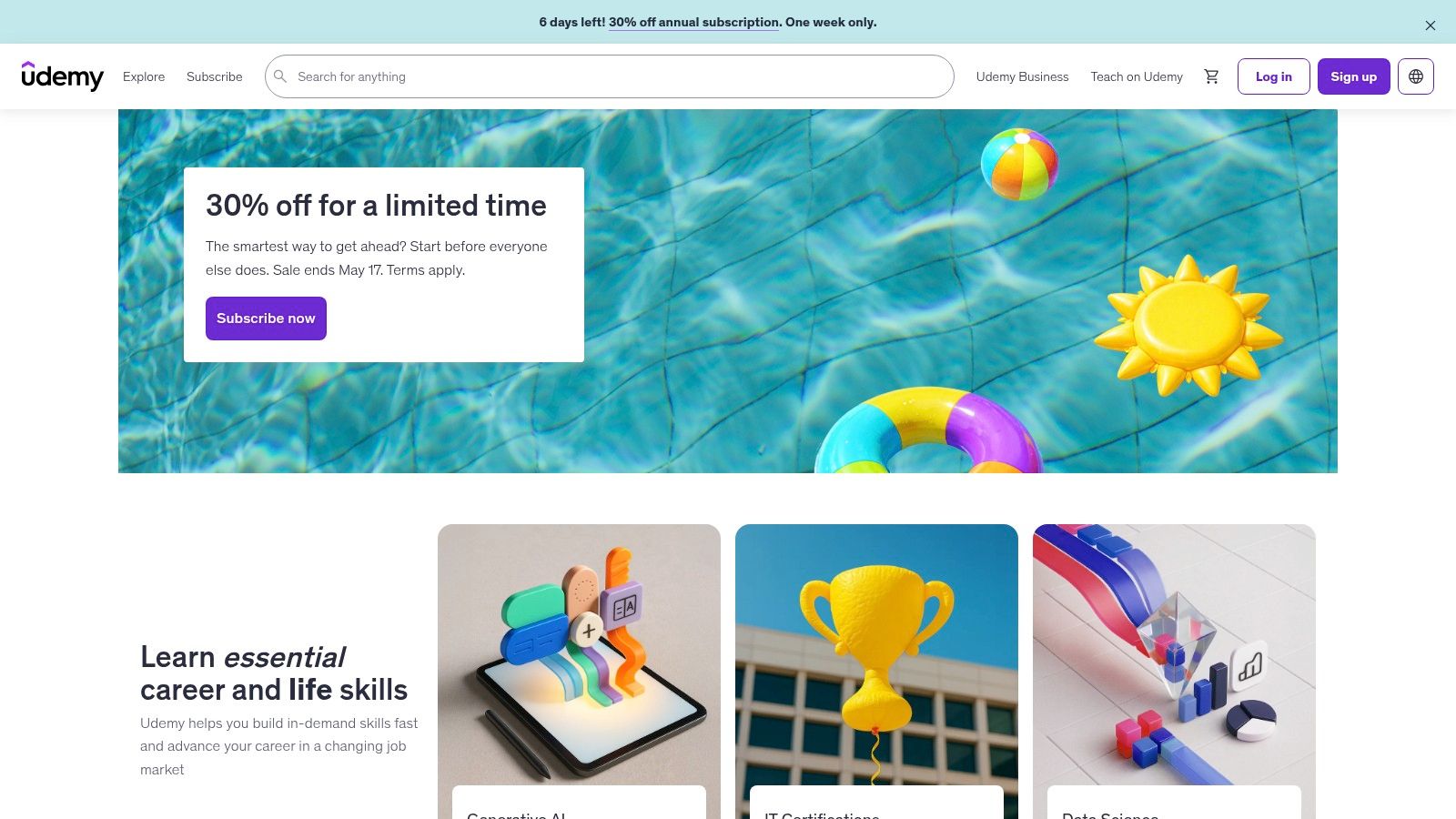
Udemy is the practical choice when your goal is breadth, speed, and low-friction upskilling. It's not the platform I'd use as the core of an association's credential strategy, but it can work well as a supplemental library for targeted skill gaps.
The marketplace model is both the appeal and the risk. You'll find a huge range of topics, and members can usually get to a course quickly. But certificate value depends heavily on the instructor, the course quality, and how your audience views completion certificates.
Udemy is a solid fit for associations that want to give members access to a broad catalog without investing heavily in content production. It's also useful for staff training, chapter leaders, or volunteer onboarding where speed matters more than formal recognition.
Good use cases include:
A Udemy certificate usually proves participation and completion. It doesn't automatically carry the same weight as a university-backed or association-issued credential.
Quality control is the main issue. Because Udemy is a marketplace, courses vary a lot. Associations that care about brand consistency often end up curating a smaller approved list rather than opening the whole catalog.
It also won't give you a branded member experience or the kind of integrated event and membership logic that association teams often need. Use it when you need content range. Don't use it when you need platform control.
Visit Udemy.
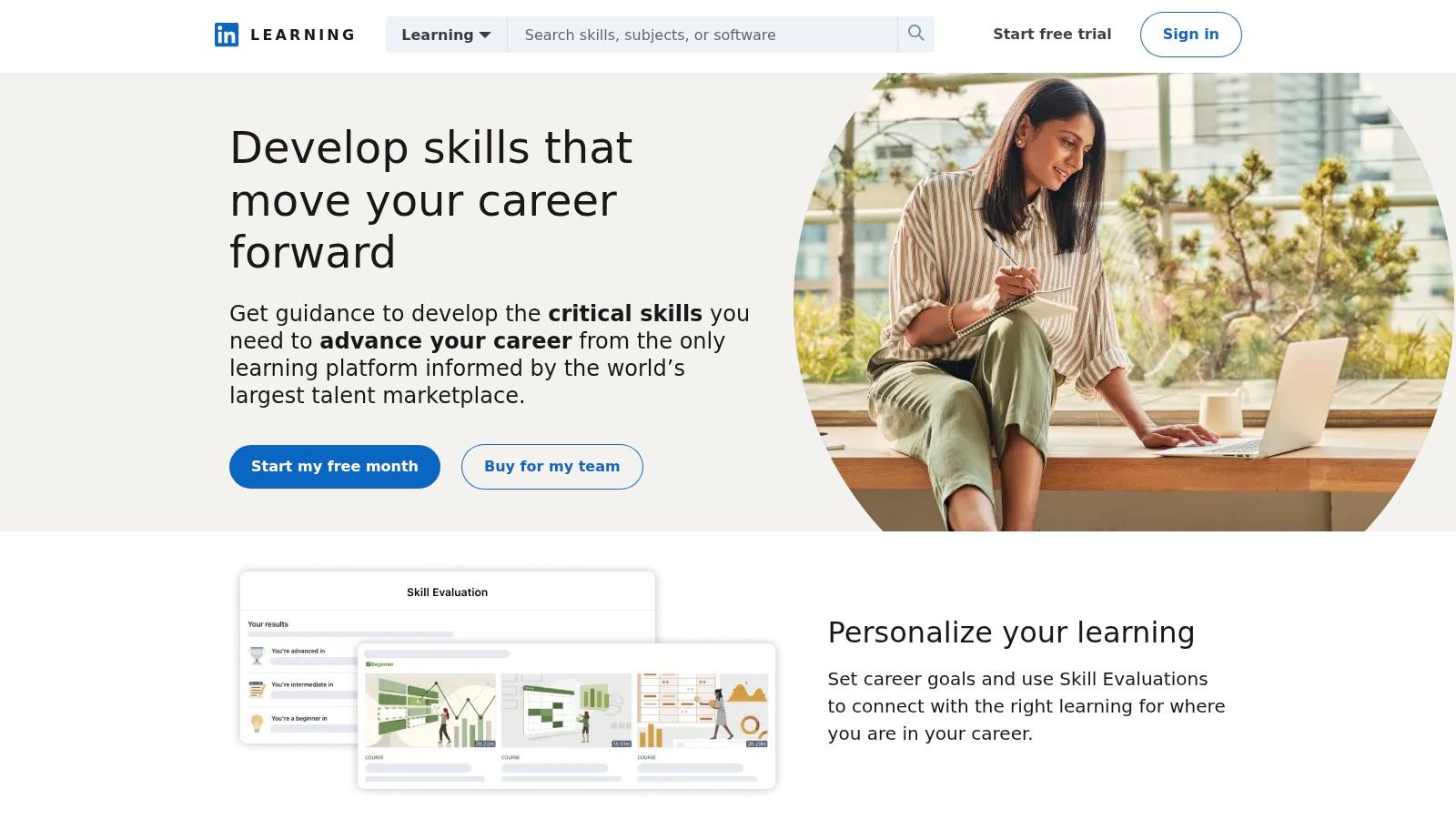
A member finishes a leadership course, adds the certificate to their LinkedIn profile, and an employer sees it the same day. That visibility is LinkedIn Learning's main advantage for associations focused on career growth.
For associations, that creates a different kind of value than a branded learning academy. The platform works well when the goal is to help members build marketable skills and show that progress publicly. It is less useful when the goal is to run your own certification framework, manage CE requirements, or connect learning rules to membership tiers, event attendance, and chapter activity.
LinkedIn Learning fits associations whose member promise is tied closely to employability, promotion, and practical skills development. The catalog is strongest in business, leadership, technology, communication, and software training, which makes it easier to support broad professional development without producing every course internally.
The completion signal also matters. Members already understand LinkedIn as a professional profile system, so adding course completion there feels natural rather than forced.
A few strengths stand out:
LinkedIn Learning is not a strong choice for associations that need control over certificate rules, branded credential design, or integration with membership and event systems. You are using LinkedIn's environment, not building your own. That affects everything from user experience to reporting depth to how closely the learning program reflects your organization's brand.
Monetization is another limitation. If your strategy depends on selling courses, bundling education with member dues, gating premium content by membership type, or tying certificates to conference registration, LinkedIn Learning will feel restrictive. In practice, I'd use it as a member benefit or a supplemental library, not as the foundation of an association academy.
Visit LinkedIn Learning.

Your association wants certificates that feel credible, especially for members who care about university affiliation, formal progression, or international recognition. FutureLearn is one of the few platforms in this list that can support that expectation without feeling purely academic.
Its appeal is straightforward. FutureLearn sits closer to structured continuing education than to an open marketplace of self-paced courses. The university partnerships matter here, particularly for associations in healthcare, education, public service, and professions where members may ask whether a certificate can support further study, career progression, or regulated learning requirements.
FutureLearn works best for associations that want to offer more than attendance certificates or simple completion records. If your members value short courses, microcredentials, transcripts, and a clearer route into formal study, it deserves a serious look.
I would put it on the shortlist for organizations serving internationally distributed members. The brand has stronger recognition outside North America than some association teams expect, and that can help when your audience spans multiple countries and professional systems.
A few platform advantages matter most:
FutureLearn is better as a content and credential partner than as the core system for running an association academy. You will still need your own membership platform, event system, and reporting workflow if you want to connect education with member status, conference attendance, chapter activity, or sponsor packages.
Certificate control is also a practical consideration. Associations that need highly branded certificates, custom award logic, or tight automation tied to dues status and event participation may find the platform less flexible than a purpose-built association learning setup.
Commitment level is the other trade-off. Some programs ask for more time and structure, which improves credibility but can lower completion rates for members who only need fast CE-style learning. For member education teams, that usually means using FutureLearn selectively, for flagship programs, international cohorts, or pathways where the academic signal justifies the extra friction.
Visit FutureLearn.
A common association scenario is a member base asking for proof of real technical capability, not another attendance certificate. Udacity is one of the few platforms in this list that addresses that need directly.
Its Nanodegree model centers on applied technical training, project work, and portfolio evidence. As noted earlier in the article, Udacity has been positioned as a career-oriented option, and that is the right lens for evaluating it. For associations serving data, AI, cloud, software, cybersecurity, or analytics professionals, that practical focus can carry more weight than a generic course completion badge.
Udacity makes the most sense for associations with a defined technical segment and a clear workforce development goal. I would consider it for a skills academy, a sponsor-backed talent initiative, or a premium member pathway where the value comes from reviewed work and role-specific training.
What stands out for association use:
Udacity is not built to run your membership operation. You will still need your association management system, event stack, CRM, and reporting process to connect learning with member tiers, conference registration, chapter activity, or dues status.
Certificate control also needs a close look. If your team wants highly branded certificates, custom issuance rules, or automation tied to member eligibility and event participation, Udacity is more likely to act as a training partner than your central credential engine.
The other practical issue is audience fit. Technical members may value the depth. A broader membership base often will not. That makes Udacity a targeted solution, not the default platform for an association-wide learning library.
Visit Udacity.
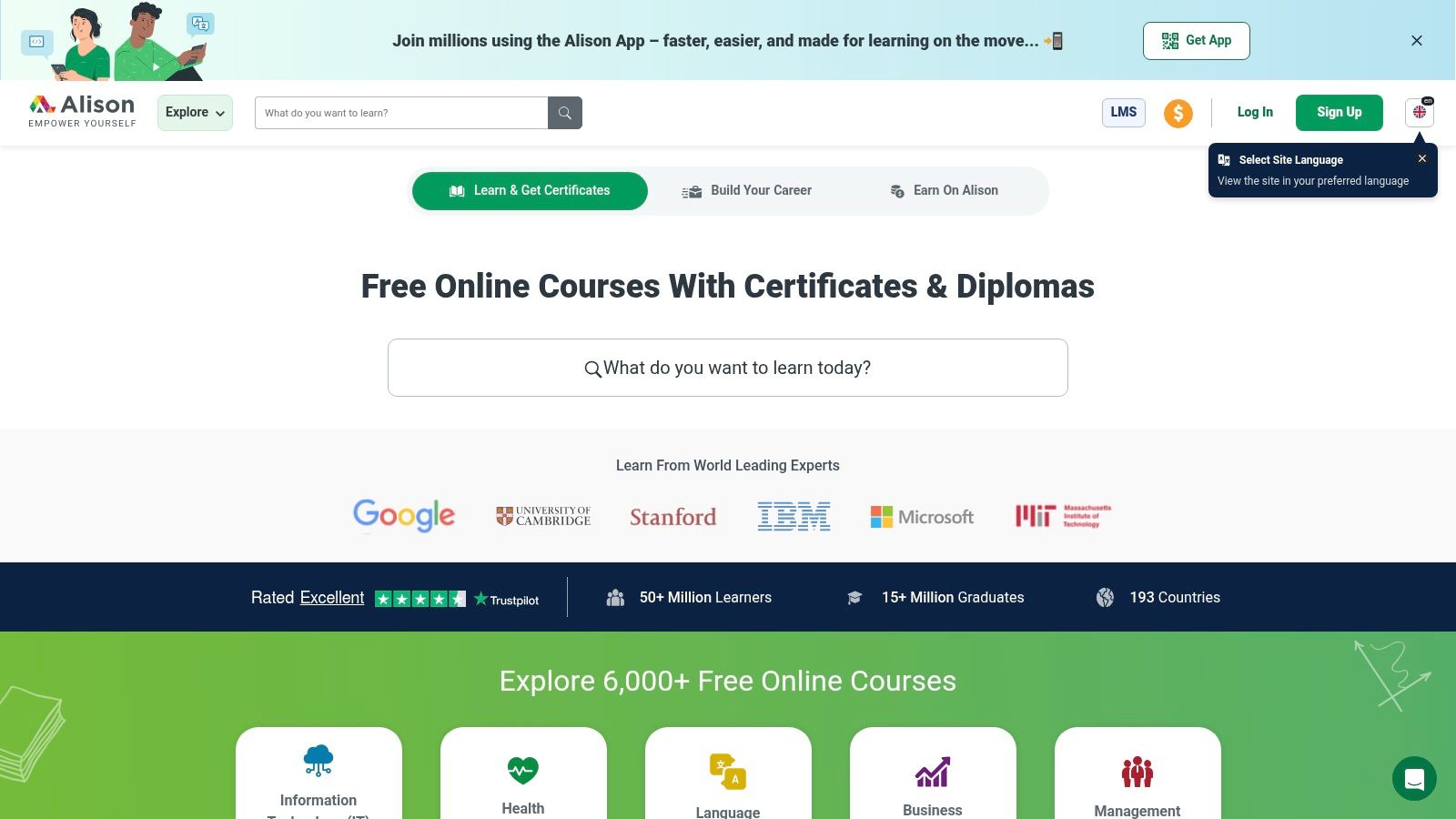
Alison is the budget-conscious option in this list. When an association wants accessible entry-level learning for a broad audience, the free access model is appealing.
That said, this is one of those platforms where you need to separate access from credential value. Free content can help with reach, especially for early-career members or public-facing education. But the role of the certificate needs to be explained clearly so expectations stay realistic.
Alison works well for foundations, outreach programs, student chapters, and associations that want to offer low-barrier learning without heavy production costs. It can also support introductory pathways before members move into your higher-touch programs.
Practical reasons to use it:
Employer recognition will vary by field, and that's the core issue. If your association is promising a high-trust professional credential, Alison is usually too light for the headline offer.
I'd treat Alison as a feeder layer, not the main certification engine. It can widen access, but it won't replace a formal association-issued program or a stronger institutional certificate.
Visit Alison.
Pluralsight is a specialist platform, and that's why it works. For associations serving IT, cybersecurity, software, cloud, and infrastructure professionals, it has a clearer use case than broader consumer learning tools.
The platform issues certificates of completion for eligible courses and pairs them with assessments, labs, and certification prep. For associations that need practical technical development rather than academic pathways, that combination can be more relevant than a university-style course catalog.
Pluralsight is best when members need depth in role-specific tech skills. If your audience wants hands-on labs, cloud training, security content, or prep around vendor-aligned knowledge areas, it can fit neatly into a continuing education portfolio.
The platform is especially useful when your association wants to support practitioner development without building all technical content internally.
Strong fits include:
A Pluralsight completion certificate isn't the same as a vendor certification or an association-owned credential. That distinction matters. Members often understand it, but marketing teams sometimes blur it.
Use Pluralsight when the value is the learning itself and the technical depth behind it. Don't present it as a substitute for your organization's primary certification brand.
Visit Pluralsight.
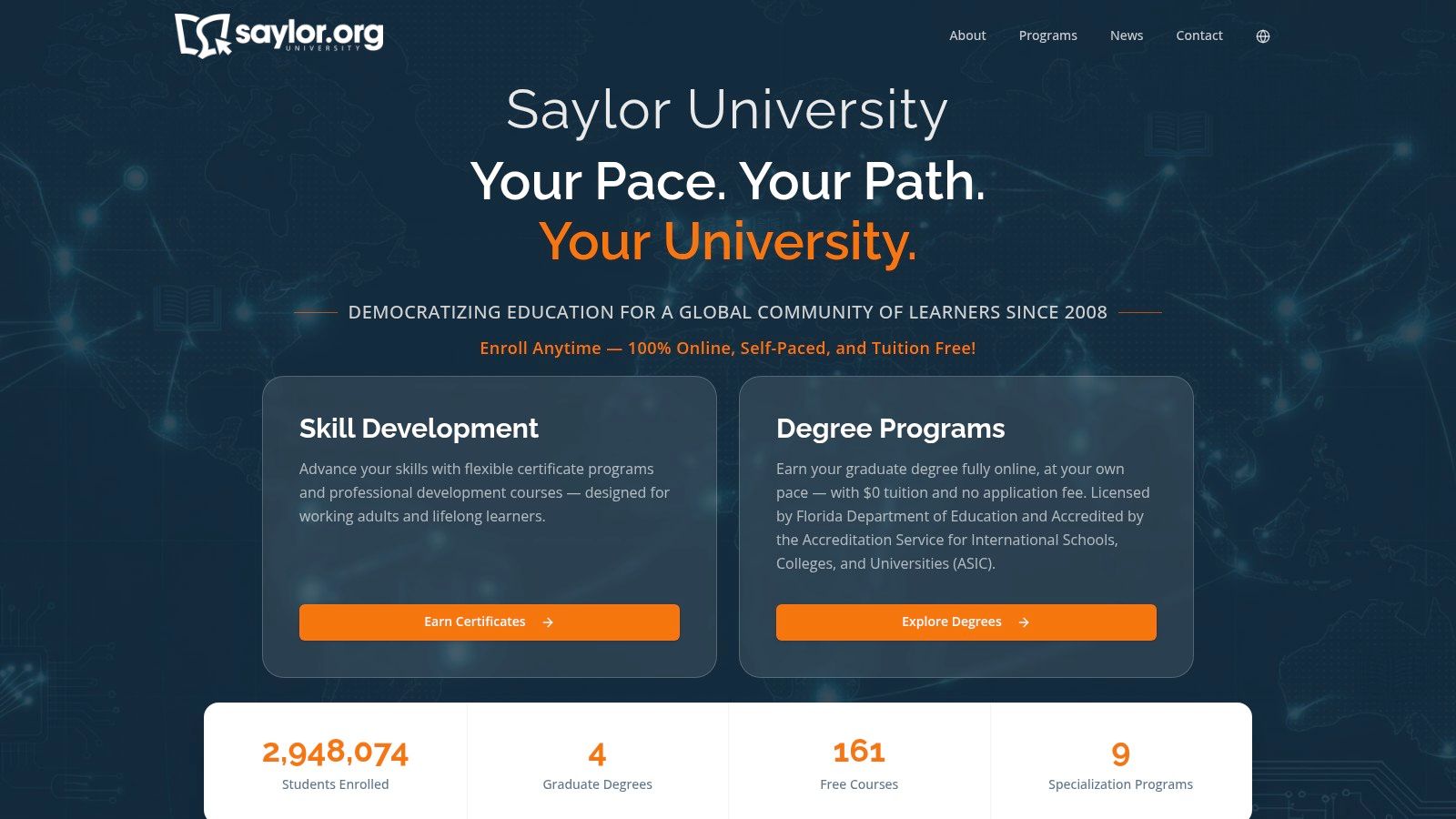
Saylor Academy is the most minimalist option on this list, but it fills a useful niche. If your organization values open access, nonprofit-aligned learning, and basic verifiable completion certificates, it's worth considering.
The platform offers free, self-paced courses and verifiable completion certificates. That makes it attractive for associations serving students, career changers, or members in lower-budget regions where paid learning can become a barrier.
I wouldn't use Saylor Academy as the flagship learning environment for a large association brand. I would use it for accessible education layers, preparatory learning, or bridge content that helps members get ready for more formal programs.
It's best for:
The catalog and production quality are more limited than the major commercial platforms, and that will matter to members who expect modern UX and richer multimedia delivery.
Still, not every association needs a glossy platform for every program. Sometimes the practical answer is a simple, free option that supports baseline learning and keeps the door open for wider participation.
Visit Saylor Academy.
| Product | Core features | UX & quality | Value & pricing | Target audience | Unique selling points |
|---|---|---|---|---|---|
| GroupOS Platform 🏆 | Memberships, ticketing, courses, built‑in messaging, sponsorship & analytics | ★★★★☆, integrated, branded apps | 💰 Flexible plans + free trial & custom setup | 👥 Associations, event organizers, professional networks | ✨ All‑in‑one white‑label platform, QR check‑ins, exhibitor pages |
| Coursera | University courses, Professional Certificates, degrees, projects | ★★★★☆, high credibility & course quality | 💰 Per course/subscription; some programs monthly | 👥 Learners seeking accredited credentials & career certificates | ✨ University & industry partnerships, shareable certificates |
| edX | Verified courses, MicroBachelors/MicroMasters, university courses | ★★★★☆, academic rigor | 💰 Program‑based pricing; varies by credential | 👥 Academic learners & professionals seeking credit pathways | ✨ Stackable credentials that may count for credit |
| Udemy | Marketplace courses across many topics, business plans | ★★★☆☆, variable by instructor | 💰 Low individual prices; frequent discounts | 👥 Self‑learners seeking quick upskilling | ✨ Massive catalog, multilingual content |
| LinkedIn Learning | Role‑based learning paths, certificates, skill assessments | ★★★★☆, curated, professional focus | 💰 Generally via LinkedIn Premium or org plans | 👥 Professionals & job‑seekers wanting profile visibility | ✨ Seamless "Add to profile" and LinkedIn integration |
| FutureLearn | University & industry courses, microcredentials, Unlimited plan | ★★★★☆, structured academic options | 💰 Unlimited subscription or paid microcredentials | 👥 Learners seeking university‑backed microcredentials | ✨ Unlimited access option; UK university partners |
| Udacity | Nanodegree programs, project reviews, career services | ★★★★☆, project‑driven, mentor support | 💰 Higher‑cost Nanodegrees (subscription/bundles) | 👥 Career changers in tech (AI/data/cloud) | ✨ Hands‑on projects + personalized career coaching |
| Alison | Free courses, CPD‑approved options, paid certificates | ★★★☆☆, basic platform, ad‑supported | 💰 Free learning; low cost for certificates/Premium | 👥 Budget learners and entry‑level upskillers | ✨ Truly free access with affordable certs |
| Pluralsight | Tech courses, skill assessments, hands‑on labs | ★★★★☆, deep tech focus for practitioners | 💰 Subscription plans; enterprise bundles | 👥 Developers, IT/cloud/security professionals | ✨ Skill IQ, labs, certification prep (A Cloud Guru bundle) |
| Saylor Academy | Free self‑paced courses, verifiable certificates, ACE options | ★★★☆☆, no‑cost, modest polish | 💰 Free content; low‑cost proctored credit exams | 👥 Cost‑conscious learners and credit seekers | ✨ Free verifiable certificates and ACE credit pathways |
A common association scenario looks like this. Members register for a webinar in one system, complete a course in another, download a certificate from a third tool, and then email staff when their credits do not appear in the member record. That setup creates support work, weakens the member experience, and makes it harder to turn education into reliable non-dues revenue.
Platform selection should start with the business model, not the course catalog. Associations and event organizers usually need more than video hosting and quizzes. They need certificate rules, payment flows, event tie-ins, sponsor options, member pricing, and records that connect back to the CRM or AMS.
Start with three decisions.
First, define what the certificate represents. Attendance certificates are easy to issue but carry limited value. Assessment-based certificates require stronger quiz design, completion rules, and audit trails. If the certificate feeds a larger credential or recertification program, the platform must support expiration dates, credit tracking, and clean reporting.
Second, map the full learner path from discovery to renewal. A member should be able to find the course, register, pay, complete the content, receive the certificate, and continue into the next offer without jumping across disconnected tools. Every extra handoff lowers completion rates and increases staff intervention.
Third, decide who owns the learner relationship. Marketplace platforms can help if your goal is broad reach or third-party brand recognition. They are less useful when the association needs direct access to learner data, branded certificate issuance, member-only pricing, and follow-up offers tied to chapters, conferences, or sponsorships.
A pilot works better than a full rollout. Start with one certificate program, one member segment, and one internal owner for operations. I usually recommend choosing a cohort that already engages with webinars, annual meetings, or committee education, because their behavior exposes where the workflow breaks. You will learn more from one live launch than from weeks of feature comparisons.
As noted earlier, demand for certificate-based learning remains strong. For associations, the practical question is not whether members value certificates. It is whether the organization can deliver them in a way that is credible, easy to administer, and connected to revenue and retention goals.
A simple selection framework helps:
One more implementation point matters. A certificate has limited value if members do not understand what it proves, how they earn it, and where it appears after completion. Clear rules, visible progress, and dependable recordkeeping matter as much as course quality.
If your organization is also weighing broader educational pathways for internationally mobile learners, this guide to German study paths in Hong Kong adds a useful perspective on how learners compare format, flexibility, and outcomes.
If you want one platform to run member education, certificates, events, messaging, and monetization in a single branded system, GroupOS is the most practical place to start. It's especially well suited to associations, event organizers, and professional networks that need learning to strengthen community and revenue, not sit in a silo.