June 20, 2026

Your association hits a milestone, and the first planning call usually splits in two directions. One group wants a gala, livestream, or giveaway. The other wants to tie the moment to renewals, referrals, sponsor visibility, and member reactivation. The strongest milestone celebration ideas do both.
A milestone should produce a result, not just a memory.
A 10-year anniversary, a membership threshold, or a standout certification cycle already carries meaning for your members. People read those moments as proof of stability, progress, and shared identity. That is why organizations borrow celebration cues from birthdays, anniversaries, and recognition programs, and why broad consumer event ideas can still spark creative direction, as shown in these milestone birthday party ideas. Associations, though, need more than inspiration. They need a structure that connects recognition to community growth.
In practice, that means deciding what the milestone is supposed to accomplish before you choose the format. A member anniversary campaign might aim to improve retention and profile completion. A foundation-day event might focus on sponsor packages, press coverage, and dormant-member reactivation. A credential milestone might work best as a content engine that feeds spotlights, referral prompts, and new member onboarding. The format should follow the goal.
The strongest campaigns also run in phases. A useful model is a countdown period, a main celebration, and a follow-up window that turns attention into action, as outlined in this progressive milestone campaign approach. That sequence matters operationally. It gives your team time to collect member stories, set up automations in GroupOS, tag honorees, assign KPIs, and measure whether the celebration changed behavior.
The ideas below are built for associations, member communities, and professional networks that need a working playbook. Each one is framed around implementation steps, trade-offs, budget range, success metrics, and ways to run it through your community platform instead of managing the whole campaign across disconnected tools.
A virtual awards ceremony works best when your members are spread across chapters, time zones, or career stages. It gives you a way to celebrate certifications, promotions, chapter leaders, long-term volunteers, and standout contributors without forcing everyone into a ballroom on the same night.
Start by pulling a clean honoree list from member profiles. Segment by recognition type, then build the run of show so the categories alternate between prestige and warmth. For example, pair a formal credential award with a “member who helped others most visibly this year” segment. That pacing keeps the stream from feeling like a compliance exercise.
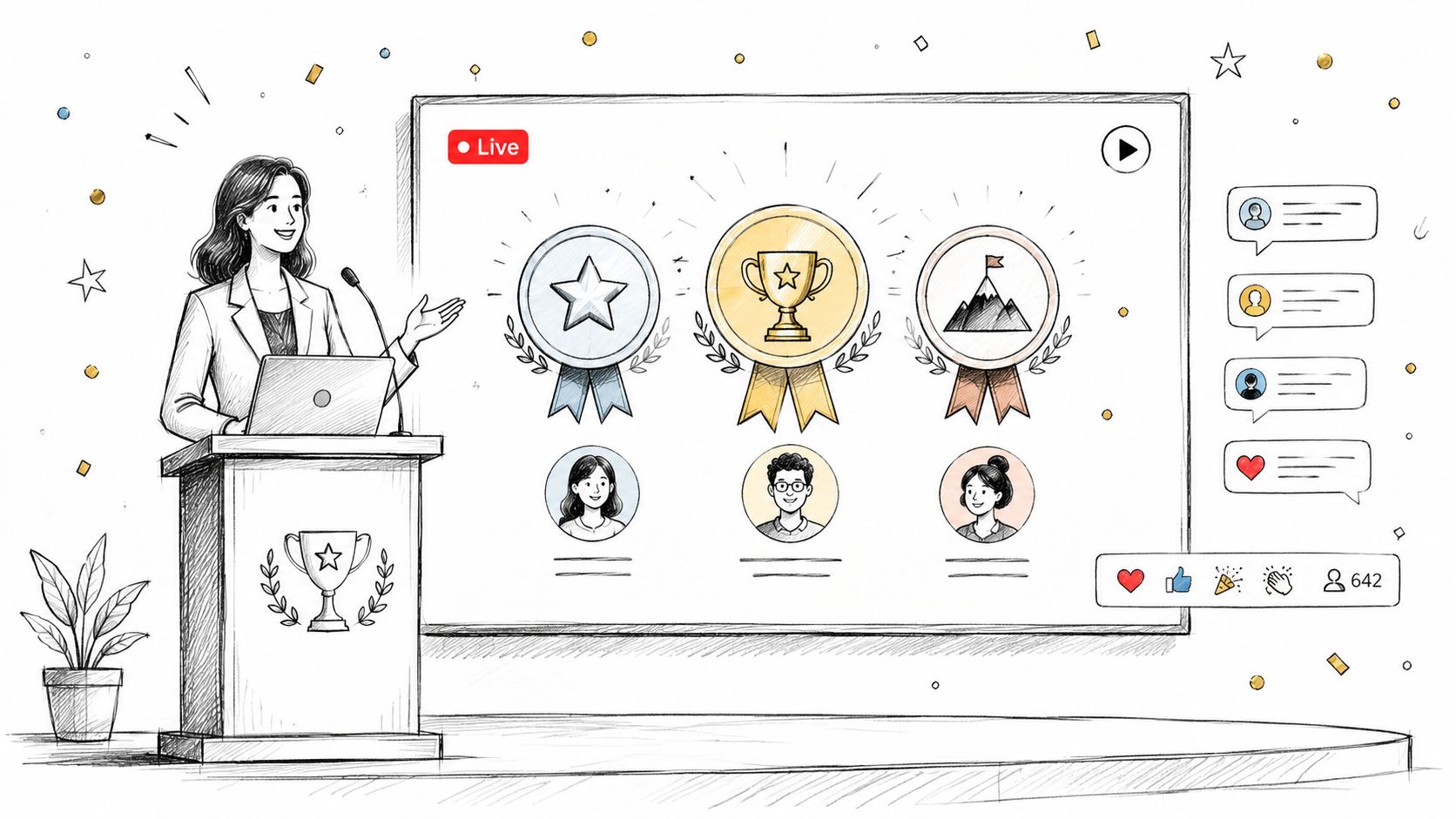
The weak version is a string of names read over slides. The better version has submitted photos, short member clips, sponsor shout-outs placed carefully between awards, and a host who can move between recognition and community narrative.
Use your platform to:
A practical KPI set is simple. Track registrations, live attendance, replay views, honoree participation, sponsor mentions delivered, and how many featured members share the recording afterward.
Practical rule: If a virtual ceremony doesn't generate reusable content, you built a live stream, not a milestone asset.
A short teaser video helps build anticipation before the event.
Members love status when it's tied to real recognition. They ignore it when it feels arbitrary. That's why anniversary-based tier upgrades work. They convert tenure into visible belonging.
Think about how professional bodies use titles like Fellow or Master Fellow. Your association can do the same at a smaller scale. A member who's stayed active for years shouldn't receive the same generic renewal email as someone who joined last week.
Use a mix of tenure, engagement, and contribution. A clean structure might include anniversary-triggered perks, access to private channels, priority registration, or a profile badge that signals long-term commitment.
The rollout should feel ceremonial, not automated, even if the backend is automated. Send a personal message, update the profile badge immediately, and place new tier members in a dedicated networking space. If your annual conference has in-person components, add QR-based VIP check-in for upgraded members so the recognition carries into the physical experience.
A few useful KPIs:
For many associations, this is less about perks than retention design. Public and meaningful recognition is one of the most reliable ways to make loyalty visible, and if you want to tighten that system, these membership retention strategies are a good companion framework.
What doesn't work is creating too many tiers too fast. Members won't remember the difference between six levels with vague names. Keep the ladder short and the distinction obvious.
Some milestone celebration ideas don't need a stage. They need a publishing rhythm. A spotlight series is one of the most durable ways to celebrate members because it keeps the milestone alive long after the anniversary month ends.
HubSpot's customer stories and LinkedIn's thought-leader features work because they turn individual wins into proof of community value. Associations can do the same with member promotions, business launches, credential completions, published research, and mentorship stories.
Start with a nomination form. Let staff nominate, let members self-submit, and let chapter leaders flag people who are doing meaningful work behind the scenes. Then rotate formats. One week can be a written profile. Another can be a live interview. Another can be a short image-based story for email and social.
Your best channels are usually:
The KPI mix here should include open rates, story page views, comments, shares by the featured member, and downstream actions like profile visits or event registrations.
The spotlight should celebrate the member and also answer a prospect's silent question: “What happens if I join this association?”
If you want these stories to do more than fill a newsletter slot, connect them to a broader engagement plan. This guide to member engagement strategies is useful because it treats content as participation infrastructure, not decoration.
What fails most often is sameness. If every spotlight uses the same questions and the same executive-type member, the series starts signaling hierarchy instead of community.
The anniversary gala works best when the organization needs one visible moment that members, sponsors, alumni, and local partners can all rally around. Used well, it does more than celebrate history. It creates sponsor inventory, gives leadership a stage for a forward-looking announcement, and produces content your team can reuse for months.
Budget discipline matters here. A 2026 roundup reports average spend of $314 for kids' birthday parties and $1,185 for adult milestone celebrations in the United States, while more than 70% of parents host at home to control costs (birthday and milestone spending roundup). Associations feel a similar squeeze. The primary decision is not whether to host an anniversary event. It is how much of the annual engagement budget one night should consume.
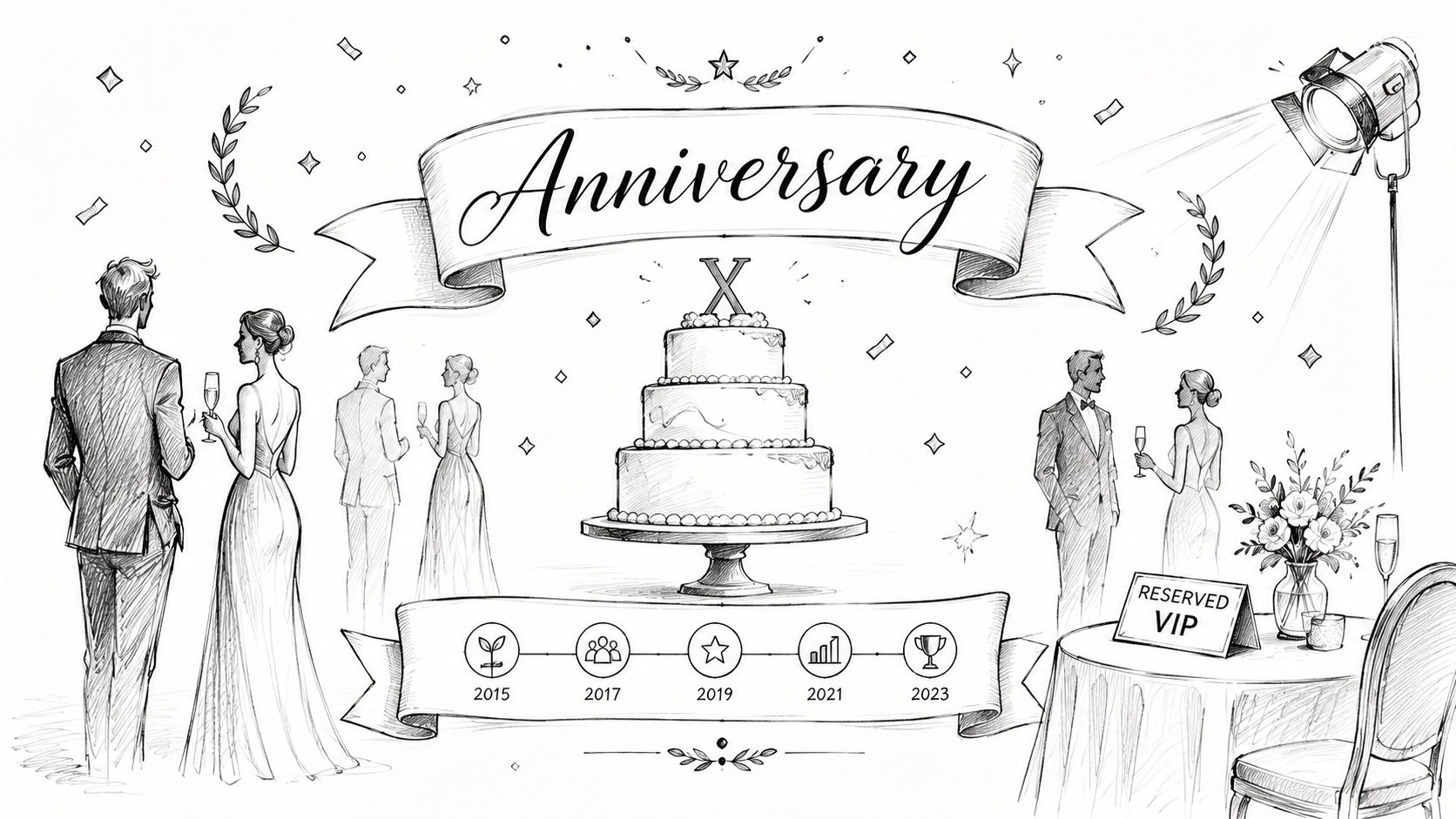
For large-scale anniversaries, the strongest format usually has four parts: arrival and networking, a tightly produced recognition segment, one future-facing announcement, and a post-event distribution plan. That last piece decides whether the gala becomes a memory or a membership asset.
A 50th anniversary for a trade association might announce a scholarship fund. A chamber could use the program to launch a regional leadership initiative. A professional society might tie the event to a new member resource center. Each option gives attendees a reason to stay involved after the photo gallery goes live.
Implementation should stay practical:
On the platform side, GroupOS or a similar system should handle registration, payment, reminder emails, QR check-in, and the post-event content hub in one workflow. If your team is comparing systems, these corporate event solutions for anniversary programs are a useful reference point.
Track the gala like a campaign, not just an event. Watch ticket sales by tier, sponsor package sell-through, attendance rate, check-in completion, survey response rate, photo-gallery views, replay engagement, and whether attendees take the next step you announced on stage. That KPI mix tells you if the gala strengthened the community or whether it was only a nice evening.
Sometimes the best celebration is access. Members who've reached a meaningful point in their career or relationship with your organization often want peer quality more than public applause.
That's where milestone-based networking circles come in. Think of them as curated groups for members who share a level of experience, contribution, or leadership trajectory. A chamber might create a founders circle. A trade association might create a credentialed leaders roundtable. A women-in-industry community might launch a senior leadership forum.
The circle needs a reason to exist beyond prestige. Define entry through tenure, role, certification status, board service, mentoring history, or chapter leadership. Then assign a facilitator. Without a host, private circles tend to go silent after the first burst of excitement.
A strong launch usually includes:
Your KPIs are less flashy here. Look at attendance consistency, discussion participation, introductions made, and whether circle members become speakers, mentors, or donors later.
What doesn't work is making the circle feel like a velvet rope with no substance behind it. If you grant entry but don't facilitate meaningful exchange, members interpret it as branding fluff.
In professional associations, credentials are already milestone markers. You don't need to invent a celebratory structure from scratch. You need to operationalize the one your members already value.
Medical boards, legal associations, and tech credential ecosystems all rely on visible qualification signals. When a member earns a credential, renews one, or completes a multi-stage professional pathway, that's a moment to recognize publicly and make searchable inside the community.
Create profile fields for credential type, issuing organization, and expiration timeline. Let members upload verification or link to an outside registry if your process allows it. Then connect the achievement to a badge, a directory filter, and a short congratulatory announcement.
This works especially well when employers, recruiters, or peers can find credentialed members through the community directory or member map. Recognition becomes practical, not symbolic.
Useful KPIs include:
A credential badge only matters if other members can see it and understand what it signifies.
One common mistake is announcing every credential in the same way. High-effort designations deserve stronger treatment, such as a spotlight feature or a dedicated networking event, while smaller completions may fit better in a digest or community feed.
Associations often over-celebrate visible success and under-celebrate labor. That's a mistake. The members who mentor, review applications, volunteer at events, serve on committees, and answer questions in forums hold the community together.
A contribution recognition program fixes that by tracking service in a structured way and then rewarding it consistently. This can include mentoring, speaking, chapter leadership, content creation, volunteer shifts, or advisory work.
Start with clear contribution categories and staff-owned tracking. If you leave contribution logging entirely to members, your data will skew toward the most self-promotional people. Give each member tags such as Mentor, Speaker, Committee Member, or Content Contributor, then decide which benefits align with each level.
Effective benefits usually include profile recognition, first access to leadership opportunities, invitation-only networking, speaker preference, and public thanks during major community moments.
KPIs worth watching:
Current guidance on milestone recognition often leans toward gifts, swag, or event-heavy formats. It leaves a real gap for organizations that need low-budget, low-waste options. Memory walls, time capsules, volunteer legacy projects, and thank-you experiences often create more meaning than expensive production, especially for distributed communities (business milestone recognition ideas and tradeoffs).
For a broader recognition lens, this roundup of effective employee recognition strategies can help spark reward formats, even if you adapt them for members rather than staff.
Growth deserves recognition too. If a member consistently brings in peers, sponsors a chapter push, or acts as an ambassador for your association, that contribution should be visible.
Referral celebration works best when it feels like advocacy, not hard selling. In associations, people refer because they trust the mission or because membership has helped them professionally. Your system should make that sharing easy and then celebrate it in a way that matches your culture.
Give each member a shareable referral link tied to their profile. Provide a simple ambassador kit with message templates, chapter-specific language, event invites, and social graphics. Then recognize milestones in public, not just through private credit.
Useful recognition formats include:
Keep the KPIs grounded. Watch referred applications, referral-to-member conversion, ambassador participation, and whether new members brought in by ambassadors stay active after onboarding.
What usually backfires is over-incentivizing with a purely transactional reward. The moment a referral campaign feels like affiliate marketing, trust drops. For inspiration around recognition formats tied to tenure and appreciation, these 10-year work anniversary gift ideas are useful as a creative prompt, even if your final rewards are digital or experience-based.
Long-term sponsors and exhibitors shouldn't hear from you only at renewal time. If a partner has supported your annual meeting, directory, webinar series, or member hub for years, mark that relationship as a milestone in its own right.
Associations that do this well borrow from donor stewardship and B2B account management. They create visible anniversary moments, stronger speaking opportunities, partner spotlights, and advisory roles that deepen the relationship beyond invoice exchange.
Create a recognition ladder tied to partnership duration. A first-year sponsor might get standard visibility. A longer-term sponsor might earn an anniversary spotlight, premium digital placement, or a “founding partner” designation if appropriate to your history.
Use the moment to gather insight too. An advisory roundtable with milestone sponsors often surfaces practical feedback about event packaging, audience targeting, and lead quality that your team won't get from a standard survey.
Your KPI mix might include sponsor renewal intent, usage of included benefits, lead engagement with sponsor profiles, and participation in partner-only touchpoints.
If you need a stronger framework for packaging these activations, this guide to sponsorship in events is a useful reference point.
A common mistake is over-promising anniversary benefits without operational support. If your team can't deliver custom assets, partner interviews, ad placement changes, and event mentions smoothly, simplify the package before you sell it.
Some milestones should be earned in public. Gamified challenges work well when you want to celebrate engagement itself, not just tenure or status.
Duolingo, Fitbit, Stack Overflow, and LinkedIn Learning all use progress signals because people respond to visible advancement. Associations can apply the same logic to event attendance, discussion participation, course completion, chapter involvement, or volunteer actions.
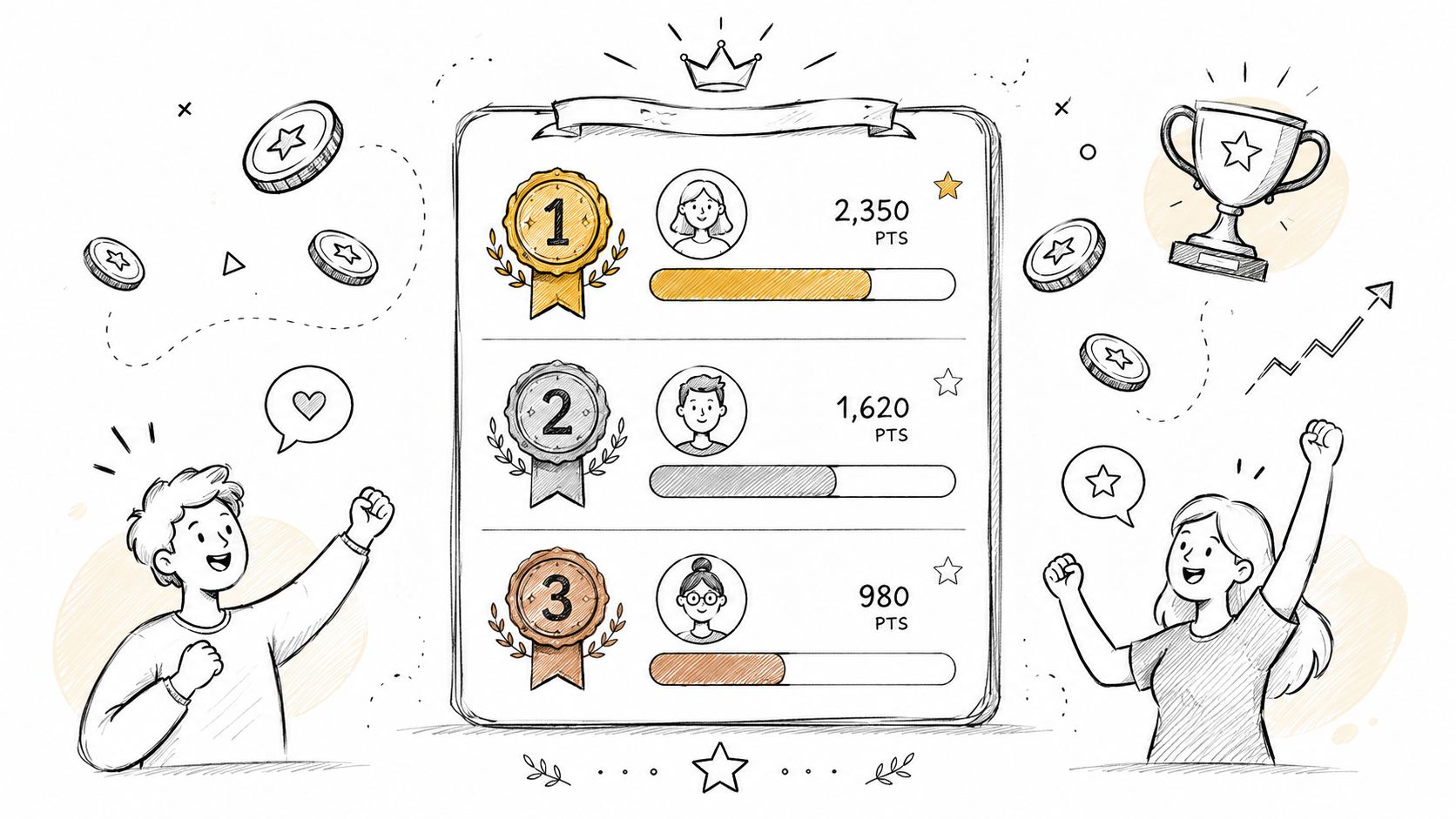
The fastest way to kill a gamification campaign is to make the milestones too far away or the scoring too opaque. Members need to understand how to participate within seconds.
A good model is tiered activity recognition with badges, leaderboard updates, and rotating rewards like discounted registration, early access, or exclusive content. Tie each challenge to your organization's calendar. A conference ramp-up challenge should reward prep behaviors. A summer challenge might reward chapter participation or course completion.
Track:
Don't gamify what members already do automatically. Gamify the actions you want to become habitual.
What doesn't work is awarding points without social meaning. Members care about badges when those badges show up on profiles, event cards, and leaderboards where peers can see them.
| Initiative | Complexity 🔄 | Resources ⚡ | Expected outcomes 📊 | Ideal use cases 💡 | Key advantages ⭐ |
|---|---|---|---|---|---|
| Virtual Member Achievement Awards Ceremony | High 🔄 (live streaming, rehearsal, timezone coordination) | High ⚡ (AV, production, hosts, tech support) | Boosts engagement, creates shareable recognition content 📊 | Public recognition moments, sponsor activation, annual/quarterly milestones 💡 | High visibility and member prestige ⭐ |
| Anniversary Milestone Membership Tier Upgrades | Medium 🔄 (automation, clear policy and communications) | Moderate ⚡ (billing, tier benefits, CRM) | Increases retention and predictable subscription revenue 📊 | Membership organizations seeking upsell and loyalty programs 💡 | Predictable revenue and clear progression paths ⭐ |
| Member Spotlights and Success Story Series | Medium 🔄 (interviews, editing, scheduling) | Low–Moderate ⚡ (content team, editing tools) | Generates UGC, social proof, higher featured member engagement 📊 | Ongoing storytelling, recruitment, marketing through member voices 💡 | Cost-effective content that builds credibility ⭐ |
| Organization Foundation Day / Anniversary Gala Event | Very high 🔄 (venue, logistics, ticketing, large coordination) | Very high ⚡ (budget, vendors, staff, marketing) | Major community bonding, sponsorship revenue, media coverage 📊 | Large-scale anniversaries, fundraising, brand moments 💡 | Powerful brand moment and significant sponsorship ROI ⭐ |
| Milestone-Based Exclusive Networking Circles | Medium 🔄 (curation, moderation, cohort management) | Moderate ⚡ (community managers, curated events) | Deeper member retention and high-value connections 📊 | Executive cohorts, leadership development, peer mentoring groups 💡 | Strong peer networking and loyalty building ⭐ |
| Certification and Credential Milestone Celebrations | Medium 🔄 (verification processes, registry maintenance) | Moderate ⚡ (badge system, verification tools) | Increases member marketability and community trust 📊 | Professional associations and credential-driven communities 💡 | Builds credibility, recruitment value, and searchable talent pools ⭐ |
| Contribution and Leadership Milestone Recognition Program | Medium 🔄 (contribution tracking, threshold management) | Low–Moderate ⚡ (analytics, tagging, recognition events) | Mobilizes volunteers and creates leadership pipeline 📊 | Nonprofits, volunteer-driven communities, committees 💡 | Encourages volunteering and supports succession planning ⭐ |
| Member Referral and Network Growth Celebration | Medium 🔄 (tracking, attribution, clear terms) | Low–Moderate ⚡ (referral tech, rewards, communications) | Scalable acquisition channel; higher LTV for referred members 📊 | Growth-focused communities, SaaS, member ambassador programs 💡 | Cost-effective member acquisition and ambassador culture ⭐ |
| Sponsor and Exhibitor Partnership Milestone Celebrations | Medium 🔄 (tier management, ROI reporting) | Moderate–High ⚡ (account management, analytics, sponsor packages) | Improves sponsor retention and lifetime value 📊 | Events, conferences, organizations reliant on sponsorship revenue 💡 | Increases sponsor loyalty and predictable revenue streams ⭐ |
| Community Engagement Milestone Gamification Challenges | Medium 🔄 (game design, ongoing management) | Moderate ⚡ (platform features, design resources) | Drives participation (typ. +25–35%) and continuous engagement data 📊 | Driving activity across broad member bases and learning programs 💡 | Sustained engagement, visible progress, measurable outcomes ⭐ |
A milestone campaign usually peaks too early. The event goes well, photos get posted, attendance looks strong for a week, and then the community falls back into its old participation pattern. That result is common when the celebration is treated as an endpoint instead of an operating plan.
Milestones produce better results when each one is tied to a specific community goal. A gala can reinforce brand trust with sponsors and long-time members. A spotlight series can create a steady stream of proof for prospective members. Tier upgrades, credential recognition, referral rewards, and leadership acknowledgments can all support renewal, participation, and member progression if they are scheduled and measured as one system.
The format matters as much as the theme because each format creates a different kind of follow-through. For large anniversary programs, the planning window is often longer than teams expect. History Factory recommends two to three years of lead time for centennial-scale celebrations because the coordination, archival work, messaging, and production demands are much broader than a standard event (centennial milestone planning guidance). Even for a smaller association anniversary, the same discipline applies. Decide early who the audience is, what action should follow the celebration, which stories deserve visibility, and what assets need to be collected before details start slipping.
Recognition also affects behavior. As noted earlier, public acknowledgment is consistently tied to stronger retention and engagement across organizations. Associations are not workplaces, but the pattern holds up in community settings. People stay involved when their progress is visible, their contribution is named, and the recognition feels connected to the mission rather than tacked on as a courtesy.
That is the strategic test I use. Ask what the milestone should move.
Sometimes the answer is renewals. Sometimes it is sponsor retention, member referrals, volunteer pipeline growth, event attendance, or reactivation of inactive members. Once the target is clear, the right celebration format becomes easier to choose, and the KPI set gets sharper too. A referral celebration should be tracked against attributed joins and ambassador participation. A credential milestone campaign should be tracked against course completion, badge claims, and profile updates. A foundation day gala should be tracked against sponsor renewals, donor commitments, attendance mix, and post-event meetings booked.
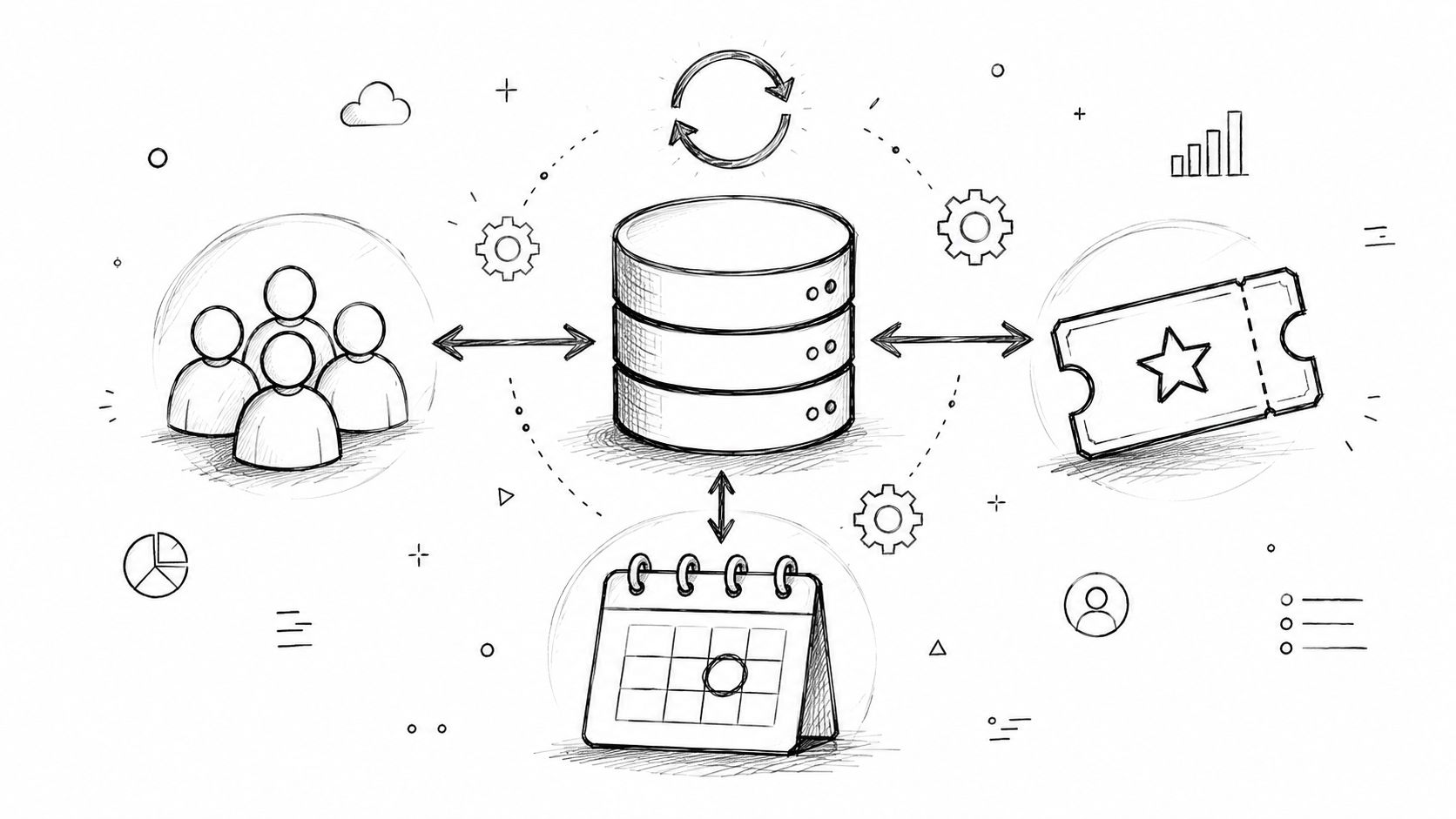
Execution usually breaks down at the tooling layer. Staff track milestones in spreadsheets, email from one system, host content in another, run registration somewhere else, and then try to combine reporting after the fact. That setup creates delays, missed follow-ups, and messy attribution.
A platform like GroupOS keeps the campaign in one operating environment. Teams can manage membership tiers, ticketing, private channels, sponsor visibility, QR check-ins, content delivery, mobile engagement, and analytics without rebuilding the process for every milestone. That matters in practice because each celebration can trigger the next action automatically. Award winners can be routed into a leadership circle. Anniversary attendees can receive segmented renewal offers. Newly certified members can be surfaced in the directory and invited into expert discussions while interest is still high.
The strongest milestone programs create a loop, not a moment. They give members a reason to show up, a reason to stay visible, and a clear next step after the applause.
If you want to turn milestone celebration ideas into repeatable systems instead of one-off events, GroupOS gives you the core infrastructure in one place. You can manage memberships, ticketing, sponsor visibility, private channels, content hubs, analytics, and branded web and mobile experiences without stitching together separate tools.