April 24, 2026

Before you even think about software, features, or design, let's talk about the single most important part of building a forum: the plan. I've seen countless forums fail not because of bad tech, but because they skipped this crucial first step. Building a successful community is all about laying a solid strategic foundation first.
The whole process really boils down to four main stages: defining your community's purpose, choosing the right architecture, setting up the infrastructure, and then designing for real human engagement. Everything else flows from that initial blueprint.
So, before writing a single line of code or getting lost in feature comparisons, take a step back. The first and most critical move is to create a detailed blueprint for your community. This isn't just a nice-to-have; it's the core of your entire project.
You need to answer one fundamental question: Why does this community need to exist?
Your answer to that question will guide every decision you make from here on out. It dictates your forum's structure, its features, and even its tone. Think about it: a SaaS company building a private support hub for B2B clients has entirely different needs than a lifestyle brand creating a public space for hobbyists.
You have to set clear, measurable goals right from the start. What does "success" actually look like for your forum? Is it about generating leads for your sales team? Is it a place to gather invaluable product feedback? Or is it simply creating a home for like-minded people to connect?
A clear purpose acts as your north star. Whenever you're debating a new feature or planning content, you can ask, "Does this serve our core purpose?" This simple question stops you from getting sidetracked and ensures you’re building a destination people will actually want to visit.
I’ve seen it time and again: forums that nail their purpose and audience from day one are the ones that thrive. A community built specifically for freelance graphic designers will always have higher engagement than one with a vague "for creative people" focus. It's that specific.
Once you've figured out your "why," it's time to define your "who." Don't just guess. Create detailed user personas to truly understand your members' needs, motivations, and what keeps them up at night. A detailed ultimate guide to website planning can be a huge help here, giving you a strategic roadmap from your first idea to a successful launch.
This planning is what prevents you from building an empty digital hall. A well-defined strategy ensures that every feature, design choice, and moderation policy is perfectly aligned with both your goals and your members' expectations.
If you're new to all this, it’s worth taking a moment to understand what is forum discussion and what makes it powerful. Grasping this "why" from the very beginning is what separates a thriving, vibrant community from a digital ghost town.
Alright, let's talk about the single biggest technical decision you'll make for your new community: how you're going to build it. This isn't just a technical detail; it's the foundation that dictates your costs, your day-to-day workload, and how much your forum can grow down the road.
Getting this right means picking a path that actually fits your budget, your team's technical know-how, and where you see this community in a few years. You’ve really got three main routes: the DIY self-hosted path, a managed hosted solution, or a fully integrated all-in-one platform. Each has serious trade-offs you need to understand before you commit.
Going the self-hosted route means you're in the driver's seat. You’ll grab some open-source software like phpBB or use a plugin like bbPress on a WordPress site, and you build it all yourself. This gives you 100% control. You own the code, you own the data, and if you can dream it, you can build it.
But all that freedom comes with a hefty dose of responsibility. You're the one on the hook for everything:
I’ve seen this path work wonders for teams with a developer on hand or for founders who are deeply technical themselves. If you have a truly unique vision that no off-the-shelf tool can deliver, this is your best bet for ultimate flexibility.
If the thought of server maintenance makes you break out in a cold sweat, hosted solutions are your friend. You pay a company like Discourse or Vanilla Forums a monthly fee, and they handle all the messy back-end stuff—the hosting, the security, the updates. This frees you up to do what you're actually here for: building and nurturing your community.
The trade-off? You give up a lot of control, and it can get pricey as you grow. Customization is often limited to what their platform allows, so you're playing in their sandbox. While it’s a fantastic way to get to market quickly, be sure to map out the costs for a large, active community—it can add up fast.
The choice here is simple: hosted solutions give you speed and peace of mind in exchange for control and a monthly fee. It’s the right move for most businesses that want a reliable forum without the IT headache.
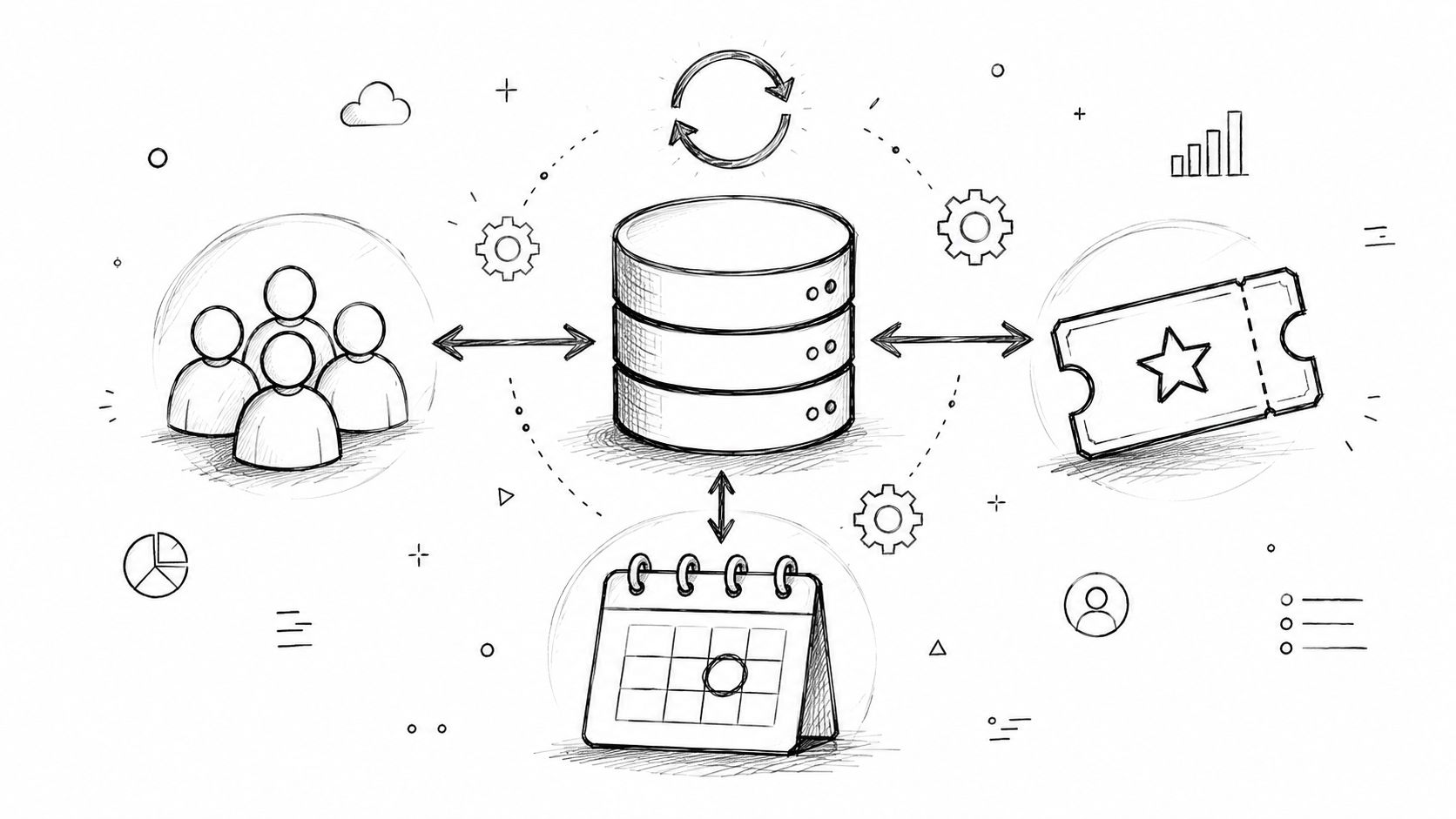
Lately, a third model has really taken hold: the all-in-one platform. Tools like GroupOS operate on the idea that a forum is just one part of a much bigger community ecosystem. Why stop at discussions when you can also manage memberships, host events, sell courses, and more, all from a single dashboard?
Instead of duct-taping a forum, a payment gateway, and an event calendar together, you get one system where everything just works. You can have a private forum for paying members, promote a webinar directly in a relevant thread, and see all your community analytics in one place. If you're looking to build more than just a place to talk, you can explore some of the best online community platforms available in 2026.
As you weigh these options, understanding the core principles behind software architecture design patterns can be incredibly helpful. It gives you a deeper appreciation for what makes each of these platforms tick and why they are built the way they are.
To make this decision easier, let's break down the key differences between these three approaches. This table lays out what you can expect in terms of technical skill, cost, and control.
| Factor | Self-Hosted (e.g., WordPress + bbPress) | Hosted Forum Software | All-in-One Platform (e.g., GroupOS) |
|---|---|---|---|
| Technical Skill | High (server management, coding) | Low (focus on configuration) | Low (no-code, focus on strategy) |
| Initial Cost | Low (software is often free) | Medium (monthly subscription) | Medium to High (tiered subscription) |
| Ongoing Cost | Variable (hosting, developer time) | Predictable (scales with users/features) | Predictable (all-inclusive pricing) |
| Control | Total control over code and data | Limited to platform features | High control within an integrated system |
| Time to Launch | Slow (requires development) | Fast (minutes to hours) | Very Fast (launch a full community hub quickly) |
| Scalability | You are responsible for scaling | Handled by provider, cost increases | Managed for you, built for growth |
Ultimately, there's no single "best" choice—only the best choice for you. Use this table to align your resources and goals with the right platform foundation.

The image above really drives this point home. A B2B support forum is all about speed and accuracy, so you'll want a platform that supports powerful search and ticketing integrations. On the other hand, a B2C hobbyist community thrives on engagement and personal connection, so features like member profiles, gamification, and social sharing become far more important. Your community's core purpose should be the guiding star for your technical decisions.
Alright, you've made your decision on the platform. Now comes the fun part—actually building the thing. This is the moment your community stops being a plan on a whiteboard and starts becoming a real place for people to gather.
Your next steps will look very different depending on whether you went with a self-hosted solution or an all-in-one platform. Either way, having a foundational grasp of web application development is a huge advantage. It gives you a much better appreciation for what's happening behind the scenes, making you a smarter, more effective community manager.
Choosing to self-host means you’re in the driver's seat. You’ll start by getting your server environment ready to go. This usually involves picking a hosting provider you trust and then installing your forum software of choice, like phpBB or a WordPress-based option such as bbPress.
Next up is the database. This is the heart of your forum, where every post, user profile, and message will live. You'll need to create a new database, set up a user with the right permissions, and then point your forum software to it during the installation prompts.
With self-hosting, you're both the architect and the janitor. You have total control over every detail, from security protocols to user roles, but it also means you're on the hook for all the technical upkeep.
Once the software is installed and running, the real configuration begins. This isn't just about technical settings; it's about translating your community vision into a functional structure.
Here’s what you should focus on first:
If you chose a platform like GroupOS, the game is different. The heavy technical lifting is already handled, so you can skip the server setup and dive right into designing the member experience.
Your first stop is almost always branding. Upload your logo, punch in your brand colors, and set up a custom domain. This immediately makes the community feel like a professional, integrated part of your brand, not some disconnected third-party site.
From there, it's all about structuring the experience. This is where you'll build out your membership tiers and decide who gets access to what. For instance, you might map out:
This kind of tiered structure is the backbone of many successful online communities. As experts in the field point out, building a thriving forum involves a strategic mix of infrastructure, software configuration, and well-planned membership systems. In fact, many thriving online communities strategically blend these technical elements with a solid plan.
No matter which path you take, you may need to move your community's data one day—whether it's for a software upgrade or a platform switch. Getting familiar with database migration best practices now can save you from a world of pain later on.
Finally, don't forget about integrations. Connect your forum to the other tools you use every day. Linking your CRM, email marketing platform, or even an internal tool like Slack can create automated workflows that make managing your community far more efficient. This turns your forum from a standalone destination into a connected hub within your entire business ecosystem.
With the technical nuts and bolts sorted, it's time to turn to the most critical part of your forum: the people. A great community isn't just a collection of features; it's a living space. It needs to feel welcoming, intuitive, and safe. This is where thoughtful design and clear community policies come together to turn a simple website into a place people actually want to be.
Your forum’s design has a massive impact on how people behave. If a new member can’t figure out how to post within 10 seconds, they're gone. Probably for good. That's why knowing how to build forum website engagement is just as important as getting the code right in the first place.

Think of your forum's layout like a physical clubhouse. Is it obvious where to hang your coat? Can you easily find the room where the interesting conversations are happening? A cluttered or confusing interface is a surefire way to kill a community before it even starts.
Focus on getting these core UX elements right from day one:
Once you have the basics down, you can start weaving in features that keep people coming back. Things like gamification—badges for post milestones, user ranks that grow with participation, or even a simple "like" system—can give members that little dopamine hit that encourages them to contribute again and again.
Every healthy community runs on a shared understanding of what's acceptable. Your community guidelines and moderation policy aren't there to stifle conversation; they exist to protect it. This is your framework for making sure the space stays welcoming and productive for everyone.
Write your rules in simple, human language and put them where people can actually find them. Don't just link it in the footer and call it a day. Link to it from the main navigation and even make it a required checkbox during the sign-up process.
Your moderation policy is your promise to your community. It clearly states what you stand for, what behavior you won't tolerate, and exactly what will happen when someone crosses a line. Being transparent builds trust and empowers your best members to help you keep things on track.
Make sure your policy explicitly addresses the common headaches:
Let's be real: you can't be everywhere at once. As your community grows, you’ll need a team of moderators to help you uphold the rules. Give them the power to succeed with clear instructions, a private place to coordinate (like a dedicated chat channel), and the right tools for the job.
Thankfully, modern community platforms like GroupOS come with powerful moderation tools that can handle a lot of the heavy lifting. Lean on automation for the repetitive stuff:
By combining a thoughtful user experience with a strong-but-fair moderation framework, you create an environment where great conversations can actually happen. This is the real secret—it’s how you turn a website into a community people are proud to call their own.
Alright, you’ve built your forum. The digital paint is dry, the doors are ready to open, but there's a problem: it's completely empty. This is the single biggest challenge new communities face. If the first members walk into a silent room, they’ll turn around and leave. Your job is to make sure the party has already started when they arrive.
The best way I’ve found to beat the "empty room" effect is by content seeding. Before you even think about sending out a single invite, you and your team need to get in there and start conversations. It’s like being the host of a party—you can't just stand by the door; you have to mingle and get people talking.
For example, if you're running a B2B software community, post a few common troubleshooting questions and answer them yourself. Ask about a little-known feature you love. For a hobbyist forum, maybe you post a photo of a recent project and ask others to share their latest work. This not only adds content but also subtly shows new members what kind of posts are welcome.

With some initial discussions in place, it’s time to roll out the welcome mat. But don't just put a link on your homepage and hope for the best. You have to be proactive and strategic.
Your primary goal isn't just sign-ups; it's getting new members to their first meaningful contribution. A simple welcome email with a direct link to an "Introduce Yourself" thread is a time-tested and incredibly effective way to do this.
This is where I see a lot of community managers get sidetracked. They become obsessed with vanity metrics like "Total Registered Users." A huge user count might look impressive on a slide deck, but it means nothing if they're all ghosts. Are you building a bustling city or a ghost town with a big census?
To really gauge the health of your community, you have to look at engagement KPIs. These are the numbers that tell you if people are actually sticking around, participating, and getting value. All-in-one platforms like GroupOS are great for this, as they have built-in dashboards that focus on the metrics that actually drive growth.
Here are the vital signs I watch like a hawk:
In 2026, building a forum that can scale is non-negotiable. As your community grows, the platform has to handle way more traffic without slowing down or breaking. This isn't something you can bolt on later; it has to be baked in from the start. That's why 100% of successful community platforms today rely on deep analytics to track what's working and what isn't.
By digging into these numbers, you can stop guessing and start making informed decisions. To go even deeper, check out our guide on community analytics and insights to see how you can really put your data to work.
The data will tell you what topics people love, who your most influential members are, and the best times to post new content. This isn't just about managing a forum; it's about proving its ROI, whether that’s through lower support tickets, higher customer retention, or a direct line to your next great product idea.
Even with the most detailed blueprint, I find the same few questions always surface when people are getting ready to build a new forum. Let's tackle them right now, because getting these answers straight can save you a world of trouble later on.
This is a real fear, and it's a valid one. The moment you start thinking about monetization, the key is to focus on adding value, not just putting up gates. Slapping ads everywhere or locking essential features behind a subscription is the fastest way to kill the very spirit you're trying to nurture.
A much better approach is to create premium offerings that your most dedicated members will genuinely want.
This is where a lot of people get caught off guard. In the very beginning, you should plan to spend a minimum of 5-10 hours per week actively managing things. That isn't just deleting spam—it’s about sparking conversations, personally welcoming new faces, and actually listening to feedback.
A community manager's job is to be the host of the party. You have to be there, be visible, and encourage people to mingle, especially in the early days.
As your community gets bigger and you bring on volunteer moderators, you might spend less time on the day-to-day grind. But the strategic work never really ends. A healthy online community needs constant care and feeding.
So, what happens when no off-the-shelf software quite fits your vision? This is when you have to start thinking like a developer. If you have a highly specific need, like a deep integration with your company's proprietary software or a completely novel way for users to interact, a self-hosted or custom-built solution is probably your only path.
The decision really hinges on your team's expertise. If you have developers who are wizards with PHP, building on a framework like Laravel could be a great choice. If your team is all about JavaScript, a Node.js solution might get you to launch faster. The most critical factor isn't just what you can build today, but what your team can confidently maintain and secure for years down the road.
If all this talk about tech stacks sounds like a major distraction from what you really want to do—build your community—then a dedicated platform is the way to go. GroupOS gives you an all-in-one solution with memberships, events, and powerful engagement tools already built-in, letting you launch a professional-grade forum without writing a single line of code. Start your free trial with GroupOS today.