April 25, 2026
Sponsorships are now the main revenue engine for events. In fact, 88.4% of event marketers identify sponsorships as the most effective revenue source, and 24.6% of organizers ranked securing sponsorship as their biggest event marketing challenge in 2024, according to Eventeny’s event sponsor trends report.
That changes how organizers need to think about sponsorship in events. You’re not selling banner space anymore. You’re building a commercial product inside your event, one that has to create value for three groups at once: the sponsor, the attendee, and your own team.
The old playbook still shows up everywhere. A PDF with tier levels. A logo grid. Maybe a booth. Maybe a stage mention. That model isn’t dead, but it’s no longer enough on its own. Sponsors want relevance, interaction, proof, and a clear path from event presence to business outcome.
That’s why the strongest programs now look a lot more like integrated marketing partnerships than one-off event add-ons. The teams getting traction are designing experiences, tracking engagement, and using event tech to turn activity into evidence. If you work in conferences, associations, trade shows, or member communities, that shift is already affecting how you sell, fulfill, and renew sponsorships. It also changes how experiential programs should be planned alongside the attendee journey, which is why a broader view of experiential marketing and events matters.
Sponsorship in events has moved from a side revenue line to a strategic operating priority. When sponsorship revenue carries that much weight, weak packaging and vague reporting stop being minor inefficiencies. They become real business risks.
A lot of organizers still treat sponsorship sales as a procurement exercise. Build packages, send them widely, wait for replies. That approach creates friction for everyone involved. Sponsors see generic inventory. Organizers end up discounting. Attendees get clutter instead of value.
Passive visibility used to carry more weight. If a sponsor could place a logo in enough places, that often satisfied the brief. Today, buyers are under more pressure to justify spend. They need activations that can support lead generation, trust-building, or brand positioning in a way they can explain internally.
That’s also why sponsorship conversations are getting more advanced. Buyers ask better questions now. Who exactly will engage? What action will attendees take? What signals will be captured? How soon will reporting arrive? If your answer is still “you’ll get exposure,” you’re already behind.
Sponsors don’t want more inventory. They want fewer, better opportunities that connect to a defined objective.
The strongest programs share a few characteristics:
That’s the practical shift. Sponsorship in events now works best when it’s sold as a partnership and managed like a performance channel.
A modern sponsor should be treated less like an advertiser and more like a co-host of a specific part of the event experience. That mindset changes everything. It affects what you sell, how you brief the sponsor, how your team supports activation, and how you measure success afterward.
If the sponsor is only buying placement, the relationship stays shallow. If the sponsor is helping create a meaningful attendee touchpoint, the partnership gets stronger fast.
Logo placement still has a place. It can support credibility, reinforce presence, and help unify a sponsorship package. But logos don’t create much on their own. Attendees remember moments, utility, and interaction far more than signage they pass on the way to a session.
A sponsor-backed charging lounge, a topic-specific networking meet-up, a product demo tied to a real attendee problem, or a branded content station can all do more than a static sign. These formats give the sponsor a role in the event, not just a footprint on it.
That’s the difference between being seen and being experienced.
Every sponsorship in events should work as a three-way exchange:
If one side loses, the model weakens. Consequently, many packages fail. They’re built around what’s easy to sell, not what’s worth receiving. A lanyard logo may satisfy a checklist item, but it rarely creates enough value to anchor a serious partnership.
Before drafting benefits, ask the sponsor questions like these:
Practical rule: If you can’t explain how the attendee benefits from the activation, the sponsorship offer probably needs work.
A stronger philosophy leads to stronger inventory. Once you define sponsorship as active brand integration instead of passive exposure, packaging becomes much easier.
Most organizers work with a mix of sponsorship types whether they label them that way or not. The problem isn’t lack of inventory. The problem is often structure. Many events still force every sponsor into the same pricing logic, even when sponsor objectives are completely different.
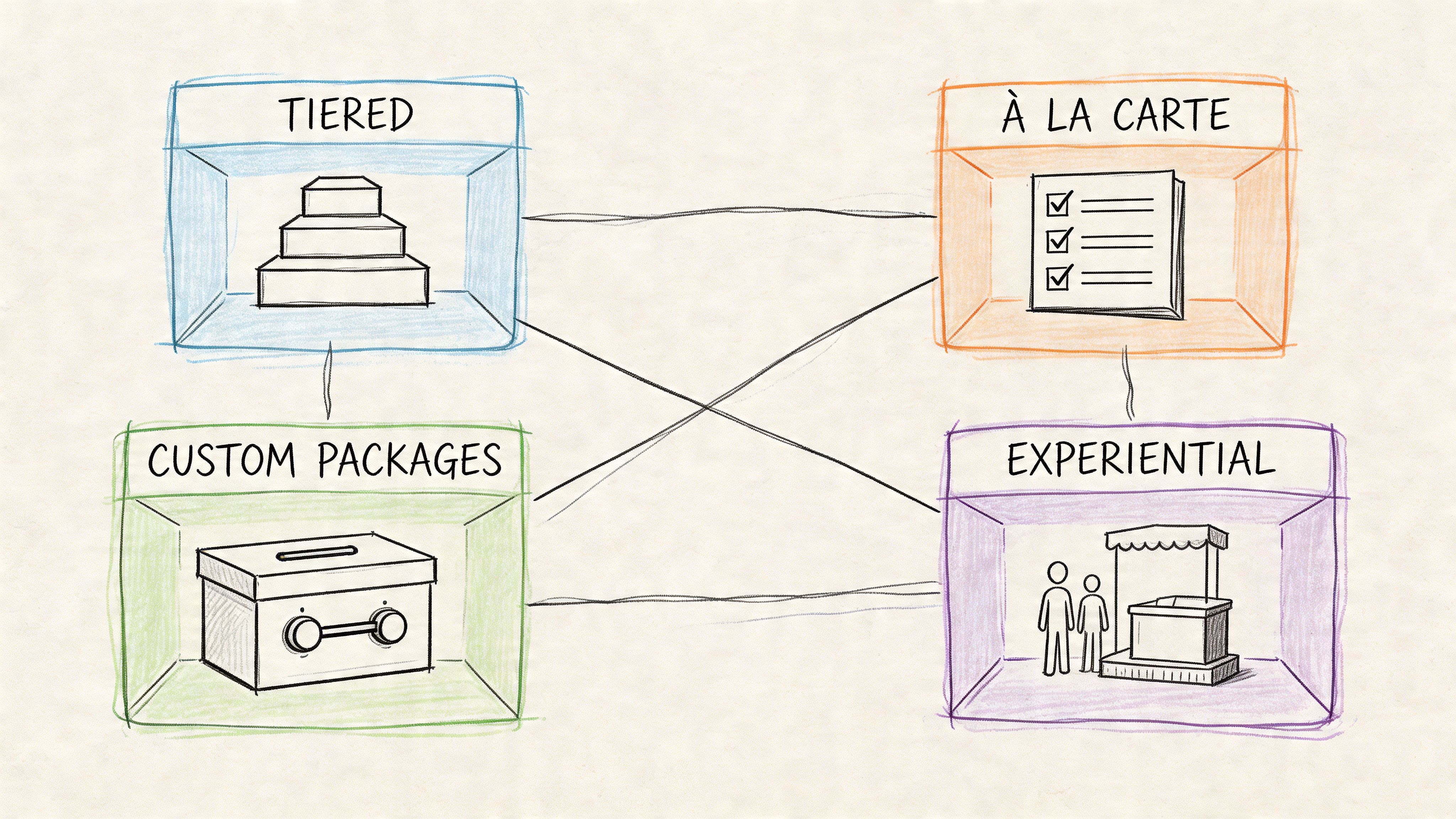
Here’s how the main models differ in practice.
| Model | Best use case | Main strength | Main weakness |
|---|---|---|---|
| Tiered | Straightforward sponsorship prospecting | Easy to publish and compare | Often too rigid for real buyer needs |
| À la carte | Sponsors with clear priorities | Lets buyers choose specific assets | Can create scattered packages if unmanaged |
| Custom package | Larger or more strategic partners | Aligns closely with goals | Takes more sales time and stronger internal coordination |
| Experiential | Events that want memorable engagement | Creates stronger attendee interaction | Requires planning, space, and operational support |
Traditional categories still matter too:
A well-run event often blends these categories. A technology provider might sponsor a check-in experience in-kind. A publication might support audience growth. A headline sponsor might underwrite a high-value attendee activation.
There’s a reason many buyers push back on Gold, Silver, and Bronze structures. Rigid tiered sponsorship packages are being critiqued for undervaluing an event’s potential and deterring inclusive partnerships, while newer models emphasize digital and CSR hybrids such as co-branded sustainability initiatives, according to Glue Up’s review of event sponsorship types.
The critique is fair. Tiered packages are efficient for the organizer, not always effective for the buyer. They often bundle low-value items with one or two useful ones, which forces sponsors to pay for benefits they don’t need.
That doesn’t mean you should abandon tiers entirely. It means you should use them carefully.
| Attribute | Traditional Tiered Model (Gold/Silver/Bronze) | Value-Based & A La Carte Model |
|---|---|---|
| Buyer flexibility | Limited | High |
| Sales process | Faster at the start | More consultative |
| Fit to sponsor goals | Often uneven | Usually stronger |
| Pricing logic | Package-driven | Outcome-driven |
| Ease of fulfillment | Simpler to standardize | Requires tighter tracking |
| Best for | Smaller sponsors or early-stage sales | Strategic partners and differentiated offers |
A practical middle ground works well. Publish a baseline menu so prospects can understand your inventory quickly. Then move serious buyers into customized conversations where you build around their goals, audience fit, and activation style.
Packaging works when it answers a sponsor’s internal question before they ask it: why should we spend here instead of somewhere else?
That answer doesn’t come from a prettier PDF. It comes from a stronger pricing logic, a tighter audience story, and a package structure that ties benefits to business intent.
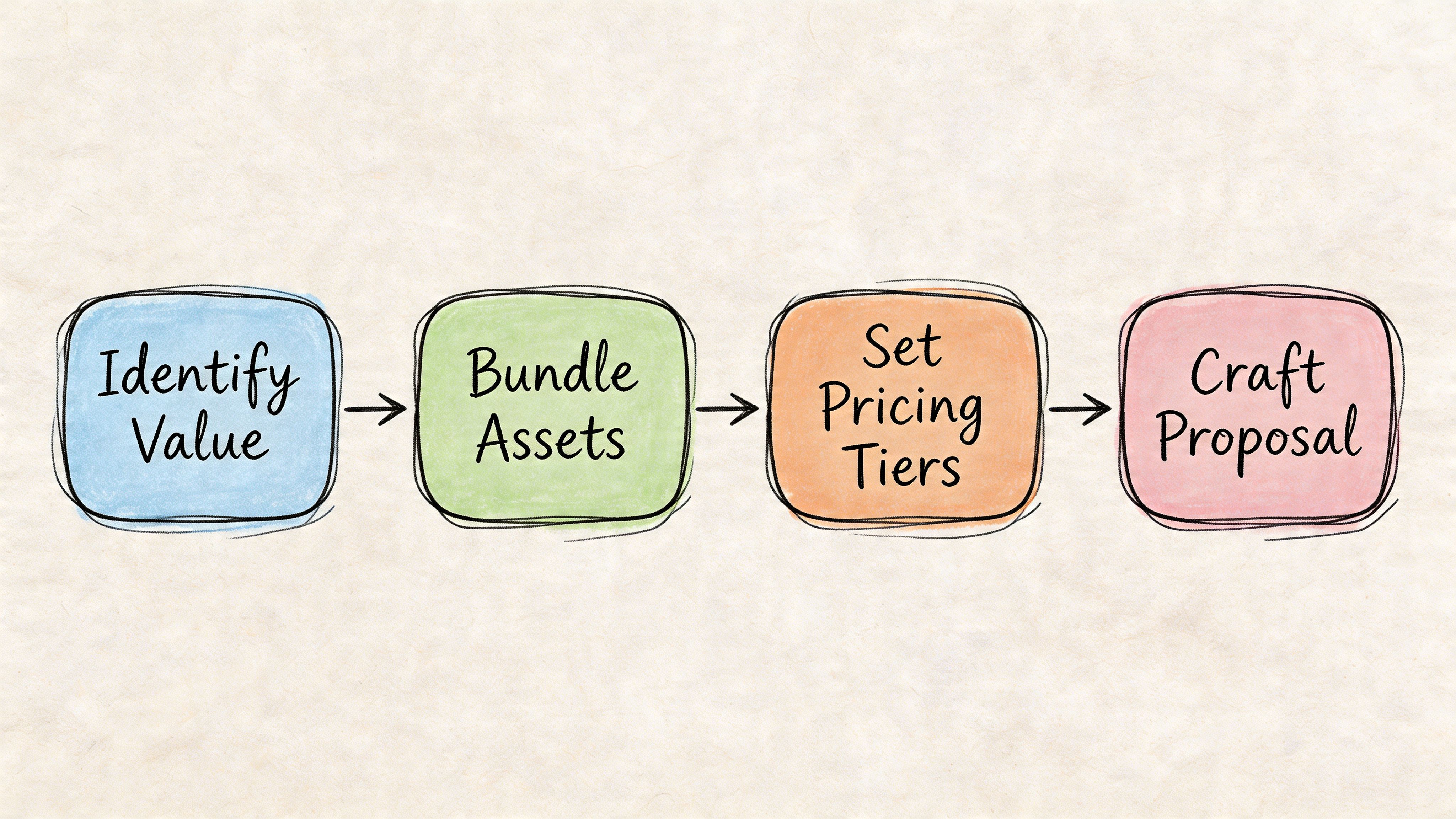
Many teams build the package first and value it later. Reverse that. List every sponsorship asset you control, then assess it by utility, scarcity, effort, and relevance.
That inventory usually includes:
Then sort each asset into one of three buckets:
Most prospectuses fail because they are overstuffed with the third category.
You don’t need one universal formula. Different assets justify different methods.
If an activation requires staffing, fabrication, signage, venue labor, or content production, build those real delivery costs into the price. This protects margin and keeps you from underpricing complex activations.
For common items such as booth placements or homepage banners, use current market context from comparable events and your own sales history. The point isn’t to copy competitors. It’s to avoid pricing in a vacuum.
Some sponsorships are worth more because they solve a specific sponsor problem. A sponsored executive breakfast for senior buyers, a recruitment-focused member meetup, or a branded learning track may justify premium pricing because the context is targeted and difficult to replicate elsewhere.
A good sponsorship prospectus should feel like a commercial argument, not a menu. It needs to show the audience, the moment, the activation path, and the likely value.
If you need a starting point for the structure, this event sponsorship proposal template is a useful reference point for organizing the core elements.
The strongest proposals usually include:
A proposal should make it easy for the sponsor’s marketing lead to sell the idea internally.
Here’s a quick video that helps frame proposal thinking and sponsor communication from a practical angle.
A few patterns consistently weaken pricing power:
Strong sponsorship packaging in events isn’t about making every opportunity sound premium. It’s about matching each opportunity to a sponsor objective and pricing it in a way you can defend.
An activation earns attention when it gives attendees a reason to stop, participate, and remember the interaction afterward. That’s why simple booth presence often underperforms. It asks people to care before giving them a reason to.
The market has moved hard in this direction. In 2026, there’s a major shift away from passive logo placements toward immersive, data-driven brand experiences, and 72% of corporate sponsors are actively seeking new partnerships through these kinds of engaging activations, according to Ticket Fairy’s analysis of festival sponsorship expectations.
The highest-impact activations tend to do one of four things well:
A branded headshot station is a good example. It gives attendees something immediately useful while creating a natural opt-in moment for the sponsor. So does a meeting-matching lounge or a sponsor-backed “ask an expert” desk at an industry conference.
If you’re thinking about visual activations that people engage with, this custom branded photo booth guide is a practical reference because it focuses on attendee experience, not just branding surfaces.
The best activations are rarely the most complicated. They’re the ones with a clear behavioral design.
Ask these questions during planning:
Organizers sometimes focus heavily on selling the activation and lightly on delivering it. Sponsors notice that immediately. A good idea can still fail if the load-in is messy, signage is late, staff aren’t briefed, or the activation gets placed in a dead zone.
Use a fulfillment checklist with real owners attached. Not broad team responsibility. Named people.
The sponsor should never have to ask whether a promised benefit was delivered. Your team should already have the proof.
Strong activations create sponsor satisfaction because they feel organized from first planning call to post-event wrap-up. That discipline is what turns a clever idea into a renewable asset.
Most sponsorship strain shows up after the event, not before it. The sponsor asks what happened. The organizer sends a few photos, some attendance context, and a list of delivered items. Everyone knows that isn’t enough.
Modern sponsorship reporting has to connect activity to outcome. Not perfectly in every case, but credibly and consistently.
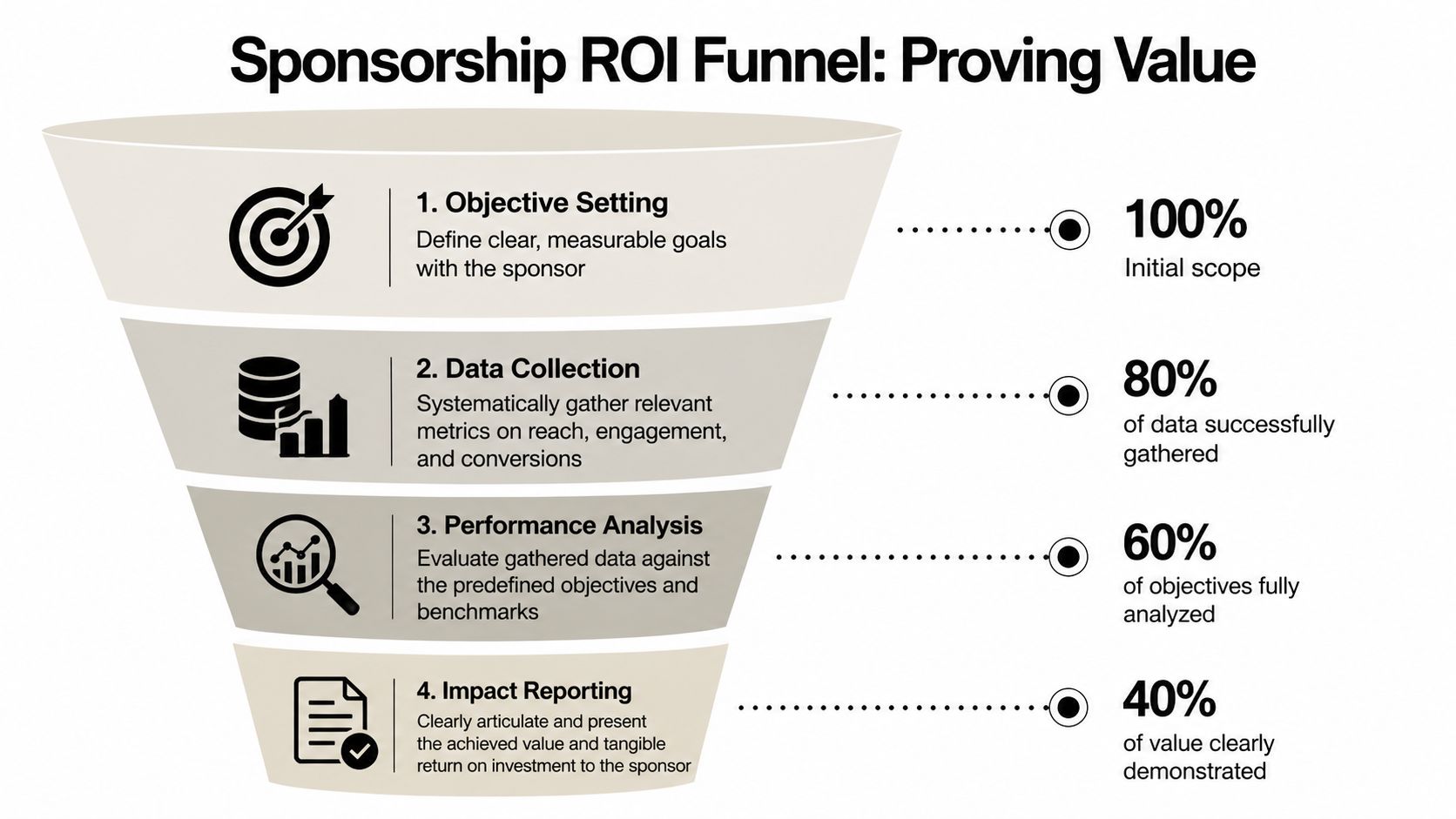
Different sponsors care about different kinds of return. A sponsor hiring talent will measure differently from a sponsor pushing demos. A brand campaign and a pipeline campaign shouldn’t be judged by the same yardstick.
The cleanest way to structure reporting is to sort metrics into three groups:
| KPI group | What it shows | Examples |
|---|---|---|
| Visibility | Whether the sponsor was seen | impressions, clicks, mentions, page views |
| Engagement | Whether attendees interacted | scans, booth visits, session participation, downloads |
| Commercial outcome | Whether the activation influenced pipeline | leads, opportunities, attributed revenue |
That structure helps avoid a common reporting mistake. Teams often deliver a lot of visibility metrics to a sponsor who mainly wanted leads, or a lead sheet to a sponsor who was really buying trust and category positioning.
To accurately calculate sponsorship ROI, organizations should evaluate revenue generation 40 to 50 days after the event so they capture deals still moving through the pipeline. The same framework highlights cost per lead, lead-to-opportunity conversion rates, and event-attributable revenue as essential tracking points, and notes that properly tracked sponsorships can achieve a 40% increase in attributed leads, according to Luzmo’s sponsorship KPI guidance.
That timing point matters. If you report too early, you understate value. If you wait too long, the sponsor loses momentum and renewal becomes harder.
A useful reporting stack usually includes a combination of these inputs:
If your team needs a stronger framework for tying event actions to measurable outcomes, this guide to measuring event ROI is worth reviewing.
Report on what the sponsor said mattered, not just on what was easiest for your team to collect.
The best fulfillment reports are concise, visual, and objective. A sponsor shouldn’t have to hunt through slides to understand whether the investment worked.
A strong report usually includes:
Visuals help. Charts, screenshots, funnel views, and simple comparison graphics make the value easier to absorb. If your team has the capacity, deliver a short written readout with commentary. Numbers alone don’t explain what they mean.
They remember whether the program felt measurable. They remember whether your team was organized. They remember whether the report arrived while the event was still fresh in everyone’s mind.
That’s why ROI reporting isn’t a post-event administrative task. It’s part of the sales process for the next cycle.
Manual sponsorship management often breaks earlier than anticipated. It usually starts with spreadsheets and shared folders. Then come scattered email threads, inconsistent logo files, missing deadlines, unclear approvals, and reporting assembled from five systems that don’t talk to each other.
That setup can survive a small event. It doesn’t hold up when sponsorship in events becomes a serious revenue function.
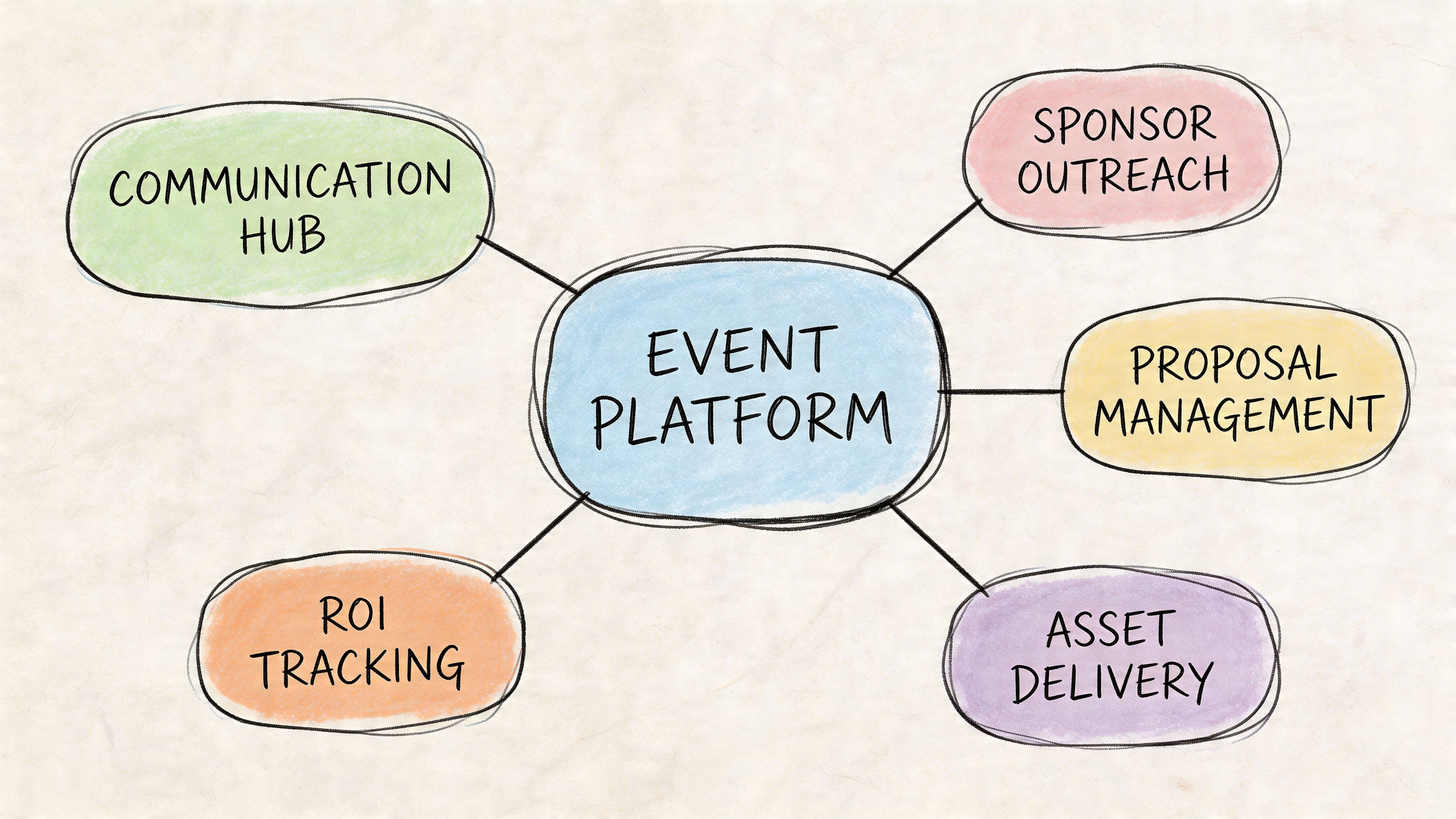
A modern event platform helps most in four operational areas.
Instead of static documents moving around by email, teams can centralize sponsor inventory, package options, deadlines, and approvals. That makes custom deals easier to manage because everyone is working from the same record.
Dedicated sponsor pages, rotating digital placements, product showcases, and built-in calls to action give sponsors more than a logo listing. They create measurable engagement points that can be tracked before, during, and after the event.
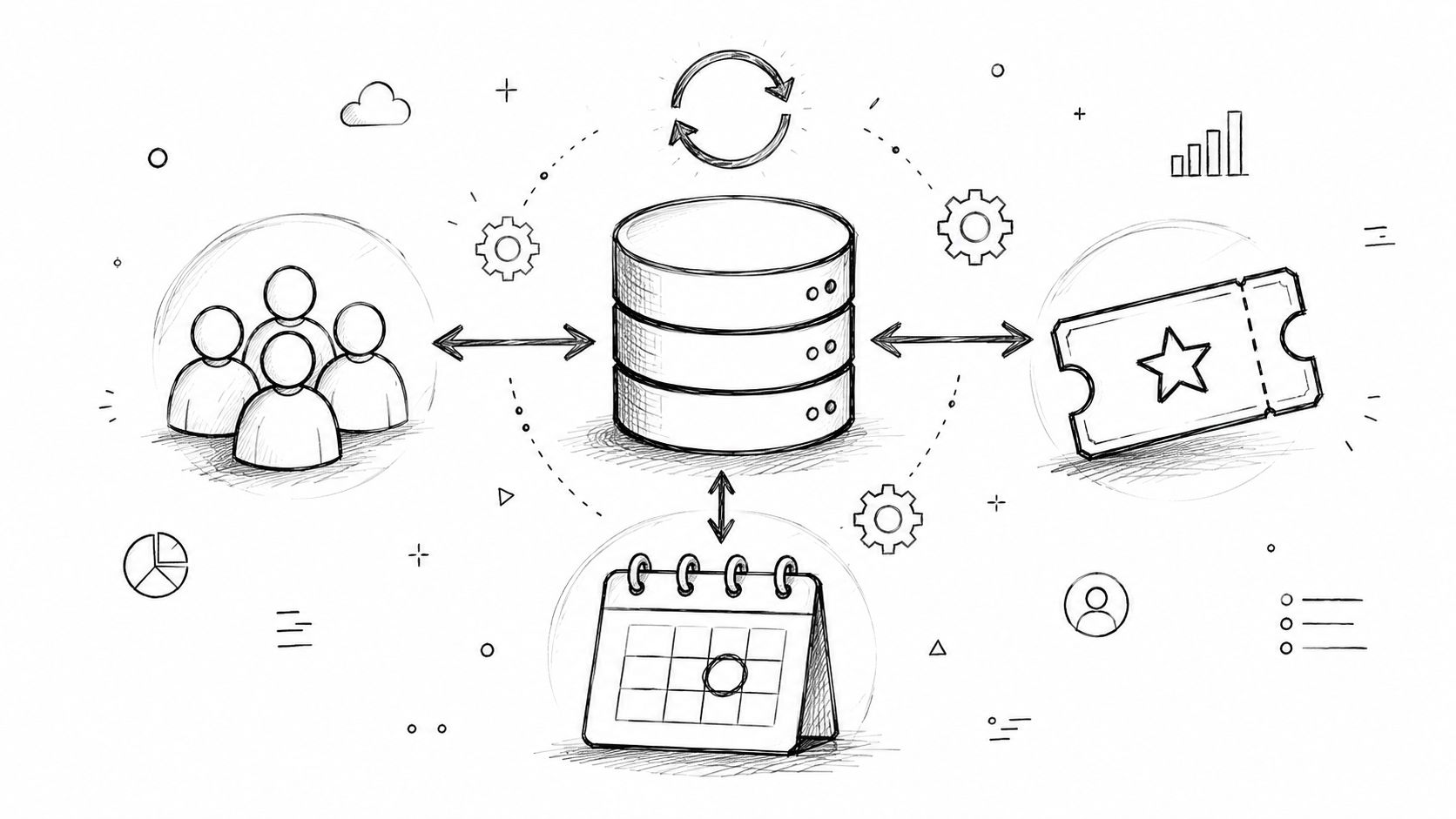
When activation requirements, artwork, links, scans, and placements live in one system, fulfillment gets tighter. Your team can confirm what was promised, what has been delivered, and what still needs attention without chasing updates across tools.
If sponsor traffic, attendee actions, and lead capture signals are already in the platform, post-event reporting becomes much easier to assemble. Renewal conversations improve because the evidence is cleaner.
Interactive sponsorships are harder to run than static ones. They involve more assets, more dependencies, and more moving parts. If a sponsor is running a branded content hub, a lounge with check-ins, a lead form, and a follow-up campaign, the operational backbone matters as much as the idea itself.
That’s also why physical booth strategy should tie into digital reporting. For teams refining on-site presentation, this piece on How LED Exhibit Booths Can Increase ROI At Trade Shows is a useful complement because it focuses on visibility and engagement in the exhibit environment.
Don’t buy software based on the longest checklist. Buy based on the workflows your team struggles with.
Look for capabilities such as:
If your current system can’t support those workflows, your sponsorship team is doing platform work by hand. That’s time they could be using to build better partnerships. For teams evaluating options, a broader view of online event management software helps clarify what should be handled inside the platform versus outside it.
Software doesn’t replace sponsorship strategy. It removes the operational drag that keeps good strategy from being executed consistently.
The practical payoff is simple. Fewer admin gaps. Better sponsor experience. Stronger proof. Easier renewal.
The next phase of sponsorship in events belongs to organizers who can connect experience design, audience fit, and measurable outcomes without making the event feel over-commercialized.
That balance matters because sponsor expectations are rising in two directions at once. They want harder proof and more human connection. They want numbers, but they also want resonance.
The broad direction is already clear. The modern sponsorship environment demands purpose-driven, data-centric partnerships. 77% of attendees trust a brand more after an in-person interaction, and 98% of emotions experienced at live events extend beyond the event itself, according to Sponsorship.org’s analysis of the year that redefined sponsorship.
That combination explains a lot. Sponsors aren’t just buying reach. They’re buying the chance to create a trusted, memorable interaction inside a credible environment.
The organizers who stay ahead usually do a few things consistently:
Those habits matter more than chasing every new trend label.
Expect more interest in CSR-aligned partnerships, cleaner attribution, and activations that feel more like services than ads. Expect sponsor conversations to involve more questions about audience quality, conversion paths, and follow-up mechanics. Expect internal pressure on sponsor teams to justify spend more clearly than before.
Organizers don’t need to become media companies or data scientists to respond well. They do need to be more deliberate. Better discovery calls. Better packaging. Better activation planning. Better reporting discipline.
That’s the durable playbook. Sponsorship in events works when the sponsor can point to meaningful engagement, the attendee can point to added value, and the organizer can point to a repeatable system that makes both possible.
If you want a system that supports memberships, ticketing, sponsor profiles, lead generation, event analytics, and branded community experiences in one place, GroupOS is built for exactly that kind of modern event operation. It helps associations, organizers, and community teams run more connected sponsorship programs without relying on disconnected tools and manual workarounds.