May 29, 2026

Most advice about how to make digital products starts in the wrong place. It starts with formats, tools, or brainstorming. For professional associations, that sequence usually produces a polished asset that members ignore, staff resent maintaining, and sponsors can't understand.
Associations don't operate like solo creator businesses. The buyer may be an employer. The user may be a member. The budget owner may sit in education, partnerships, or events. That changes everything. Product creation becomes a validation and distribution problem first, then a production problem.
That shift matters because the category is already large and active. One industry roundup says digital products created more than $2.5 trillion in annual value by 2025, and internet users spent over $560 billion on digital media in 2024, up 12.5% year over year. The same source says 68% of internet users aged 16+ paid for digital content each month in 2025, which points to a recurring payment market for products that solve repeatable problems, not one-time curiosities (digital product market statistics).
If you're building a first portfolio for a member community, the job isn't to publish more content. The job is to package expertise in a way members can find, trust, buy, and use.
Creator advice often says to pick a niche and start making. That's incomplete for associations. You already have a niche. What you usually lack is evidence that a specific problem is painful enough for someone to pay to solve it.
A gap in most guidance on how to make digital products is validation for non-creator audiences. The common playbook focuses on marketplace demand and content formats, but it rarely addresses associations, corporate communities, or professional networks where buyer, user, and payer may differ. The stronger takeaway is that digital product creation is not mainly a design exercise. It's a distribution and validation problem, and even creator-focused advice still leans on pre-selling and waitlists as the clearest sign of demand (validation gap for professional communities).
Associations should validate four things before drafting a single module or PDF:
When teams skip one of those, they confuse interest with demand. A member saying "this would be useful" is not validation. A member joining a waitlist, answering a survey with specifics, or paying for early access is.
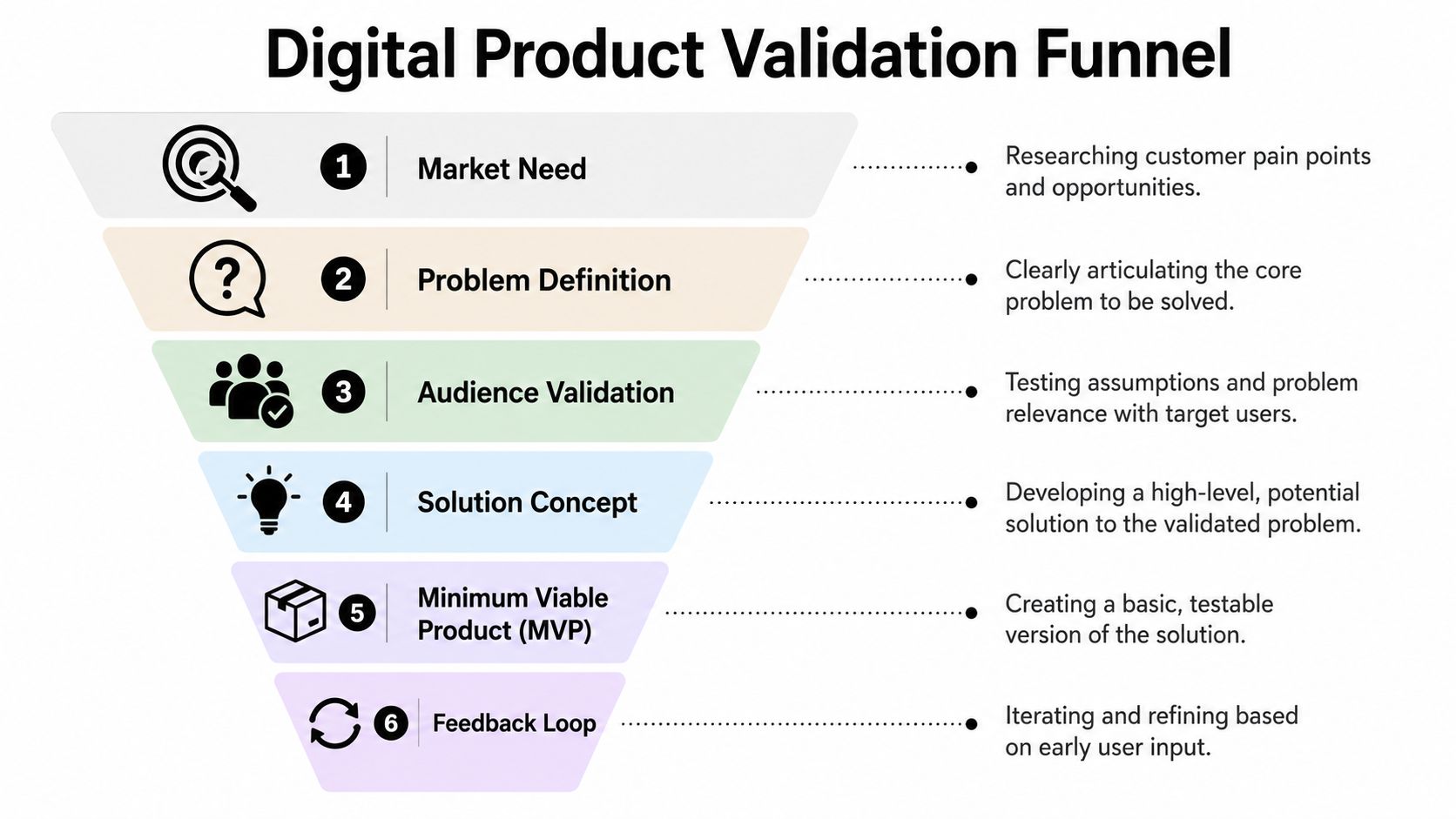
I like a simple sequence that association teams can run in a few weeks without overcommitting staff time.
Mine existing signals
Review event feedback, support inbox themes, webinar questions, job board patterns, and community discussions. You're looking for repeated friction, not isolated requests.
Write a problem statement
Keep it narrow. "Mid-career members need leadership training" is too broad. "Chapter volunteers need a repeatable sponsor outreach process before annual events" is workable.
Test the problem with the right segment
Run short interviews or member outreach. Keep questions concrete. Ask what they've tried, where they get stuck, and what a solved version would help them do.
Pre-sell the outcome
Offer a pilot, interest list, or founding cohort. If nobody raises a hand, don't keep polishing the concept.
Practical rule: If you can't describe who buys the product, who uses it, and why they would act this quarter, the idea isn't validated.
If you want a broader framework, these methods for validating startup concepts are useful because they force teams to test assumptions before they commit resources. The principle translates well to associations, especially when the offer needs approval from more than one stakeholder.
Validation also gets easier when your community structure is clear. If your member segments are still vague, work on finding your tribe inside a professional community before you build products around broad member averages. Broad averages produce bland products.
Once the problem is validated, format becomes a strategic choice. Teams often default to a course because it feels substantial. In practice, many association problems are solved faster by a toolkit, template library, or on-demand resource bundle.
The category supports multiple formats because people already pay regularly for digital content. As noted earlier in the opening, the market isn't the issue. The issue is matching the product format to the member job-to-be-done.
Here is the mistake I see most often. A team identifies a problem that requires speed and implementation, then builds a long educational series. Members wanted a shortcut. The association shipped homework.
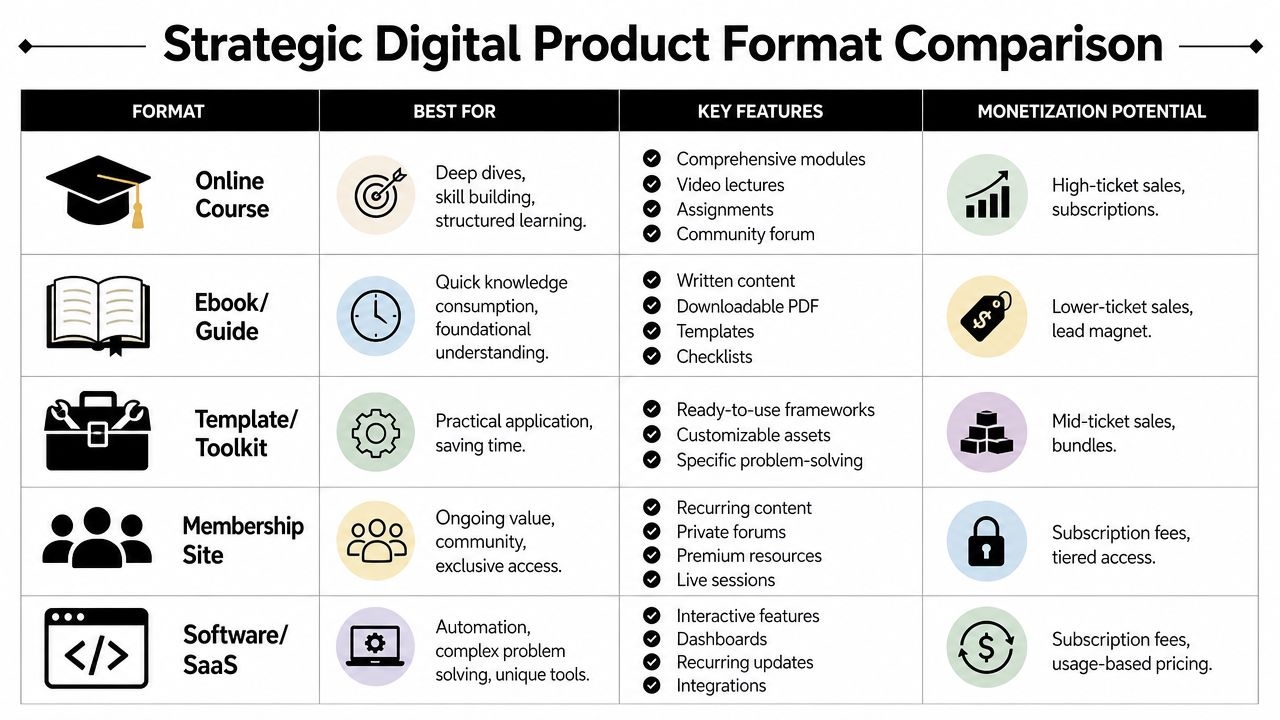
A simple decision matrix helps.
| Format | Best when members need | Team effort | Maintenance load | Strong fit for associations |
|---|---|---|---|---|
| Course | Structured skill development | Higher | Moderate to high | Credential prep, onboarding, leadership programs |
| Template pack | Faster execution | Lower to moderate | Low | Event planning, sponsorship outreach, policy drafts |
| Toolkit | A repeatable process with examples | Moderate | Moderate | Chapter operations, advocacy playbooks, member recruitment |
| On-demand video library | Just-in-time explanation | Moderate | Moderate | Recorded sessions, expert walkthroughs, software training |
| Guide or ebook | Foundational understanding | Lower | Low | Industry primers, trend orientation, policy explainers |
| Member-only resource hub | Ongoing access over time | Moderate to higher | Higher | Mixed libraries, recurring education, premium tiers |
For first-time portfolios, these formats tend to be more sustainable:
What usually works worse than expected is the giant flagship course built before demand is proven. It takes longer, requires stronger instructional design, and can become stale if the field changes quickly.
A short walkthrough can help teams think in formats, not just topics:
The strongest first product often isn't the most impressive format. It's the one members can use this week.
Format also shapes monetization. A toolkit can sit inside a premium membership tier. A course can anchor a cohort program. A guide may work best as a conference add-on or lead-in to a larger offer.
If your team is still deciding where each format belongs, this overview of places to sell digital products for communities and organizations is a useful planning reference. The point isn't to list channels. It's to make sure the format fits the access model.
Associations get into trouble when they treat digital products like special projects. One committee gets excited, a subject matter expert records a few videos, files live in six folders, branding drifts, nobody knows who owns updates, and the product fades away.
A better approach is to build a production system. Stripe's guidance on digital product businesses points in the right direction. Start with a simple, polished product that solves one problem well, then expand from there. The cost range also explains why this model is accessible for associations experimenting with non-dues revenue. Startup expenses can be roughly $0-$300 for ebooks, printables, templates, and workbooks, and $200-$1,000 for online courses depending on hosting and video setup (digital product business basics and startup costs).
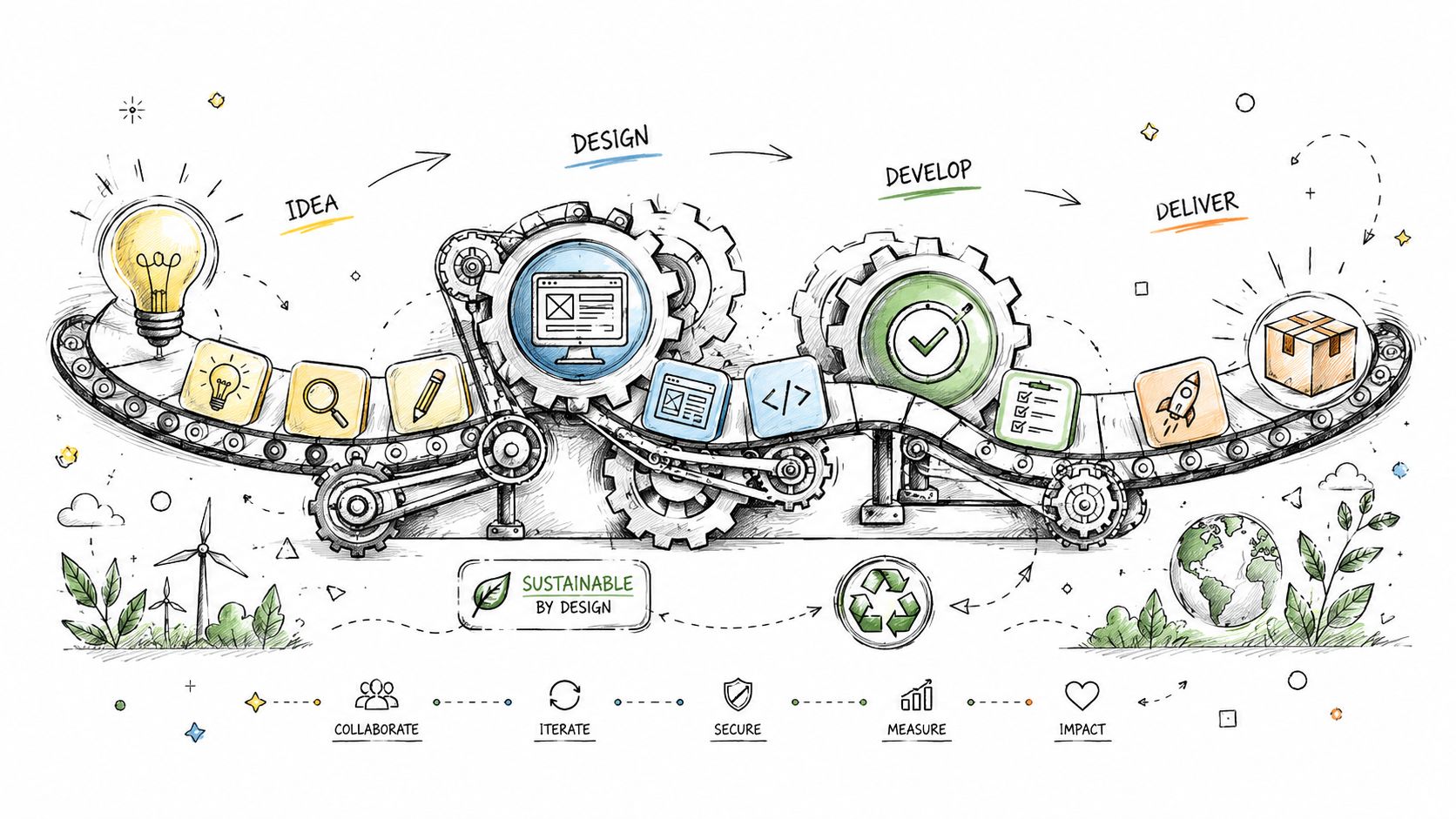
A workable association workflow usually has five owners, even if some roles sit with the same person:
That division matters because experts are rarely the best product architects. They know too much. Members need the shortest path from problem to outcome.
Use a consistent sequence so each new product doesn't become a fresh debate.
Lock the promise
Define the result in one sentence. If the promise is fuzzy, production will sprawl.
Outline the minimum path
Cut anything that doesn't directly support the promised outcome. Doing so saves teams weeks.
Create from existing assets first
Pull from webinar recordings, event decks, standards documents, speaker notes, sponsor education, and FAQs. Most associations already own useful raw material.
Standardize templates
Keep one slide master, one worksheet style, one video intro, one naming convention, and one review checklist.
Pilot before full release
Let a small member group use it. Watch where they hesitate, skip, or ask for clarification.
Operating principle: Associations scale digital products when they standardize production, not when they chase perfect content.
If your portfolio includes video, create a house style once and reuse it. A practical guide to training video creation for member education can help teams set recording standards, lesson length, and production basics before they start gathering footage from multiple contributors.
Don't build a full learning management empire for a first product. Don't create ten modules when three would work. Don't let every committee add "just one more section." The first release needs clarity more than breadth.
The strongest first products feel tighter than internal stakeholders expect. That's usually a sign the scope is right.
A lot of association teams price digital products backwards. They total up staff time, compare a few competitors, then choose a number that feels safe. That method produces weak offers because members don't buy based on your internal production math. They buy based on the value of the outcome, the trust in the source, and the convenience of getting there faster.
Cost-plus pricing sounds disciplined, but it ignores the actual buying context. If a compliance toolkit saves staff confusion and standardizes execution, the value isn't the number of hours it took your team to produce the files. If a chapter leader onboarding course reduces guesswork and helps local volunteers perform faster, the value isn't the video length.
Competitor-based pricing also causes problems. Associations often compare themselves to creator products, low-cost marketplaces, or generic business education. That's the wrong frame. Your product may include industry-specific examples, peer credibility, member access, templates adapted to your field, or updates tied to standards and events.
Price the decision support, not just the digital asset.
The strongest packaging for B2B communities usually combines access, applicability, and affiliation.
Consider offers like these:
AI makes it easier to produce worksheets, summaries, landing page copy, and even draft course structures. That lowers production friction, but it also makes generic products easier to imitate. Guidance in recent creator content makes this tension clear. AI can accelerate production, but successful digital products still depend on a specific outcome or niche. In practice, easier creation raises the bar for proof of expertise, audience fit, and outcome specificity (AI and digital product differentiation).
That has pricing implications. You can still command premium pricing when the offer includes things AI can't fabricate on its own:
| Package element | Why it protects value |
|---|---|
| Industry-specific judgment | Members trust field-tested interpretation, not generic advice |
| Peer examples | Real use cases improve implementation confidence |
| Community access | Discussion, accountability, and feedback make the product more useful |
| Timed updates | Associations can align product refreshes with policy, standards, or annual cycles |
| Templates tied to your ecosystem | Practical artifacts reduce adaptation work |
The file isn't the whole product. The context is.
A digital product isn't finished when the files are exported. Delivery determines whether members use it once, return to it, share it internally, and buy the next offer.
Many associations leave money on the table by selling a workshop, emailing a download link, and calling it distribution. That approach works for one-off transactions, but it weakens the long-term product portfolio. Members lose links, staff fields access requests manually, and nobody sees usage patterns clearly enough to improve the next release.
A rigorous build process includes more than content creation. AIM Consulting presents digital product development as a structured method that starts with a measurable North Star and moves through service mapping, user journey mapping, story mapping, technology assessment, stakeholder alignment, roadmap prioritization, and an explicit risks and assumptions register. A key implementation point is that MVP and MMP decisions belong in roadmap design, not after development starts (digital product development methodology).
That matters for associations because delivery choices affect:
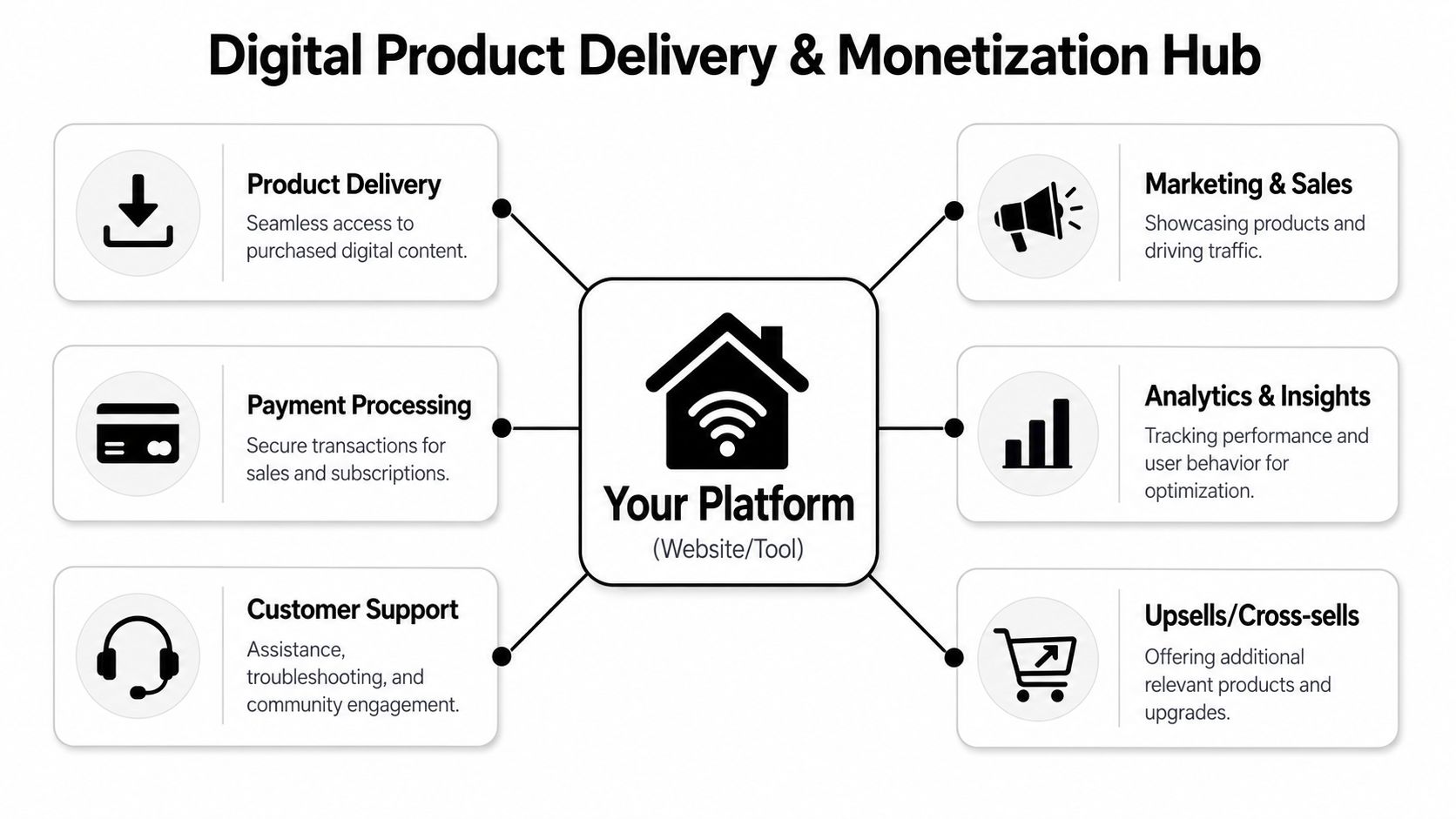
A useful delivery hub should combine several jobs in one place.
This is why platform choice isn't a back-office decision. It shapes monetization and member experience at the same time.
For associations, a platform should reflect how members already engage. If your organization runs memberships, events, content libraries, and private communication in parallel, separating product delivery into yet another disconnected system creates friction.
One option in that category is membership platform software for associations and communities, where content delivery can sit alongside member management, events, and communication instead of being treated as a separate storefront. The underlying principle is more important than the tool choice. Put products where your members already return.
If members have to remember a new login, hunt through old emails, and guess which version is current, delivery is working against monetization.
The best digital product portfolios don't feel like isolated purchases. They feel like a connected member environment.
A launch doesn't need a huge campaign. It needs timing, message discipline, and a clear operational checklist. Associations have an advantage here because they already own trusted channels. The mistake is using those channels only once, usually in a generic announcement email.
A cleaner launch sequence looks like this:
Pre-launch interest
Announce the problem being solved before announcing the product. This helps members self-identify.
Founding access
Offer early access to a small member segment, pilot cohort, or waitlist. This creates better feedback and stronger internal proof.
Public release
Share the product across newsletter, community feed, chapter leaders, event programming, and partner channels with specific messaging for each group.
Post-launch reinforcement
Promote usage, not just purchase. Highlight one template, one lesson, one replay, or one outcome at a time.
If your team wants a compact operational reference, these essential launch steps for product rollouts are useful for making sure the release doesn't miss basic dependencies.
Don't copy the same launch copy into every channel. Each one does a different job.
Launch messaging should answer three questions fast. Who is this for, what problem does it solve, and what happens after someone buys it?
Associations don't need complicated legal theater for a first product, but they do need the fundamentals.
Use a short legal checklist:
The legal standard isn't about sounding formal. It's about preventing confusion when the product starts moving through teams, employers, and partner organizations.
A first product should not stand alone. It should act like the opening move in a system your association can repeat.
That system is simple: listen, build, deliver, repeat.
Improvement comes when teams stop asking, "How do we make a digital product?" and start asking, "How do we run a digital product program?" The difference is discipline.
A program has these traits:
For many associations, a sensible early portfolio looks like a ladder rather than a catalog.
| Stage | Product type | Purpose |
|---|---|---|
| Entry | Guide, checklist, or replay bundle | Quick value and easy adoption |
| Core | Toolkit or short course | Stronger transformation and monetization |
| Expansion | Premium library, cohort, or team access | Deeper retention and non-dues revenue |
| Renewal | Updated versions and companion products | Ongoing member relevance |
That pattern works because each product teaches you something about segment demand, pricing tolerance, support load, and content maintenance.
Associations often have too much expertise and too many stakeholders. That creates a temptation to launch multiple product lines at once. Resist it. A narrow portfolio with clear ownership beats a broad portfolio with scattered accountability.
The strongest early program usually comes from one audience, one painful problem, one repeatable format, and one reliable delivery path. Once that works, expansion becomes operational rather than speculative.
A mature digital product strategy doesn't produce more files. It produces a repeatable way to turn member needs into trusted, accessible solutions.
If you're serious about how to make digital products that your community will buy, don't start with content volume. Start with demand signals, scope discipline, and a delivery model members can return to without friction.
If your association wants one place to manage memberships, events, communication, and digital product delivery together, GroupOS is built for that operating model. It gives professional communities a branded hub where paid resources, on-demand education, member access, and engagement can live in the same system instead of being scattered across separate tools.