January 3, 2026

Before you even dream of sending a single sponsorship email, you need a rock-solid strategy. It all starts with getting crystal clear on what makes your event special, who exactly is in your audience, and what you’re trying to achieve. Nail this foundation, and you’re no longer just asking for money—you're presenting a can't-miss business opportunity.
Forget about drafting a list of dream sponsors for now. The real work, the stuff that actually gets you a "yes," happens long before that. This foundational stage is everything because it answers the one question every potential sponsor has on their mind: “What’s in it for me?” If you can't answer that with confidence and data, your outreach is dead on arrival.
Landing great sponsors isn't about luck; it's about doing your homework. You have to learn to see your event through a sponsor's eyes. What makes your gathering the perfect place for them to connect with their ideal customers?
Your event's unique value proposition (UVP) is the heart of your pitch. It’s a short, powerful statement that explains the benefit you offer and what makes you different from every other event out there.
Don't just say you host a "great tech conference." That's generic. Get specific. For instance, "We're the only West Coast conference built exclusively for early-stage SaaS founders, giving them direct access to a hand-picked group of angel investors and VCs."
See the difference? That kind of precision immediately grabs the attention of any sponsor trying to reach that specific market.
Let's be clear: sponsors aren't paying for access to your event. They're paying for access to your audience. You need to know that audience like the back of your hand. Go way beyond just attendee numbers and dig into the real details.
This is the kind of intel that lets a potential sponsor see a perfect match between your attendees and their target customers. It makes their decision to invest a whole lot easier. You can collect a ton of this information right at registration.
Custom registration forms like this are gold. They give you the exact data points you need to prove your audience is the right fit for a potential partner.
Your sponsorship goals should be bigger than just a dollar amount. Having clear objectives shows you're a strategic thinker and helps you find partners who are genuinely aligned with your vision. Think about goals like:
There's a reason sponsorship has become such a huge part of event strategy. Recent data shows that 88.4% of event marketers believe sponsorships are their most effective revenue source. What’s more, nearly a third of organizers measure an event's success by the quality of the sponsors they bring on board. This just proves how important it is to be strategic from day one.
Putting all of this down on paper is a non-negotiable step. A well-organized plan not only keeps your team on track but also becomes the source material for all your sponsorship proposals. If you need help structuring this, check out our guide on creating a comprehensive event brief format.
Alright, you’ve nailed down your event's value and you know your audience inside and out. Now for the fun part: building the actual sponsorship packages you’re going to sell.
Let's be clear: the days of just slapping "Gold, Silver, Bronze" on a PDF and calling it a day are long gone. Today's sponsors are sophisticated marketers looking for a clear return on their investment. They expect to see a story of escalating value, not just a menu of logos on a banner.
Think of yourself less as someone selling ad space and more as a business partner creating strategic opportunities. Your job is to build a set of options so compelling that a potential sponsor can instantly see how partnering with you helps them crush their goals.
This all starts with a solid foundation.

As you can see, everything flows from a deep understanding of your event's purpose and the community you serve. Get this right, and the packages practically build themselves.
Before you can put a price tag on anything, you need to know exactly what you have to sell. This means taking a complete inventory of every single asset—every touchpoint where a sponsor could possibly connect with your audience has value.
It's time to open up a spreadsheet and get granular. Think about both the physical and digital real estate you have.
Don't sleep on the value of your digital assets. A sponsor profile page within an event platform isn’t just a static logo; it's a dynamic lead-gen tool with built-in analytics that prove its worth.
Once you have your complete asset list, you can start bundling them into logical tiers. The absolute key here is to create obvious, clear differentiation between each level. A prospect should immediately understand why the Gold tier costs more than Silver and what tangible benefits they get for that extra investment.
A great way to approach this is to structure your tiers around common sponsor objectives:
Your top-tier packages absolutely must offer genuine exclusivity. This could be category exclusivity (e.g., "The Official Financial Services Partner") or asset exclusivity (e.g., being the sole sponsor of the keynote address). Scarcity creates urgency and justifies a premium price point.
To really make these packages compelling, it helps to understand the power of experiential marketing. This is about creating memorable, immersive brand interactions that attendees will remember long after the event ends.
Below is an example of how you can structure these tiers to show escalating value clearly.
This table format makes it incredibly easy for a potential sponsor to compare the packages and see exactly where the added investment goes.
While tiered packages give you a fantastic starting point, some of the biggest and best sponsorship deals I've ever closed came from a willingness to customize.
Always leave the door open for a "Build Your Own" or "À La Carte" option. It tells potential partners that you're a flexible collaborator, not just a rigid vendor.
For instance, a sponsor's main goal might be establishing thought leadership. Your standard Gold package might not be a perfect fit, but a custom deal that includes a pre-event webinar, a moderated panel session, and a sponsored whitepaper sent to all attendees? That’s an immediate yes for them. This flexibility is often what it takes to get those high-value contracts signed.
If you're looking for more inspiration, our complete guide to building event sponsorship packages has several more templates and creative ideas you can use.
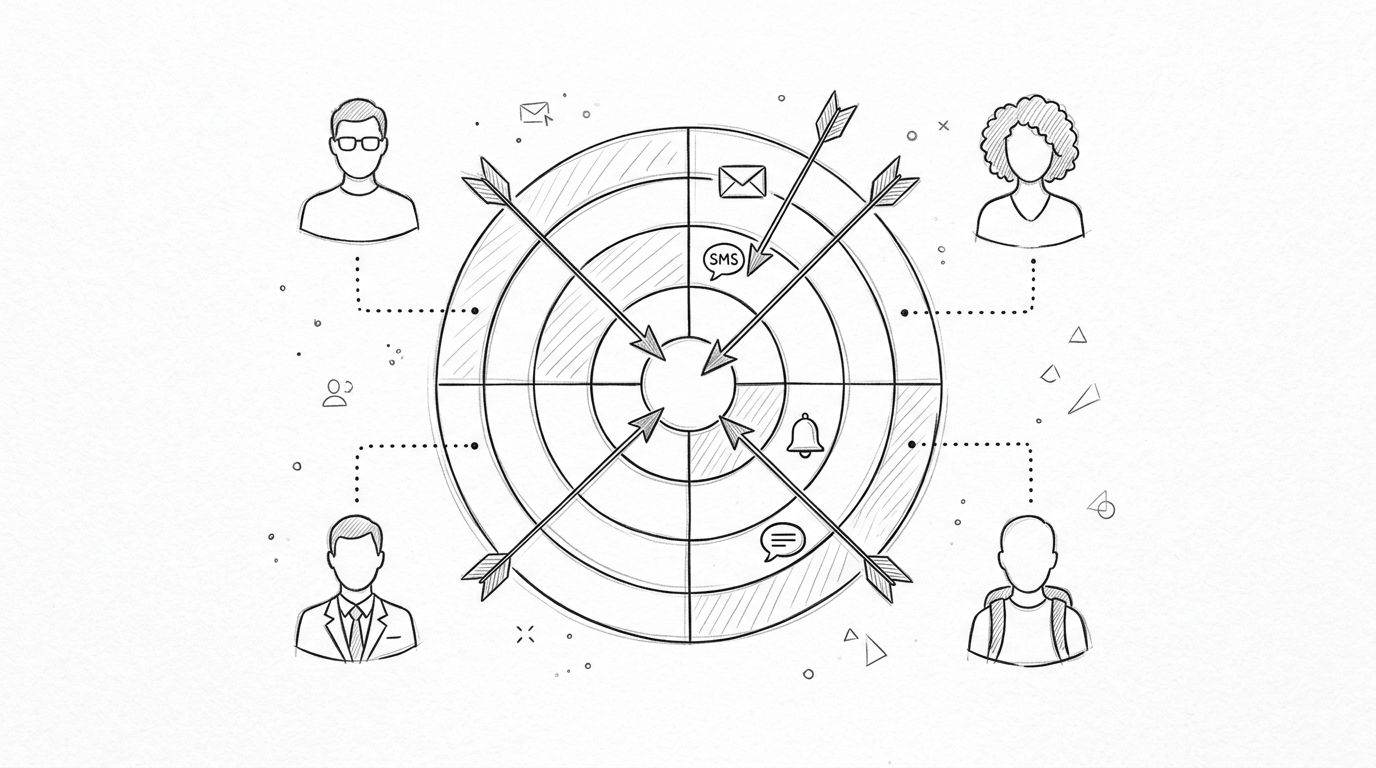
Sending out a generic sponsorship proposal is like throwing darts in the dark. You might get lucky, but you'll waste a ton of time and energy missing the board completely. The real secret to landing sponsorships isn't about volume; it's about precision. It’s time to stop pitching brands that will never say yes.
Instead, a focused, research-driven approach will dramatically boost your success rate. This means building a highly targeted list of prospects and then qualifying them to make sure your pitch isn't just seen, but actually welcomed.
Before you even think about hunting for specific companies, you need to know exactly what you’re looking for. Think of it as creating a persona for your perfect sponsor. This profile is built on three key pillars of alignment that signal a strong potential partnership.
A great place to start is by looking for brands that:
Once you know the type of company you're looking for, it's time to find them. General web searches are okay, but specialized tools will give you a serious edge in tracking down the right decision-makers.
The goal isn't just to find a company; it's to find the specific person within that company who holds the purse strings for sponsorships. This is usually a brand manager, event marketing lead, or community partnership director—not the CEO.
Use powerful platforms to zero in on these key contacts:
Finding a prospect is only half the battle. The crucial next step is qualification—doing your homework to confirm they are a good fit right now. This extra bit of research is what elevates your pitch from a generic ask to a compelling, timely business proposal.
While global sponsorship budgets are growing—projected to nearly double from $97.4 billion in 2022 to $189.5 billion by 2030—sponsors are getting much more selective. In fact, 45% of brands have recently renegotiated sponsorship deals, demanding stronger ROI and real engagement over just slapping a logo on a banner. This trend, highlighted in corporate sponsorship statistics from DoubleTheDonation.com, proves that a well-researched, relevant pitch is more important than ever.
To ensure your outreach is laser-focused, dig into their recent activities. Look for new product launches, major marketing campaigns, or company news that ties into your event's theme. Mentioning this in your outreach email shows you’ve done your homework and aren't just spamming their inbox. For a deeper dive into this process, check out our detailed guide on how to find corporate sponsorship.
You’ve done the hard work of building your prospect list. Now for the moment of truth: reaching out. Let’s be honest, a generic, copy-pasted email is a one-way ticket to the trash folder. To even get a reply, you have to show you've done your homework.
This is your first impression, and it’s not about begging for money. It's about starting a genuine conversation and proving you understand what the sponsor is trying to achieve. Your initial outreach sets the tone for the entire relationship, so make it count by focusing on their world, not just yours.
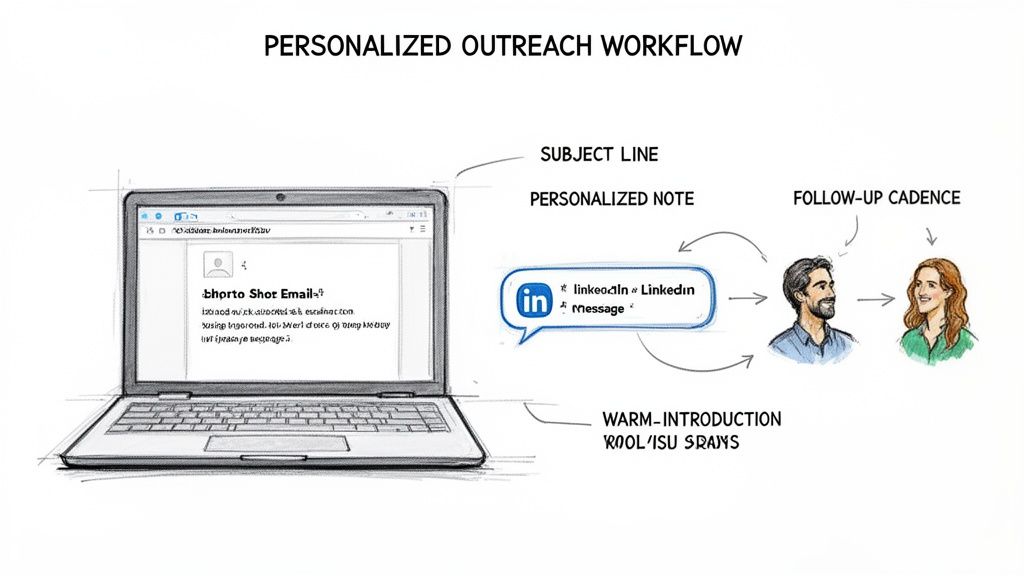
Before you ever send a cold email, pause and check your network. A warm introduction through a mutual connection is infinitely more powerful. It’s the difference between knocking on a locked door and having someone open it for you.
Hop on LinkedIn. See if you, a colleague, a board member, or even an advisor shares a connection with your target contact.
A quick intro is all it takes. Ask your mutual connection to send a simple note like, "Hey [Sponsor Contact], I wanted to connect you with [Your Name]. They're putting on an event that I think would be a perfect match for what [Sponsor Company] is focused on right now. Are you open to a brief chat?"
This simple act immediately gives you credibility and social proof, making it almost impossible for your email to be ignored.
When a warm intro just isn't in the cards, a killer cold email can still break through. The secret? Personalization and brevity. Seriously. Your only goal here is to get a reply and start a conversation, not to close the deal on the spot.
A solid first email has a few key ingredients:
Remember, outreach is a conversation starter, not a monologue. Keep it tight, focused, and centered on mutual benefit. You’re presenting a business opportunity, not just asking for a check.
Decision-makers are slammed. One email, no matter how perfect, will almost always get buried. That's why you need a strategic follow-up plan—a multi-touch cadence—to stay on their radar without being annoying.
This just means using different channels over a short period to make a connection.
Here’s a simple but incredibly effective cadence I’ve used time and again:
This structured process shows you’re professional and persistent, not pushy. For a deeper dive into crafting the perfect pitch document, we cover everything in our complete guide on creating an event sponsorship proposal template.
Getting an email back that says, "Yes, we're interested" is a fantastic moment. But don't pop the champagne just yet—this is where the real work begins. The negotiation phase is where you transform a potential transaction into a genuine partnership. It's a conversation, not a confrontation.
Your aim here is to find that perfect middle ground where both you and your sponsor feel like you've scored a major win. You're not just selling ad space; you're offering a concrete solution to their marketing goals.
Almost every sponsor will have some pushback. It’s a completely normal part of the process, so don't get discouraged. Being ready for the usual objections helps you respond thoughtfully instead of getting defensive.
The secret to a great negotiation is to stop selling and start solving. Listen to what they’re really saying, figure out their underlying objective, and then propose a creative solution that gets them there. This approach turns a potential obstacle into a chance to prove your value.
Once you’ve shaken hands (or hit "reply" on that confirmation email), it’s time to get it all down in writing. A formal sponsorship agreement isn't optional. It’s the essential document that protects both of you by making sure all expectations are crystal clear from the start.
Seriously, never start working on deliverables without a signed contract. It’s the best way to avoid miscommunications and headaches later on.
A good contract is your roadmap for the partnership, leaving no room for "I thought you meant..." conversations. Make sure your agreement is straightforward and covers these key points:
Finalizing the contract isn't just a box to check. It's the final piece in building a foundation of trust. It ensures everyone is on the same page and sets the stage for a fantastic partnership.
Getting that signed sponsorship agreement is a huge win, but don't pop the champagne just yet. The real work starts now. The period between signing the contract and sending the final report is where you cement a long-term partnership or end up with a one-time transaction.
Your focus has to shift from pitching value to actually delivering it. This is about more than just slapping a logo on a banner; it’s about creating memorable experiences that genuinely connect the sponsor's brand with your attendees. You’re bringing their brand to life inside your event.

Sponsor activation is the difference between passive exposure and active engagement. It’s how you make a sponsor feel like an integral, value-adding part of the event instead of a commercial that attendees tune out.
Great activation ideas work both in the physical space and online.
To really show your sponsors a solid return, you need to understand effective strategies to build lasting brand awareness, as this is often their primary goal. Your activation plan should be built around supporting this objective.
Sponsors answer to their CMOs and CFOs, and they need hard numbers to justify their spend. The days of getting by on vague promises of "brand exposure" are long gone. You need to deliver tangible proof of their return on investment (ROI).
This is where your event technology becomes absolutely critical.
Your event platform is a goldmine of data. It lets you track the specific metrics that sponsors are desperate for, turning abstract ideas like "engagement" into concrete data points they can take back to their team.
Don't wait until the event is over to figure out your reporting. Plan your tracking strategy from day one. Know exactly which KPIs you'll measure for each sponsor and make sure your tech is configured to capture that data.
The right platform gives you a crystal-clear view of how each sponsor is performing. For example, a sponsor profile in your event app should be more than a static page—it should be a lead generation and analytics machine.
Within a week of the event wrapping up, you need to be in your sponsor's inbox with a custom post-event impact report. This isn't just a nice-to-have; it's your most powerful tool for securing a renewal. Think of it as the final, and most important, deliverable.
Your report should be visual, to the point, and loaded with data. Make sure it includes these key pieces:
This professional follow-up proves you’re invested in their success, and it's the single best thing you can do to boost your sponsor retention rate.
If you're diving into the world of event sponsorships, you probably have a few questions. It's a complex space, but with the right approach, you can master it. Here are some straightforward answers to the questions we hear most often from organizers just like you.
This is a big one. For larger, more intricate events, you need to start the conversation a good 9-12 months out. Trust me on this. For smaller or more local community events, a 4-6 month runway usually works.
Why so early? It’s all about timing their budget cycles. Most companies lock in their marketing and sponsorship budgets annually or quarterly. Getting your proposal in front of them while they're still in planning mode is crucial. If you wait too long, the money is already spoken for.
Plus, a longer lead time gives you the space you need for proper prospecting, back-and-forth negotiations, and genuinely weaving the sponsor into your event's story—not just slapping their logo on a banner at the last minute.
Easy. Sending a generic, copy-paste proposal. It's the fastest way to get deleted.
These pitches almost always scream, "I need money," instead of "Here's how we can help you achieve your goals." It immediately tells the potential sponsor you haven't done your homework and don't really value their partnership beyond the check they might write.
To stand a chance, every single pitch needs to be personal. You have to show them you get their brand, understand who they're trying to reach, and have a clear idea of their current marketing focus. Your job is to connect the dots and spell out exactly how your event helps them get a measurable win.
A personalized pitch proves you’re looking for a partner, not just a piggy bank. It shows you’ve put in the work to understand their world before asking them to invest in yours. This shift in mindset is what separates the "yes" from the "no response."
Pricing your sponsorship packages is part art, part science. I always tell people to anchor their pricing around three key elements:
My advice? Start by listing out every single asset you can offer. Assign a fair market value to each one, then start bundling them into tiered packages that make sense. It’s also smart to see what similar events in your space are charging to make sure you're in the right ballpark. But always be ready to defend your pricing by clearly showing the ROI a sponsor can expect.
Juggling all these moving parts—from attendee lists to sponsor promises—is where things can get chaotic. GroupOS is an all-in-one platform built to simplify your event management. You can prove sponsor ROI with clear analytics and build an engaged community that keeps coming back. See how you can transform your event strategy at GroupOS.com.