January 6, 2026
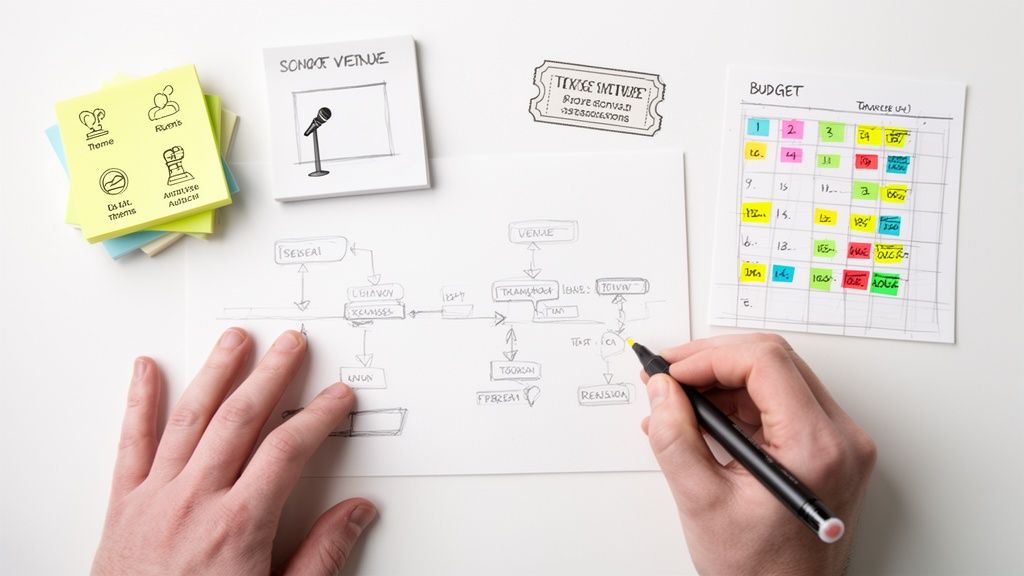
Before you even think about venues or catering, the success of your event hinges on one thing: a rock-solid foundation. This isn't just about picking a date and a theme; it's about digging deep to define what you want to accomplish and who you're doing it for. Every single decision you make down the line—from marketing copy to session topics—will flow from this initial strategy.
Get this part right, and you’re not just planning another gathering. You're engineering an experience that delivers real, measurable results for your association and its members.
Let's start with the big questions. Why are we hosting this event? What's the core objective? Who, specifically, are we trying to attract? And, critically, how will we know if we’ve hit the mark?
Answering these questions gives your entire team a North Star. It provides clarity and focus, turning a vague idea into a strategic initiative. Without this, you’re just hoping for the best; with it, you're building a roadmap for success.
Your event shouldn't be an isolated project. It needs to be a powerful tool that directly supports your association's overarching goals.
Is member retention your top priority this year? Then your event's primary goal should be to deliver such undeniable value that attendees can't imagine not renewing. If generating non-dues revenue is the focus, then the goal shifts to maximizing ticket sales and locking in high-value sponsorships.
Here are a few common goals we see associations build their events around:
Once you’ve landed on a primary goal, distill it into a simple, powerful mission statement for the event. Something like: "To equip early-career finance professionals with the skills and network to advance their careers, reinforcing our association as the industry's essential resource." This statement becomes the gut check for every decision you make. For a more structured approach, you can formalize this thinking by using a detailed guide to create an event brief format.
Knowing your audience is about more than just job titles and demographics. You need to get inside their heads. What are their biggest professional challenges? What motivates them? What are they hoping to walk away with after spending their time and money with you?
Creating a detailed attendee persona—a semi-fictional profile of your ideal guest—is one of the most valuable exercises you can do.
Give this person a name, a role, and a backstory. What professional hurdles are they facing? What kind of content or connection would make them feel like you truly understand their world?
Pro Tip: Don't operate on assumptions. The best insights come directly from your members. Use surveys, run polls in your online community, and have real conversations. Ask what they loved (and didn't) about past events. This feedback is pure gold.
This deep understanding is what transforms a generic theme like "Annual Tech Summit" into something targeted and compelling, like "Future-Proofing Your Tech Career." The second one speaks directly to a specific need, turning a generic meeting into a must-attend experience. It also makes your marketing infinitely more effective because you can craft messages that resonate with the right people for the right reasons.
Okay, you’ve got the big idea for your event. Now for the nuts and bolts: money and time. A well-planned event really boils down to two things: a solid budget and a timeline that keeps everyone on track. This isn't just boring admin work; it's the strategic framework that turns a great concept into a smooth, profitable reality.
Getting this right is more important than ever. The global events industry is booming, projected to hit $1.9 trillion by 2029. That kind of growth means the line between a standout success and a costly misstep is all in the planning.
The aim here is to build a budget that sees everything coming—from the big-ticket items like the venue to the tiny details that can quietly drain your funds if you're not watching.
Let's talk numbers. The best way to start is by listing every single potential expense. I'm a fan of a detailed spreadsheet, but a dedicated platform works just as well. The key is to break it all down into categories so you can see exactly where the money is going.
Here are the non-negotiables for any event budget:
Here’s a pro tip I swear by: always add a contingency line item of 10-15% of your total budget. This is your safety net for those inevitable surprises, like a last-minute equipment rental or a sudden price hike from a vendor.
A budget isn't meant to be a ball and chain. Think of it as your roadmap for making smart decisions. It shows you where you can splurge to create an amazing attendee experience and where you need to be a little more creative.
For a deeper look at the nitty-gritty of financial planning, our guide on budgeting an event is a great resource. This is also where an integrated system like GroupOS really shines. By linking ticket sales directly to your budget, you get a live look at your financial health, which lets you make adjustments on the fly as revenue flows in.
This helpful timeline shows how your initial vision sets the stage for every financial and scheduling decision you'll make.
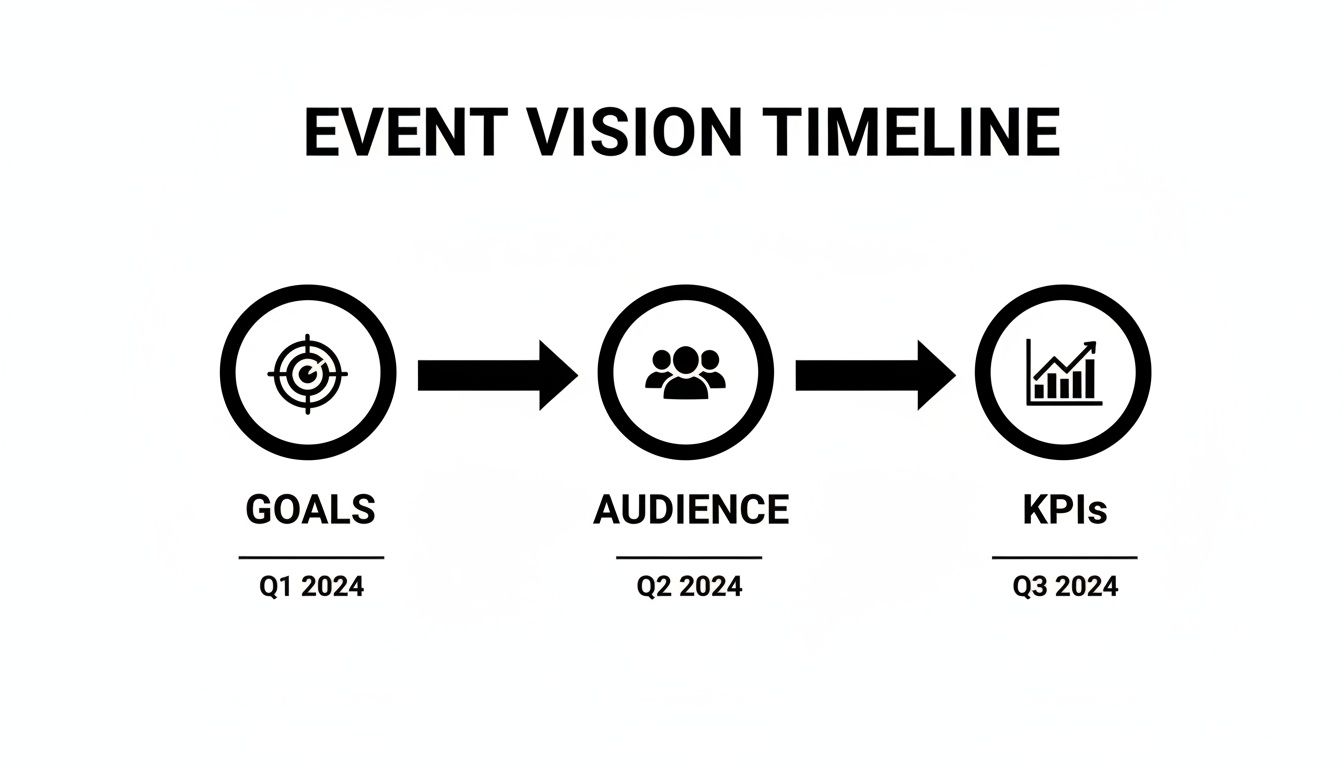
As you can see, defining your goals, audience, and key metrics has to come first. These foundational decisions drive everything else.
To help you visualize this, here’s a sample breakdown of where your funds might go for a mid-sized professional conference.
This table provides a sample budget allocation for a mid-sized professional conference, helping organizers anticipate key expense categories and their typical percentage of the total budget.
Remember, these percentages are just a starting point. Your specific event might have different priorities, so adjust them to fit your unique goals and audience needs.
Your timeline is the command center for the entire event. From my experience, the most foolproof way to build one is to work backward from the event date itself. This "reverse-engineering" approach is a lifesaver for making sure no critical deadline gets missed.
Start with your event day and plot your major checkpoints in reverse.
Managing all these moving parts requires a tight workflow. Learning about improving workflow efficiency and boosting productivity is a game-changer for staying on top of your budget and timeline. Think of a well-oiled workflow as the engine that keeps your entire plan moving forward.
Let's be honest—your venue and vendors can make or break your event. They aren't just line items on a spreadsheet; they are the physical experience you’re creating for your members. Picking the right partners can turn a good event into a legendary one, while the wrong ones... well, they can cause headaches you didn't even know were possible.
This is where you put on your detective hat and your negotiator hat at the same time.
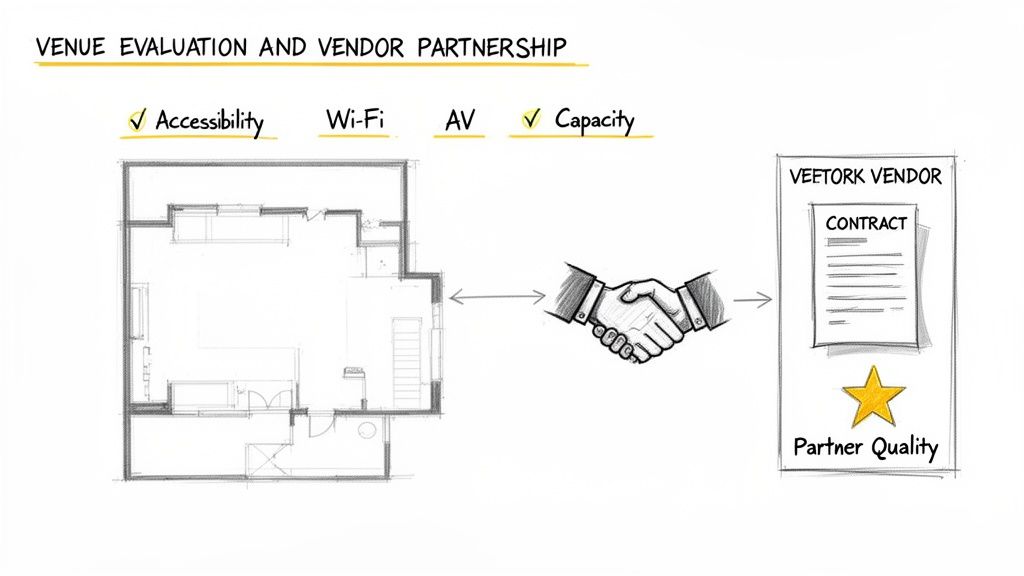
Finding a venue isn't just about four walls and a roof. It’s about the feeling of the space and how it serves your attendees from the second they arrive. A great venue scout looks past the square footage and focuses on the experience.
Before you even start Googling, map out your absolute must-haves. Think about the entire attendee journey. Can they easily find parking, or is it a confusing nightmare? Is the venue a quick walk from the nearest public transit? Once they’re inside, does the layout make sense, or will people get lost trying to find the breakout rooms?
Here’s a practical checklist to run through during your site visits:
A quick pro-tip: The contract a venue sends over is just a starting point. Everything is negotiable. Ask them to throw in complimentary Wi-Fi, waive the cake-cutting fee, or give your attendees a discount on parking. A venue that wants your business will be willing to work with you.
Once you’ve narrowed it down, it's time to get into the nitty-gritty of the contracts. This same level of detailed review should apply to every single vendor you bring on board.
Your caterer, your A/V crew, your photographer—they are all extensions of your brand for the day. You’re not just hiring hands; you're building a team that needs to be as invested in your event's success as you are.
When you're looking for vendors, dig deeper than their slick websites and brochures. Ask for references from past clients, especially from associations or events that are a similar size to yours. One of my favorite questions to ask a potential vendor is, "Tell me about a time something went wrong at an event and how you handled it." Their answer tells you everything you need to know about their ability to think on their feet.
Before you sign on the dotted line, make sure you have crystal-clear answers to these questions:
Managing all your exhibitor and sponsor details can feel like a full-time job in itself. This is where a tool like GroupOS can be a game-changer. Instead of endless email threads and outdated spreadsheets, you can create a dedicated portal for each partner. They can upload their own logos, booth descriptions, and marketing materials, which saves you a ton of administrative work.
When sponsors can manage their own presence so easily, it makes your event a much more attractive and professional opportunity—and that makes it far easier to secure those high-value partnerships year after year.
You’ve got the vision, the venue, and the speakers lined up. But a perfectly planned event is just an empty room until people actually show up. This is where we shift from logistics to people—and it all comes down to a smart marketing plan and a registration process so smooth it feels effortless.
Forget the old "spray and pray" approach to promotion. Today, it’s about building a multi-channel campaign that creates real excitement and turns curious prospects into confirmed attendees.
Your marketing begins the moment you define your message. Think back to that ideal attendee persona you built earlier. What problems are you solving for them? Your message shouldn't just be a list of speakers and sessions; it needs to scream value.
Instead of a flat "Join our annual conference," try something that hits a nerve: "Master the skills to lead your team through the industry's next big shift." The first is an announcement. The second is a solution.
This value-first language is the golden thread you'll weave through every piece of marketing:
To really expand your reach, you'll want a solid guide to paid social media strategy for rapid growth. Paid ads are your secret weapon for targeting professionals by job title, industry, or specific interests, making sure your message lands in front of the people who need to see it most.
Relying on a single channel is a recipe for a half-empty room. A successful campaign layers different tactics to create a steady drumbeat of promotion that keeps your event top of mind. The trick is to find the right blend of owned, earned, and paid media.
Owned Media (Your Channels)
Earned & Paid Media (External Channels)
The great news is that the industry is buzzing with optimism. Recent data shows 53.1% of organizers are seeing attendance numbers climb, and a whopping 66% of organizations plan to host more events. This means your audience is actively looking for great experiences, making your marketing that much more critical.
Every single one of your marketing efforts funnels people to one destination: your registration page. If that page is clunky, confusing, or slow, you've just wasted all your hard work. Every extra click and unnecessary form field is a reason for someone to abandon ship.
Your registration page isn't just a form; it's the final, crucial step in your marketing funnel. It needs to be as thoughtfully designed as your emails and social ads, because a seamless experience here reinforces the professionalism of your entire event.
This is where an integrated system like GroupOS gives you a serious edge. You can build a branded, intuitive registration flow that lives right inside your community platform, keeping the experience consistent.
Here’s what every high-converting registration page needs:
When you pair a compelling message with a smart promotional strategy and a dead-simple registration process, you create a powerful engine that drives attendance and sets you up for a sold-out success.
After months of planning, event day is finally here. This is where all the spreadsheets and emails turn into a real, live experience. It's also where a tiny oversight can quickly become a major headache. The secret to a smooth on-site experience isn’t about micromanaging every detail; it’s about leading with confidence and being ready to adapt.
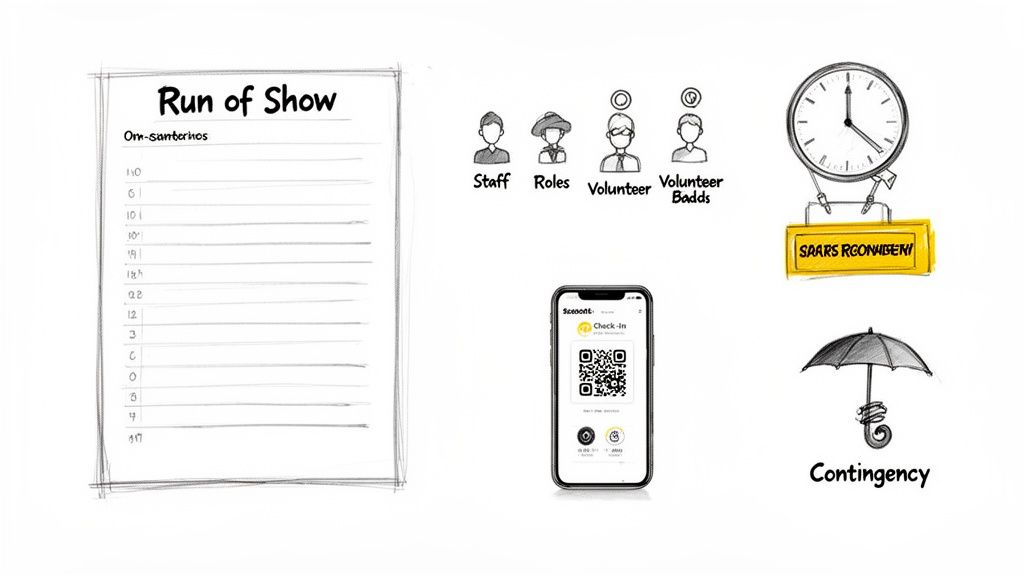
The goal is to create an environment where your team feels empowered, your attendees are well taken care of, and you have a game plan for when things inevitably go sideways. It’s all about turning potential chaos into a memorable, seamless day for everyone.
On event day, your most critical tool is the run-of-show. Think of it less as a schedule and more as a hyper-detailed, minute-by-minute script for everything and everyone. A truly great run-of-show is so thorough that if you had to step out, a colleague could take over without missing a single cue.
This document goes way beyond session times. It should be packed with every operational detail.
This level of detail gets rid of any guesswork and empowers your team to make decisions. When everyone knows what’s happening and when, you’re free to manage the big picture.
Let's be real: you can't be everywhere at once. Your event’s success rides on having a well-briefed and empowered team of staff and volunteers. Before you open the doors, get everyone together for a mandatory all-hands meeting. Walk through the run-of-show and make sure every single person knows their role.
They need to understand their specific duties, who their point person is, and how to communicate if something goes wrong. A great tip is to give every volunteer a one-page "at-a-glance" sheet with a venue map, the Wi-Fi password, and answers to common questions.
A well-informed team is your first line of defense against chaos. When a volunteer can confidently answer an attendee's question without having to track you down, it elevates the entire experience and frees you up to handle high-level issues.
This is especially true at the check-in desk, which sets the first impression. Nothing frustrates attendees faster than a slow, clunky registration line. Using QR codes for instant check-in isn't just a nice-to-have anymore; it's what people expect. A fast check-in process not only keeps attendees happy but also gives you accurate, real-time attendance data.
For professional associations, the right tech makes all the difference. You can learn more about how a dedicated event check-in app can get rid of long lines and give your members a professional welcome from the moment they walk in.
I can guarantee one thing: no matter how perfectly you plan, something will go wrong. A speaker will get stuck in traffic. The projector bulb will burn out. A sudden downpour will soak your outdoor networking session. The difference between a minor hiccup and a full-blown disaster is a solid contingency plan.
Before the event, sit down and brainstorm what could go wrong. What’s your backup if the keynote’s flight gets canceled? Do you have an indoor space on hold? Who has the authority to make a call if the fire alarm goes off?
Here’s a simple way to frame your contingency planning:
Having this document ready means you aren't scrambling in the moment; you're just executing a plan you already made. This calm, prepared approach to how to do event planning is what separates the pros. It gives your team, your vendors, and most importantly, your attendees, complete confidence in your event.
Even with the best checklist in hand, planning a major professional event always brings up questions. It's just the nature of the beast. Let's tackle some of the most common hurdles association leaders face, drawing from years of experience in the trenches.
Before you even think about a venue or a date, you have to nail down your "why." Seriously. What is the core purpose of this event? Are you trying to drive non-dues revenue, deliver critical education to your members, or just get everyone in the same room to build a stronger sense of community?
Get crystal clear on that first. Your goals will become the North Star for every single decision that follows, from the session topics to the marketing copy. Once you know your "why," figuring out your "who"—the target audience—is the next logical move. Everything you do should serve them. This foundational clarity is what separates a good event from a great one.
Start by brainstorming every possible cost, even the tiny ones. I like to group them into big buckets like Venue, Catering, Marketing, Speakers, and Tech so I can see where the money is really going. Do a little homework to find out the going rates for major items in your area; don't just guess.
Here’s a non-negotiable tip: set aside 10-15% of your total budget for a contingency fund. Think of it as your "stuff happens" insurance, because something unexpected always comes up. Using a platform with built-in ticketing is also a game-changer, as it lets you see revenue rolling in against your expenses in real-time. This helps you pivot and make smarter financial calls on the fly.
The rookie mistake is forgetting about the "invisible" costs. Things like credit card processing fees, event insurance, or temporary staffing can nibble away at your budget until it's gone. Track every single line item—it’s the only way to stay in the black.
This really boils down to the size and complexity of your event. While there's no magic number for how to do event planning, you can follow some solid rules of thumb.
No matter what, your first move should always be to lock in your venue and keynote speakers. Their availability creates the anchor points for your entire production schedule.
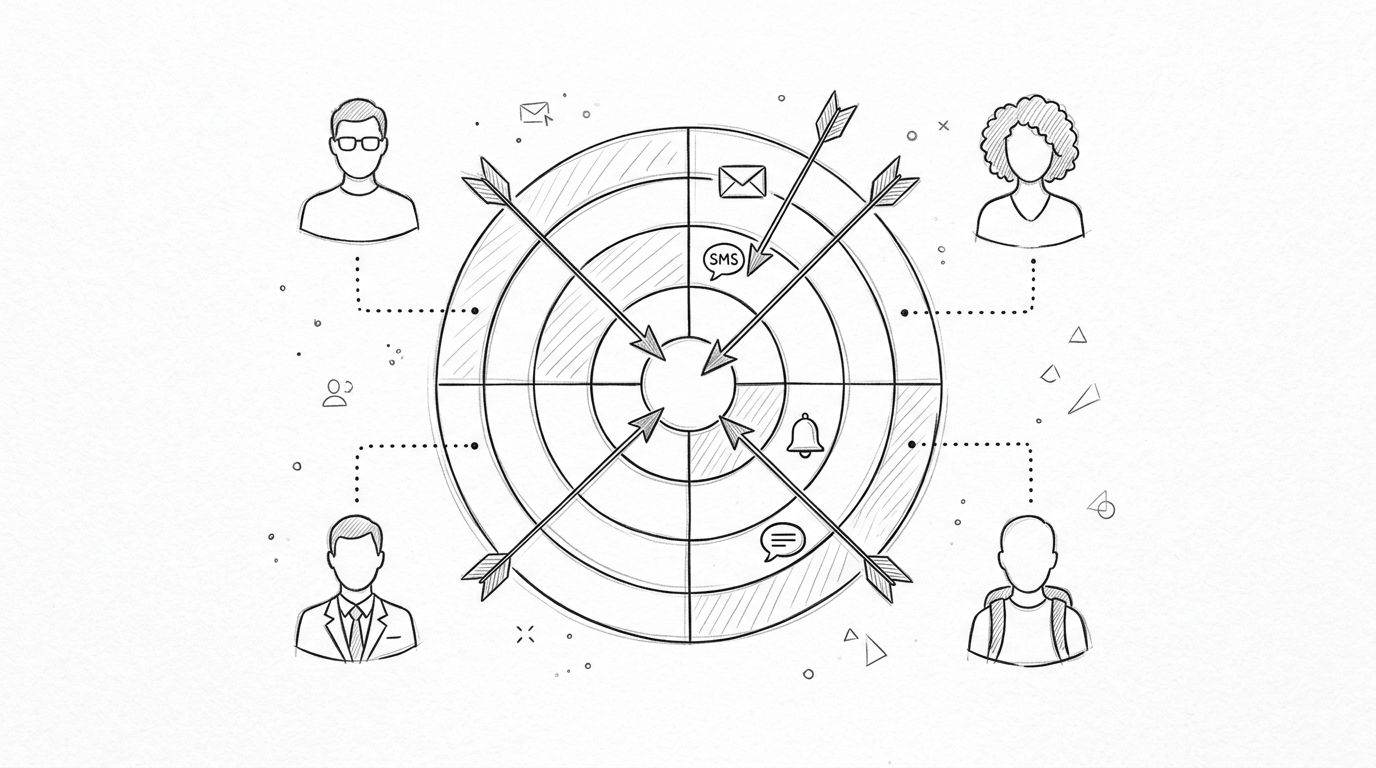
Don't put all your eggs in one basket. The best approach is a multi-channel one that hits your audience from a few different angles. Always start with your most valuable asset: your member email list. It’s your warmest audience and your most direct line of communication.
From there, get active on your social media channels. Share sneak peeks, speaker announcements, and behind-the-scenes content to build some buzz. Create a unique event hashtag and use it everywhere. Don’t be shy about asking your speakers and sponsors to promote the event to their own followers—their endorsement is marketing gold and extends your reach massively. And for associations, never underestimate the power of content; writing a few blog posts or creating short videos about your event’s core topics is a fantastic way to prove its value.
Ready to stop juggling spreadsheets and a dozen different tools? GroupOS brings everything you need to manage your events, members, and community into one seamless platform. From building beautiful registration pages in minutes to tracking your revenue in real-time, our tools are built to make your job easier so you can focus on creating those unforgettable experiences. Start your free trial today and see how GroupOS can transform your event planning process.