January 1, 2026
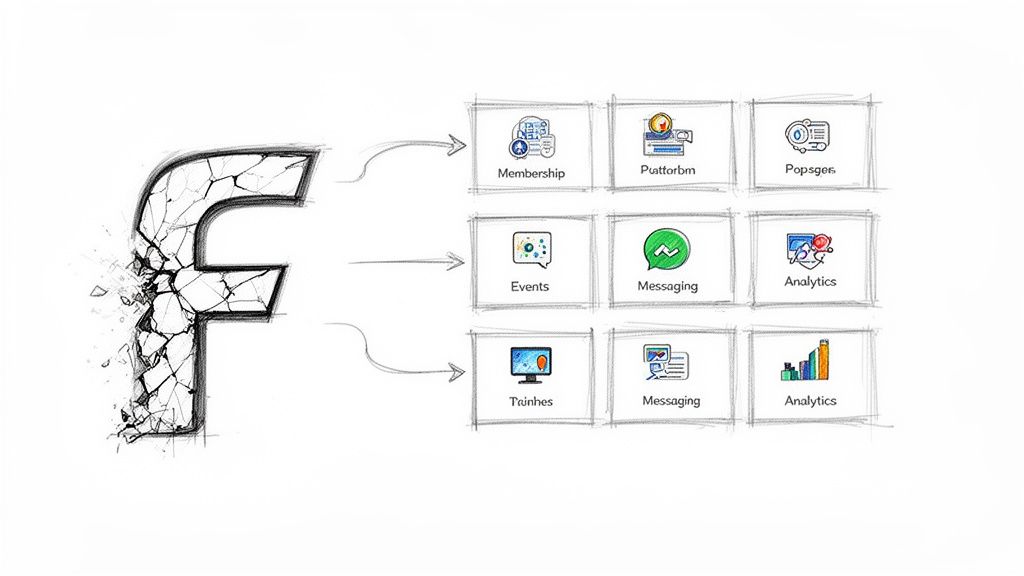
For years, Facebook Groups served as the default digital gathering place for professional associations, event planners, and community managers. They were accessible, familiar, and free. However, that convenience came at a cost: distracting algorithms, limited data ownership, poor monetization tools, and a user experience designed for casual social scrolling, not focused professional engagement. As a result, many leaders are now seeking a dedicated alternative to Facebook that offers greater control, deeper member engagement, and a branded, professional environment.
This comprehensive guide is designed to help you navigate that transition. We've curated a list of the best platforms built for building, managing, and scaling professional communities. You won't find generic descriptions here. Instead, we provide a detailed analysis of 12 distinct options, from decentralized networks like Mastodon to all-in-one community platforms like Circle and Hivebrite. For a deeper dive into why communities are seeking new platforms, consider exploring discussions on the evolving landscape of social media and the rise of recommendation media.
Each entry in this listicle includes:
Our goal is to cut through the marketing noise and give you the practical insights needed to choose the right foundation for your community's future. Whether you're migrating a thousand-member association or launching a new event-based network, this resource will equip you to make an informed decision. Let's explore the platforms that put community managers back in control.
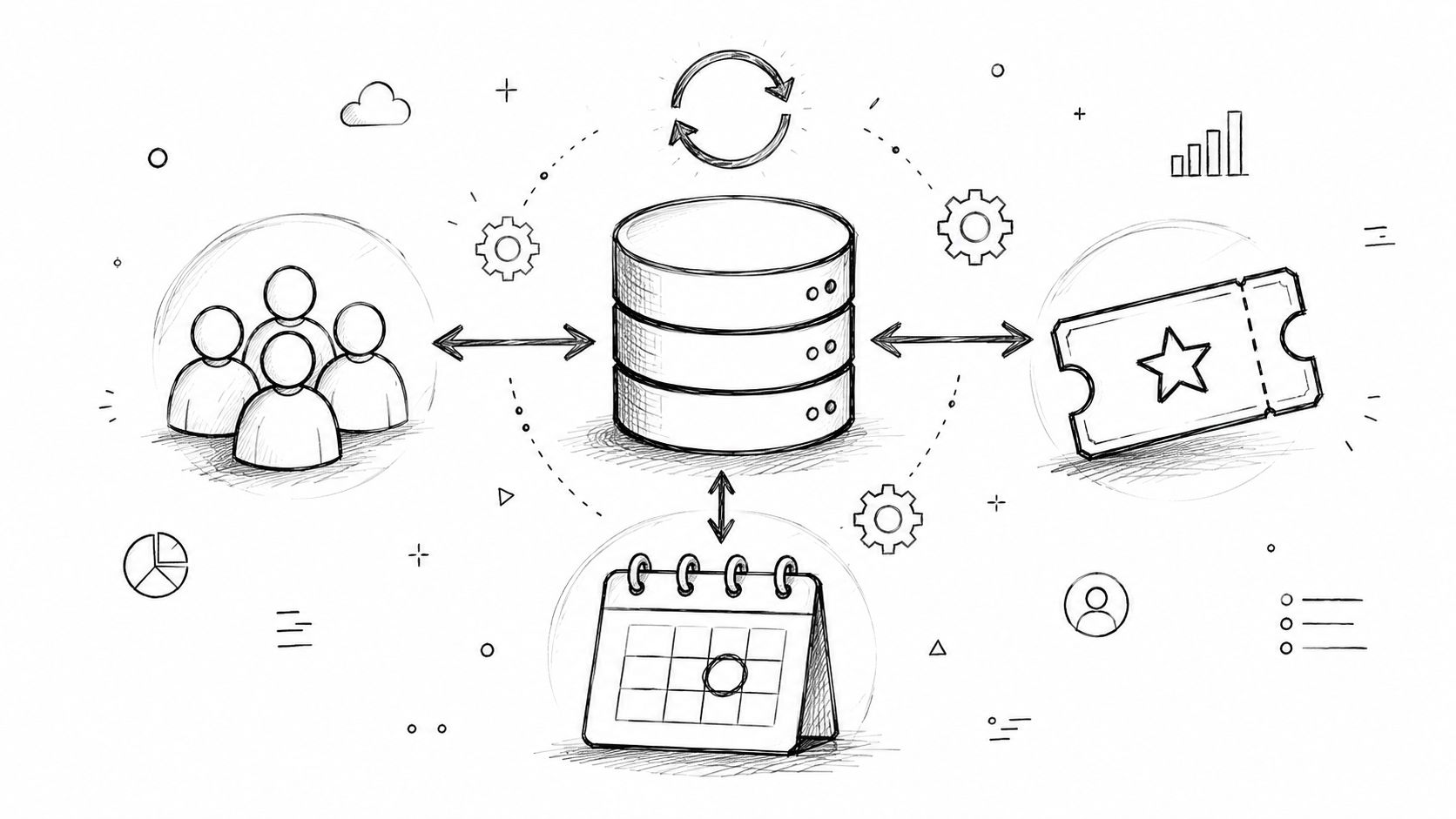
GroupOS stands out as a powerful, all-in-one alternative to Facebook, specifically engineered for professional associations, event organizers, and corporate community managers who require a single, branded solution. It consolidates events, memberships, content, and communication into a unified web and mobile app, eliminating the need for a fragmented collection of tools.
Unlike general-purpose social networks, GroupOS is built around the core business needs of professional communities. It transforms scattered Facebook groups and event pages into a centralized, revenue-generating ecosystem under your own brand.

GroupOS excels where Facebook's toolset falls short for professional use, particularly in monetization, data ownership, and integrated management. Its platform is designed to drive tangible business outcomes, not just surface-level engagement.
Expert Insight: GroupOS is a strategic choice for organizations looking to replace a chaotic mix of Facebook Groups, Eventbrite, and Slack. By unifying these functions, it can deliver a significant ROI, with one partner reporting a 30% reduction in administrative workload.
Pros:
Cons:
Access: GroupOS offers a free trial with custom setup (no credit card required). Pricing is provided upon request via their sales team.
Mastodon offers a fundamentally different approach to social networking, making it a compelling alternative to Facebook for organizations prioritizing data sovereignty and community control. Instead of a single, centrally owned platform, Mastodon is a federated network of thousands of independent servers, or "instances," each with its own moderation policies and community guidelines. This decentralized model eliminates corporate oversight, ads, and algorithmic timelines, presenting content in a purely chronological order.
For a professional association, this means you can create or join a server dedicated to your specific industry, ensuring conversations remain relevant and professionally moderated. The key distinction is that while your community has its own home base, members can still interact with users across the entire federated network (the "fediverse"), fostering broader connections without sacrificing a curated local experience.
While Mastodon is free to join, the user experience can be fragmented, as each server has a unique interface and culture. Onboarding new members requires clear guidance on how to choose a server and understand the federated timeline. For organizations wanting maximum control, self-hosting a Mastodon instance is an option, but it demands significant technical expertise for setup and maintenance. The platform's open-source nature and commitment to interoperability via ActivityPub are its greatest strengths, allowing for a future-proof community space. Successfully launching a community here hinges on understanding its unique, decentralized structure. For more insights on this, you can learn about the fundamentals of how to build an online community.
Bluesky is an emerging social network that provides a compelling alternative to Facebook by focusing on user control and algorithmic choice. Built on the open-source AT Protocol, its core promise is a decentralized architecture where users can select or build their own content feeds. This structure moves away from a single, centrally-controlled algorithm, allowing organizations to create highly tailored content streams for their members, such as feeds dedicated to industry news, event updates, or specific professional topics.
For a professional association, this means you can direct your community to custom feeds that filter out irrelevant noise and prioritize valuable conversations. This empowers members to shape their own discovery experience, a stark contrast to Facebook's opaque, engagement-driven timeline. While still in its growth phase, Bluesky’s commitment to an open developer ecosystem and identity portability makes it a forward-thinking choice for communities that value transparency and customization.
The main appeal of Bluesky is its philosophy of "algorithmic choice." Community managers can curate or recommend feeds that align with their organization’s goals, offering a much more focused user experience. However, the platform is still evolving, and many enterprise-level moderation and analytics tools are less mature than those found on established networks. Onboarding members requires explaining the concept of custom feeds, which is a new paradigm for many. The platform’s open API and active third-party developer ecosystem signal strong potential for future community management tools, but currently, it is best suited for organizations comfortable with a rapidly developing feature set.
MeWe positions itself as the "anti-Facebook" social network, offering a familiar interface and feature set that makes it a straightforward alternative to Facebook for communities seeking simplicity and privacy. Its core promise is a social media experience free from ads, algorithms, and data tracking. For a professional association, this translates to a predictable, chronologically-ordered feed where every member sees every post, ensuring no important announcements are missed due to algorithmic curation. The platform's design closely mirrors early Facebook, which can lower the adoption barrier for less tech-savvy members.
The user experience is centered around private and public groups, direct messaging, and personal profiles, providing the essential tools for community engagement without the complexities of a federated system. Setting up a dedicated group for your organization is quick and intuitive, allowing you to establish a branded space where members can connect, share files, and hold discussions. The lack of corporate surveillance and a commitment to user privacy are its primary draws for organizations wary of mainstream data practices.
MeWe's strength lies in its simplicity and low barrier to entry. Migrating a community from Facebook is relatively easy due to the functional parallels. However, the platform's historically lax content moderation has attracted controversial groups, which could lead to brand safety concerns for professional organizations. While MeWe has since updated its policies, it's a factor to consider. The optional MeWe Premium subscription unlocks features like cloud storage and video calling, but the core group functionality remains free. Its smaller user base means less organic discovery, so community growth will rely heavily on direct invitations and external promotion.
Minds positions itself as an open-source social network that blends familiar public posting with robust creator monetization and private community options, making it a noteworthy alternative to Facebook. The platform focuses on rewarding creators with tokens for engagement and offers premium tiers, Minds+ and Minds Pro, which unlock enhanced features and monetization tools. This model is particularly appealing for associations that want to build a public-facing presence while also fostering a dedicated, revenue-generating member community.
For community managers, Minds offers a clear pathway from a simple public channel to a fully branded, domain-based "Network." This allows an organization to start small and scale its community infrastructure as it grows, without needing to migrate platforms. The built-in monetization and content promotion tools provide a direct way to reward active contributors and drive engagement, which can be a powerful incentive for professional members.
The primary strength of Minds is its tiered structure, which supports both individual creators and large organizations. While the public feed has a smaller mainstream audience compared to Facebook, its "Networks" feature allows for the creation of a focused, private space. The main challenge lies in navigating the different pricing tiers and feature sets, which can initially feel complex. Successfully leveraging this platform requires a clear strategy for content and monetization, aligning its tools with your community's goals. Effective implementation demands a solid understanding of a topic like what is community management to maximize member value.
Visit Minds
Initially known for gaming, Discord has evolved into a powerful real-time community hub, making it a dynamic alternative to Facebook for professional associations and event organizers. The platform is built around servers, which act as dedicated spaces containing various text, voice, and video channels. This structure allows community managers to create organized areas for different topics, announcements, and interactive sessions like live Q&As or virtual networking events using its "Stage Channels" feature.
For event planners, a Discord server can act as a persistent virtual venue before, during, and after a conference, fostering continuous engagement. Its strength lies in immediate, synchronous communication, creating a lively and highly interactive environment that static Facebook Groups often lack. The platform's extensive bot and integration ecosystem further allows for significant customization, from automated moderation to event scheduling and member verification.
The core Discord experience is free, making it incredibly accessible. The main challenge for professional communities is its ephemeral nature; conversations move quickly and can be hard to track, making it less suitable as a permanent knowledge base without deliberate structure. Effective community management requires setting up clear channel topics, leveraging role-based permissions to manage access, and using bots to archive important information. Success on Discord depends on fostering a culture of active, real-time participation rather than treating it as a repository for static content.
Reddit presents a unique opportunity as an alternative to Facebook by leveraging its massive, topic-driven ecosystem. The platform is a collection of thousands of communities, known as "subreddits," each dedicated to a specific interest, industry, or niche. This structure allows organizations to engage with highly targeted, pre-existing audiences that are actively seeking information and discussion related to their field. Instead of building an audience from scratch, you can become an authoritative voice within established communities.
For professional associations, this means participating in or even creating a subreddit for your industry. It's an excellent venue for hosting "Ask Me Anything" (AMA) sessions with industry experts, sharing valuable content, and providing community support. Unlike Facebook's broad, social-graph-based feed, Reddit's content is surfaced based on user upvotes and community relevance, rewarding quality contributions over sheer advertising spend. The platform’s inherent focus on discussion makes it ideal for fostering genuine engagement around a specific topic.
Success on Reddit requires respecting its distinct culture of authenticity and anti-promotional sentiment. Blatant marketing is often downvoted, so the focus must be on providing genuine value. Community managers must learn the rules and etiquette of each subreddit they engage with. While you can create your own subreddit for maximum control, you are still subject to Reddit's platform-wide policies and do not own the audience data. The platform's powerful volunteer moderation tools allow for robust community management, but building a presence demands a long-term strategy centered on authentic participation rather than direct promotion.
For organizations with a strong local focus, such as neighborhood associations or regional chapters, Nextdoor serves as a powerful alternative to Facebook. This platform is built around verified residential neighborhoods, connecting users based on their physical address. Its hyperlocal nature allows community managers to engage directly with residents in specific ZIP codes or service areas, making it ideal for promoting local events, sharing community news, or gathering area-specific feedback.
Unlike broad social networks, Nextdoor's audience is defined by geography, ensuring that your message reaches a relevant and engaged local user base. Businesses and organizations can create free Business Pages to post updates, respond to recommendations, and build a neighborhood presence. The platform's structure fosters a sense of trust and community, as interactions are between real, verified neighbors.
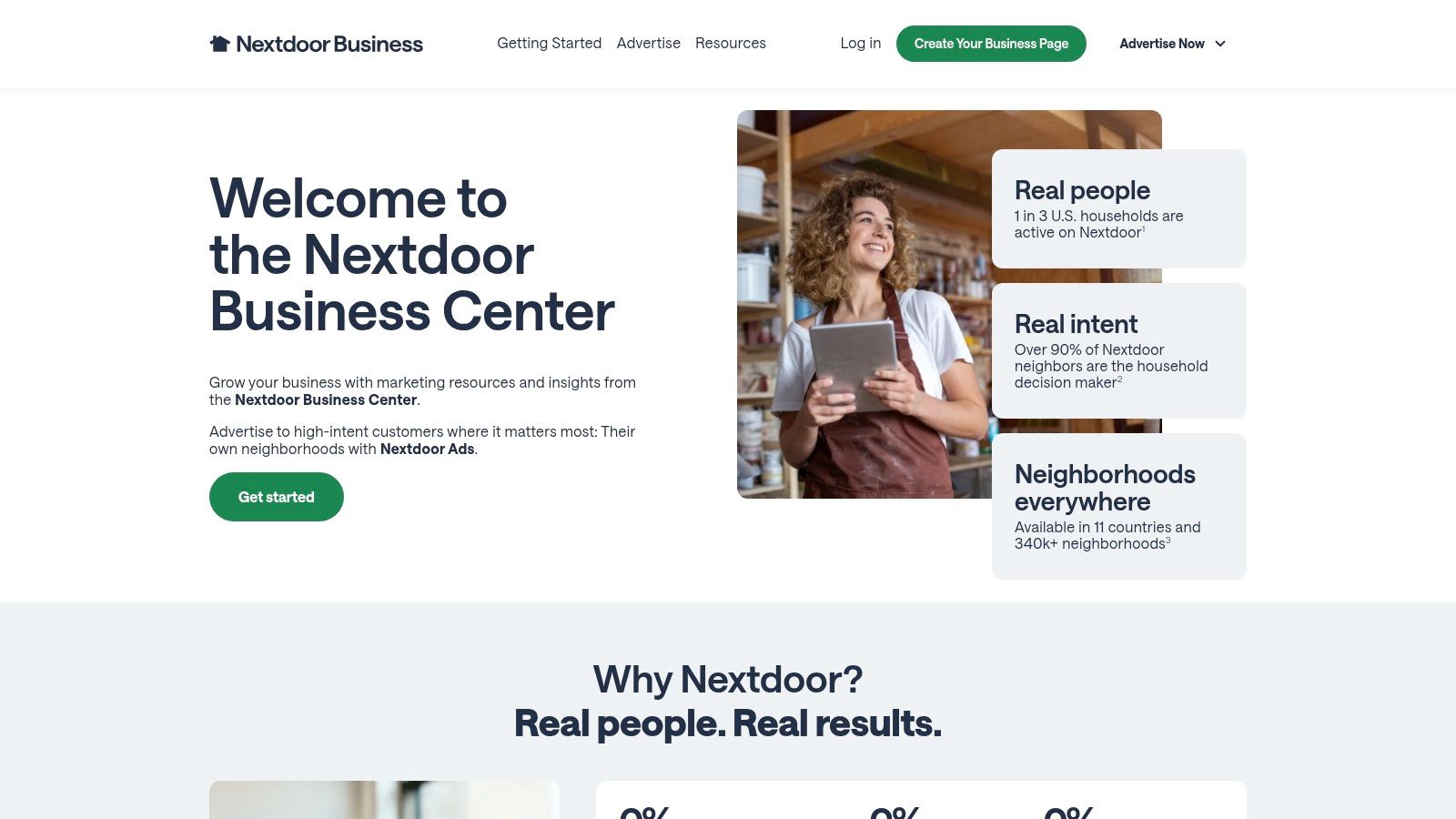
While a Business Page offers a free entry point, meaningful reach often requires leveraging paid options like Local Deals or sponsored posts. The user base is strictly limited to the platform’s defined neighborhood boundaries, which may not align perfectly with an organization's target service area. Community managers must focus on providing tangible local value to stand out from neighborhood chatter, such as sharing safety tips, announcing local meetings, or offering exclusive promotions for residents. The effectiveness of Nextdoor hinges entirely on your ability to connect with a specific geographic community.
Mighty Networks is engineered specifically as a premium alternative to Facebook Groups, allowing organizations to build fully branded communities they own and control. The platform integrates essential community-building tools like discussion feeds, live events, member directories, and direct messaging into a single, cohesive experience. Unlike scattered social media groups, it provides a structured environment where you can organize content, courses, and conversations into dedicated "Spaces," guiding members toward high-value interactions.
For professional associations, this means you can offer tiered membership plans, host exclusive virtual conferences, and sell digital courses all under your own brand. The platform is designed to move beyond simple engagement, empowering you to generate revenue directly from your community while owning all member data and communication channels.
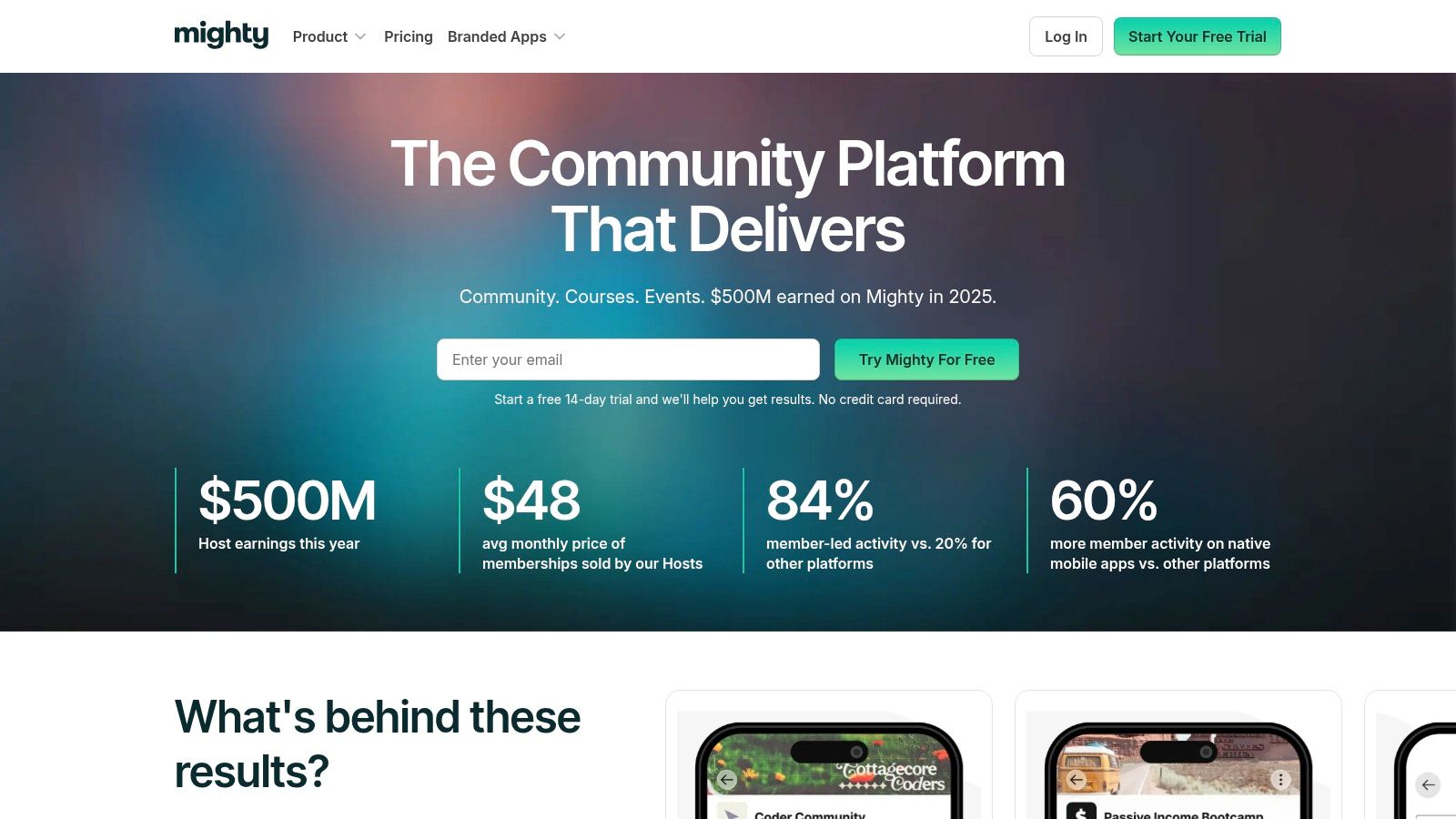
Mighty Networks excels at providing an all-in-one solution that reduces tech stack complexity. Its native payment processing, robust analytics, and optional white-label mobile apps offer a professional-grade experience that Facebook cannot match. However, as a premium SaaS product, it requires a budget, and some plans include transaction fees. The platform’s true power lies in its structured "Spaces" feature, which requires thoughtful planning to set up effectively. For those ready to leave social media behind, Mighty Networks offers migration support and guidance. If you're planning a move, it's wise to understand the process of a Facebook Group export.
Circle is a powerful, modern community platform designed for creators and professional associations looking for a polished and integrated alternative to Facebook. It combines discussions, live streams, events, and courses into a single, white-labeled space. This allows organizations to build a fully branded hub where members can connect, learn, and engage without the distractions of a traditional social network. The platform is structured around "Spaces," which can be customized for different topics, member groups, or content types, offering a highly organized user experience.
For a professional association, Circle provides the tools to not only host conversations but also monetize its community through paid memberships and exclusive content. Its clean interface and focus on creator tools make it ideal for delivering structured value, such as certification courses or members-only workshops, directly within the community environment. This transforms a simple group into a comprehensive digital headquarters for your organization.
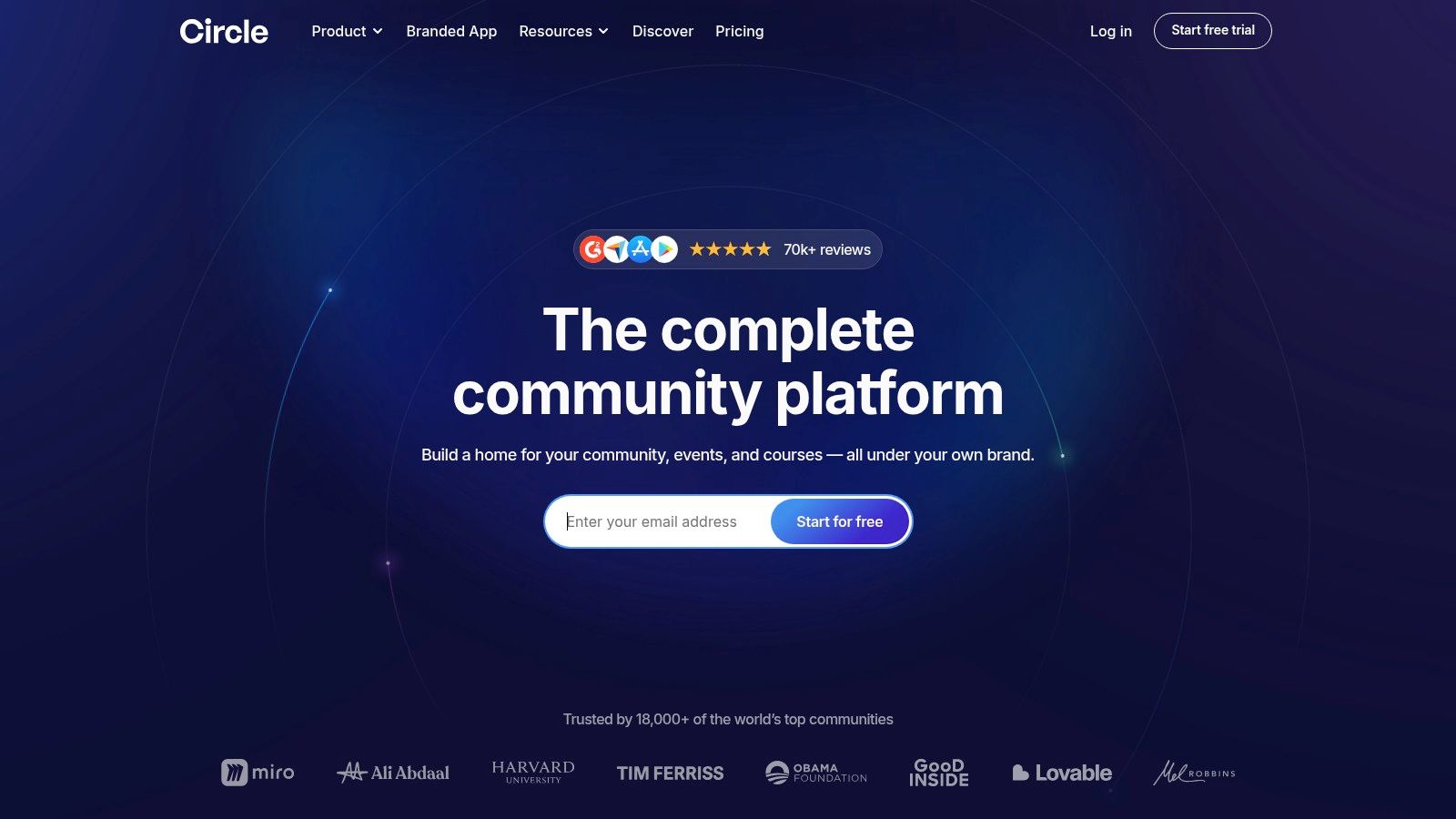
Circle's strength lies in its all-in-one nature and excellent user experience, which simplifies member onboarding. While there is no free plan, its paid tiers offer extensive customization, including custom domains and branding, to ensure the platform feels like a natural extension of your organization. For larger associations, the Enterprise plan provides crucial features like single sign-on (SSO) and dedicated support. Keep in mind that payment processing includes transaction fees on top of the subscription cost, and some advanced features like the Email Hub are priced as separate add-ons. Success on Circle depends on leveraging its integrated toolset to create a seamless, high-value member journey from discussion to education and events.
Visit Circle
Discourse champions structured, long-form discussion, making it a powerful alternative to Facebook for organizations focused on building a durable knowledge base. Unlike the ephemeral nature of social media feeds, Discourse is designed as modern forum software, prioritizing organized conversations through categories, tags, and powerful search capabilities. This format is ideal for technical support, Q&A sessions, and in-depth professional dialogue that needs to remain accessible and valuable over time.
For an association, this means creating a centralized hub for member expertise that grows more useful with every contribution. The platform combines traditional threaded topics with integrated chat channels, accommodating both asynchronous, detailed discussions and real-time interactions. This dual approach ensures members can engage in the manner that best suits the conversation, fostering a more dynamic and scalable community space.
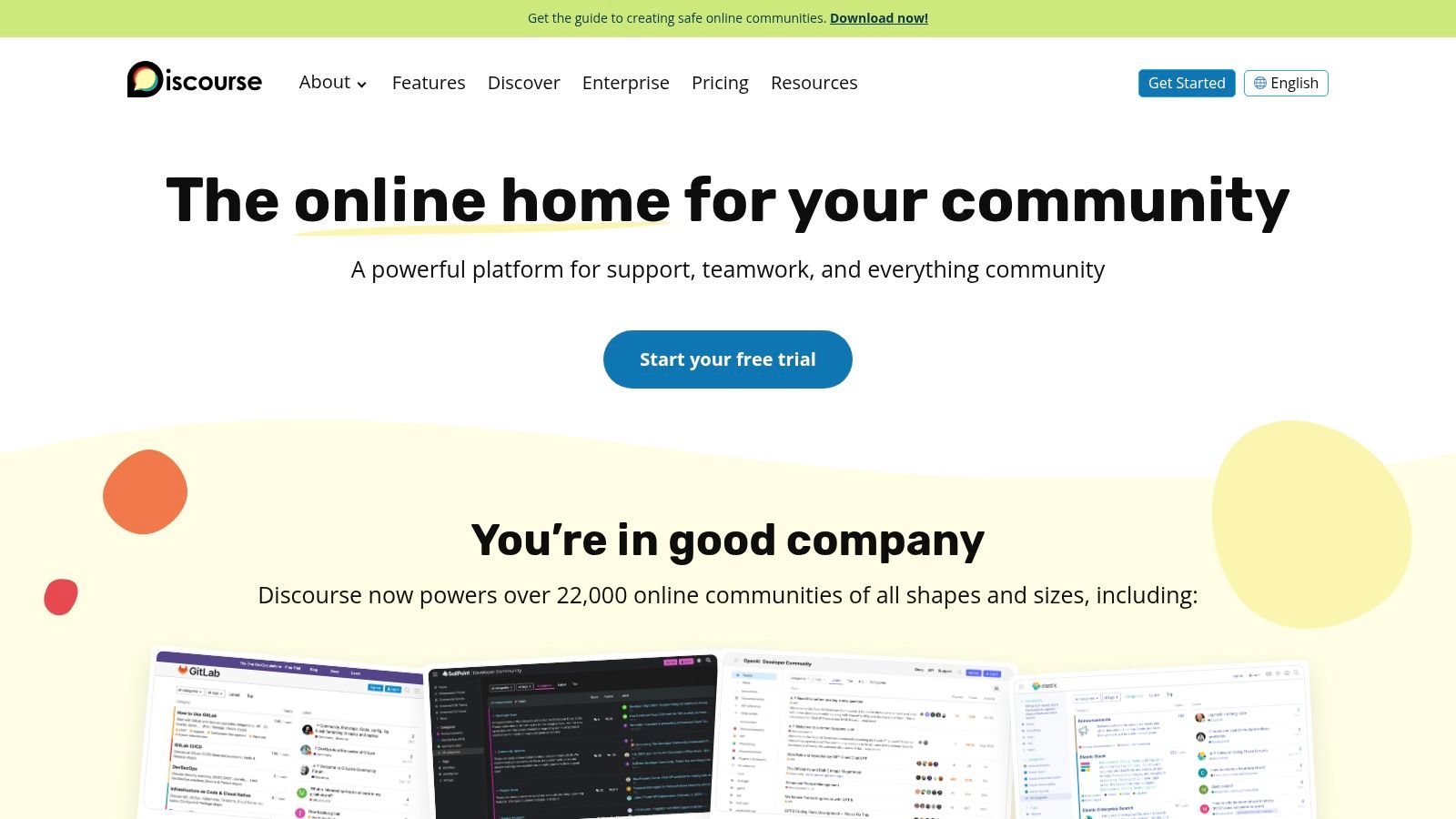
Discourse offers two main pathways: a managed hosting service for ease of use or an open-source, self-hosted version for complete control and data ownership. While self-hosting provides maximum flexibility through APIs, webhooks, and SSO integrations, it requires significant technical resources for setup and ongoing maintenance. The user experience is centered around topics rather than a social feed, which may require an adjustment period for members accustomed to Facebook's interface. Successfully migrating a community here involves clearly communicating the platform's value for creating a lasting, searchable repository of collective knowledge.
Hivebrite is an enterprise-grade community platform designed for large associations, alumni networks, and corporations that have outgrown simpler social tools. It serves as a powerful alternative to Facebook by offering a centralized hub with advanced features for managing complex organizational structures. Unlike public networks, Hivebrite provides a fully branded, private environment where administrators can manage memberships, create sub-groups, host ticketed events, and run targeted communication campaigns.
For a large professional association, this means you can build a custom-branded portal that not only facilitates member interaction but also integrates with your existing AMS or CRM systems. The platform’s strength lies in its ability to support various revenue streams directly within the community, such as paid memberships, event registrations, and fundraising, all while providing robust data and analytics to track engagement and growth.
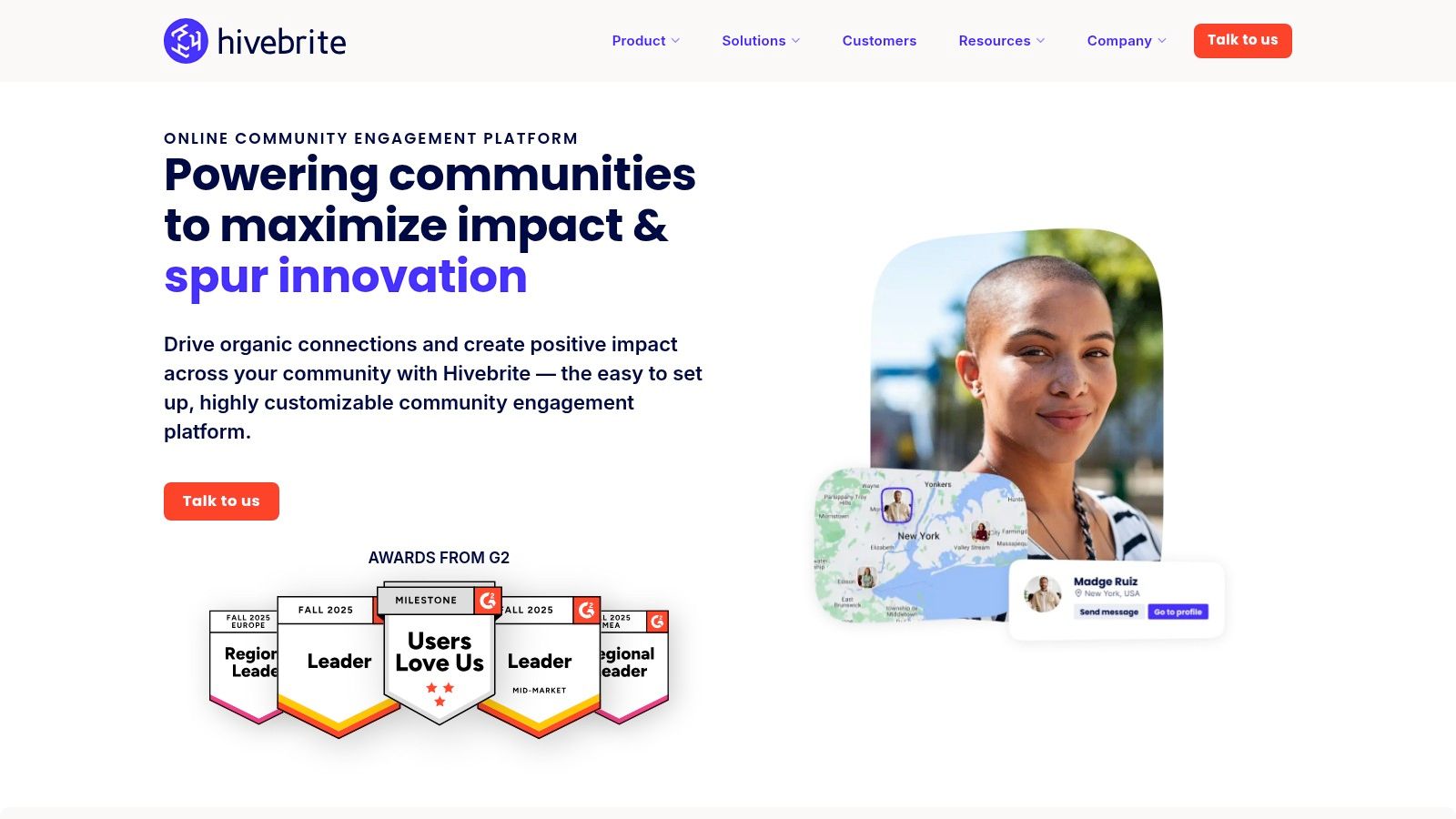
Hivebrite is built for scale, offering extensive customization options from landing pages to member directories with granular privacy controls. This depth requires a strategic approach to setup and management, which is supported by their enterprise-level onboarding and dedicated customer success teams. While it provides an all-in-one solution that reduces the need for multiple disparate tools, its comprehensive nature and contract-based pricing make it better suited for established organizations with clear community goals and a dedicated budget. The platform's powerful backend allows for detailed reporting, helping community managers prove ROI and make data-driven decisions.
Navigating the expansive landscape of digital communities can feel overwhelming. We've journeyed through twelve distinct platforms, from decentralized networks like Mastodon and Bluesky to purpose-built community hubs like Mighty Networks, Circle, and Discourse. Each offers a unique answer to the growing demand for a viable alternative to Facebook, but the "best" choice is not universal; it's the one that aligns precisely with your organization's goals, resources, and member expectations.
The core takeaway is that moving away from Facebook isn't just about finding a new platform; it's about fundamentally rethinking your community strategy. While Facebook Groups offered a convenient, zero-cost entry point, they often came with significant trade-offs: algorithmic unpredictability, data privacy concerns, and a constant battle for attention against endless distractions. The alternatives we've explored empower you to reclaim control, build a branded and focused environment, and truly own your community's data and destiny.
Making a confident decision requires a structured approach. Instead of getting lost in feature comparisons, start with a clear assessment of your own needs. Use the following steps to guide your selection process:
Finally, remember that the platform itself is only half the equation. The success of your community hinges on your ability to foster genuine connection and provide value. Once you've chosen a Facebook alternative, mastering how to create engaging social media content is crucial for fostering strong community interaction and achieving your goals. Selecting the right tool is the first step, but building the community is an ongoing commitment. By carefully evaluating your needs against the solutions available, you can build a thriving, independent community that serves your members for years to come.
Ready to build a powerful, integrated community that drives engagement and revenue? GroupOS is the all-in-one community platform designed specifically for professional associations and event organizers, providing the tools you need to move beyond the limitations of Facebook. See how GroupOS can transform your member experience and simplify your workflow by visiting our website to learn more or book a demo.