January 19, 2026
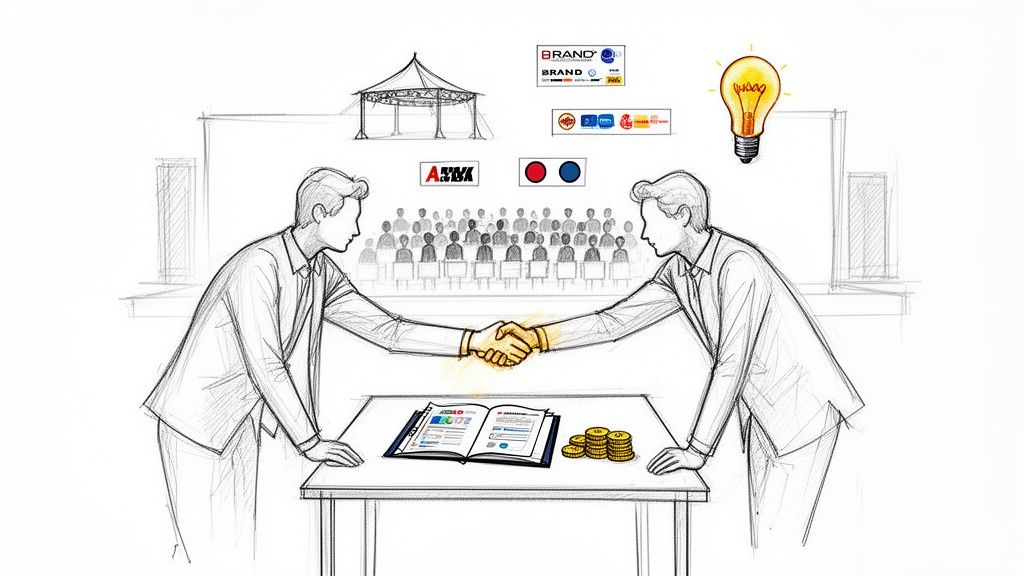
Landing a sponsor for your event is all about proving you can deliver a valuable, targeted audience that a brand can't easily reach anywhere else. The whole process really kicks off once you nail down your audience demographics, set clear goals for what a partnership should accomplish, and build a compelling story backed by real data.
Think of it less like asking for a handout and more like offering a can't-miss marketing opportunity.
Before you even start dreaming up a list of potential sponsors, you need to build a rock-solid foundation. This isn't just about wishing for big-name brands to show up; it's about making a business case for your event. You have to shift your thinking from "fundraiser" to "strategic partner." Sponsors are savvy marketers, and they're looking for a clear return on their investment.
Your first job? Know exactly what you're selling. And what you're selling is access—access to a specific, engaged, and often hard-to-reach group of people. This is where your data becomes your most powerful asset.
So, who actually comes to your event? Vague descriptions like “industry professionals” just won’t cut it. You need to get granular by digging into your event platform’s analytics, past registration forms, and post-event surveys.
Answering these questions helps you build a detailed attendee persona. For instance, instead of saying you attract "tech leaders," you can confidently state, "Our attendees are VPs of Engineering from mid-size SaaS companies, managing an average annual budget of $500,000 for new software." Now that's a pitch a sponsor can sink their teeth into.
This simple diagram breaks down the essential groundwork.
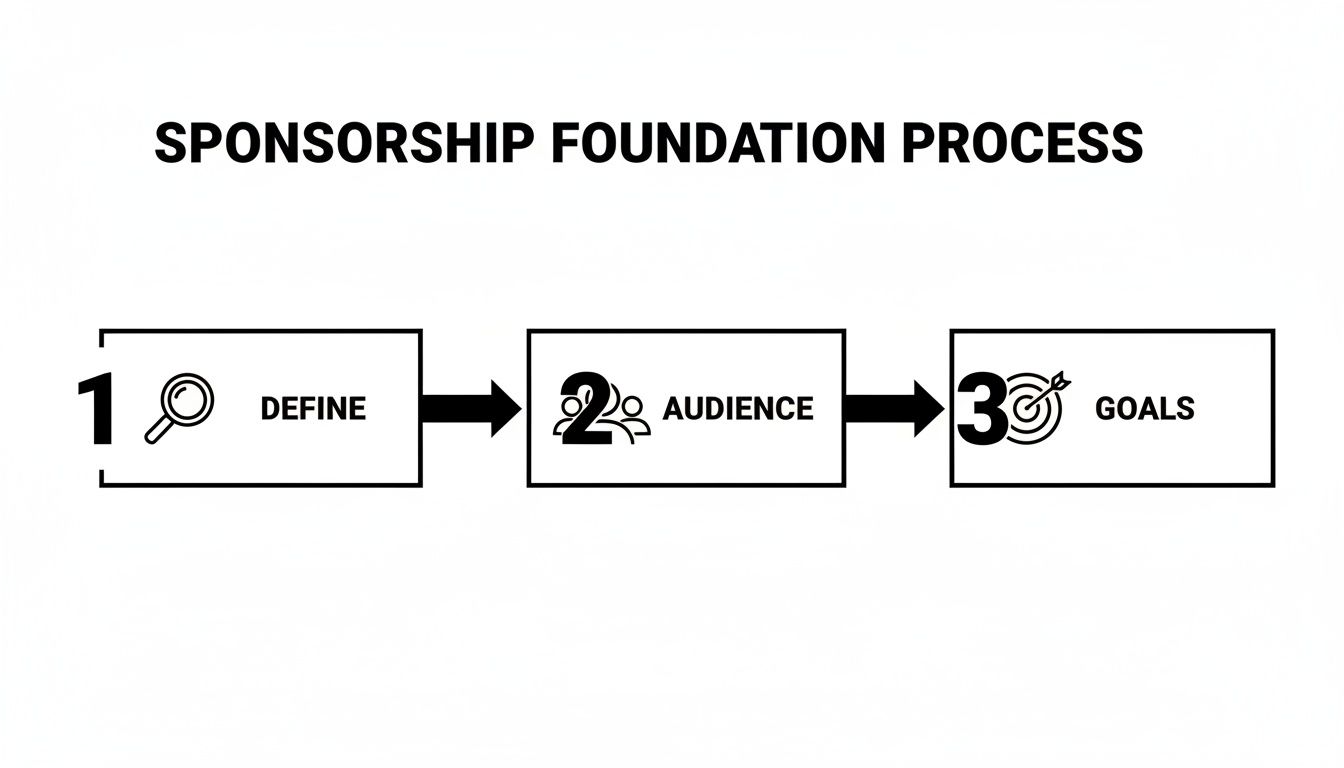
This Define, Audience, Goals flow is a perfect reminder that clear objectives and a deep understanding of your attendees have to come before you ever send a single email.
What, exactly, do you need sponsorships to do for your event? The answer will shape your entire strategy. Your goals might be purely financial—say, covering the venue rental—or they could be more focused on enhancing the attendee experience.
Your goal isn't just to find a sponsor; it's to find the right sponsor. The right partnership feels authentic to attendees and delivers measurable results for the brand, creating a true win-win scenario.
This foundational work is absolutely critical. A staggering 88.4% of event marketers view sponsorships as their primary revenue source, yet nearly a quarter say securing them is their biggest challenge. That gap often exists because this initial groundwork of defining value gets rushed. Brands want data-driven partnerships, not just their logo on a banner.
The table below provides a simple framework to help you define clear objectives and identify the key metrics for tracking success.
By setting these clear benchmarks upfront, you'll be much better positioned to prove the value you delivered when it's time to report back to your partners.
With a deep understanding of your audience and clear goals in hand, you can start building a narrative that transforms your event from a simple line item into an unmissable marketing investment. For a deeper dive, our guide on how to gain corporate sponsorship offers more detailed strategies on this topic.
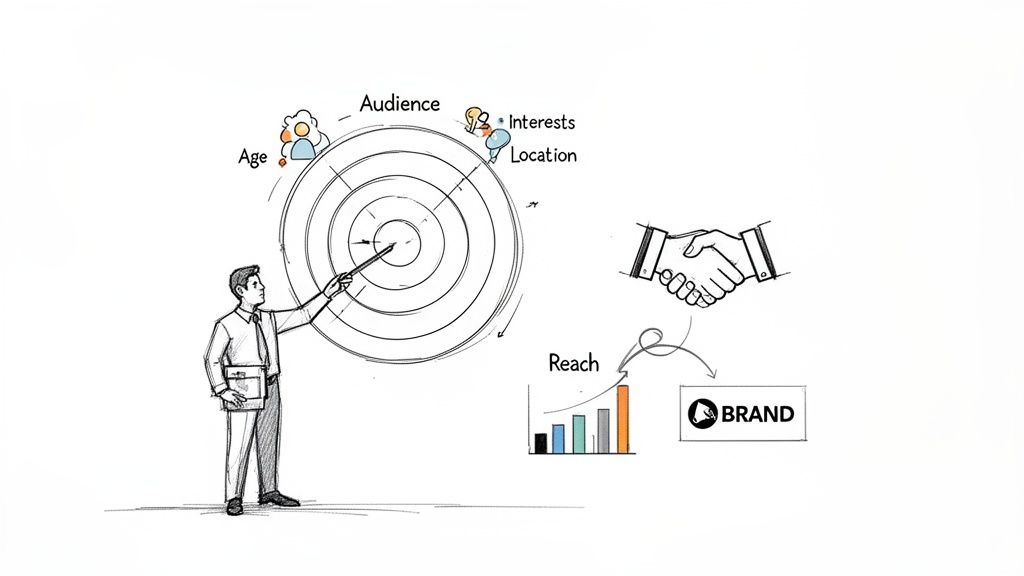
Now that you've laid the groundwork, it’s time to hunt for the brands that are a natural fit for your event. This is all about precision, not volume. A short, highly-aligned list of prospects will always beat a massive, unfocused spreadsheet. Getting sponsors is less about cold calling and more about strategic matchmaking.
The whole process starts with a simple shift in perspective: put yourself in a potential sponsor’s shoes. Ask yourself, "What companies are desperately trying to reach the exact audience I’ve gathered?" Your attendee personas are your treasure map, pointing you directly to brands whose ideal customers are sitting in your event seats.
Before you even open a search tab, you need to define what your dream sponsor actually looks like. Think of this as creating a filter that will save you countless hours by helping you instantly qualify or disqualify leads. It stops you from chasing companies that were never going to be a good match in the first place.
Your ideal sponsor profile should nail down these key traits:
With this profile in hand, you can start your research with a clear sense of direction. You're not just looking for any company with a marketing budget; you're looking for a true partner.
Once you know who you’re looking for, the hunt begins. And honestly, the best prospects are often hiding in plain sight.
Start by looking at who sponsored similar, non-competing events in your industry over the past one to two years. This is a goldmine of pre-qualified leads who have already allocated budget for event marketing.
Next, look inside your own ecosystem. Who do your keynote speakers and most prominent attendees work for? These companies already have a built-in connection to your event and can see its value firsthand. For community managers, this is where strong member relationships really pay off—you can dive deeper into this with our guide on professional networking tips.
Finally, put on your detective hat and use social listening tools. Monitor hashtags and conversations relevant to your event’s theme. Which brands consistently pop up in the discussion? This gives you real-time data on companies actively trying to engage with your target audience right now.
Don’t just read a company’s marketing slogans; look at their actions. A brand’s recent blog posts, press releases, and social media campaigns tell you everything you need to know about their current priorities and marketing goals.
As your prospect list grows, you need to bring some order to the chaos. A simple tiering system can transform a messy spreadsheet into an actionable pipeline, helping you focus your energy where it will have the most impact.
You can sort your prospects into three straightforward categories based on their fit and potential investment level:
This tiered approach is what allows you to tailor your outreach effectively. You can dedicate serious time to crafting a bespoke, in-depth proposal for your Tier 1 prospects while using a more streamlined approach for Tier 3. This is how you turn a hopeful list into a pipeline of high-potential partners who are actually excited to hear from you.
Let's be honest: the days of slapping a logo on a banner and calling it "sponsorship" are long gone. Today’s sponsors are savvy marketers. They aren't just giving you money; they're investing in an outcome and expect a real, measurable return. If you want to get sponsors for your event, you have to stop thinking about selling space and start building genuine partnership opportunities.
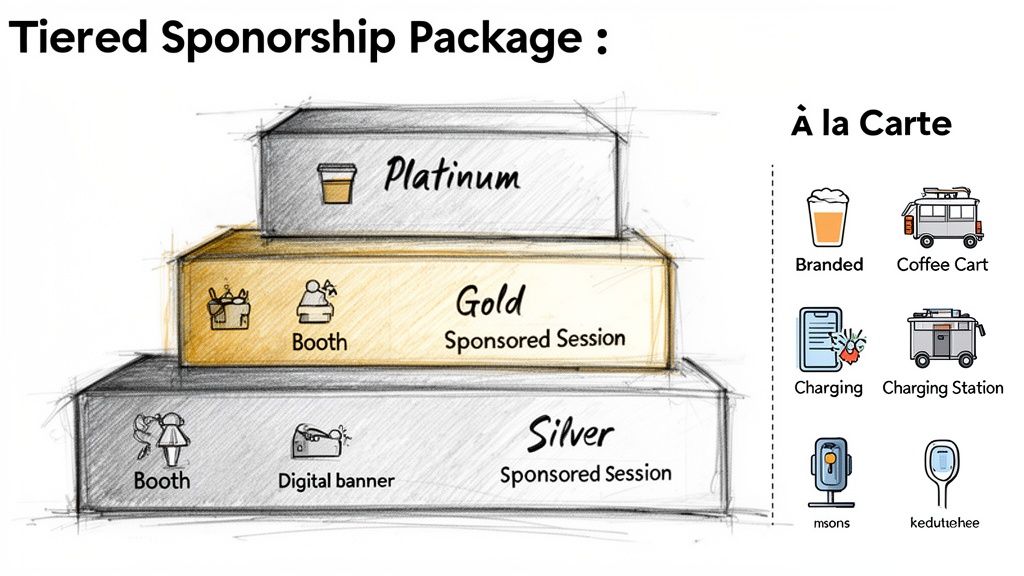
Your packages need to tell a story about the unique access and value only you can provide. The best way to start is by creating a tiered structure—think Platinum, Gold, and Silver—that clearly outlines the benefits at each investment level. This makes it incredibly easy for a potential partner to see exactly where their brand fits and what they get for their money.
The classic tiered model is a classic for a reason: it works. It provides clarity and choice. Each level should offer a bigger and better collection of benefits, weaving together digital visibility, direct attendee engagement, and exclusive branding rights. The real secret here is to price these tiers based on the immense value you deliver, not just what you need to cover your costs.
Put yourself in a sponsor's shoes and walk through the entire event experience:
When you bundle assets from each of these phases, you're not just selling a one-time thing; you're offering a comprehensive, year-round marketing opportunity. For a deeper dive into building these out, check out our detailed guide on creating valuable event sponsorship packages.
To help you visualize how this works in practice, here’s a quick breakdown of how benefits can scale across different tiers.
This table is just a starting point, of course. The key is to create clear distinctions in value, making the decision to upgrade to a higher tier a no-brainer for the right partner.
While your tiered packages are the foundation, don't forget the power of creative, à la carte options. These one-off sponsorships are perfect for attracting sponsors with specific goals or different budget levels, and they often generate way more buzz than a simple logo placement.
Here are a few ideas I've seen work wonders:
The most compelling sponsorship packages solve a problem for the attendee and the sponsor simultaneously. A charging station saves someone's day while giving the sponsor a captive audience. That’s a true win-win.
Thinking this strategically shows you understand sponsorship is a serious marketing channel. And the market is booming; the global sports sponsorship market alone was valued at USD 60.17 billion and is projected to hit USD 132.86 billion by 2033. This massive growth, especially in North America with a projected 9.19% CAGR, signals a huge opportunity for event organizers of all stripes. You can dig into more of these trends and what they mean for professional conferences from Straits Research.
Of course, having great packages is only half the battle. You also need to learn how to develop a compelling event sponsorship proposal that sells the value you’ve worked so hard to create. By offering a smart mix of structured tiers and creative one-offs, you give sponsors the power to build a presence that feels authentic to their brand and, most importantly, delivers results they can see.
Alright, you've done the legwork. You have a solid list of potential sponsors and some thoughtfully crafted sponsorship packages. Now comes the moment of truth: reaching out and making the connection.
This is where your pitch and outreach strategy can make or break a deal. A generic email blast is a one-way ticket to the trash folder. Decision-makers are flooded with requests, and they can sniff out a copy-paste job from a mile away. To succeed, you have to be personal, strategic, and genuinely interested in their business goals.
Think of your proposal not as a brochure, but as your #1 sales tool. It has to grab their attention and tell a compelling story about why partnering with your event is one of the smartest moves they can make this year. The best proposals are all about the sponsor, not about you.
Every winning proposal I've ever seen nails these key elements:
This approach signals that you're a professional who values their time, which instantly puts you ahead of the pack.
With your killer proposal ready, it's time to start the conversation. The initial goal is simple: get your materials in front of the right person. This usually means someone in the marketing, partnerships, or business development department.
Your first email should be short, personalized, and packed with value. Reference a recent campaign they launched or a company value that aligns with your event's mission. That small touch shows you’re not just sending out a mass email.
The most effective outreach isn't a monologue; it's the start of a conversation. Ask questions about their current marketing priorities. A "no" today could simply mean "not right now," and a positive interaction keeps the door open for the future.
Follow-up is an art form. If you don't get a response, a polite nudge after about a week can work wonders. It's often just what's needed to bring your email back to the top of a crowded inbox. If a second follow-up goes unanswered, it's probably time to direct your energy toward other promising prospects. For more tactical advice, our guide on how to ask for sponsorship is full of templates and real-world examples.
When a prospect agrees to a call, your primary mission is to listen, not to pitch. This is your chance to dig deeper and truly understand their world. Use this time to ask smart, open-ended questions about their business.
Try asking questions like these on your next discovery call:
When you take the time to understand their needs first, you can position your sponsorship as a strategic solution to their problems, not just another expense. This is how you shift from a one-off transaction to a powerful, long-term partnership.
Getting that first "yes" from a sponsor feels fantastic, but it's really just the starting line. What comes next—negotiation and activation—is where a good partnership becomes a great one. This is where you hammer out the final details and then bring that agreement to life with flawless execution.
The negotiation process shouldn’t feel like a battle. It’s a conversation, not a confrontation, aimed at finding a win-win that sets you up for a long-term relationship. The goal is to land on an agreement that delivers real value for the sponsor while protecting your event’s integrity and the attendee experience.
Once a sponsor shows they're serious, the conversation will naturally turn to the finer points of the deal. Being ready for these discussions is what helps you secure a partnership that works for everyone. You need to know when to stand firm and when to be flexible.
A few common negotiation points will almost always come up:
This is where you have to understand the bigger picture. The sponsorship world is always shifting. While global rights fees just hit a staggering $97.5 billion, with a huge 21% jump in social impact deals, the story isn't that simple. In fact, 45% of brands have recently changed or even walked away from partnerships because of rising costs, choosing instead to focus on fewer, high-ROI activations. This trend really drives home the need for clear, value-driven agreements. You can dig deeper into these global sponsorship trends to stay ahead of the curve.
A successful negotiation ends with both sides feeling like they got a great deal. It’s about building a partnership, and the best ones start with mutual respect and a crystal-clear, documented understanding of the goals.
Once you’ve shaken hands on the deal, it’s time to get everything in writing. A formal sponsorship contract is your best friend—it protects both you and the sponsor by getting rid of any gray areas. Think of it less as a formality and more as the official blueprint for your partnership.
Your contract needs to spell out every single detail you’ve discussed. It's always a good idea to have a lawyer look over your template, but at a minimum, make sure it includes these key pieces:
This document becomes your single source of truth and is the key to preventing headaches and misunderstandings later on.
With a signed contract in hand, the real work begins. Activation is the art of delivering on every promise you made, and this is where your operational skills get to shine. A smooth activation process doesn’t just make your current sponsor happy; it’s also your most powerful sales pitch for getting them to renew next year.
The trick is to create a seamless onboarding experience. Don't just send the invoice and disappear. Assign a dedicated point of contact from your team to be their guide every step of the way.
Your activation checklist should cover all the bases:
Flawless execution shows sponsors that you’re organized, professional, and genuinely value their investment. This is how you stop chasing new sponsors every single year and start building a loyal base of partners who come back because they know you always deliver.
The event isn't over just because the last attendee has gone home. In fact, for your sponsors, the most important part is just beginning. Your ability to turn a one-time sponsor into a dedicated, long-term partner hinges entirely on what you do next.
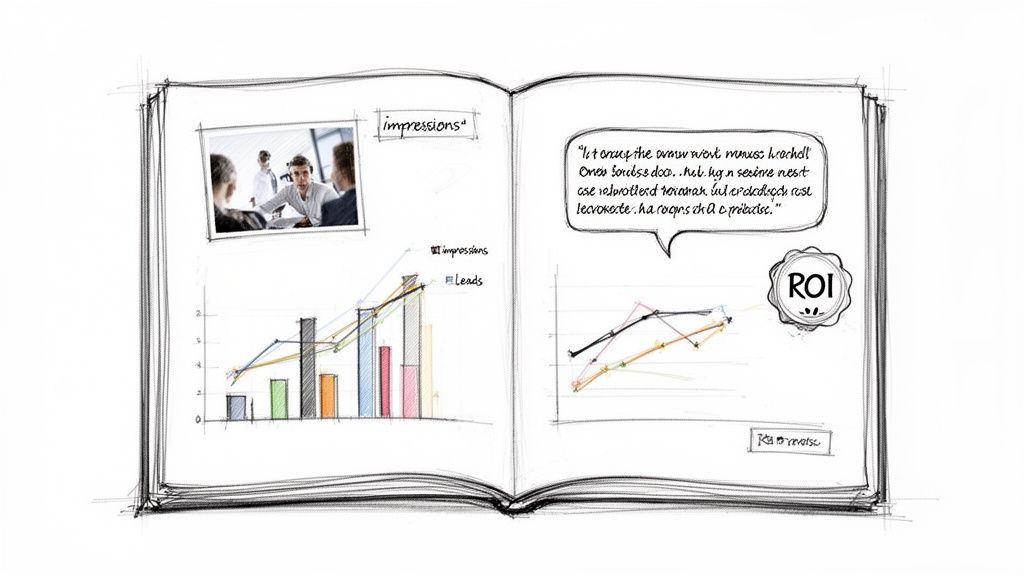
The key is proving their investment paid off, and you do that with cold, hard data. This is where a polished, professional post-event fulfillment report becomes your single most important tool for those renewal conversations. It’s your chance to go beyond "it felt like a great event" and deliver a concrete summary of their return on investment. Your event platform is an absolute goldmine for this.
Start by pulling the metrics that tie directly back to the goals you both agreed on during negotiations. Every sponsor has a different definition of success, so your report needs to speak their language.
Your report should be built around clear, compelling key performance indicators. Think in terms of:
But numbers alone can feel a bit dry. You need to combine this quantitative data with qualitative feedback to create a powerful narrative. Pack your report with high-quality photos of their booth buzzing with people. Include screenshots of positive attendee comments from the app. Add in any glowing testimonials you managed to collect.
A truly great sponsorship report doesn't just list metrics; it tells a story of success. It connects the dots between the sponsor’s investment and the real, meaningful engagement they had with your valuable audience.
When you present a comprehensive report like this, you're doing more than just justifying this year's spend. You are perfectly setting the stage for a conversation about renewing—and often upgrading—their partnership for the next event.
The final, crucial touch in your report is a forward-looking one. It shows you're already thinking about how to bring them even more value next time.
For instance, demonstrating the tangible impact of a sponsorship is crucial; consider how well-chosen effective promotional products can contribute to your sponsors' brand visibility and marketing goals. Mentioning small, thoughtful details like this proves you're invested in their long-term success.
By treating the post-event phase with the same energy and professionalism as the initial pitch, you show sponsors that you see them as genuine partners, not just walking checkbooks. That kind of professional follow-through is the real secret to building lasting relationships and securing the funding you need to grow your event year after year.
Even seasoned event organizers run into questions when building out their sponsorship strategy. Let's tackle some of the most common ones I hear from people trying to figure out how to get sponsors for an event.
This is a classic "it depends" question, but I can give you some solid timelines based on experience. For major conferences or large-scale events, you absolutely need to start your outreach 9 to 12 months out. This isn't just about finding sponsors; it's about giving them enough time to get your event approved and into their annual marketing budgets, which are often finalized months in advance.
If you're running a smaller, local gathering or a more nimble event, a 4 to 6-month window can work. But even then, starting earlier is always better. It gives you the space to build genuine relationships instead of rushing through last-minute, transactional deals. More time equals better partners.
By far, the single worst thing you can do is send a generic, one-size-fits-all pitch. I can't stress this enough. Potential sponsors get dozens of these every week, and they can spot a copy-paste template a mile away. It immediately tells them you haven't put any real thought into why they would be a good fit.
The fastest way to get ignored is to show you haven't done your homework. A personalized pitch that connects your event directly to a sponsor's specific marketing goals will always stand out from the crowd.
Take the time to tailor every single pitch. Reference a recent campaign they ran, mention how your audience aligns perfectly with their target customer, and connect your event to their brand mission. This shows you're serious about partnership, not just cashing a check.
Pricing is more of an art than a science, but you should always start by pricing based on the value you deliver, not just what you need to cover your costs. Your first step is to do a full audit of every single asset you can offer a sponsor. We're talking everything from logo placement on your website and mentions in email blasts to stage time, lead lists, and physical booth space.
Assign a fair market value to each of those individual items. Then, bundle them into tiered packages that offer clear, escalating value. It's also a smart move to see what similar events in your niche are charging—this will keep you competitive. And remember, the intangible value of connecting a brand with your unique audience is often your biggest selling point, so don't be afraid to price that accordingly.
Ready to manage your sponsors, members, and event attendees all in one place? GroupOS provides the tools you need to build powerful partnerships and grow your community. Discover how GroupOS can streamline your next event.