December 22, 2025
Getting brands to sponsor your event is all about proving you’re the right partner with the right audience. Your success really comes down to a clear, well-executed strategy: defining who's in your audience, creating sponsorship packages that offer real marketing value, and reaching out to companies that actually make sense for your event. Nail this foundational work, and you'll turn cold emails into signed contracts.
Before you even think about sending that first pitch, you need a solid plan. This isn't just administrative busywork—it's the strategic foundation that makes a brand see your event as a can't-miss opportunity. Get this part right, and everything that follows becomes so much easier.
Your first move is to get crystal clear on what makes your event unique. Why should anyone care? Don't just think about the topic. Think about the vibe, the attendee experience, and the community you’ve built. This is what you're really selling.
Let’s be honest: sponsors aren’t paying for a logo on a banner. They're paying for access to a specific group of people. Vague descriptions like "a diverse group of professionals" are a waste of everyone's time. You need to dig in and paint a picture so detailed that a marketing manager instantly sees their ideal customer.
Get the data that answers these questions:
This detailed audience profile is the heart of your pitch. It shows a potential sponsor exactly how they can connect with people who are ready to buy what they're selling. A well-defined audience is your single most valuable asset.
A huge mistake I see people make is focusing entirely on what they need from a sponsor. Flip that script. Your job is to solve a problem for the sponsor—whether that's generating leads, boosting brand awareness, or building community trust. Your event is just the tool to get them there.
Once you know the value you're offering, you can start setting realistic financial goals. These targets shouldn’t be pulled out of thin air; they need to be grounded in your event's budget and overall strategy. This process is a key part of your overall event planning, and it's worth understanding how all the pieces fit together by exploring what is an event plan.
Next up is prospect research, and it’s an art. Please, avoid the "spray and pray" method of blasting a generic email to a huge list. Instead, build a carefully curated list of companies whose mission and audience genuinely align with yours. Look for brands that have sponsored similar events or whose marketing speaks directly to the values of your attendees. As you build this strategy, think about how you can develop a strong B2B marketing strategy on LinkedIn to find and attract the right partners. This early homework is what makes your outreach feel personal and relevant—and much, much more likely to get a yes.
Your sponsorship proposal is much more than a price list; it's the business case for why a brand should invest in your audience. Let's be honest, the days of slapping "Gold, Silver, Bronze" on a page and calling it a day are long gone. To land real, committed partners, you have to build packages that directly address a brand's marketing goals, whether that's generating leads, boosting awareness, or engaging with the community.
You're not just selling banner space. You're offering a solution to a brand's biggest marketing headaches. When you frame your pitch this way, the entire conversation changes from a simple ask for cash to a discussion about a strategic partnership.
The best sponsorship packages I've ever seen are all built on one thing: a solid understanding of what sponsors actually care about. They need tangible returns, not just a fuzzy feeling from being associated with your event. Your job is to connect the dots between what your event offers and what their marketing team needs to achieve.
This means your packages need to do more than just list benefits. They should tell a story about the value a brand will get. Instead of simply listing "logo on website," reframe it as "Prime brand visibility to our 10,000+ monthly website visitors in the weeks leading up to the event." See the difference?
This simple flowchart shows how it all connects. A great event builds a specific audience, and that audience is what attracts the right sponsors.
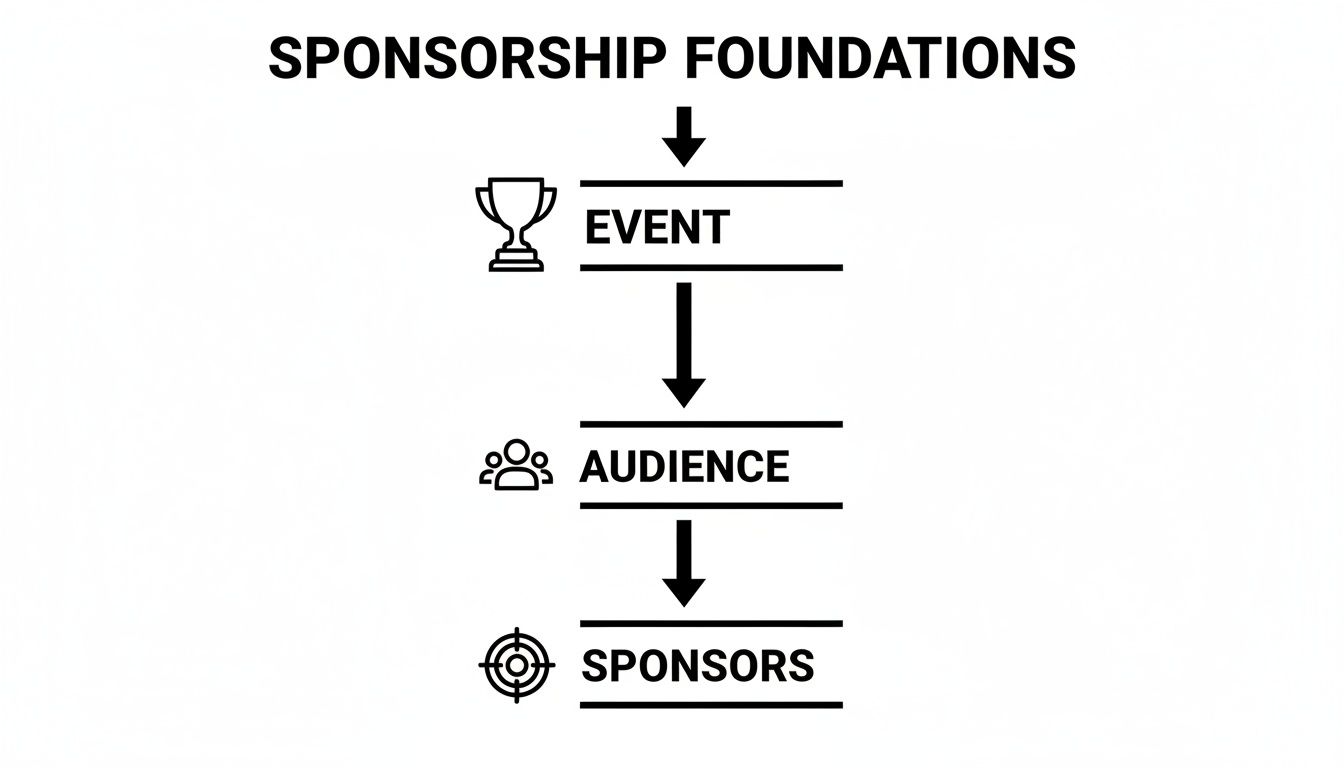
It all flows from the value you create with your event. Get that right, and the rest falls into place.
To get started, focus on creating distinct tiers with escalating levels of value. You can still use familiar names like "Presenting Sponsor" or "Supporting Partner," but the benefits inside each tier need to be carefully thought out. In fact, research shows that 88.4% of event marketers see sponsorships as their most effective revenue driver. It's that important.
Here are a few high-value benefits I've seen work wonders:
And don't forget the swag. Including high-quality, effective promotional products that sponsors can hand out is a fantastic way to keep their brand in front of attendees long after your event is over.
The biggest mistake I see organizers make is pricing their packages based on their event costs. Flip that around. Price them based on the market value of the access you're providing. Ask yourself: what would it cost a brand to reach this exact audience through other channels?
To give you a better idea of how this looks in practice, here’s a sample table outlining a tiered structure. It clearly shows how the value and exclusivity increase with each level, making it easy for sponsors to see where they fit.
This side-by-side comparison helps brands quickly grasp the different investment levels and what they get in return, streamlining their decision-making process.
How you present your packages is just as critical as what’s in them. Your sponsorship deck needs to be professional, compelling, and incredibly easy to digest. It’s the visual handshake for the partnership you’re proposing. For a detailed guide on putting this together, check out our post on creating compelling event sponsorship packages.
A winning sponsorship deck almost always includes:
When you focus on the value you provide, show a clear path to ROI, and present your offerings professionally, you build a business case so strong that brands will see your event not as a cost, but as an essential marketing investment.
You’ve got a killer proposal ready to go. Now comes the hard part: getting it into the right hands. This is where so many event organizers stumble, but a smart, strategic outreach plan is what separates the pros from the amateurs whose emails just get deleted. Forget mass emails; this is all about making a genuine connection.
First things first, you need to find the actual decision-maker. Firing off your pitch to a generic "info@" address is a waste of time. Hop on LinkedIn and look for titles like "Marketing Manager," "Brand Partnerships Manager," or "Community Relations Director" at your target companies. You're searching for the person whose job it is to find and evaluate opportunities just like yours.
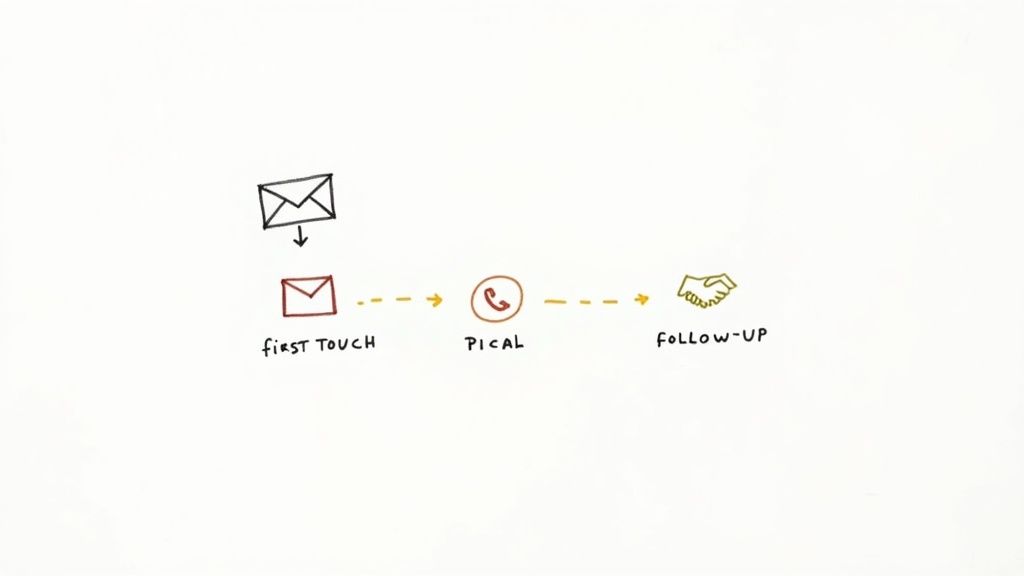
Don't skip this research. It shows you’re a professional who has taken the time to understand their company before asking them to invest in your event.
That first email has one job and one job only: to get opened and read. This isn't the time for a novel explaining every detail of your event. Keep it short, personal, and focused entirely on them. And for goodness' sake, write a strong subject line.
Try something that’s direct and highlights the value for them:
The body of the email should be just as focused. Kick it off by mentioning something specific about their company—a recent product launch, an award they won, or a marketing campaign you admired. This immediately signals that your email isn't just another copy-and-paste job.
Then, briefly introduce your event and connect the dots between your audience and their business goals. Wrap it up with a simple, low-pressure call to action, like asking for a quick 15-minute chat to see if there’s a fit. Whatever you do, don't attach your full sponsorship deck. It’s overwhelming and a great way to land in the spam folder.
The most effective outreach I've ever done started with a simple, two-sentence email referencing a specific campaign the sponsor had just launched. It showed I was paying attention to their world, not just my own. That small bit of personalization is what gets you a reply.
Look, very few partnerships are sealed with a single email. In fact, research shows that 80% of sales require five follow-up touches. This is where your persistence—and professionalism—truly matters. Giving up after one or two tries is one of the biggest mistakes you can make.
You need a simple follow-up sequence. I usually wait three to five business days before sending the first one. Each time you reach out, try to offer something new or come at it from a slightly different angle.
A Simple Follow-Up Cadence:
Throughout this whole process, keep your tone helpful, not harassing. Remember, you’re trying to build a relationship, not just close a deal.
When your hard work pays off and you land that first call, your primary job is to listen more than you talk. This isn't a performance where you read your sponsorship deck out loud. It's a discovery session to understand their marketing goals and challenges.
Have a few talking points in your back pocket, but let the conversation guide you.
That first call is all about finding alignment. When you focus on their needs, you stop being an expense and start being a solution to their problems. That consultative approach is how you turn a prospect into a genuine partner.
So, you’ve got a sponsor on the hook—they’re interested. That’s a huge win, but don’t start celebrating just yet. This is where the real work begins. We’re moving from pitching to partnering, and that means it's time to negotiate.
Think of negotiation not as a battle, but as a conversation to build something great together. The goal isn't to squeeze every last dollar out of them; it's to create an agreement where everyone feels they’ve won. You're laying the groundwork for a partnership, and you want it to be a strong one.
Let's be real: you’re going to get pushback, especially on price. It's practically part of the script. But don't get defensive or immediately offer a discount. Pushback is a good sign—it means they’re taking your proposal seriously.
When they question the price tag, your job is to circle back to the value. You're not selling a logo on a banner; you're selling access to a specific, engaged audience. This is your chance to show them the data that proves it. Talk about your audience demographics, past engagement metrics, and the unique ways you can connect them with attendees.
Here’s how to handle it like a pro:
If their budget just won’t stretch to your top-tier package, don't just walk away. Offer to build a custom package. Can you swap a high-cost deliverable (like a main stage sponsorship) for something that's lower cost for you but still high-value for them (like a dedicated email blast)? This makes you look like a flexible, problem-solving partner.
The negotiation table is where you set the tone for the entire relationship. A transparent, respectful, and flexible approach here tells a sponsor you'll be a great partner to work with long after the contract is signed.
There's a major shift happening in the sponsorship world. Big brands are tired of spreading their budget thin across dozens of small events. They’re cutting back on the sheer number of sponsorships to invest more heavily in a few key partnerships that deliver real results.
In fact, brands are reducing their sponsorship portfolios and seeing incredible returns—slashing administrative costs by 18% and boosting ROI by 12%, according to a report from Lumency.
What does this mean for you? You have to prove your event is one of the "big, better deals." During your negotiations, hammer home the deep engagement and concentrated impact you offer. You’re not just another logo in a sea of them; you’re a direct line to their ideal customer.
Once you’ve shaken hands on the terms, it's time to get it all in writing. The sponsorship agreement is your safety net. It protects you, it protects your sponsor, and it makes sure everyone is on the same page. A clear, straightforward contract is the foundation of any professional relationship.
Your agreement doesn't need to be 50 pages of dense legalese, but it does need to be thorough. It should clearly spell out every single detail of the partnership so there's no room for confusion later. For a good look at how to structure this, our sample sponsorship proposal breaks down the key components.
Make sure your contract covers these essentials:
Getting the signature is the final step in the sale, but it's the first step in your partnership. Kicking things off with a clear, mutually-beneficial agreement sets you up for a successful collaboration.
Getting that sponsorship contract signed feels like the finish line, but it’s really just the beginning. The real work—the part that turns a one-time sponsor into a recurring partner—is all in the execution. Honestly, delivering flawlessly on your promises is the single best marketing tool you have for securing next year’s budget.
This phase is all about staying ahead of the game and keeping the lines of communication wide open. You're not just ticking off boxes on a list; you're building a critical business relationship and making sure your partner feels valued every step of the way.
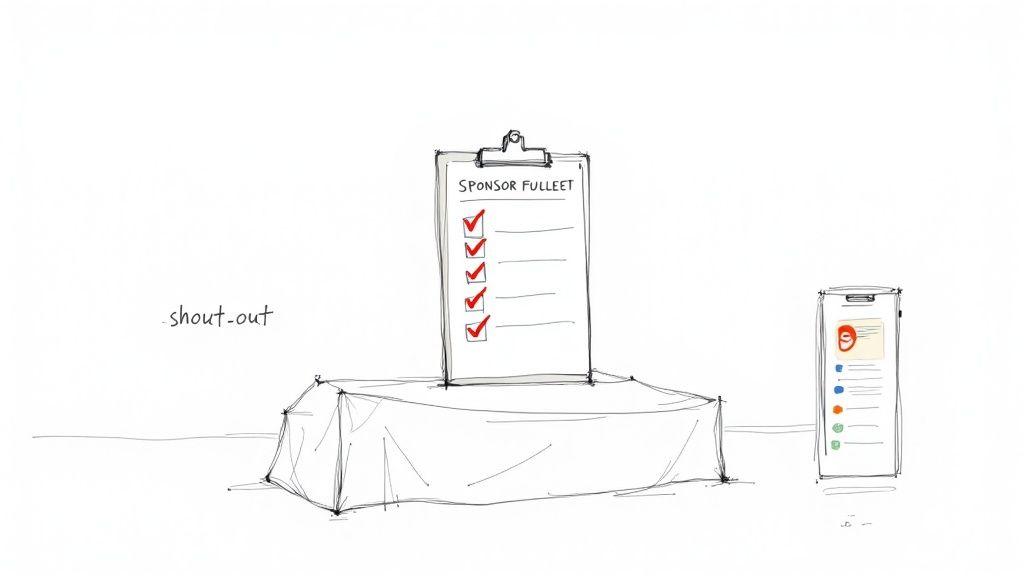
The secret to perfect execution is organization. Don't even think about relying on memory. Your first move should be creating a master activation checklist—a single source of truth that tracks every single deliverable for every sponsor. Think of it as your operational bible.
For each sponsor, your checklist should break down:
This isn’t just for your team, either. Sharing a simplified version with your contact at the sponsor company shows them you’re on top of everything. It also helps them track what they need to provide, like sending over their logo or ad creative on time.
Modern events exist in two places at once: online and in-person. Your sponsorship fulfillment has to do the same. This shift is reshaping the entire sponsorship game, with 74.5% of planners now running hybrid events. If you want to dive deeper, you can explore some of the latest event industry statistics that highlight this trend. This reality demands a two-pronged approach to activation.
Physical Activation is all about the tangible experience at your venue. We're talking about the classics:
Digital Activation, on the other hand, extends their brand's reach far beyond the four walls of the venue. This could mean:
If you drop the ball on either side of this coin, you're leaving a ton of value on the table for your sponsor.
A classic mistake is to go completely silent after the contract is signed until the week before the event. Keep your sponsors engaged with regular, brief updates. A quick email saying, "Hey, just wanted to let you know ticket sales are pacing 20% ahead of last year!" keeps them excited and feeling like a genuine partner in the event's success.
Ultimately, exceptional fulfillment comes down to consistent, clear communication. Designate a single point of contact for all your sponsors to streamline questions and requests. This person becomes their go-to resource, which prevents confusion and builds trust.
Before the event, send out a comprehensive logistics email. Cover everything from load-in times and parking to where they can grab coffee. During the event, make a point to check in with them in person. A simple, "How's everything going? Do you guys need anything?" goes a surprisingly long way.
And once the event is over, don't disappear. The follow-up is where you truly lay the groundwork for renewal next year.
When the lights dim and the last attendee heads home, your work with your sponsors is far from over. This is where you separate a one-time transaction from a powerful, long-term alliance. It’s your chance to prove their investment paid off and set the stage for years of successful partnerships.
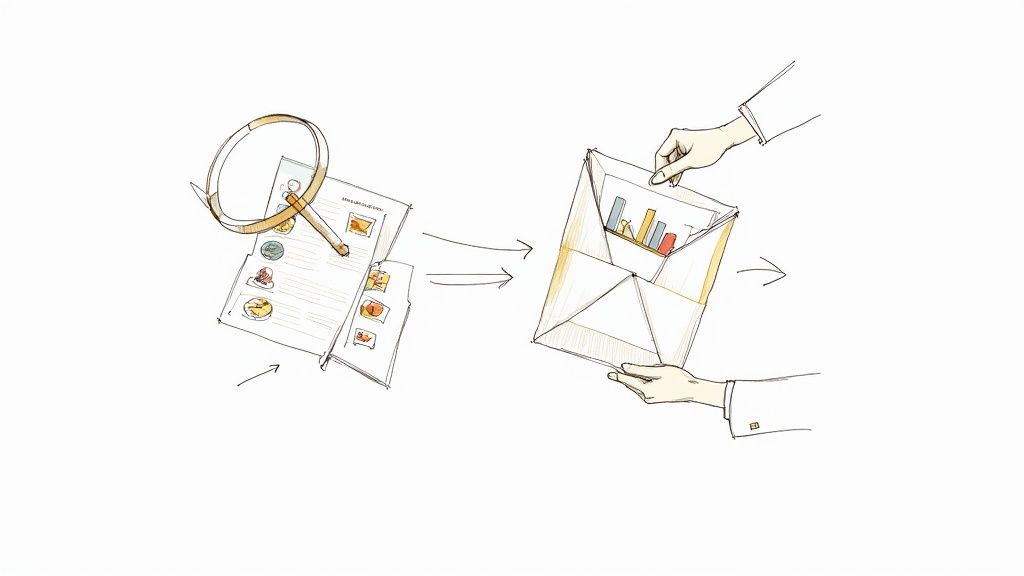
The single most important thing you can do post-event is deliver a comprehensive sponsorship report. Think of this less as a "thank you" note and more as a data-backed business case demonstrating the tangible return on their investment (ROI). Your goal here is to move beyond vanity metrics and paint a clear picture of the value you delivered.
Your report needs to be a visual, data-rich summary of the event's success, all viewed through the lens of your sponsor's original goals. Don't just list what you did; show the impact of what you accomplished together.
Make sure to include key metrics that tie directly back to their objectives:
The most effective sponsorship reports I've ever seen tell a story. They start with the sponsor's initial goals and then use data and visuals to walk them through precisely how the event helped achieve them. It makes the renewal conversation next year feel like a natural next step, not a sales pitch.
For a deeper dive into the nitty-gritty, our guide on measuring event ROI offers some great frameworks you can apply directly to your sponsorship reports. It'll help you focus on the numbers that truly matter to your brand partners.
A strong partnership doesn’t just stop once the report is sent. The real pros know how to keep the conversation and goodwill going long after the event buzz has faded. This is all about relationship building, not just reporting.
A few weeks after they’ve had time to digest the report, schedule a debrief call. This is your chance to get their unfiltered feedback. Ask what went well for them and, just as importantly, what they think could be improved. This simple act shows you value their perspective and are committed to making the partnership even better next time.
Throughout the year, look for organic reasons to stay in touch. Maybe you share a big company update, send a note of congratulations on their latest product launch, or give them a heads-up when early-bird tickets for your next event are about to drop. These small touchpoints keep your event top of mind and transform a sponsor from a line item on a budget into a genuine partner who is invested in your success.
Even the most seasoned event organizers run into questions when they're deep in the sponsorship trenches. Let's tackle some of the most common ones that pop up, with practical advice you can put to use right away.
Ideally, you should start your outreach 9 to 12 months before your event. I know that sounds like a long time, but hear me out. Major brands often lock in their marketing budgets a full year in advance. Getting on their radar early means you're part of the conversation before their money is already committed elsewhere.
This generous timeline gives you the breathing room you need for proper prospect research, crafting personalized outreach, handling negotiations, and getting contracts signed without a last-minute scramble.
If you're working with a smaller event or a tighter planning window, a 6-month lead time can still work. Just know that the more time you give yourself, the better your chances are of landing the right partners for the right price.
The number one killer of a sponsorship deal? Sending a generic, copy-and-paste proposal. We can all spot them a mile away, and they almost always go straight to the trash folder. Right behind that is failing to do your homework on a sponsor's specific marketing goals.
Other classic blunders I see all the time include:
The most critical mindset shift is to stop treating sponsorship as a transaction and start seeing it as a partnership. You aren't just asking for a check; you're offering to solve a real marketing problem for a brand. That changes everything.
Your sponsorship packages should be priced based on the value you deliver, not just what it costs to run your event.
Start by calculating all your event expenses to determine your break-even point. That's your floor. From there, start quantifying the actual value you're offering. Think about your audience's purchasing power, the potential for qualified leads, the media impressions you can generate, and how strong the brand alignment is.
Take a look at what similar events in your niche are charging to get a feel for the market rate. Then, build out tiered packages with clear, escalating benefits that give potential sponsors real choices. Always be ready to back up your prices with data, but also be flexible enough to create a custom package for a dream sponsor with specific goals.
Ready to manage your entire sponsorship sales cycle in one place? GroupOS helps you track outreach, deliver on your promises, and build stronger partnerships that drive revenue. From the first email to the final ROI report, we've got you covered. See how it works with a free trial.