December 17, 2025

Before you even think about writing a pitch email or picking up the phone, the real work of securing event sponsorship begins. It's a fundamental shift in thinking: you’re not asking for a handout. You're presenting a powerful marketing opportunity.
Landing a major sponsor isn’t about luck. It's about building a rock-solid business case that shows a potential partner exactly how they'll see a return on their investment.
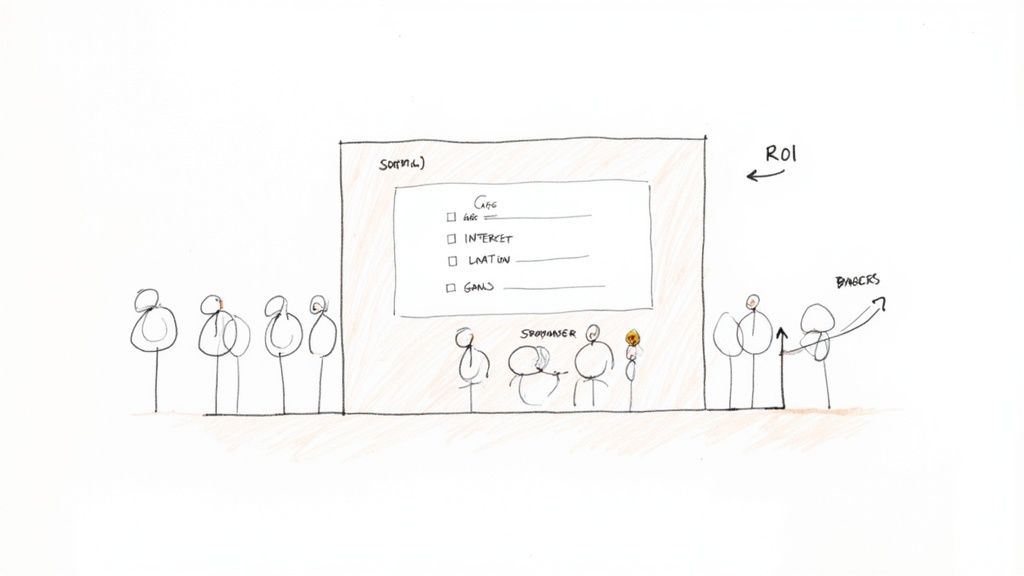
Let's be clear: sponsors aren't donors. They are marketers with budgets, and they need to justify every dollar spent. Your first job is to give them the data and the story they need to say "yes." This foundation is built on a few key pillars that you absolutely cannot skip.
What makes your event an unmissable opportunity for a brand? The answer has to be more compelling than just, "We'll have 500 people there." You need to craft a value proposition that speaks directly to a sponsor's marketing objectives.
Get started by digging into these questions:
Your value proposition isn't what you offer; it's how you solve a sponsor's problem. Their problem might be generating qualified leads, boosting brand awareness in a new market, or engaging with the local community. Position your event as the perfect solution.
The good news? The market for corporate sponsorship is booming. Global spending hit $97.4 billion in 2022 and is expected to skyrocket to $189.5 billion by 2030. With nearly 44% of brands planning to increase their sponsorship budgets, the money is out there. But they're also getting smarter, favoring fewer, more impactful partnerships that deliver undeniable results.
Your goals will dictate your entire strategy—from the companies you target to the way you design your sponsorship tiers. While bringing in revenue is obviously a top priority, it shouldn't be your only one.
Think bigger and get specific with your goals:
When you have these foundational pieces locked in, your entire approach changes. You're no longer just asking for money. You're walking into conversations confidently, armed with the data and vision to present your event as what it is: an essential marketing investment they can't afford to miss.
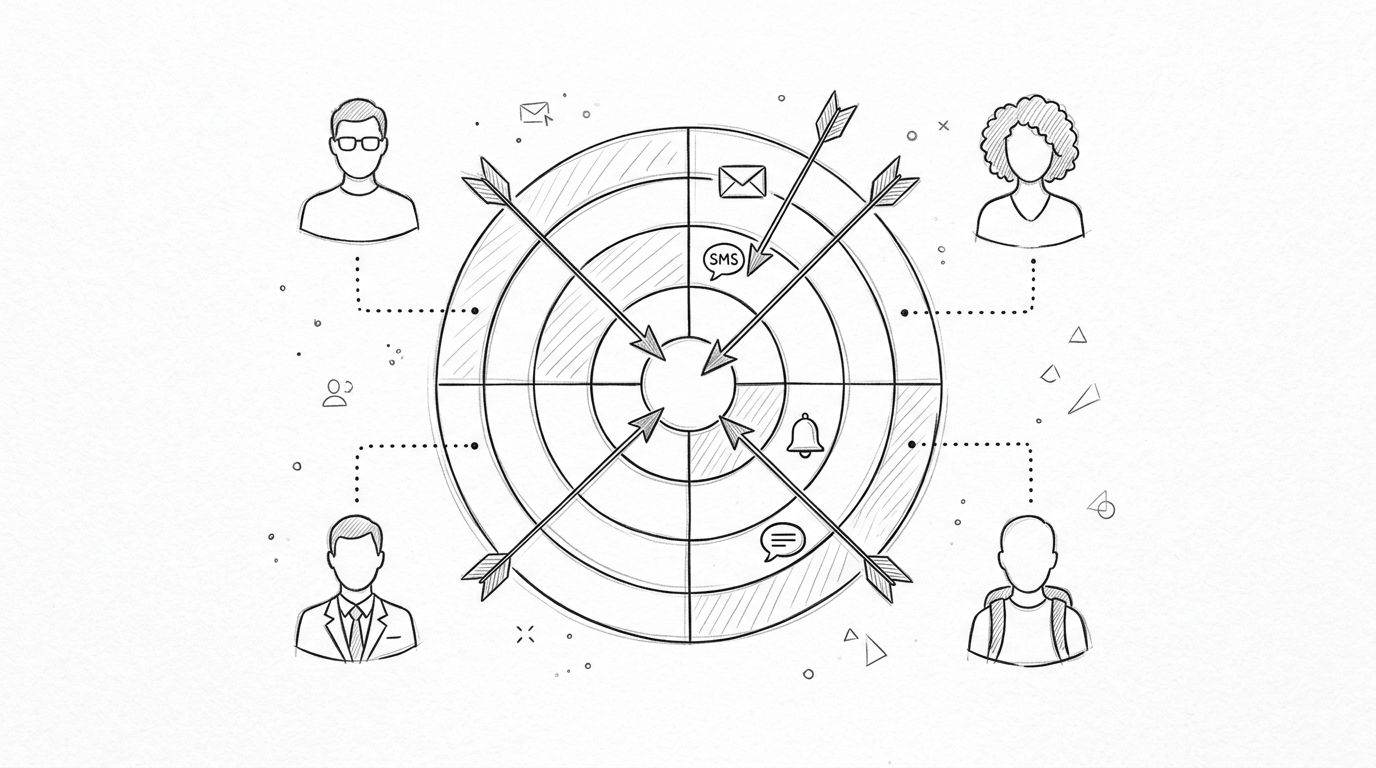
Let's get one thing straight: securing event sponsorship isn't a numbers game. Blasting a generic proposal to a hundred companies and hoping something sticks is a recipe for a full inbox of rejections. The most successful event organizers I know act more like matchmakers, connecting their unique audience with brands that are genuinely trying to reach them.
This targeted approach respects everyone's time and, frankly, dramatically increases your odds of getting a "yes." Your goal is to move from a wide, inefficient net to a focused, strategic plan. Every outreach should feel less like a cold call and more like a warm, relevant conversation that solves a problem for the brand. It all starts with identifying brands whose target customers are sitting in your audience, whose company values mirror your event's purpose, and who have a history of sponsoring similar initiatives.
Before you even open a new browser tab, take a step back and brainstorm what your perfect sponsor actually looks like. I'm not just talking about big, flashy names; I'm talking about fit. An ideal sponsor profile is your North Star—a blueprint that guides your entire search and keeps you from wasting time on dead ends.
Think about alignment in these key areas:
With your ideal profile in hand, it's time to start building your prospect list. This part is heavy on research, I won't lie, but the effort pays off tenfold. Instead of guessing, you'll be building a list of qualified leads who have a real, tangible reason to partner with you.
Here are a few of my go-to spots to start the hunt:
The most powerful question you can ask is not "Who can I get money from?" but "Whose business would fundamentally grow by connecting with my attendees?" This simple shift in perspective transforms your pitch from a request into a valuable business opportunity.
Finding a company name is just the first step. The real magic happens in the qualification phase. This is where you dig a little deeper to make sure a company isn't just a potential fit, but a strong fit. A few minutes of research here can save you hours of wasted effort chasing down the wrong lead.
For a more detailed breakdown, you can check out our comprehensive guide on how to find sponsors for your events.
Before you add a prospect to your "A-List," ask yourself these questions:
This deliberate process of finding and qualifying leads ensures that when you finally do reach out, your proposal lands on a receptive desk. You're no longer just another email in their inbox; you're a strategic partner with a solution to their marketing goals.
Let's be honest: a generic, one-size-fits-all proposal is the fastest way to land in a potential sponsor's trash folder. If you want to grab a brand's attention, you have to frame your event as an unmissable marketing opportunity. This isn't about asking for a handout; it's about selling a powerful solution to their business goals.
The whole process starts with figuring out the true value of every single asset your event offers. It’s so much more than just slapping a logo on a banner. You're selling direct access to a curated audience, brand association with your mission, and real, tangible marketing outcomes.
Before you can dream up exciting sponsorship packages, you need to take inventory of what you can actually offer and what each piece is worth. This isn't an exact science, but getting it right is crucial for justifying your prices and staying competitive.
Start by listing everything—and I mean everything—you can offer a sponsor, from digital shout-outs to prime real estate at the venue.
Think about assets in these buckets:
Once you have your list, start assigning a dollar value to each item based on its reach, exclusivity, and potential impact. A 20-minute speaking slot in front of 500 qualified VPs is infinitely more valuable than a tiny logo at the bottom of a pre-event email. As you brainstorm, don't forget tangible items. A well-chosen promotional product can keep a sponsor's brand in front of attendees long after the event ends, as detailed in this guide to promotional products that deliver ROI.
This hierarchy of value is completely unique to your event and your audience.
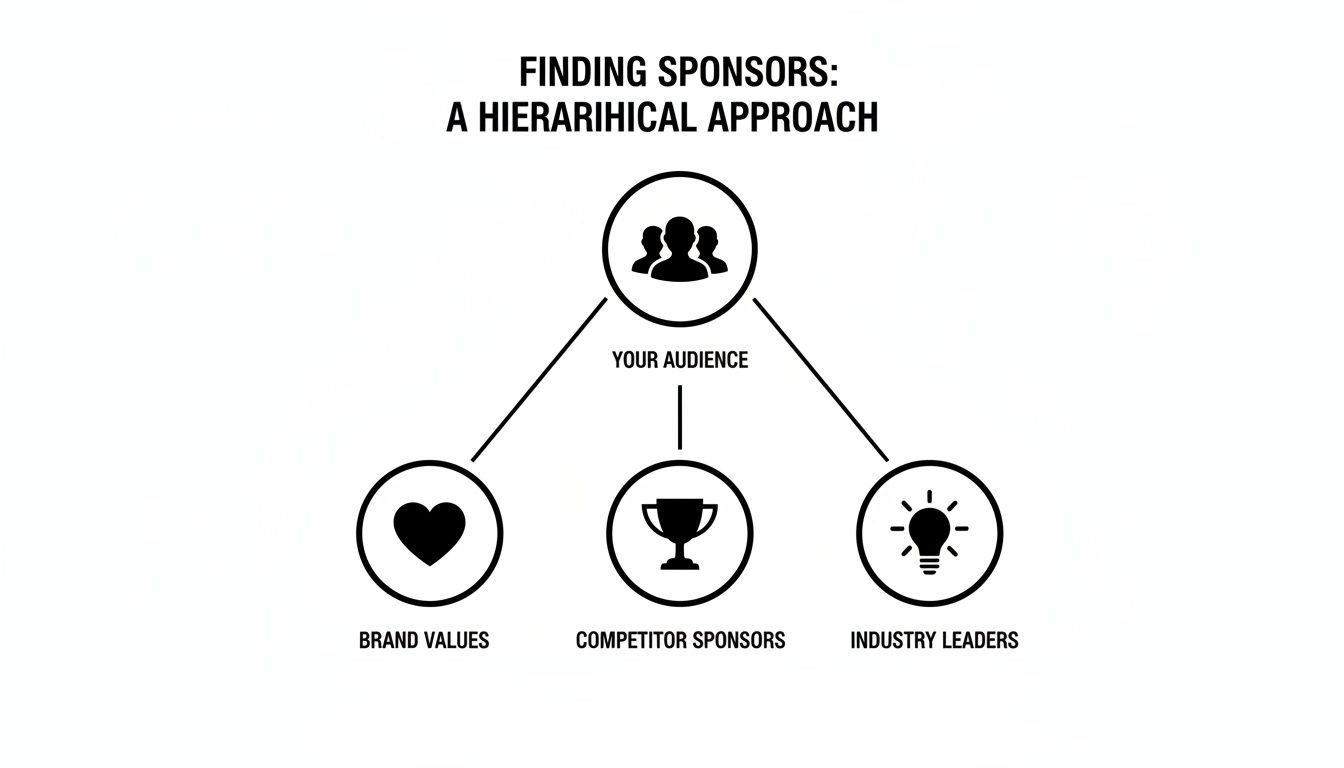
As you can see, a winning strategy always starts with a deep understanding of your audience. From there, you can identify brands that share your values and are trying to reach the same people.
With your assets valued, you can start bundling them into tiered packages. You've seen them before: Bronze, Silver, Gold, and maybe a top-tier Presenting or Platinum level. The goal here is to create clear, escalating levels of value that appeal to different budgets and marketing goals. This structure makes it incredibly easy for a sponsor to immediately see where their brand fits in.
Pro Tip: Don’t just add more benefits to higher tiers; increase the quality of the benefits. A Gold sponsor shouldn't just get more logo placements—they should get better ones, like on the main stage screen or the official event lanyards.
For instance, a Bronze package might offer some basic logo visibility and a social media mention. A Gold package, on the other hand, could include a speaking slot, a prime exhibitor booth location, and a dedicated email blast to your entire attendee list. By bundling assets, you create packages that feel like a much better deal than buying individual benefits à la carte. For a deeper dive, we have a whole guide on creating effective event sponsorship packages.
To give you a clearer picture, here's how the benefits might scale across different tiers.
This table shows a sample breakdown of how benefits can be structured to provide increasing value and exclusivity at each investment level.
Notice how the value isn't just about getting more of something, but getting better access and more exclusive opportunities as the investment increases.
Your sponsorship proposal (or "deck") is your most important sales tool. It needs to be sharp, professional, and completely focused on what the sponsor stands to gain.
A proposal that actually converts has a few key ingredients:
So, you’ve got a killer sponsorship proposal. That’s a great start, but now comes the hard part: getting it in front of the right people and actually closing the deal. This is where your strategy and personalization skills are truly put to the test.
Blasting out generic emails is a surefire way to get ignored or, worse, flagged as spam. Think about it from their perspective. You’re not just asking for a check; you're inviting a brand to solve their marketing challenges with your help. A value-first approach is the only way to get your emails opened and conversations started. In many ways, the principles are the same as learning how to get brand deals—it all comes down to a compelling pitch and finding the right fit.
That first email is your digital handshake. Its one and only job is to spark enough curiosity to land a meeting. It needs to be short, sharp, and all about them.
First things first, find the actual human you need to talk to. A personalized note to a "Senior Brand Manager" will always beat a generic "info@" email. Once you've got your contact, it's time to craft the perfect email.
Let's be real: decision-makers are swamped. Your first email, no matter how perfect, might just get lost in the shuffle. This is why a polite but persistent follow-up game is non-negotiable.
A "no" isn't a failure—it's just feedback. But silence? That often just means the timing is off. A gentle follow-up can put your proposal back on their radar when they actually have a moment to breathe.
I've found a cadence of two to three follow-up emails, spaced a few days apart, works wonders. The key is to add new value with each one. Don't just say, "Just checking in." Instead, share an exciting update—maybe you just locked in a big-name speaker or hit a new ticket sales milestone. This turns your follow-up from a nag into a helpful, informative touchpoint. If you get radio silence after three tries, it’s probably time to move on.
You got the meeting. Fantastic. Now it's time to shine.
This isn't a monologue where you click through your slides. It’s a strategic conversation. Your primary goal here is to listen way more than you talk.
Kick things off with questions to get them talking about their world:
Their answers are pure gold. They give you everything you need to tailor your pitch in real time, focusing only on the assets and ideas that solve their specific problems.
Be ready for objections. If they say the price is too high, don't just jump to a discount. Circle back to the value and ROI. Better yet, explore creating a custom package that hits their budget and still delivers results. When you frame the entire conversation around what they gain, it stops feeling like a sales pitch and starts feeling like the beginning of a true partnership.

Getting that verbal "yes" from a sponsor feels fantastic, but it's really the starting line, not the finish. The real work—the part that builds a long-term partnership—is just getting started. This final phase is all about locking in the contract, delivering an incredible experience, and proving undeniable value.
Getting this right is what turns a one-time sponsor into a recurring partner who can't wait to work with you again.
The move from a handshake deal to a signed agreement needs to be seamless. Have a straightforward sponsorship agreement ready to go. This isn't about burying them in legal jargon; it's about clarity. A good contract protects both you and the sponsor by outlining deliverables, payment schedules, and key deadlines so there are no surprises later.
Negotiation is a totally normal part of finalizing a sponsorship deal. Sponsors will have questions or want to adjust certain benefits, and you should come to the table ready for a collaborative conversation, not a confrontation.
I’ve found that a few things come up time and again:
Once you’ve worked out the details and the contract is signed, your focus shifts entirely to bringing their sponsorship to life.
A logo on a banner is a given, but it’s the memorable activations that truly connect a sponsor with your audience. This is where you get to move past the basics and help your partner create genuine moments of engagement.
Think beyond the standard 10x10 booth. Here are a few ideas I've seen work incredibly well:
Your job isn't just to sell a space; it's to be a creative partner. When you proactively suggest activation ideas, you show you're invested in their success because you genuinely know what resonates with your audience.
These days, sponsors are laser-focused on results. It’s not just about brand awareness anymore—they want measurable engagement. In fact, 45% of brands have recently pushed to renegotiate deals to include clearer metrics. We're also seeing that partnerships tied to social causes are growing fast, largely because they drive much higher engagement. You can find more on these shifts in this report on global sponsorship trends.
After the lights go down and the last attendee leaves, you have one final—and critical—task: delivering a comprehensive post-event report. This is your proof of performance. It’s the document that shows the sponsor exactly what they got for their investment and is often the single biggest factor in whether they sign on again next year.
A great report is a blend of hard data and compelling storytelling. Don’t just email them a spreadsheet; create a visually engaging summary that puts the wins front and center.
Here’s what every post-event report must include:
This level of detailed follow-up shows you’re a professional who is committed to their success. It makes the renewal conversation incredibly easy because you’re not just asking for more money—you’re proving you’re an indispensable marketing partner.
Let's be honest: securing sponsors can feel like a maze. No matter how many events you've run, there are always tricky situations and nagging questions that pop up. Here are some of the most common ones I hear, along with some straight-up advice from the trenches.
This is a big one, and the answer really boils down to who you're asking. If you have your sights set on big corporate fish, you need to be thinking way ahead—I'm talking six to nine months out. These companies operate on rigid annual or quarterly budget cycles. If you miss their planning window, the money is already gone.
On the other hand, if you're targeting local businesses or smaller companies, you can be a bit more nimble. Their decision-making is usually faster and less bureaucratic. For them, a three to four-month runway is typically plenty of time to get a conversation started and a deal signed.
Quick tip: A "no" today isn't always a "no" forever. More often than not, it's just bad timing. If their budget is tapped for the year, thank them for their time and ask point-blank when you should circle back for next year's event. Get on their calendar early.
Don't panic. This is a classic objection, especially for niche or first-time events. The key is to stop talking about quantity and start talking about quality. A small, laser-focused audience can be a goldmine for the right sponsor.
Here’s how you can flip the script:
Yes, a thousand times yes. Having standard tiers like Gold, Silver, and Bronze is a great starting point. It makes the decision easy for sponsors who just want a simple, off-the-shelf option. But you should always leave the door open for something custom.
The most savvy sponsors have very specific goals they need to hit, and a one-size-fits-all package probably won't cut it. Simply adding "Custom packages available upon request" to your proposal signals that you're a strategic partner, not just someone selling a product. It invites a deeper conversation about how you can help them win.
In-kind deals, where a company gives you goods or services instead of cash, can be a lifesaver for your budget. Think of a local print shop providing all your signage for free, or a hotel comping rooms for your keynote speakers. These partnerships can be incredibly valuable.
When an in-kind offer comes your way, there's one simple question to ask yourself: "Is this something I would have paid for anyway?"
If the answer is a clear "yes," it’s probably a fantastic deal. Just make sure you assign a realistic market value to whatever they're offering. This allows you to place them in the appropriate sponsorship tier and give them the benefits they deserve.
Juggling all of this—from custom sponsor pages and lead capture to ticketing and proving ROI with data—is a massive undertaking. The all-in-one platform from GroupOS was built specifically to take that chaos off your plate. It gives you the tools you need to deliver serious value to sponsors and make each event more successful than the last.