January 9, 2026

Before you even dream of sending out a sponsorship proposal, there's some critical groundwork to do. The most common mistake I see is people rushing the outreach process. They fire off a generic email and wonder why they hear crickets. The truth is, sponsorships are won or lost long before that first contact.
To get a company sponsorship, you need to stop thinking like you're asking for a handout and start thinking like you're proposing a strategic business partnership.
You have to build a rock-solid foundation that answers one simple question for any potential sponsor: "Why should I partner with you over anyone else?" This isn't the flashy part of the process, but it's absolutely where the magic happens.
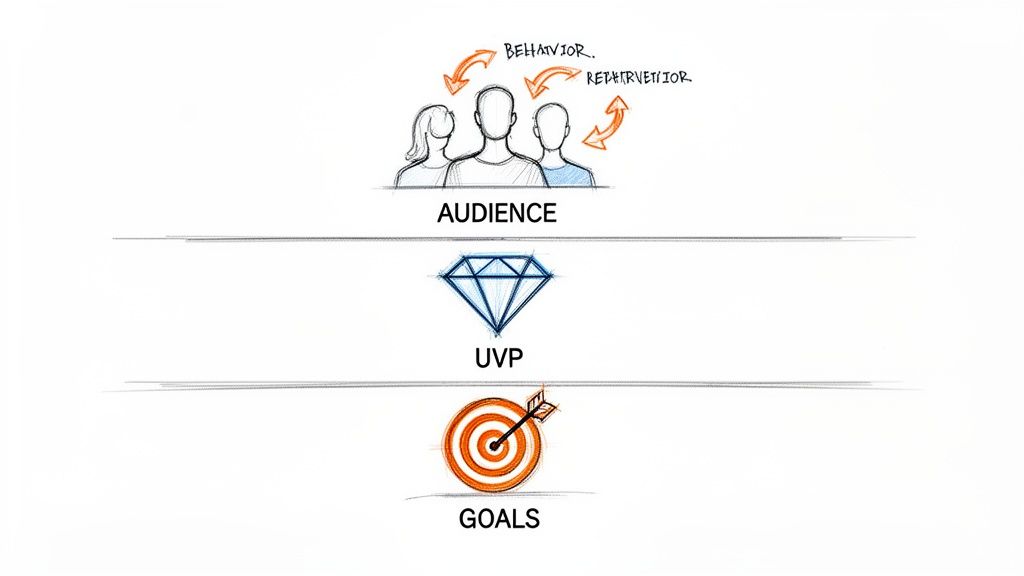
Mastering how to get event sponsors and secure funding means you can walk into any conversation and confidently explain the ROI for a potential partner, making their decision to invest a no-brainer. This essential prep work breaks down into three core pillars: Audience, Value, and Goals.
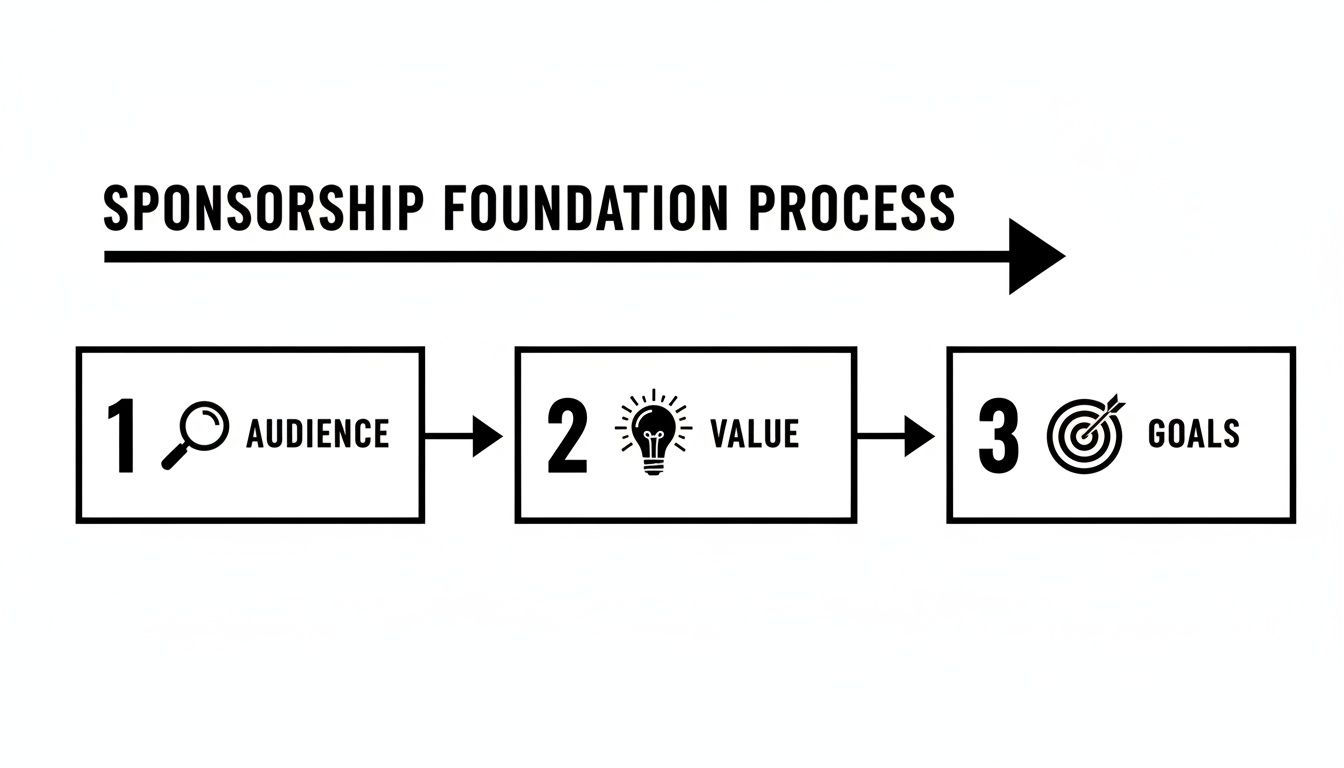
As you can see, it all starts with deeply understanding your audience. That knowledge is what allows you to define your value, which in turn helps you set crystal-clear goals for your partnerships.
Let's be clear: sponsors aren't buying access to your event or community. They are buying access to your audience. A simple headcount just won't cut it anymore. You need to paint a vivid, detailed picture of who these people are.
Go way beyond basic demographics like age and location. The real gold is in the psychographics and professional data that reveal their true value to a sponsor.
Think about the difference. Saying you have "1,000 attendees" is forgettable. But saying you have "1,000 SaaS product managers from mid-market tech companies actively looking for new project management solutions"—now that is a powerful statement a sponsor can immediately see value in.
Once you know your audience inside and out, you can build your unique value proposition (UVP). This is your sharp, concise statement that spells out the tangible benefits a sponsor gets by partnering with you.
Your value proposition is the bridge between your audience and a sponsor's marketing goals. It answers the question, "What specific business objective can we help you achieve?"
A weak proposition is, "Sponsor us to get your logo on our website." Yawn. A strong one sounds like this: "Partner with us to generate qualified leads from 300+ vetted FinTech executives through a dedicated workshop and our integrated lead capture tools." See the difference? To really nail this, check out our guide on https://groupos.com/blog/how-to-ask-to-be-sponsored.
Finally, what do you actually need from a sponsorship? Defining your goals upfront saves you from accepting deals that look good on paper but don't move the needle for your organization. You have to get specific about what a "win" looks like.
Your goals could be a mix of things:
Having these goals locked in gives you a strategic anchor for everything that comes next, from pricing your packages to deciding which companies are worth your time to approach.
Once you’ve nailed down what you’re offering, it's time to find companies that will actually get excited about it. Landing a sponsorship isn't about blasting emails to a massive list of businesses. Think of it as strategic matchmaking—your success depends on finding the right fit long before you even draft a proposal.
The game has changed. Today, brands are under serious pressure to justify every single marketing dollar, which makes them way more selective. A "spray-and-pray" approach won't just fall flat; it can actively hurt your reputation. Your real mission is to build a short, curated list of high-potential partners.
Before you even open a search tab, you need to know who you’re looking for. The best way to do this is by creating an Ideal Sponsor Profile (ISP), just like a sales team builds a profile for their perfect customer. This goes deeper than just their industry.
A classic rookie mistake is chasing a big, famous company just for the name recognition. Trust me, a smaller, niche company whose audience is a perfect match for yours is a far more valuable and likely prospect than a global brand with no real connection to your world.
With your ISP in hand, the real detective work begins. Your best tools are the platforms and publications your ideal sponsors are already using to find their own customers.
LinkedIn is your best friend here. Seriously. Use its search filters to zero in on companies by industry, size, and location. Even better, you can find the actual human beings you need to talk to—people with titles like "Partnership Manager," "Sponsorship Coordinator," or "Brand Marketing Director." Building a real connection with these people is everything. Our guide on professional networking tips can help you start those conversations off right.
Don't stop at LinkedIn, though. These resources are goldmines:
Today’s sponsorship decisions are driven by values and measurable results. Social impact sponsorships, for example, grew by a massive 21% year-over-year. And with 45% of brands renegotiating deals to shorten terms or shift assets, it’s clear they need to see a real return on their investment. This shows why a targeted, value-packed pitch is non-negotiable.
Once you’ve built a solid list of companies and the right contacts, you need to reach out. Getting your message directly to them is key. Learning how to find company email addresses is a practical skill that helps you skip the generic "info@" inbox and put your pitch in front of the person who can actually say yes.
Let's be honest: the old "Gold, Silver, Bronze" sponsorship model is tired. It's a relic from an era when slapping a logo on a banner was enough. Today, securing company sponsorships requires a completely different mindset. You're not just selling ad space; you're selling solutions to a company's biggest marketing challenges.
Think of your packages as a product line. Each one needs to be designed to solve a specific business problem for a specific type of partner. Are they desperate for sales leads? Trying to build brand recognition in a new market? Or maybe they want to position their CEO as the go-to expert in the field? Each of those goals demands a unique set of benefits.
Instead of a simple price-based hierarchy, try building packages around the outcomes you can deliver. When a potential sponsor sees a package that speaks directly to their KPIs, the conversation changes instantly. You’re no longer just another organization asking for money; you're a strategic partner who understands their world.
This approach forces you to think from their perspective, which is the secret to landing bigger, better, and longer-term deals.
Here are a few examples to get you started:
When you frame your offerings this way, a sponsor immediately understands the value proposition. It just clicks.
To build packages that are both profitable for you and compelling for them, you need to start with a full inventory of every single asset you can offer. I mean everything. Then, you assign a fair market value to each item. This simple exercise is a game-changer—it stops you from undervaluing your opportunities and gives you a rock-solid foundation for your pricing.
Get creative and think about all the ways a sponsor can connect with your audience.
Here’s a look at how we can structure different sponsorship tiers. Notice how the value—and the investment—ramps up with a mix of branding, engagement, and direct lead-gen benefits. This model helps a potential sponsor easily see where they fit and what they get for their money.
This kind of clear, tiered structure backed by individual asset valuation makes your pricing transparent and much easier to justify during negotiations. For a much deeper dive, check out our complete guide on building irresistible event sponsorship packages.
While live experiences are a huge draw, today's sponsors expect more. They want an integrated approach that connects the on-site experience with digital touchpoints before, during, and after the event. The smart money is flowing to partners who can demonstrate this multi-touch journey—from pre-event social buzz to in-person QR scans and post-event content views.
A modern sponsorship package isn’t about exposure; it’s about providing measurable, data-backed results. A sponsor is far more likely to invest $15,000 in a package that promises "qualified leads with detailed engagement analytics" than one that just offers "logo placement and three social media mentions."
This is where technology becomes your best friend. With a platform like GroupOS, you can stop selling vague promises and start offering tangible, data-rich benefits that prove ROI.
When you build your packages this way, you change the entire dynamic of the conversation. You're no longer asking for a handout; you're presenting a strategic investment with a clear, demonstrable return. And that makes it incredibly difficult for the right sponsor to say no.
Alright, you've designed some killer sponsorship packages. Now comes the moment of truth: reaching out and convincing a prospect to become a partner. This is where your strategy needs to shine through your storytelling.
Let's be blunt: a generic, self-centered pitch is the fastest way to get your email ignored. A winning proposal isn't about your needs; it's a solid business case for why partnering with you is a smart investment for them. The goal is to stop sounding like everyone else asking for a handout and start sounding like a strategic partner who can solve a real problem.

Your first email is everything. It has one job: get a reply. So, forget the long, rambling introductions. Your message has to be personal, punchy, and packed with value right from the start.
Those "Dear Marketing Team" or "To Whom It May Concern" emails are dead on arrival. Do your homework. Find the right person's name. It shows you've put in the effort and respect their time.
Here's a simple framework that I've seen work time and again:
Once you get that initial "yes," it's time to send the formal proposal. Think of this document less as a novel and more as a strategic blueprint for success. It should be visual, easy to scan, and confirm all the value you've already discussed.
A great proposal tells a story where the sponsor is the hero. Each section should logically build on the last, guiding them from understanding the opportunity to seeing a clear return on their investment. To see this in action, checking out a sample sponsorship proposal can give you a fantastic blueprint.
The best proposals I've ever seen focus way more on the sponsor's potential return than on the organization's life story. Frame every single benefit in terms of what they will gain—whether it’s qualified leads, brand exposure, or valuable market insights.
Make sure your proposal nails these key sections:
Hitting "send" on the proposal isn't the finish line. A smart, respectful follow-up cadence is what often seals the deal. The trick is to be persistent but professional, adding a little value with each touchpoint.
Give them about a week before your first check-in. A simple email asking if they had a chance to review it and have any questions is perfect. If you still hear crickets, try again a week later. This time, you could share a quick community update or a relevant article to stay on their radar.
My rule of thumb? After three attempts with no response, it's probably time to gracefully move on.
Getting a sponsor to say "yes" feels like you've crossed the finish line, but really, the starting gun has just fired. The real work of building a great partnership starts now. The path from a verbal agreement to a signed contract and a killer activation is where a lot of potentially great sponsorships can fizzle out.
Nailing this process doesn't just lock in the deal; it sets the entire tone for your relationship. This is your first real chance to show them you’re an organized, reliable partner who actually delivers on what you promised.
Negotiation shouldn’t feel like a battle. It’s more of a collaborative jam session, where you're both trying to fine-tune the partnership so everyone walks away feeling like they won. The secret is knowing your own value inside and out, while also understanding where you have room to bend.
Before you even think about hopping on a call, map out your "must-haves" and your "nice-to-haves." This simple exercise gives you a solid framework for the entire conversation.
What if they ask for a discount? Instead of just slashing the price, try swapping benefits. For example, if they can't quite swing the price for your Gold package, you could offer to keep them at that price point by trading a speaking slot for an extra dedicated email blast to your members.
Remember, the goal of negotiation isn't just to squeeze out every last dollar. It's to build a balanced agreement where both you and the sponsor feel like you're getting fantastic value. That approach creates goodwill that pays off in the long run.
As soon as you’ve shaken on the terms, get it all down in writing. A formal contract is your best friend—it protects both you and your sponsor by laying out every single expectation, deliverable, and timeline in black and white.
Make sure your contract clearly spells out:
A solid, comprehensive contract gets rid of any gray areas and prevents those "I thought you meant..." conversations down the road. It’s the blueprint for a successful partnership.
Once the ink is dry, it's all about execution. A smooth onboarding is your chance to make your new partner feel incredible about their investment right from the start. Put together a simple welcome packet that includes a checklist of everything you need from them, a list of key dates, and who to contact on your team for what.
This is where you can really show your value with data-driven activations. The whole sponsorship game has changed. The winning pitch isn't about "exposure to 5,000 attendees" anymore. It’s about delivering "data on 5,000 tagged members, with behavior and conversion analytics." This shift toward measurable ROI is massive, and you can find more stats like this to beef up your own proposals.
Modern platforms are built for exactly this. For example, with a tool like GroupOS, you can give sponsors their own dedicated profiles. They can upload their content, see lead-capture data as it comes in, and access post-event analytics that prove their money was well spent. This instantly turns their sponsorship from a line-item expense into a fully trackable marketing campaign.
The real secret to turning a one-time sponsor into a long-term partner? It all comes down to what you do after the event wraps up. Cashing the check isn't the end of the road. The sponsorship cycle truly ends when you hand them a powerful report that proves their investment was a brilliant move. This is what separates the pros from the amateurs.
You're not just looking for a transaction; you're building a relationship. And strong relationships are built on trust and tangible results. When you proactively track and report on their return on investment (ROI), you're showing them you're just as committed to their success as they are. It changes the entire dynamic.
Let's be honest: sponsors don't really care how many people simply showed up. They need data that ties directly back to their business goals. So, it's time to ditch the vanity metrics and focus on the key performance indicators (KPIs) their marketing team is actually tracking.
These are the numbers that tell a story of genuine value:
This is where a dedicated platform like GroupOS can be a game-changer. It automatically tracks this kind of data, so sponsors can log in and see exactly how many people visited their profile or downloaded their materials. It’s a transparent, immediate way to show them their impact.
Your post-event report is your single best sales tool for next year's event. A sponsor who sees clear proof of 150 qualified leads and a 25% click-through rate from your email blast is already halfway to saying "yes" to renewing.
Never just email over a spreadsheet of raw numbers. Your report needs to be a compelling narrative that brings the partnership's success to life. Weave the quantitative data together with qualitative insights to paint the full picture.
Include photos of their busy booth or their packed speaking session. Pull out a few attendee testimonials that specifically mention them. Most importantly, frame all the data around the specific goals they shared with you in your very first conversation. This proves you were listening and that you were actively working to deliver what they needed.
This kind of professional, data-driven follow-up is how you secure a company sponsorship year after year, transforming your program into a reliable revenue engine for your organization.

When you're trying to land corporate sponsorships, it's easy to get bogged down by questions. Getting the right answers can be the difference between a stalled effort and a signed contract. Let's walk through some of the most common questions that pop up.
A big one I hear all the time is, "When should I start reaching out?" For any significant event or partnership, you need to start the conversation 9-12 months ahead of time. Think about it: big companies often lock in their marketing and sponsorship budgets for the entire next year during the fall. Getting on their radar early puts you right in their planning cycle.
That kind of lead time also takes the pressure off. It gives you space to do your homework, build real connections with the right people, and negotiate a deal that works for everyone. If you’re planning something smaller, like a local community event, you can usually get away with a 4-6 month runway.
So, what about when a company offers products or services instead of cash? That's called an in-kind sponsorship, and it can be a game-changer for your budget. A tech company might give you software licenses, or a local brewery could provide drinks for your networking event.
Valuing these contributions is actually pretty straightforward. Just figure out the fair market retail price for the goods or services they’re providing. That dollar amount then counts toward their sponsorship level, ensuring they get all the recognition and perks they’ve earned.
The biggest mistake people make when pitching sponsors is focusing on their own organization's needs. A winning pitch is never about what you need; it's about what you can do for them.
Seriously, flip the script. Your proposal should be all about how you'll help them crush their marketing goals, connect with their dream customers, and see a real return on their investment. Always lead with their win, not your wish list.
From that first pitch to the final ROI report, managing sponsorships can feel like a full-time job. GroupOS is built to handle the heavy lifting. Our platform gives you everything you need to prove your value, track every benefit, and build the kind of long-term partnerships that grow year after year. See how we can help you at https://groupos.com.