December 21, 2025
Long before you start thinking about venues or catering, the real work of event planning begins. The success of any event is decided right here, in the strategic foundation. This is the phase where you turn a great idea into a concrete plan with measurable goals. It's all about defining what a "win" looks like for your association and making sure every decision from here on out supports that vision.
Think of this as the architectural blueprint for your event. It’s not just a brainstorm on a whiteboard; it’s a shared, documented understanding of why you're doing this. This document becomes the framework that holds everything together, preventing that dreaded scope creep and keeping your entire team aimed at the same target.
First things first, you have to answer the most fundamental question: Why are we even hosting this event? Your answer needs to be specific, measurable, and tied directly to your association's big-picture goals. Are you trying to get members more involved? Generate some non-dues revenue? Or maybe position your organization as the go-to thought leader in your industry?
Vague goals like "increase engagement" won't get you very far. You need to get specific. For example, turn that fuzzy goal into a sharp target:
When you have clear, quantifiable goals like these, they become your north star. Every time a decision comes up—whether it's about a potential speaker or a new marketing channel—you can just ask, "Does this help us hit our numbers?"
Once your objectives are locked in, it’s time to figure out who is involved and who you want to attract. Your stakeholders are anyone with a vested interest in the event's success—your board, your internal team, key sponsors, and even community partners. To keep everyone on the same page, it's smart to follow some solid process documentation best practices from the start.
At the same time, you need to get crystal clear on your target audience. "Industry professionals" is way too broad. You need to build out detailed personas of your ideal attendees.
Let's imagine you're a professional association for software developers. A persona might look something like this:
When you have this level of detail, you can shape every part of the event—from the content and speakers to the marketing copy—to speak directly to the people you want in the room.
Key Takeaway: A detailed strategic blueprint is like your event's constitution. It turns fuzzy ideas into a clear action plan, gets everyone aligned, and ensures every decision is made with your audience in mind.
Finally, pull all of this foundational work into one central document: an event project charter or brief. This is your team's single source of truth. It should spell out the event's mission, goals, scope, stakeholders, and a high-level budget.
Keeping this strategy document in a unified platform like GroupOS means everyone is working from the same playbook from the very beginning. To get a head start, check out our guide on creating the perfect event brief template. This charter is your best defense against miscommunication and keeps the whole team on track as you move from planning to execution.
Okay, you’ve got your strategic blueprint. Now comes the real work: turning those big ideas into a concrete, day-by-day action plan. Honestly, trying to run an event without a detailed timeline is like taking a road trip without a map. You might get there eventually, but you’ll be stressed, lost, and probably burn through your budget on wrong turns. Your master plan is your GPS, guiding every single task from today until the last attendee walks out the door.
The single best piece of advice I can give you here? Work backward. Seriously. Start with your event date and reverse-engineer every milestone. This simple trick forces you to be brutally realistic about deadlines and saves you from those frantic, last-minute scrambles. It’s the difference between locking in your keynote speakers with plenty of time to spare and desperately calling agents a week before the show.
The graphic below shows how that initial blueprint—where you nailed down your objectives, audience, and project charter—is the bedrock for this timeline.
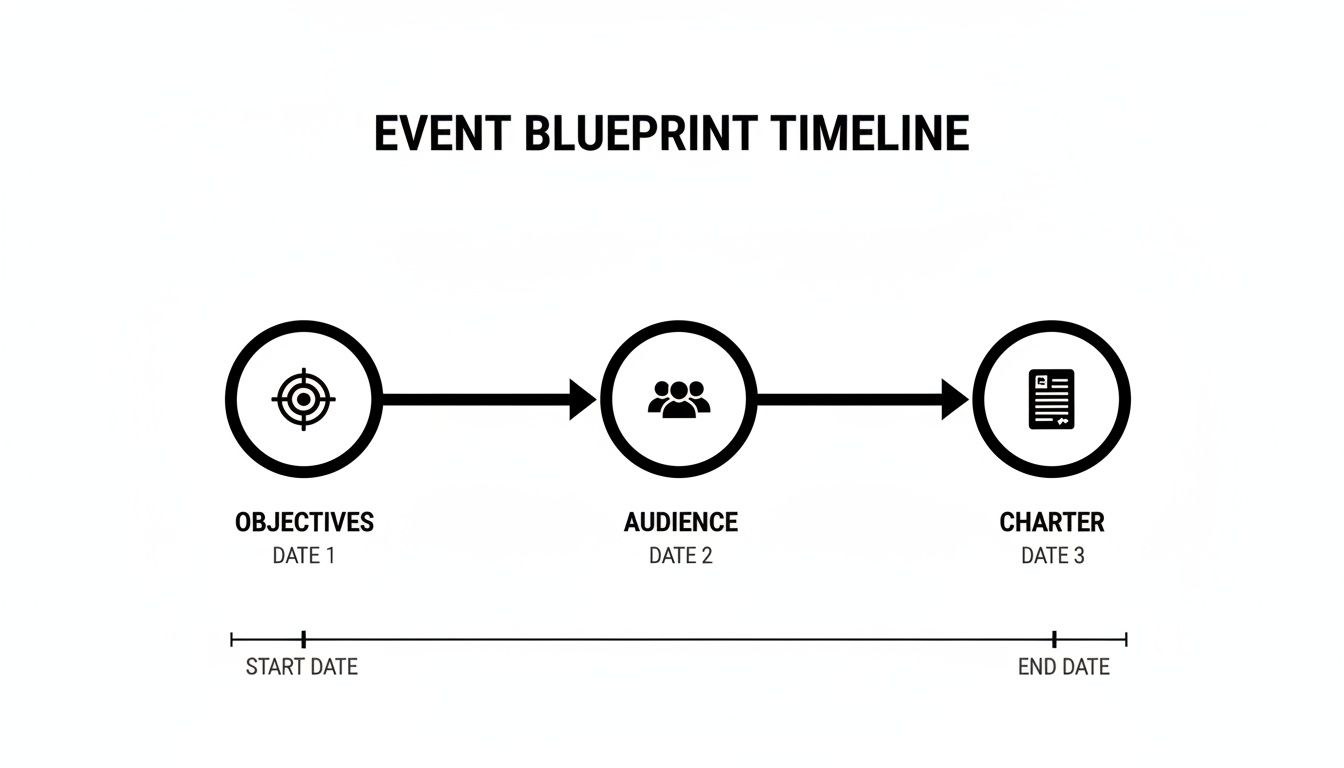
It’s all connected. A solid timeline isn't just a list of dates; it’s the logical extension of the strategic decisions you made right at the start.
Before you get lost in the weeds, think in broad strokes. What are the major phases of your event lifecycle? Sketch those out first, then you can start filling in the smaller tasks.
For a typical professional association conference, the flow might look something like this:
Each of these bullet points is really a container for dozens of smaller, interconnected tasks that need to be delegated and tracked.
Once you have your milestones, it’s time to get granular. A task like "Handle Marketing" is completely useless on a project plan. You have to break it down into actionable steps: "Draft email campaign copy," "Design social media graphics," "Schedule promotional posts." This is where a lot of plans fall apart.
For every single one of those tiny tasks, you need two things:
Pro Tip: Always, always identify task dependencies. You can’t launch the registration page until the ticketing tiers are priced out. You can’t print the program until the agenda is final. Mapping these connections ahead of time prevents bottlenecks that can grind your entire project to a halt.
This is where a unified platform like GroupOS becomes a lifesaver. You can visually link dependent tasks. If one gets delayed, the system can automatically notify the owner of the next task in the chain. It’s about proactive management, not constant firefighting.
Let's be real: no event plan survives first contact with reality. A speaker will cancel. A vendor will go out of business. A global crisis might force you to go fully virtual. Your master plan has to be a living document, not something carved in stone.
To build that agility into your process:
By combining a detailed, work-back timeline with clear ownership and built-in flexibility, you create a master plan that actually works. For a deeper dive, grab our free templates and examples in this comprehensive guide to crafting the perfect event planning timeline template. This approach turns a dauntingly complex process into a clear, manageable set of steps that will keep your team in sync and on the path to a successful event.
Alright, you've got your timeline sketched out. Now it's time to tackle the two things that will truly make or break your event: your money and your partners.
Smart financial management is so much more than just cutting costs. Think of it as the operational backbone holding your entire event vision together. Without a rock-solid grip on the numbers, even the most brilliant concept is going to struggle to get off the ground.
This all starts by creating a realistic, line-item budget that accounts for everything. And I mean everything. It’s easy to remember the big-ticket items like the venue, but it's the little things that'll get you. I'm talking about AV tech overtime, speaker travel stipends, credit card processing fees, and even the software you'll use for post-event surveys. Having this all in one central place is the only way to keep a real-time pulse on your event's financial health.
Before you can start tracking every dollar, you need a solid structure. A good event budget tells a story—it shows your priorities and lays out your path to profitability. The best way to begin is by bucketing your costs into logical categories. This makes tracking way easier and helps you spot potential overspending at a glance.
A simple, effective breakdown usually looks something like this:
Once you have your expenses mapped out, you can start forecasting revenue from things like ticket sales, sponsorship packages, and exhibitor booths. Putting these two sides together—income and expenses—lets you calculate your break-even point. This is the absolute minimum you need to bring in just to cover your costs.
Knowing your numbers inside and out is the secret sauce to effective event planning. Your break-even analysis isn't just a classroom exercise; it's the benchmark that dictates your ticket prices and sponsorship goals.
This number gives you a clear target to aim for. If you want to go deeper on this, our guide on budgeting an event has templates and practical examples to get you started.
With your budget as your north star, you can start selecting your partners. Your vendors—from the caterer to the AV company—are an extension of your team. Their performance has a direct line to your attendees' experience, so rushing this step is a classic mistake that can cause major headaches on event day.
Kick things off by drafting a clear Request for Proposal (RFP) for each major vendor you need. A good RFP does more than ask "How much?" It should lay out your event's goals, who your audience is, what you specifically need, and what success looks like. This way, when the proposals come back, you're actually comparing apples to apples.
Once you’ve narrowed it down to a shortlist, the real vetting begins. Here's what I always look for:
Finally, you negotiate the contract. Get every single detail in writing: payment schedules, cancellation policies, and a crystal-clear scope of work. A solid contract protects you and the vendor, setting you both up for a successful partnership.
And don't wait. With 66% of event professionals planning to run more events in 2025, the competition for top-tier vendors is getting fierce. Securing the right partners early is more critical than ever.
Let's be honest: you can plan the most incredible, industry-defining event imaginable, but it's all for nothing if you're speaking to an empty room. The real work begins when you shift from logistics to people—crafting a marketing and registration strategy that builds genuine excitement and a can't-miss sense of urgency.
An attendee's experience doesn't start when they walk through the door. It starts the moment they click your registration link. A clunky, confusing, or untrustworthy ticketing page can torpedo your sign-ups before they even get started. It’s your first impression, and it needs to be a good one.
Before you draft a single email or design a social media graphic, you need to answer one simple question from the attendee's perspective: "What's in it for me?"
"Join our annual conference" just doesn't cut it anymore. Your messaging has to be built around the benefits, not just the features. Don't just list speakers; talk about the game-changing insights they'll gain from industry titans. Don't mention networking breaks; frame it as a chance to forge career-defining connections.
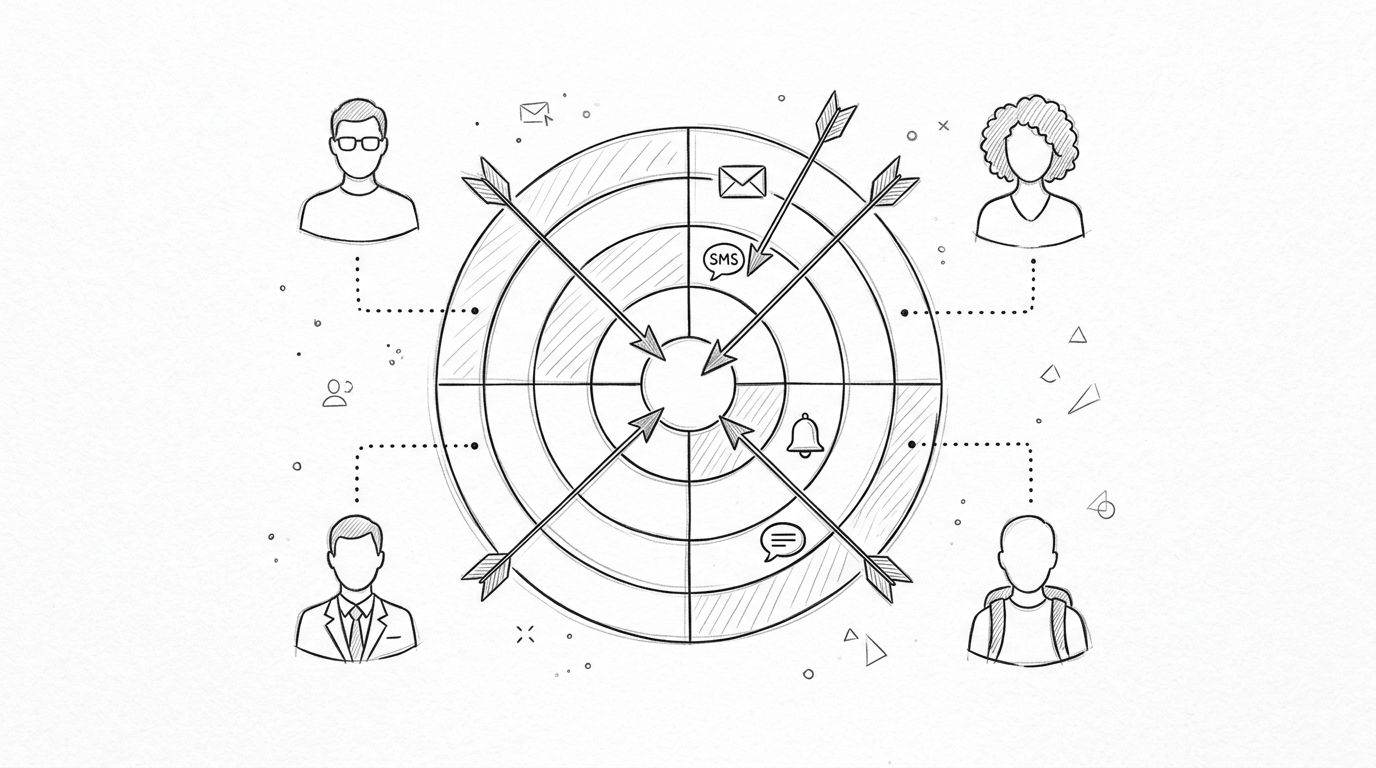
Think about your different member personas and speak directly to them:
This benefit-first approach becomes the bedrock of all your marketing, keeping your message consistent and powerful across every channel.
Throwing a few random posts on social media a couple of weeks out is a surefire way to get a disappointing turnout. What you need is a strategic, multi-channel marketing calendar that maps out every touchpoint. The goal is to create a promotional rhythm that builds momentum over time. A huge part of this is driving traffic to a central hub, which is why effective landing page design is so critical.
Your calendar should create a "surround-sound" effect, reaching your audience from multiple angles.
Different channels have different strengths. A smart event marketer knows which lever to pull and when. This table breaks down some of the most common channels and how to use them effectively for your association's event.
By planning this out, you’re not just sending ads; you’re telling a story that builds from the initial "save the date" all the way to the final "last chance to register" push.
You did it! Your marketing worked, and an interested professional clicked "Register Now." The last thing you want is to lose them at the finish line because of a frustrating form.
Every extra field and every unnecessary click is another chance for them to abandon the process. Simplicity is key.
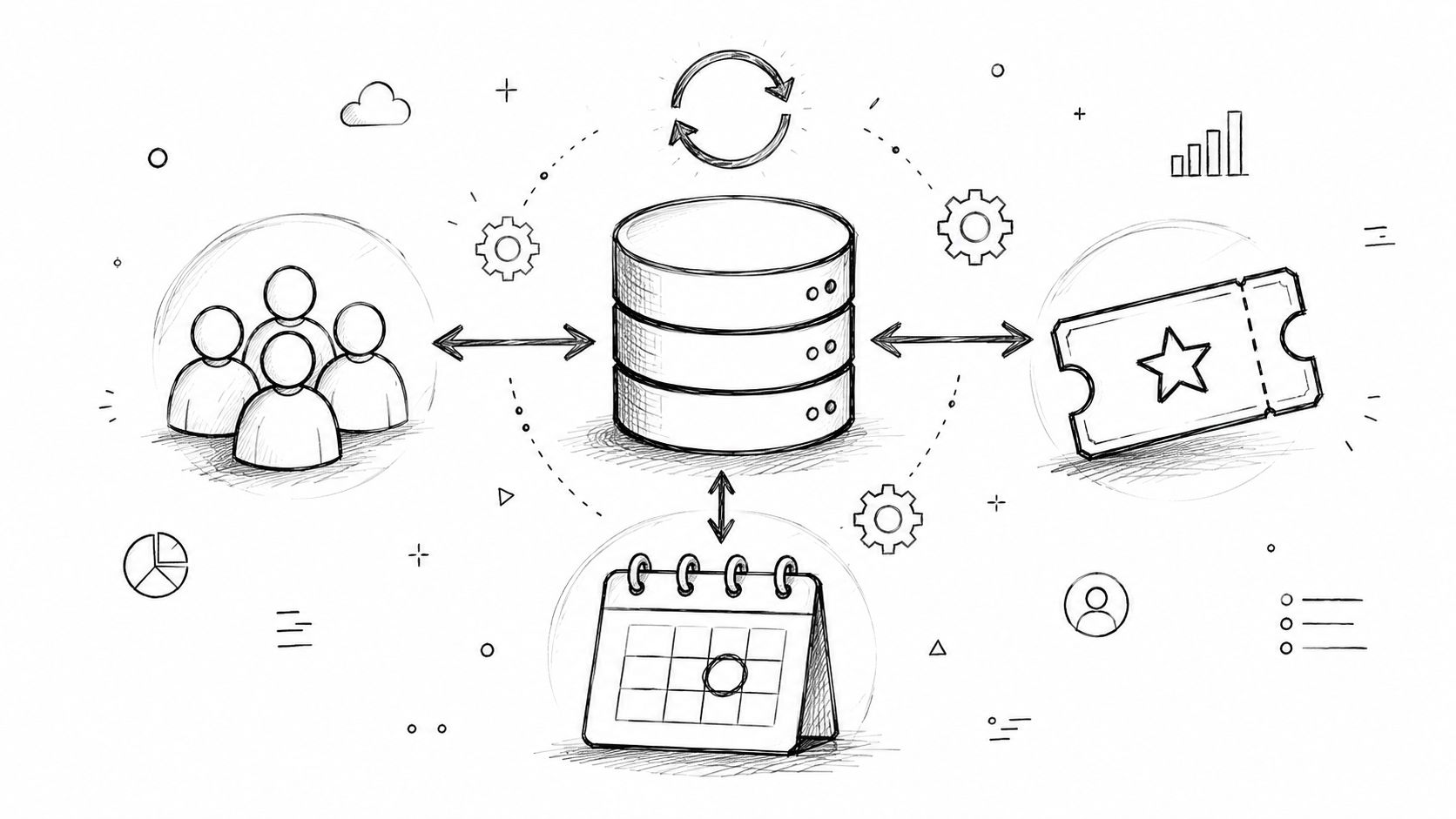
This is where an all-in-one platform like GroupOS becomes invaluable. You can quickly build a branded, professional ticketing page that inspires trust. But the real power comes from integrating it directly with your membership database.
A Pro Tip From Experience: The ability to automatically check someone's membership status and apply the correct discount is a total game-changer. It makes your members feel seen and valued while removing the biggest point of friction in the sign-up process.
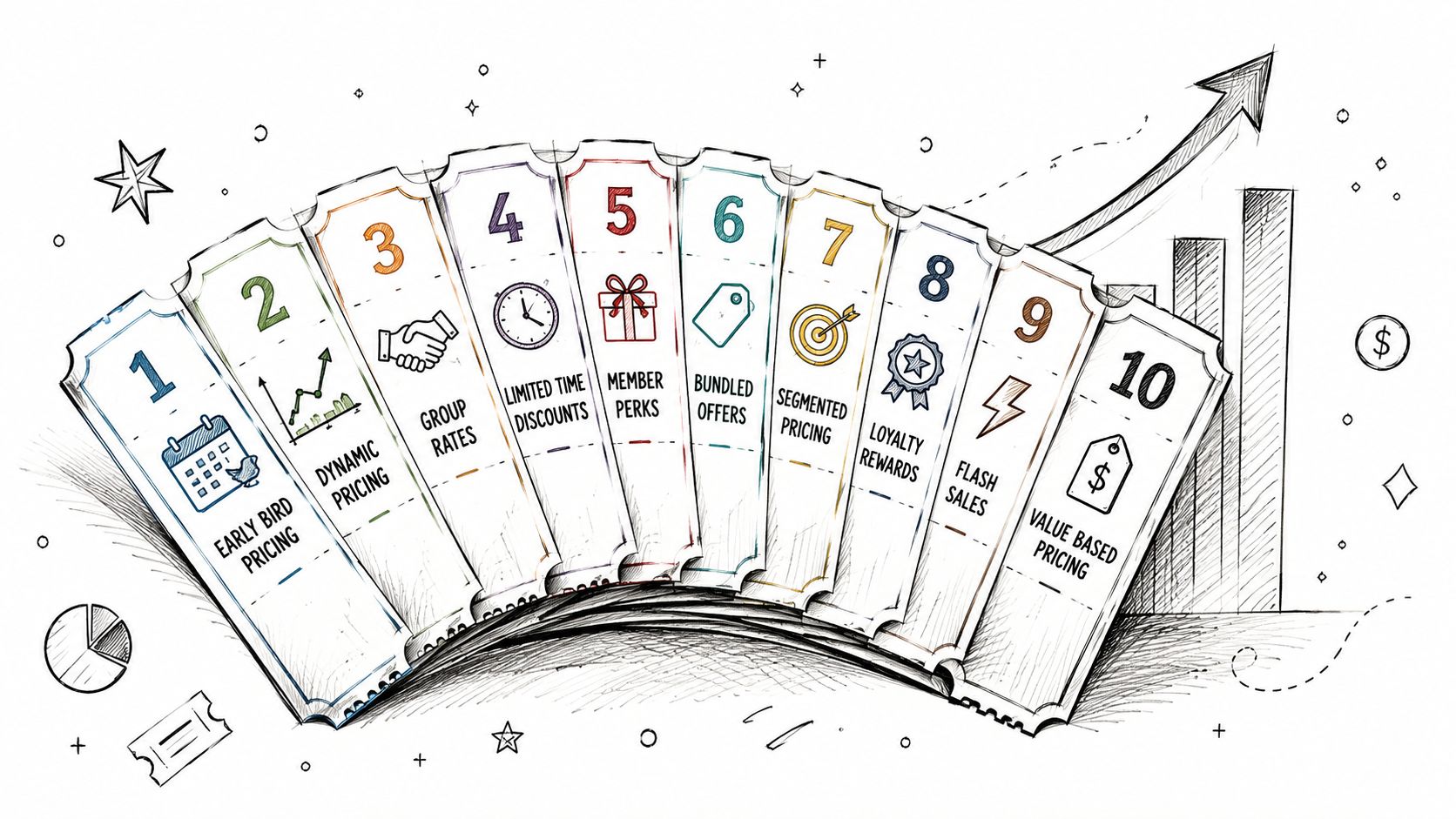
This deep integration makes setting up smart, strategic ticketing tiers a breeze:
When you pair compelling, benefit-focused marketing with a simple and intelligent registration system, you build a powerful machine that drives attendance. You're no longer just selling a ticket—you're selling an experience that starts right from the moment they sign up.
After months of planning, event day is finally here. This is where all those detailed timelines and strategic blueprints pay off. The focus now shifts completely from planning to execution, making sure every single attendee has a smooth, engaging, and memorable time from the moment they walk through the door.
The energy on-site is electric, and your job is to be the calm conductor of a very complex orchestra. From last-minute AV checks to briefing your team of staff and volunteers, this is all about managing the moving parts with confidence. The goal? Make it all look effortless, even when you’re secretly solving three problems at once behind the scenes.
Your check-in process is the first real touchpoint of the day, and you only get one chance to make a great first impression. Long lines and confusion at the entrance can sour the mood before the event even begins. The mission is simple: get people in the door and into the action as quickly and painlessly as possible.
This is where modern tech becomes your best friend. Using QR codes for check-in isn't just a cool feature anymore—it's standard practice for a reason. A platform like GroupOS can generate a unique QR code for every single person who registered. This lets your team use their own smartphones or tablets as scanners, ditching the clunky hardware and endless alphabetized lists for good.
Think about designing a check-in area that anticipates what people need:
This kind of setup drastically cuts down wait times and kicks the day off with a positive, efficient vibe.
Every successful event runs on a master script. For us, that’s the run-of-show document—a minute-by-minute schedule that outlines every single component of the day. It’s the ultimate source of truth for your entire team.
But this document has to be more than just a list of session times. A truly useful run-of-show includes:
Pro Tip: Don't just email the run-of-show and hope for the best. Hold a quick pre-event briefing to walk everyone through it. This ensures every volunteer, staff member, and vendor knows exactly what their role is and how it fits into the bigger picture.
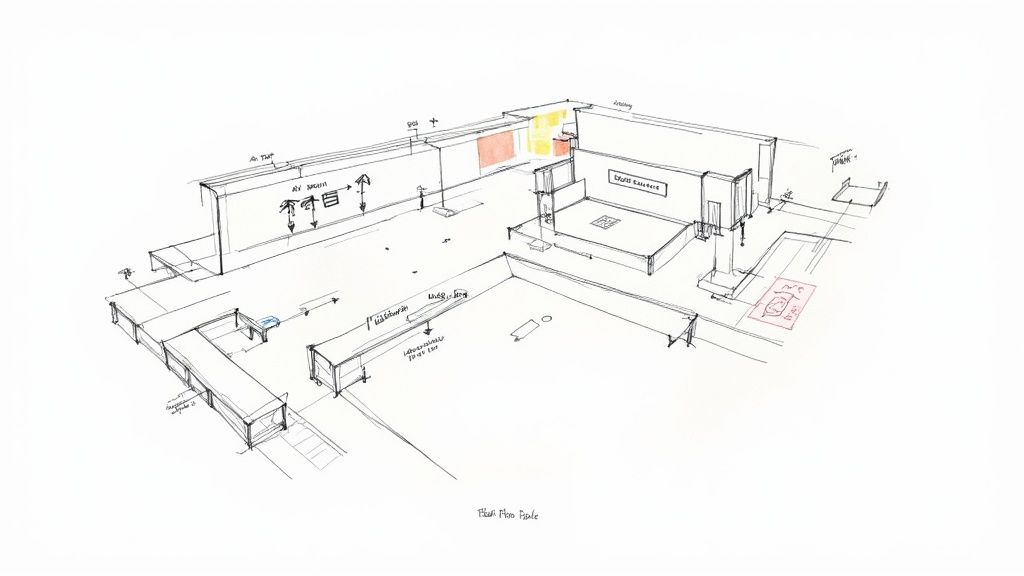
Once everyone is checked in, your focus pivots to managing the movement of people throughout your venue. Bad attendee flow creates bottlenecks in hallways, causes sessions to start late, and leads to a frustrating experience for everyone.
Before the doors open, walk the venue as if you were an attendee. Is the path from the main ballroom to the breakout rooms obvious? Is there enough signage pointing people to restrooms or coffee stations? Good, clear signage is one of the most effective and affordable ways to improve the on-site experience.
This level of on-site polish is more critical than ever. The global events industry is absolutely booming, projected to grow from $1,227.3 billion in 2024 to $1,346.92 billion this year. That growth means opportunity, but it also means attendees have much higher expectations. With 83% of 2025 meetings expected to include an in-person component, a seamless on-site experience is how you stand out and prove the irreplaceable value of face-to-face connection. You can find more stats on the booming events industry to see just how big the opportunity is. By sweating these logistical details, you ensure your event shines.
The last guest has left, the lights are off, and the venue is quiet. It might feel like the job is done, but honestly, this is where the real work—and the real value—begins. The post-event phase is your single greatest opportunity to figure out what clicked, what didn't, and how to build unstoppable momentum for your next gathering.
This is where you shift from just running the event to truly understanding it. It’s not about cleanup; it’s about digging into the data to prove your success and make smarter decisions down the road. Skipping this step is like training for a marathon but never timing your runs. You'll finish, sure, but you'll have no idea how to get better.
The first thing on your list should be getting honest feedback, and you need to move fast. Don’t wait a week. Get that post-event survey out the door within 24 hours, while the experience is still fresh in everyone's minds. A survey that lands in an inbox a week later feels like an afterthought and usually gets ignored.
When you build your survey, think short, focused, and mobile-friendly. A good mix of question types will give you the most useful data:
This kind of direct feedback is gold. It’s a clear roadmap showing what your community actually wants, taking the guesswork out of planning your next event.
The real goal of a post-event survey isn’t just to collect five-star ratings. It’s to find those specific, actionable nuggets of wisdom. A single thoughtful comment can be far more valuable than a hundred generic high scores.
With attendee feedback in hand, it's time to pull everything together. Your post-event report tells the definitive story of your event through cold, hard numbers. This is the document you'll use to prove the event's success to your board, sponsors, and other stakeholders who need to see the bottom line.
Think of this report as your event's dashboard. It should highlight all the key metrics in one place:
Putting these numbers together helps you tell a powerful story about your event's impact. For a much deeper dive, our guide on measuring event ROI gives you a great framework for connecting these data points directly to business goals. Ultimately, this report is your best tool for showing value and getting the green light for future events.
Ready to turn your post-event analysis from a chore into your secret weapon? GroupOS pulls all the tools you need into one place—letting you survey attendees, track key metrics, and generate insightful reports without the headache. Start your free trial and see how easy it is to manage the entire event lifecycle.