March 15, 2026
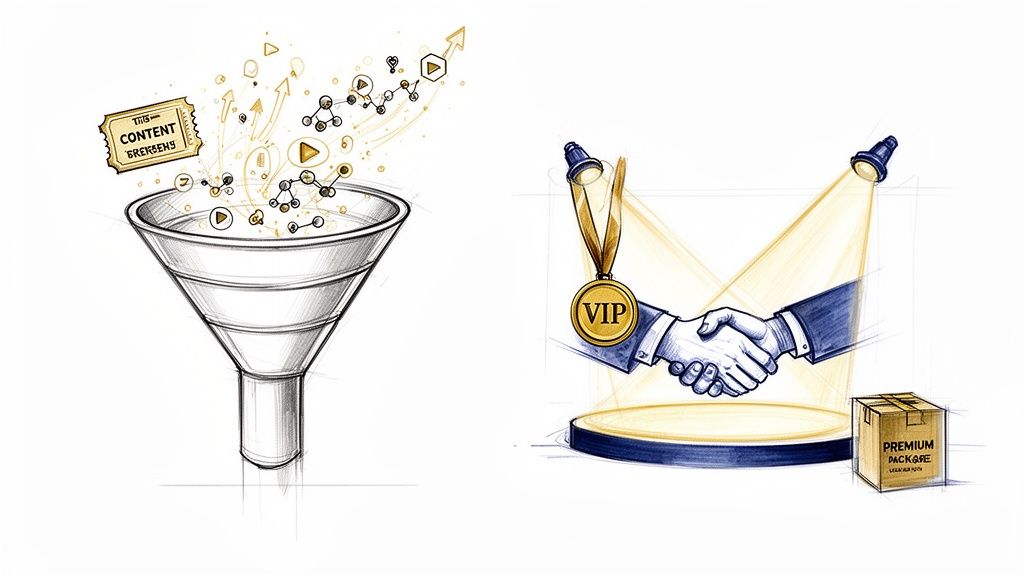
When most people think of eCommerce, they picture a high volume of small sales. But there's another, more powerful approach: high-ticket eCommerce. We're talking about selling products, packages, or services for $1,000 or more.
This isn't about just slapping a bigger price tag on things. It's a fundamental shift from a volume game to a value game. For professional communities, associations, and event organizers, this is where the real opportunity lies—moving from quick, low-margin transactions to building deep, high-value customer relationships.
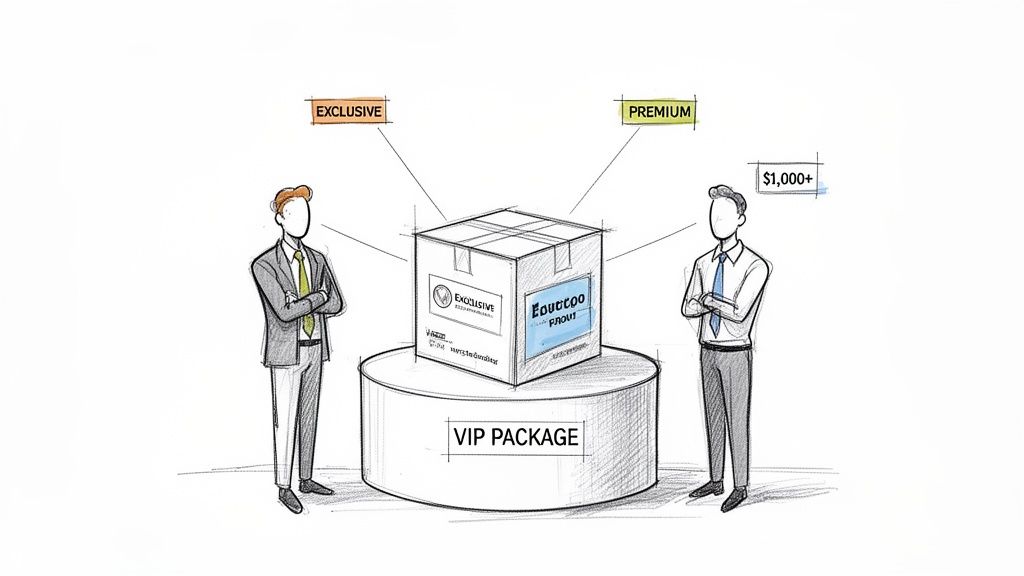
Let’s get practical. For an association, this is the difference between selling a standalone $50 webinar ticket and offering a $5,000 all-access pass with exclusive coaching and networking opportunities. It's about packaging your value in a way that commands a premium price.
This approach is especially potent in the B2B world, where perceived value and tangible outcomes are far more important than getting the lowest price. Your organization is built on community, authority, and exclusivity—the very pillars of a successful premium offering.
To really grasp this, let's compare the two models side-by-side.
As you can see, the entire strategy pivots. Instead of trying to sell as many units as possible, your focus narrows to serving a smaller, more dedicated group of customers with an experience they can't get anywhere else.
The real magic is that a single high-ticket sale can bring in more revenue and forge a stronger connection than dozens of smaller ones. This frees you up to deliver a truly white-glove experience.
This isn't just a niche strategy for physical goods, either. The B2B eCommerce market is projected to hit an incredible $36.16 trillion by 2026, driven by businesses making major purchases online. You can see how top-tier companies do it by studying the playbooks of successful Luxury Ecommerce Brands.
Here’s the thing: as a professional community, you already have the most important asset—trust. Your members and attendees see you as a credible authority, which gives you a massive head start when presenting a premium offer.
This foundation of trust is a core component of building truly scalable business models for membership organizations.
By focusing on high-value packages, you create a far more sustainable and predictable revenue stream. You need fewer customers to hit your financial targets, which means your team can stop chasing endless small sales and start focusing on what really matters: delivering an unforgettable experience that turns casual members into lifelong advocates.
If you want to succeed with high-ticket sales, the secret isn't just raising your prices. It’s about creating an offer so compelling that your members or sponsors see it as an investment, not just another expense. The goal is to stop guessing what they might want and start building packages that are impossible for them to ignore.
A technique I’ve seen work wonders is what’s known as value-stacking. You’re not just selling one thing; you’re bundling several high-value components into a single, irresistible package. A simple virtual conference pass can instantly become a premium offering.
Think about bundling a standard ticket with extras like these:
Suddenly, the offer feels substantial. Each piece adds another layer of value, making the total package far more attractive than the sum of its parts and justifying a premium price.
Once you know what you’re bundling, the next move is to organize those components into clear tiers. A classic Bronze, Silver, and Gold structure is especially effective for sponsorships because it’s familiar and easy to understand. The real trick is to make the jump to the next tier an obvious choice.
Here’s a practical example of how you might structure sponsorship packages:
This tiered layout creates a clear upgrade path. It guides sponsors toward a higher investment by showing them exactly what tangible benefits they unlock at each level. For more in-depth guidance on this, you should check out our guide on https://groupos.com/blog/how-to-create-a-sponsorship-package.
With high-ticket items, the price tag itself is rarely the deciding factor—it’s all about perceived value. Your main job is to spell out the return on investment (ROI) so clearly that the price feels like a bargain. This is where a little pricing psychology and benefit-focused language come in handy. For instance, a price like $1,997 just feels more palatable than $2,000.
As you design these offers, you'll also want to build in advanced strategies to increase average order value, which is a key part of making high-ticket sales truly profitable.
Don't just say, "Our Gold package costs $7,500." Instead, frame it like this: "Our Gold package secures you a featured speaking slot in front of 500 qualified industry leaders and gives you direct lead-capture tools, generating opportunities worth tens of thousands."
This small shift in language changes the entire conversation. You're no longer talking about a cost; you're talking about a direct path to measurable business results. It’s this combination of strategic bundling, clear tiering, and value-first communication that will help you create high-ticket offers that don't just sell, but build lasting partnerships.
Selling a high-ticket item isn't like selling a t-shirt. You can't just throw up a product page and expect sales to roll in. When the investment is significant, your customer's journey needs to be just as thoughtful. This is where a meticulously built sales funnel comes in, designed to build trust and prove value every step of the way.
Forget a one-size-fits-all approach. Think about the different people you're trying to reach. For an event, a potential sponsor ready to invest $5,000 needs to see a clear path to ROI and qualified leads. A C-suite executive paying $2,500 for a VIP pass, on the other hand, is motivated by exclusive access to content and high-level networking. Your funnel needs to speak to each of them differently.
Your first job is to capture the attention of the right people. This isn't about casting a wide net; it’s more like spear fishing. Create high-value lead magnets that are laser-focused on each of your customer segments.
What does that look like in practice?
These targeted resources do two critical things. They pull in people who are already primed to be interested in your premium offer, and they start positioning your organization as a true authority in your space. Once you have their email, the real relationship-building begins. Our guide to building sales funnel templates offers a solid foundation for mapping out these communications.
Your email sequence is where the magic happens. This is your chance to ease hesitation and build genuine excitement. Step away from the hard sell. Instead, focus on education, validation, and a little bit of social proof.
Share powerful testimonials from last year's sponsors. Send a deep-dive email highlighting the unique expertise of your speakers. Offer a behind-the-scenes look at the value you’re creating. It’s all about building a connection.
The goal of your funnel is to make the final purchase decision feel like the next logical step in a valuable relationship, not a sudden leap of faith. It’s about building so much trust that the price becomes secondary to the outcome.
This simple framework illustrates how to think about designing an offer that’s easy to communicate within your funnel.
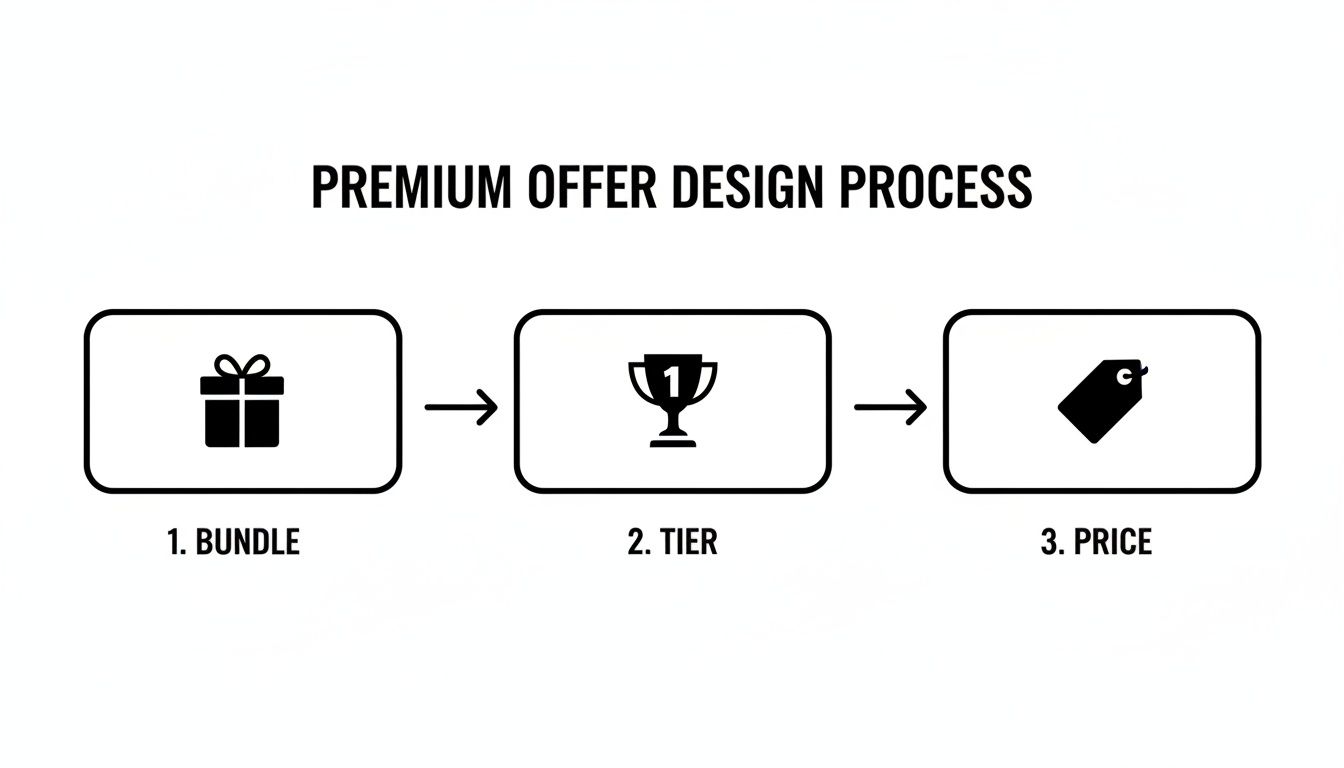
As you can see, a winning high-ticket offer isn't just a high price tag. It's a thoughtful combination of strategic bundling, clear tiers, and pricing that reflects immense value.
The final piece of the puzzle is the purchase itself. This is where you can't afford any friction. A modern, integrated platform lets you build dynamic registration pages that continue the high-touch experience right through to checkout.
Imagine a registration flow that automatically recognizes a prospect from your "early interest" list, applies an early-bird discount, and then presents a seamless, one-click option to upgrade to a VIP package. That’s the kind of experience that drives high-ticket conversions.
This model is especially potent for events and memberships, where upselling and retention are everything. The global B2B market, valued at a massive $36.16 trillion, is dominated by these kinds of high-value online transactions. You can dive deeper into these powerful eCommerce trends and statistics to see just how big the opportunity is. For sponsors, this means seeing huge ROI on packages over $5,000 when they get tools like dedicated exhibitor profiles.
By unifying the entire customer journey, from that first targeted lead magnet to the final, frictionless sale, you create a clear path to success.
When a customer is about to make a significant investment, their level of scrutiny skyrockets. The checkout page is the final moment of truth—it's where a five-figure sale can be secured or lost in an instant. A clunky, confusing, or untrustworthy experience will make even the most interested buyer second-guess their decision.
Imagine a potential sponsor is ready to commit $7,500 to your upcoming conference. You've done everything right up to this point. They're sold on the value and ready to complete the purchase. But then they land on a checkout page that feels disconnected, asks for a mountain of unnecessary information, or worse, looks like it was built in 1999. That hesitation is all it takes to derail the entire deal.
For a high-ticket eCommerce transaction, the goal isn't just speed; it's about building absolute confidence at the most critical moment.
First things first: get out of your customer's way. The biggest conversion killer I see is an overly complicated, multi-page checkout form. If you can, consolidate everything onto a single, clean page. And be ruthless about the information you request. If you're selling a digital membership pass, do you really need their physical shipping address? Probably not.
Beyond a simple form, you need to offer real payment flexibility. A single "Pay Now" button just won't cut it for a premium investment. Make it easy for them to say yes by providing options.
Here’s a powerful but often overlooked tip: use an integrated platform that keeps the entire transaction on your own branded website. Sending a customer to a generic, third-party payment portal they don't recognize is jarring. Keeping them within your branded ecosystem maintains a seamless, secure feeling from start to finish.
With high-value purchases, customers aren't just looking for reasons to trust you; they're actively looking for red flags. Your job is to surround them with so much proof of your credibility that any doubt simply vanishes. Your checkout page needs to be a fortress of trust.
A seamless checkout is more than a convenience; it's the final handshake that confirms your professionalism and justifies the premium investment. It tells the customer, "We've got this, and we've got you."
Make sure these trust-building elements are displayed prominently right on the payment page:
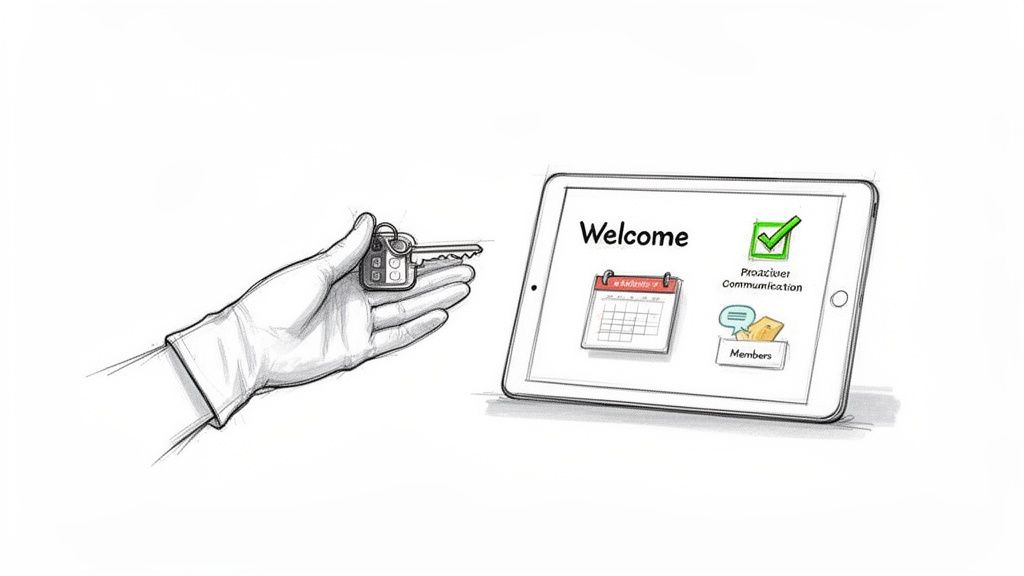
For a high-ticket sale, the moment a customer clicks “buy” isn’t the finish line. It’s the starting gun. This is where the real relationship begins, and where you start proving that their significant investment was worth it. Get this wrong, and you're not just losing a customer; you're losing a potential advocate for life.
A premium price tag naturally sets a high bar for expectations. If you're an event organizer, this means a simple confirmation email won't cut it. Your attendees expect frictionless digital check-ins, proactive updates on schedules, and instant access to session recordings or any other digital goodies you promised.
It’s the same story for a high-tier membership. The journey has to start with a thoughtful, personalized onboarding experience. A generic "welcome" email is the bare minimum. What really makes an impact is guiding them to key resources and maybe even connecting them with a community leader or a few other members to help them find their footing right away.
A truly premium experience feels effortless to the customer, but it requires a very intentional process on your end. It’s all about anticipating their needs and making every interaction feel seamless. This isn't just about good customer service; it’s about making your members and sponsors feel seen long after the payment has cleared.
Here’s what that fulfillment process should look like:
This kind of attention to detail is the foundation of any effective customer retention program. It’s how you reinforce the value of their initial investment and keep them engaged for the long haul.
The goal is to make every interaction so smooth and valuable that your customer never once questions their decision to invest with you. This is how you earn repeat business and glowing testimonials.
By obsessing over this post-purchase journey, you prove that the premium price was justified. You build the kind of trust and loyalty that turns a one-time transaction into a thriving, scalable part of your business.
Once your high-ticket offers are live, it's tempting to just watch the sales roll in. But if you want to build something that lasts, you have to look beyond the top-line revenue. True success is found in the details—the data that tells you what’s really working and where you can grow.
Think about it this way: tracking the Average Order Value (AOV) for each membership or sponsorship tier immediately shows you which packages are your heavy hitters. That insight is gold. It helps you double down on what people value most. For event sponsors, the story is all about ROI. You need to track their lead-to-close ratio to give them concrete proof that their investment paid off.
To get a complete view of your performance, you’ll want to keep a close eye on a few specific KPIs.
Customer Lifetime Value (CLV): This is the holy grail for high-ticket offerings. CLV tracks the total revenue you earn from a single customer over their entire relationship with you. When this number is climbing, it’s a clear sign that your members and sponsors are sticking around and finding enough value to upgrade.
Post-Purchase Engagement: What happens after the sale? Dig into your analytics to see how members are using their exclusive content or how sponsors are interacting with their leads. High engagement is a great indicator of satisfaction and tells you who is most likely ready for an upsell or renewal conversation.
Feedback & Testimonials: Don't wait for feedback to come to you. Actively collect it after an event or partway through a membership term. Every glowing testimonial you receive isn't just a pat on the back; it's a powerful piece of social proof you can plug directly into your next sales funnel to win over new customers.
This isn’t just about collecting data for reports. It’s about creating a living, breathing feedback loop. The insights you gain will give you the confidence to tweak your pricing, add new benefits, and perfect your offers for the next cycle.
Whenever I talk with associations or event organizers about moving into the high-ticket space, the same handful of questions always come up. It's natural to have some uncertainty when you're making a big strategic shift.
Let's get them out of the way right now so you can move forward with confidence.
This is always the first question, and the answer isn't a magic number—it's about the value you're stacking up. Forget trying to calculate your costs and adding a margin. That’s the wrong way to think about it.
Start by making a comprehensive list of every single thing a buyer gets. This includes exclusive content, direct access to experts for Q&As, networking sessions with curated contacts, and lifetime access to materials. Once you have that, look at what comparable groups are charging for similar packages.
A great starting point for a well-built event package or community tier often lands around the $1,500 mark. But don't let that be a ceiling. If you can clearly show how your offer solves a major pain point or accelerates a career, you can and should charge more.
The price is what they pay, but the value is what they get. Focus on demonstrating an ROI so compelling that the price feels like a smart investment in their career or business growth.
I’ve seen this happen time and time again: organizations get excited about their new offer and immediately ask for the sale. This is, without a doubt, the single biggest mistake you can make.
A high-ticket purchase is a serious decision built on trust. You simply can't drop a link to a $5,000 sponsorship package on a generic sales page and expect people to buy. It just won’t happen.
You have to warm up your audience first. This means consistently delivering value through free content, showcasing glowing testimonials from past attendees or partners, and telling the success stories of your members. Without that foundation of trust and social proof, even the most incredible offer will fail to launch.
Absolutely. In fact, I'd argue smaller associations have a secret weapon: a tight-knit, highly engaged community.
While a massive organization has a wider reach, you have deep relationships. You know your members on a personal level and understand their specific, niche challenges in a way a giant, faceless corporation never could. This is your unfair advantage.
This intimacy allows you to design hyper-targeted offers that resonate deeply. Your strength isn't in scale; it's in specificity and the trust you've already built.
Ready to build and scale your own high-ticket community and event offerings? GroupOS provides the all-in-one platform to manage memberships, create dynamic ticketing, and deliver premium content seamlessly. Get started with GroupOS today.