March 17, 2026
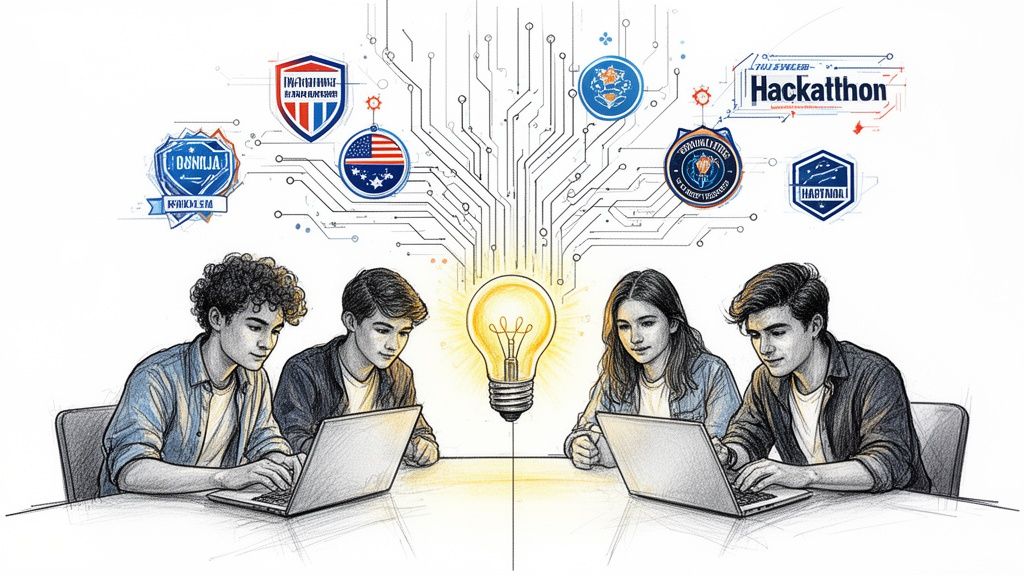
Ready to turn your coding passion into a real-world project? Hackathons for high schoolers offer a unique, fast-paced environment where you can build something amazing, learn new skills, and connect with a community of fellow creators. These events, typically spanning a weekend, challenge you to collaborate with a team to develop a software or hardware project from scratch. It’s an intense but rewarding experience that can supercharge your technical abilities and look great on college applications.
At their core, hackathons epitomize the value of project-based learning, where participants learn by actively creating. You're not just reading about code; you're writing it, debugging it, and shipping a final product under a tight deadline. This hands-on approach builds confidence and practical knowledge that classroom settings often can't replicate.
Finding the right event, however, can be a challenge. That's why we built this guide. Below, you’ll find a curated directory of the best hackathons for high schoolers, including national, regional, and online opportunities. For each event, we provide essential details like:
This article cuts through the noise to give you a clear, actionable list. Each entry includes direct registration links and specific tips to help you prepare and succeed, turning your ambition into an impressive portfolio piece. Let’s find your next hackathon.
For organizers of student-focused coding events, especially those managing multiple hackathons for high schoolers, GroupOS presents a robust, all-in-one solution. It moves beyond simple ticketing to offer a fully integrated event and community management system. This platform is designed for organizations that want to build a lasting, branded presence around their events, fostering engagement long after the final project is submitted. It provides a single, controlled environment for registrations, content delivery, and ongoing communication.

The platform’s core strength lies in its ability to consolidate disparate tools into one branded hub. Instead of patching together ticketing sites, communication apps like Discord or Slack, and a separate website, GroupOS brings everything under one roof. This creates a more professional and cohesive experience for students, mentors, and sponsors from the first interaction.
While not exclusively built for hackathons, its features are exceptionally well-suited for the complex needs of running these events. The ability to create fully white-labeled mobile and web applications means your hackathon’s brand is front and center, creating a dedicated space for your community.
A key differentiator is the combination of powerful event logistics with sustained community-building tools. Features like QR code check-ins and real-time agenda management simplify on-site operations, which is critical for fast-paced, youth-focused events. At the same time, built-in private channels and direct messaging allow for secure, moderated communication, replacing less controllable platforms like WhatsApp or Messenger.
Key Insight: The true value of GroupOS for student hackathons is its ability to extend the event's life cycle. Organizers can use the platform to host pre-event coding workshops, share learning resources post-event, and maintain a year-round community of aspiring student developers, mentors, and sponsors.
Here’s a breakdown of how GroupOS’s features can be applied to create exceptional hackathons for high schoolers:
Pricing & Access:
GroupOS does not list public pricing. The cost is customized based on an organization’s specific needs, particularly concerning the white-labeled app and enterprise-level features. This suggests a premium pricing model better suited for established organizations or school districts running multiple events rather than a single, small student-led hackathon. A free trial is available without a credit card, allowing organizers to explore the platform's capabilities firsthand.
Pros:
Cons:
For more information or to request a demo, visit their official website.
CodeDay stands out as a nationwide series of events specifically engineered to welcome newcomers into the world of technology. Rather than being a single, massive competition, CodeDay hosts simultaneous 24-hour hackathons in dozens of cities across the United States, alongside virtual options. This structure makes it one of the most accessible and consistent hackathons for high schoolers available today, operating year-round with a proven, beginner-friendly formula.
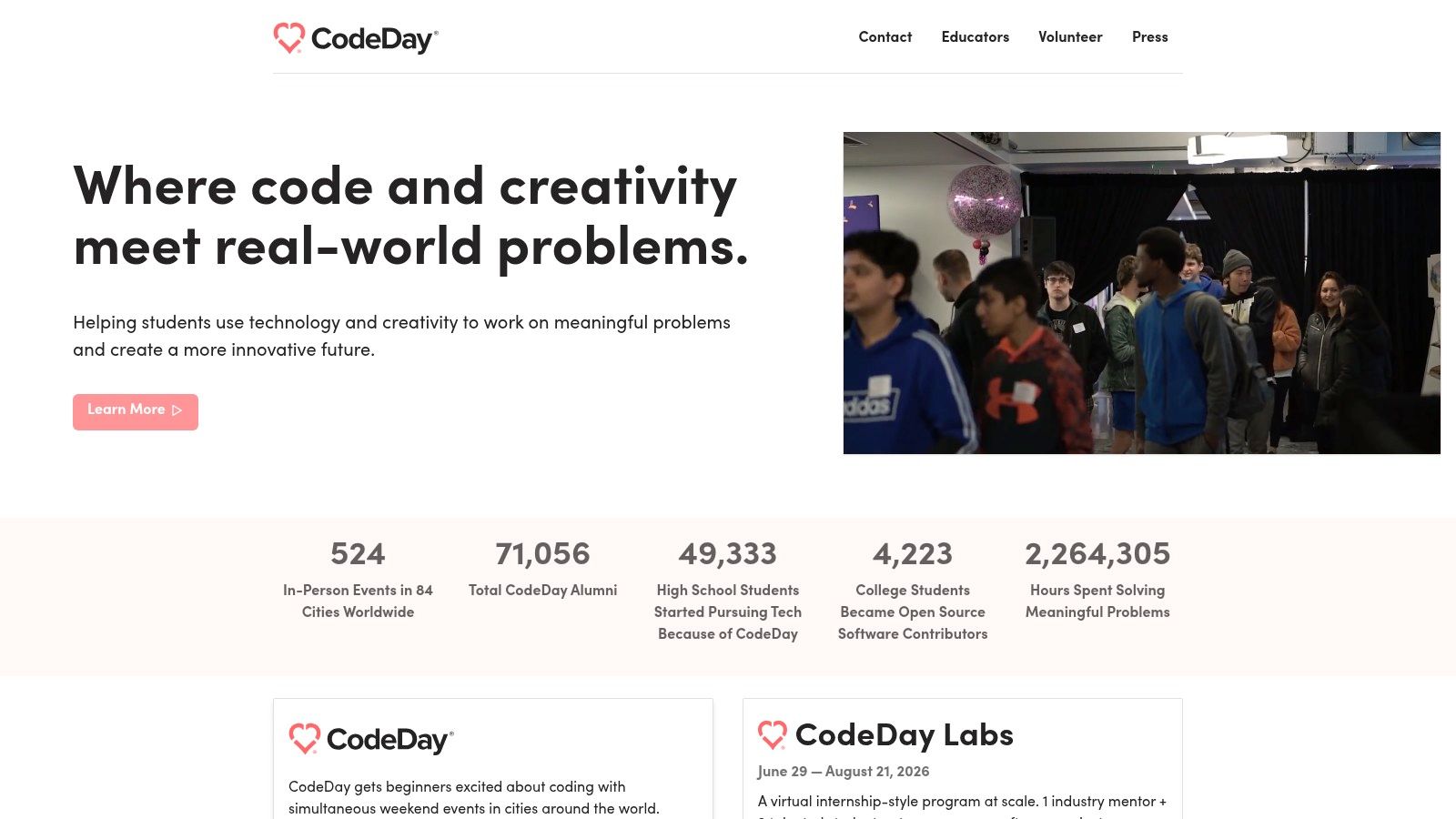
The platform’s website, codeday.org, serves as the central hub for finding and registering for these events. The user experience is direct and simple: students can easily browse a map or list of upcoming CodeDays, view location-specific details, and purchase tickets.
CodeDay events are built around a supportive, hands-on learning model perfect for first-time hackers. The process is straightforward: students arrive, listen to pitches, form teams on the spot, and spend the next 24 hours building a project, typically a game or an app.
Organizer Insight: The distributed, multi-city model of CodeDay is a powerful way to scale impact. For organizations looking to expand their reach, learning how to create an event that can be replicated with a consistent brand and safety standard is crucial for sustainable growth.
| Pros | Cons |
|---|---|
| Consistent Structure & Safety: Clear Code of Conduct and parent guidance provide a safe, predictable environment. | Overnight Intensity: The 24-hour, overnight format can be demanding and may not suit every student's stamina or schedule. |
| Large, Established Program: With over 70,000 alumni, CodeDay has a long track record of successful events. | Variable Local Capacity: Event frequency and ticket availability differ by city, with popular locations selling out quickly. |
| Broad Appeal: The focus on games, art, music, and security challenges attracts students with diverse interests beyond just coding. |
Ultimately, CodeDay earns its place by being one of the most effective and widespread entry points for students curious about technology. Its deliberate focus on creating a fun, low-pressure environment removes the intimidation factor often associated with hackathons, making it an excellent first step for any high schooler looking to build something cool.
Hack Club operates as a vibrant, teen-led maker community, and its hackathon directory is a direct reflection of that spirit. Instead of hosting a single branded event series, Hack Club provides a constantly updated, open-source listing of hackathons for high schoolers across the country, most of which are organized by teens for teens. This grassroots approach makes it an essential resource for finding free, local, and student-run events that are often more accessible and less corporate than larger competitions.
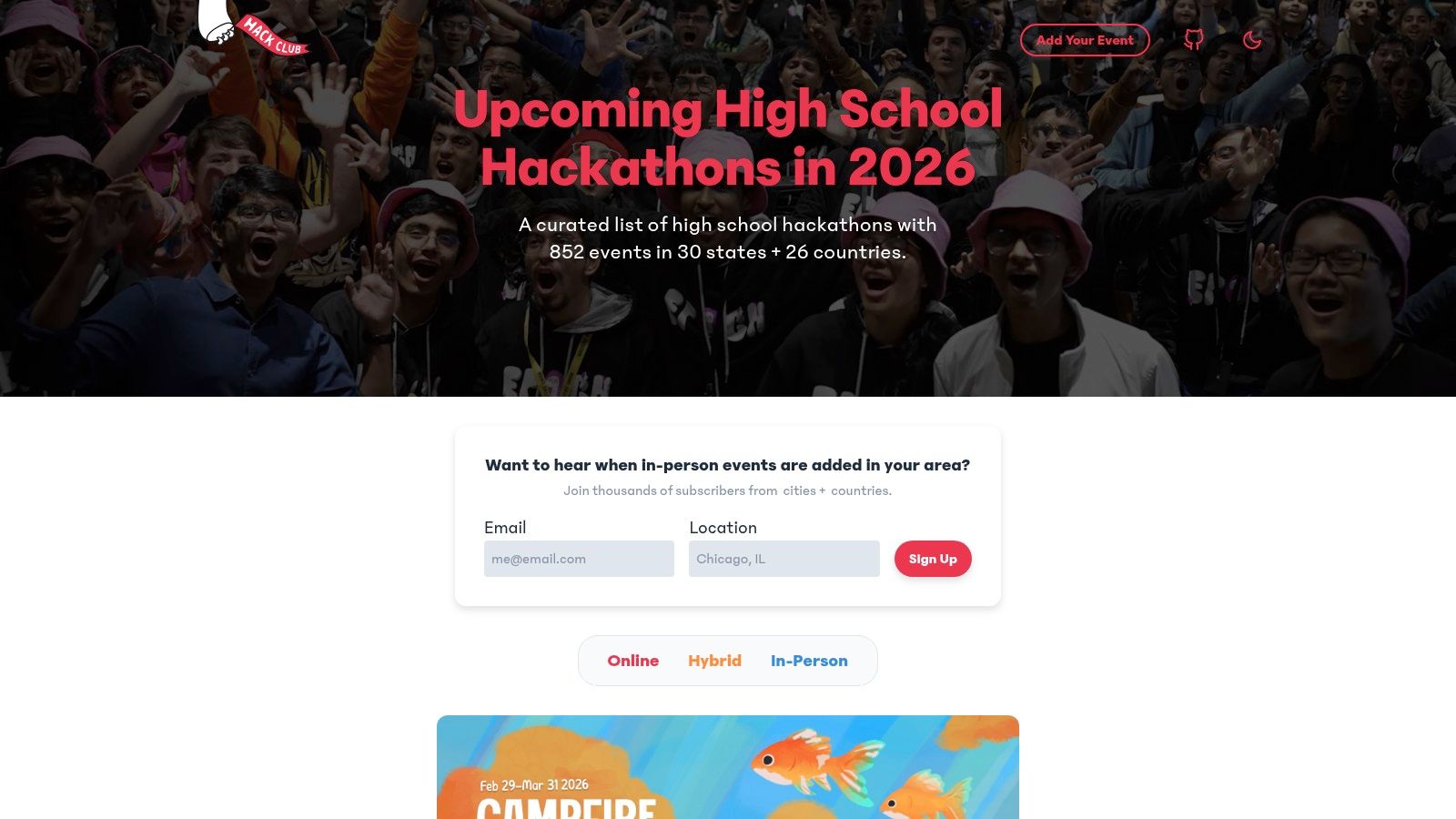
The platform's website, hackathons.hackclub.com, is the central directory for these events. The interface is a straightforward, chronological list of upcoming in-person and online hackathons, allowing students to quickly see what's happening near them. Since most listed events are organized by fellow students, the atmosphere is often exceptionally welcoming and collaborative.
Hack Club’s directory is built on the principle of empowering student organizers. The events listed vary widely in theme and scale, but they share a common thread of being free, inclusive, and focused on building.
Organizer Insight: The Hack Club model shows the power of a decentralized community. By empowering local leaders (in this case, students) with resources and a platform, you can foster a self-sustaining ecosystem of events. This requires building a strong digital home base; learning how to create an online community is the first step toward enabling this kind of distributed success.
| Pros | Cons |
|---|---|
| Authentic Student-Run Culture: The "by students, for students" ethos creates an energizing and empowering atmosphere that is less intimidating for newcomers. | Variable Event Quality: Because events are run by independent student organizers, the logistics, mentorship, and overall experience can differ significantly from one event to another. |
| Depth and Variety of Free Events: The directory offers an unmatched selection of free hackathons across numerous cities and online, covering a wide range of tech interests. | Short Lead Times: Some events are announced with only a few weeks' notice, requiring students to monitor the site regularly to catch opportunities. |
| Strong Community and Network: Participants become part of a broader network of young makers, with opportunities for mentorship and collaboration beyond a single event. |
Hack Club's directory earns its spot by being the definitive hub for the student-led hackathon movement. It's the best place to find authentic, peer-driven events where the focus is purely on the joy of building. For any high schooler wanting to dive into a welcoming community of fellow creators, browsing the Hack Club list is a fantastic starting point.
HackTJ represents a premier example of a student-run hackathon that has grown to a national scale. Hosted annually by the powerhouse Thomas Jefferson High School for Science & Technology in Alexandria, Virginia, this event draws hundreds of high school students for a weekend of intense building, learning, and competition. It stands as one of the largest and most well-regarded hackathons for high schoolers in the United States, offering a highly competitive and rewarding experience.
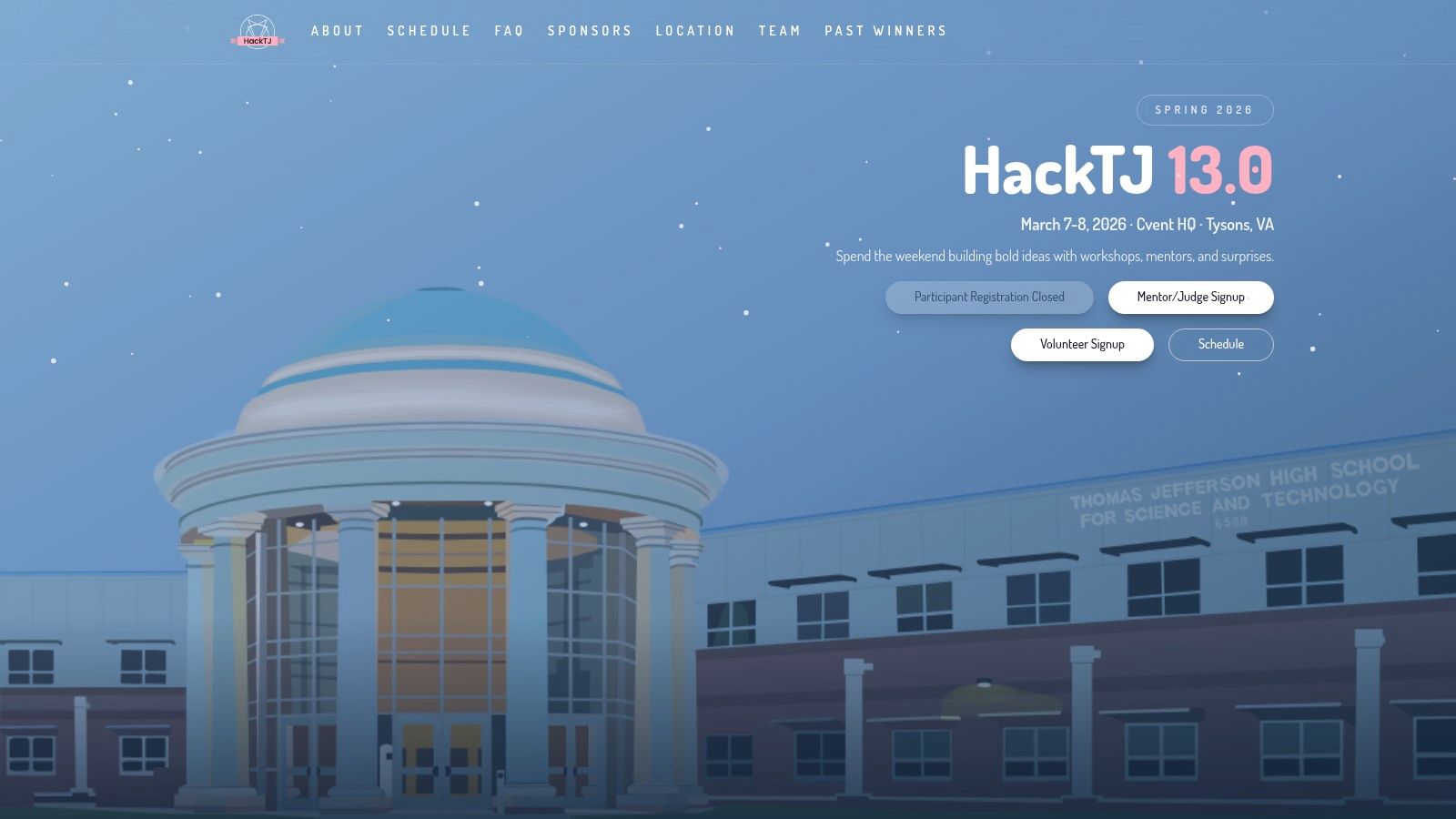
The official website, hacktj.org, is the definitive source for all event information. The site clearly outlines the schedule, rules, sponsors, and registration process. Because it's student-led, the user experience is direct and geared toward its peer audience, providing exactly what a prospective participant needs to know to apply and prepare.
HackTJ is built on a 24-hour build model, where students form teams and work to create a software or hardware project from scratch. The event is distinguished by its scale, strong organizational continuity, and association with a top-tier STEM magnet school.
Organizer Insight: The success of a student-run event like HackTJ hinges on strong documentation and transition planning. Their year-over-year consistency shows the power of having a solid playbook. Organizers looking to build similar momentum should explore effective strategies for promoting an event to ensure a steady pipeline of participants and sponsors.
| Pros | Cons |
|---|---|
| High Visibility & Prestige: Winning or even just participating is a strong signal for college applications, especially for those targeting top CS programs. | Prioritized Local Registration: Registration windows may give priority to students from the local school district, making spots for others more competitive. |
| Competitive Environment: The quality of projects is exceptionally high, pushing students to learn and build at a very advanced level. | Travel & Logistics: For non-local participants, the cost and coordination of travel and accommodations can be a significant barrier. |
| Sponsor & University Ecosystem: The event attracts major sponsors and university representatives, offering networking opportunities. |
Ultimately, HackTJ earns its spot by offering an aspirational and competitive experience for high school students serious about computer science. Its connection to a renowned STEM school and the sheer scale of the event provide a unique platform for students to challenge themselves, showcase their skills, and connect with a community of high-achieving peers.
MIT Blueprint, organized by the same students behind the renowned HackMIT, offers a unique hybrid format designed specifically for beginners. It masterfully combines a "learnathon" day filled with educational workshops and a traditional hackathon day, making it one of the most instruction-focused hackathons for high schoolers. This two-part structure, held on the prestigious MIT campus, demystifies coding and empowers students with concrete skills before they start building their projects.
The event's website, found at bparchive.hackmit.org, serves as the information and registration portal. While the site is an archive, it provides a clear picture of the event's past structure, curriculum, and goals. Students interested in attending should monitor this site or the main HackMIT page for announcements about the next event cycle.
Blueprint’s core strength is its scaffolded learning approach. The first day is dedicated entirely to workshops led by MIT students, ensuring participants have a solid foundation before the 24-hour hacking period begins. This format removes the pressure of needing pre-existing knowledge.
Organizer Insight: A learnathon-hackathon model is exceptional for engaging beginners and building community confidence. By providing free attendance, organizers rely heavily on financial backing. Learning how to get event sponsorship is vital for sustaining this kind of high-impact, no-cost model for students.
| Pros | Cons |
|---|---|
| High Instructional Value: The structured teaching before the hackathon is ideal for students with little to no coding experience. | Limited Seats & High Demand: As a popular, free event at MIT, admission can be competitive with a limited number of available spots. |
| Prestigious Reputation: Association with MIT provides significant motivation for students and adds a strong signal to their portfolios or college applications. | Location-Specific: The event primarily serves students in the Boston area or those who can travel, limiting accessibility for others. |
| Beginner-Centric Support: The entire event is engineered to support first-time hackers with strong mentorship and a welcoming atmosphere. | Annual Cadence: Blueprint typically runs only once a year, meaning students have a narrow window to apply and attend. |
MIT Blueprint is an outstanding choice for any high schooler who feels intimidated by traditional hackathons but is eager to learn. Its deliberate focus on education first and competition second makes it a powerful and inspiring entry point into the world of technology.
The Congressional App Challenge offers a unique intersection of technology and civics, standing apart from typical weekend hackathons. Officially sponsored by the U.S. House of Representatives, this competition invites middle and high school students to build and submit an application over a several-month period. Instead of a single national event, it operates on a district-by-district basis, creating a powerful local connection between students and their elected officials. This makes it one of the most prestigious and distinct hackathons for high schoolers focused on long-term project development and public service.
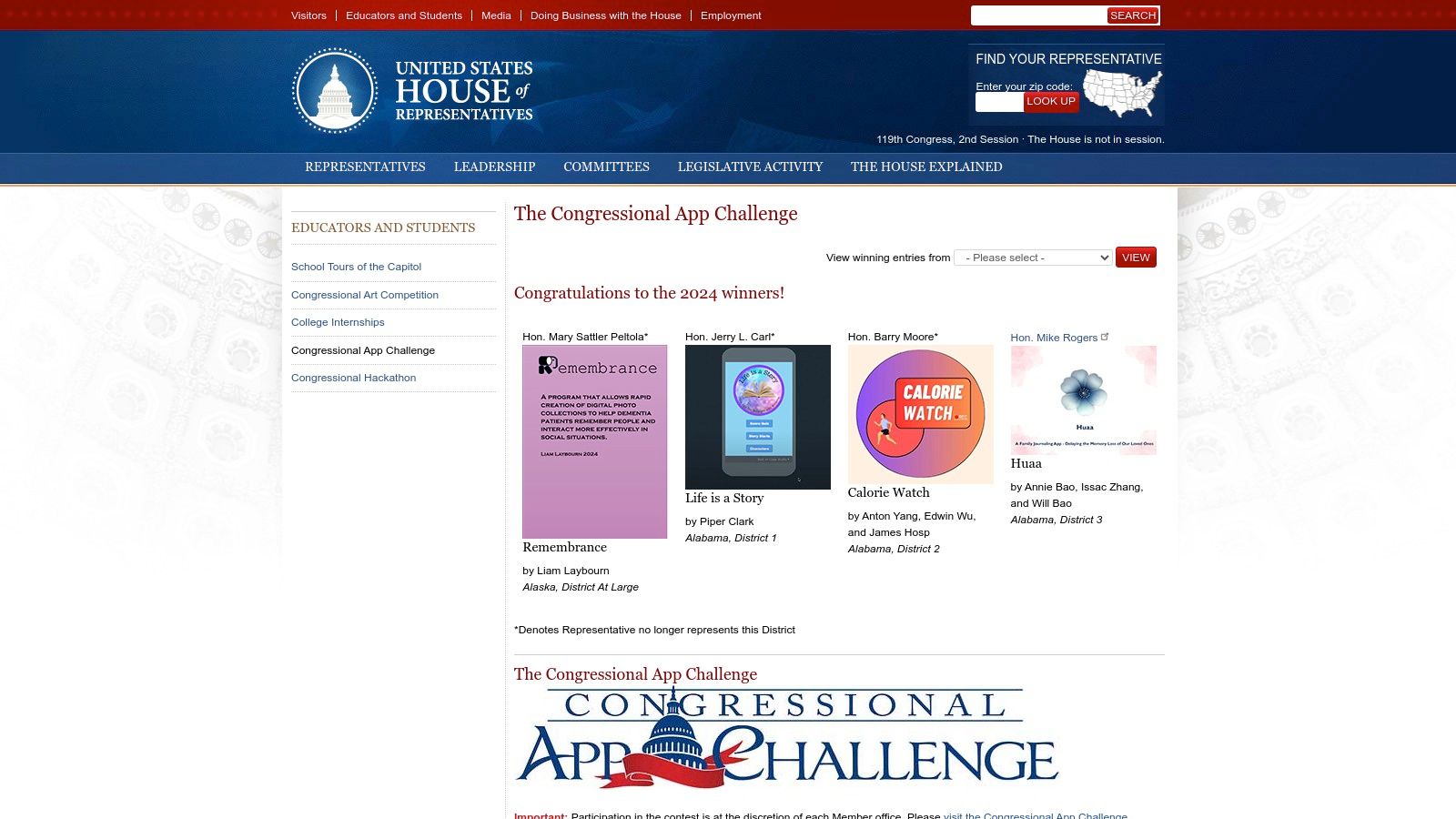
The competition’s main portal, house.gov/educators-and-students/congressional-app-challenge, directs students to find their congressional district and its specific rules. The user experience is governmental but functional: students enter their zip code to confirm participation and access their district’s deadlines and submission guidelines.
The Challenge is structured more like a semester-long project than a sprint, allowing for deeper development and learning. Students work individually or in teams of up to four to conceptualize, design, and code an application on any platform using any programming language. The extended timeline encourages thoughtful problem-solving and iteration.
Organizer Insight: The district-based model is an excellent example of engaging local communities. For events with a civic or educational mission, partnering with local government or community leaders can add significant prestige and provide participants with a unique sense of accomplishment and connection.
| Pros | Cons |
|---|---|
| Strong Resume Signal: Winning or participating provides a prestigious, government-recognized award that stands out on college applications. | Geographic Limitation: Students must reside or attend school in a congressional district that is actively participating in the challenge. |
| Flexible Tech Stack: Freedom to use any programming language or platform allows students to build on existing skills or learn new ones. | Self-Funded Travel: Travel and accommodation costs for the national #HouseOfCode showcase in D.C. are typically not covered for winners. |
| Longer Development Time: The semester-length format is ideal for creating more complex and polished applications. |
Ultimately, the Congressional App Challenge earns its place by offering a one-of-a-kind opportunity for students to engage in STEM while also participating in a civic process. The combination of local competition, national recognition, and a flexible, project-based timeline makes it an excellent choice for self-motivated students who want to build an impactful app and earn significant accolades for their work.
The NASA International Space Apps Challenge offers a unique, globally-coordinated experience where participants use open NASA datasets to solve real-world problems on Earth and in space. This weekend-long event is a magnet for students interested in space exploration, data science, and environmental science. While it is a global competition, many local sites in the US host in-person and virtual events that explicitly welcome high-school participants, making it one of the most inspiring hackathons for high schoolers with a passion for STEM.
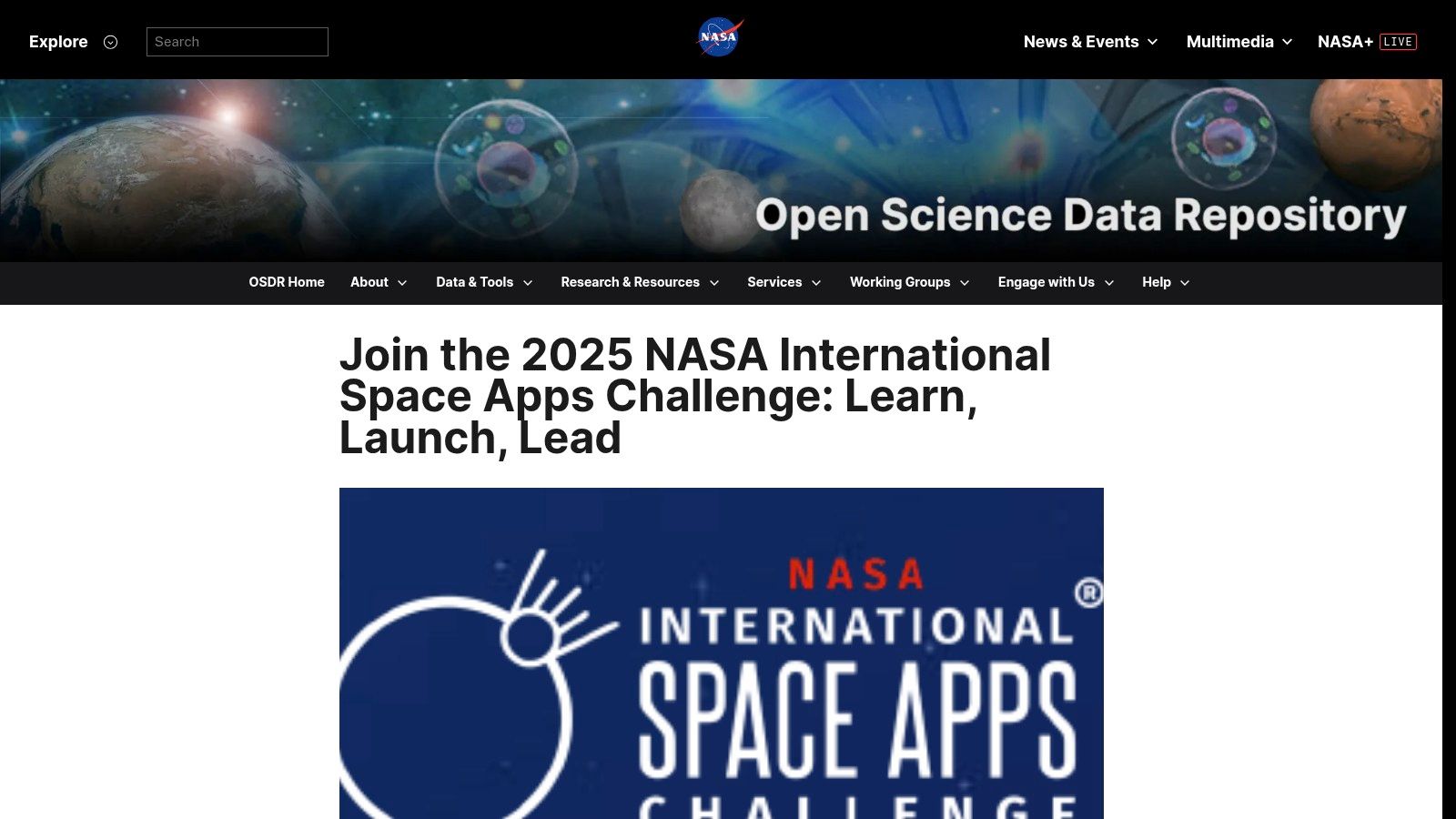
The official website, found at nasa.gov/nasa-space-apps-challenge-2025/, acts as the primary portal for the event. Here, students can find official challenge prompts, browse a map of local host sites (often museums, universities, or tech hubs), and register for either a local in-person event or a virtual one. Registration is typically free, handled by the local organizing partners.
Space Apps is structured as a 48-hour sprint where teams choose a challenge statement released by NASA and build a solution. The projects often involve data analysis, software development, hardware prototyping, or even artistic interpretation of scientific data.
Organizer Insight: Leveraging high-appeal themes is a fantastic way to attract a specific, motivated audience. For event organizers, partnering with an entity like NASA provides instant credibility and a built-in source of compelling content (datasets and challenges), reducing the burden of content creation while boosting participant excitement.
| Pros | Cons |
|---|---|
| High-Motivation Themes: Space, climate, and Earth observation themes are very attractive to STEM-minded students. | Annual Cadence: The event happens only once a year, typically in early October, so students must align their schedules. |
| Work with Real-World Data: Offers a rare chance to apply skills to official, impactful datasets. | Data-Heavy Challenges: Prompts can be complex and data-intensive; beginners may need mentor support or pre-event preparation. |
| Free Registration: Most local sites offer free participation, removing financial barriers for students. |
In the end, the NASA Space Apps Challenge earns its spot by connecting high schoolers directly to the frontier of science and technology. The opportunity to work with genuine NASA data on problems with real-world significance provides an unparalleled sense of purpose and a powerful addition to any student's portfolio.
| Item | Implementation Complexity 🔄 | Resource Requirements ⚡ | Expected Outcomes ⭐📊 | Ideal Use Cases | Key Advantages & Tips 💡 |
|---|---|---|---|---|---|
| GroupOS | High 🔄🔄🔄 — custom setup & white‑label apps | Moderate–High ⚡ — budget + admin for integration | High ⭐⭐⭐⭐ — stronger engagement, upsells, admin reduction (case study) 📊 | Enterprise associations, branded event+community hubs | All‑in‑one branded apps, sponsor tools, 350+ connectors; plan for onboarding costs 💡 |
| CodeDay | Low–Medium 🔄 — repeatable 24‑hr format | Low ⚡ — low ticket cost; mentor staffing required | Moderate ⭐⭐⭐ — hands‑on skills & confidence boost 📊 | Beginner coders, first‑time hackers, local weekend events | Beginner‑friendly, mentor support; note overnight intensity and variable local capacity 💡 |
| Hack Club (HS) | Low 🔄 — student‑run listings & events | Low ⚡ — mostly free; relies on volunteers | Moderate ⭐⭐⭐ — community building & varied project exposure 📊 | HS students seeking free/local student‑run hackathons | Wide free options and youth empowerment; quality varies by organizer 💡 |
| HackTJ | Medium 🔄 — large student‑run logistics | Medium ⚡ — travel, capacity, mentor pool | High ⭐⭐⭐⭐ — visibility, strong peer/sponsor exposure 📊 | Competitive, college‑bound HS students seeking signal | High prestige and mentor depth; check eligibility and travel needs 💡 |
| MIT Blueprint | Medium 🔄 — dual learnathon + hackathon format | Medium ⚡ — on‑campus travel; limited seats | High ⭐⭐⭐⭐ — strong instruction and portfolio signal 📊 | First‑time hackers wanting structured teaching & MIT exposure | Scaffolded workshops before building; competitive admission, monitor registration 💡 |
| Congressional App Challenge | Low–Medium 🔄 — district rules & timelines | Low ⚡ — semester timeline; minimal tech constraints | High ⭐⭐⭐⭐ — congressional recognition and resume signal 📊 | Students seeking civic recognition and long‑term projects | Flexible tech stack and civic focus; must follow district rules and timelines 💡 |
| NASA International Space Apps | Medium 🔄 — dataset‑driven prompts | Medium ⚡ — mentors and dataset prep useful | High ⭐⭐⭐⭐ — thematic impact, possible NASA amplification 📊 | Students into space, data science, public‑impact projects | Access to NASA data and global reach; beginners should seek mentor support 💡 |
You've explored the dynamic world of hackathons for high schoolers, from large-scale national events like the Congressional App Challenge to community-focused gatherings powered by Hack Club. This guide was built to serve as your launchpad, whether you are a student ready to build your first project or an organizer aiming to create an impactful event for the next generation of innovators. The path from a curious idea to a functional prototype is rarely a straight line, but it's a journey rich with learning, collaboration, and discovery.
The key takeaway is that there is no single "best" hackathon; the right fit depends entirely on your goals. Are you looking for a global, thematic challenge like the NASA International Space Apps Challenge, or do you prefer a local, student-run event like HackTJ? Understanding the format, eligibility, and culture of each event is the first critical step in making your choice. Don't just look at the prize money or the prestige; consider the learning opportunities, the mentorship available, and the community you'll be joining.
For students, the time to act is now. Information alone won't build your skills or your network. The true value comes from participation.
If you're inspired to bring a hackathon to your own school or community, your journey begins with planning and platform selection. The success of youth-focused hackathons hinges on creating a supportive, safe, and engaging environment. This requires more than just securing a venue and sponsors; it demands a robust operational backbone.
When evaluating platforms to run your event, consider these factors:
A platform like GroupOS is specifically built to address these needs, helping you manage everything from registration and ticketing to community engagement in one place. By automating the administrative work, you can focus on what truly matters: creating an unforgettable experience for your high school hackers. The right tool doesn't just manage an event; it helps you build a community. The events we've highlighted, from MIT Blueprint to local Hack Club gatherings, all prove one thing: when you give students the resources and a platform to create, they will build amazing things. Your first step, whether as a participant or an organizer, is the most important one. Take it today.
Ready to organize a hackathon that inspires the next generation? GroupOS provides an all-in-one community platform to manage your event, engage participants, and build a thriving network of young innovators. Simplify your event management by visiting GroupOS to see how our tools can help you create a seamless and impactful hackathon experience.