June 22, 2026
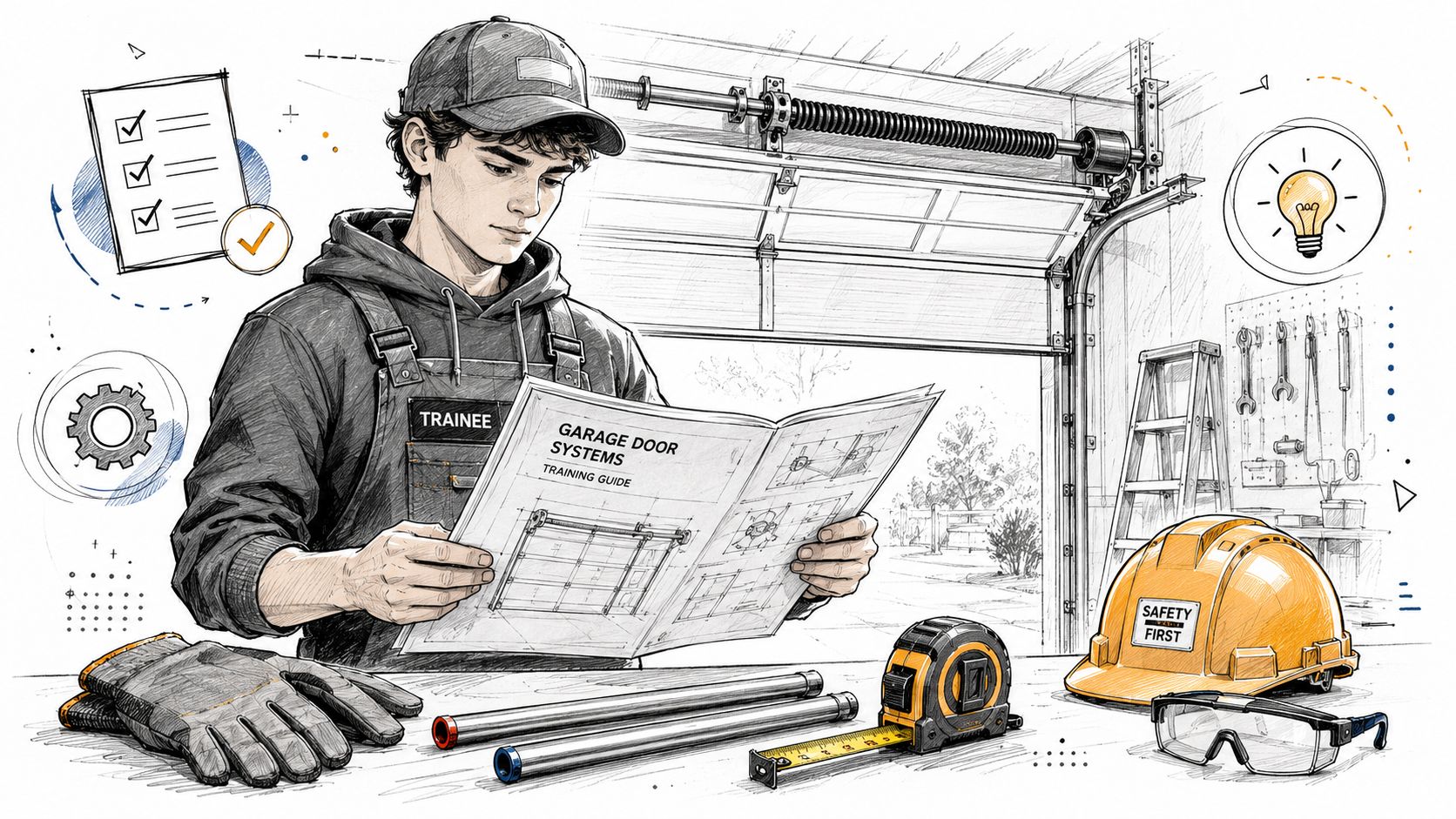
If you're reading about garage door technician training, you're probably in one of two places right now. You're either trying to break into the trade and want a path that leads to real field work, or you're responsible for a team and need a training system that produces consistent, safe technicians instead of a mix of habits picked up from whoever happened to train them last.
Both problems are common. So is the same bad answer: throw a new hire in the truck, hope they learn fast, and fix the mistakes later. That approach creates weak technicians and uneven service.
Garage door work isn't a trade built around a long academic path. It's a hands-on occupation that usually starts with apprenticeship or on-the-job learning, not a formal degree program. Industry guidance notes that training can range from a few days to several months, with basic onboarding often taking one to two weeks and fuller technical training taking longer, as outlined in this garage door technician training guide.
That matters for both audiences.
If you're an aspiring technician, it means you don't need to wait for a perfect credential before starting. You need a real employer, a structured learning sequence, and supervised reps doing actual installs, repairs, diagnostics, and customer-facing work.
If you're an association leader or business owner, it means your training program has to mirror the reality of the trade. A good curriculum doesn't begin and end with classroom content. It starts with standards, moves into controlled practice, and then pushes trainees into supervised field application.
Individuals often enter this trade with general work readiness, mechanical interest, and the ability to learn safely around heavy moving systems. After that, the path usually looks like this:
For readers comparing skilled trades, the broad pattern is similar to other practical pathways such as UK electrician training pathways. The details differ, but the principle is the same. Competence comes from structured learning tied to supervised work.
Practical rule: Start where the risk is lowest and the repetition is highest. That's how technicians build clean habits before they touch the jobs that can hurt people or damage property.
A career path in this trade is accessible. But it only works when training is deliberate.
A strong technician isn't just "good with tools." The job sits at the intersection of mechanical repair, electrical troubleshooting, and customer communication. Miss one of those, and the technician tops out fast.
Mechanical skill is the foundation. A technician has to understand how the system moves, where force is transferred, what creates drag, and why one bad component can affect the entire door.
On a normal day, that can mean:
Beginners often struggle, looking for the broken part without understanding the system. An experienced technician reads the whole assembly first, then narrows the fault.
For homeowners who underestimate that complexity, these Danny's Garage Door Repair insights are a useful reminder of why the work belongs in trained hands.
Garage door systems aren't only mechanical. Openers, wall controls, safety sensors, wiring connections, and accessory devices all require basic electrical confidence.
A capable technician should be able to:
This doesn't mean every technician needs deep specialist knowledge on day one. It does mean the training program can't treat opener systems as an afterthought.
Field technicians work in driveways, homes, warehouses, and commercial facilities. Customers judge the company through the technician standing in front of them.
That requires more than being polite. It means being able to explain:
A good technician reduces confusion. A poor one creates distrust, even if the repair itself is technically sound.
The best techs don't talk over customers. They translate the problem into plain language and set clear expectations before they touch the door.
For associations and employers, many training programs frequently encounter a critical flaw. They test wrench skills but ignore communication. That usually shows up later as complaints, disputed invoices, and inconsistent close rates on recommended work.
A modern program should also account for how people learn. Short knowledge checks, scenario practice, and progression tracking work better than a one-time information dump. That's one reason many organizations now borrow methods from adjacent learning models such as gamification in eLearning, especially when they need to keep trainees engaged between field sessions.
When I build a trainee profile, I don't look for a finished technician. I look for signs that the person can become one:
| Competency area | What to look for |
|---|---|
| Mechanical sense | Comfort with tools, assemblies, movement, adjustment, and cause-and-effect troubleshooting |
| Electrical basics | Willingness to learn opener systems, sensor logic, safe testing, and structured diagnostics |
| Customer presence | Clear communication, professionalism, listening, and the ability to explain options calmly |
If one of those pillars is weak, training has to compensate. If two are weak, hiring gets expensive. If all three are present, the trainee usually moves fast.
A training program works best when it follows the job in the right order. Start with reference materials. Move into demonstrations. Then require supervised hands-on work. According to ServiceTitan, basic onboarding commonly takes 1 to 2 weeks, complete technician training can extend to about 2 months, and training should progress from service manuals and checklists to supervised field practice, while covering safety, product knowledge, and customer service in this garage door training resource.
That sequence matters because technicians don't need random information. They need the right information at the moment they're ready to apply it.
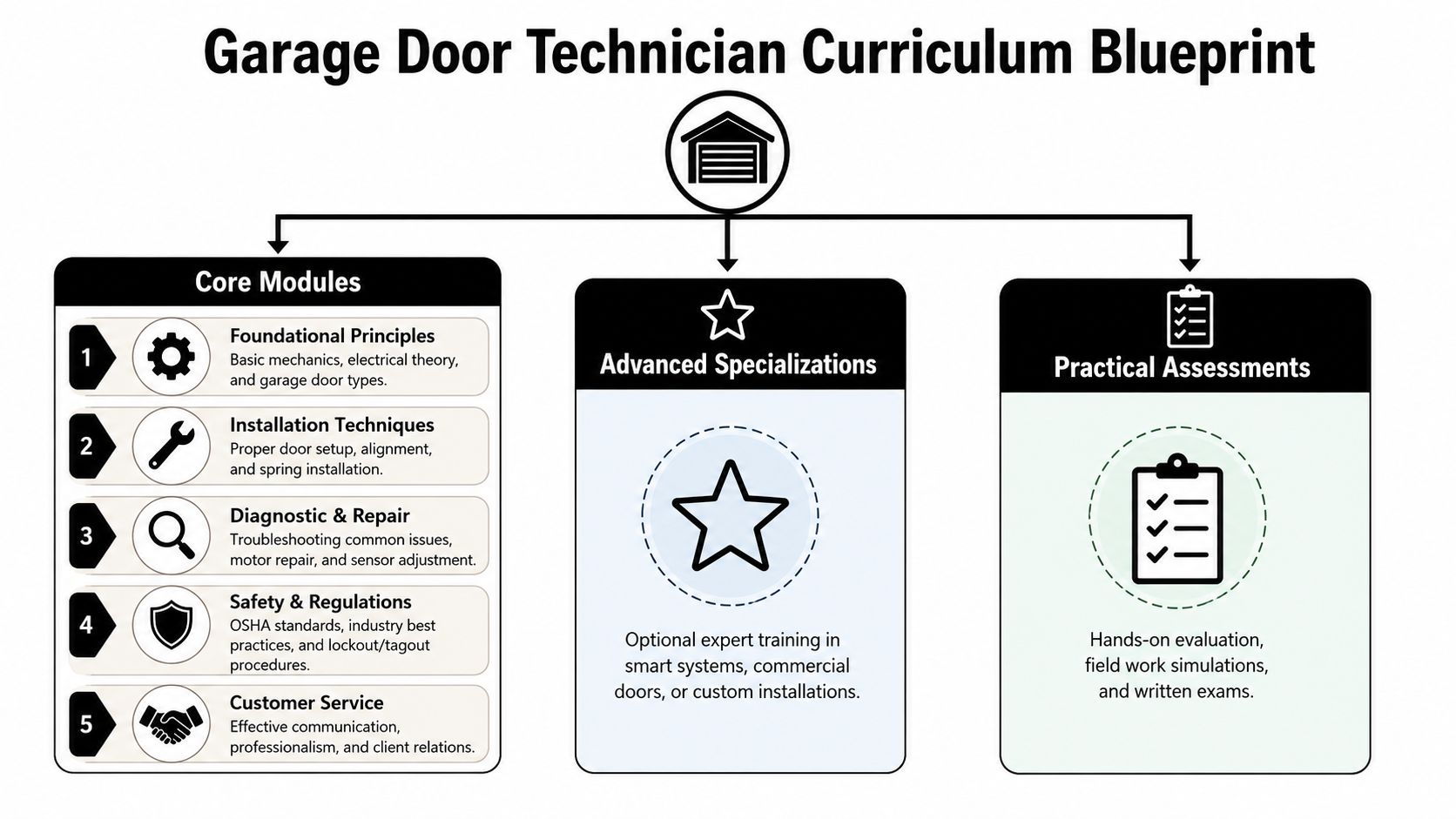
Think of the curriculum in layers. Each layer removes uncertainty before the trainee advances.
Layer one is safety and orientation. A trainee should know the shop rules, field rules, PPE expectations, tool handling standards, and the basic hazards tied to springs, weight, pinch points, ladders, and automation.
Layer two is system literacy, encompassing door types, hardware families, track layouts, opener categories, cable paths, and the language of the trade. If they can't name the parts, they can't communicate faults clearly.
Layer three is controlled technical practice. Install steps, adjustment procedures, opener setup, preventive inspection, and basic diagnostics belong here.
Layer four is supervised customer-facing field work. The trainee begins documenting findings, explaining work, and performing simpler tasks while being observed.
For teams building formal learning pathways, this general structure aligns well with how vocational education turns applied job skills into repeatable instruction instead of informal know-how.
| Module | Key Topics Covered |
|---|---|
| Safety First | PPE, hazard recognition, ladder use, lockout practices, tool safety, field conduct |
| Garage Door Systems and Components | Door types, tracks, rollers, hinges, cables, drums, bearings, panels, openers |
| Spring Systems | Torsion basics, extension systems, balancing concepts, inspection standards, supervised adjustment procedures |
| Electrical Systems and Openers | Power flow, sensors, wall controls, remote setup, opener troubleshooting, safe testing |
| Installation and Service Workflow | Job preparation, manufacturer references, checklists, installation sequence, final inspection |
| Diagnostics and Repair | Symptom tracing, wear identification, service documentation, root-cause thinking |
| Customer Communication | Explaining options, setting expectations, documenting recommendations, professionalism on site |
| Assessment and Refreshers | Quizzes, checklists, hands-on evaluations, coaching feedback, ongoing skill updates |
Poor programs usually fail in one of three ways:
A better approach is to document every module, define what competent performance looks like, and track progression in one place. For training leaders building a repeatable framework, this guide on how to develop training curriculum is useful because it focuses on turning subject matter into teachable, assessable modules.
The difference between a productive apprenticeship and a wasted one is structure. I've seen trainees spend weeks riding along, carrying parts, and sweeping up jobsites without learning why the lead technician made any of the decisions. That's not apprenticeship. That's labor without transfer.
A real apprenticeship moves in stages.
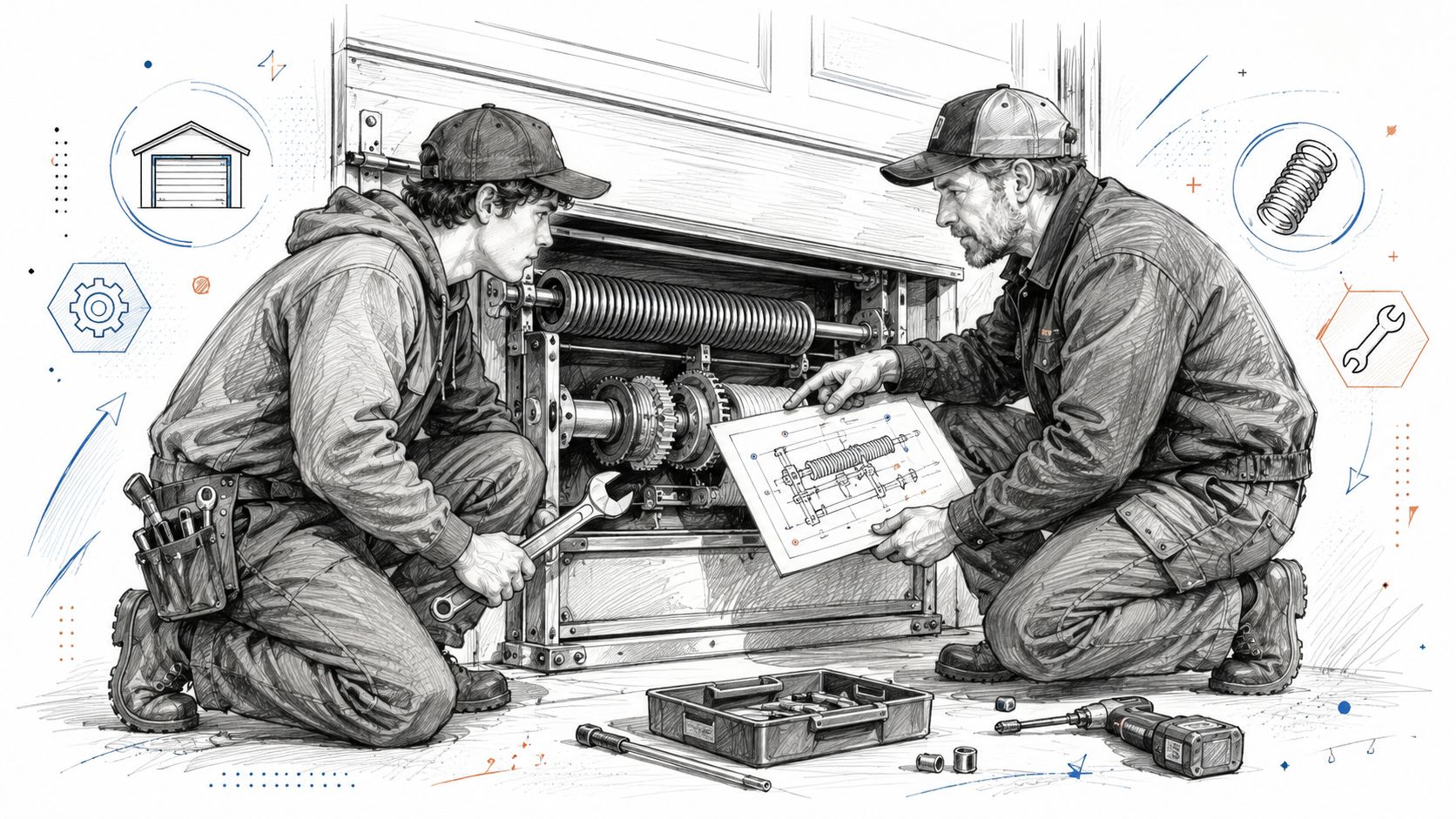
In a strong setup, the first stretch of field work is mostly observation, but it isn't passive. The trainee should hear the technician explain the complaint, inspect the system, identify likely causes, confirm the issue, and walk the customer through the repair.
After that, responsibility expands:
That progression keeps the trainee moving without exposing them too early to the jobs most likely to go wrong.
The best mentor isn't always the fastest technician. Speed can hide bad teaching. A good mentor explains cause and effect, shows the standard, and corrects small mistakes before they harden into habits.
Look for someone who does these things consistently:
A trainee should leave a service call knowing one new principle, not just one new trick.
For employers, that means selecting mentors carefully. Your top biller may not be your best trainer. The right field trainer produces more technicians over time. That's usually worth more than one highly productive individual.
An apprenticeship should never be judged only by time served. It should be judged by tasks performed safely and correctly.
Here is practical video material that can support discussion before or after field sessions:
A simple milestone model often works well:
The training approach often determines whether many shops either gain a future lead technician or lose a recruit. If the trainee gets only random exposure, learning drags. If the trainee gets progressive responsibility with feedback, skill builds quickly and confidence follows.
Garage door work carries real risk. Industry sources report about 1,500 to more than 1,600 garage-door-related injuries per year in the U.S., which is one reason standardized training and safer work practices have become more important. The same industry discussion also notes that certification is often not legally required, but credentials such as those from IDEA can function as a trust signal and risk-control tool in a high-liability trade, as discussed in these garage door industry insights.
That should change how people think about certification. It's not just a badge for the wall. It's part of how a technician or employer shows they take the work seriously.

Some trades can tolerate a loose learning curve for low-risk tasks. Garage door work can't. Technicians deal with heavy door sections, high-tension spring systems, automated equipment, ladders, and constant travel between job sites.
If safety is taught casually, people fill in the gaps with shortcuts. Shortcuts become habits. Habits show up in injuries, damaged property, and avoidable liability.
For that reason, a serious training program should formalize:
Certification usually matters most in three places.
First, it helps hiring. A shop with a recognized standard can bring in people who want a career path, not just day labor.
Second, it helps customer trust. Homeowners and commercial clients may not understand the technical details, but they do understand signals of professionalism.
Third, it helps internal consistency. Certification frameworks force companies and associations to define what qualified performance means.
Field standard: If your team can't describe the safety process the same way, they aren't following the same safety process.
That doesn't mean every credential automatically improves field performance. It means the right credential, tied to a real training program, can support better supervision, stronger accountability, and a clearer professional identity.
Associations that want to turn internal standards into recognized credentials should think carefully about scope, assessments, renewal, and recordkeeping. This guide on how to create a certification program is a good starting point because it treats certification as an operational system, not a one-time test.
One of the most common mistakes in this trade is confusing legal minimums with professional standards. A state may not require a specific certification. That doesn't mean skipping formal standards is smart.
The better mindset is simple. If the work is high-liability, the training should be high-discipline.
For individual technicians, that approach protects your career. For business owners and associations, it protects your reputation.
Most garage door companies already have training. It's just trapped in the heads of senior technicians, scattered across text threads, and delivered inconsistently from truck to truck. An accredited program starts when that informal knowledge gets written down, taught the same way, and assessed against a standard.
For an association or larger service organization, the job is to build a system that can survive turnover, expansion, and changes in product lines.
Begin by turning your best field practices into formal requirements. That means documenting:
If you skip this step, the rest of the program becomes cosmetic. You might have courses, but you won't have a standard.
Technicians don't learn best from long policy documents alone. They learn through a blend of short instruction, visual demonstration, reference materials, supervised repetition, and coaching.
That usually means a workable program includes:
| Program component | Practical role |
|---|---|
| Written modules | Define terminology, safety rules, product knowledge, and service standards |
| Video lessons | Show installations, inspections, opener setup, and troubleshooting steps |
| Live workshops | Let trainees practice tasks in a controlled environment |
| Field verification | Confirm the trainee can perform on real jobs |
| Certification records | Track who completed what, when, and at what level |
A lot of associations struggle here because they try to manage training across separate tools. Course files live in one place. registrations in another. Certificates in another. Member communication somewhere else.

A training program isn't only content. It's operations.
You need a clean way to handle enrollments, workshop sign-ups, member access, progress tracking, communications, and credential visibility. If you're comparing systems for course delivery and completion tracking, these best online course platforms with certificate features can help clarify what matters operationally.
For associations, an accredited model usually works best when it includes:
Growth exposes weak standards fast. When you add more trainers, chapters, or branches, the biggest risk is drift. One trainer signs off aggressively. Another is overly strict. A third teaches a shortcut that undermines safety or consistency.
The fix is straightforward:
An accredited program doesn't have to be complicated. It does have to be controlled. When associations build that control into the training design, they raise the level of the whole trade instead of relying on informal knowledge transfer.
If you're building a training pathway for garage door technicians, GroupOS can help you organize it under one roof. You can manage memberships, host training content, register learners for workshops, track engagement, and support certification-style programs without stitching together separate tools. For associations and industry groups that want a branded, scalable training experience, it's a practical way to turn standards into an operating system.