May 19, 2026

You're probably in one of two places right now. You run a dog-related group that gets plenty of likes but very little follow-through, or you're staring at a blank page trying to figure out whether “dog lovers” is specific enough to become a real business.
It usually isn't.
A dog lovers community can become a durable asset. It can support memberships, events, sponsors, education, and local partnerships. But only if you build it like an operator, not like someone opening yet another casual social group and hoping enthusiasm carries the load.
That means every decision has to pull double duty. Your niche has to create belonging and commercial clarity. Your platform has to reduce admin chaos and give members a better experience. Your content has to answer real needs, not just fill a feed. Your engagement tactics have to turn dog owners into people who know each other. And your revenue model has to fund the work without making the community feel extractive.
A founder launches a group for “dog lovers,” gets a quick burst of joins, then watches the feed drift into random photos, scattered questions, and the same low-commitment chatter every week. Nobody is wrong for showing up that way. The offer is just too broad to create a reason to stay, pay, or participate with any consistency.
A sustainable dog lovers community starts with a narrower promise.
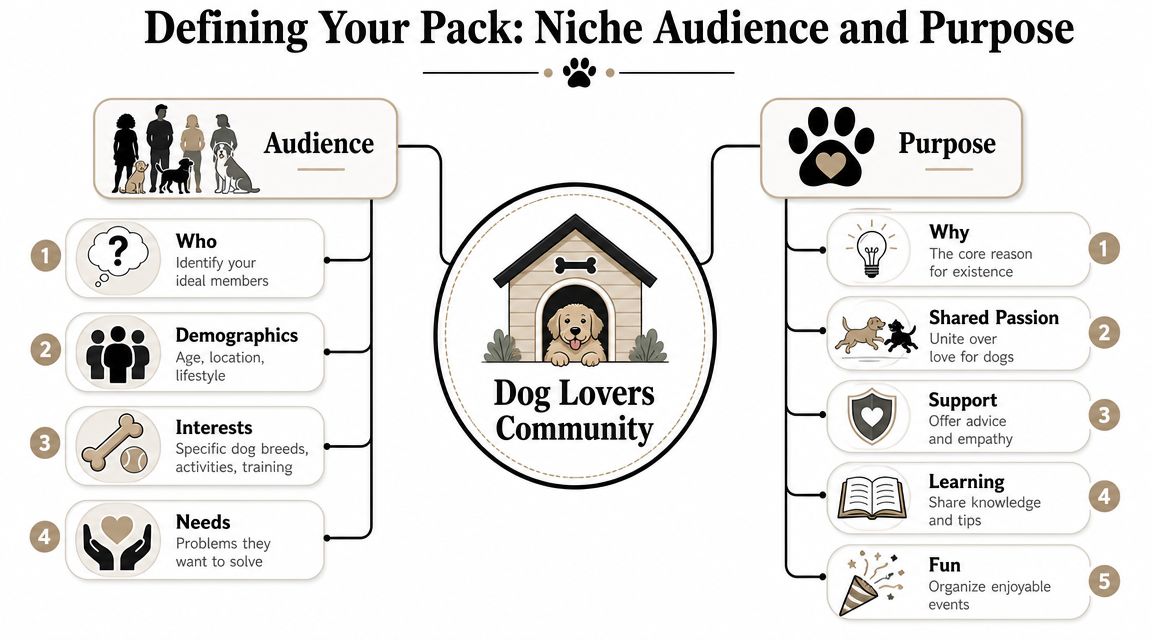
People join faster when they can identify themselves in the description without doing extra work. “Dog lovers” is an interest. “First-time puppy owners in Austin who want training help, local referrals, and weekend meetups” is a community.
That difference affects revenue as much as engagement. Clear niches attract clearer partnerships, better event ideas, stronger referrals, and paid offers that feel relevant instead of forced.
Good niches usually center on one strong organizing trait:
Weak niches collect unrelated interests and call it inclusion. A group for rescues, training, fashion, travel, adoption, breeders, pet brands, and memes usually turns into a noisy general feed. It is hard to moderate, hard to position, and even harder to monetize without confusing members.
A simple test helps. If the right member cannot say, “this was built for me,” the niche still needs work.
Affection for dogs brings people in. A recurring use case brings them back.
Write one sentence that answers two questions:
A few examples:
Founders often miss the underserved angles here.
A lot of dog media assumes stable housing, easy transportation, flexible budgets, and smooth access to care. Real ownership is often constrained by rent rules, cost, and local support gaps. A qualitative study on dog acquisition in lower-income communities found that decisions are often shaped by price, housing constraints, and informal networks, while support needs after acquisition are often overlooked (qualitative study on dog acquisition and lower-income communities).
That is not just a social insight. It can point to a durable community model. If we serve a group with a shared, ongoing need, we can build programming, resources, memberships, or partnerships that fit naturally.
Good community positioning includes the right people and screens out the wrong expectations. That does not require a harsh tone. It requires precision.
Use a short positioning grid before you name the group or open enrollment:
| Element | What to define |
|---|---|
| Primary member | The one person you most want to attract |
| Core need | The reason they will return regularly, not just join once |
| Shared identity | The belief, lifestyle, location, or challenge they recognize |
| What you are not | Audiences, topics, or behaviors that do not fit |
| Commercial fit | Products, events, services, or memberships that could serve them well |
That last row matters. If the niche has no clear commercial fit, it may still become a warm, enjoyable hobby group. But a revenue-generating community needs a clear path from member need to paid value. Training clinics, vetted directories, breed-specific workshops, local meetups, private support circles, sponsor packages, and premium content all work better when the audience is specific.
I also like to pressure-test a niche before launch. Ask five prospective members what they use now, what frustrates them, what they would pay for, what they ignore, and what would make them invite a friend. Those conversations usually sharpen the offer fast, and sometimes they save us from building the wrong thing.
For a broader framing exercise, this guide on how to find your tribe is useful. It pairs well with looking at how dogs strengthen social ties beyond ownership alone. You can discover dogs' community contributions and study how shared affection turns into real local connection when the purpose is clear.
Founders often make the platform decision backwards. They ask what tool is easiest to start with, not what system can support the member experience and business model they want.
That's how you end up with a Facebook Group for discussion, Eventbrite for tickets, Mailchimp for email, Google Forms for applications, Canva links floating everywhere, and a spreadsheet trying to hold the whole operation together. It works for a while. Then moderation gets messy, reporting is fragmented, and members never feel like they've joined one place.

The right choice depends on your ambition level.
| Platform type | Strengths | Weak points | Best fit |
|---|---|---|---|
| Social media group | Fast setup, familiar for members, easy discovery | Noisy feed, limited ownership, weak monetization control | Early testing, informal local groups |
| Forum or custom website | Strong control, flexible structure, branded experience | More setup work, more maintenance, harder to keep lively | Communities with technical resources |
| Dedicated community platform | Memberships, content, events, profiles, and messaging in one system | Requires upfront setup and operational clarity | Organizations building long-term revenue and retention |
The DIY stack looks cheaper at first because each tool solves one problem. In practice, it creates hidden costs. Staff spend time reconciling member records, event attendance, email lists, sponsor placements, and support requests across separate systems.
Members feel that fragmentation too. They don't care that your tools are stitched together. They care that registration links break context, event reminders arrive from a different brand, and the best resources are buried across multiple channels.
A dog lovers community has some needs that generic communities don't.
You usually need member profiles that can capture relevant details such as dog breed, age, location, interests, or special circumstances. If you host in-person activities, you'll want event registration, attendance workflows, and check-in support. If you offer paid value, you need membership tiers, gated content, and clean renewal management.
For many dog communities, these features stop being nice-to-haves quickly:
A public social group gives you reach. It doesn't give you much control.
When a platform owns the audience relationship, you're always borrowing access. When you control the system, you can build a real operating model around it.
Here's a useful lens. If your community depends on memberships, repeat events, sponsor visibility, and a branded experience, then platform choice is not a convenience decision. It's infrastructure.
Many dog communities come alive offline. Walks, breed meetups, charity runs, training classes, adoption events, and pop-up partner activations create the strongest member memories. If your event workflows live outside your main community system, you force people to leave the environment where trust was built.
That hurts conversion.
Use the planning phase to map one complete member journey:
If that journey spans too many disconnected tools, friction builds at every step.
This walkthrough is a helpful reference if you're evaluating what a modern membership platform should support.
A short explainer can also help your team align before choosing tools:
The best tech stack for a dog lovers community is usually the one that disappears into the background. Members shouldn't have to think about your software. They should feel that joining, talking, registering, and returning all happen naturally in one place.
A lot of communities confuse activity with value. A busy feed can look healthy while delivering almost nothing durable. After a few weeks, the same questions repeat, good answers vanish down the timeline, and new members have no idea where to start.
Content fixes that, if you build it in layers.
Start with the content members will search for again and again. This is your evergreen layer. It reduces repetitive admin work and gives people a reason to stay even when they're not chatting.
For a dog lovers community, strong library content often includes:
Treat this like product development. Ask what information would save members time, stress, or money. Then organize it so they can find it in seconds.
The feed should create reasons to return between bigger moments. It shouldn't try to carry the whole value proposition by itself.
I like a simple rhythm:
| Content type | Why it works |
|---|---|
| Weekly prompts | Low-friction participation and easy conversation starters |
| Member stories | Builds identity and peer recognition |
| Ask the expert sessions | Creates authority and useful archives |
| Photo or theme threads | Light participation that still strengthens belonging |
| Event follow-ups | Extends energy after meetups or workshops |
The key is variety. If every post asks for a cute photo, you train members to expect entertainment, not usefulness. If every post is instructional, the place starts to feel like homework.
A better mix creates both habit and trust.
Working rule: Library content earns the join. Feed content earns the return.
Different members need different things. A brand-new puppy owner doesn't need the same content as a rescue volunteer or someone caring for a dog with mobility issues.
Map content against stages such as:
This keeps your calendar from becoming random. It also gives you a cleaner path to monetization later, because paid offers usually perform best when they solve a stage-specific need.
If you need a practical framework for keeping that pipeline full, this resource on how to create engaging content is worth reviewing.
Many community teams do the hard work of creating excellent material and then hide it unintentionally. Don't bury resources behind vague labels like “files” or “resources.”
Use plain names members would search for:
Then resurface your best assets often. Link them in welcome messages. Reference them in discussion replies. Package them into monthly roundups. Good community content should compound.
The long game is simple. If members can get friendship anywhere but can only get your specific combination of practical guidance, curated resources, and local relevance from you, your dog lovers community becomes much harder to replace.
Content helps people. Relationships keep them.
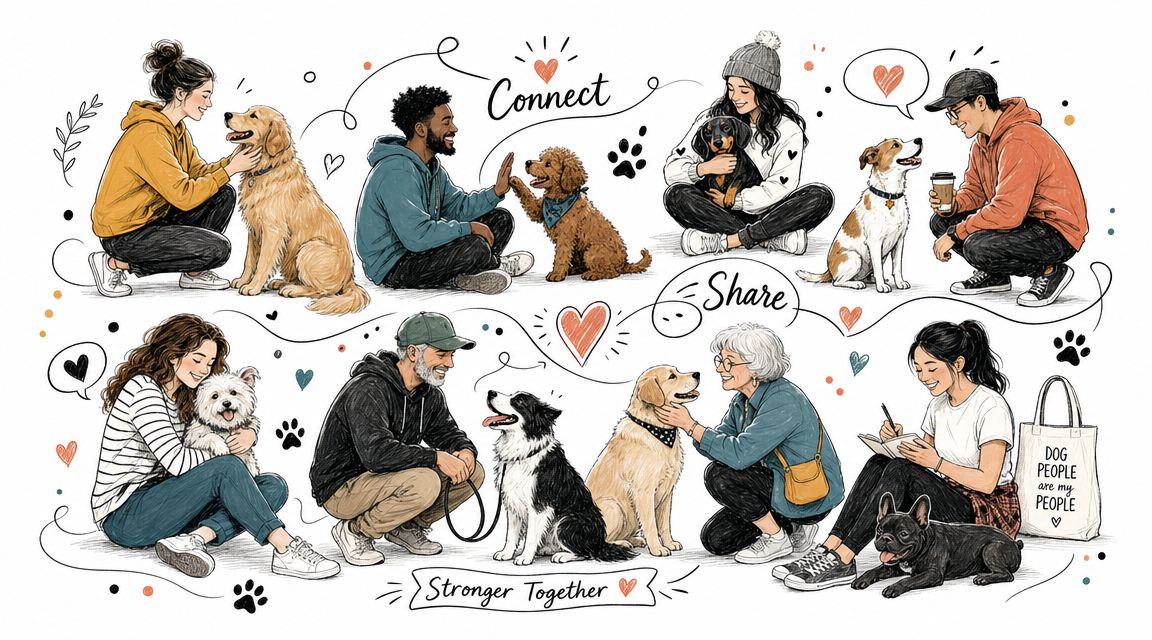
That distinction matters because members rarely stay loyal to a community only because it has useful posts. They stay because they recognize names, feel seen, and know where they fit. Dog-centered communities have an advantage here because dogs naturally create conversation, ritual, and repeated contact.
Research backs that up. One study found dog ownership was significantly associated with stronger sense of community, with the key pathway running through anchored personal relationships. In that analysis, the indirect effect through anchored personal relationships was b = 0.69 with 95% CI = [0.29, 1.08], p < .001. The same research also reported that 83% of adults said they had communicated or interacted with people they otherwise would not have because of their pet, about 80% of pet owners met neighbors through their pets, and 9 in 10 pet parents agreed pets contribute to a stronger sense of community (study on dog ownership and community connection).
The best engagement tactics aren't flashy. They create low-pressure ways for members to show up often.
A practical set of repeatable habits:
Belonging usually grows through accumulated familiarity, not through one perfect event.
A common mistake is making every interaction about the dog as an object. Breed, age, toys, food, and photos all matter, but stronger communities also reveal the person attached to the leash.
Ask questions that open space for identity:
| Prompt type | Better question |
|---|---|
| Routine | What walk route do you take when your day has gone sideways? |
| Challenge | What's one issue you're working through with your dog right now? |
| Local life | Which dog-friendly place in your area deserves more attention? |
| Caregiving | What has your dog taught you about patience lately? |
Those answers invite conversation that feels human, not performative.
The goal isn't just to get comments. It's to create enough repeated recognition that members begin contacting each other without admin intervention.
Not every good engagement moment has to be cheerful. Weather changes, travel stress, indoor boredom, fireworks, moving apartments, and vet anxiety all create shared pain points. Communities that respond to these moments feel useful and caring.
For example, when bad weather kills outdoor routines, it helps to post practical resources members can use immediately. A guide with fun ways to keep dogs busy inside fits naturally into that kind of seasonal conversation and often triggers members to swap their own enrichment ideas.
You can build recurring rituals around these moments too:
Communities deepen when people contribute something recognizable. Not everyone will host events or mentor new owners, but many will happily answer neighborhood questions, welcome newcomers, share supplier recommendations, or coordinate small meetups.
That's why structured roles matter. Even lightweight ones.
Try assigning or inviting members into functions such as local connector, photo contest host, rescue signal booster, trail scout, or welcome volunteer. Those roles create status, but above all, they create responsibility to others.
That's the point where a dog lovers community starts feeling like a pack rather than a content channel.
A lot of founders get nervous here. They worry that charging for anything will dilute the spirit of the community.
Usually the opposite is true.
When you fund a community properly, you can run better events, maintain better systems, pay experts, support moderators, build useful resources, and create a more reliable experience for members. Monetization isn't the enemy. Misaligned monetization is.
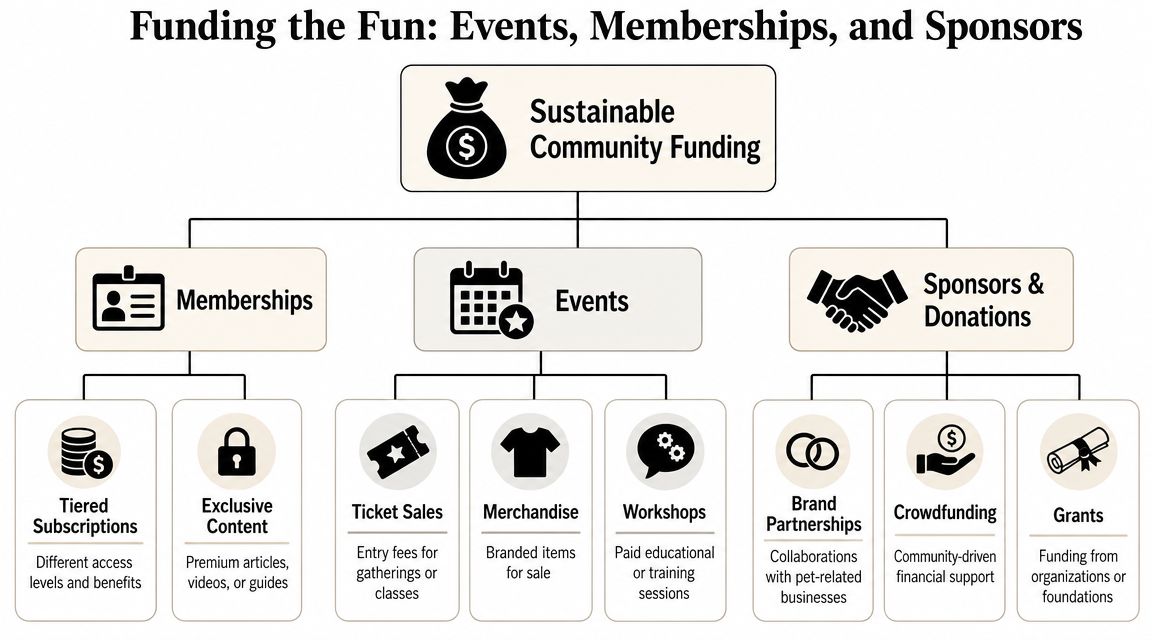
The healthiest community businesses rarely rely on one income stream. A dog lovers community usually has three practical lanes that can support each other.
| Revenue stream | What members get | What you gain |
|---|---|---|
| Memberships | Access, perks, exclusives, early registration | Predictable recurring revenue |
| Events | Experiences, education, social connection | Cash flow and stronger retention |
| Sponsors and partners | Useful offers, relevant services, special activations | Non-dues revenue and ecosystem support |
The important part is fit. Members should understand why each paid element exists and how it improves the community.
Free access can still play a role. It helps discovery, lowers the barrier to join, and gives prospective members a way to sample the culture. But free shouldn't carry your entire value model.
Paid tiers usually work best when they offer practical advantages such as:
Don't stuff a membership tier with random perks. Give members one clear reason to upgrade.
Operator mindset: People don't pay because you need revenue. They pay because the paid layer saves them time, gives them access, or improves outcomes.
Events are often the easiest place to start monetizing because members can see the value immediately. A park meetup may stay free, while a training clinic, fundraiser gala, breed showcase, or workshop can carry a paid ticket.
The strongest event programs usually mix formats:
Operational efficiency is key. You need clean registration flows, custom forms, waiver handling if appropriate, attendee communication, and simple check-in on the day itself. If admins have to juggle spreadsheets and manual reminders, event margins get swallowed by labor.
Sponsors become a problem when they feel bolted on. They work when they solve member needs and fit the community's standards.
Strong sponsor categories for a dog lovers community might include trainers, groomers, veterinarians, daycare operators, pet photographers, nutrition brands, insurers, walkers, boarding facilities, and local dog-friendly businesses. The key is curation. Don't say yes to everyone.
A sponsor package should answer three questions:
Good packages often combine:
If you're packaging these opportunities formally, this guide on how to create a sponsorship package can help tighten the offer.
A fast way to damage a community is to flood it with promotions before members feel protected. Vet partners carefully. Label sponsored placements clearly. Keep editorial judgment separate from sponsor money.
If a sponsor annoys members, the short-term revenue won't be worth the long-term erosion.
The best funding model feels like reinforcement. Members get better experiences. Partners get qualified attention. You get the resources to keep the community healthy.
Launch week often looks exciting from the outside. New members join, comments start flowing, and the first event fills up. Then the harder part begins. If those members do not build habits, know what to do next, or see clear value worth paying for, the community stalls before it becomes a real business.
The opportunity is large, as noted earlier. Dog ownership in the U.S. is widespread enough to support focused communities with paid memberships, recurring events, and partner revenue. But broad interest alone does not create a sustainable operation. A durable dog lovers community grows because the launch is staged carefully, the experience is shaped around repeat behavior, and the business model is built into the member journey from day one.
Open with a founding cohort, not a public free-for-all.
A smaller first group lets you test the parts that determine retention and revenue. Onboarding. Profile completion. Posting norms. Event signups. Moderator response times. Upgrade prompts. If any of those feel clumsy, fix them before paid acquisition or broad promotion sends more people into the system.
Give founding members a job, not just access. Ask them to complete a profile, introduce themselves, attend one event, post once, and report where they got confused or lost interest. That feedback is far more useful than launch-day praise.
Here is a rollout structure that keeps growth tied to operational reality:
| Phase | Task | Key Feature/Tool |
|---|---|---|
| Pre-launch | Finalize niche, offer, rules, and member journey | Positioning doc, onboarding flow |
| Founding member invite | Bring in a small first cohort | Direct outreach, application form |
| Soft launch | Test discussions, resources, events, and support | Welcome posts, event registration |
| Public launch | Announce widely with a clear reason to join now | Landing page, email, partner promotion |
| Optimization | Review member behavior and drop-off points | Engagement tracking, feedback survey |
| Growth loop | Formalize referrals, partnerships, and recurring campaigns | Member referral prompts, event calendar |
If you already have a Facebook Group, treat migration as a conversion process.
People stay where the habit is easiest, even if the experience is worse. So the new platform needs to become the place where the most useful things happen. Host event registration there. Keep the resource library there. Run expert Q and A sessions there. Give members a practical reason to log in that goes beyond an announcement about changing platforms.
A migration sequence that works in practice looks like this:
If veterinary clinics are part of your partner strategy, content that helps them grow your veterinary practice can create useful collaborations around education, referrals, and local events.
Keep your best conversations in one place. Fragmentation kills momentum faster than slow growth does.
Early growth can hide weak fundamentals. A spike in signups feels good, but it does not tell you whether the community is getting stronger.
Watch the behaviors that lead to retention and monetization:
Those metrics give you something you can improve. If profile completion is low, fix onboarding. If event attendees never return, improve follow-up. If free members consume content but do not upgrade, tighten the paid offer or place it closer to the moment of value.
Sustainable growth usually comes from a few channels run consistently, not from one dramatic campaign.
For dog communities, the reliable channels are often local partnerships with trainers, rescues, veterinarians, and dog-friendly businesses, member referrals, recurring events, niche social content with a clear call to join, and chapter leaders who bring in peers. The point is not to be everywhere. The point is to run a system you can repeat every month without exhausting the team.
A practical cadence works well. One partnership push. One signature event. One referral reminder. One public-facing story or resource that attracts the right kind of member. Over time, that rhythm builds a community that is easier to retain, easier to monetize, and much easier to operate.
A strong dog lovers community does not feel chaotic. It feels organized, useful, and worth coming back to. That is what gives you room to grow revenue without weakening trust.
If you're ready to build a dog lovers community with memberships, events, content, and communication under one roof, GroupOS gives you a branded system to run it like a real business instead of patching together disconnected tools.