March 22, 2026
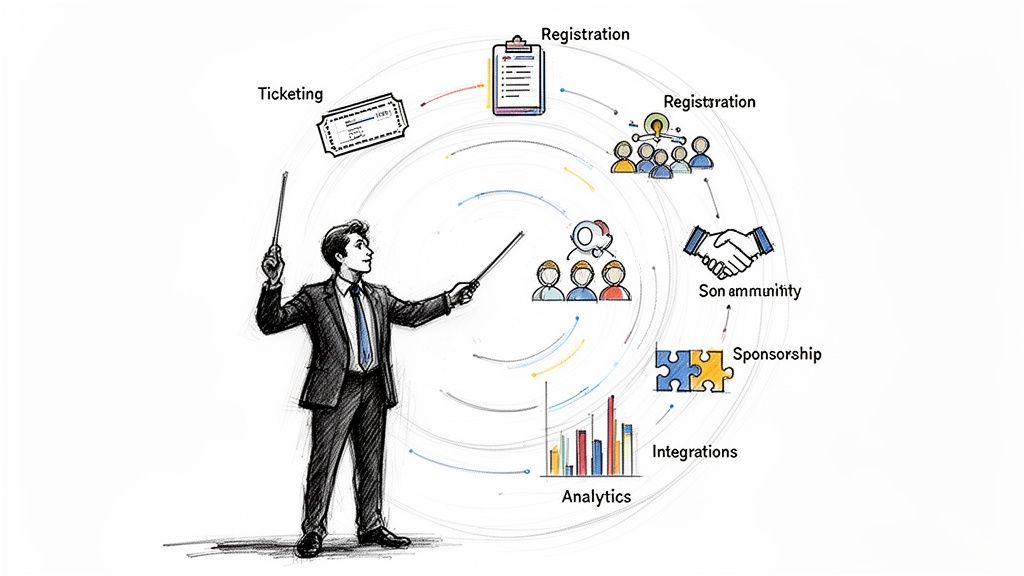
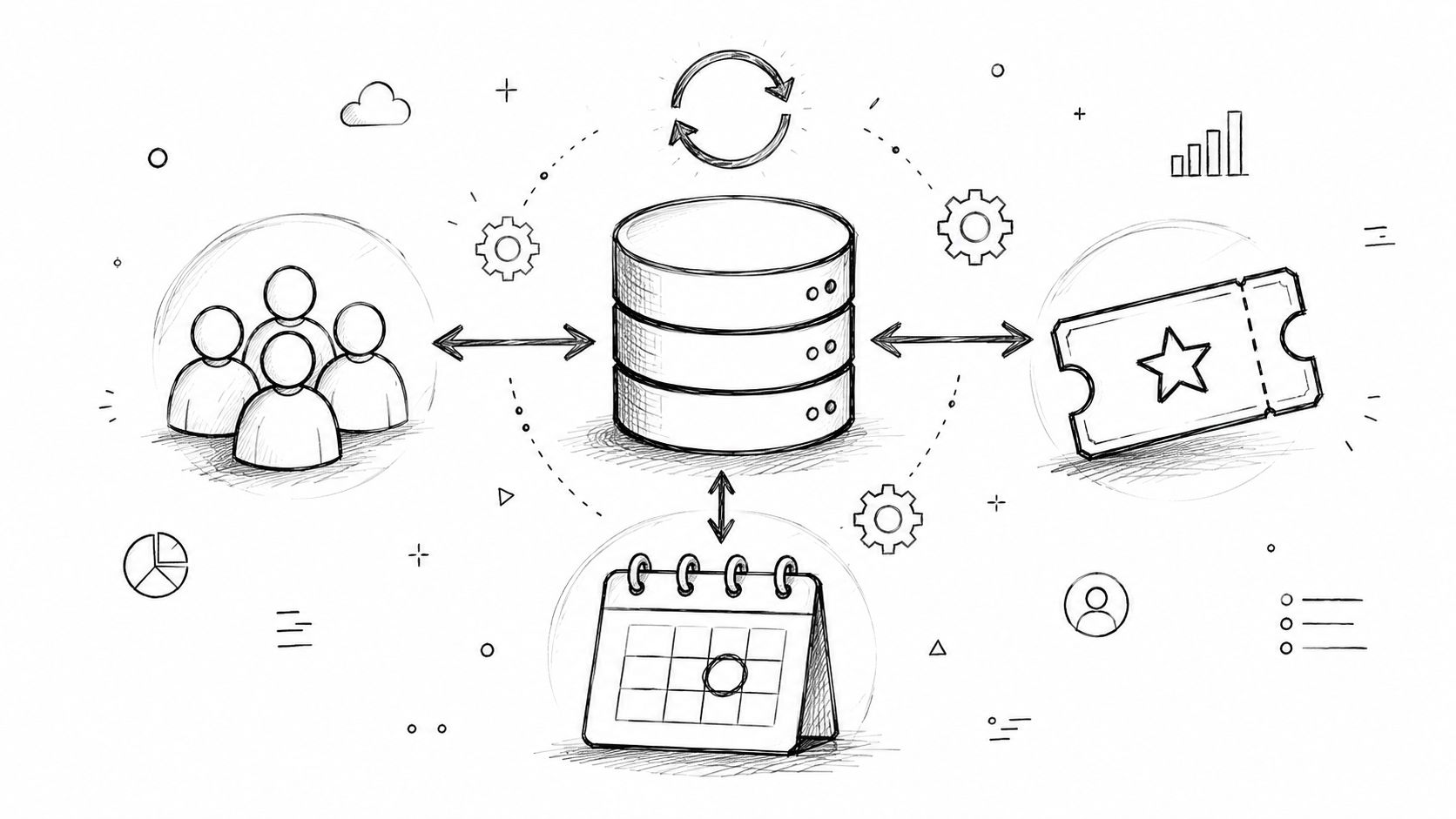
So, what exactly is a corporate event solution? It's not just another piece of software. Think of it as the central nervous system for your entire event strategy, connecting everything from the first registration click to the final post-event survey.
Instead of juggling a messy collection of spreadsheets, email lists, and payment processors, a true event solution brings all those functions under one roof. It’s the difference between conducting a finely tuned orchestra and trying to lead a band where everyone is playing a different song.
Let’s be honest, the old way of running corporate events is broken. It used to be all about logistics—booking a hall, ordering coffee, and printing name tags. Today, that’s just the baseline. The real goal is to create an experience that genuinely connects with people and drives business forward.
A dedicated corporate event solution is the conductor that makes it all happen. It syncs up every moving part, from ticketing and attendee management to sponsor engagement and detailed analytics. In today's market, this isn't a "nice-to-have"; it's an essential part of a successful event strategy.
The game has changed. While getting the logistics right is still important, the spotlight has moved squarely onto the attendee experience. People won’t settle for a day of boring presentations anymore.
This change is driven by a simple fact: your event is competing for attention in a very crowded world. To make it worth their time and money, attendees are looking for much more.
An integrated platform is what makes delivering on these expectations possible. It transforms event management from a frantic, reactive checklist into a proactive strategy focused on building lasting community and value.
The appetite for well-executed corporate events is growing at an incredible pace. The numbers don't lie: the global corporate event market is projected to grow by USD 221.7 billion, with a compound annual growth rate (CAGR) of 10.8% between 2024 and 2029, according to research from Technavio.
This explosive growth brings a wave of new competition and much higher expectations from attendees. A unified event platform is your best tool for rising above the noise. For in-person events, this extends to the physical experience, where things like stunning conference booths displays become a critical touchpoint. A great platform helps you manage every single detail, ensuring the digital experience flows seamlessly into a polished, professional physical environment.
Without this cohesive approach, you risk putting on a fragmented event that just doesn't connect, failing to make an impact in an industry that's bigger and more competitive than ever.
Think of a great all-in-one event platform not as a random collection of tools, but as the central headquarters for your entire event. It’s a single, cohesive system where every piece works together, from the moment someone first hears about your event to the final thank-you email.
This integrated approach is what separates a clunky, disjointed experience from a smooth, professional one for everyone involved—your attendees, your sponsors, and your own team. Let's walk through the key "departments" of this event headquarters.
Your registration process is the very first impression you make. It’s more than just a way to sell tickets; it’s the official welcome mat. A clunky, confusing registration page can set a negative tone before your event even begins.
A modern platform turns this into a seamless experience.
This first touchpoint is your chance to show attendees you’ve thought about their experience right from the start.
The Big Idea: A smooth registration process isn't just about making a sale. It’s the first step in building a relationship, collecting valuable data, and delivering a polished, branded experience.
Once your guests are "in the door," you need a place for them to connect. This is where a one-off event can transform into a year-round community, which is absolutely critical for associations and member-focused organizations.
Think of this as the digital lounge or community hub where real networking happens. Features like member directories help people find peers with similar interests, while private messaging and group chats give them a space to have meaningful conversations. This is how you turn passive viewers into active, engaged participants who feel a true sense of belonging.
This shift from a scattered approach to a unified one is what truly sets a modern event strategy apart.
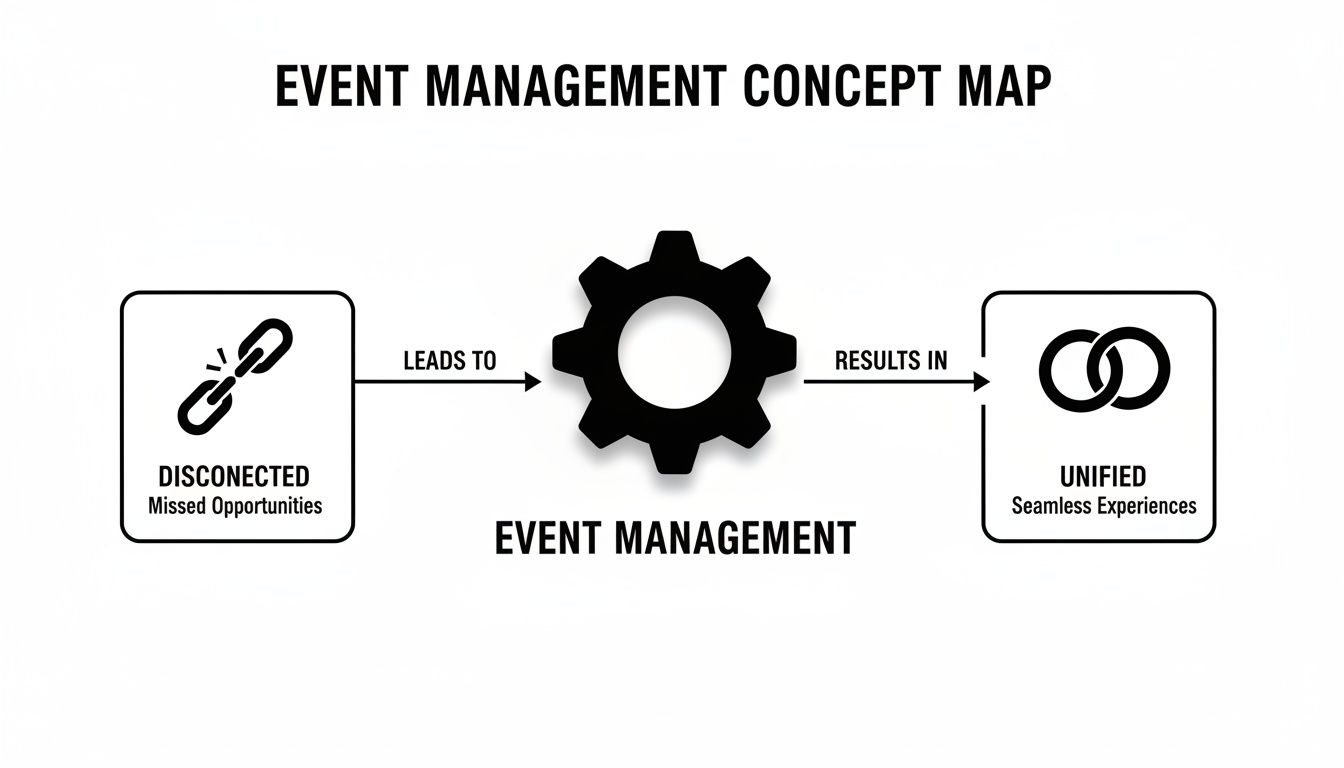
As you can see, a central hub brings all the scattered pieces of the event puzzle together to create one powerful, cohesive experience.
This is where you deliver the core value of your event. Whether you're running a virtual conference, a hybrid summit, or a live workshop, this is where you manage all the content that your audience came for.
A good platform gives you the tools to make your content shine.
Getting your content delivery right is non-negotiable for a high-quality event. If you want to go deeper, check out these 7 essential event management software features for 2025 that make all the difference.
To bring it all together, here’s a quick breakdown of the core features you should expect in a comprehensive event platform and the direct benefits they bring to the table.
| Feature Category | Key Functionalities | Primary Benefit |
|---|---|---|
| Ticketing & Registration | Tiered pricing, custom forms, automated confirmations, QR code check-in. | Creates a smooth, branded first impression while capturing valuable attendee data. |
| Membership & Community | Member directories, private messaging, group chats, forums, user profiles. | Fosters year-round engagement and transforms one-time attendees into a loyal community. |
| Content & Agenda | Multi-track agenda builders, speaker portals, session ratings, on-demand library. | Simplifies content logistics and empowers attendees to personalize their learning journey. |
| Sponsor Management | Exhibitor profiles, lead capture tools, direct messaging, sponsorship tiers. | Provides sponsors with measurable ROI and meaningful ways to connect with attendees. |
| Analytics & Reporting | Real-time dashboards, registration tracking, engagement metrics, post-event reports. | Offers data-driven insights to measure success, prove impact, and optimize future events. |
| Integrations | CRM, email marketing, payment gateways, and other business software via API. | Connects event data to your core business systems, eliminating silos and manual work. |
These features aren't just bells and whistles; they are the engine that powers a successful, modern event strategy, ensuring a great experience for everyone involved.
Finally, we have the two areas that drive the business side of your event: your sponsors and your data.
The Sponsor Pavilion is where you deliver value to your partners. Forget just putting a logo on a webpage. A true event platform gives sponsors their own virtual booths, lead capture tools, and direct lines of communication with attendees. This is how you prove clear ROI and keep them coming back.
At the same time, the Analytics Dashboard is your mission control. This is where you see everything happening in real time—from which sessions are most popular to how many leads a sponsor has captured. These insights aren't just for a report you'll read next month; they let you make smart, data-driven decisions on the fly to improve the experience as it happens.
A great event platform does more than just help you stay organized. This is where the real magic happens—where your corporate event solutions stop being an expense on a spreadsheet and start generating real, measurable growth for your business.
For professional associations, this is a complete shift in thinking. You’re no longer just running a handful of conferences each year. Instead, you're building a vibrant community that stays active all year round. The direct result is a big boost in member retention, because people feel connected and see the value long after the main event has wrapped.
A single, centralized platform opens up revenue opportunities you might be missing with a patchwork of different tools. It’s time to think bigger than just standard ticket sales. With the right features, you can easily set up tiered ticketing—offering exclusive perks like VIP networking sessions or early access to content for a premium.
Your sponsorships become far more attractive, too. Forget just putting a logo on a banner. Now, you can offer sponsors their own digital profiles, tools to capture leads, and even direct messaging with attendees. This gives them a clear, trackable return on their investment, making them eager to come back and spend more next year.
The right technology transforms an association’s event from a cost center into a primary driver of revenue and member loyalty. It creates a self-sustaining ecosystem where engagement fuels growth.
And it’s not just associations that see these kinds of results. For large companies, the impact can be just as significant, helping to strengthen brand loyalty, generate high-quality sales leads, and keep employees engaged. A solid event solution can handle everything from a massive customer conference to an internal sales kick-off that spans the globe.
Imagine a sales kick-off where everyone, whether they're in the room or joining remotely, gets the same resources and can participate in the same live polls. That kind of unified experience builds a motivated, cohesive team. For your customer-facing events, the data you capture is pure gold. You can see which prospects attended which sessions and what topics they engaged with, giving your sales team incredibly warm, well-informed leads to follow up on.
This isn't just theory; it's backed by a huge vote of confidence from the market. A staggering 74% of Fortune 1000 marketers are planning to increase their event budgets. What's more, 66% of organizations expect to schedule more events in 2025—a huge jump from just 41% in 2023. It’s clear that businesses are doubling down on events as a core growth strategy.
At the end of the day, it's all about proving that your events are making a real business impact. That means moving beyond anecdotal feedback and getting into hard data. An integrated platform gives you the analytics you need to draw a straight line from event activities to your bottom-line goals.
To truly show the value of your event strategy, you need to master event marketing attribution. By connecting specific touchpoints to your sales pipeline, you build an undeniable case for future investment. For a practical walkthrough, our guide on measuring event ROI gives you the complete framework. The right platform makes all this possible, turning your events into a predictable and scalable engine for business growth.
Picking the right technology partner is a make-or-break decision for your event strategy. Get it right, and you'll see your community and revenue grow. Get it wrong, and you're in for a world of logistical nightmares and wasted potential. But it doesn't have to be an intimidating process.
Think of it this way: you wouldn't hire a general contractor to build your dream home just because they’re great at installing windows. You’d look at their entire body of work—from foundation to roofing—to make sure they can bring your complete vision to life. The same logic applies when choosing corporate event solutions. You need a partner who can handle the whole project, not just one piece of it.
The first thing I always ask clients to consider is their ambition. Where do you want your events program to be in three or five years? The platform you choose has to get you there. A solution that’s perfect for a 100-person workshop might completely fall apart when you try to run a 5,000-attendee hybrid conference.
Don’t just shop for what you need today. You have to plan for the success you’re working toward. Get specific and press potential vendors on their capacity.
A truly scalable platform is built to grow alongside you, so you never have to go through another painful migration just because you succeeded.
A great platform is a long-term partner, not a short-term fix. It should feel like moving into a home with plenty of room to grow, rather than one you’ll outgrow in a year.
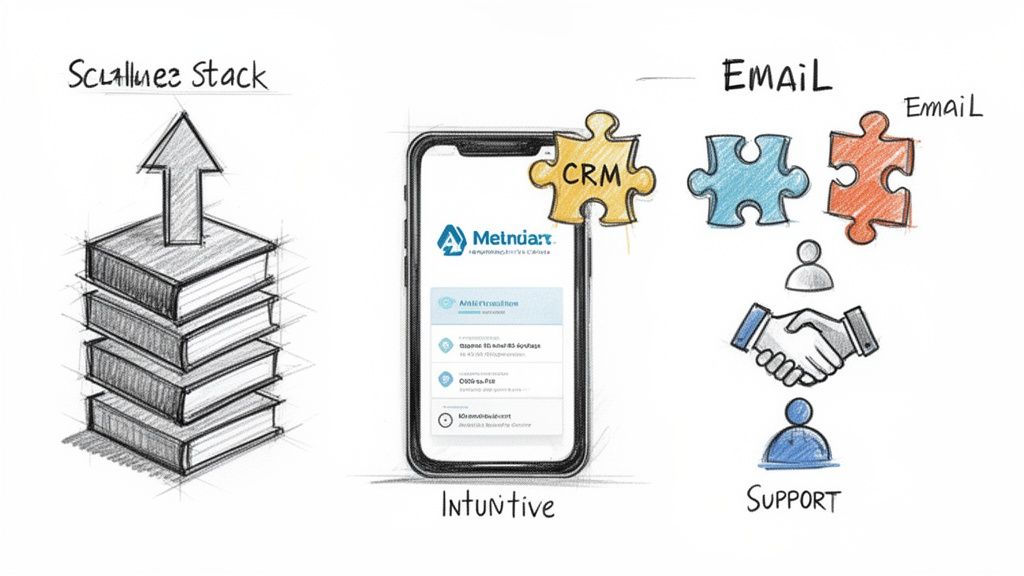
Your event software can't be an island. It has to play nicely with the other tools you already depend on, whether that’s your CRM, email marketing platform, or accounting software. Without solid integrations, you’re just creating frustrating data silos and signing your team up for endless hours of manual, error-prone data entry.
Picture your event platform as the new hub of your tech stack. It needs to "talk" to everything. Look for solutions that have a flexible API and, more importantly, have already built connections to the tools you use. This is how you ensure that when someone new registers, their information instantly appears in your CRM and they’re dropped into the right email campaign—all without anyone on your team lifting a finger.
For a closer look at how different platforms stack up, our event management software comparison breaks down how various solutions approach integration.
Your brand is your most valuable asset, so why would you let a vendor’s logo overshadow your own? Generic, cookie-cutter event pages create a cheap and confusing experience. The ability to completely customize the look, feel, and branding of your event touchpoints is non-negotiable.
And this goes way beyond just swapping out a logo and a few colors. Can you create a fully branded mobile app that feels like an extension of your organization? Can you tailor registration forms to capture the exact information you need?
Just as crucial is the day-to-day experience for everyone involved.
A platform can have all the features in the world, but if it's a pain to use, people won't use it. The best corporate event solutions masterfully blend powerful functionality with an interface that simply makes sense.
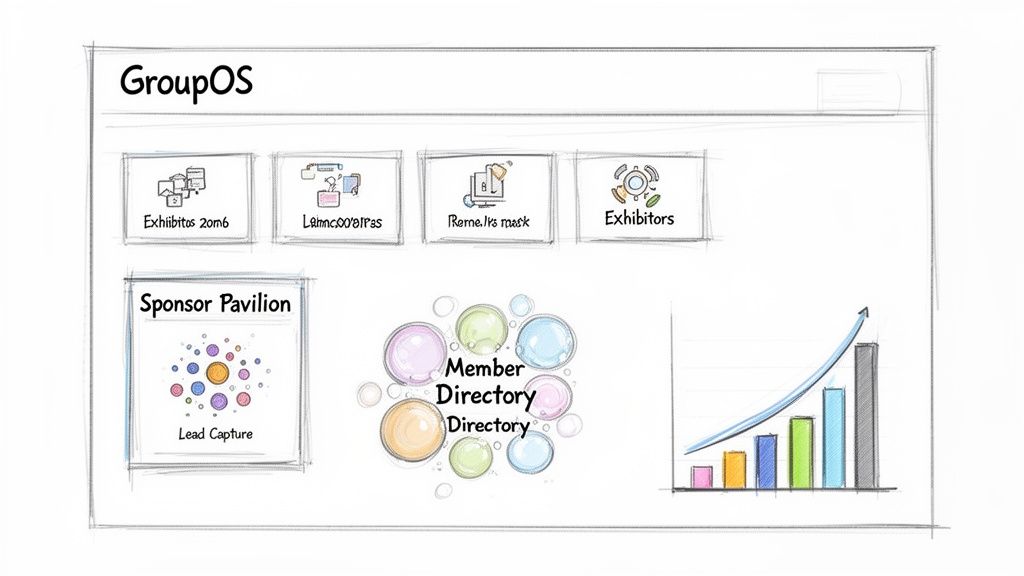
It’s one thing to talk about the ideal components of a modern platform, but seeing how it all works in the real world is what really matters. We’ve laid out the blueprint for an all-in-one system, and now we’ll show you how a platform like GroupOS pulls those pieces together into a single, growth-focused solution.
Think of GroupOS as the central nervous system for your entire event and community strategy. It’s built from the ground up to connect your members, prove value to your sponsors, and hand you the data you need to make smarter decisions.
We talked earlier about the importance of a smooth "Welcome Lobby" and a buzzing "Community Hub." GroupOS merges these ideas into one seamless experience. The entire journey kicks off with a simple registration process, complete with custom forms and tiered ticketing that let you manage everything from basic sign-ups to complex VIP packages.
But the real magic happens right after registration. Once someone joins your event, they instantly become part of your community, with their own rich profile inside your branded platform. This is where you open the door to year-round value.
This approach turns your event from a single point in time into the anchor for a thriving professional network. If you're currently weighing your options, seeing how different platforms compare is crucial. You might find our breakdown of Mighty Networks vs GroupOS helpful in understanding what this means for professional communities.
Let's be honest: sponsors need more than just their logo on a website to justify their spend. They need tangible results. The "Sponsor Pavilion" concept within GroupOS is designed specifically to deliver measurable ROI and spark meaningful interactions between sponsors and your attendees.
Instead of treating sponsors as an afterthought, a platform like GroupOS integrates them directly into the event experience, giving them dedicated tools to prove their value and capture high-quality leads.
This is done with a whole suite of features geared toward lead generation and brand visibility. Every sponsor gets their own profile page to showcase products, post updates, and share resources. Rotating banner ads keep their brand front-and-center, while integrated lead capture tools make it incredibly simple for them to connect with interested members.
For instance, a national professional association recently used these built-in sponsor tools to completely overhaul its partnership packages. By giving sponsors clear metrics and direct pathways for engagement, they saw a 40% increase in sponsorship revenue for their annual conference. That’s the impact of a true corporate event solution that puts sponsor success first.
The real power of an all-in-one solution is seeing how every part works in sync. In GroupOS, the "Main Stage" where you deliver content is directly linked to the community hub, so conversations about a session can continue for days. The analytics from your sponsor pages feed right into your main dashboard, giving you a complete, real-time picture of your event’s performance.
This integrated design gets rid of data silos and simplifies your workflow. Your team is freed up to focus on what they do best—creating an incredible experience—instead of fighting with disconnected technology. From a branded mobile app to seamless data migration, GroupOS delivers the complete toolkit to turn your event vision into a practical, powerful reality.
For a long time, the corporate event playbook was simple: host a big annual conference, maybe a gala, and then... radio silence until next year. That old model is quickly becoming a relic. The real future isn't about these isolated moments; it’s about building a living, breathing community that thrives all year long.
So, what does this actually look like in practice? It’s a smart mix of in-person energy and digital accessibility, where technology helps you make every single person feel like the event was designed just for them. The goal has shifted from simply running a smooth event to sparking real relationships that continue long after the closing keynote.
The "virtual vs. in-person" debate is over. The clear winner is the hybrid model, a powerful approach that captures the buzz of a live gathering while offering the scale and convenience of digital access. This isn't a compromise—it's the best of both worlds, letting you engage a global audience without geographic limits.
This shift is a huge reason for the industry’s explosive growth. In fact, projections show the U.S. corporate event market is on track to hit an incredible $510.9 billion by 2030, climbing at a CAGR of 17.3% between 2021 and 2030. This boom is driven by tech that makes both virtual and physical experiences better, especially through hybrid formats that give organizations unprecedented reach. You can dig deeper into the trends shaping the U.S. corporate event market to see the data for yourself.
At the same time, technology is making events much more personal. Artificial intelligence is no longer a buzzword; it’s a practical tool for creating highly individualized experiences.
Here’s the single biggest change happening right now: We’re moving away from just planning events and toward cultivating vibrant, ongoing professional communities. This is where modern corporate event solutions truly shine.
An event should be the spark that ignites a community, not the final destination. The right technology platform is the engine that keeps that community running all year long, providing a central hub for connection, learning, and growth.
Think of your event platform as the digital headquarters for your professional network. It becomes the go-to place where members can watch content from past events on-demand, jump into exclusive discussions, find mentors, and connect with their peers. This creates a powerful cycle: the community builds excitement for the next event, and each event pours new energy and value back into the community.
This completely changes the job of an event organizer. You’re not just a planner anymore; you’re a community architect. You're building a digital home that your members depend on for their professional growth. The best corporate event solution isn't just a tool for logistics—it's the very foundation for building a community that lasts.
Alright, we've covered what a corporate event solution is and why it matters. Now, let's get into the practical questions that inevitably pop up when you're seriously considering bringing a new platform into the fold.
Making a big tech decision always comes down to a few key things: cost, effort, and risk. So, let’s tackle the big three questions we hear from organizations just like yours.
This is usually the first question out of the gate, and the honest answer is: it depends. Think of it like buying a car—you can get a reliable base model or a fully-loaded one with all the custom features. The final price tag hinges on what you actually need.
Most platforms use one of a few common pricing structures:
Beyond the base price, a few other things can affect the final number. Complex data migrations, a need for lots of hands-on support, or a custom-branded mobile app will naturally increase the investment. A simple setup can be surprisingly affordable, while a full enterprise implementation is a more significant line item.
Yes, and you absolutely should. The thought of moving years of member data, payment histories, and event records can feel overwhelming, but it's a standard part of the process. Any vendor worth their salt will have a well-defined plan for this.
A clean data migration is the bedrock of a successful transition. It protects your historical insights and ensures your members don’t feel any bumps in the road when you switch systems.
This isn't something you should have to figure out on your own. Leading corporate event solutions like GroupOS have dedicated specialists who manage this for you. They’ll work hand-in-hand with your team to map out and securely transfer everything—member profiles, event attendance, and more—making sure it all lands exactly where it should.
This brings us to the next logical question: how long until we’re up and running? The timeline can range from a few days to a couple of months, depending entirely on the project's complexity.
For a straightforward, out-of-the-box setup, you could be launching your first event in under a week. Seriously. The core features are often ready to go very quickly.
However, a large-scale implementation with heavy customization will take more time. If you're looking at a major data migration, unique branding, and a dedicated mobile app, you should plan for a timeline of several weeks to two months. The best partners will offer hands-on setup and onboarding to make this process as quick and painless as possible, getting your team comfortable and confident from day one.
Ready to see how an all-in-one platform can transform your events and build a thriving community? GroupOS provides the tools you need to streamline everything from ticketing and memberships to sponsor management and analytics. Get a free demo today and discover a better way to manage and grow your professional network.