January 22, 2026
Ever get that jolt of excitement when you sign up for an online course, ready to master a new skill, only to lose steam a few weeks in? You’re definitely not alone. The traditional world of self-paced online learning can feel isolating, with no real accountability pushing you forward. It's a bit like being handed a map with no destination and told to "go explore." The resources are there, but the journey feels aimless.
This is exactly why cohort-based courses are making such a huge impact. They’re not just a new trend; they’re a return to a more natural, human way of learning—together.
Instead of leaving you to fend for yourself, cohort-based courses bring everyone together to learn as a group. Think of it as the difference between studying alone in a library versus joining an interactive workshop. In the workshop, everyone starts on the same day, works through the same challenges, and hits milestones as a team.
This shared experience is what makes the cohort model so powerful. It flips the script from passively watching videos to actively participating in a learning adventure.
Students in a cohort get to experience:
This structure naturally creates accountability. When you know your classmates are showing up for the live call or turning in their project, you’re far more motivated to do the same. This has a massive effect on whether students actually finish.
Some platforms see completion rates jump to an incredible 85-90% for cohorts, blowing the typical 5-10% for self-paced courses out of the water. The psychology is simple: we’re wired for social connection, and that commitment drives us to the finish line. In fact, cohort models can outperform self-paced ones by as much as 8x in keeping students engaged.
To give you a clearer picture, here's a quick breakdown of how these two models stack up.
As you can see, the difference is stark. That built-in support system becomes a safety net and a powerful motivator, ensuring people don't just enroll—they stick with it, learn the material, and achieve what they set out to do. Understanding the benefits of community engagement is key to seeing why this model is so effective.
For a deeper dive, check out this comprehensive guide to cohort-based courses. It’s this focus on a collective journey that truly makes all the difference.
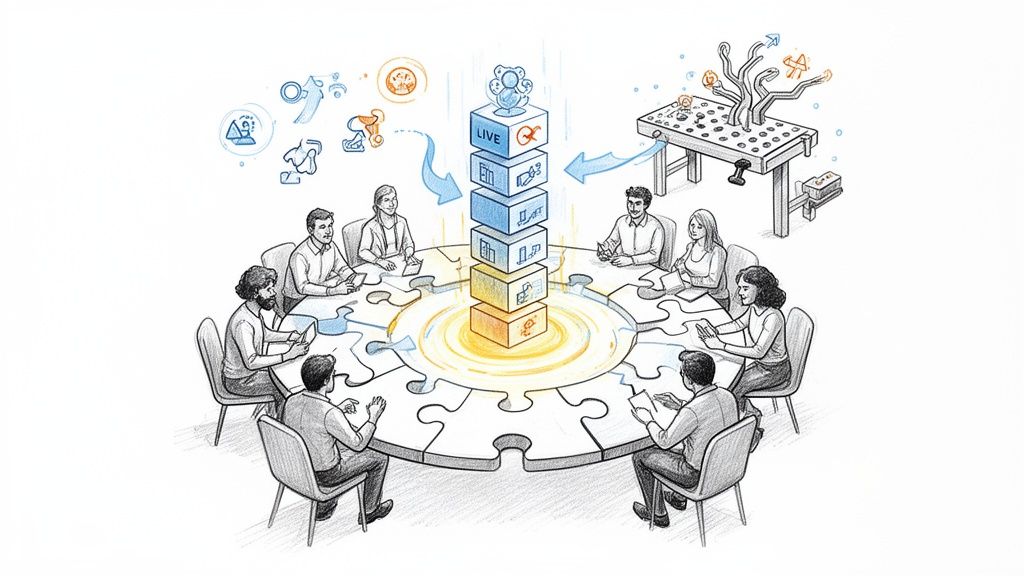
A truly great cohort-based course isn't just a playlist of videos and a stack of PDFs. Think of it as a guided expedition. Unlike a self-paced course where people often wander off the trail, a cohort-based course gathers a group of learners at a starting point and leads them to a specific, valuable destination—together.
The entire journey is built on a solid curriculum. It all starts with a simple question: Where are your students right now (Point A), and what incredible result will they achieve by the end (Point B)? Every single module, lesson, and activity needs to be a clear, intentional step on that path.
This diagram helps visualize where cohort-based courses fit in. They're all about learning with a group, not going it alone.
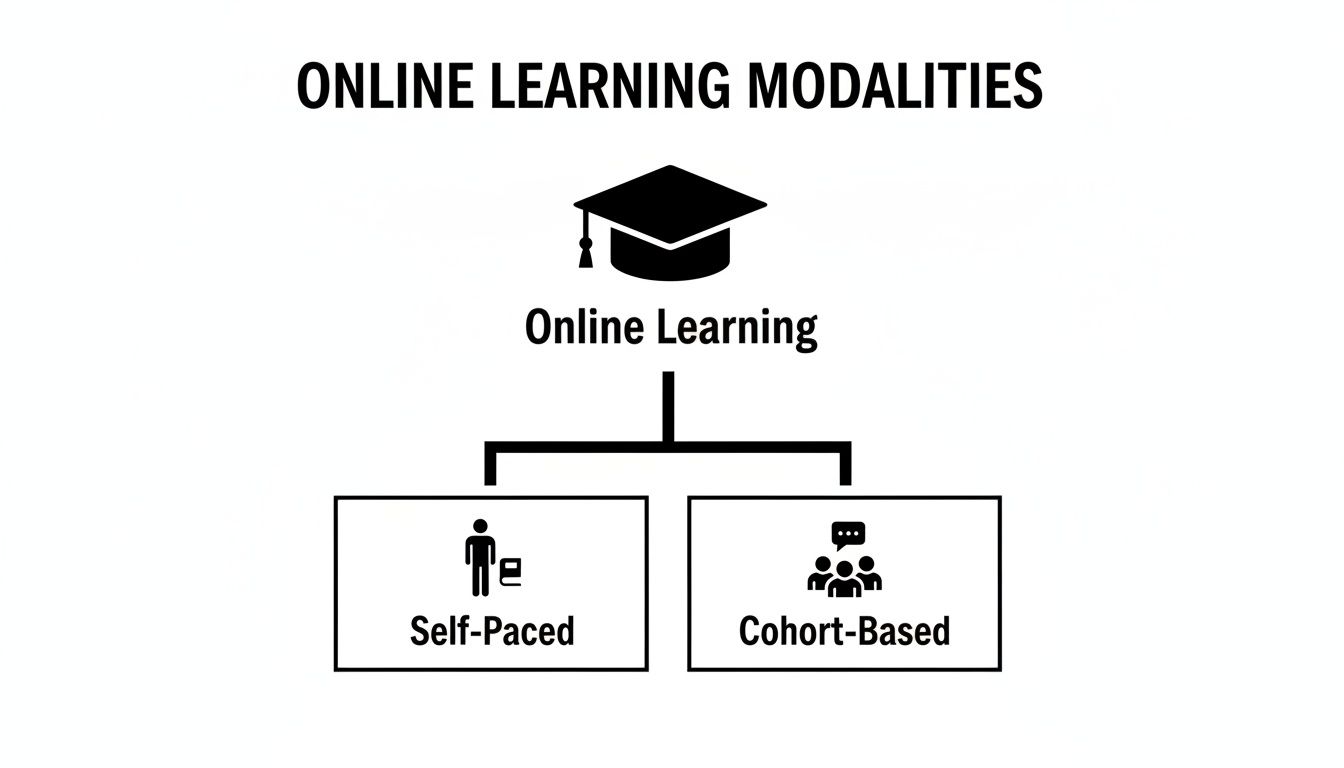
As you can see, the self-paced route is a solo pursuit. The cohort-based courses model, however, is fundamentally built on shared experience and interaction.
The magic of this model is in the mix. A well-designed course blends different learning formats to keep everyone engaged and cater to different learning styles. It’s a careful balance between two critical components.
1. Asynchronous Content (The "What")
This is the core knowledge—the stuff people can absorb on their own schedule. It lays the groundwork so everyone comes to the live sessions prepared.
2. Synchronous Sessions (The "How" and "Why")
This is where the real learning happens. These live events aren't for lectures; they’re for application, discussion, and connection.
If you're looking for more guidance on structuring your content, our guide on creating a comprehensive outline of course material can help you map this out.
Great content is just the start. The secret ingredient that makes a cohort succeed is the set of mechanics that drive real engagement and accountability. These elements are what turn passive viewers into active, committed participants.
In a great cohort-based course, the community becomes just as valuable as the curriculum itself. The connections and collaborations are often what people remember and value most, long after the course ends.
Three pillars support this kind of thriving learning environment:
When you deliberately build these three elements into your program, you create a powerful environment where students don't just enroll—they show up, connect, and are genuinely motivated to cross the finish line together.
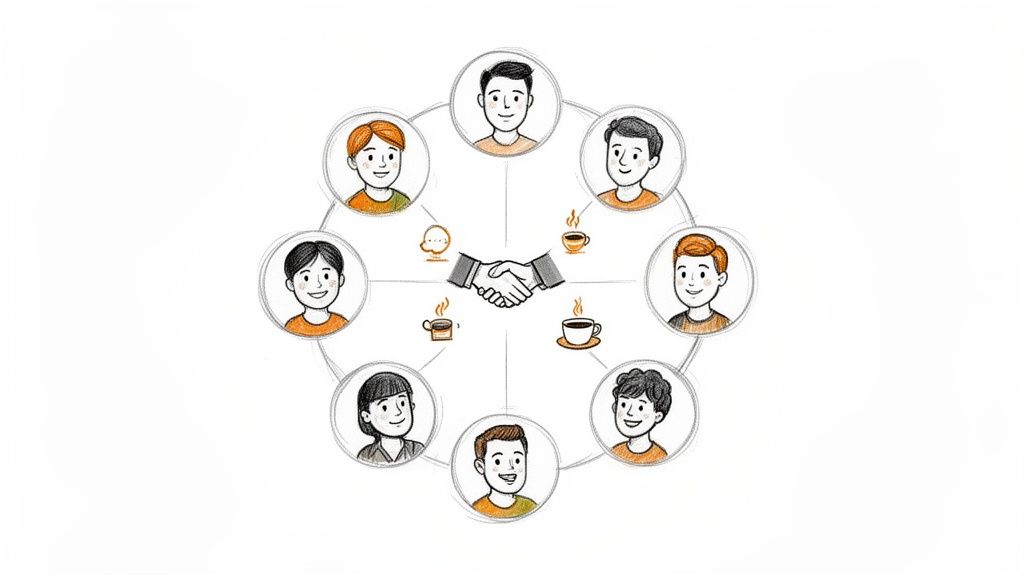
While a stellar curriculum gives students a roadmap, it's the community that actually fuels the journey. In cohort-based courses, the real magic isn't just in the lessons; it's in the moments when students transform from passive observers into a tight-knit, supportive network. This sense of belonging is the secret sauce behind the incredible results these courses achieve.
The numbers don't lie. According to BuddyBoss, cohort-based courses can see completion rates as high as 88%, which completely blows the typical 12% for self-paced courses out of the water. This massive gap comes down to human connection. Live sessions alone can boost retention by 65%, and when 82% of learners say their networking ROI blew past their expectations, you know something special is happening.
This kind of collective energy doesn't just happen on its own, though. It has to be designed intentionally, right from the very start, with the goal of making every single member feel seen, heard, and valued.
The first week is everything. It sets the tone for the entire course and is your best shot at breaking the ice before any awkward silence can settle in. A strong start encourages people to jump in immediately and establishes a culture of collaboration from the get-go.
To make that happen, focus on structured and engaging kickoff activities:
The strongest cohort-based courses make students feel like they’ve joined a movement, not just enrolled in a class. The sense of shared purpose is what keeps them engaged long after the initial excitement fades.
Once you’ve lit that initial spark, your job shifts from being a facilitator to a community architect. The goal now is to create consistent, meaningful opportunities for interaction that turn passive participants into active contributors. This requires more than just a weekly Q&A.
You need to build systems that encourage organic, peer-to-peer support. For a deeper dive into this process, check out our guide on how to create an online community that truly thrives.
Ultimately, the most vibrant communities are the ones where members feel empowered to lead and support each other. You can't be everywhere at once, so your real goal is to create a structure where the community can sustain itself. This is where the true value of the network really starts to shine.
Here are a few powerful ways to make this happen:
When you implement these strategies, you're no longer just teaching content. You're building a dynamic, self-supporting ecosystem that delivers immense value long after the final lesson is over.
Having a brilliant idea for a course is one thing, but turning it into a sold-out program is a completely different beast. A successful launch for a cohort-based course isn't about luck; it's about a deliberate plan that weaves together smart pricing, sharp marketing, and the right technology.
Think of your launch less like a single event and more like a carefully orchestrated campaign. It all starts long before you even think about opening the doors for registration.
One of the most common pitfalls I see is creators pricing their cohort-based courses like any other digital product. This is a huge mistake. Your students aren't just buying a collection of videos and PDFs; they're investing in a guided transformation, direct access to your expertise, and a powerful new professional network. Your price needs to reflect that immense value.
Stop thinking in terms of hours or modules. Instead, anchor your price to the outcome. What massive problem are you solving for them? What is that solution really worth? A course that teaches a skill leading to a $10,000 salary bump is worlds away from one teaching a casual hobby, and the price should show it.
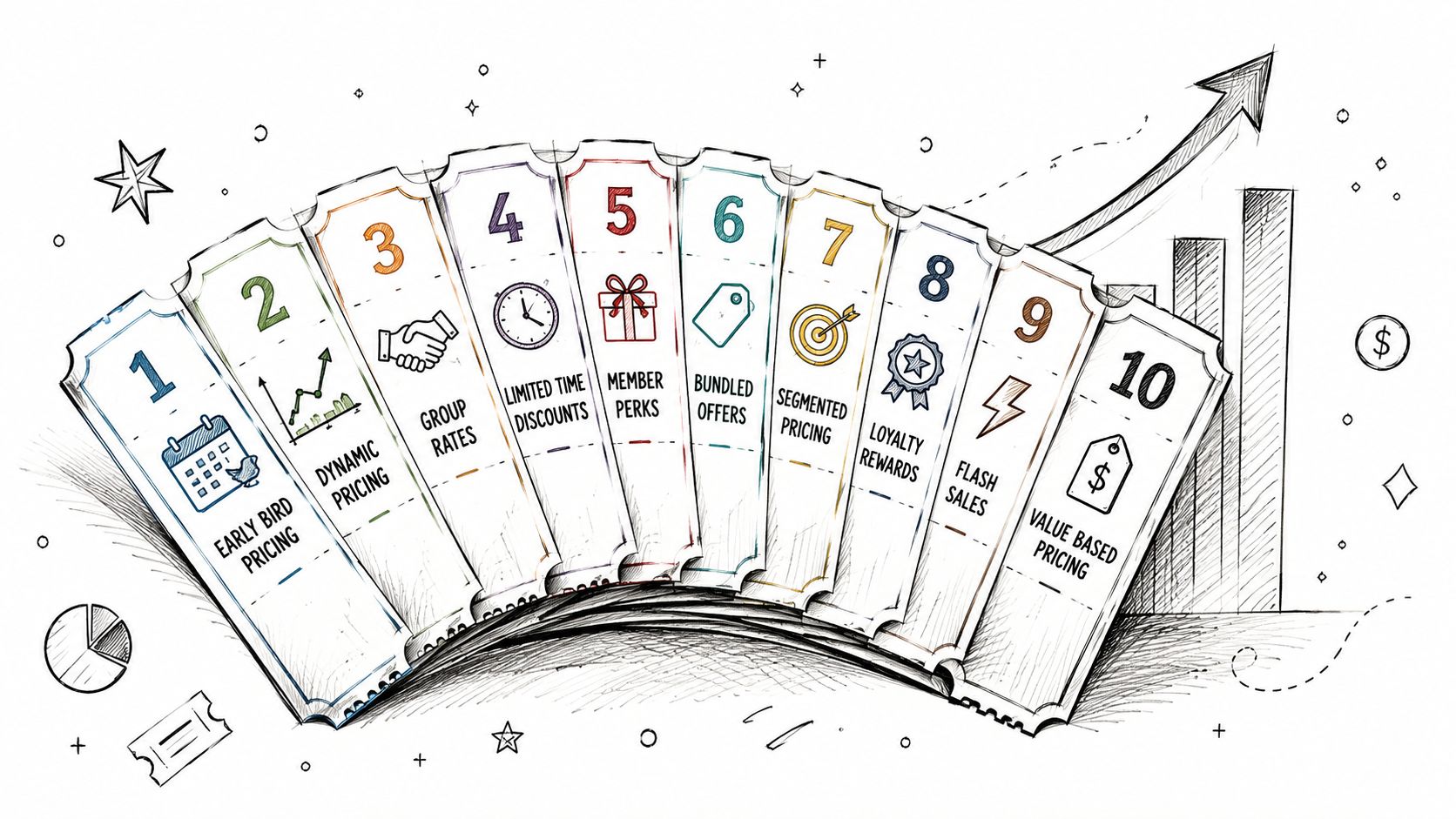
Here are a few proven ways to structure your pricing:
Don't compete on price; compete on value. The right students are absolutely willing to pay a premium for a high-touch, outcome-driven experience that a self-paced course could never dream of offering.
The marketing for a cohort-based course is special because you have an incredible tool at your disposal: a fixed start date. This built-in scarcity is your single greatest asset. It creates a natural, non-slimy deadline that motivates people to stop procrastinating and take action. Your entire marketing plan should be built around this.
Your goal is to create a groundswell of interest and desire before you even open enrollment. A strong pre-launch strategy isn't optional; it's essential.
Here’s a simple, battle-tested sequence to follow:
This structured approach turns your launch from a hopeful "I hope people sign up" announcement into a predictable, revenue-generating event.
Finally, a smooth launch relies on a solid tech stack to handle all the logistics so you can focus on what you do best—teaching your students. Trying to juggle a dozen disconnected tools for payments, community, and course delivery is a recipe for disaster. You need a system that creates a seamless, professional experience from the moment someone clicks "enroll."
Your core tech stack really needs to nail three key jobs:
By thoughtfully planning out your pricing, marketing, and technology, you're not just launching a course; you're building a comprehensive go-to-market strategy. This playbook transforms your launch from a source of anxiety into a powerful engine for building a thriving, impactful program.
It’s easy to get caught up in enrollment numbers and revenue—and don't get me wrong, those are great. But for a cohort-based course, they’re just the opening scene. The real story unfolds inside the program. The true measure of a course’s success isn’t just about who signs up, but who crosses the finish line, grows from the experience, and actually hits their goals.
When you focus on the right metrics, you get a much clearer picture of your learning community's health and can prove your course has a lasting impact. These are the numbers and stories that show whether your curriculum is landing, your community is buzzing, and you’re truly delivering on your promises.
To really understand how well your course is working, you need a mix of hard data (what people are doing) and human feedback (why they're doing it). This combination gives you the complete story and is essential for making smart improvements.
Let's start with the core quantitative metrics you should be watching:
These numbers give you a solid, objective view, but they don't tell you how your students feel about the experience. That’s where qualitative feedback comes in.
Qualitative insights give you the "why" behind the data. This is where you'll find the gold—the specific friction points, the unexpected wins, and the moments that truly matter to your students.
The most valuable feedback won't come from a multiple-choice question. It comes from open-ended conversations where students feel heard and can share the specific moments of transformation they experienced.
Here are some of the best ways to get that rich feedback:
At the end of the day, all these metrics need to tie back to tangible business goals. For a professional association, a successful course could directly lead to higher member retention. For a corporate training program, it might mean a measurable lift in specific on-the-job skills.
This guide on how to measure training effectiveness offers a great framework for thinking beyond the basics. By blending completion rates, project quality, and direct student feedback, you build a powerful case for the true value of your program—a value that extends far beyond the initial sign-up fee.
Theory is one thing, but seeing cohort-based courses in action is where the magic really happens. To get a better sense of how these ideas play out in the real world, let's look at a few successful programs from different fields. You'll notice they all lean on the same core principles: community, accountability, and a shared timeline.
What these examples prove is that the most successful courses sell a transformation, not just a folder of information. They curate an entire experience designed to get people from Point A to Point B with a supportive crew cheering them on.
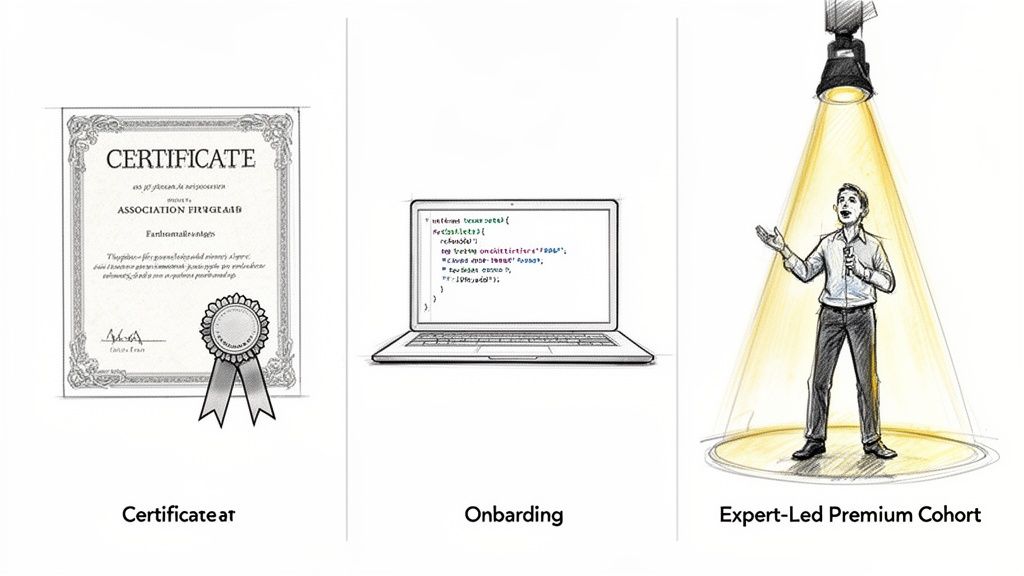
A perfect example of this is Tiago Forte’s “Building a Second Brain.” This isn’t a cheap, self-paced video dump. It's a premium program that guides a group of students, week by week, through the process of creating their own personalized digital organization system.
So, what makes it so effective?
This model proves that people will happily pay top dollar for a guided, high-accountability experience that delivers a specific, life-changing result.
Forget those boring, watch-on-your-own onboarding videos. Smart tech companies are now running their new hires through structured cohort-based programs. A fresh batch of employees all start on the same day and move through a curriculum covering company culture, product deep dives, and role-specific skills—together.
This immediately builds camaraderie and gives new team members a solid internal network from their very first day. They learn faster by working on projects together and feel comfortable asking questions in a safe group environment. The outcome? A more connected, engaged, and effective employee who feels like part of the company from the get-go.
Professional associations often have a hard time keeping members engaged outside of their big annual conference. A brilliant fix has been to turn their static certification programs into lively cohort-based courses. Instead of just handing members a study guide and a link to an exam, they enroll them in a group that prepares for the certification together.
This doesn't just dramatically improve pass rates; it builds a much stronger community within the association. Members form their own study groups, network with peers in their field, and develop a real bond with the organization. That spike in engagement is a huge driver for higher member retention and shows the association is serious about helping its members grow.
If you're thinking about launching a cohort-based course, you probably have a few questions about how it all works in practice. It’s a different beast than a self-paced course, and getting the logistics right is the key to creating a program that people rave about. Let's tackle some of the most common questions we hear.
Let's be upfront: a live cohort requires your focused attention. Unlike a set-it-and-forget-it course, your active presence is what makes the experience valuable. A typical week during a live cohort might break down like this:
It's a real commitment, no doubt. But the good news is that modern platforms can handle the tedious administrative stuff like sending reminders and scheduling events, so you can pour your energy into teaching and connecting with your students.
There's no magic number here—the ideal size really hinges on the kind of experience you want to create. Think of it in terms of goals:
The goal is to scale up without watering down the quality of the interaction.
Your existing content isn't obsolete; it's the foundation. The real value of a cohort based course comes from wrapping that content in a structured, collaborative experience that guarantees a specific outcome.
Absolutely! In fact, you should. All those videos, worksheets, and resources you’ve already created are the perfect building blocks. The switch to a cohort model isn't about starting from scratch; it's about adding layers of interaction on top.
You’re simply taking that great content and wrapping it in a live experience with a clear timeline, group workshops, and a buzzing community. You’re not just selling information anymore; you’re selling a guided transformation.
This is where cohort-based courses truly shine. It's so much easier to spot and support someone who's struggling when everyone is moving together.
A few simple strategies work wonders: send a personal check-in email, pair them up with an accountability buddy, or make sure all live session recordings are super easy to find. Some instructors even offer a "rollover" pass, allowing a student to join the next cohort if life gets overwhelming. That kind of flexibility builds incredible trust and shows you're genuinely invested in their success.
Ready to build a thriving learning community without the technical headache? GroupOS provides an all-in-one platform to manage your curriculum, live events, and member discussions seamlessly. Start your free trial today and see how easy it is to launch your next cohort.