April 1, 2026
Let's get straight to it: If you're looking for more than just a dry recitation of the PMBOK Guide, the Andrew Ramdayal PMP course is a serious contender. Its real strength lies in a unique, mindset-focused approach that genuinely prepares you for the tricky situational questions on the modern PMP exam.
Think of it less like a textbook and more like having a seasoned coach. This isn't just about learning the rules of the game; it's about learning the psychology of how to win.

The world of PMP training is crowded, but Andrew Ramdayal's program has managed to build a very strong reputation, and for good reason. The PMP exam is notoriously tough. Industry data for 2026 shows a first-time pass rate of only 60-70%. That means a staggering 30-40% of candidates fail on their first go, which makes finding the right prep course absolutely critical. You can dig deeper into these numbers with these PMP pass rate statistics on pmpwithray.com.
This is where Andrew Ramdayal's course really shines. Since its launch back in 2020, the program has guided over 5,000 students toward their certification goal. More importantly, student feedback consistently points to an impressive 85% pass rate on the first attempt—a figure that speaks volumes when compared to the industry average.
Before we dive deep, here's a quick look at the core components of the course.
| Feature | Description |
|---|---|
| Primary Focus | The PMP Mindset; learning how to think for situational questions. |
| PMI Requirement | Provides the mandatory 35 Contact Hours needed for the exam application. |
| Core Content | Extensive video lessons, detailed slides, and full-length practice exams. |
| Exam Simulator | A famously difficult simulator designed to over-prepare you for the real test. |
| Instructor | Andrew Ramdayal, a well-known and engaging PMP trainer. |
This table gives you the highlights, but the real magic is in how these elements work together.
So, what’s the secret sauce? The course is built around a few key pillars that build both your knowledge and, crucially, your test-day confidence. You're not just memorizing processes; you're learning a whole new way of thinking.
This strategic mix of mindset coaching, complete content coverage, and intense practice is what elevates the course from a simple study aid to a full-blown training system. Everything is laser-focused on one thing: getting you to pass the PMP exam.
This approach gives aspiring project managers a clear and effective path to getting certified in 2026. By teaching you how to think instead of just what to know, it gives you a skill set that will serve you long after you've passed the exam.
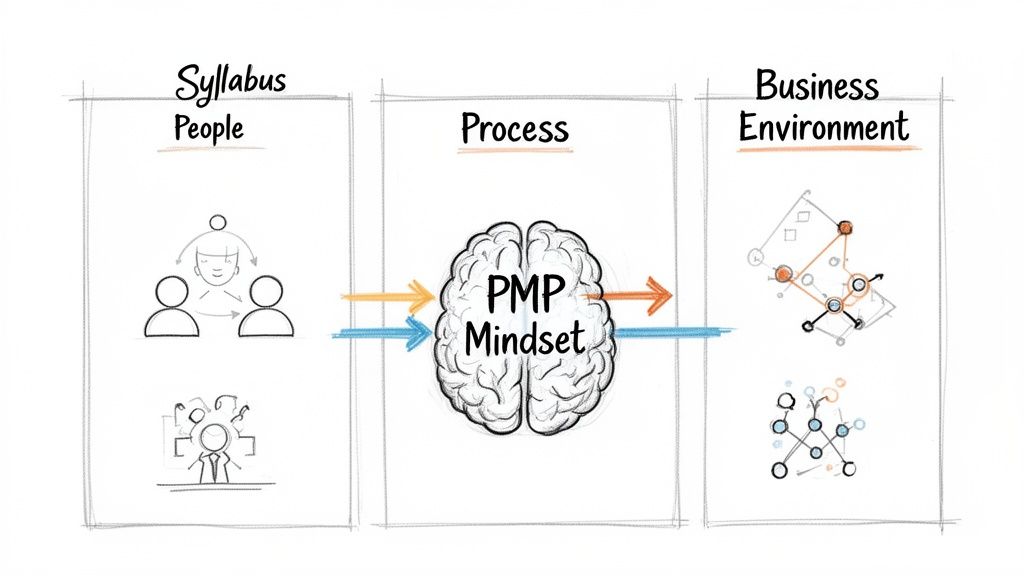
If you dive into the Andrew Ramdayal PMP course, you'll quickly realize its curriculum is more than just a checklist for exam topics. The real secret sauce is a concept he drills into you from the very beginning: the PMP Mindset.
This isn't just a catchy phrase. It's a specific way of thinking—a decision-making framework built to help you navigate the tricky situational questions that make up the bulk of today's PMP exam. The test isn't about spitting back definitions from memory; it's about applying judgment.
Instead of just memorizing the 49 processes or the Agile Manifesto, Ramdayal’s course teaches you how to think like the project manager PMI expects you to be. It’s about learning to see problems through a specific lens, which is often the only way to spot the "best" answer when two or three options seem perfectly reasonable.
Think of this mindset as your internal guide. When a question throws a project crisis at you, the mindset forces you to first assess the situation, then review your plan, and only then take action. It stops you from jumping straight to a solution without doing your due diligence.
So, what does this mindset actually look like in practice? It's really a set of core principles that Andrew Ramdayal weaves into every single lesson. He dedicates an entire section to it right at the start, making sure you have this foundation before you get into the nitty-gritty of project management.
You can think of it as a set of "golden rules" for leading a project effectively.
The PMP Mindset is the operating system for your brain on exam day. The technical knowledge from the syllabus is the software you run on it. Without the correct operating system, even the best software will fail to perform.
When you adopt this approach, your studying changes. You're not just cramming facts anymore; you're developing a new professional intuition.
The course syllabus is laid out logically to mirror the three domains of the PMP exam, leaving no stone unturned. Ramdayal breaks down each domain into easy-to-follow video modules, downloadable slides, and practice quizzes, all while reinforcing the PMP Mindset.
1. People (42% of Exam)
This is all about the human side of project management. The course digs into the soft skills that make or break a project: managing conflict, building a cohesive team, engaging stakeholders, and mentoring team members. For association managers, these are the exact skills needed to lead volunteer committees or manage event teams effectively.
2. Process (50% of Exam)
Here we get into the technical heart of project management. These lessons are a deep dive into managing everything from budgets and schedules to quality, scope, and risk. This is where you learn the "how-to" of running a project, from initiation all the way to a successful closeout. The Andrew Ramdayal PMP course really shines here by showing how traditional predictive methods and modern Agile approaches can coexist, just as they do in the real world. If you're curious about structuring this kind of content yourself, our guide on creating a comprehensive course outline offers some great insights.
3. Business Environment (8% of Exam)
While it's the smallest domain, it's what connects your project to the big picture. You'll cover topics like organizational compliance, delivering business value, and navigating change. The mindset teaches you to constantly ask, "How does this project support our organization's strategic goals?"
By structuring the content this way, the course creates a complete learning system. The on-demand videos explain the concepts, the slides serve as quick-reference guides, and the exam simulator tests whether you can apply what you've learned under pressure. It's a practical, systematic approach that builds real-world skills, not just exam-passing knowledge.
Plenty of courses can walk you through the PMBOK Guide, but very few create a genuine community of evangelists. The Andrew Ramdayal PMP course is one of those rare exceptions. The magic isn't just in the syllabus, but in how Andrew delivers it and the entire philosophy driving the program.
At its heart, the course's power comes directly from Andrew Ramdayal's unique teaching style. He’s not someone who just reads off slides or drones on about process groups. His delivery is packed with energy and a kind of motivational urgency that makes you feel personally invested in your own success.
It’s the classic difference between learning from a textbook and learning from a real mentor. Ramdayal has a knack for making dense project management concepts feel practical and almost obvious. He builds a strong rapport with his students, even through pre-recorded videos, that makes you feel like you have a coach in your corner who is genuinely rooting for you.
This personal connection does wonders for accountability. It turns what is often a lonely online grind into something far more engaging, which is a huge advantage, especially for students in cohort-based courses where that shared drive is a powerful motivator.
Another thing that really sets this course apart is its heavy emphasis on hybrid project management. The modern PMP exam—and frankly, the modern workplace—isn't strictly predictive (Waterfall) or Agile anymore. Real-world projects are messy, demanding a blend of both, and the exam questions absolutely reflect this new reality.
The Ramdayal method meets this challenge head-on. It doesn’t treat Agile and predictive frameworks as two separate, opposing ideas. Instead, it teaches you to weave them together, showing you exactly when to use the rigid planning of Waterfall and when to lean on the flexibility of Agile.
For instance, a lesson might break down how a project could use a predictive model for the initial budget and scope planning but then pivot to an Agile (Scrum) approach for the actual development sprints. This is exactly what prepares you for those tricky situational questions on the exam that ask you to pick the "best" path forward.
Maybe the most famous—or infamous—part of the Andrew Ramdayal PMP course is the exam simulator. If you talk to anyone who has passed using his method, you’ll hear the same thing: the practice exams are way harder than the actual PMP test.
This isn't an accident. It's a core part of the strategy.
The simulator is designed to do more than just quiz you on facts; it’s there to build your mental stamina. By throwing tougher questions, complicated scenarios, and relentless time pressure at you, it conditions you for the real four-hour marathon.
This approach pays off in a few key ways:
By the time you walk into that testing center, you haven't just memorized information—you've been through boot camp. This over-preparation means you're not just ready for the content, but you're also mentally and emotionally steeled for the experience. It’s this triple-threat of an engaging instructor, a practical hybrid focus, and a resilience-building simulator that explains why so many students don't just pass; they become die-hard advocates for the Ramdayal method.
So, you're convinced that the Andrew Ramdayal PMP course is the right tool for the job. That’s a great first step, but a powerful tool is useless without a plan to wield it. Now, let's shift from the "what" of the course to the "how" you're going to conquer it.
Let’s be real: just passively watching videos won't get you a passing score. You need a game plan. A structured approach ensures you cover all the material, test your understanding, and, most importantly, internalize that famous PMP Mindset. Flying blind is a recipe for burnout and missed points on the exam.
The Ramdayal method itself is built on a logical progression, which is a great foundation for your own plan.
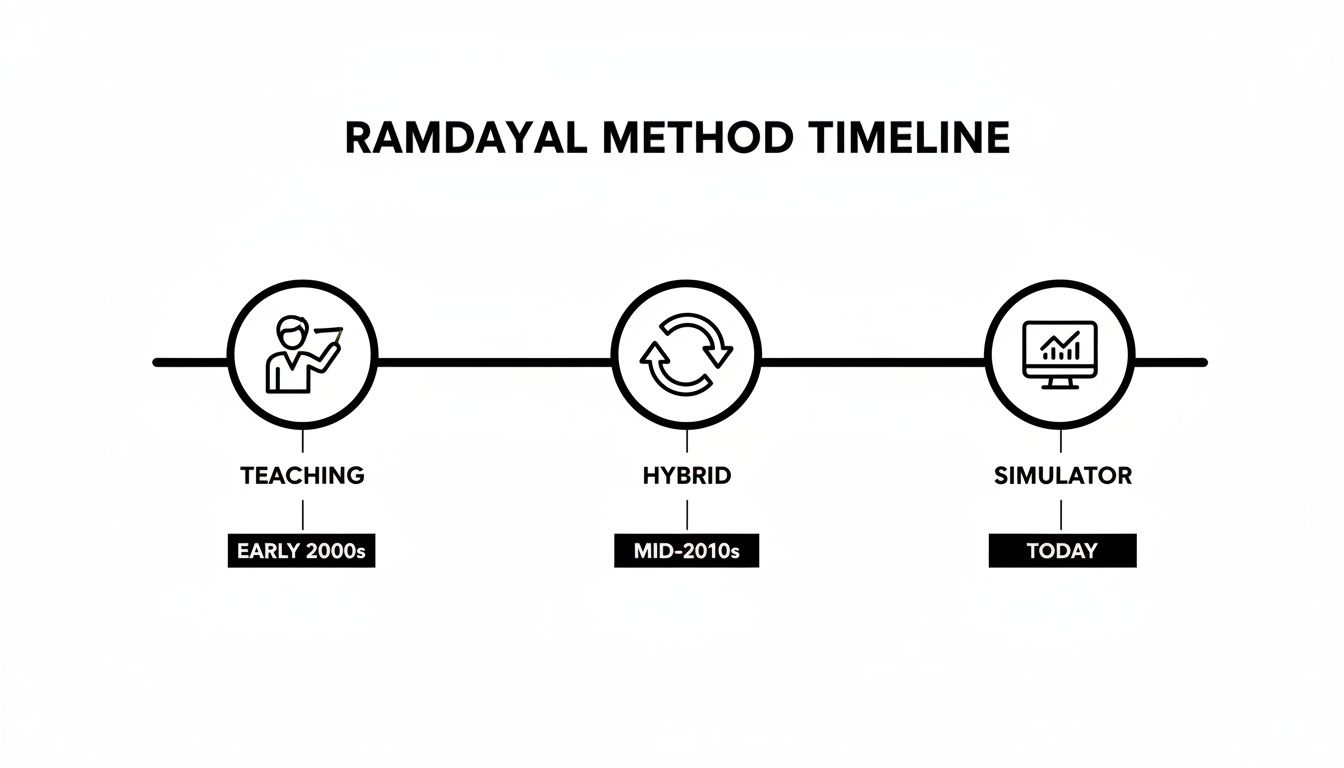
As you can see, the course is designed to build your knowledge from the ground up—starting with core teaching, moving into hybrid concepts, and finishing with the simulator to prove you're ready. Your study schedule should mirror this flow.
The big question on everyone's mind is, "How long is this going to take?" While it varies from person to person, most people who pass the exam using this course put in a solid six to eight weeks of consistent effort. The key word there is consistent. This is a marathon, not a sprint.
Treat your study time like a non-negotiable meeting. Block it out on your calendar. This simple act of scheduling creates accountability and protects your time from other distractions.
Here are a couple of popular timelines I've seen students use successfully. Feel free to adapt them to fit your own life and learning speed.
The 6-Week "Fast Track" Plan:
The 8-Week "Steady Pace" Plan:
The most critical part of any study plan is reviewing your mistakes. Simply knowing you got a question wrong is useless. You must understand why the correct answer is the best choice and how the PMP Mindset would have led you there.
To make these concepts stick, you have to connect them to what you do every day. Applying what you learn turns abstract theory into muscle memory, which is exactly what you need when the exam clock is ticking. If you want a more formal way to track this, checking out some professional development plan templates can give you a solid framework.
Start looking at your job through a PMP lens. If you’re a marketing manager, think about how you're applying stakeholder engagement principles when talking to your sales team. If you lead a small team, consciously try to practice the servant leadership styles discussed in the course.
This daily practice stops studying from feeling like a chore and turns it into ongoing professional growth. It makes the lessons from the Andrew Ramdayal PMP course part of your professional DNA, ensuring you're not just ready for an exam, but for a more successful career as a project leader.
So far, we've talked about what PMP certification can do for an individual. But what if we zoom out and look at the bigger picture? If you’re an association leader or a corporate training manager, you know that professional development is more than just a member benefit or an employee perk. It's a strategic move.
Think about it. What would it mean if your key members or team leaders had the skills to flawlessly execute strategic initiatives, run committees with precision, and see complex projects through to completion? That's the real, tangible value PMP certification brings to an organization.
When someone on your team earns their PMP, they don’t just come back with a new certificate for their wall. They return with a completely new way of approaching problems, managing resources, and getting predictable results. Suddenly, everyone starts speaking a common language of project success, which strengthens your entire organization from the ground up.
This is where a tool like the Andrew Ramdayal PMP course can be incredibly effective. Because it’s self-paced and video-based, it’s a remarkably flexible and scalable option for group training. You can roll it out as a high-value benefit for your members or build it into your internal upskilling curriculum.
For associations, offering PMP training is a natural fit alongside existing leadership development programs, creating a powerful pathway for growth.
The career and salary benefits for individuals are well-established. Andrew Ramdayal's course directly contributes to this, helping people achieve a credential that has a proven impact. For context, PMP-certified project managers earn, on average, 23% more than their non-certified peers. That salary jump alone makes it a compelling professional goal for your people. If you're curious, you can dig into more project management stats in this insightful report on ravetree.com.
But what about the return for the organization? It’s just as powerful, though measured in different ways:
Investing in PMP training isn't just an expense; it's a direct investment in your organization's ability to operate. It creates a shared methodology for getting work done right, turning big plans into successful realities.
While the solo, self-paced nature of the Andrew Ramdayal PMP course is one of its biggest strengths, you can multiply its effectiveness by wrapping a community around it. Don’t just give them the course—give them a team.
Imagine creating a dedicated cohort for your members or employees who are all studying for the exam together. What was once a lonely, challenging journey becomes a collaborative, motivating experience. They can share notes, ask questions, and hold each other accountable, which dramatically boosts completion and success rates. You can learn more about how powerful this is by exploring effective association management solutions.
By building a dedicated community space, you can host study groups, share extra resources, and run Q&A sessions. By pairing a best-in-class course with a supportive community, you’re not just offering training. You're creating an integrated program that delivers immense value and strengthens your organization from within.
Alright, let's get into the practical questions I hear all the time. When you're investing your time and money into PMP prep, you need straight answers. Here’s the breakdown of what people often ask about Andrew Ramdayal's course.
This is a big one, and the news is mostly good. When you purchase the main course on a platform like Udemy, you get lifetime access to the video lectures and downloadable slides. You can revisit a topic months later or even use it as a refresher after you're certified.
The key thing to watch, however, is the TIA Exam Simulator. Access to the simulator is sold separately and is time-limited, usually giving you 90 days. My advice? Activate the simulator only when you're in the final stretch of your studies and ready to dedicate serious time to practice tests.
For a huge number of students, yes, it absolutely is. The course is built to be a one-stop shop, covering your required 35 contact hours, all the exam topics, and giving you a ton of practice. The "PMP Mindset" lectures, in particular, are what many people point to as the secret sauce for passing.
That said, no single resource is a magic bullet for everyone. Think of Andrew's course as your core foundation—your primary textbook and coach. Smart students often supplement it with other materials, like the official PMI study guides or another question bank, just to see questions phrased in different ways.
The refund policy is tied to where you buy the course. If you grab it on Udemy, for example, you’re covered by their standard 30-day money-back guarantee.
This is a great, no-risk way to dive in, watch a few modules, and see if Andrew's teaching style clicks with you. If it doesn't, you can get your money back. Just be sure to double-check the refund terms on whatever platform you use before you click "buy."
Andrew Ramdayal has a strong track record of keeping his material fresh and aligned with the current PMP Exam Content Outline (ECO). The course you'll find today is heavily focused on the Agile and Hybrid approaches that make up a huge portion of the 2026 exam. He knows that's what gets people past the finish line.
It’s always a good habit to check the course description for the latest update date or any announcements from Andrew himself. This ensures you're working with the most current version before you begin your studies.
Ready to build a thriving community and deliver valuable professional development like the PMP? GroupOS provides an all-in-one platform to manage your members, events, and content seamlessly. Explore how GroupOS can empower your organization.