For many professional associations, event organizers, and community managers, Facebook has long been the default platform for member engagement. However, its limitations are becoming increasingly apparent, from data privacy concerns and algorithm-driven visibility issues to a distracting, generalized environment that often fails to serve the specific needs of a professional audience. The search for effective alternatives to Facebook is no longer just about finding a replacement; it's about discovering a platform that actively supports focused community building, enhances member value, and provides better control over your data and brand experience.
This comprehensive guide is designed to help you navigate this transition. We've curated a detailed list of the top platforms that offer robust solutions for professional communities. Each entry provides a deep dive into its core functionality, ideal use cases, and practical pros and cons. To help you make an informed decision, we analyze key features, break down pricing structures, and offer specific migration tips to ease the move from a legacy platform.
You'll find screenshots for a visual reference and direct links to explore each option further. We also provide integration notes, highlighting how each platform connects with other tools and compares to solutions like GroupOS. For those interested in the foundational principles behind many new networks, it's helpful to explore decentralized social media platforms, which offer a different approach to online connection and data ownership. Our goal is to equip you with the insights needed to select the perfect digital home for your members, attendees, or professional network.
1. GroupOS
For professional associations, event-driven businesses, and enterprise community teams seeking a robust and fully branded ecosystem, GroupOS presents a compelling, all-in-one alternative to Facebook. It moves beyond simple social networking by centralizing memberships, event management, content delivery, and communications into a single, cohesive platform. This unified approach eliminates the need to juggle multiple disconnected tools, providing a seamless experience for both administrators and members.
The platform is engineered to drive engagement and revenue. It replaces the fragmented nature of Facebook Groups with a white-labeled environment available on web, iOS, and Android. This allows organizations to maintain complete brand control while delivering a professional, modern user experience.

Key Strengths & Use Cases
GroupOS excels where Facebook's generalist platform falls short for professional use. Its feature set is specifically designed to manage and monetize communities.
- Integrated Event Management: Organizers can execute complex events with dynamic ticketing, custom checkout forms, VIP upgrades, and QR code check-ins. This is ideal for conferences, trade shows, and member-exclusive workshops.
- Built-in Monetization & Sponsor ROI: The platform includes dedicated tools for exhibitors and sponsors, such as profile pages, rotating banner ads, and product showcases. This creates clear value and streamlines lead generation, a core function unavailable in standard social media groups.
- Centralized Content & Learning: Unlike scattered Facebook posts, GroupOS allows you to house documents, host courses, and offer on-demand video libraries within your branded community space. This transforms your community into a valuable resource hub.
The platform's emphasis on a smooth transition is a significant advantage. GroupOS offers guided demos, seamless member migration, and a free trial with custom setup to ensure organizations can get started efficiently. For those looking to deepen their strategy, resources on how to build an online community provide valuable guidance for long-term success.
Platform Breakdown
| Feature | GroupOS |
|---|
| Ideal For | Professional associations, enterprise teams, event organizers |
| Pricing | Not public; requires booking a demo or starting a free trial |
| Key Advantage | Unifies events, memberships, content, and sponsor tools in one branded platform |
Pros:
- Comprehensive All-in-One Platform: Unifies core functions to eliminate tool churn and data silos.
- White-Labeled & Integrated: Offers fully branded mobile and web apps, plus over 350 connectors for existing SaaS stacks.
- Strong Monetization Features: Built-in tools for ticketing, upsells, and sponsor lead generation deliver measurable ROI.
- Proven Results: Client case studies demonstrate quantifiable improvements in engagement, revenue, and administrative efficiency.
Cons:
- No Public Pricing: The need to contact sales can slow down the initial evaluation and budgeting process.
- Potentially Over-featured for Small Groups: The extensive feature set may be more than what a very small or simple community requires.
Visit GroupOS
2. Mastodon
Mastodon offers a fundamentally different approach to social networking, making it a compelling alternative to Facebook for organizations prioritizing data sovereignty and community control. It's a decentralized network, meaning it's composed of thousands of independent servers, or "instances," that can communicate with each other. Associations can either join an existing instance relevant to their industry or, more powerfully, host their own private instance for complete autonomy over data, moderation, and user experience.
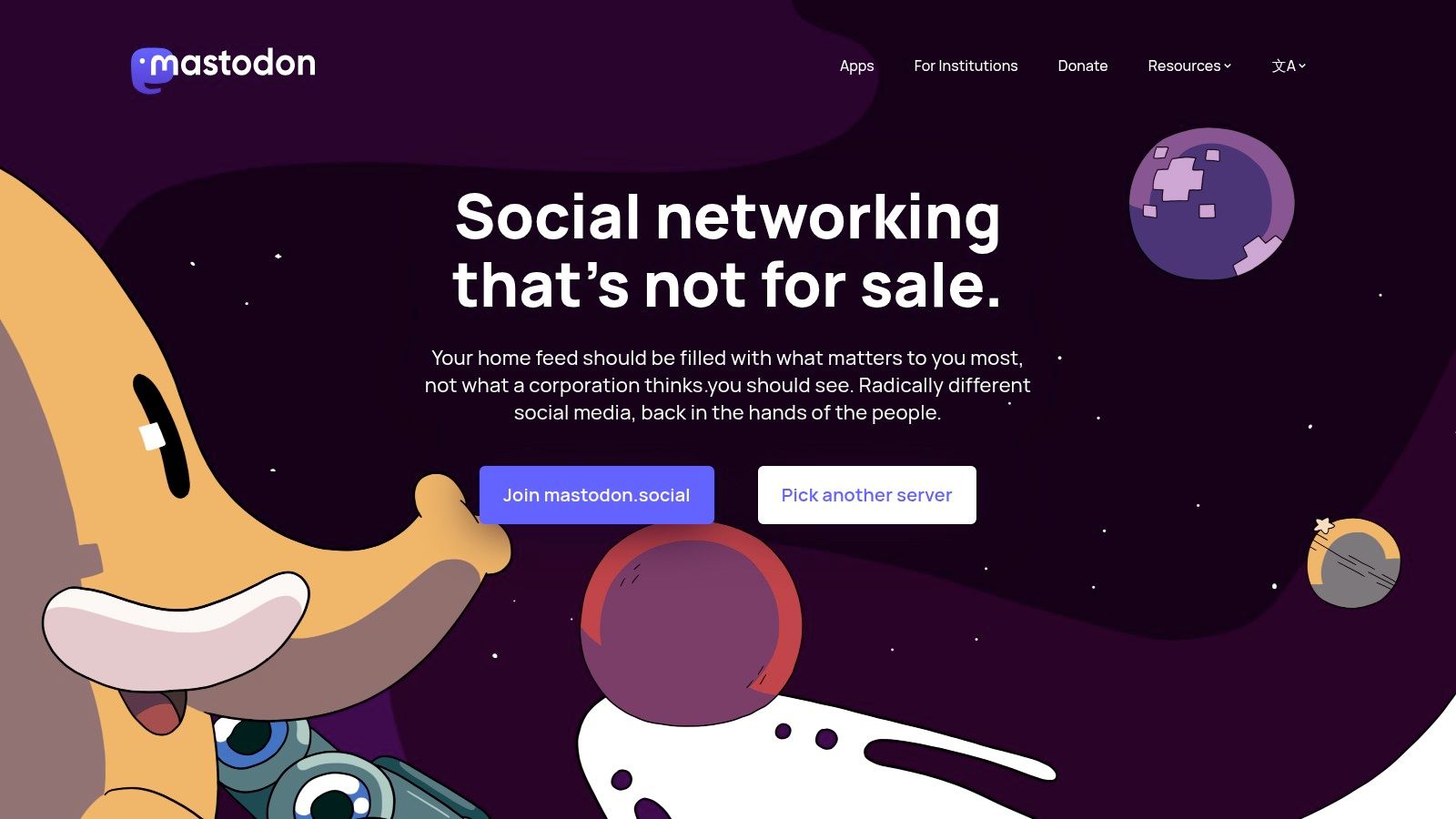
This structure eliminates algorithmic feeds in favor of a chronological timeline, ensuring members see all content from those they follow. There are no ads, and the open-source nature provides a high degree of transparency and customization.
Key Features & Use Cases
- Decentralized Instances: An association can create its own server, turning it into a branded, private community hub. This is ideal for sensitive discussions or for creating an exclusive members-only digital space.
- Federation: Users on your instance can still interact with users on other Mastodon servers, preventing community isolation while maintaining a home base. This allows for cross-industry networking from a trusted environment.
- Chronological Feed: Guarantees content visibility, which is crucial for event announcements, calls for papers, or timely industry news without fighting an algorithm.
- Open-Source & Ad-Free: The platform's non-commercial ethos aligns well with the mission of professional associations, focusing entirely on community interaction.
Implementation & Migration Tips
| Category | Details |
|---|
| Pricing | Mastodon's software is free. Costs are associated with hosting your own instance (server fees, maintenance) or paying for managed hosting services, which can range from $10/month to several hundred for large communities. |
| Ideal For | Associations and tech-savvy groups wanting a private, self-governed community space. It's perfect for fostering focused, professional conversations away from the noise and data privacy concerns of mainstream platforms. |
| Migration | Onboarding requires user education. You must guide members through choosing a server (or joining your specific one). Provide clear instructions and highlight the benefits of a decentralized, ad-free environment to encourage adoption. |
| GroupOS Note | While Mastodon offers a unique public-facing or private social space, GroupOS complements it by managing the backend membership, event registration, and monetization tools. You could use Mastodon as the "town square" and GroupOS as the "membership office." |
Website: https://joinmastodon.org/
3. MeWe
MeWe positions itself as the "next-gen social network," offering a user experience that feels remarkably similar to classic Facebook but with a foundational commitment to user privacy. For associations seeking a familiar interface without the data mining and algorithmic manipulation, MeWe is a strong contender. It replicates the core features like groups, pages, and news feeds, making the transition for members intuitive and straightforward.
The platform is ad-free and does not use algorithms to sort content, presenting everything in a chronological timeline. This privacy-first approach means member data is not sold or shared, making it a trustworthy environment for professional communities concerned with how their information is used.
Key Features & Use Cases
- Familiar Interface: MeWe offers groups, pages, stories, and chat, closely mirroring Facebook's layout. This minimizes the learning curve for members, facilitating easier adoption.
- Privacy-Focused: With no ads, targeting, or newsfeed manipulation, it's a "what you see is what you get" platform. This is ideal for sensitive industry discussions where confidentiality is key.
- MeWePRO: A separate, paid tier designed for businesses and organizations, offering enhanced collaboration tools and administrative controls for building a dedicated internal or external community.
- Cloud Storage Integration: Users can connect their cloud storage accounts, making it easier to share larger files like presentations, research papers, or event materials within groups.
Implementation & Migration Tips
| Category | Details |
|---|
| Pricing | The standard consumer platform is free. MeWe Premium ($4.99/month) adds features like cloud storage and video calling. MeWePRO for organizations is priced on a per-user basis and offers a more controlled, collaborative environment. |
| Ideal For | Associations and groups looking for a direct, user-friendly alternative to Facebook without a steep learning curve. It's perfect for communities that value privacy but still want a traditional, feature-rich social media experience. |
| Migration | The simple UI makes migration easy. Promote MeWe as a "private, ad-free version of what you're used to." Create your official association group and page first, then send direct invitations to members with a clear guide on joining and participating. |
| GroupOS Note | MeWe can serve as a great social layer for your member engagement, while GroupOS handles the core operational needs like member database management, dues processing, and event ticketing. Use MeWe for daily chatter and GroupOS for official business. |
Website: https://mewe.com/
4. Minds
Minds positions itself as an open-source social network that blends familiar features with a focus on creator monetization and free speech, making it an interesting alternative to Facebook for organizations with a strong content-creation focus. It offers a newsfeed, groups, and encrypted chat, but differentiates itself by integrating a wallet system that rewards users for their engagement and allows them to earn from their content.
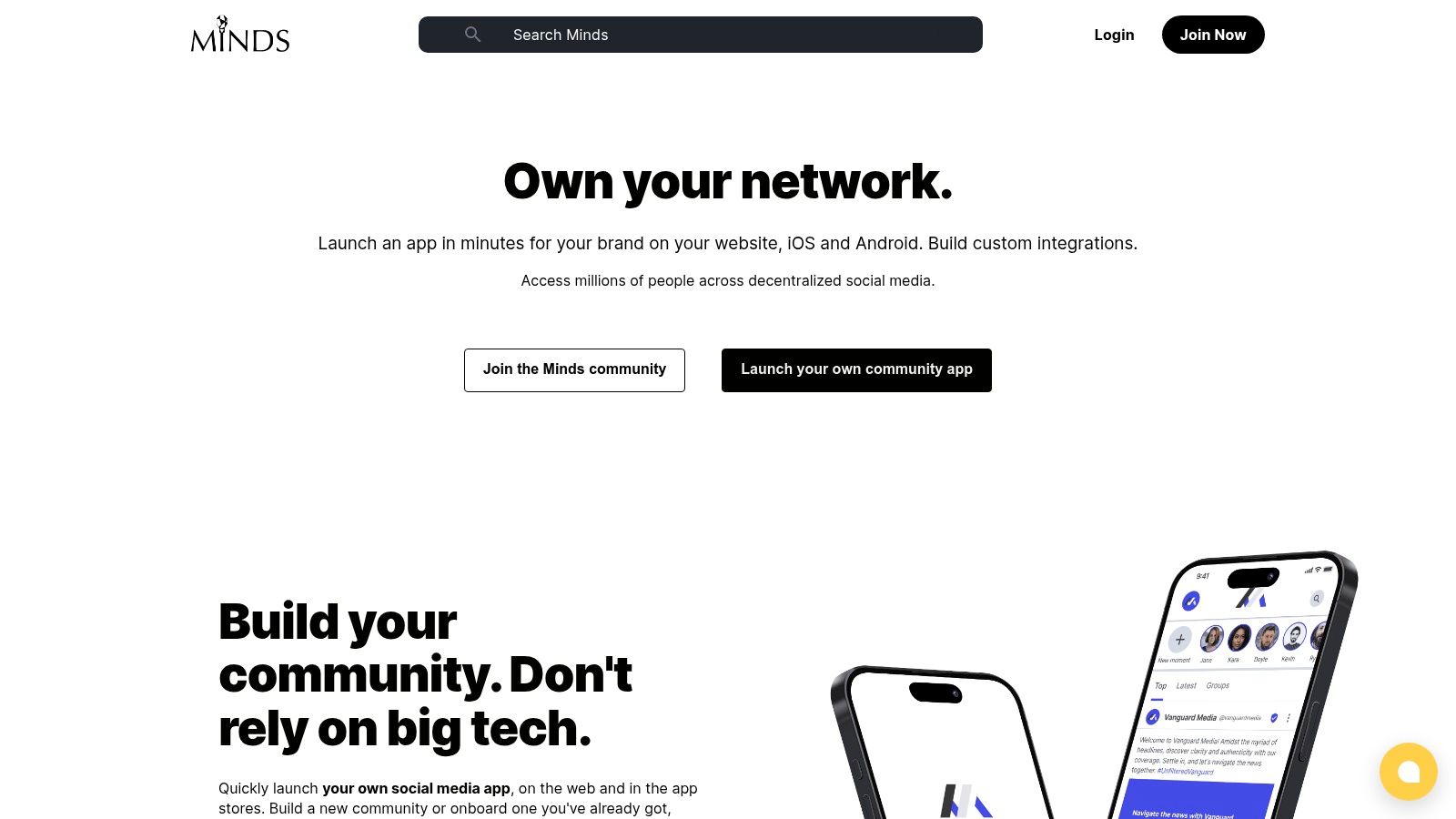
This model provides built-in incentives for member participation, which can be highly effective for associations looking to foster a vibrant community. For more control, Minds Networks offers a white-label solution, allowing an organization to launch its own branded community platform powered by Minds technology.
Key Features & Use Cases
- Creator Monetization: Associations can leverage integrated tools to offer premium content, receive direct support from members, or even reward top contributors, creating a self-sustaining content ecosystem.
- Encrypted Messenger: Provides a secure, private channel for one-on-one or small group conversations, ideal for committee discussions or direct member support.
- Minds Networks: The white-label option lets you create a fully branded, hosted community without the technical overhead of self-hosting, perfect for groups wanting a custom-branded space.
- ActivityPub Federation: Like Mastodon, this allows users on your network to interact with the wider federated universe, expanding your community's reach while maintaining a central hub.
Implementation & Migration Tips
| Category | Details |
|---|
| Pricing | The main Minds platform is free, with optional Plus/Pro subscriptions ($5-$15/month) for enhanced features. Minds Networks pricing for custom communities is available upon request and is tailored to the organization's needs. |
| Ideal For | Associations with active content creators or those who want to build a reward-based engagement model. It's also great for organizations that want a custom-branded community solution without managing their own servers. |
| Migration | Introduce Minds as a new hub for exclusive content and direct creator support. Emphasize the monetization and reward features as a key benefit for members who contribute expertise, which can drive faster adoption. |
| GroupOS Note | Minds provides an excellent public-facing community layer with engagement incentives. GroupOS can manage the official member directory, dues, and event ticketing, while Minds serves as the dynamic content and discussion platform. |
Website: https://www.minds.com/
5. Discord
Discord began as a gamer-centric platform but has evolved into a powerful community hub ideal for real-time, synchronous engagement. It serves as an excellent alternative to Facebook Groups for organizations that thrive on instant conversation and live interaction. The platform is structured around "servers" (your community) which are then broken down into topic-based text and voice "channels," allowing for highly organized, simultaneous conversations without cluttering a single feed.
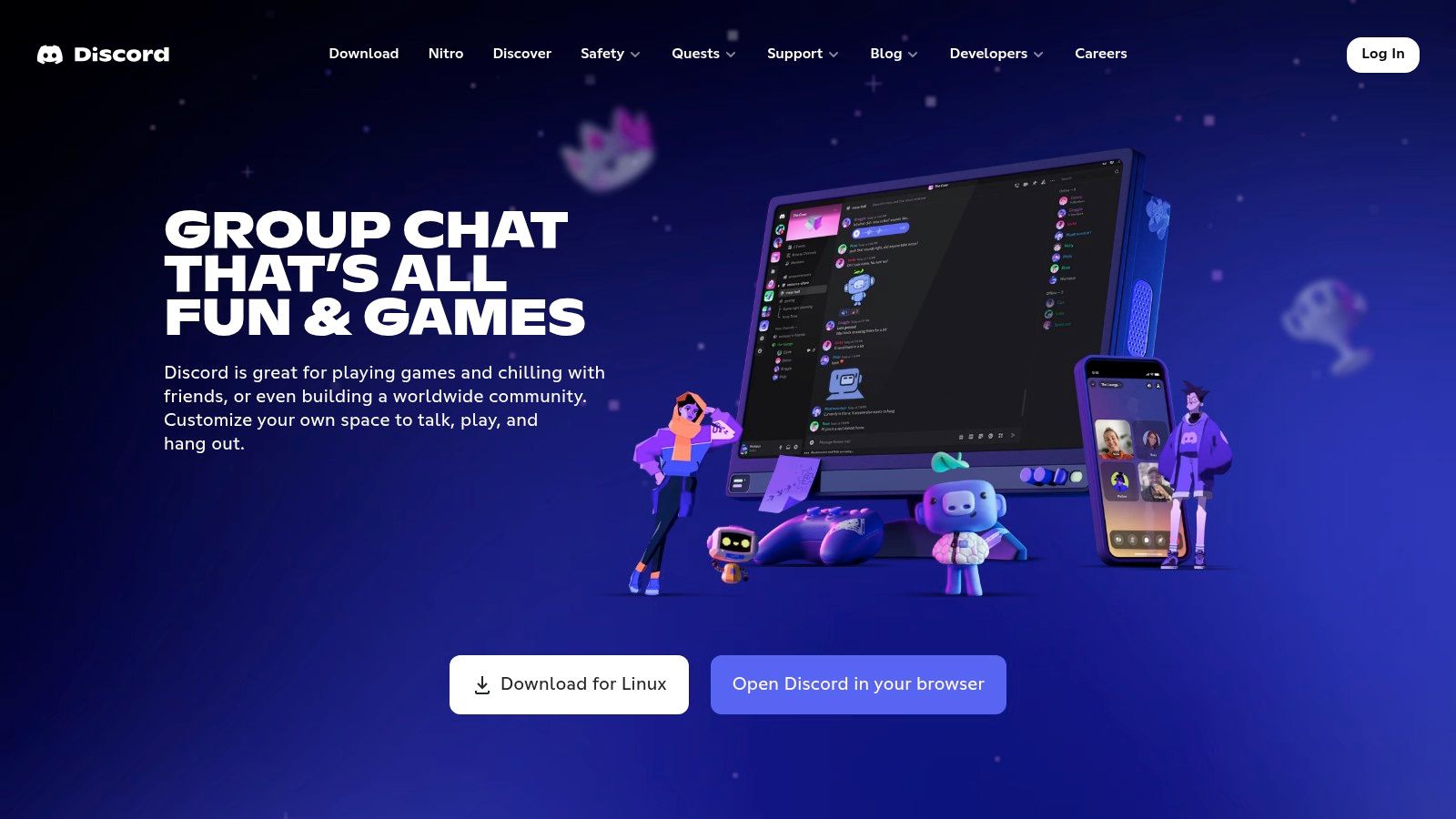
This chat-first approach fosters a dynamic, always-on environment. Its robust role and permission system allows for granular control over who can see and interact with specific channels, making it perfect for creating tiered access for members, committees, or special interest groups.
Key Features & Use Cases
- Topic-Based Channels: Create dedicated channels for different subjects, projects, or event sessions. This keeps conversations focused and easy to follow, unlike a single, monolithic Facebook Group feed.
- Voice, Video & Stages: Host virtual meetups, Q&A sessions, or panel discussions directly within the platform using voice channels or "Stage" channels, which are designed for one-to-many broadcasts.
- Roles & Permissions: Assign roles to members (e.g., 'Board Member', 'New Member', 'Sponsor') to grant access to private channels and specific permissions, adding a layer of sophisticated community structure.
- Bots & Integrations: Automate welcome messages, moderate content, poll members, and integrate with thousands of third-party apps to extend the server's functionality far beyond native capabilities.
Implementation & Migration Tips
| Category | Details |
|---|
| Pricing | The core functionality of Discord is free. Optional "Server Boosts" (starting around $4.99/month per boost) unlock higher quality audio/video and other perks. |
| Ideal For | Associations and groups that want a highly interactive, real-time community hub. It excels at fostering ongoing conversations, hosting live virtual events, and engaging a younger, more tech-savvy demographic. |
| Migration | The chat-first interface can be overwhelming. A strong onboarding process and clear channel structure are critical. Success requires active moderation, a key tenet of what is community management. Guide members on how to mute channels and manage notifications to prevent burnout. |
| GroupOS Note | Discord is a fantastic venue for synchronous communication and member-to-member chat. GroupOS can manage the formal aspects like membership databases, dues processing, and ticketed event registration, while you can use a private Discord server as the exclusive, real-time benefit for paying members. |
Website: https://discord.com/
6. Reddit Communities
Reddit offers a massive, pre-existing ecosystem where associations can build a niche community, known as a "subreddit." This platform is an excellent alternative to Facebook for groups focused on high visibility and organic growth. By creating a dedicated subreddit, an organization can tap into Reddit's vast user base, leveraging its powerful search and discovery functions to attract individuals already passionate about their industry or topic.
Unlike algorithm-driven feeds, content on Reddit is surfaced through user upvotes and community engagement, promoting valuable discussions. Associations can set their community to be public, restricted, or private, and benefit from some of the most mature moderation tools available on any social platform.
Key Features & Use Cases
- Public, Restricted, or Private Subreddits: Choose the level of access, from an open forum for public engagement to a private, members-only space for confidential discussions.
- Advanced Moderation Tools: Utilize a robust suite of tools including AutoModerator, user flair, and detailed community rules to maintain a high-quality, professional environment.
- High Organic Discovery: Your community and its content are indexed by search engines and discoverable within Reddit, making it ideal for brand awareness and attracting new members.
- Text-Focused Discussions: The platform excels at fostering in-depth, threaded conversations, perfect for Q&As, technical support, and industry-specific debates.
Implementation & Migration Tips
| Category | Details |
|---|
| Pricing | Creating and moderating a subreddit is completely free. Optional costs involve running Reddit Ads to promote your community or content. |
| Ideal For | Associations aiming for broad public reach and organic member acquisition. It's particularly effective for tech, hobbyist, and academic fields where users are already active on the platform. |
| Migration | Promote your new subreddit to existing members as the official "discussion hub." Success depends on seeding initial content and having active moderators to set the tone and enforce rules from day one. Compare its utility against other alternatives to Facebook Groups. |
| GroupOS Note | Reddit is an exceptional top-of-funnel tool for community building and brand discovery. You can direct engaged subreddit members to your GroupOS portal for official membership registration, event ticketing, and access to premium, monetized content. |
Website: https://www.reddit.com/
7. Nextdoor
Nextdoor taps into hyper-local community building, making it a unique alternative to Facebook for associations tied to specific geographic areas, such as homeowners associations (HOAs), neighborhood business alliances, or city-level professional chapters. The platform is built around verified residential addresses, creating an environment of trust and relevance for location-based discussions, event promotion, and local service recommendations.
Unlike global platforms, Nextdoor’s value comes from its strict geographic boundaries. This focus ensures that content is directly applicable to members' immediate surroundings, which is powerful for organizing local events, sharing safety alerts, or promoting member-owned businesses within the community.
Key Features & Use Cases
- Neighborhood-Scoped Groups: Create private or public groups limited to members within a specific zip code, neighborhood, or city, perfect for an HOA's official communication channel.
- Local Discovery: Members can easily find and join nearby groups, making it an excellent tool for chapter-based associations looking to boost local recruitment.
- Business Pages & Recommendations: Member businesses can create local pages and gather recommendations, providing a tangible benefit for joining and participating in a local business association.
- Event Promotion: Promote local meetups, workshops, or charity drives directly to the people most likely to attend- those living just a few blocks away.
Implementation & Migration Tips
| Category | Details |
|---|
| Pricing | Free for users and for creating groups. Nextdoor monetizes through local advertising (Nextdoor Ads), so businesses and organizations may pay to promote posts or services to a wider local audience. |
| Ideal For | Geographically-focused organizations like HOAs, neighborhood watch programs, local chambers of commerce, and city-specific professional chapters. It excels at facilitating neighbor-to-neighbor communication and local organizing. |
| Migration | The address verification process can be a barrier. Communicate this requirement clearly and frame it as a benefit for security and relevance. Encourage existing members to "invite their neighbors" using the platform's built-in tools to drive organic growth. |
| GroupOS Note | Nextdoor is the hyper-local "front porch" for community chatter. GroupOS manages the official membership database, dues collection, and national-level event registrations that are beyond Nextdoor's scope, creating a complete member management ecosystem. |
Website: https://nextdoor.com/
8. LinkedIn Groups
For associations and organizations deeply embedded in the professional world, LinkedIn Groups offer a native and contextually relevant alternative to Facebook. Rather than creating a separate destination, it allows you to build a community directly on the world's largest professional network, where members already have established identities and profiles. This eliminates the friction of new sign-ups and keeps discussions grounded in a career-oriented environment.
This platform is ideal for hosting B2B discussions, sharing industry-specific content, and facilitating networking among professionals. The inherent link to real-world careers fosters a higher level of accountability and focused conversation compared to more casual social networks.
Key Features & Use Cases
- Professional Context: Members use their real, professional profiles, which encourages high-quality, relevant discussions and discourages anonymity.
- Targeted Networking: Excellent for special interest groups (SIGs), alumni networks, and industry-specific forums where career development is a primary goal.
- Content Curation: Admins can moderate posts and manage membership, ensuring the group remains a valuable, spam-free resource for its niche.
- Integrated Ecosystem: Groups are part of the broader LinkedIn platform, making it easy for members to share content, invite connections, and see group activity in their main feed.
Implementation & Migration Tips
| Category | Details |
|---|
| Pricing | Free to create and manage. It operates within the standard LinkedIn ecosystem, requiring no additional budget for the platform itself. |
| Ideal For | Professional associations, B2B companies, and corporate communities focused on industry news, career advice, and networking. A strong choice when the audience is already active on LinkedIn. |
| Migration | Announce the new group to your existing community on other platforms. Leverage email lists and your main LinkedIn company page to drive initial membership. Set clear group rules from the start to establish a professional tone. |
| GroupOS Note | LinkedIn Groups can serve as the top-of-funnel for your association. You can engage potential members there and then direct them to GroupOS for official membership registration, event ticketing, and access to exclusive member-only content and benefits. |
Website: https://www.linkedin.com/
9. Mighty Networks
Mighty Networks is a purpose-built platform designed for organizations looking to create a dedicated, monetized community hub. It directly addresses the shortcomings of Facebook Groups by integrating courses, events, memberships, and content into a single, branded environment. This all-in-one approach allows associations to move their entire engagement strategy away from distracting social media feeds and into a focused space they control.
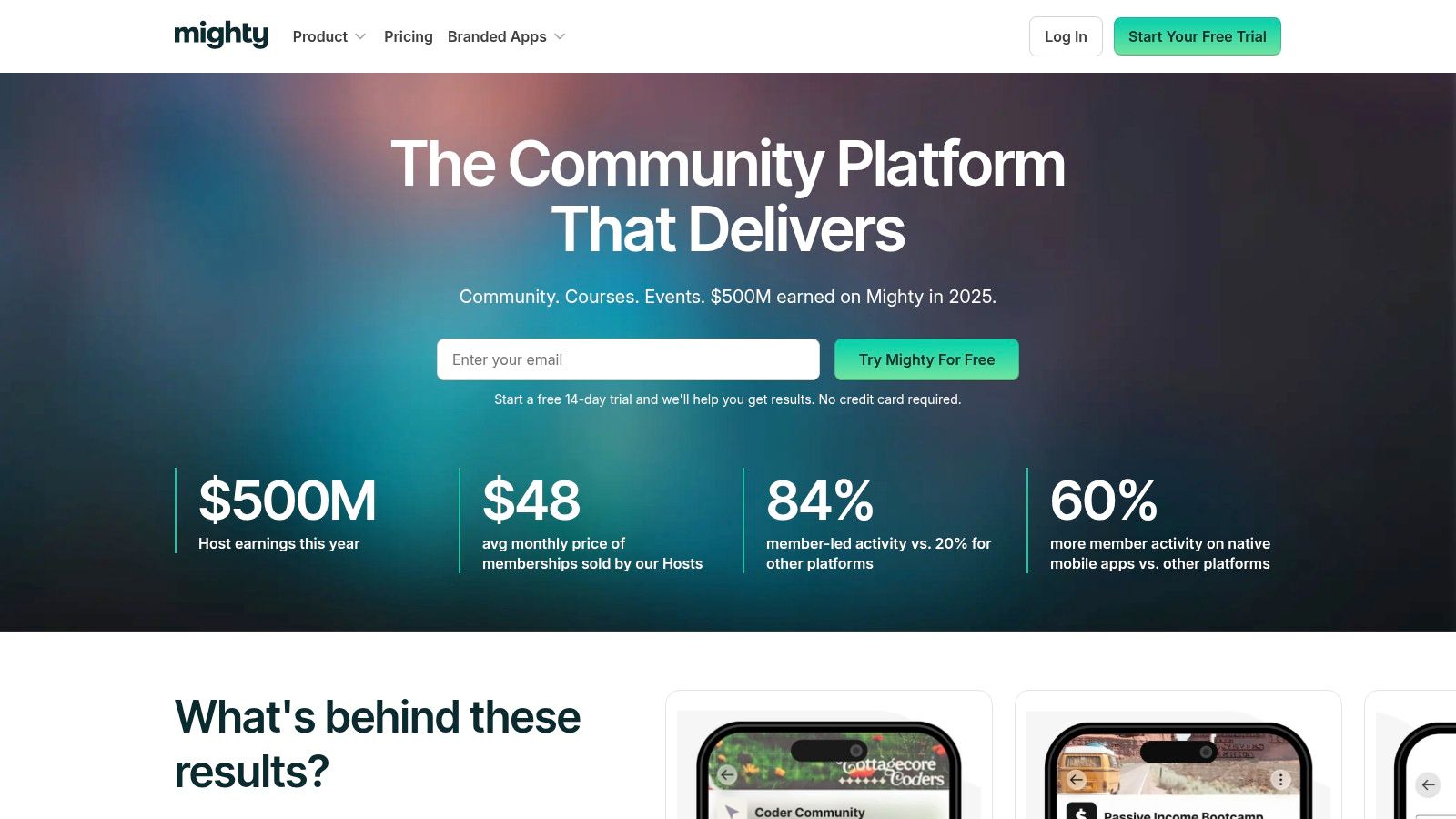
The platform is built around the idea of turning an audience into a community and a community into a business. It provides robust tools for selling access, bundling content, and even launching a custom-branded mobile app, making it a powerful alternative to Facebook for revenue-generating organizations.
Key Features & Use Cases
- Integrated Monetization: Sell memberships, access to exclusive subgroups, event tickets, and online courses directly within the platform.
- Structured Content: Organize discussions, create articles, host polls, and build comprehensive online courses with video and downloadable resources.
- Live Events & Streaming: Host virtual events, webinars, and member-only livestreams without needing third-party tools like Zoom or YouTube.
- Branded Mobile Apps: The Mighty Pro plan allows organizations to launch their own white-label app on iOS and Android, offering a premium, accessible member experience.
Implementation & Migration Tips
| Category | Details |
|---|
| Pricing | Offers tiered subscription plans starting from around $41/month (billed annually) for the Community Plan, with higher tiers for courses and advanced features. The Mighty Pro plan for branded apps is a custom-priced enterprise solution. |
| Ideal For | Professional associations, coaches, and creators who want to monetize their community and content. It's an excellent fit for groups that have outgrown the limitations and distractions of a free Facebook Group. |
| Migration | Mighty Networks offers a "Member Import" feature to streamline bringing your existing member list over. Communicate the value of a dedicated, ad-free space to incentivize members to make the switch from your old platform. |
| GroupOS Note | Mighty Networks is a strong all-in-one choice. For associations seeking more specialized event management and exhibitor tools, GroupOS can act as the central hub for conferences and trade shows, while Mighty Networks could power a year-round membership community. |
Website: https://www.mightynetworks.com/
10. Circle
Circle is an all-in-one, white-label community platform designed for creators and brands seeking a polished alternative to Facebook. It excels at creating structured, engaging member experiences by combining discussions, courses, events, and memberships into a single, cohesive ecosystem. Organizations can build a fully branded hub that feels like their own custom application, moving member interaction away from distracting social media feeds.
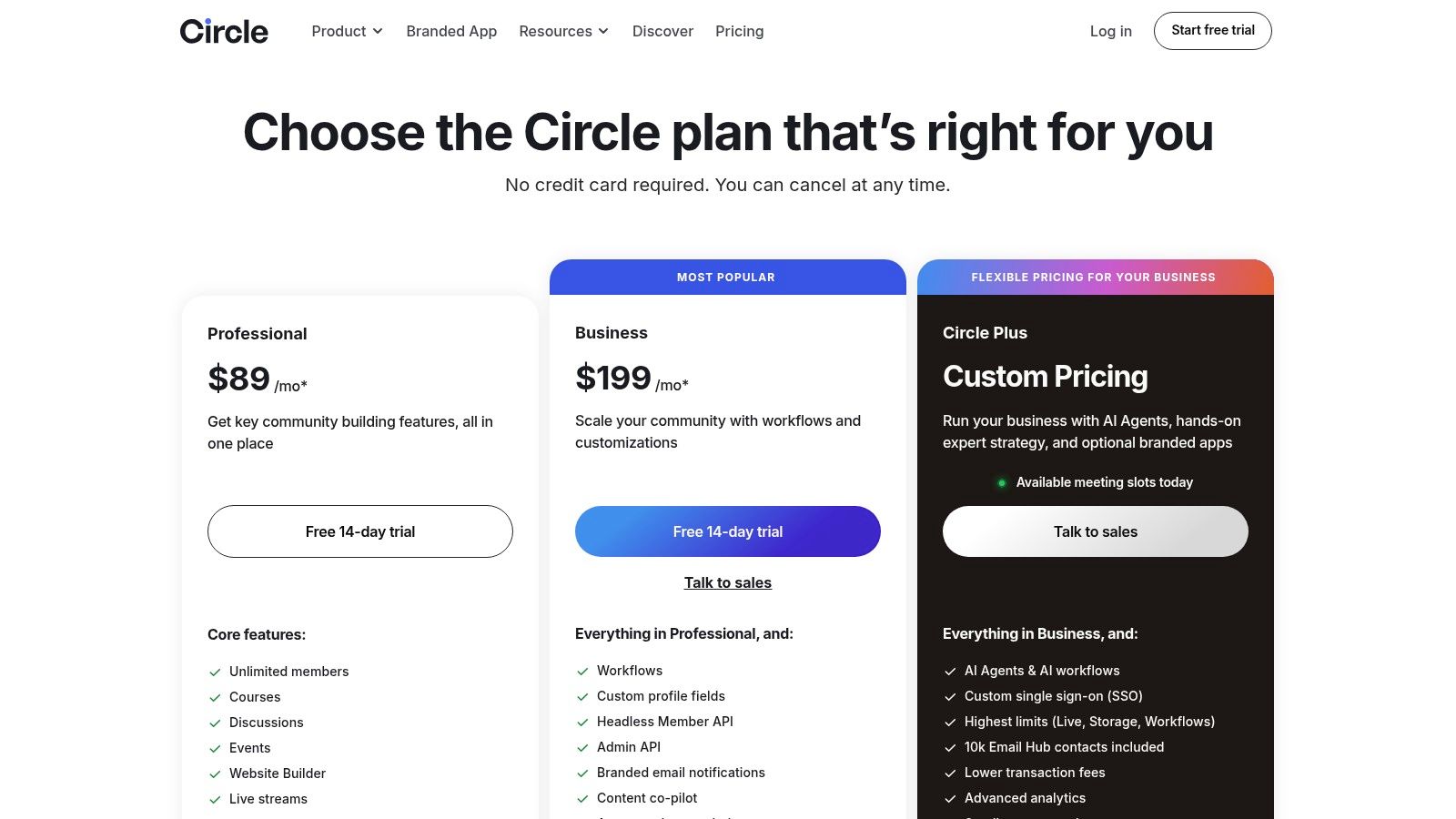
The platform's strength lies in its flexible "Spaces," which can be configured for different purposes like forums, resource libraries, or event calendars. This allows associations to neatly organize content and conversations, making it far easier for members to find value compared to a single, chaotic Facebook group feed.
Key Features & Use Cases
- Integrated Toolset: Combine discussion forums, live streams, chat, events, and even online courses within one platform, eliminating the need for multiple disparate tools.
- Monetization Engine: Native tools for creating paid membership tiers, bundling access to specific spaces or courses, and managing subscriptions directly.
- White-Label & Customization: Use a custom domain and branding to create a seamless member experience. Higher-tier plans offer fully branded mobile apps.
- Workflows & Automation: Automate member onboarding sequences, send welcome messages, and manage member access based on their subscription level or actions.
Implementation & Migration Tips
| Category | Details |
|---|
| Pricing | Starts at $49/month for the Basic plan. Professional and Enterprise plans add features like live streaming, workflows, and API access, with costs scaling up. Transaction fees apply to payments on lower tiers. |
| Ideal For | Associations, coaches, and course creators who want a premium, all-in-one platform to host and monetize a community. Its clean UX is perfect for delivering structured content and cohort-based programs. |
| Migration | Plan your community structure by mapping out your "Spaces" before inviting members. Use Circle's workflow features to create a smooth onboarding experience that guides new users to the most relevant areas and introduces them to the platform's layout. |
| GroupOS Note | Circle provides an excellent, self-contained environment for community and content. For associations with complex backend needs, GroupOS can manage the primary member database and financials, while integrating with Circle as the premium front-end community experience. |
Website: https://circle.so/pricing
11. Discourse
Discourse revitalizes the classic internet forum for the modern era, offering a powerful platform for structured, long-form discussion. It serves as an excellent alternative to Facebook Groups for organizations that need a durable, searchable knowledge base. Unlike the ephemeral nature of a social feed, Discourse organizes conversations into topics and categories, ensuring valuable information remains accessible and easy to find over time.
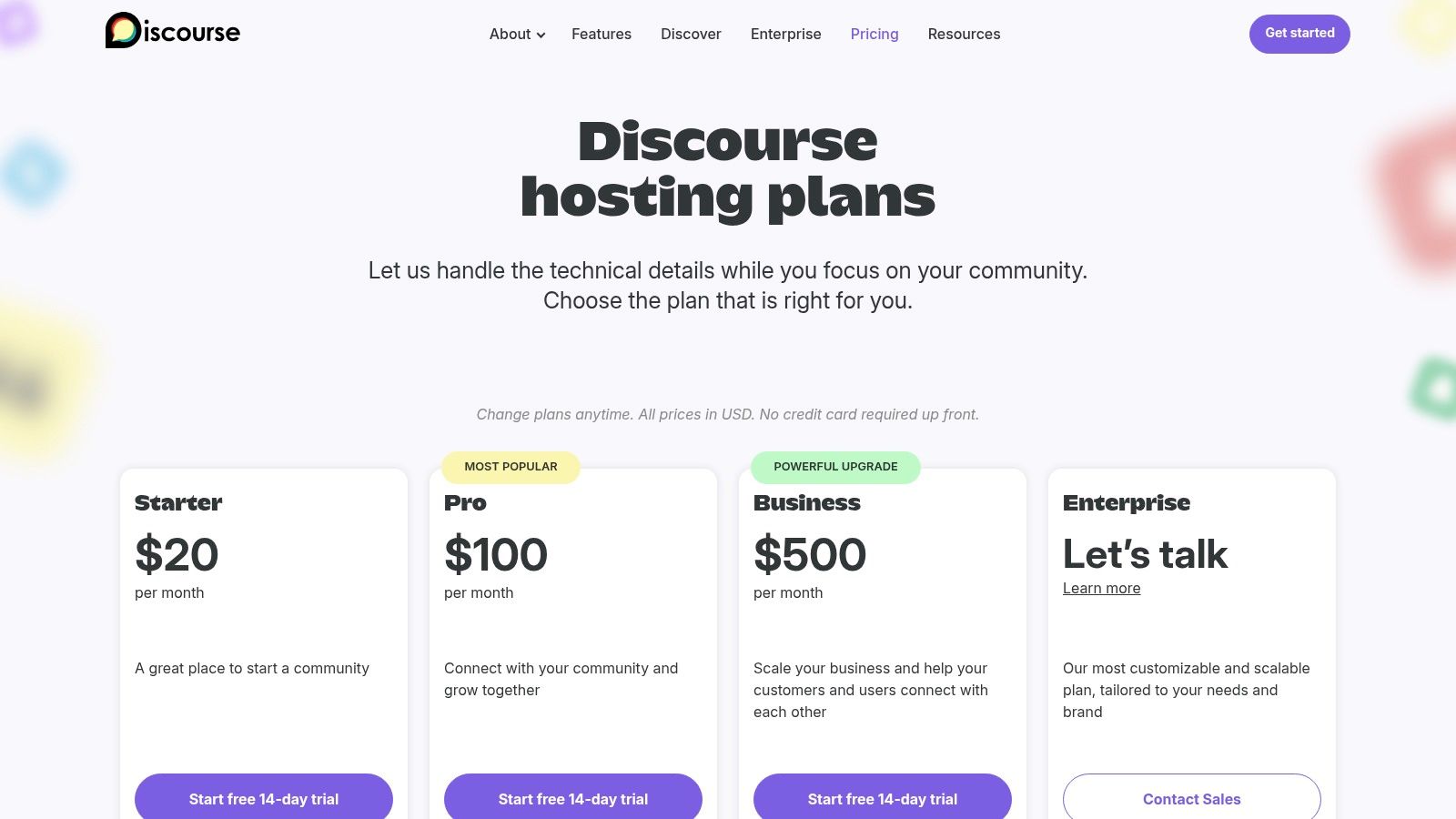
This structure is ideal for building a community knowledge hub, Q&A sections, or technical support forums. Its open-source nature allows for self-hosting and complete data ownership, while managed hosting options provide a more hands-off approach. The platform's robust moderation tools and user trust levels help maintain high-quality conversations.
Key Features & Use Cases
- Organized Topics: Conversations are neatly filed into categories and topics, making it easy for members to find information on specific subjects or ask new questions without getting lost.
- Trust System: A built-in user trust system automatically grants more capabilities to engaged, long-term members, empowering them to help moderate the community organically.
- Extensive Integrations: With plugins, themes, SSO, and a powerful API, Discourse can be deeply integrated into an organization's existing technology stack, such as a membership portal.
- Email Integration: Members can participate in discussions entirely via email, lowering the barrier to entry for those less comfortable with a new platform.
Implementation & Migration Tips
| Category | Details |
|---|
| Pricing | The software is open-source and free to self-host (requires server costs). Managed hosting plans start at $100/month for the Basic tier, scaling up to enterprise-level packages with advanced features and support. |
| Ideal For | Professional associations, user groups, and developer communities that prioritize knowledge archiving and in-depth, threaded discussions over a real-time social feed. |
| Migration | Transitioning from a Facebook Group requires a cultural shift. Emphasize the benefit of a searchable archive and structured topics. Seed the forum with key discussions and create clear category guidelines to guide new users on how to participate. |
| GroupOS Note | Discourse can serve as the deep-dive "library" or "resource center" for your community. You can integrate it with GroupOS via SSO, allowing members to use their primary membership login to access a private, knowledge-rich discussion forum. |
Website: https://discourse.org/pricing
12. Bettermode
Bettermode is a highly customizable, white-label community platform designed for businesses and professional organizations that require deep brand integration and workflow automation. It provides a robust, all-in-one solution that allows an organization to create a fully branded hub for discussions, knowledge sharing, and events, making it a powerful alternative to Facebook for member engagement and support. Its strength lies in its extensive API and integration capabilities, enabling a seamless connection to existing business tools.
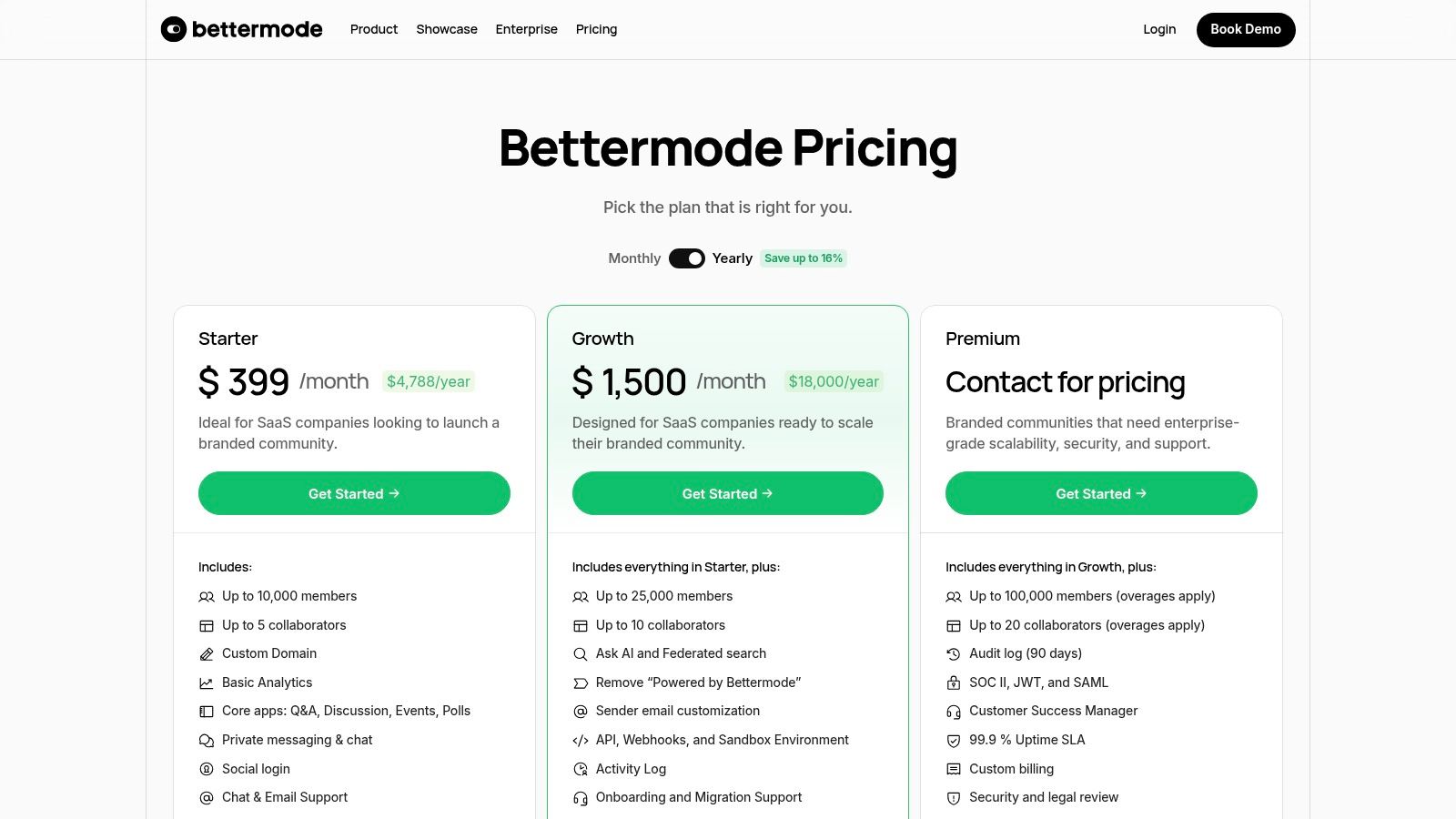
The platform is structured around "Spaces," which can be configured for Q&As, articles, events, or general discussions. This modular approach allows associations to tailor the community experience precisely to their members' needs, moving beyond a simple, one-size-fits-all feed.
Key Features & Use Cases
- Complete White-Labeling: Use a custom domain, apply your own branding, and design a community that feels like a native part of your organization's website, not a third-party tool.
- Customizable Spaces: Create dedicated areas for specific topics, committees, or member cohorts. Use a Q&A space for technical support, a discussion space for networking, and an event space for webinars.
- Enterprise-Grade Integrations: Leverage APIs, webhooks, and single sign-on (SSO) to connect the community with your CRM, AMS, or other internal systems for a unified member data experience.
- Member Profiles & Messaging: Fosters member-to-member connections with rich profiles, direct messaging, and group chat functionalities, keeping interactions within your branded environment.
Implementation & Migration Tips
| Category | Details |
|---|
| Pricing | Plans start with a free option for small communities. Paid tiers scale significantly, with the Advanced plan starting at $599/month, targeting established businesses and large associations needing advanced integrations and support. |
| Ideal For | Tech companies, SaaS businesses, and large professional associations needing a scalable, fully integrated community platform for customer support, product feedback, and member networking. |
| Migration | The platform requires initial configuration to align with your brand and workflows. Plan to dedicate resources for setup and leverage Bettermode’s SSO options to make member login seamless from day one. |
| GroupOS Note | Bettermode offers a powerful front-end community experience with robust integration. GroupOS can manage the core membership data, payments, and event logistics that feed into it, creating a comprehensive member ecosystem. |
Website: https://bettermode.com/
Comparison of 12 Alternatives to Facebook
| Platform | Core features (✨) | UX / Quality (★) | Target audience (👥) | Value / Pricing (💰) |
|---|
| GroupOS 🏆 | ✨ Memberships, ticketing, content hub, chats, exhibitor ads, 350+ integrations | ★★★★★ | 👥 Associations, event orgs, enterprise communities | 💰 Contact sales · Free trial + custom setup · ROI-focused |
| Mastodon | ✨ Decentralized ActivityPub, server-based moderation, open-source | ★★★★☆ | 👥 Self-hosters, privacy-focused communities | 💰 Free / self-host; hosted instances vary |
| MeWe | ✨ Groups, pages, chat, voice/video, cloud storage | ★★★☆☆ | 👥 Consumer groups, privacy-minded users | 💰 Freemium (some features paid) |
| Minds | ✨ Federation option, creator monetization, rewards & wallet | ★★★★☆ | 👥 Creators, niche communities, federated users | 💰 Freemium + paid upgrades |
| Discord | ✨ Text/voice/video channels, roles, bots, events | ★★★★★ | 👥 Creators, active member communities, gamers | 💰 Free tier · Nitro paid upgrades |
| Reddit Communities | ✨ Subreddits, robust moderation, high organic discovery | ★★★★☆ | 👥 Public communities, topic-driven audiences | 💰 Free to create & run |
| Nextdoor | ✨ Neighborhood-scoped communities, local discovery, invites | ★★★★☆ | 👥 Local/neighborhood groups (US-focused) | 💰 Free (business features paid) |
| LinkedIn Groups | ✨ Professional groups, admin controls, basic analytics | ★★★☆☆ | 👥 B2B, industry associations, professionals | 💰 Free with LinkedIn account |
| Mighty Networks | ✨ Communities + courses + memberships + branded apps | ★★★★☆ | 👥 Creators, membership businesses | 💰 Paid tiers; higher cost for advanced features |
| Circle | ✨ Spaces, courses, live rooms, APIs, optional branded apps | ★★★★☆ | 👥 Brands, cohort programs, creators | 💰 Paid plans; fees on lower tiers |
| Discourse | ✨ Forum-first: categories, tags, SSO, plugins, PWA | ★★★★☆ | 👥 Organizations needing searchable, long-form knowledge | 💰 Open-source self-host / paid hosting |
| Bettermode | ✨ White-label community, Q&A, events, SSO, APIs | ★★★★☆ | 👥 SaaS & enterprise teams | 💰 Paid / enterprise pricing |
Final Thoughts
The journey away from Facebook can feel daunting, but as we've explored, the digital landscape is rich with powerful, purpose-built alternatives to Facebook. The one-size-fits-all model of social media is giving way to specialized platforms designed to foster genuine connection, professional growth, and focused engagement. Moving your community from a space designed for distraction to one built for interaction is no longer just an option; it's a strategic imperative for associations, event organizers, and brands aiming to build lasting value.
Our deep dive into platforms like Mighty Networks, Circle, and Discourse reveals a clear trend toward owned, branded community spaces. These tools empower you to control the user experience, own your data, and integrate community directly into your business model. For organizations prioritizing professional networking and industry-specific discourse, the structured environments of LinkedIn Groups or a dedicated Discourse forum offer a significant upgrade from the noise of a Facebook Group.
At the same time, platforms like Discord and Mastodon demonstrate the power of niche, user-driven communities. While they may require a steeper learning curve, they offer unparalleled customization and a culture of deep engagement that can be incredibly rewarding for tech-savvy audiences or communities built around specific hobbies and interests. The key takeaway is that the "best" platform is not universal; it's the one that aligns most closely with your community's culture, your organization's goals, and your administrative capacity.
Key Considerations Before You Make the Switch
Choosing your new digital home is a critical decision. Before you commit, carefully evaluate these final factors:
- Data Ownership and Portability: Can you easily export your member data and content if you decide to move again? Prioritize platforms that respect your ownership of the community you’ve built.
- Scalability and Performance: Will the platform grow with you? Consider its ability to handle an increase in members, content, and concurrent activity without a decline in performance.
- Monetization and Business Integration: How will this platform support your revenue goals? Look for native payment gateways, subscription management, and integrations with your existing CRM, AMS, and marketing automation tools.
- Member Experience and Accessibility: Is the platform intuitive for your specific audience? A feature-rich tool is useless if your members find it confusing. Consider the user interface, mobile experience, and accessibility features.
Your Action Plan for a Successful Migration
Successfully transitioning your community requires more than just picking a new tool. It demands a thoughtful, member-centric strategy.
- Survey Your Members: Don't make the decision in a vacuum. Ask your community what they value, what their pain points are with Facebook, and what features they would find most useful in a new home.
- Launch with a Core Group: Before a full-scale migration, invite a small group of your most engaged members to a pilot program. Use their feedback to refine your community structure, guidelines, and onboarding process.
- Communicate a Clear "Why": Explain the benefits of the move. Frame it as an upgrade: a more focused, valuable, and exclusive space for them. Highlight new features and opportunities the new platform provides.
- Create a Deliberate Onboarding Experience: Develop welcome guides, video tutorials, and an initial schedule of events or discussion prompts to help new arrivals feel at home and understand how to participate.
Ultimately, the search for alternatives to Facebook is about reclaiming control and intentionally designing a space that serves your community's unique purpose. The right platform will not only solve the problems you face with traditional social media but will also unlock new opportunities for engagement, growth, and revenue. Choose wisely, plan your transition carefully, and you can build a thriving, independent community that will serve as a core asset for your organization for years to come.
Ready to build a community platform that integrates seamlessly with your events and professional association's goals? GroupOS is designed specifically for organizations like yours, offering a powerful, unified alternative to fractured Facebook groups and generic community tools. Explore how GroupOS can help you create a branded, data-rich ecosystem that drives year-round engagement and boosts event ROI.