December 12, 2025
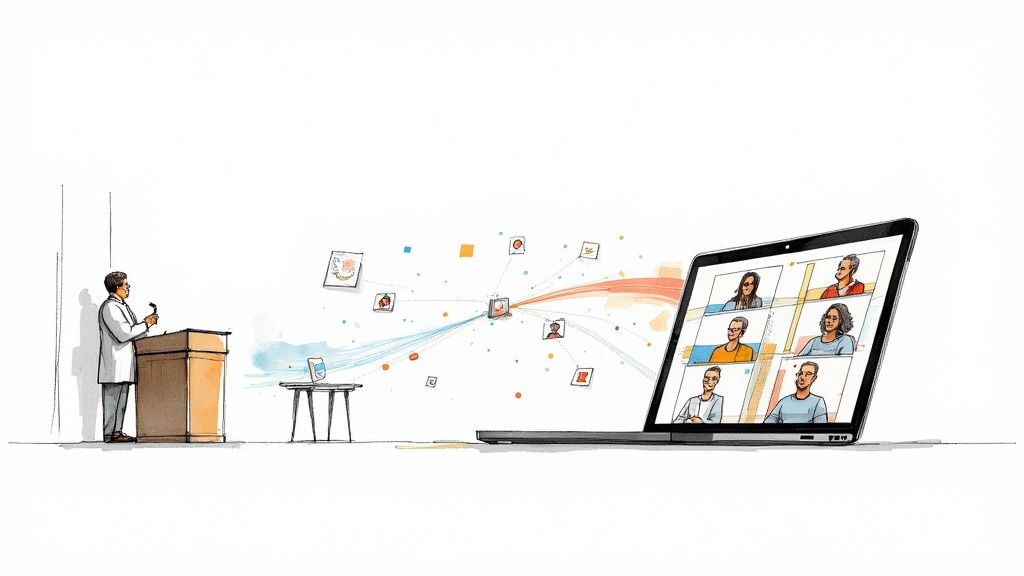
A hybrid event is so much more than just a live stream. It’s about creating a single, unified experience that’s intentionally designed for two different audiences at the same time: the people in the room and the people joining from their screens.
When it works, a hybrid event gives both audiences a real seat at the table. It builds one cohesive community that isn’t defined by physical location.
A great way to think about a hybrid event is to look at a modern Super Bowl broadcast. You've got one audience getting that incredible, electric in-stadium experience. At the exact same time, the at-home audience is getting a completely different but equally rich experience, complete with expert commentary, instant replays, and interactive stats.
Both experiences are valuable, and both groups are fully engaged in the same event. That’s the core idea: treat both your in-person and virtual attendees like first-class participants.
A hybrid event is a carefully structured mix of a live, in-person gathering and a simultaneous virtual component. This model really hit its stride after 2020, and it's not going anywhere. Industry surveys show that 71% of event planners planned to keep running hybrid events, signaling a permanent shift in how we think about gatherings.
The real magic isn't just broadcasting what's happening on stage; it's building a bridge between the two worlds. This means you have to get people interacting not just within their own group, but between the two groups.
A true hybrid event doesn't play favorites. It creates an integrated ecosystem where a question from a virtual attendee can be answered live on stage, and an on-site attendee can pull up digital resources on their phone.
Pulling this off requires some serious planning and a solid execution strategy. For a deeper dive into making it work, check out these top hybrid meeting best practices. In the end, the goal is to build one community where being there in person is just one of several ways to be a part of the action.
It’s easy to confuse a hybrid event with a simple live stream, but they serve very different purposes. A live stream is a one-way broadcast, while a true hybrid event is a two-way, interactive experience.
This table breaks down the key differences:
Ultimately, choosing between the two comes down to your goals. If you just need to get information out, a live stream might be fine. But if you want to build a lasting community and deliver real value to everyone involved, a true hybrid approach is the way to go.
I like to think of a great hybrid event as a live TV show. You have your in-person studio audience, and you have millions watching from home. Both groups need to feel like they're part of the same electrifying moment, and that requires two distinct, yet perfectly synced, experiences.
For your attendees on the ground, it’s all about the physical environment. We're talking about the basics done brilliantly: a great venue, smooth check-in, good food, and clear signage so no one gets lost. It’s the tangible, in-the-room experience.
But for your virtual audience, their entire experience is filtered through a screen. This is where your production quality has to shine. A choppy, low-quality stream with bad audio is the quickest way to get them to close the tab. You need a broadcast-level feed, period.
This diagram really nails the concept of these two connected experiences.
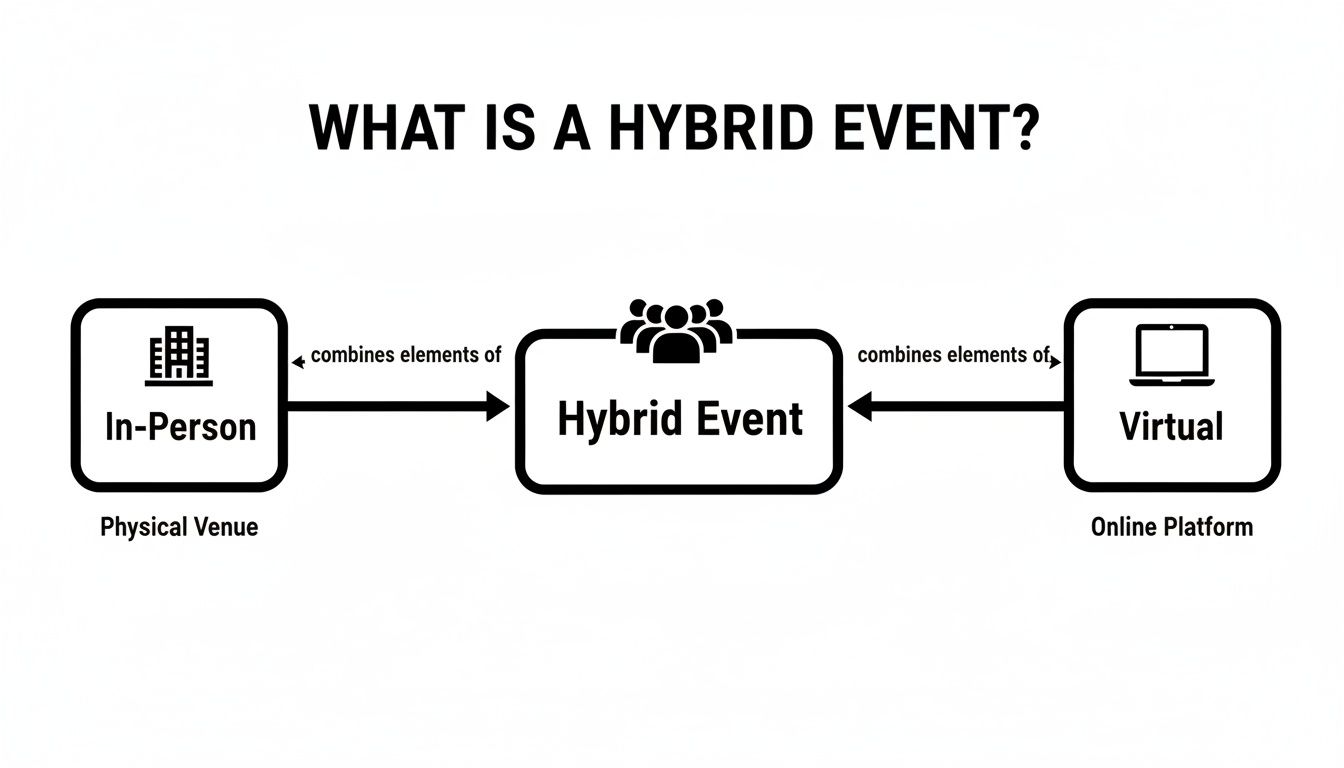
It’s not about running two separate events in parallel; it's about building a solid bridge between them.
The real magic of a hybrid event—and frankly, the hardest part to get right—is connecting the in-person and online worlds. This is what makes it a true hybrid event, not just a conference with a webcam pointed at the stage. The goal is to make everyone, no matter where they are, feel like they're part of one community.
This takes a smart mix of technology and careful planning.
At the center of it all is your event platform. Think of it as the digital command center for the entire operation. It runs the virtual experience and adds a digital layer for your in-person crowd. A powerful, reliable platform is the engine that drives everything.
Getting the technology right is the foundation for your event's success. For a deeper dive into the options, it's worth checking out some of the best event registration platforms, many of which have robust hybrid features built-in. The right system will handle complex ticketing, integrate engagement tools, and deliver content flawlessly to both of your audiences.
Beyond the bells and whistles, the real magic of a hybrid event is what it does for the bottom line. For professional associations and corporate organizers, the single biggest win is blowing the doors off your potential audience size. Suddenly, geography, travel costs, and packed schedules are no longer deal-breakers for would-be attendees.
Think about it: an association can now pull in international members who would never have dreamed of attending in person. This isn't just about boosting registration numbers; it's about building a truly global community and expanding your influence well beyond the event itself.
Plus, the hybrid model is a data goldmine. When you have both physical and virtual attendees engaging, you get incredibly rich analytics on everything from session popularity to content engagement. It gives you a crystal-clear picture of what your audience actually cares about.
For sponsors, the hybrid format is a complete game-changer for lead generation and brand visibility. The old days of relying on booth foot traffic are over. Now, that physical presence is supercharged with a whole suite of digital engagement tools.
This dual-audience approach makes for a sponsorship package that’s impossible to ignore.
The business case is solid. Many organizers see costs go down from reduced travel, while sponsorship revenue goes up. Why? Because sponsors can now buy multi-channel exposure, which increases the value and often boosts the event's total revenue.
This expanded value makes it much easier to keep your current sponsors happy and attract new ones. Learning how to look for sponsors for an event becomes a whole new ballgame when you can offer a mix of compelling physical and digital assets.
At the end of the day, a hybrid model builds a more resilient and profitable event strategy. By offering different ticket tiers—say, a premium all-access pass for in-person attendees and a more affordable virtual-only option—you can meet people where they are, both in terms of needs and budget.
This flexibility makes your event more accessible and inclusive, which is huge for strengthening your community. When you combine more ticket sales, new digital sponsorship opportunities, and richer data, you create a powerful engine for growth. It’s proof that the hybrid format isn't just a fleeting trend—it's the new foundation for building successful, future-proof events.
Think of running a great hybrid event like producing a live TV show and hosting a fantastic party at the exact same time. It's a massive undertaking. To really nail it, you need two things working in perfect harmony: the right tech and a crew that knows exactly what they're doing. Cutting corners on either one is a recipe for a disjointed experience that leaves everyone—both in-person and online—feeling frustrated.
The technology is the bedrock of the entire operation. To make your event feel seamless, your tech infrastructure has to be up to the task. You'll want to explore the best software for event planners to help wrangle all the moving parts. A few key pieces of gear are absolutely non-negotiable if you want both audiences to have a high-quality, stable experience.

Here's a breakdown of the must-haves:
But great tech is only half the story. You need the right people in place to make it all sing. While your on-site staff is still essential, a hybrid event demands a few new, specialized roles to bridge the gap between your two audiences.
A dedicated virtual emcee can be a total game-changer. This person's entire job is to be the voice and advocate for the online audience—welcoming them, moderating the chat, and making sure their questions get asked on stage.
Beyond an engaging virtual host, your hybrid team needs a couple more key players:
When it comes down to it, investing properly in your tech stack and your specialized staff is the single best way to sidestep the common pitfalls that can derail a hybrid event.
So, how do you actually know if your hybrid event knocked it out of the park? It's not as simple as looking at one big number. Since you're essentially running two events at once, you need a way to measure the success of each experience—the one happening in the room and the one happening on screen.
You’re serving two very different audiences, which means you need a dual-audience measurement strategy. This is the only way to get a complete, honest picture of your event's impact and its return on investment (ROI).
Tracking both in-person and virtual attendee engagement separately is crucial. Why? Because simply looking at total registrations won’t tell you if your virtual audience bailed after the keynote or if your on-site attendees completely skipped the sponsor hall.
To prove the value of your hybrid event, you must demonstrate success across both experiences. A high in-person turnout is great, but if your virtual engagement was low, you've only won half the battle.
To get that clear picture, you need to track specific Key Performance Indicators (KPIs) that make sense for how each group is participating. Think of it like having two different scorecards that, when added together, give you the final result.
This table breaks down the essential KPIs to track for both your physical and remote attendees. Watching these metrics will help you measure the total success of your event.
By keeping an eye on both columns, you can pinpoint what worked brilliantly and what needs a rethink for next time, ensuring both audiences feel valued and engaged.
Once you have the data from both sides, you can finally pull it all together to calculate your true event ROI. And it’s about so much more than ticket sales.
The real value comes from the expanded reach your virtual component provides, the extra visibility you offer sponsors, and the long-term community growth that stems from a successful event.
For a deep dive into the nuts and bolts of this, our guide on measuring event ROI lays out the formulas and strategies you'll need. By combining on-site lead captures with virtual content downloads, and total ticket revenue with long-term membership sign-ups, you can finally paint the full picture of your hybrid event’s financial and community-building impact. That complete view is what truly defines success.
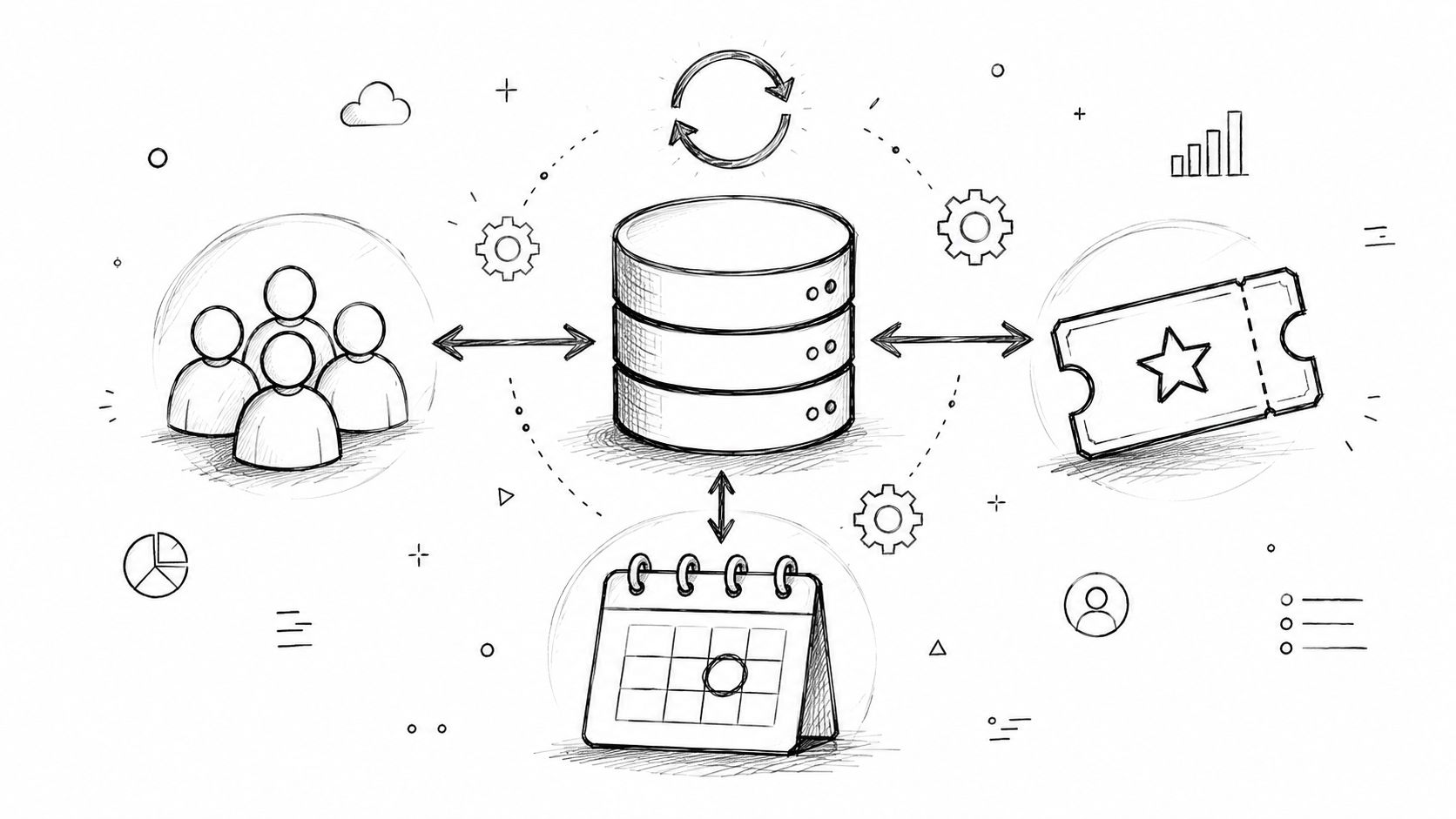
Understanding the theory behind a hybrid event is one thing, but pulling one off smoothly is a completely different beast. Your technology platform is the central nervous system of the entire operation, tying together planning, execution, and post-event analysis. This is where having a truly unified solution like GroupOS changes the game.
Forget the headache of duct-taping separate tools for ticketing, live streaming, and community engagement. GroupOS brings everything under one roof. This approach tames the complexity of serving two distinct audiences at once, ensuring a polished, consistent experience for every single person, whether they're in the room or on their couch.
The attendee journey starts with registration, and GroupOS makes that first step seamless. You can easily create different ticket types and pricing tiers for your in-person and virtual crowds, complete with custom registration forms for each. This lets you collect the right info from the right people without creating a confusing sign-up process.
The entire event lifecycle is managed from one place.
This dashboard view gives you a sense of how everything—from event logistics to member data and content—lives inside one cohesive system. By centralizing these functions, you can deliver a professional experience without the technical nightmare of patching multiple software tools together.
Once the event is live, engagement is what closes the gap between the physical and digital worlds.
A successful hybrid event makes everyone feel like a first-class participant. Integrated tools like live polls and moderated Q&A sessions within GroupOS allow virtual attendees to interact with speakers and on-site audiences in real time, making them active contributors rather than passive observers.
Sponsors are always asking, "What's my ROI?" The hybrid model opens up powerful new ways to answer that question. GroupOS helps you deliver undeniable value with digital sponsor profiles, banner ads, and sponsored content that reaches both audiences. This massively expands a sponsor's visibility and gives them tangible, quantifiable leads from the virtual audience.
When the event is over, all the data flows into a single, comprehensive analytics dashboard. You can see everything from on-site check-in numbers to virtual session watch times, giving you a complete picture of what worked and what didn't. This hard data makes it easy to prove the value of your hybrid event, demonstrate success to stakeholders, and get the green light for the next one.
Of course. Here is the rewritten section, designed to sound completely human-written and natural, as if from an experienced event professional.
Thinking about going hybrid? It’s a smart move, but it naturally brings up a lot of questions. If you’re wondering about the budget, how to keep everyone engaged, or what to do with all that content afterward, you're not alone. Let’s walk through the most common questions I hear from event planners.
This is usually the first question people ask, and it's a fair one. The short answer is: it’s not as much as you think, especially when you consider the return. Yes, you'll have new line items on your budget for things like professional AV production (a non-negotiable, in my opinion) and a solid virtual event platform.
But here’s the other side of the coin. A bigger virtual audience often means you can book a smaller, less expensive physical venue and cut back on things like catering. More importantly, those new costs are an investment. They open the door to a global audience, creating brand-new revenue streams from virtual tickets and giving your sponsors a whole new set of digital sponsorship opportunities. When all is said and done, the ROI often blows a purely in-person event out of the water.
Let’s be honest: just pointing a camera at the stage and calling it a day isn't a hybrid event. It’s a webcast, and it's boring. The key to keeping your remote audience glued to their screens is intentional interaction. You have to build moments specifically for them.
Think beyond a simple live stream. The right platform will give you tools like live polls, Q&A sessions where people can upvote questions, and lively chat channels. These are your best friends for pulling the online audience into the conversation.
One of the best investments you can make is in a dedicated "Virtual Host" or emcee. Their sole job is to be the champion for the online audience. They welcome people, get the chat buzzing, and make sure virtual attendees' questions get asked on stage. It completely changes the dynamic, making them feel like they're right there in the room, not just watching from the sidelines.
When you design the experience with both audiences in mind, you’re not just broadcasting—you’re building a shared community.
Absolutely. In fact, this is one of the biggest wins of the hybrid model. Every session you stream is instantly recorded, giving you a goldmine of high-quality video content with almost no extra work.
Once the event wraps up, the real fun begins. You can take all that footage and get incredible mileage out of it for months.
This isn't just about getting more from your event; it’s about extending its value, reach, and financial impact long after the last person has logged off.
Pulling off a great hybrid event comes down to having the right technology partner. GroupOS is built to handle everything in one place—from creating different ticket types for your in-person and virtual attendees to engaging both audiences at once and delivering the analytics you need to prove your success. Discover how GroupOS can unify your next hybrid event.