December 6, 2025

So, what exactly is an event plan? Think of it as the strategic roadmap for any event you're putting on, guiding every single detail from that first lightbulb moment all the way through to the post-event wrap-up. It's the essential document that turns a great idea into a smoothly run, memorable experience for everyone involved.

Trying to pull off an event without a plan is a bit like trying to build a house without architectural drawings. Sure, you might get some walls up, but you'll probably end up with a shaky, over-budget structure built on a foundation of pure chaos. An event plan serves the exact same purpose—it's the master blueprint that lays out all the logistical, financial, and operational details you need to get right.
This isn't just a to-do list. It's a living, breathing document that keeps everyone—from your internal team to your sponsors and vendors—on the same page, working toward the same goals. To get a sense of how all the moving parts come together, it helps to look at a complete success blueprint for event planning to understand the big picture.
Before we dive deep into each component, let's look at the core pillars that hold up any solid event plan.
Here’s a quick summary of the core components that form the foundation of any successful event plan, which we will detail throughout this guide.
These pillars ensure you've covered all your bases long before the doors open.
For professional associations and dedicated event teams, a well-crafted event plan isn't just a nice-to-have; it's non-negotiable. It’s the tool you'll use to get buy-in from leadership, justify your budget, and head off those costly, last-minute scrambles. Without one, you’re stuck just reacting to problems instead of steering the ship.
This level of foresight is more important than ever.
The global events market is projected to grow from $1,227.3 billion in 2024 to an anticipated $1,346.92 billion in 2025—a 9.7% year-over-year jump that really underscores the need for meticulous planning.
A solid plan helps you anticipate needs, allocate resources wisely, and deliver that seamless experience attendees rave about. It becomes your single source of truth, keeping all key decisions and information in one central place. If you're just getting started, a simple event brief template is a fantastic way to begin sketching out your vision and core goals.
In the sections ahead, we’ll break down each of these pillars, giving you a clear picture of what it takes to build your own flawless event from the ground up.

So, you've got the big idea for an event. That’s the fun part. Now it's time to build the foundation that will keep it from crumbling under pressure. This is where we get into the nitty-gritty, turning a concept into something real and actionable.
Think of it like building a house. You wouldn't just start throwing up walls without a solid blueprint, right? The same goes for an event. These next few steps are your blueprint, giving your event structure, purpose, and a clear path forward.
Every great event begins by answering a simple but crucial question: "Why are we even doing this?" Your objectives are the answer. They define your event's purpose and give you a clear yardstick to measure whether it was a hit or a miss. Without them, you're just throwing a party with your fingers crossed.
To give your objectives real teeth, use the SMART framework. It's a classic for a reason. This ensures your goals are Specific, Measurable, Achievable, Relevant, and Time-bound.
These goals become your North Star, guiding every single decision you make from here on out.
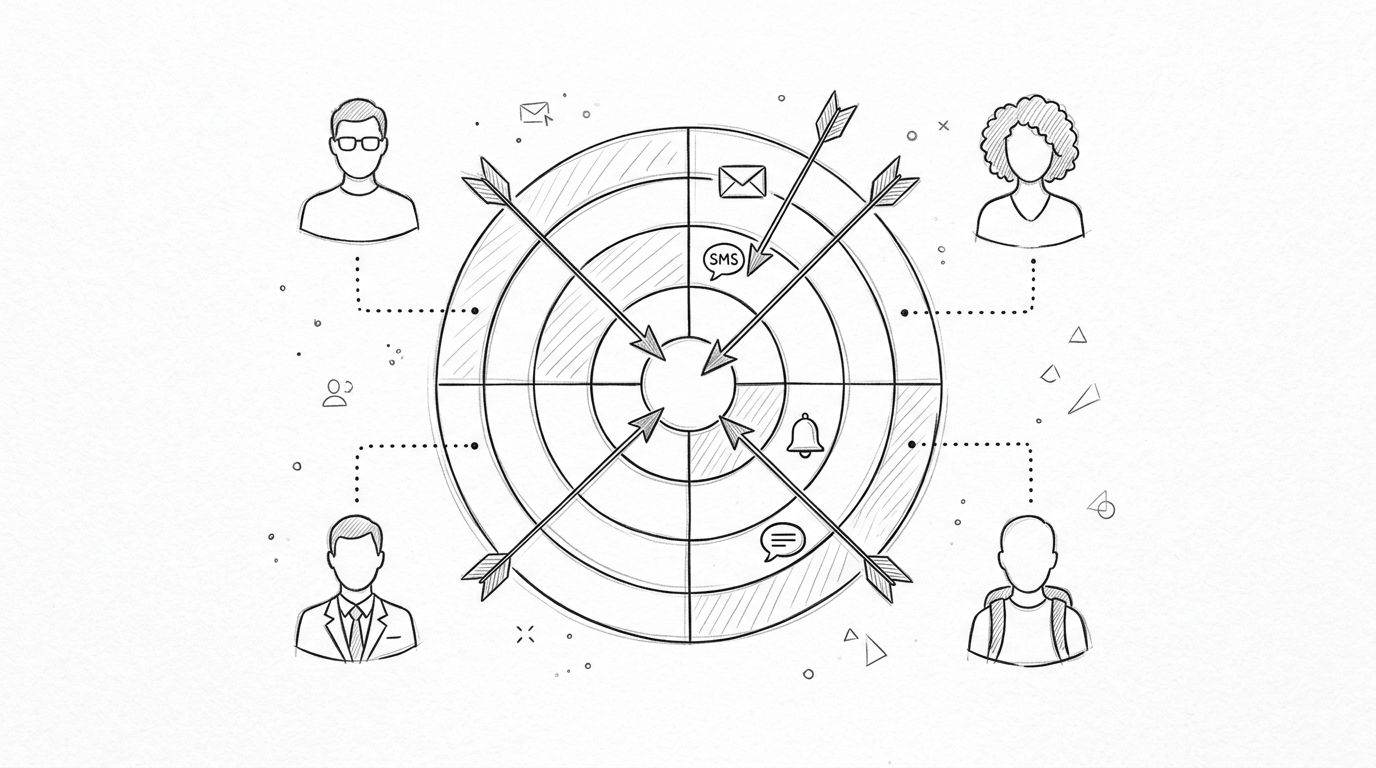
With your objectives locked in, it’s time to figure out who you're planning this for and just how big it's going to be. Guessing what your audience wants is a surefire way to end up with an empty room. This is where you need to build out detailed audience personas.
A persona is basically a character sketch of your ideal attendee. What’s their job title? What keeps them up at night professionally? What are they hoping to walk away with? Knowing this lets you tailor everything—from the speakers you book to the emails you send—directly to them.
By analyzing guest data, you can tailor experiences that resonate on a personal level. Events that leverage data to understand attendee preferences can create powerful, memorable moments that foster loyalty and drive repeat attendance.
Next up, you have to define the event’s scope and format. Will this be:
Your choice here has a massive impact on your budget, tech needs, and all the logistics that follow. A hybrid event, for instance, means you're basically running two different events simultaneously.
Your budget is the fuel for your event. It’s a detailed breakdown of every dollar coming in and every dollar going out. Start by listing every single potential cost, from the big-ticket items like the venue and catering all the way down to the small stuff like name badges and credit card fees. They add up fast.
And please, don't forget a contingency fund. Set aside 10-15% of your total budget for those inevitable surprises. For a deeper dive, our guide on budgeting an event has everything you need to create a rock-solid financial plan.
Finally, you need a work-back timeline. This is your master schedule. You start with the event date and work backward, plotting out every single deadline along the way. If your event is in six months, your timeline will tell you exactly when to book the venue, launch the website, open registration, and finalize speaker contracts. This simple trick keeps the chaos at bay and ensures nothing slips through the cracks.
A brilliant event plan on paper is just that—paper. The magic happens when a great team brings it to life and a smart marketing plan gets people in the door. After all, the most perfectly planned event is a failure if nobody shows up.
This is where your blueprint becomes a living, breathing experience, and it all starts with getting the right people in the right seats—on your team, that is.
The first step is figuring out who is doing what. Without clear roles, you’re practically inviting chaos. Tasks get done twice, or worse, they fall through the cracks completely. This is where a simple but incredibly effective tool called a RACI matrix saves the day.
A RACI matrix is just a straightforward way to assign roles for every major task. It stops the confusion before it starts.
Think about it for key tasks like securing sponsorships or managing speaker logistics. By mapping this out, everyone knows exactly what's expected of them. No more guessing games, just a clear path forward.
With the U.S. event planning industry projected to hit $1.7 billion by 2025, the competition is fierce. Standing out requires a plan that’s airtight, from vendor contracts to a promotional strategy that actually works. If you want to dive deeper, you can explore the growth and trends in the event planning industry to see just how high the stakes have become.
Once your team is ready to roll, it’s time to get people excited. Your marketing and promotion strategy isn't an afterthought; it’s a detailed campaign within your overall plan. You can't just send a few emails and hope for the best.
A successful promotion plan is a campaign in itself. It needs a clear timeline, targeted messaging, and a multi-channel approach to build momentum from day one.
Start by creating a promotional calendar. Work backward from the event date and map out every single touchpoint, from the first "save the date" announcement to the final "last chance to register" email.
Next, figure out where your audience actually lives online. Is it email newsletters? Social media ads? Partner promotions? For some fresh, actionable ideas, check out our guide on creative promotion ideas for events.
Finally, nail your messaging. You have to answer the attendee's ultimate question: "What's in it for me?" Make it crystal clear what they'll learn, who they'll meet, and why this is one event they absolutely cannot afford to miss.
Let’s be honest: even the most perfectly crafted event plan can get sideswiped by reality. A sudden thunderstorm, a keynote speaker stuck in traffic, or a Wi-Fi outage can throw a wrench in the works if you haven't planned for it. This is where your strategy moves beyond just planning for success and starts preparing for the unexpected.
Think of it like a theater production. They always have understudies and backup props, right? Your event needs that same level of foresight. It’s about thinking through what could go wrong so you can keep things running smoothly no matter what.
Risk management isn’t about drafting a hundred-page doomsday manual. It's about practical, common-sense preparation. Start by simply brainstorming what could realistically go wrong.
For more serious situations, it's wise to have a formal guide. A practical emergency response plan template can be a lifesaver, giving your team clear, actionable steps to ensure everyone stays safe.
Okay, the lights are off, the last guest has left, but you're not done yet. The final, and arguably most important, part of your event plan is proving it was all worth it. Success isn't just a feeling or a packed room; it's about hitting the concrete, measurable goals you set from day one.
By analyzing guest data, event planners can objectively measure the success of their events. This data helps identify areas of strength and weakness, allowing for data-driven decisions to improve future iterations.
To do this, you need to track the right Key Performance Indicators (KPIs). These are the specific metrics that tie directly back to your original objectives.
Key Metrics to Track:
Collecting this data gives you the hard evidence to show your event's impact. It’s what lets you calculate financial return and prove the value you delivered to your members, sponsors, and leadership. To dig deeper, check out our guide on measuring event ROI and learn how to turn those numbers into a compelling success story. This final step is what turns a one-off event into a repeatable, improvable system for growth.
It’s one thing to talk about the theory behind a great event, but what you really need is a tool that turns those ideas into a concrete plan. This is where a solid template comes in. It’s the bridge between your high-level vision and the nitty-gritty details that make an event happen.
To show you how it works, we’ll walk through a ready-to-use template, filling it out for a hypothetical hybrid conference. This isn't just about lists and checkboxes; it's about seeing how a real-world objective transforms into the specific, tactical steps you need to take. The goal is simple: for you to walk away from this guide ready to start planning your next event with confidence.
A truly effective template does more than just list tasks—it actively guides your thinking process. It’s your safety net, making sure you've covered every critical area, from the big-picture strategy to the on-the-ground logistics.
Think of it as your event’s central nervous system. Here are the essential sections that ensure you’ve covered all your bases:
The flow chart below perfectly illustrates how these pieces fit together. It’s a cycle of identifying risks, creating a detailed plan, and then measuring the outcomes to ensure success.

This visual is a great reminder that a successful event isn’t a straight line. It's a continuous loop of foresight, strategic action, and careful evaluation.
Let's be honest, being an event professional today comes with its own set of hurdles. Finding the right attendees (21%) and navigating tight budgets (22%) consistently rank as top concerns. A modern event plan has to tackle these head-on, and technology is the key.
It’s no surprise that 61% of organizers now rely on mobile event apps, and a whopping 79% use Event Management Systems to keep their workflows organized and their data automated. Your plan isn't complete if it doesn't account for these tools. You can find more details on these and other current event technology trends.
This is where a platform like GroupOS can be a game-changer. It allows you to centralize all these moving parts, integrating your plan directly into your event management workflow. This transforms your plan from a static document gathering dust into a living, breathing blueprint that adapts as your event moves from concept to reality.
Once you start trying to wrestle your big event vision down into an actual document, a few key questions always pop up. Getting answers to these early on saves a ton of headaches and keeps everyone on the same page from day one.
Think of your event plan less like a strict set of instructions and more like a chef's recipe. You wouldn't use the same ingredient amounts for a dinner for two as you would for a party of fifty. In the same way, your plan has to scale and adapt to the size and style of your get-together.
The honest answer? It depends. The level of detail you need is directly tied to how big and complex your event is. There’s no magic formula here.
For a simple, one-hour webinar, your plan might be just a few pages covering the essentials:
But for a multi-day hybrid conference? That plan is going to be a beast. You'll need to detail everything from venue contracts and catering menus to virtual platform integrations and coordinating international speaker travel. The point isn't to create more paperwork; it's to make sure nothing critical falls through the cracks, no matter how big or small the event.
Event planning is a team sport. If you try to create the plan all by yourself, you're setting yourself up for crossed wires and last-minute panic. The best plans are built together, with input from all the key players.
At a minimum, you need these folks in the room (or on the Zoom call):
When you bring these different perspectives together, the plan becomes a shared roadmap. Everyone has a stake in its success, which is exactly what you want.
Don't let your event plan gather dust. It’s not a "set it and forget it" kind of document. It’s a living document that should change and grow as your event comes to life.
An event plan should be a dynamic guide, not a historical artifact. Regular reviews are critical to adapt to new information, manage emerging risks, and keep the entire team aligned as you move toward event day.
Get into a rhythm of reviewing and updating it. Key milestones are natural checkpoints. For instance, once the venue is locked in, take another look at the plan. When the first batch of ticket sales data comes in, review it again. If a major sponsor signs on, it's time for another update. This keeps your strategy grounded in reality and ensures you’re always steering toward a successful event.
Juggling all these moving parts—from the first brainstorm to the final report—can feel like a circus act. GroupOS brings your entire event strategy into one place, turning your plan into an active, collaborative workflow. You can manage registrations, keep your community engaged, and prove your event's ROI without switching between a dozen different tools. Discover how GroupOS can streamline your next event.