April 7, 2026

Monday starts with three tabs for registrations, two spreadsheets for members, a newsletter draft waiting for approval, and a message from a sponsor asking for attendee data you cannot pull cleanly. By lunch, someone notices a VIP ticket holder never received the access link. By afternoon, finance is asking why event revenue in one system does not match the CRM. Nothing is technically broken, but everything is fragile.
That is the old definition of “managing” an association. Keep the parts moving. Reconcile numbers by hand. Export one list, clean another, and hope the latest upload is the right one.
I have seen that model up close. It looks busy, but it is mostly rework. Staff spend their best hours moving data between tools that were never designed to speak to each other. Members feel the seams. Sponsors feel them too. The board sees rising software costs and still asks why reporting is slow.
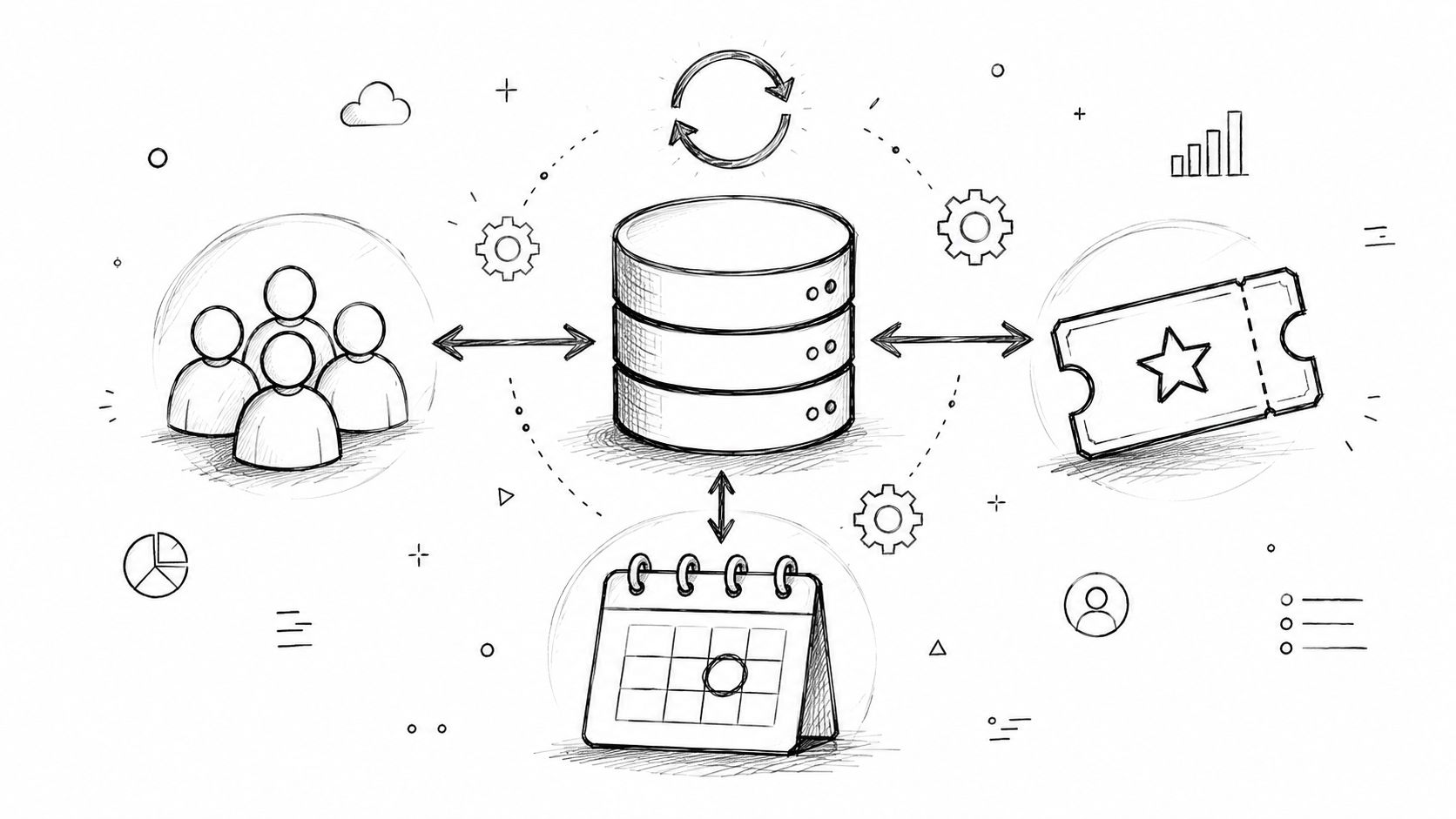
Staying ahead of the game is not about answering more emails before sunrise or building a color-coded personal productivity system. It is about replacing fragmented operations with one connected system that handles the repetitive work, keeps data in one place, and gives staff a clear view of what is happening across membership, events, content, and communication.
Associations that make that shift stop operating in a constant state of catch-up. They spend less time fixing records and more time improving programs, growing revenue, and increasing member value.
Most association teams did not choose a disconnected stack on purpose. It happened one urgent decision at a time.
A membership database was good enough for renewals. Then the annual meeting needed a separate ticketing tool. Then marketing wanted a faster email platform. Then the community formed inside Slack or Facebook because it was quick. Each tool solved one problem. Together, they created a larger one.
The daily symptoms are familiar:
The primary cost is not only staff frustration. It is slower response time. It is missed upsells. It is weaker member experiences because nobody has a complete picture.
A board member sees total membership. An event director sees registrations. A marketing manager sees open rates. Few people see the whole journey from prospect to registrant to renewing member. That gap keeps associations reactive.
Practical takeaway: If your team still starts major decisions by asking, “Which spreadsheet has the latest version?” you do not have a workload problem. You have a systems problem.
Understanding what association management includes helps clarify why patchwork software fails over time. Membership, events, communications, sponsorship, and content are not separate lines of business. They are one operating model.
The associations that pull ahead are not the ones asking staff to work harder inside a broken setup. They are the ones removing the broken setup.
Associations still make too many strategic decisions on instinct. A board member likes a topic, so it becomes a webinar. A committee wants a new benefit, so it gets added. A competitor launches a new event, so everyone scrambles to imitate it.
That approach feels responsive. In practice, it creates bloated programming and weak positioning.
A modern strategy starts with competitive intelligence. Not spying. Not obsessing over every rival move. Just disciplined attention to what members value, what competing organizations offer, and where your association can create a stronger experience.

In a commercial business, competitive intelligence often tracks pricing, product launches, and market share. In an association, the signals are different.
You watch:
That work matters because members compare you to more than direct peer associations. They compare you to any organization that helps them learn, connect, and advance.
The business case is already clear. 90% of Fortune 500 companies utilize competitive intelligence to secure a competitive edge, and businesses leveraging CI platforms achieve a 4x revenue increase while locating critical information 4x faster via centralized systems, according to Ranktracker’s competitive intelligence statistics for 2024.
Most associations do not need a formal intelligence department. They need a rhythm.
A workable review cycle looks like this:
| Focus area | What to review | What decision it informs |
|---|---|---|
| Member demand | Search terms, support questions, event feedback, renewal objections | New benefits, content, pricing, member journeys |
| Competitor activity | Events, membership tiers, sponsor offers, community features | Differentiation and positioning |
| Performance signals | Registrations, renewals, engagement, content usage | What to scale, cut, or redesign |
The point is not to collect more data for its own sake. The point is to make fewer weak bets.
When an association runs on guesses, staff chase anecdotes. One loud volunteer can redirect months of work. One competitor announcement can trigger unnecessary feature envy.
When an association runs on data, leadership can say no with confidence.
That confidence shows up in practical ways:
Teams that want this level of visibility need systems built for it. A useful starting point is understanding how analytics and insights support association decisions across engagement, event performance, and member activity.
Staying ahead of the game starts when strategy stops being a debate between opinions and becomes a process grounded in evidence.
The fastest way to slow an association down is to let every function buy its own software.
Membership picks one tool. Events pick another. Marketing adds a third. Community lives somewhere else entirely. Each vendor promises flexibility. Staff inherit the integration work.
That is when ordinary admin turns into detective work.

A fragmented stack creates small failures that add up.
The registration team cannot see full member history. The education team cannot tell which event attendees later consumed on-demand content. Sponsors receive reports assembled from several exports. Staff create workarounds, and those workarounds become business processes.
The hidden burden usually shows up in five places:
Many associations see this mess and assume the answer is a custom platform. The logic sounds reasonable. Build exactly what you need.
The risk is not the idea. The risk is execution.
Scope creep is the primary reason platform initiatives fail, and 97% of complex digital products released since 2022 did not achieve commercial success due to inadequate scope management, according to Juegostudio’s review of common digital product failure points.
Associations are especially vulnerable because every stakeholder wants something different. Membership needs flexible renewals. Events need dynamic ticketing. Sponsors want lead capture. Chapters want autonomy. Marketing wants segmentation. Leadership wants one dashboard. The “simple custom build” becomes a moving target.
Tip: Before approving any build project, ask one question. Are we building a strategic differentiator, or are we rebuilding common association infrastructure at great expense?
A unified platform does not make work disappear. It removes duplicate work.
After consolidation, the gains are operational first:
That means fewer exports, fewer handoffs, and less argument about whose numbers are correct.
Associations dealing with the pain of scattered systems should review common data integration challenges in community and event operations. It usually becomes obvious that the issue is not one bad tool. It is the absence of one trusted operating layer.
The associations that scale cleanly do not stack workaround on top of workaround. They simplify.
Many associations still treat engagement as a communications problem. Send more reminders. Post more often. Build a better newsletter calendar.
That is only part of it. Engagement improves when you know who needs what, when they need it, and which signals show momentum or risk.

The old advice says you stay ahead by hustling harder. More personal outreach. More follow-up. More manual care.
That sounds admirable, but it breaks under scale.
Community platforms using AI analytics achieve 27% higher member retention rates. The same source argues that prioritizing platform automation over personal hustle yields 3x faster scaling for membership-based businesses, while manual processes lead to 50% burnout in organizers, as noted in Michelle Gibbings’ discussion of staying ahead of the game.
The lesson is not “replace people with software.” It is “stop asking people to do the work software should already be doing.”
Good automation handles the repeatable tasks:
That frees staff for the work that still requires judgment. Board relationships, volunteer development, sponsor strategy, sensitive retention calls, and community leadership.
A healthy community does not wait for members to raise their hands. It creates useful next steps.
That can mean:
These are small interventions, but they feel personal when the data behind them is connected.
Below is a helpful walk-through on building stronger digital communities without adding more manual overhead.
Not every member metric deserves equal attention. A practical engagement review usually centers on behavioral change.
Watch for:
Key takeaway: Automation works best when it reduces friction for members and busywork for staff at the same time.
Staying ahead of the game in community management means acting before churn becomes visible in a board report. By the time a member formally leaves, the warning signs were usually there for months.
Many associations still treat events as isolated productions. Registration opens. The conference happens. Slides get emailed. The team exhales and starts over.
That model leaves money, content value, and sponsor momentum on the table.
The stronger approach is to treat every event as part of a year-round member experience. The annual conference becomes a content engine. Workshops become lead-in points for membership. Sponsor activations extend before and after the live dates.

A well-run event should create at least four layers of value.
First, there is the live experience. That is the obvious one.
Then comes the on-demand library. Session recordings, speaker resources, and curated follow-up content keep delivering value long after the closing remarks.
Next is the member pathway. A nonmember attendee should not vanish after the event. They should move into a deliberate sequence that introduces year-round benefits.
Finally, there is sponsor continuation. If exhibitors only get a booth and a logo, the relationship ends when the floor closes. If they get profile visibility, product showcases, targeted content placement, and follow-up touchpoints, the value lasts longer.
Sponsors are harder to retain when the offer is mostly passive exposure.
Associations get better renewal conversations when they sell participation. That can include dedicated sponsor spaces, product spotlights, featured resources, discussion access, and direct alignment with relevant member segments.
Here is a simple comparison:
| Traditional package | Digital-age package |
|---|---|
| Logo on signage | Branded profile or showcase page |
| Booth traffic | Ongoing member discovery inside the platform |
| One-time email mention | Targeted placement tied to audience interests |
| Post-event lead dump | Structured engagement opportunities over time |
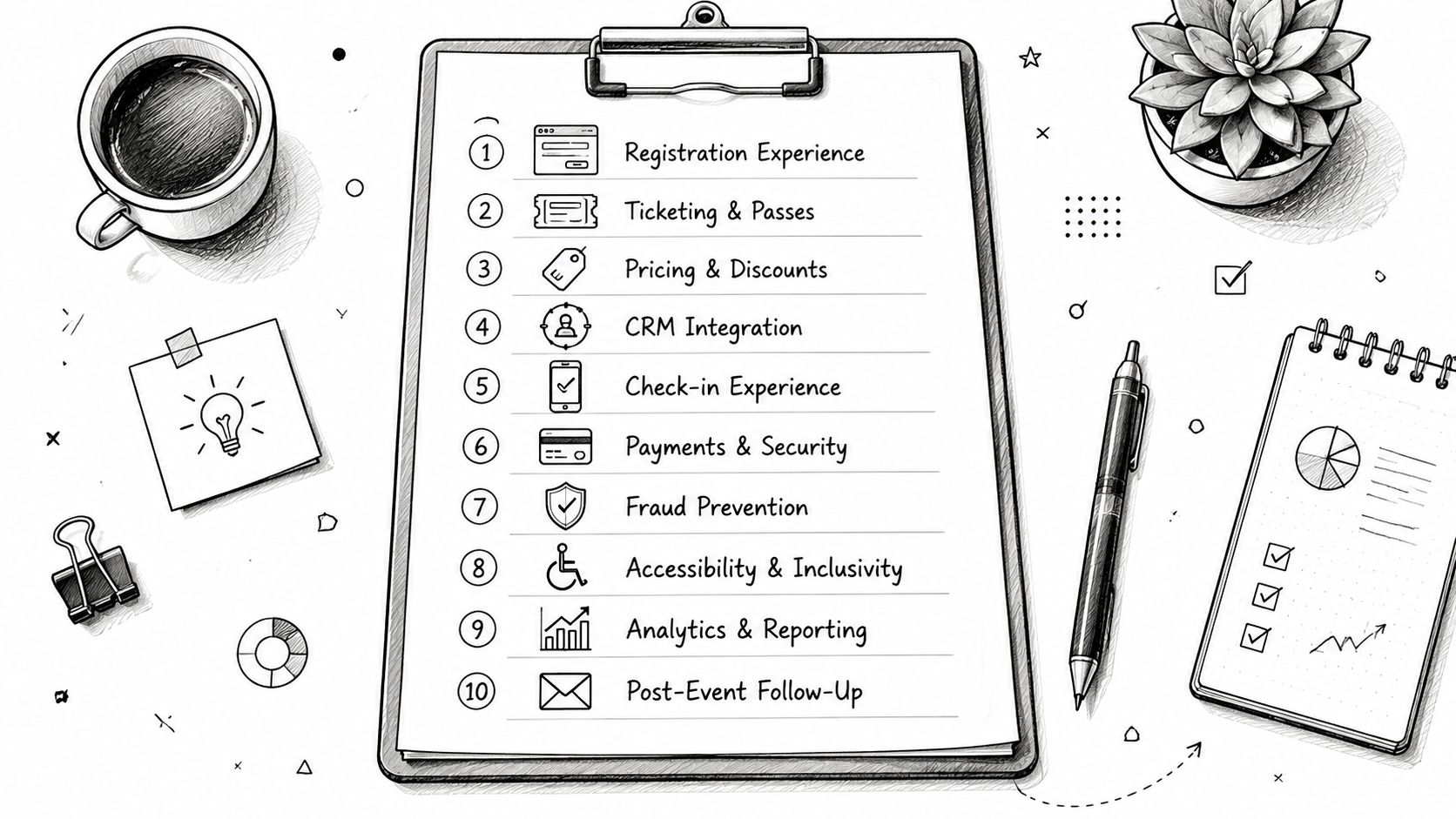
Modern platform capabilities are key. Features such as custom forms, VIP upgrades, exhibitor pages, banner placement, QR check-ins, and content hubs make the event more useful for both attendees and sponsors. Associations evaluating those options can review virtual event platform features that support year-round engagement.
When events sit inside the same environment as membership and content, the team can do more with less scrambling.
Staff can see who registered, who attended, what they watched later, which sponsor pages they visited, and whether they renewed or upgraded afterward. That makes post-event follow-up sharper. It also gives sponsorship sales real context instead of generic impressions.
Practical rule: Design sponsorship packages around actions you can support and relationships you can continue, not just assets you can place.
Staying ahead of the game with events means thinking like a publisher and a community operator, not only a meeting planner.
Boards rarely ask whether staff worked hard. They ask whether the association is growing, retaining members, generating revenue, and delivering value.
That is why measurement has to move beyond vanity metrics.
A total membership count matters, but it hides important questions. Are new members participating? Are event attendees becoming subscribers? Are sponsors getting activity that justifies renewal? Is content consumption leading to deeper involvement?
A useful dashboard does not need to be large. It needs to be tied to decisions.
Here is the difference:
| Vanity metric | Better operating metric |
|---|---|
| Total members | Renewal patterns by cohort |
| Total event registrations | Attendance quality and post-event engagement |
| Email sends | Actions taken after key messages |
| Content volume | Content consumption by segment |
| Sponsor count | Sponsor activation and follow-up outcomes |
Operating metrics help staff decide what to adjust. Vanity metrics mainly help presentations look full.
The strongest teams do not wait for quarterly disappointment. They set thresholds that flag risk early.
When effective early warning systems for KPIs are implemented, project success rates increase by up to 16 percentage points. Tying meaningful rewards to improvements across all performance dimensions can increase project success rates by nearly 25%, according to BCG’s analysis of why software projects succeed or fail.
For association operations, that principle translates cleanly. Staff should be able to spot trouble before it becomes visible in a renewal report or budget meeting.
A practical KPI review often includes:
Too many reports are backward-looking documents assembled to defend what already happened.
A better reporting habit asks three questions:
That shifts reporting from compliance to management.
It also changes conversations with leadership. Instead of presenting scattered updates from different departments, staff can show how membership, events, content, and sponsorship influence one another. That is what boards need if they are going to support new investments with confidence.
Staying ahead of the game is not a mindset alone. It is an operating discipline. One connected system. Clear data. Fewer manual tasks. Faster decisions. Better member experiences. Stronger revenue visibility.
When an association gets those pieces right, staff stop spending their days stitching together tools and start building something members can experience.
If your association is tired of juggling disconnected systems and wants one place to manage memberships, events, content, communication, and sponsor activation, GroupOS is worth a close look. It gives teams a unified operational foundation so you can save time, grow revenue, and deliver more value to members without adding more manual work.