April 19, 2026

TL;DR: 1 million YouTube views typically earns between $2,000 and $6,000, but the range is much wider: under $100 for Shorts to over $40,000 for high-value niches. The reason is RPM, which is the revenue you keep per 1,000 views after YouTube’s share and other variables.
A million views sounds like a single milestone. Financially, it isn't.
For an organization, how much is a million views on youtube depends less on vanity metrics and more on audience economics. The same view count can represent modest ad income, a strong brand lift engine, or a top-of-funnel asset that feeds memberships, event sales, sponsorship inventory, and premium education products. That difference comes from who watches, what they watch, how advertisers value that audience, and whether you treat YouTube as a media business or just a publishing channel.
That’s why the raw number matters less than the business model behind it. A professional association publishing policy explainers, a B2B software company posting tutorials, and an event organizer clipping keynote sessions can all reach the same view count and walk away with very different outcomes.
A million YouTube views is not a revenue answer. It is a distribution event.
For an organization, that distinction matters because the same audience scale can produce a modest AdSense payout, a meaningful sponsorship asset, or a pipeline for higher-margin offers. Public YouTube content sits at the top of the revenue stack, not at the center of it.
Benchmarks for million-view earnings vary widely across format, audience quality, geography, and advertiser demand. If you need context for how ad markets price attention, this detailed guide on what constitutes a good CPM is a useful reference point. It helps frame why one channel can treat 1 million views as minor media income while another sees the same reach as commercially significant.
That is why the right question for a marketing director is rarely, "How much does YouTube pay?" The better question is, "What does this reach do for the business?"
For associations, conference brands, training companies, publishers, and membership organizations, YouTube usually works best as a public distribution layer. It builds awareness, trust, search visibility, and repeat audience behavior. Ad revenue can help offset production costs, but it is often the lowest-value outcome attached to a strong video.
Practical rule: Treat AdSense as a yield layer, not the entire business case.
The strategic trade-off is straightforward. Broad, free content performs well on YouTube because the platform rewards accessibility and watch time. Premium content follows a different logic. If a workshop series, certification program, research archive, or event replay drives direct revenue, open distribution can reduce what viewers are willing to pay. In those cases, private or paywalled hosting can be the smarter financial decision, even if it means giving up public views.
Organizations get better results when they separate those roles clearly. Use YouTube for discovery content, brand authority, and audience development. Keep high-intent, high-value assets in environments you control, where pricing, access, data capture, and member experience support the business model.
CPM gets the attention. RPM drives the budget.
For an organization evaluating YouTube as a media channel, that distinction matters because these metrics answer different business questions. CPM measures what advertisers pay per 1,000 ad impressions. RPM measures what your channel earns per 1,000 views after YouTube takes its share and after only some views generate monetized impressions. If your team needs a market reference point, this detailed guide on what constitutes a good CPM helps frame CPM against broader advertising benchmarks.

CPM reflects market demand for your audience. RPM reflects realized channel income. Those numbers can sit far apart.
A channel can attract advertisers in a valuable category and still post modest RPM if a meaningful share of views are not monetized, viewers skip ads, inventory mix is weak, or watch behavior limits how many ads YouTube can serve. This is why marketing teams get misled when they plan revenue off headline CPM alone. CPM describes pricing pressure in the auction. RPM describes what finance can count.
For organizations, RPM is usually the operating metric worth watching. It gives content, marketing, and finance teams a common number for forecasting, post-campaign review, and deciding whether YouTube is functioning as a revenue line or primarily as a top-of-funnel channel.
CPM still matters. It helps explain the commercial value of your audience and category, especially if your organization serves buyers in expensive markets such as software, finance, healthcare, or professional services.
RPM matters more for decisions such as:
Teams that want better forecasting should pair RPM with audience and content performance analytics for digital communities. That combination shows whether YouTube is creating enough economic value on its own or whether its main role is demand generation for higher-margin offers elsewhere.
YouTube economics often present a more interesting scenario for established brands than for solo creators. A high CPM niche can signal that your audience is commercially attractive. It does not automatically mean YouTube ads are the best way to monetize that audience.
If your videos support premium training, paid research, member education, certification, or event replays, RPM should be judged against the value of keeping that content behind registration or payment. In practice, many organizations earn more by using YouTube to distribute selected discovery content and reserving premium assets for controlled environments. RPM helps you measure the yield from public distribution. It should not be mistaken for the ceiling on video revenue.
A million views can produce modest ad revenue or meaningful revenue, and the gap usually has little to do with editing quality or subscriber count. It comes from the commercial value of the audience, the type of content being watched, and how many views create ad inventory.

For organizations, that distinction matters. YouTube is not just a creator payout system. It is a distribution channel with a variable media yield. Teams that treat view count as the headline metric usually miss the underlying question. Are these videos attracting audiences that advertisers value, and are they supporting broader business outcomes such as registrations, pipeline influence, sponsorship value, or member retention? That is why stronger analytics and insights for digital communities matter more than surface-level traffic reports.
Geography affects pricing because advertisers pay differently for different markets. A view from a commercially attractive market often earns more than a view from a low-intent or low-spend market.
That creates a real trade-off for brands. Broad global reach can increase total views, but a smaller audience concentrated in the right regions may produce better revenue and better downstream business results. An association serving North American professionals, for example, may earn more per view than a channel with far larger reach across mixed international markets.
The same logic applies to seniority and job function. If your audience includes buyers, practitioners, and decision-makers in expensive categories, each qualified view tends to carry more value.
YouTube ad economics tend to improve when the content sits near a purchase decision or a high-value professional problem. Finance, software, business services, healthcare administration, and technical training often perform better than broad entertainment for one simple reason. The advertiser on the other side can justify a higher bid.
Organizations should read that as a signal about audience quality, not as a reason to publish endless sales content. The strongest channels usually combine commercial relevance with genuine utility. In practice, that often means content such as:
These formats work because they attract viewers with clear intent. They also map well to organizational goals outside AdSense.
Video length matters, but only in context. A short clip can be effective for discovery, social distribution, or event promotion. A longer video often creates better conditions for watch time, deeper session engagement, and more monetizable inventory.
That does not mean every team should publish longer videos.
It means format should follow the job the video needs to do. Use short videos to attract attention and reach new viewers. Use longer educational videos when the goal is trust, qualified viewing time, and stronger revenue yield. For many organizations, the best mix is a two-tier model. Public YouTube content handles awareness, while premium training, event replays, or member education live in a controlled environment where the business keeps more of the value.
Raw view counts are a poor forecasting tool because not every view serves an ad. Some sessions are not monetized. Some viewers use ad blockers. Some content gets watched in contexts that produce less ad revenue than teams expect.
This is one reason revenue projections often come in high during planning and low during reporting. A marketing director may see strong reach and assume a proportional payout. The platform economics are more selective than that. Paid views depend on ad fill, audience conditions, watch behavior, and content eligibility.
Watch time, retention, and session depth influence more than channel health. They affect how much value the platform can extract from a viewer session, and they usually correlate with business outcomes that matter more than ad revenue alone.
A viewer who completes a product tutorial, watches a second related video, and clicks through to a webinar page is often worth far more than a casual viewer who leaves after 20 seconds. For an established organization, that is the strategic lens to use. YouTube revenue is one output. Audience qualification, demand generation, and content-driven conversion often matter more.
That is also why some premium content should never be optimized for public ad yield in the first place. If a video supports paid education, certification, member access, or customer retention, keeping it behind registration or a paywall can produce a much better return than chasing public views on YouTube.
A million views can mean very different things on YouTube. For an organization, the gap is not academic. It affects budgeting, content format decisions, and whether public distribution is the right model at all.
As noted earlier, general long-form content usually produces modest ad revenue, while business-oriented subjects with stronger advertiser demand can perform much better. Shorts sit in a different category entirely and tend to generate far less direct income per view. That range is why raw view counts are a poor forecasting tool for teams building a media, education, or demand generation strategy.
| Content Niche | Average RPM Range | Estimated Earnings per 1M Views |
|---|---|---|
| General long-form educational or brand content | $2 to $6 | $2,500 to $5,000 |
| Finance | High-value niche, premium pricing environment | $15,000 to $40,000 |
| Tech | High-value niche, premium pricing environment | $15,000 to $40,000 |
| Gaming, entertainment, vlogs, pranks, or beauty | Lower-RPM niche environment | $1,000 to $4,000 |
| Shorts | Pooled Shorts model | $50 to $200 |
An industry association publishing certification clips, policy explainers, or webinar excerpts often has a better revenue profile than its subscriber count suggests. The audience is narrower, but it is also more commercially relevant. Advertisers generally pay more to reach professionals tied to high-value decisions than casual viewers browsing for entertainment.
That said, ad revenue still should not be the main business case. For this kind of channel, the stronger outcome is usually pipeline support, member acquisition, or paid education upsell.
A conference organizer's channel creates a different economics profile. Keynote edits, speaker interviews, and event recaps can build authority and extend the life of the event brand, but many of those assets function better as top-of-funnel media than as high-yield ad inventory.
The distinction matters. A polished recap video may help next year's ticket sales, sponsor renewals, or attendee trust, even if the AdSense payout is average. A technical session clipped into a practical buying guide can carry more advertiser value and more downstream commercial value at the same time. Content strategy should separate those roles instead of treating every upload as an equal revenue unit.
Organizations sometimes publish culture, lifestyle, or entertainment-style content to chase reach. That can work for awareness. It is a weaker model if finance expects the channel to pay for itself through ads.
In lower-value ad categories, one million views may still underperform a much smaller audience that is closer to a purchase decision. That is why many B2B teams pair public YouTube content with paid assets such as workshops, templates, or recorded training. If your team is packaging expertise beyond ad-supported video, this guide to the best places to sell digital products is more useful than another round of RPM estimates.
The same principle explains a lot of creator monetization advice, including broader breakdowns of how influencers make money. The highest-performing businesses do not rely on one payout stream. They use YouTube as a distribution layer, then route qualified attention into offers they control.
The closer a video sits to a meaningful business decision, the more valuable each view becomes.
A million views can be the wrong success metric for an organization.
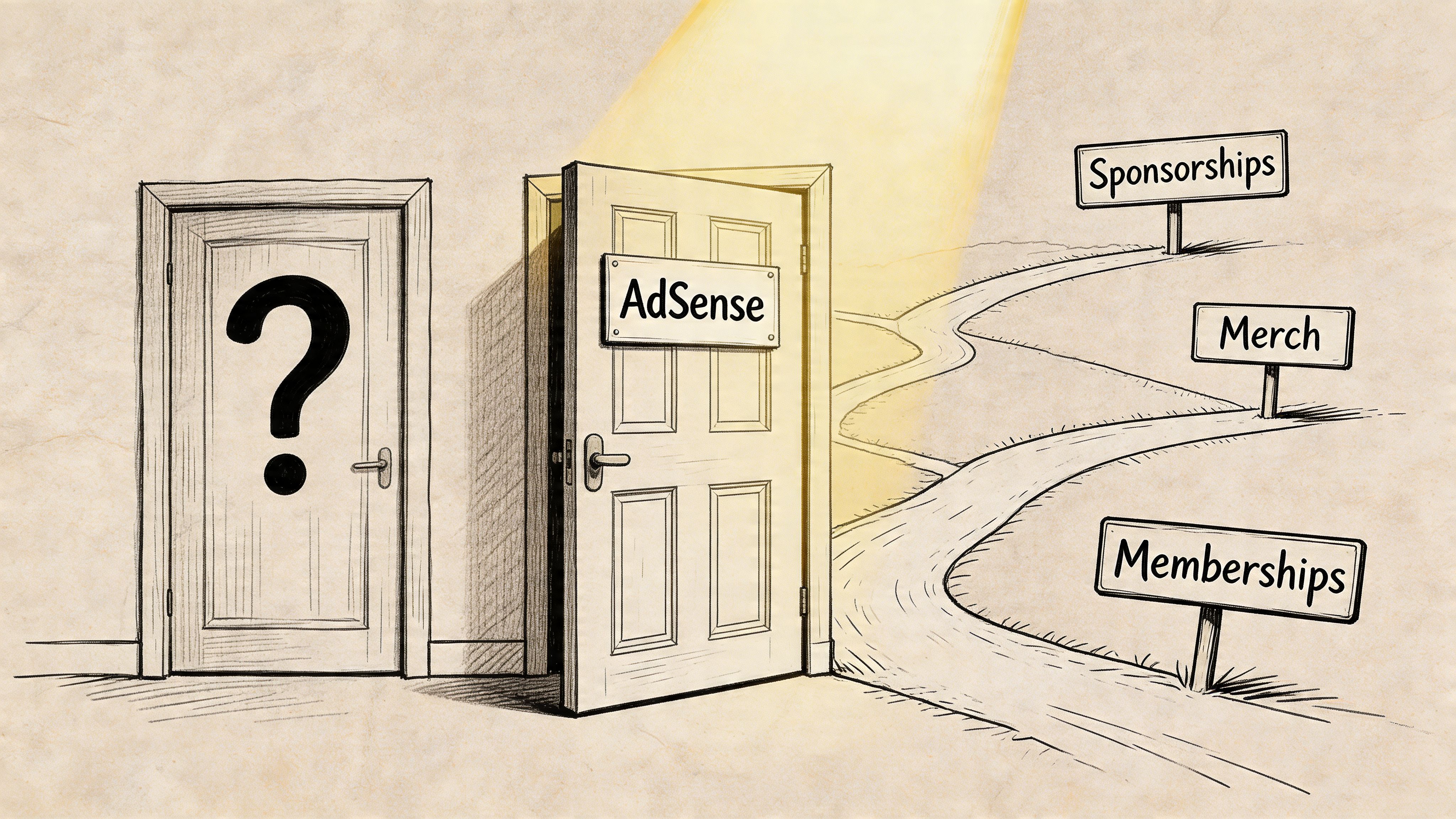
For a business, publisher, association, or training brand, YouTube ads are usually the smallest and least controllable part of the revenue picture. The stronger economics often come from assets the organization already owns: sponsor relationships, paid education, memberships, events, research, and direct audience trust.
Ad revenue changes with advertiser demand, geography, watch behavior, monetized playbacks, and platform policy. A team can improve some of those inputs, but it cannot set the terms. That makes YouTube ads useful as incremental income, not as the foundation for premium content economics.
Organizations have better tools than a solo creator. They can package sponsorship rights across a video series. They can bundle recordings into member access. They can attach training to certification, event tickets, or annual renewals. They can protect higher-value content instead of giving it away for a volatile payout.
Teams that want a broader view of creator-style revenue models often study examples of how influencers make money. The lesson is not that organizations should copy creator tactics. The lesson is that strong media businesses spread risk across multiple income streams.
The best monetization route depends on what the content is designed to do.
For organizations building a repeatable system, it helps to work from a broader content monetization strategy for digital communities instead of asking each individual video to justify itself on ad revenue alone.
Some content has more value behind controlled access.
If a video is expensive to produce, tied to membership retention, or central to a paid education offer, public hosting can undercut the business model. I see this often with certification programs, conference recordings, licensed training, and executive briefings. The team publishes too much for free, then wonders why the paid version is harder to sell.
A better structure is straightforward:
That approach preserves discoverability while protecting margin. It also gives the business cleaner data on who converted, what offer they chose, and how video contributes to revenue beyond YouTube itself.
A short explainer on monetization models can help frame the trade-offs:
Public video builds awareness. Controlled premium video is often where organizations capture the real commercial value of their expertise.
The best YouTube strategy for an organization usually has very little to do with chasing platform payouts. It’s about increasing the value per view.

A view can support awareness, but a good system turns that attention into a known business outcome. For a conference brand, that may be ticket sales. For a membership organization, it may be member acquisition or renewal. For a training business, it may be course enrollment. The strategic question isn't "How many views did we get?" It's "What path did those viewers have into the next meaningful action?"
One mistake I see repeatedly is using the same video style for every objective. That creates channel activity, not channel strategy.
A better model looks like this:
Organizations typically outperform individual creators. They usually already have an ecosystem. They have events, sponsors, documents, communities, and offers. YouTube works best when it feeds those assets instead of trying to replace them.
Most underperforming channels don't have a distribution problem. They have a pathway problem.
Every video should answer one operational question: what should the right viewer do next? That could be:
When that path is vague, even strong videos produce weak business results. When it's clear, a modestly performing video can become a durable asset.
This is the point many organizations reach after a year or two of publishing. Public video builds awareness, but some content becomes too valuable to leave on an open platform.
That’s when a split-platform strategy starts making sense. Keep discovery content on YouTube. Host premium education, recordings, certifications, or paid communities in a controlled environment where you decide access, branding, pricing, and member experience. Teams evaluating that shift often compare tools built for structured learning and paid access, which is why research into the best platforms for selling online courses becomes more useful than another debate about ad rates.
If I were advising a marketing director building this from scratch, I’d keep it simple.
That last step changes executive buy-in. When YouTube is reported as a media vanity channel, budgets get cut quickly. When it's reported as a contributor to pipeline, sponsor fulfillment, and member growth, leadership understands why the investment matters.
Usually far less than long-form video.
Shorts can generate broad reach, but they are a weak direct revenue product for organizations that care about predictable returns. The format is best used to introduce a brand, surface a subject-matter expert, or pull viewers into a stronger asset such as a webinar, series, membership, or gated library.
No.
Public views and paid views are not the same thing. Some viewers are outside monetized markets, some use ad blockers, and some watches do not result in an ad impression. For planning, finance teams should treat view count as a distribution metric, not a revenue forecast.
Advertisers pay more to reach audiences tied to expensive buying decisions.
A viewer researching software, financial products, cybersecurity, or business services is often closer to a purchase than a viewer watching general entertainment. That raises ad demand. For an organization, the implication is clear. Audience commercial value matters more than raw volume.
RPM shows revenue kept per 1,000 views after YouTube takes its share.
That makes it the more useful planning metric for operators. CPM tells you what advertisers may be paying. RPM tells you what the business receives. If a content line attracts attention but the RPM stays weak, the better move may be to treat YouTube as an acquisition channel and monetize elsewhere.
In most cases, yes.
Long-form gives YouTube more room to place ads and gives your team more room to build trust, explain a topic, and move viewers toward a business goal. Shorts still matter, especially for awareness campaigns, but they rarely carry the economics of a serious content program on their own.
Usually no.
Ad revenue is volatile, platform-controlled, and hard to forecast at the level most organizations need for budgeting. A stronger model uses YouTube for reach, then captures value through sponsorships, memberships, paid events, lead generation, subscriptions, or private premium content.
That approach gives your team control over pricing, audience data, access, and brand experience.
If your organization wants to turn video into something more durable than unpredictable ad revenue, GroupOS gives you a way to combine community, events, memberships, and premium content in one branded platform. Use YouTube for reach, then bring your most valuable audience into an owned environment where you control access, monetization, and the full member experience.