April 10, 2026
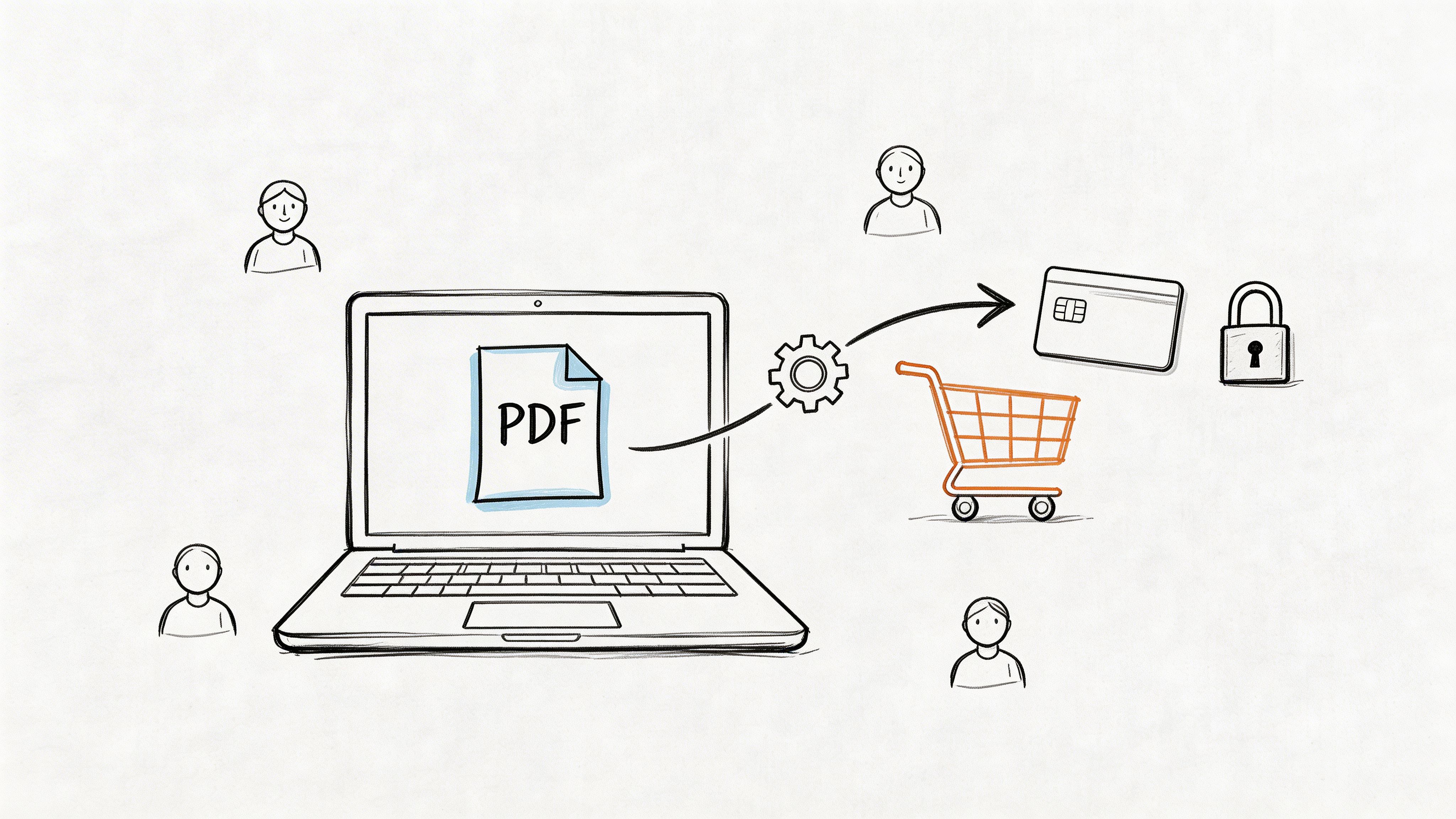
Most associations already have the raw material for a new revenue stream.
It sits in shared drives, event folders, and old campaign archives. Annual research reports. Certification prep guides. Conference playbooks. Sponsor-facing trend decks. Member onboarding manuals. Most of it was expensive to create, useful to the right audience, and then left to collect digital dust.
That is a missed commercial opportunity, but it is also a missed community opportunity. When you sell pdf documents online inside your own ecosystem, you do more than generate non-dues revenue. You package your expertise, put a price on convenience, and create a cleaner path from casual visitor to paid member, event buyer, or sponsor lead.
The format is not going away. The global PDF software market was valued at approximately $2.15 billion in 2024 and is projected to reach $5.7 billion by 2033 at a 11.47% CAGR, while over 2.5 trillion PDFs exist and over 290 billion new PDFs are created annually according to PDF trends in 2025. For organizations, that matters because buyers already trust the format. They know how to open it, share it internally, archive it, and use it in procurement, training, and board reporting.
The practical question is not whether PDFs can sell. They can.
The central question is where your organization should sell them, how you should protect them, and how you can connect those sales to memberships, events, and long-term retention instead of treating them like one-off downloads.
A professional association rarely starts from zero. It already has content with market value.
That content usually falls into a few strong categories:
Many teams underprice these assets because they think of them as support material. Buyers often see them differently. A well-structured PDF can save a member hours of work, help a sponsor justify a budget, or help a practitioner solve a pressing problem without attending a full course.
Associations have an advantage that solo creators do not. They already have trust, subject matter access, and distribution channels.
A consultant on Etsy has to prove credibility from scratch. An association can sell a standards guide, committee-backed handbook, or event report with built-in authority. That changes both buyer confidence and product positioning.
Key takeaway: The easiest digital product to launch is often not a new course. It is a document your organization already owns, cleaned up, packaged well, and sold with the right access rules.
I see the same pattern repeatedly. Teams either upload PDFs to a generic marketplace because it feels fast, or they bury them in a member portal with no clear product packaging, no payment logic, and no analytics.
Both choices leave money on the table.
A marketplace can help a solo template seller. It is usually a weak fit for an association that needs controlled branding, buyer data, member segmentation, sponsor tie-ins, and secure delivery. A hidden file library is not much better. If nobody can discover, purchase, or upgrade around the asset, the file remains a cost center.
The better model is to treat documents as part of a connected revenue system. A report can lead to a membership. An event guide can be bundled with registration. A sponsor kit can sit behind a qualified lead form. A certification manual can become the first paid step toward a larger learning path.
That is how organizations sell pdf documents online without fragmenting the member experience.
The platform decision shapes everything that follows. Brand control, checkout flow, reporting, renewals, and upsells all sit downstream from this choice.
Organizations usually end up evaluating three models. Marketplaces. Standalone ecommerce tools. Integrated community platforms.
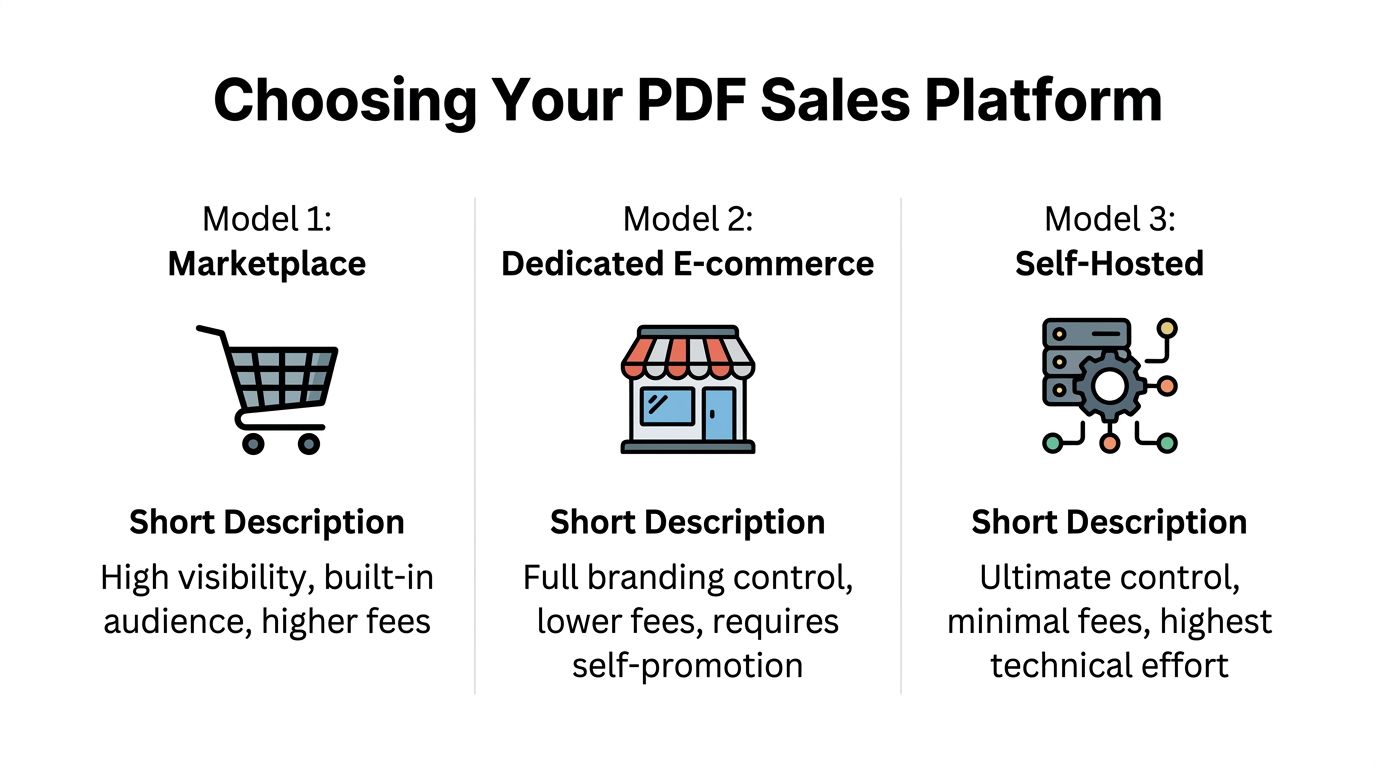
Marketplaces such as Etsy are built for visibility first. They reduce setup friction and give you a ready-made storefront environment. That sounds attractive until you remember that an association is not just selling a file. It is managing a relationship.
Standalone tools such as Gumroad or Shopify sit in the middle. They give you more control over brand, product pages, and payments, but they still require your team to stitch together community, access control, and engagement workflows.
Integrated community platforms sit closest to the needs of associations and event organizers. They combine content gating, member identity, communication, and monetization in one environment.
For an organization, the platform question is not mostly about launch speed. It is about whether the buyer journey stays inside your brand.
Existing guidance often skips this B2B reality and focuses on solo creators. That is a major gap because marketplaces can dilute brand control and reduce member lifetime value by up to 40% compared to owned platforms that integrate sales with membership systems and analytics, as noted in this analysis of selling PDF documents online for organizations.
If your team sells standards documents, event recaps, gated reports, or member-exclusive whitepapers, that trade-off matters more than marketplace convenience.
| Criterion | Marketplaces (E.g., Etsy) | Standalone Tools (E.g., Gumroad, Shopify) | Integrated Community Platforms (E.g., GroupOS) |
|---|---|---|---|
| Brand control | Limited. Your listing lives inside the marketplace experience. | Strong. You control site design and product pages. | Strongest. Sales live inside the same branded member environment. |
| Audience access | Built-in browsing traffic, but mixed intent. | You must drive your own traffic. | You can sell to existing members, prospects, registrants, and sponsors in one place. |
| Customer data ownership | Restricted compared with owned systems. | Better access to buyer data. | Strong access tied to membership and engagement records. |
| Member experience | Fragmented. Buyers leave your ecosystem. | Better checkout control, but community still sits elsewhere. | Unified. Content, discussion, events, and renewals can connect directly. |
| Fee pressure | Platform fees can be higher and harder to justify for institutional sales. | More predictable after setup. | Depends on platform model, but usually stronger long-term economics if revenue layers stack. |
| Security and access rules | Basic for many use cases. | Can be solid with add-ons and setup work. | Better fit for gated libraries, member tiers, and controlled distribution. |
| Best fit | Solo creators testing simple products. | Teams wanting branded sales without a full community layer. | Associations and event organizers monetizing content as part of a larger membership strategy. |
A marketplace helps when speed matters more than control. It is not ideal when the buyer might also become a member, sponsor, exhibitor, chapter leader, or event attendee.
A standalone storefront works well if your team already has strong marketing operations and can manage the complexity of separate systems. Shopify, for example, can handle product presentation nicely, but you still have to define how purchased PDFs connect to member status, private channels, event records, and access levels.
An integrated platform is the strongest fit when the PDF is not the end product. That is the situation for most associations.
A paid report can unlock a follow-up webinar invitation. A conference workbook can trigger access to a private attendee group. A sponsor playbook can lead into lead retrieval, branded profile visibility, or exhibitor upgrades. Those workflows are much easier when your content sales live inside the same environment as your members and events.
Tip: If your PDF sale should trigger anything beyond a receipt and a download, choose a platform that treats documents as part of a community journey, not just a file transaction.
Use these questions before you commit:
Will this buyer need ongoing access?
If yes, avoid systems that treat every sale as a disconnected one-time order.
Do we need member-only pricing or role-based access?
If yes, prioritize platforms with strong identity and permissions.
Will we bundle PDFs with events, courses, or renewals?
If yes, isolated storefronts create extra admin work.
Do we want sponsor visibility or post-purchase engagement?
If yes, a community-connected environment pays off.
Do we need clean reporting across content, membership, and events?
If yes, separate tools usually produce fragmented data.
Teams comparing options often start with broad market research, and this review of the best places to sell digital products is a useful reference point. The key is to evaluate those options through an association lens, not a creator-economy lens.
A PDF becomes a product only after you package it like one.
That means editing for clarity, branding for trust, and securing access before the first sale goes live. The document may already be valuable, but buyers judge what they see. If the cover looks dated, the file name is generic, or the download link can be passed around freely, the asset will underperform.
Digital products, including PDFs, contribute over $2.5 trillion in annual economic value, and the digital downloads market is projected to reach $18.3 billion by 2033, according to digital product sales statistics. Organizations that want a piece of that market need to treat file preparation seriously.
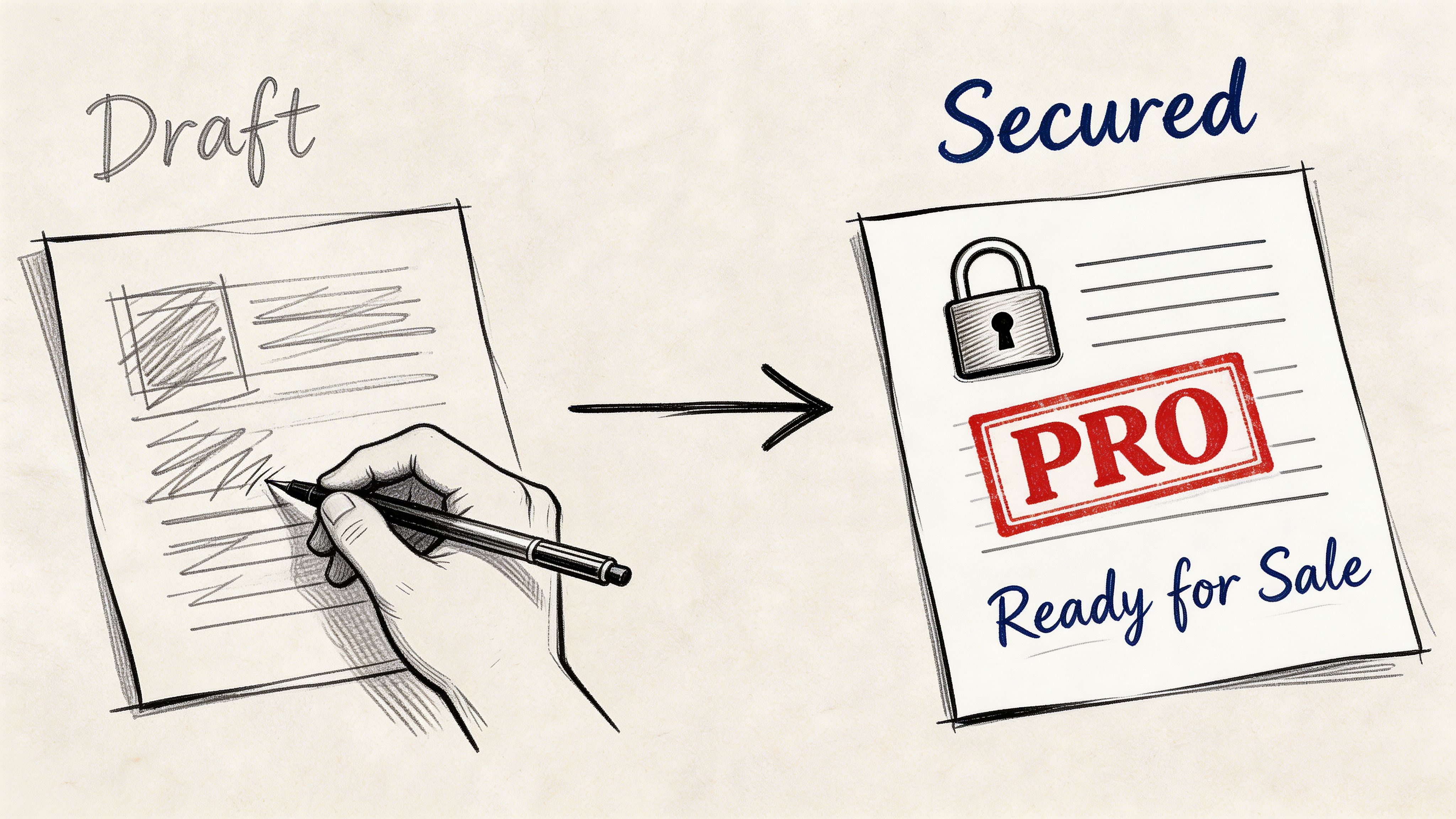
Before you think about checkout, fix the document itself.
Associations often skip this step because the content team knows the material is strong. Buyers do not buy your internal confidence. They buy perceived usefulness and professional presentation.
Security should match the value of the asset and the likelihood of sharing.
For a low-cost event handout, simple controls may be enough. For a premium research report, board briefing, or member-exclusive whitepaper, you need tighter access rules.
Common options include:
The point is not to create friction for legitimate buyers. The point is to make casual forwarding and unlicensed reuse harder.
Tip: Start with watermarking and controlled download links for standard paid documents. Move to stronger DRM only when the asset value and sharing risk justify it.
Security fails when it depends on memory.
Create a short release checklist your staff follows every time:
For teams that want a better handle on where copied files may surface after launch, this guide to platforms you should monitor if you sell digital products is worth reviewing. It is a practical reminder that security is not just prevention. It is also monitoring and response.
A solid content stack also helps. If your organization is building a paid resource library inside a broader member environment, tools discussed in this guide to a membership-based website builder can help frame the infrastructure side.
To see how teams think about digital document preparation in practice, this walkthrough is useful:
Manual fulfillment breaks fast.
The first few PDF orders may feel manageable. Someone receives a payment notification, sends an email, attaches a file, and moves on. Then an event launch hits, orders arrive after hours, and support inboxes fill with messages asking where the download is.
Automation fixes that. It also makes your organization look more professional.
A buyer should move through a simple sequence:
That flow sounds basic, but many organizations still break it by relying on attachments, shared-drive links, or generic thank-you emails.
Your setup should include four layers.
Use a payment processor your finance team already trusts and can reconcile. Stripe and PayPal are common options because buyers recognize them and platform integrations are widely available.
If your sales process needs cleaner billing workflows, especially for organizational buyers or sponsor-side purchases, it helps to review what a dedicated online invoice system can support around invoicing and payment tracking. That becomes more relevant when your PDFs are sold not only to individuals but also to departments, exhibitors, or procurement-managed teams.
Do not send the raw file as an email attachment. Use secure download links generated after purchase.
Set rules around:
This protects the asset and reduces file version confusion.
The delivery email needs to answer the buyer’s next three questions before they ask them.
Include:
A vague “Thanks for your order” message creates unnecessary support traffic.
Key takeaway: The best delivery email works like a receipt, a help document, and an onboarding message at the same time.
Your operations team should be able to confirm whether payment went through and whether the buyer received access. That prevents handoffs between finance, membership, and support from turning into a mess.
Three mistakes show up often.
First, teams use public cloud storage links. Buyers can forward them. Staff later lose track of who has legitimate access.
Second, organizations split payment and delivery across too many systems. One tool processes payment, another sends a generic email, and a third hosts the file. When something fails, nobody knows where the break happened.
Third, teams forget the subscription edge case. If a PDF is included in a membership or premium access tier, your delivery rules must account for what happens when that access ends. This discussion of ending a Stripe subscription is useful because content entitlements and billing status need to stay aligned.
The strongest automation is almost invisible. The buyer pays, gets the file, and never thinks about your delivery system again.
That means your job is not to make the setup flashy. It is to make it reliable.
For associations, that reliability matters twice. It protects the revenue stream, and it protects trust in the organization’s digital operations.
Most organizations price PDFs backward.
They look at how long the document is, how much design time went into it, or what they charged for a printed booklet years ago. That approach leaves strong money on the table because buyers do not pay for your production effort. They pay for relevance, speed, and reduced uncertainty.
If you want to sell pdf documents online effectively, price by value and market through your existing community channels first.
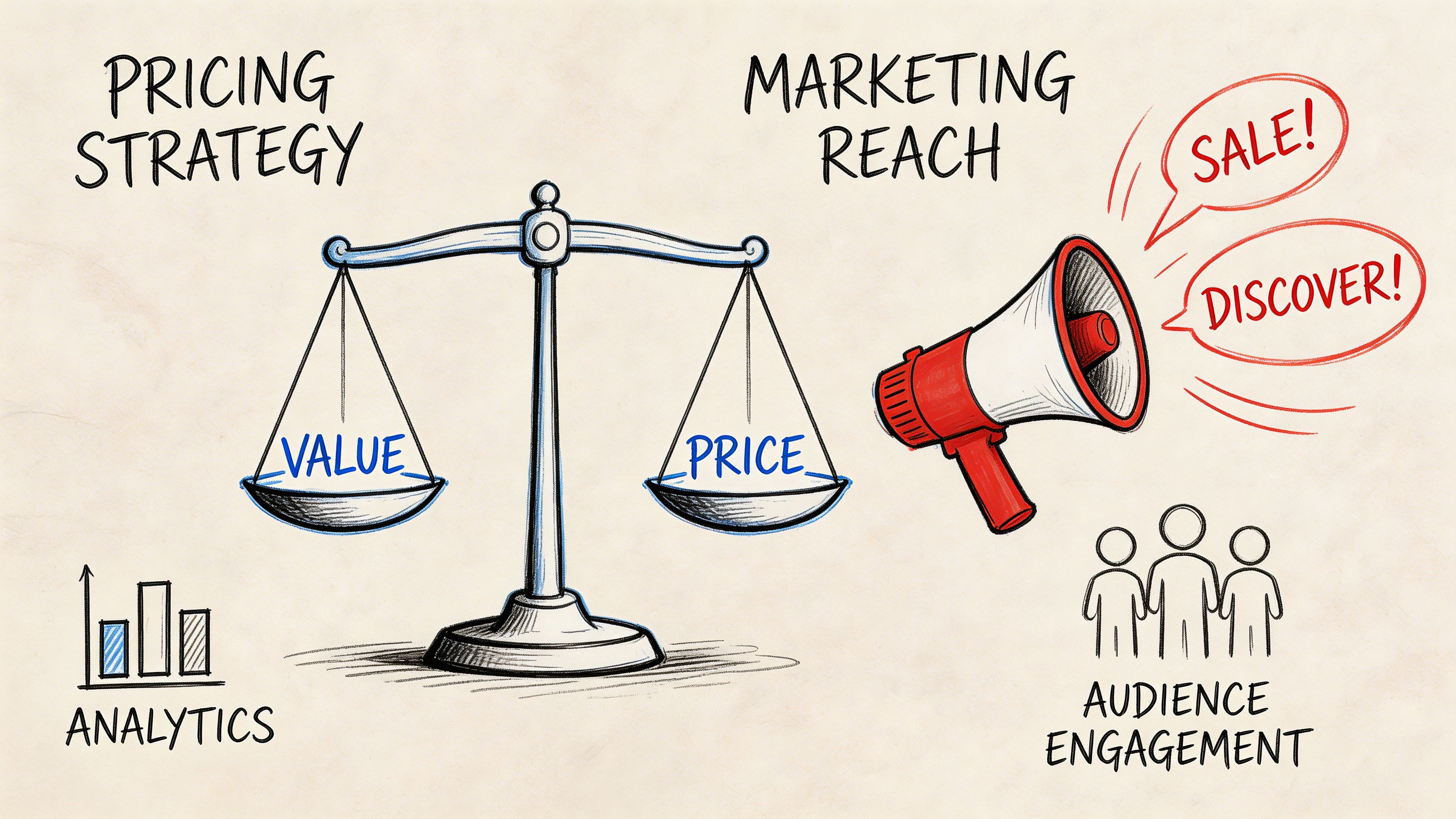
Expert guidance for digital PDFs recommends value-based tiers, with solo PDFs often priced at $17 to $47, while bundles or subscriptions can produce a 150% to 300% revenue uplift. The same source notes that promotion through email and social channels for digital products has a 4:1 benchmark ROI, and piracy from unsecured links can cost 20% to 30% of revenue if not addressed, according to this guide on selling PDFs with pricing and promotion benchmarks.
An association should not copy solo-creator pricing blindly, but the principle holds. A compliance checklist used by a busy department may justify a much stronger price than a long but generic report.
The strongest setups usually use layers.
| Offer type | Best use case | Why it works |
|---|---|---|
| Single PDF | One focused asset, such as a benchmark report or event playbook | Low friction entry point |
| Bundle | Related documents sold together | Increases order value and solves a broader problem |
| Member price plus non-member price | Association-owned knowledge assets | Encourages membership conversion |
| PDF plus webinar replay | Event follow-up or training offer | Adds immediacy and perceived depth |
| PDF inside a subscription tier | Ongoing resource library | Turns one-time value into recurring value |
I usually advise associations to start with two offers, not six. One standalone document and one bundled option are enough to learn how buyers respond.
Organizations often underestimate the assets they already control.
Your strongest launch channels are usually:
The mistake is treating the PDF as a random store item. It should be positioned as the next logical tool for a specific audience.
A conference organizer, for example, can sell a post-event resource pack that includes speaker slides, worksheets, and a summary guide. A professional association can offer a non-member paid version of a research report while giving members preferred access or better pricing.
Associations have one marketing advantage that many storefronts lack. They can make an offer feel contextual.
Try promotional angles like these:
Tip: A PDF sells faster when it is attached to a moment. Conference season, regulatory change, board planning, and annual budgeting all create natural demand windows.
Discounting is easy. Recovering perceived value is harder.
Use discounts sparingly and for a clear reason. Launch pricing, conference-attendee offers, and member-exclusive pricing all make sense. Constant couponing does not.
If your organization is building a broader digital revenue strategy, this piece on content monetization is a useful complement. It helps frame PDFs as one part of a larger portfolio, not a standalone tactic.
The best pricing decision is rarely “What can we charge for this file?” It is “What role does this asset play in our revenue ladder?” Once you answer that, pricing and promotion become much easier.
Once the sales system is live, your job shifts from launching to learning.
That means tracking what buyers do, not what your team expected them to do. The data tells you which documents deserve expansion, which landing pages need work, and which channels attract buyers who may later become members or repeat customers.

For digital products, useful benchmarks include a 2% to 5% conversion rate, an average order value of $25 to $75, and close tracking of traffic sources. Top performers see 30% of sales driven by email and SEO, and ignoring analytics can reduce repeat purchases by 60%, according to this guide on monitoring analytics for digital product sales.
Those benchmarks are not targets to chase blindly. They are reference points that help you identify where friction sits.
Focus on a short list of questions.
That usually signals a positioning problem.
The product page may be vague. The title may describe the format instead of the benefit. The audience may not understand why the document matters now.
A traffic source that drives curiosity but no purchases is not useless, but it is less valuable than a smaller channel that converts consistently.
For many associations, email performs well because trust already exists. SEO can also be strong when the PDF solves a specific professional problem.
A single report may sell steadily, but a bundle may improve total revenue without much extra effort. Track whether buyers choose add-ons, member upgrades, or related resources after the first purchase.
Organizations have an edge in this area. You can look beyond the first order.
A useful question is whether buyers of a paid guide are more likely to attend events, join membership, renew, or purchase another resource. That is where PDF sales become strategically important rather than merely transactional.
Use a repeating review process each month.
Key takeaway: Optimization works best when you change one meaningful variable at a time. Otherwise, your team cannot tell what improved performance.
Analytics should shape your content roadmap too. If buyers consistently purchase implementation-focused guides but ignore long-form thought leadership reports, build more applied resources. If event attendees buy recap packs but not standalone manuals, tighten the event-product connection.
The goal is not more dashboards. The goal is better decisions.
Associations often look for new revenue in complicated places.
They explore new programs, new sponsorship packages, and new event formats before they fully monetize the expertise they already own. Meanwhile, valuable reports, workshop guides, field manuals, and member resources sit underused in folders that only staff can find.
That is the practical opportunity.
To sell pdf documents online well, an organization needs a system, not just a store listing. Choose a platform that keeps the buyer journey inside your brand. Prepare each file like a product. Protect access in a way that matches the asset’s value. Automate payment and delivery so the operation runs cleanly. Price for usefulness, not length. Promote through the channels your community already trusts. Then track what sells, what gets ignored, and which buyers become part of a larger relationship with your organization.
The strongest result is not a one-time document sale.
It is a connected revenue engine where content supports membership, events, sponsorship, education, and retention. A report can attract a non-member. A toolkit can support a renewal. A conference PDF bundle can extend event revenue after the room is empty. A sponsor download can become a lead-generation asset.
That is why this matters.
Your content is not filler around your programs. In many cases, it is the product that proves your organization’s authority most clearly. Package it properly, and it becomes one of the easiest new revenue streams your team can launch without inventing something from scratch.
If your organization wants to turn reports, guides, event materials, and gated resources into a more integrated revenue stream, GroupOS gives you a branded way to connect content sales with memberships, events, communication, and analytics in one place. It is a practical fit for associations and community-driven organizations that want less tool sprawl and a stronger member experience.