December 4, 2025

Before you ever think about sending a single email or picking up the phone, you have to do the foundational work. This is the single most important—and most often skipped—step in the entire sponsorship process.
Getting this right isn't just a suggestion; it's the difference between looking like an amateur asking for a handout and a professional offering a genuine partnership.
Rushing this stage is like building a house on sand. It might look okay for a moment, but it’s guaranteed to collapse under the first bit of pressure. Successful sponsorship isn't about asking for money; it’s about offering undeniable value.
Let’s be clear: companies aren't charities. They’re strategic businesses looking for a return on their investment (ROI), whether that’s brand visibility, new leads, or a stronger community presence. The numbers don't lie. Brands poured $97.4 billion into sponsorships in 2022, and that figure is expected to rocket to $189.5 billion by 2030. For many companies, sponsorships make up around 12% of their marketing budget. They see it as a serious growth engine, and you need to treat it that way too.
First things first: stop thinking about what you need. Instead, start taking a hard, honest look at what you have. What assets, both tangible and intangible, can you bring to the table for a corporate partner? This means doing a real inventory of your organization's strengths.
Get granular and think through these key areas:
This whole process is about defining your mission, analyzing what you bring to the table, and then packaging it all into a clear, compelling offer.
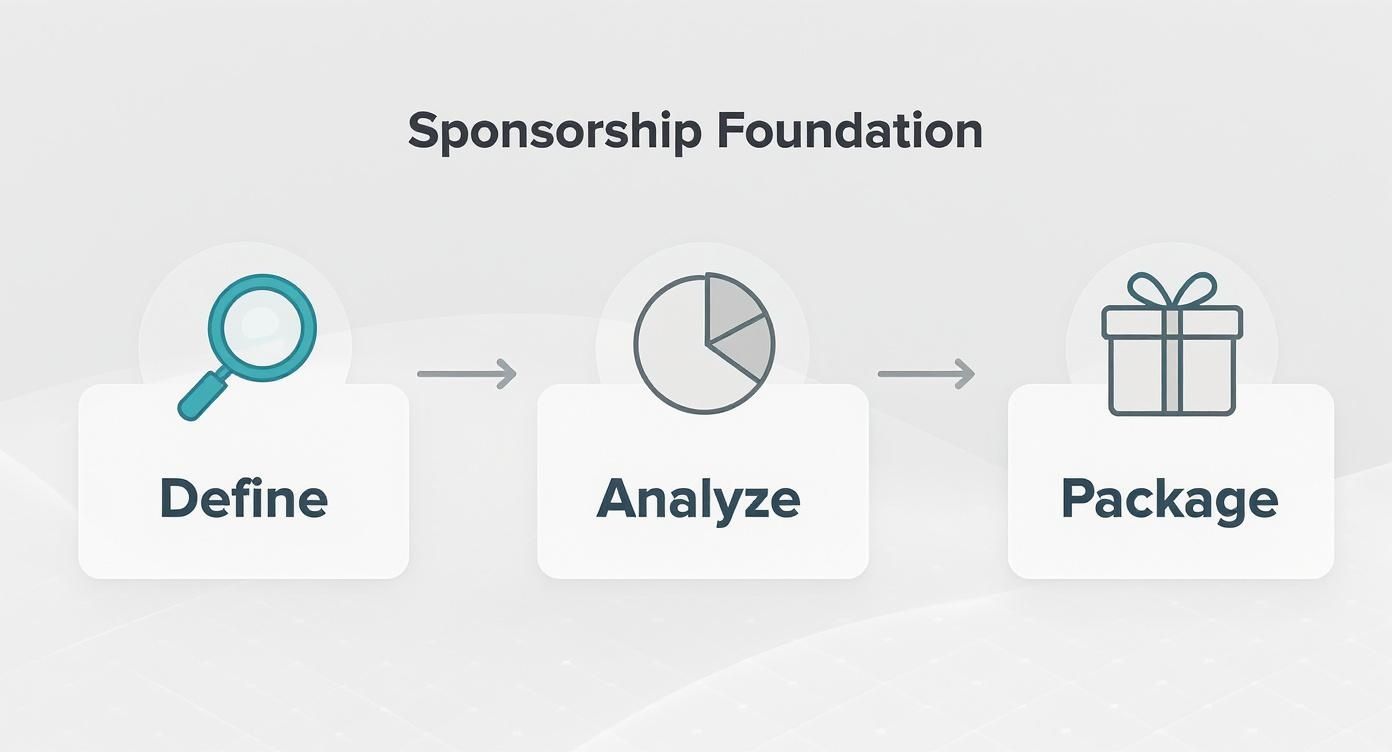
This simple diagram really drives home the point: a strong sponsorship approach is a deliberate process, not a rushed, desperate ask.
Once you've cataloged all your assets, you have to translate them into a language that speaks to a business's bottom line. This is your value proposition. If you need some help with this, there are great resources that show you how to write a compelling value proposition that grabs a sponsor's attention.
Your value proposition is the concise, powerful answer to a sponsor’s unspoken question: "Why should I partner with you over all the other options I have?"
Let’s look at an example. Don't just say, "We have 10,000 social media followers."
Instead, try this: "We offer direct engagement with 10,000 young professionals in the tech industry—a key demographic for your new product line." See the difference? The second statement connects your asset directly to a business goal they likely have.
To see how all these pieces fit together in a professional document, check out our guide that includes a sample sponsorship proposal. It'll show you exactly how to structure your offer effectively. Doing this foundational work ensures that when you finally do your outreach, you're not sending a generic request. You're presenting a targeted, data-backed business proposal that demands to be taken seriously.
Let’s be honest: stop sending mass email blasts. The fastest way to get your sponsorship request sent to the trash folder is to send a generic pitch to a company you know nothing about. To actually land corporate sponsors, you have to shift your mindset from a shotgun approach to a sniper rifle. It’s all about building a carefully curated list of prospects who are a natural fit for your community.

This initial research phase isn't just about finding any company with a marketing budget. You're searching for a true partner. The best partnerships are built on a foundation of shared values and, most importantly, overlapping audiences. When a sponsor's target market is the same as your community members, the value proposition clicks into place for them almost instantly.
Before you even open a search engine, you need a clear picture of what you’re looking for. I always start by creating an "Ideal Sponsor Profile" that outlines the characteristics of a perfect partner. Think of it less as a wish list and more as a strategic filter that will save you countless hours down the road.
Your profile should clearly answer a few key questions:
Getting this profile right from the start prevents you from chasing dead ends. By defining your ideal partner first, you can focus your energy where it has the highest chance of success. To really nail this, it's crucial to apply strategies for mastering targeted lead generation.
With your profile handy, it’s time to start digging. This isn't just basic research; it's intelligence gathering. The goal is to understand a potential sponsor’s motivations, marketing goals, and recent activities so you can walk into a conversation already knowing what they care about.
Here’s what your research toolkit should look like:
The biggest value you can offer a sponsor is connecting them with their ideal audience, not just yours. When you can prove that your attendees are their customers, the conversation changes from a donation request to a strategic marketing discussion.
Once you have a shortlist of highly qualified companies, the final—and most critical—step is finding the right person to contact. Sending a brilliant proposal to a generic "info@" email is like shouting into the void. You need to get your pitch directly into the hands of a decision-maker.
I typically fire up LinkedIn and search for titles like:
For smaller, local businesses, you might need to reach out directly to the owner or CEO. The key is to find the person whose job performance is measured by the exact kind of results your partnership can deliver. For a deeper dive, our guide on how to find sponsors for events offers even more practical strategies. This focused approach ensures your message doesn't get lost in the corporate shuffle.
Let’s be honest: the old Gold, Silver, and Bronze packages are dead. Today’s sponsors are sharp investors looking for a clear return, not just a feel-good donation. If you hand them a generic, one-size-fits-all menu, you’re practically asking for a polite "no, thank you."
The real secret to building sponsorship tiers that get a signature is a mental shift. Stop selling pre-set packages and start offering a flexible framework of value.
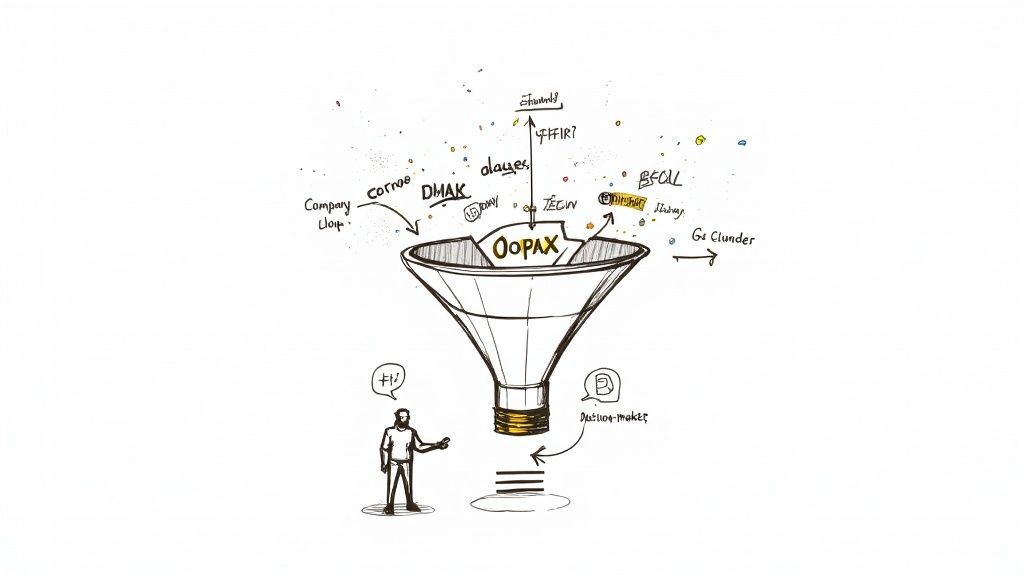
Your job is to design a system where sponsors can essentially build their own package—one that directly hits their business objectives. Whether they need brand awareness, hot leads, or genuine community engagement, your tiers should offer clear paths to get them there. This changes the entire conversation from "What do I get for my money?" to "How can we work together to crush your goals?"
Before you put a price on anything, you need a complete inventory of every single asset you can offer a partner. This goes way beyond just putting a logo on a banner. Get creative and assign a real, tangible value to each item, thinking about both your cost and what it’s actually worth to a sponsor in the market.
Your inventory should be a mix of digital, physical, and experiential assets. Think about:
The most powerful sponsorship benefits are the ones a sponsor can't just buy through traditional ads. Offer a unique experience or direct access, and you’ve created undeniable value.
Once your assets are valued, you can start structuring your tiers. But instead of rigid levels, think of them as customizable starting points. A great modern approach is to create a base tier and then offer a menu of high-impact "activation" add-ons.
For instance, a "Community Partner" tier could cover the basics like logo placement and a few event tickets. From there, a sponsor chasing leads could add a sponsored workshop or a booth in a high-traffic spot. A different sponsor, focused on brand perception, might add title sponsorship of a charity auction held during the event.
This model is a huge reason why markets like sports sponsorship are exploding. That industry was valued at a massive $60.17 billion in 2024 and is on track to hit $132.86 billion by 2033. That growth isn’t just from bigger logos on jerseys; it’s fueled by creative, data-backed activations that engage fans in totally new ways. You can learn more about the booming sports sponsorship market and see how these innovative partnerships are driving incredible value.
To really separate yourself from the pack, you have to offer benefits your competitors aren’t even thinking about. While the traditional assets still have their place, today's sponsors are hungry for deeper integration and activations that people will remember long after the event is over.
This table shows the difference between the old way of thinking and the modern, high-value assets that sponsors are excited to invest in today.
The goal is to weave the sponsor into the fabric of the event experience, making their presence feel natural and valuable, not like a pushy advertisement.
This strategy of building modern, flexible packages is absolutely essential. For more detailed examples and pricing strategies, our comprehensive guide on creating event sponsorship packages takes a much deeper dive into crafting offers that sponsors can’t possibly resist.
By offering a flexible, value-first framework, you empower sponsors to build a partnership that fits them perfectly. It’s a collaborative approach that not only makes it easier to close the deal but also lays the foundation for a successful, long-term relationship built on winning together.
You can have the most incredible sponsorship proposal in the world, but it’s completely useless if no one ever sees it. Once you’ve pinpointed your ideal partners and built out some compelling sponsorship packages, the real work begins. This is where you have to be human. It’s all about turning a name on a list into a real conversation and, eventually, a true partner.
Success here isn’t about some magic script; it’s about authentic, personalized connection. Firing off a generic email blast is the fastest way to get your message deleted. Your goal is to start a relationship, not just make an ask. This part of the process takes persistence, a professional touch, and a genuine curiosity about what your potential sponsor is trying to achieve.

That first email is your one shot to cut through a mountain of inbox noise, so it has to count. The secret? Personalization. You need to show them you’ve actually done your homework and aren't just copy-pasting their company name into a template.
A good first email does three things, and it does them quickly:
This thoughtful, research-based approach makes it so much harder for them to ignore you. If you want to dig deeper into crafting that initial message, our guide on how to ask for sponsorship has some great templates and examples.
Let's be real: most deals don't happen after one email. In fact, research shows that 80% of sales require at least five follow-ups. If you’re serious about landing corporate sponsors, you need a follow-up game plan. But there's a huge difference between being persistent and just being annoying.
The best strategy is to mix up your channels. After sending that first email, give it a few business days. If you hear crickets, it’s time to try something else.
A great follow-up isn't nagging. It's a series of gentle, professional touchpoints that demonstrate your value and build familiarity over time.
When you finally land that call, solid preparation is what will make you stand out. This isn't the time for a hard sales pitch. Think of it as a discovery session. Your main goal is to listen and learn, uncovering the sponsor's business challenges and what they really need.
Walk into the call armed with open-ended questions that will get them talking:
By asking smart questions and actually listening to the answers, you’re gathering the exact intel you need to customize your proposal. You're no longer guessing what they want; you're building a solution with them, turning a simple ask into an opportunity they can't afford to miss.
Getting that email that says, "We're interested," feels incredible. It's a huge win. But don't pop the champagne just yet. The space between a warm "yes" and a signed contract is where so many promising partnerships fizzle out.
This is where the real work begins. Closing a deal isn’t just about getting a signature; it’s about proving you’re a professional partner they can trust, not just someone asking for a check. It requires a delicate mix of confidence, clear communication, and a laser focus on creating a true win-win.
You’re going to hit a few speed bumps in almost every negotiation. When a potential sponsor raises a concern, don’t see it as a rejection. Think of it as an invitation to solve a problem together. The most common objection you'll hear is some version of, "The budget is tight right now."
Instead of getting defensive, get curious. Ask questions to dig into what that really means.
This simple pivot changes the entire dynamic. You’re no longer haggling over a price tag; you're collaboratively building a solution that fits their needs while respecting their financial reality.
Knowing when to customize a package and when to stand firm on your value is a skill you'll hone over time. If a sponsor wants to swap one benefit for another of similar value, that’s an easy yes. It builds incredible goodwill. For example, if they'd rather have an extra dedicated email blast than a physical banner at the event, that's often a smart and simple trade to make.
However, you can't devalue your core assets just to close a deal. If your top-tier package comes with exclusive naming rights and they're asking for a 30% discount, you have to be ready to hold your ground. This is your moment to gently but firmly re-articulate the immense value and ROI that exclusivity provides.
The goal is to be flexible on the components but firm on the value. You can rearrange the puzzle pieces, but the overall worth of the puzzle has to remain intact.
Once you’ve shaken hands on the terms, it’s time to get everything in writing. A formal sponsorship agreement protects both you and your partner, eliminating any chance of confusion down the road. While you should always have a legal professional review your contracts, make sure your agreement clearly outlines these key areas:
This final document is the blueprint for your entire partnership. Making it clear and comprehensive ensures everyone is on the same page and genuinely excited to get started.
The world of corporate sponsorships has evolved far beyond simple logo placement. Social impact sponsorships, for instance, saw a 21% growth in 2024 because content tied to social causes generates 33% more engagement. This proves brands are now using sponsorships to showcase their ESG commitments. You can discover more insights about global sponsorship trends that highlight this important shift.
When you're diving into the world of corporate sponsorships, a few key questions always seem to pop up. Trust me, you're not alone. Getting these fundamentals right from the start can make all the difference between landing a dream partner and getting a polite "no, thank you."
Let's tackle some of the most common questions I hear from organizations just getting started.
The golden rule? Start your outreach six to 12 months before your event or program kicks off.
That might sound like a lot of time, but there's a very practical reason for it: corporate budget cycles. Most large companies lock in their marketing and community budgets months—sometimes a full year—in advance. If you show up too late, the money has already been spent. Getting in early puts you on their radar while they're still deciding where to allocate funds.
But it’s about more than just timing. This longer runway gives you the breathing room to build an actual relationship. A last-minute pitch always feels transactional. A longer lead time allows for thoughtful research, personalized conversations, and un-rushed negotiations. It positions you as a strategic partner, not just another organization with its hand out.
Rushing the outreach process is the fastest way to get a "no." Giving yourself a 6-12 month runway shows sponsors you are a strategic, professional partner, not just a last-minute fundraiser.
The number one mistake I see, time and time again, is sending a generic, one-size-fits-all proposal. Sponsors can spot a copy-and-paste job from a mile away. It tells them you haven't taken the time to understand their brand, their goals, or their audience. It's the quickest path to the trash folder.
Beyond that, here are a few other critical errors to avoid:
Pricing is definitely part art, part science. You can't just pick a number out of thin air.
Start with the basics: calculate your hard costs. What will it actually cost you to deliver every single benefit you're promising? Then, figure out the fair market value for your assets. What would a company normally pay for a sponsored email to a list of your size and engagement? What's the going rate for a dedicated social media campaign?
Finally, don't forget to factor in the intangible value. This is the magic sauce—the brand association with your mission and the exclusive access you offer to your unique audience. To get a reality check, see what similar events or organizations are charging. But always be prepared to back up your pricing with real data on your audience demographics, reach, and past performance.
Keeping all these moving parts organized—from tracking prospects to managing sponsor deliverables—is exactly what GroupOS was designed for. Our all-in-one platform helps you manage every sponsor relationship, showcase their value with dedicated profiles, and track ROI with clear analytics. It’s all about building partnerships that last.